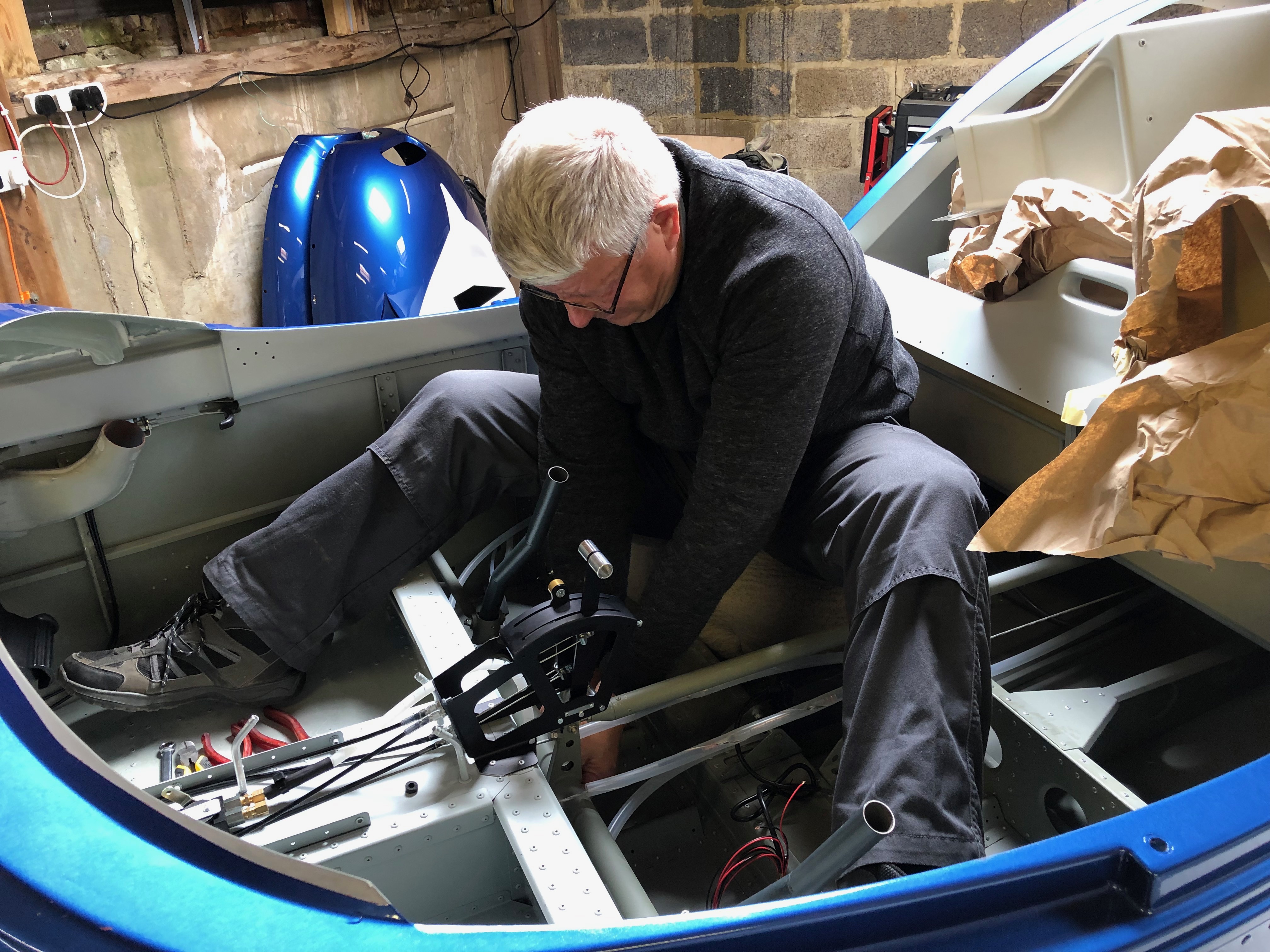
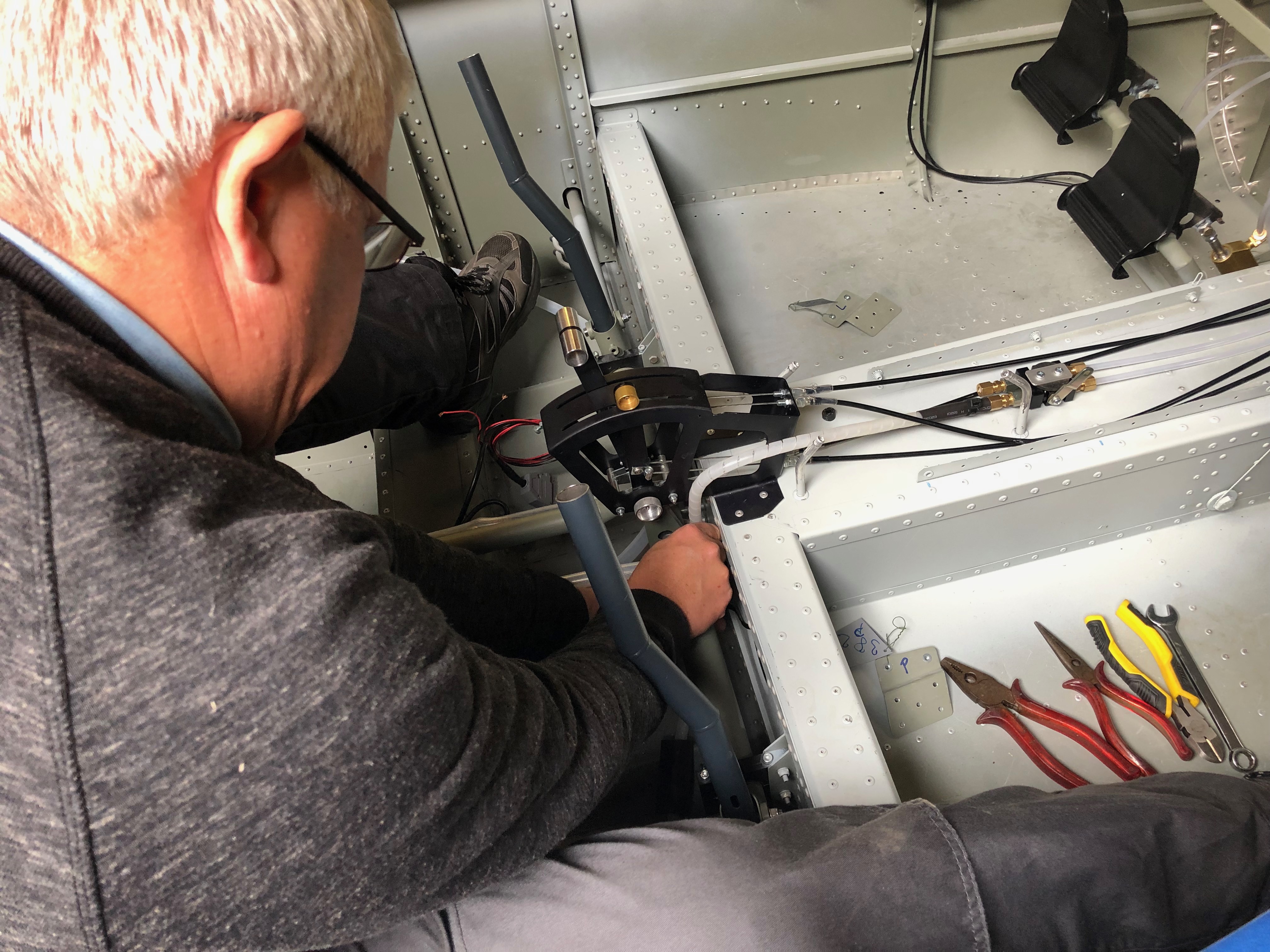
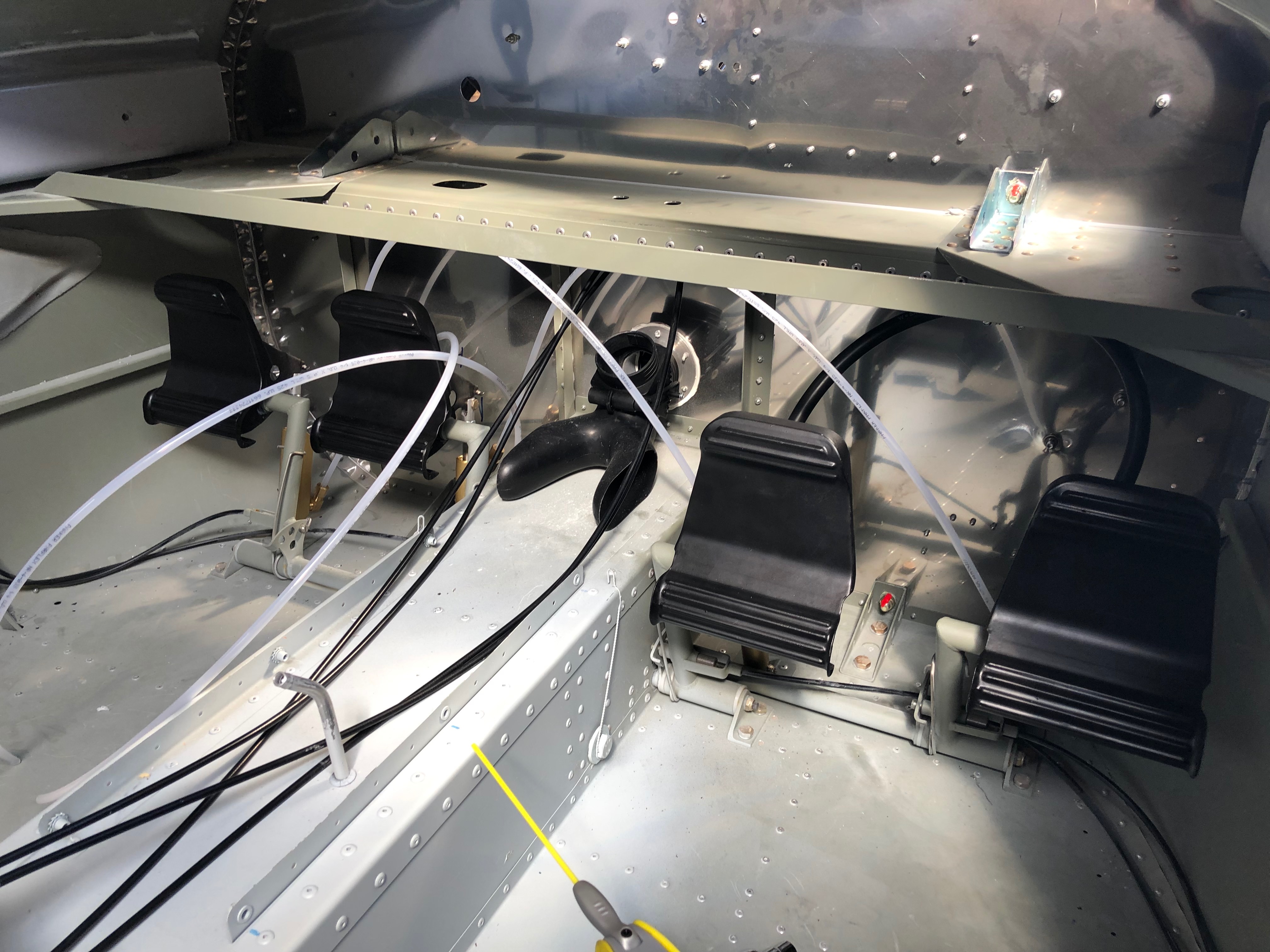
Karen came to help me complete the brake pipe install inside the cabin as it’s fiddly and needs a second pair of hands. certainly saved me some time.
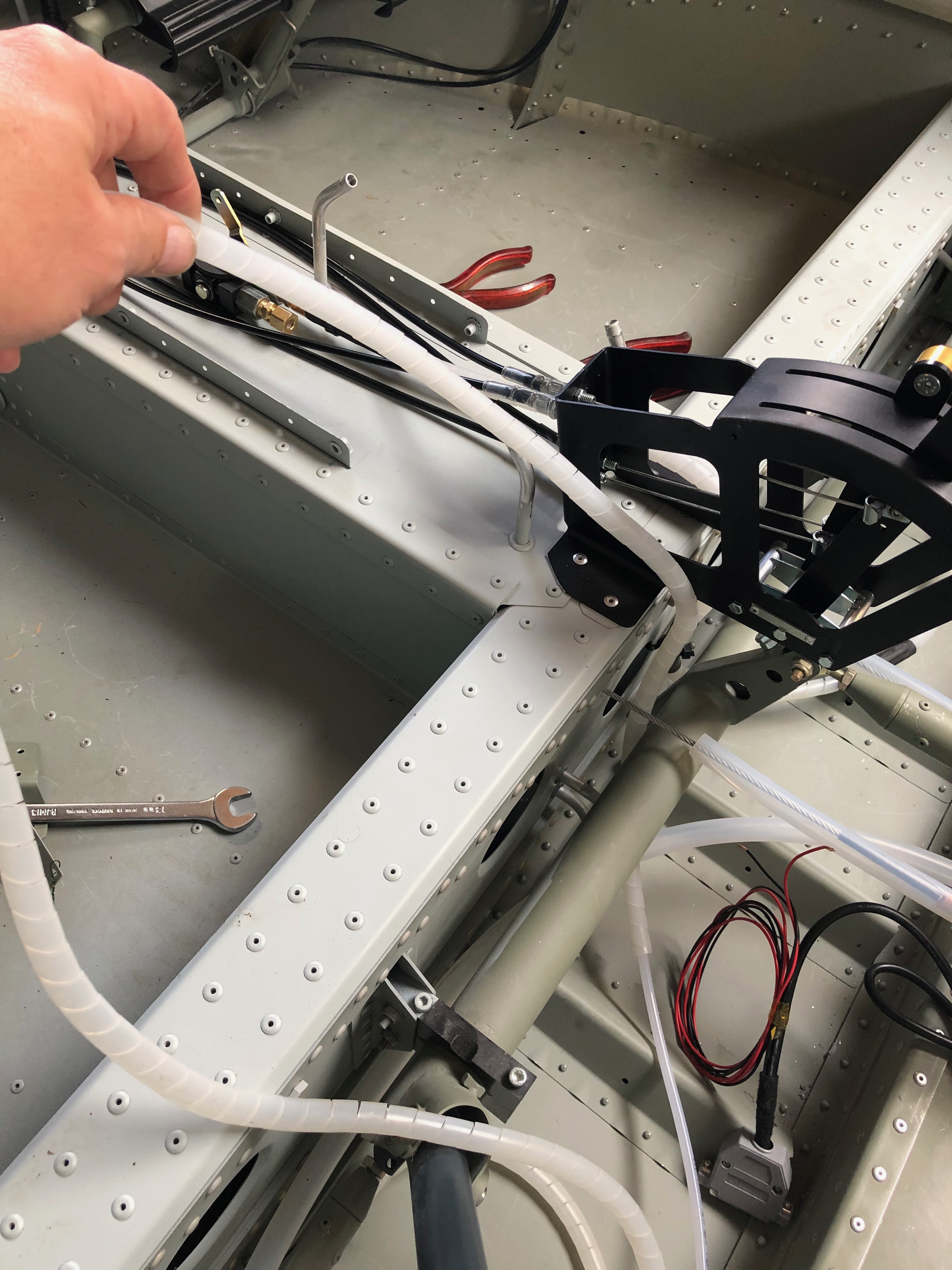
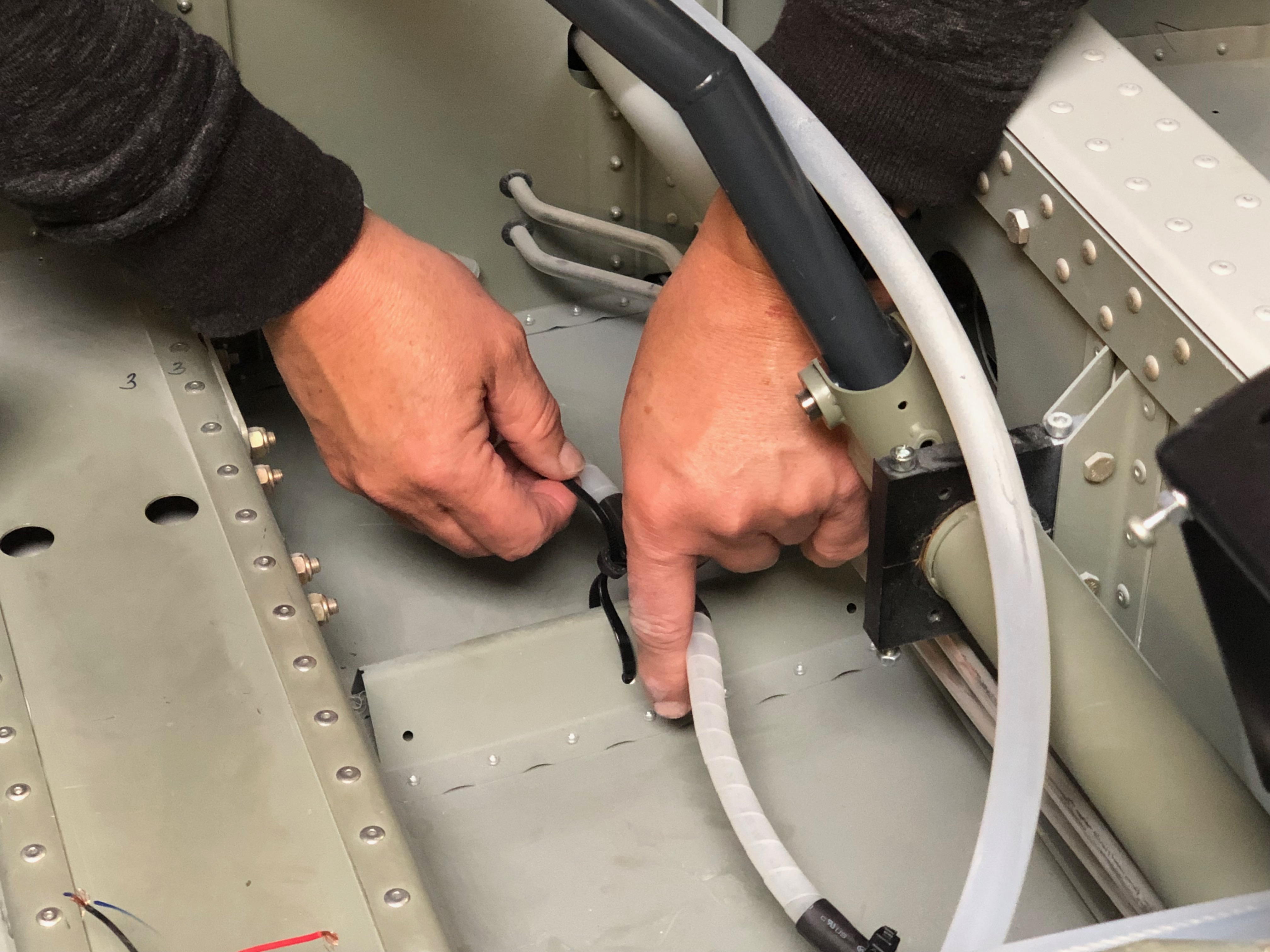
After running the hydraulic pipe to the side of the fuselage it’s covered with a protective sleeve to prevent the pipe from chaffing. I’ve chosen to use a spiral wrap similar to that used as a cable tidy but more substantial.
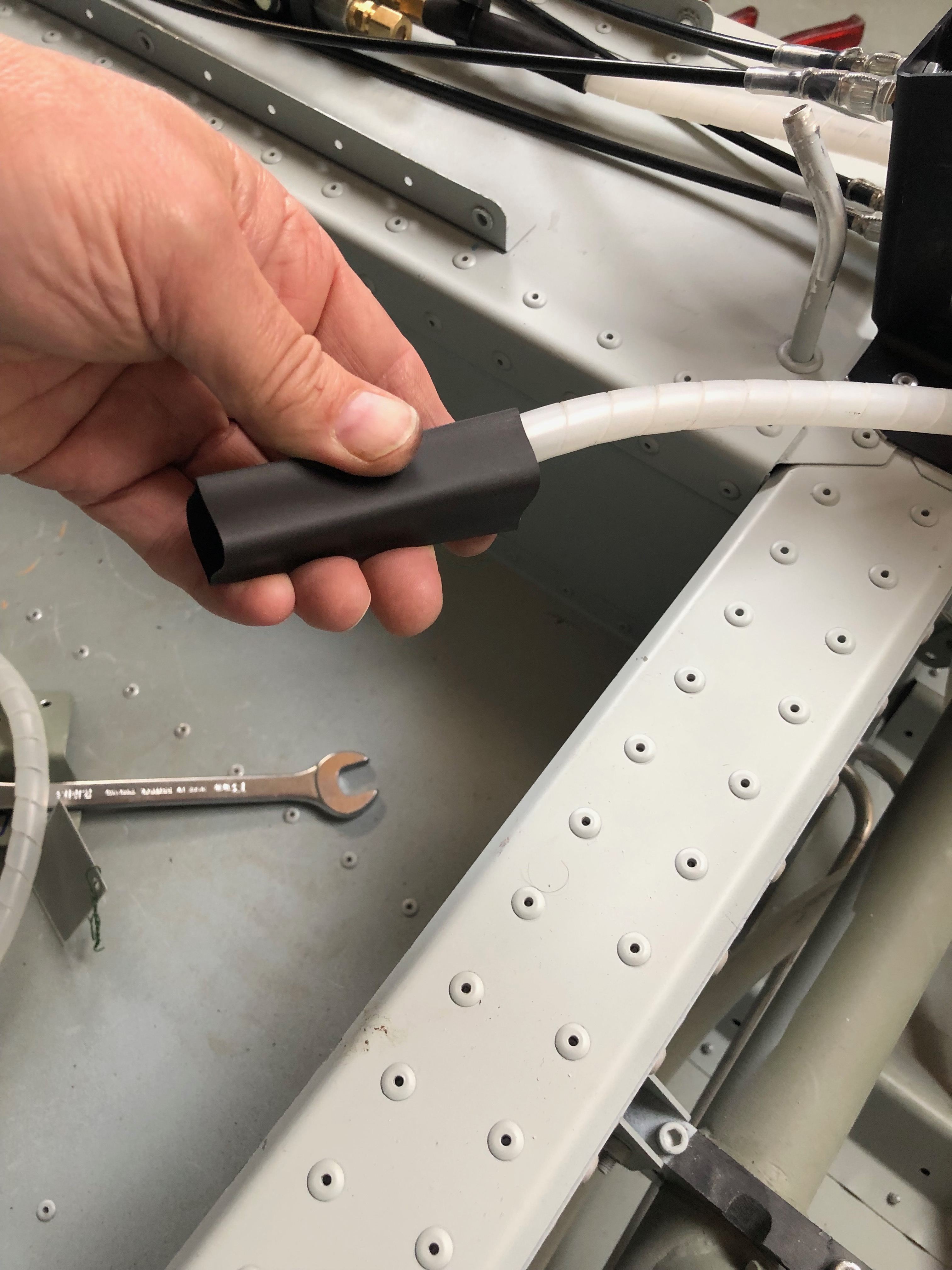
The tubing and wrap needs to be held in pace but a cable tie is likely to separate the wrap and clamp the pipe instead so I slipped some heat shrink tubing over the wrap so a cable tie holds the wrap and doesn’t clamp the pipework. Seems a good solution.
Anti crush inserts are added to the end of the pipes to stop the pipe collapsing when the nuts are tightened.
The nuts are tightened and a heat gun is used shrink the hear shrink. A cable tie is used just to prevent it moving.
Cable tie stand offs will be used to secure the pipe work onto the cabin floor. The holes are opened up with a 5mm drill first.
As I’ve said before, this job is very fiddly, you need several pairs of hands and there’s not a lot of space to manoeuvre!
But eventually it all comes together…
Installation of a cable tie stand off used to secure the pipework.
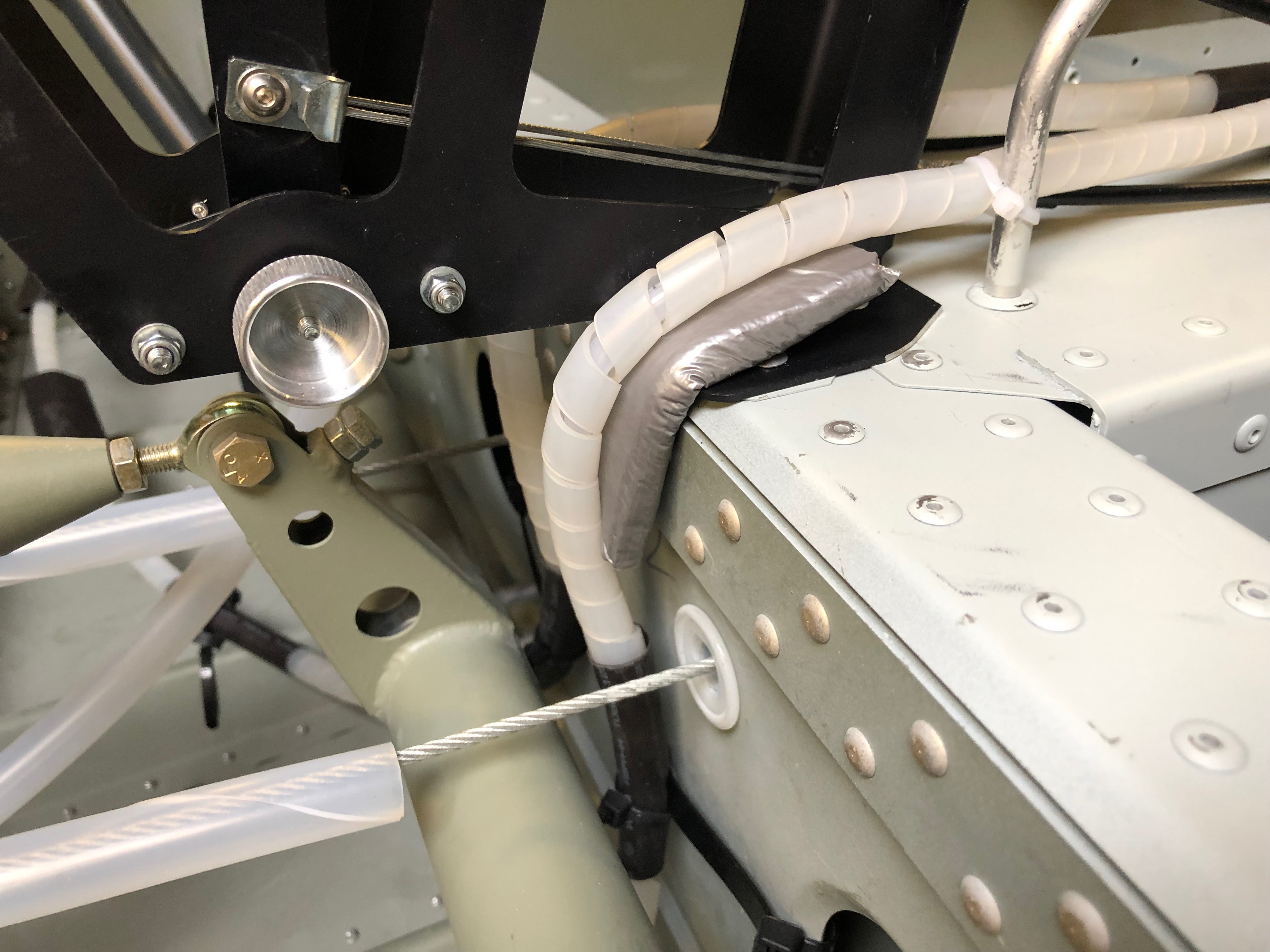
Looking at the pipe runs I found a couple of places where there is a chance of chaffing and possible pipe failure. I’ve secured a couple of pads over a sharp edge that should prevent failure in service.
A jubilant smile – it seems that this stage has taken ages to complete but Karen’s help today has really paid dividends.
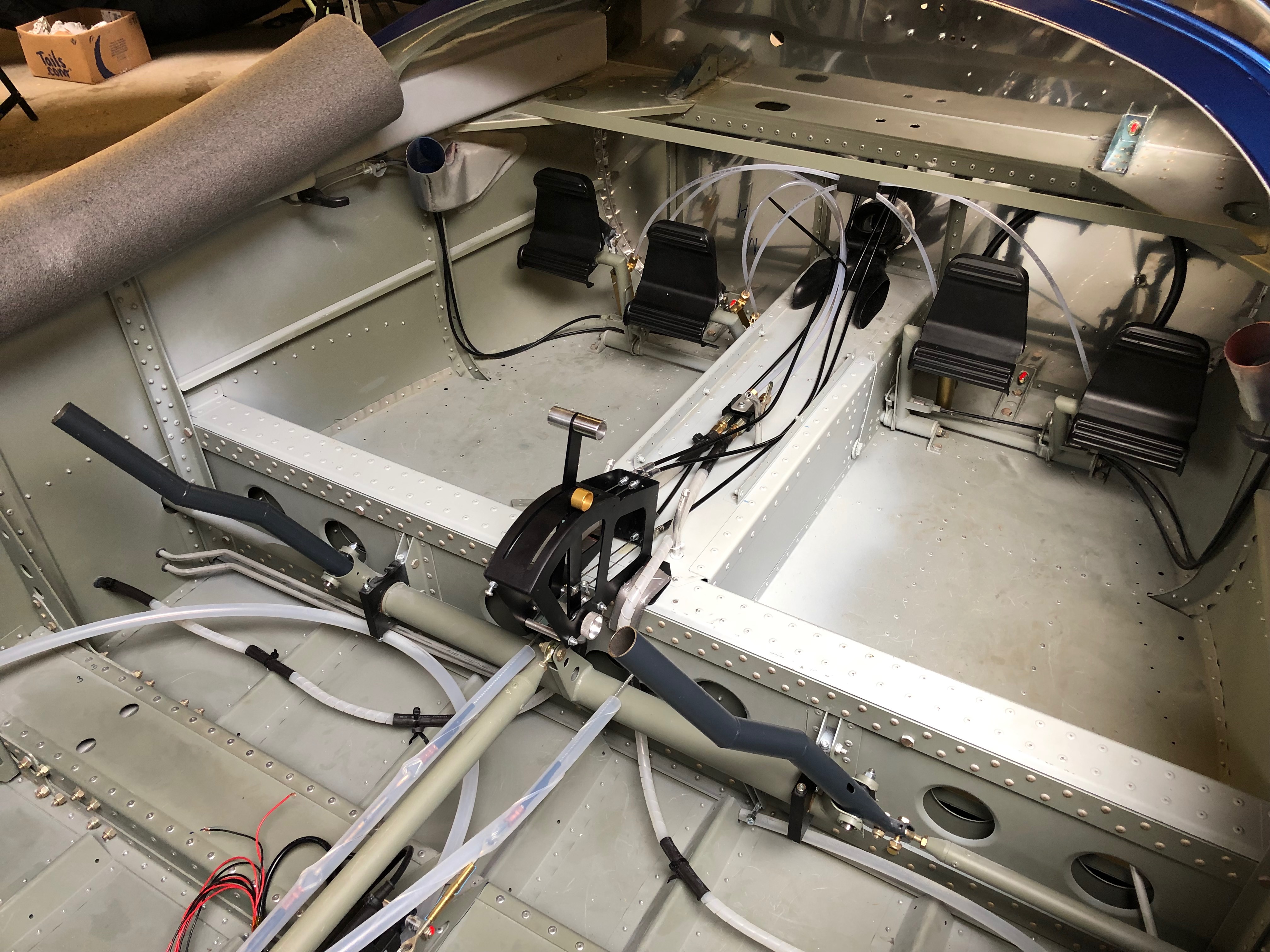
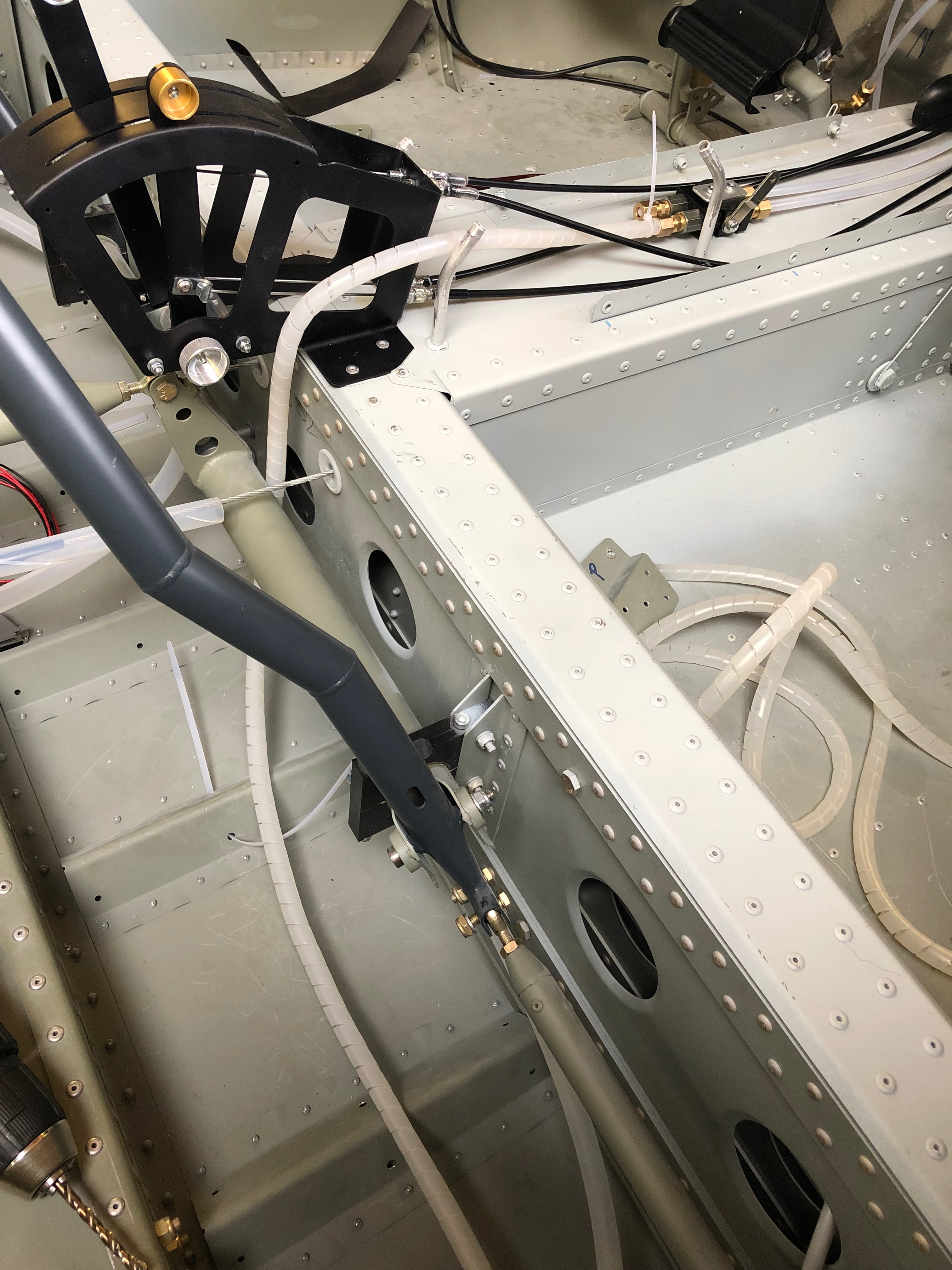
The finished brake pipework in the cabin, just need to run the pipes to the brake callipers which i’ll do on Monday.
Continuing the brake system installation that has turned out to be time consuming and a little frustrating at times as the brake pipes are so rigid that they are difficult to handle.
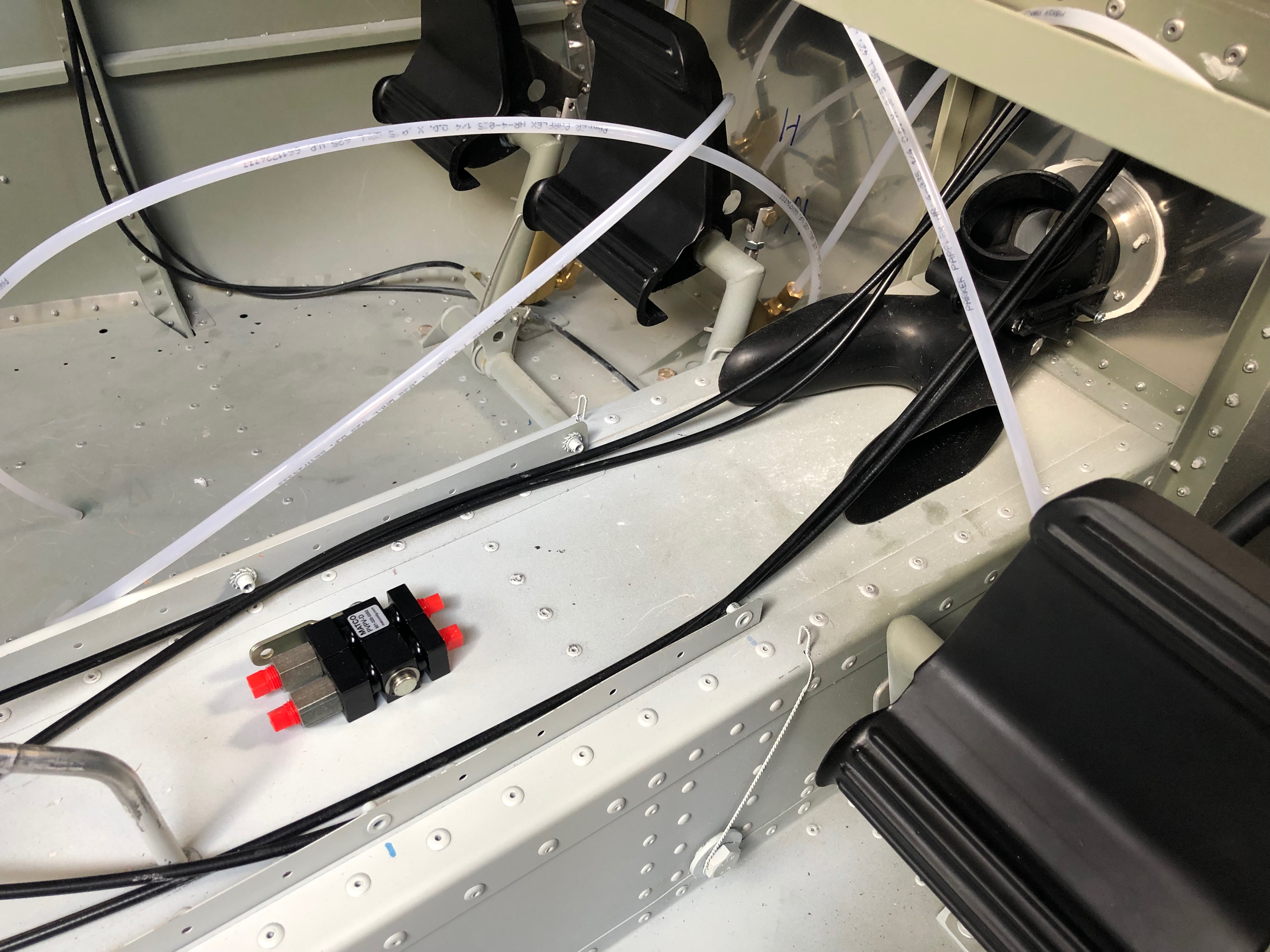
The tunnel is positioned to see how the park brake unit would sit on the airframe.
There is a service hatch on the tunnel moulding that allows you top access the pipework and park brake actuator when required.
All 1/4″ NPT brake fittings require Loctite 577 to seal the threads before fitting.
The complete unit ready for installation.
6mm holes are drilled for a couple of M4 rivnuts that will secure the park brake actuator.
The unit is sandwiched between a couple of pieces of anti-vibration rubber and an aluminium top plate and the secured with a couple of M4 x 40mm cheese head screws.
The installation so far. Such a straight forward piece of work but it’s taken ages to get this far.
Now the park brake unit is in place the pipework to the disc brakes needs to be run. The pipe is very rigid but it becomes pliable with some heat which allows it be moulded more easily.
The rigid pipe needs to be protected with a cover so I’ve used some cable spiral wrap which seems to work well.
Today’s saw a continuation of the brake system installation which has turned out to be quite a complicated, fiddly and time consuming task.
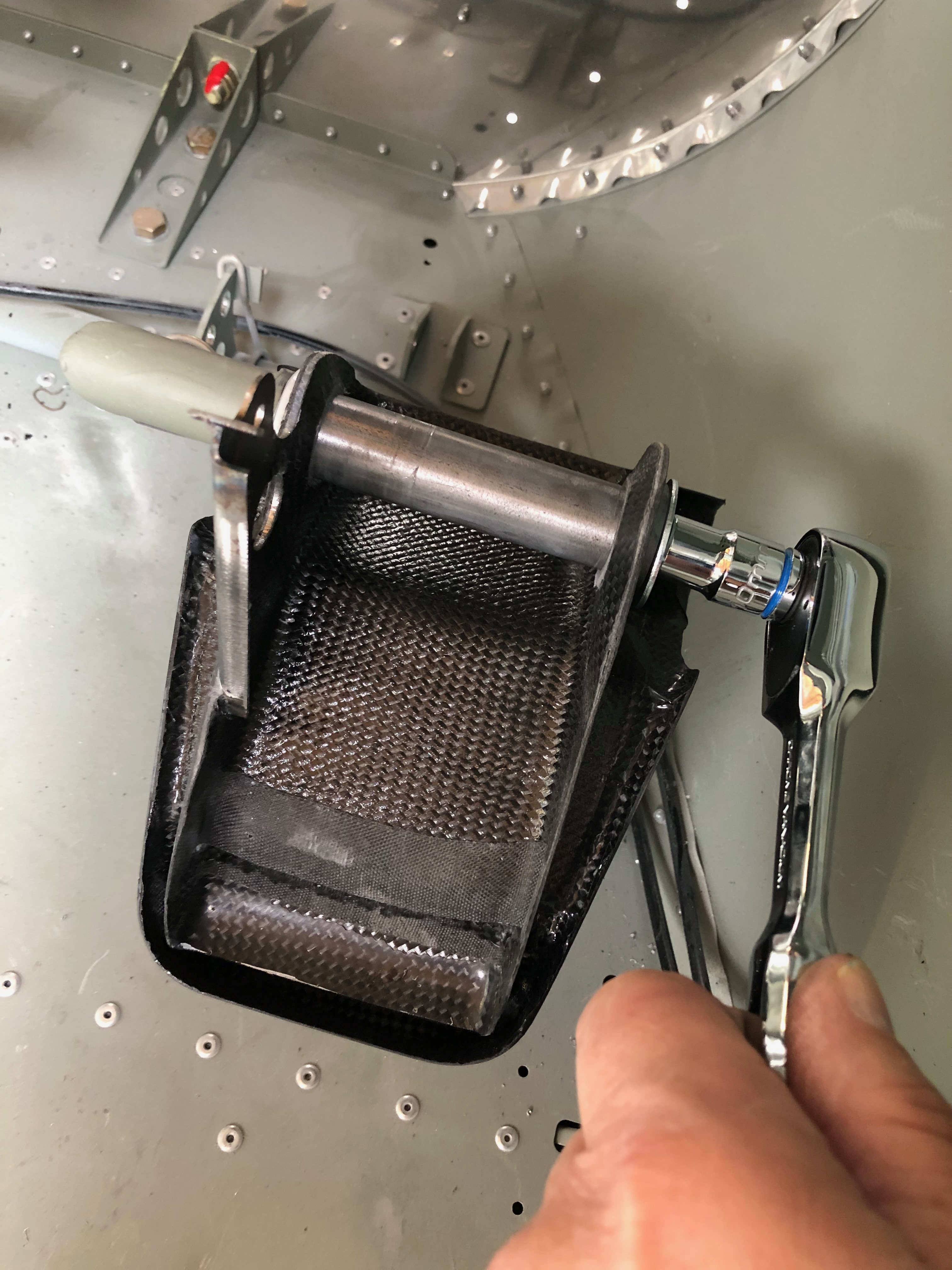
I wasn’t 100% happy with the installation yesterday as one pedal was tight on its shaft and there was slack in the top mount to the master cylinder. I decided to use a different set of washers which removed the slack and made a much better installation.
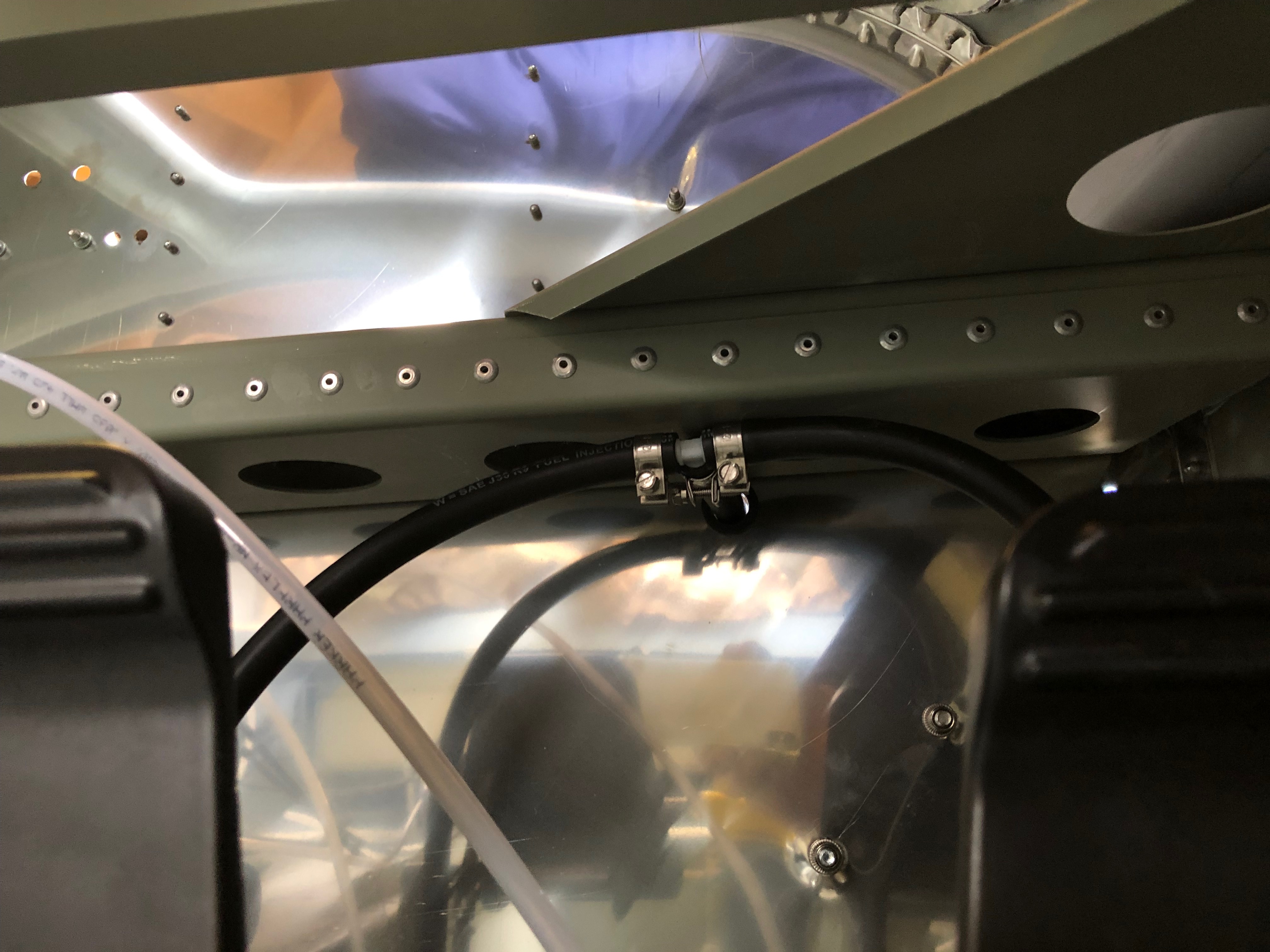
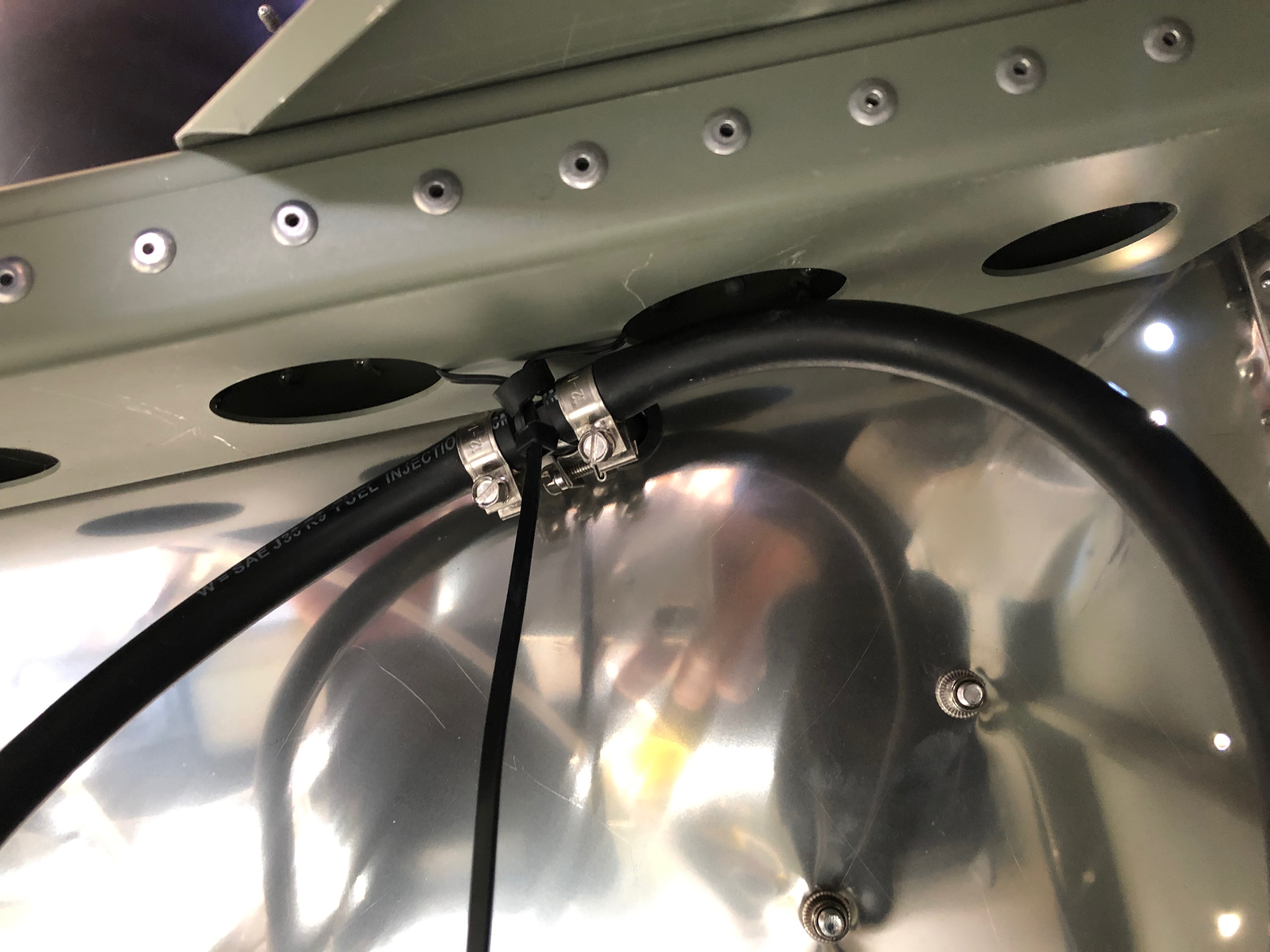
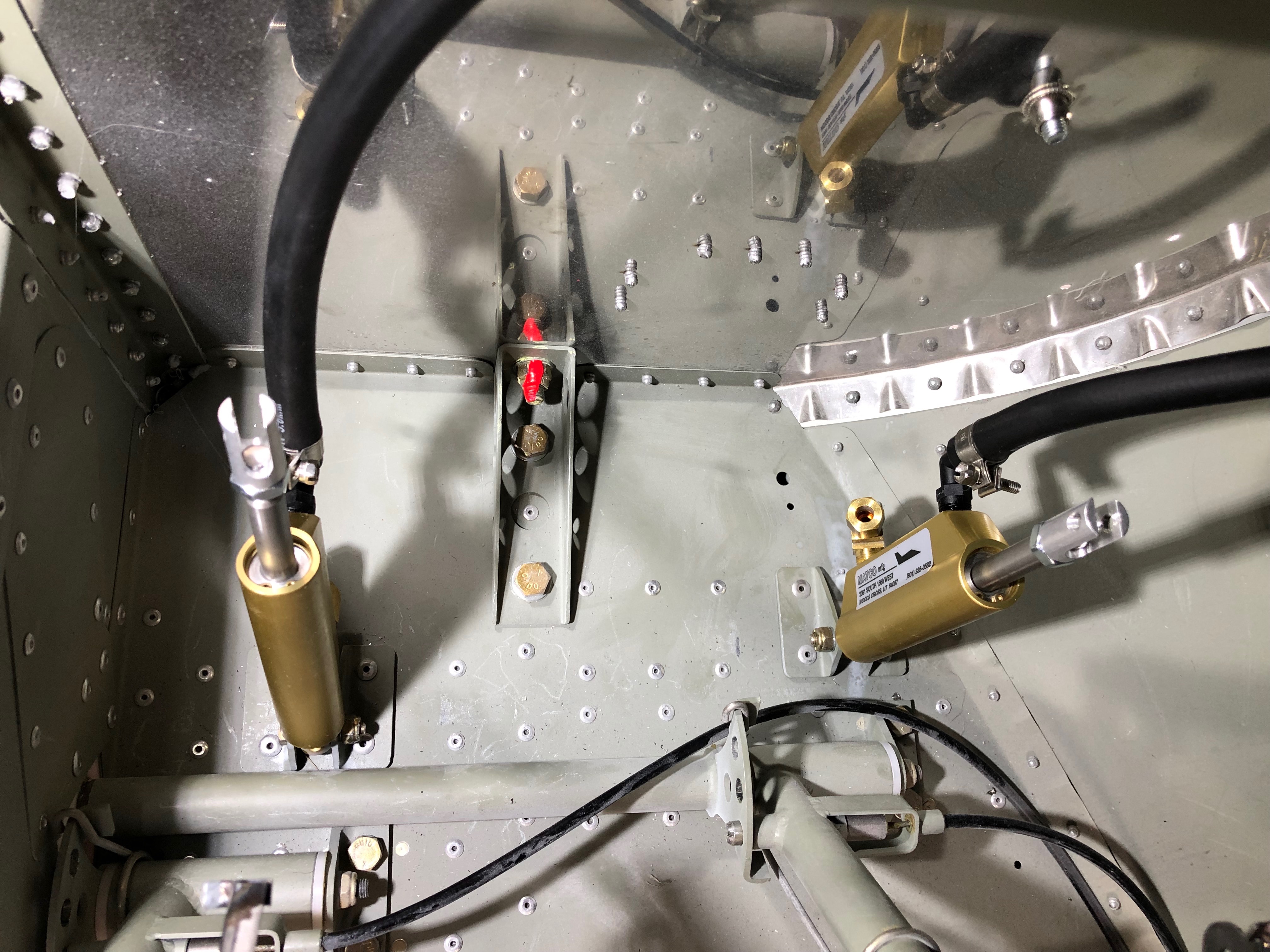
Now for the piping. The brake reservoir to master cylinder hose was installed.
A stand off is used to prevent it moving when the brakes are operated.
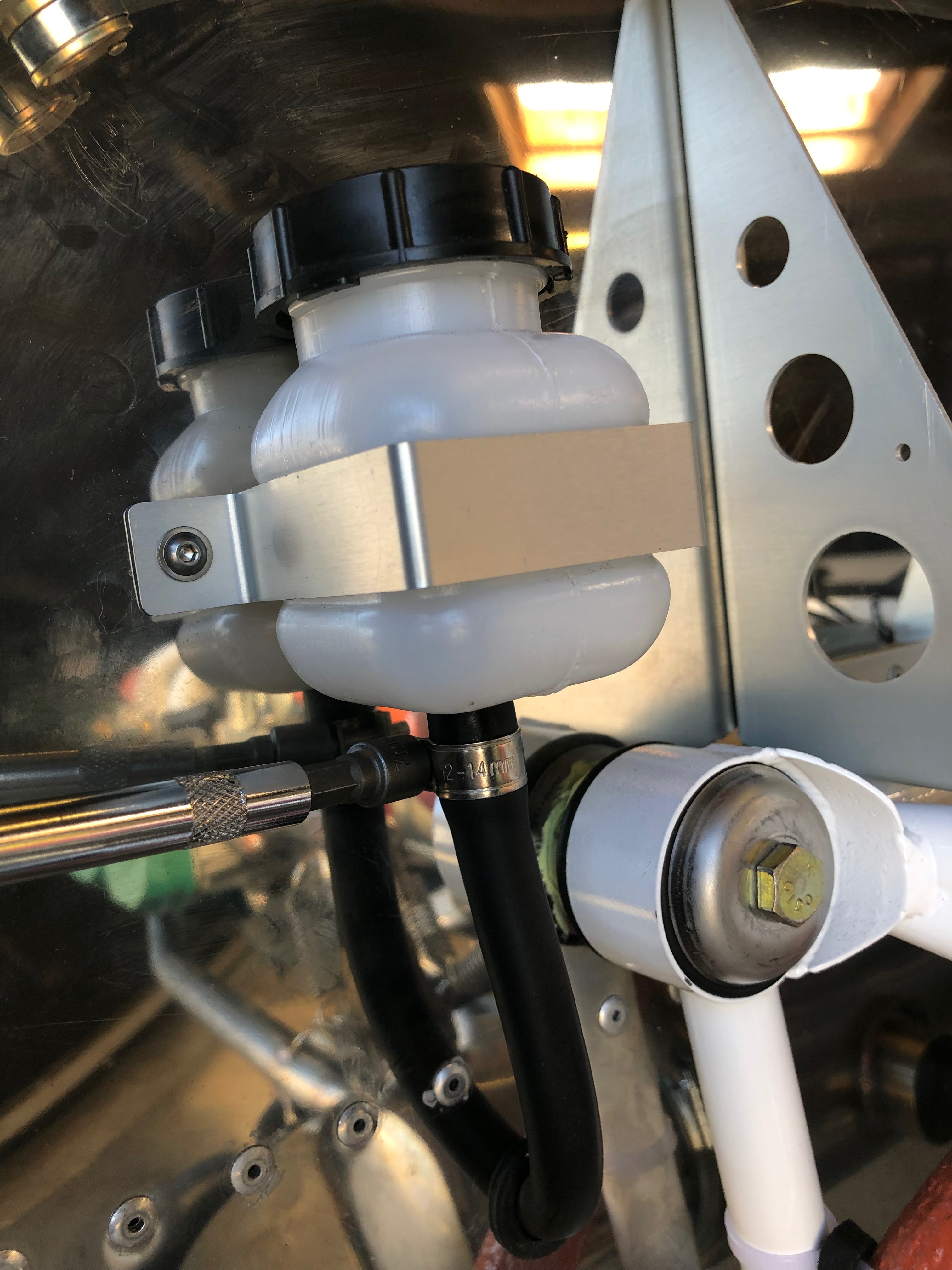
The brake reservoir bottle is connected.
The support bracket has a lining of rubber applied to make sure that the bracket doesn’t damage the bottle itself.
The bottle is clamped to the firewall and the pipe clamp is tightened.
The installation so far. Doesn’t seem much for a one and half days of work but the installation needs a lot of thought to make sure that the pipework and pedals aren’t fatiqued when operated in service.
Tomorrow’s task will be to install the park brake and the remaining brake pipes.
As I’ve now ordered the avionics for the build I thought I’d make a mock up of the panel and see what it looks like in the plane.
One of the jobs left over from the fuel system install was to fit a 1/8″ NPT blanking plug in the top of the gascolator. Luckily Ian Daniels had one spare. Loctite 577 was applied before tightening.
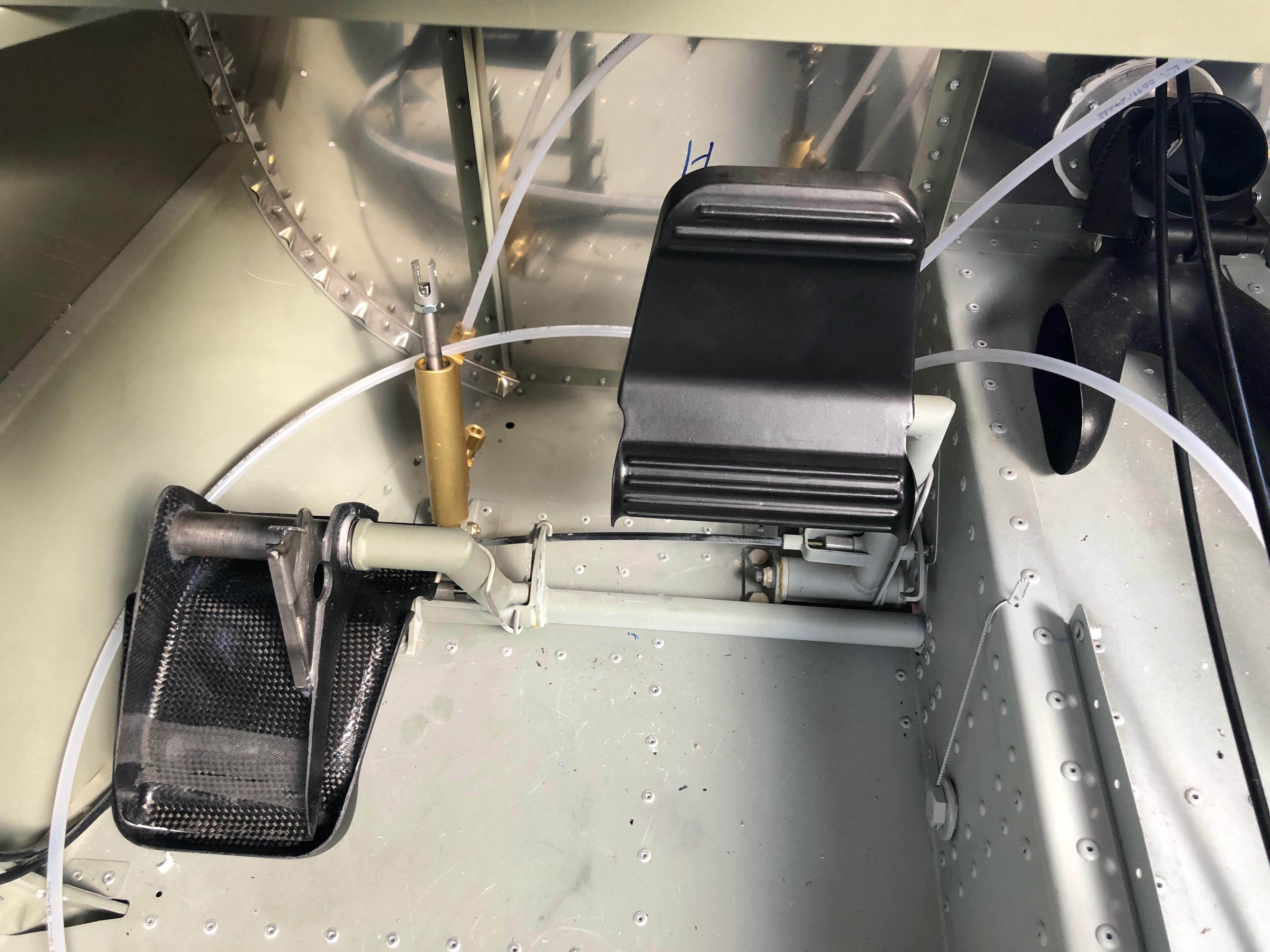
Next up was to start the install of the brake system. The picture shows the components that make up the system. I ordered hydraulic brakes with the parking brake option.
The brake sub assembly is made up outside the plane as it’s quite difficult to work in the front of the fuselage in the space behind the pedals.
The master cylinder fittings are added and threads sealed with Loctite 577.
The brake pipes are cut to size and added to the fittings to test the assembly looks right.
The brake pedals are added and secured with an M6 bolt and 30mm washer secured with Loctite 243.
All four rudder pedals in place.
The master cylinders are fitted next using a m3 bolt and nyloc.
After some exciting skiing in Val Thorens it’s back to work. Whilst I was away I planned my weeks ahead based on what’s left to do. Some small jobs to get me back into the groove.
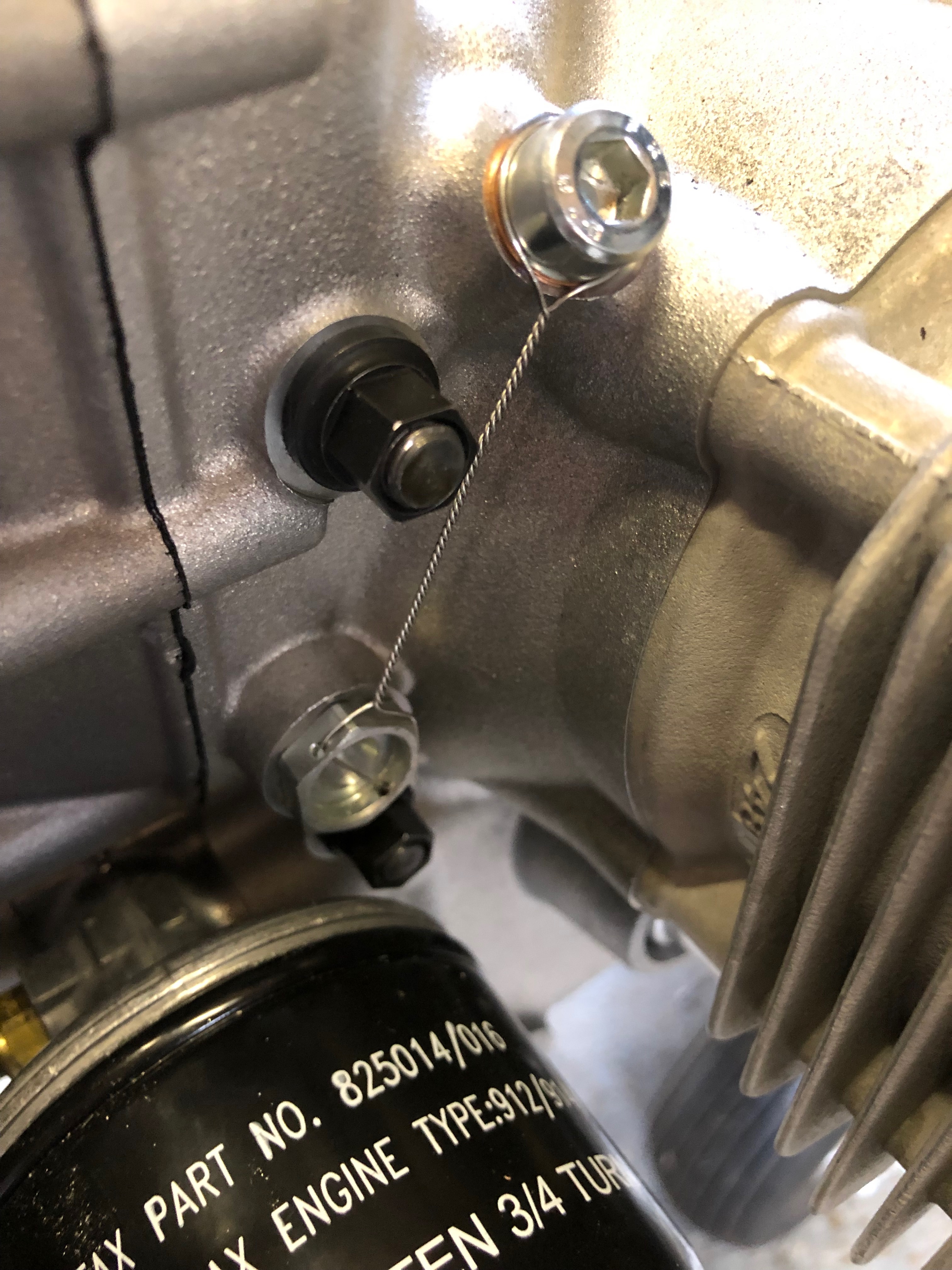
The magnetic oil plug needs to be checked for debris. If any large pieces of metal are stuck to this it’s an indication that there is a problem with the engine.
Once checked the plug is refitted and locked to prevent it from coming loose whilst in operation.
The oil drain banjo underneath the engine also needs to be wire locked.
A job leftover from fitting the canopy locks is installing the centre canopy release mechanism.
Holes marked and drilled.
A rivnut is installed and the mechanism is secured. Once the interior panels are fitted the operating wire will be fitted.
When Chris came down he helped me install the electric aileron trim servo. Now it’s time to install the Elevator trim mechanism. Chris had already attached the clevis, pin, split pin and had cut the threaded rod which cuts some of the work I have to do.
The first thing that needs to be done is to set the trim motor to its extremes so it can be set at midpoint.
The midpoint is 8.5mm which is set by connecting to a 12v battery to move it to that position.
The servo is temporarily installed with Clecos, the other clevis is attached and adjusted so the trim tab is inline with the elevator.
The Clecos are removed and M3 screws, nylon washers and nylocs nuts are used to secure the servo.
Once correctly adjusted the pin and clevis is secured with a split pin.
Loctite 243 is applied to the threads…
and the nut is tightened up against the clevis.
Following the build of my Bristell NG5 Kit No. 382 Registration G-MLSY














 G-MLSY