Category Archives: Panel

Thursday 20th June 2019

Music: Gerry Rafferty and Daily Mix.

A lot to do today, as every day! When the delivery arrived I found that some of what I had ordered was out of stock. It’s not a big problem as there are lots of other jobs to do. So I’ll wire up the power side of the system and label, install and test the radio and transponder coax cable.
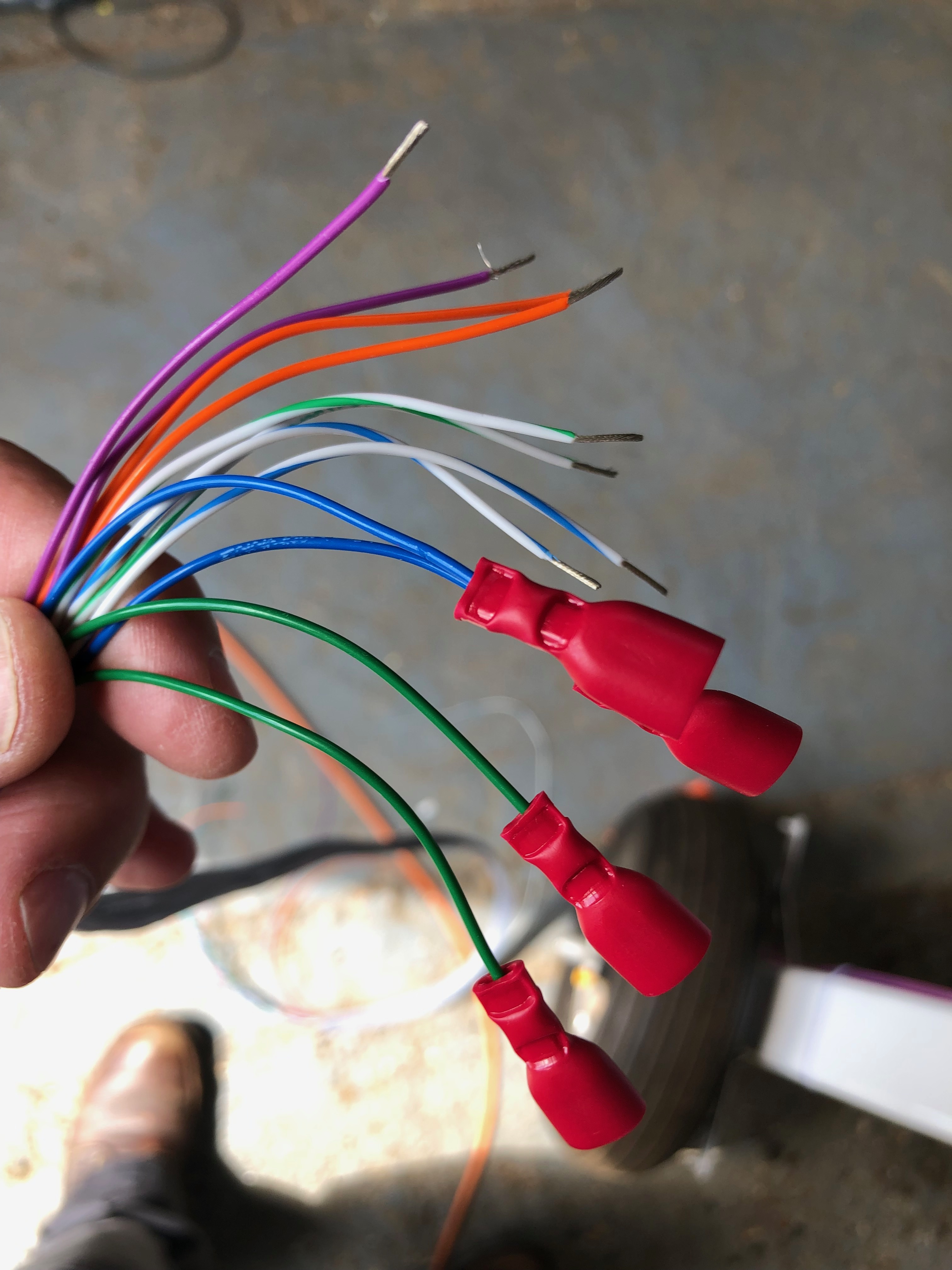
Time to wire up the power side of the electrical system. I’m reusing the wire that I have leftover from the other circuit wires that were trimmed back. There’s plenty to do the job although not a unified colour as long as they are labelled it will be ok.
My new friend. A Dymo Label Manager 200 that I bought some years ago. It’s been invaluable and luckily I managed to get some label cartridges.
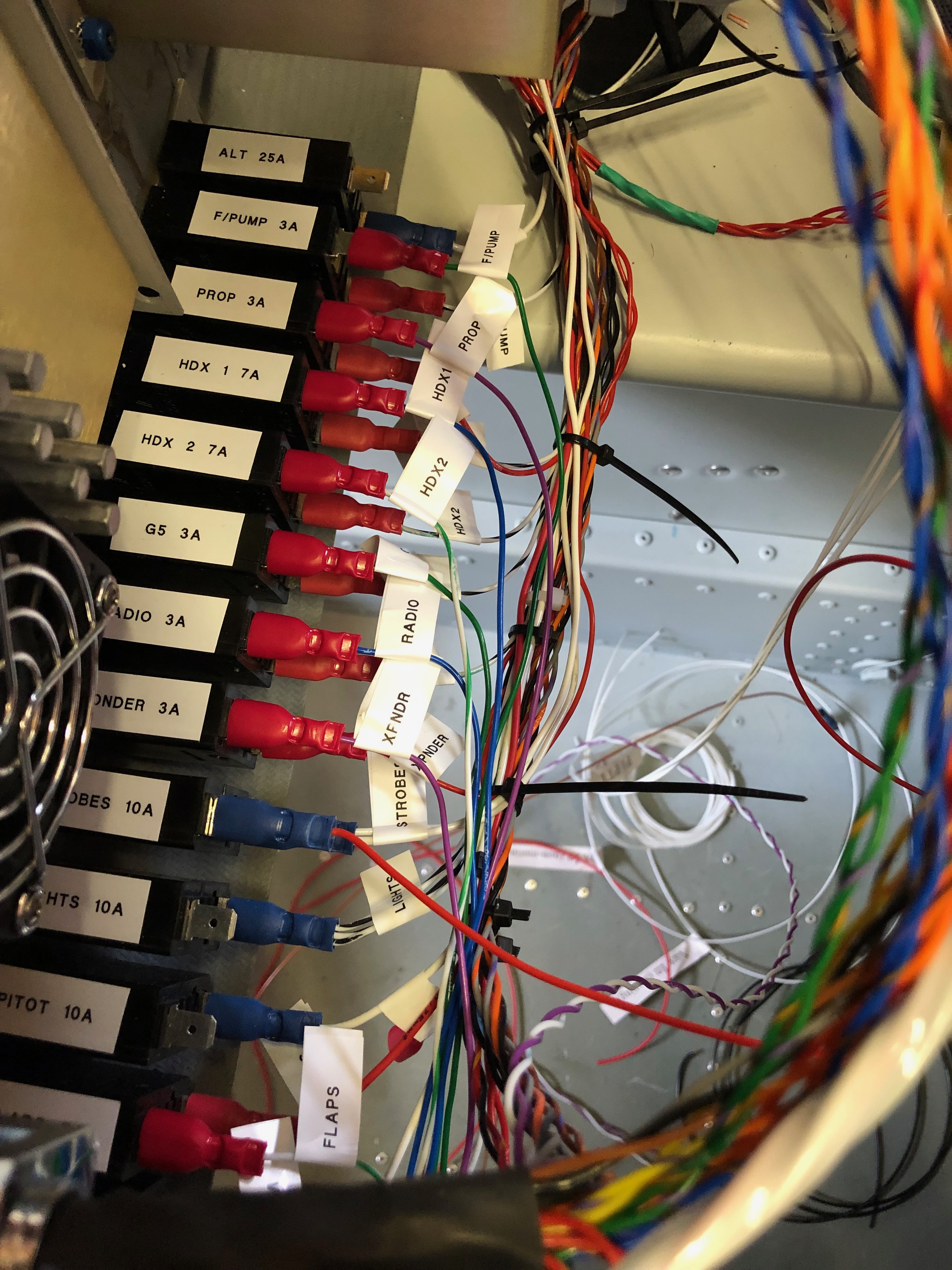
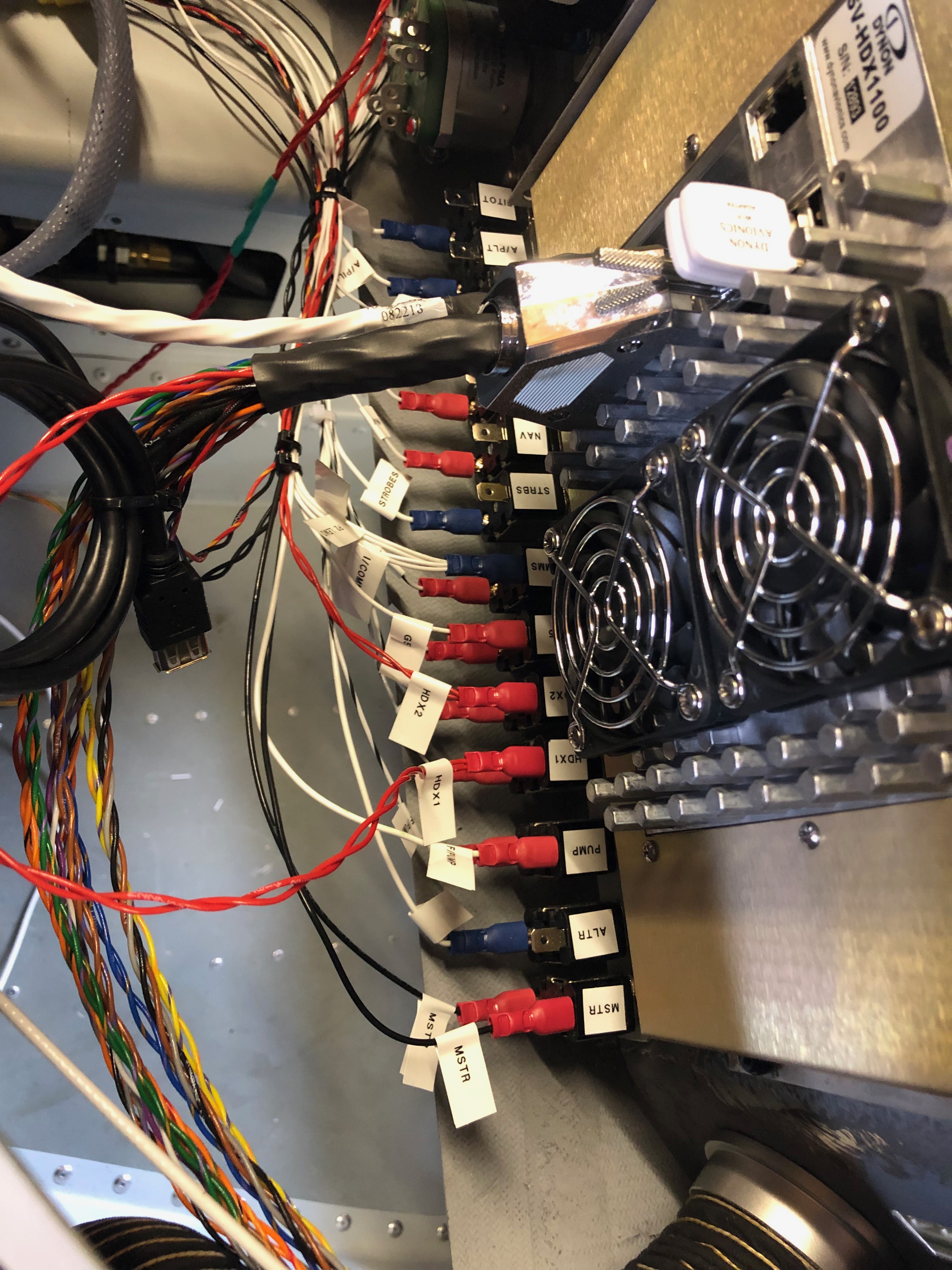
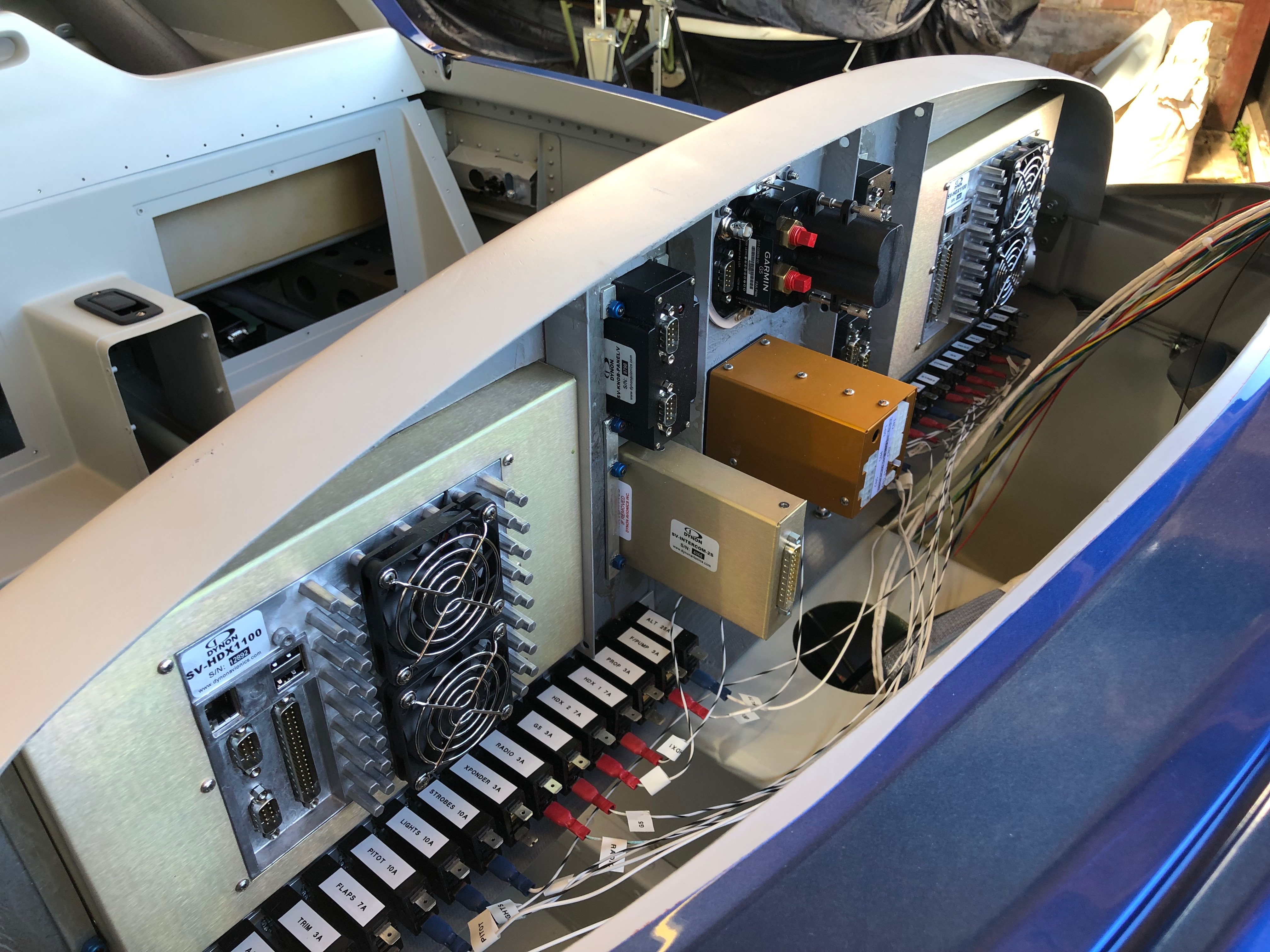
The +ve bus with 11 of the circuits completed.
The circuit breakers connected, some tidying will be required but it’s mostly complete.
The complete panel powered up for the first time. The system shows a 7 amp power drain which is roughly what I had calculated.
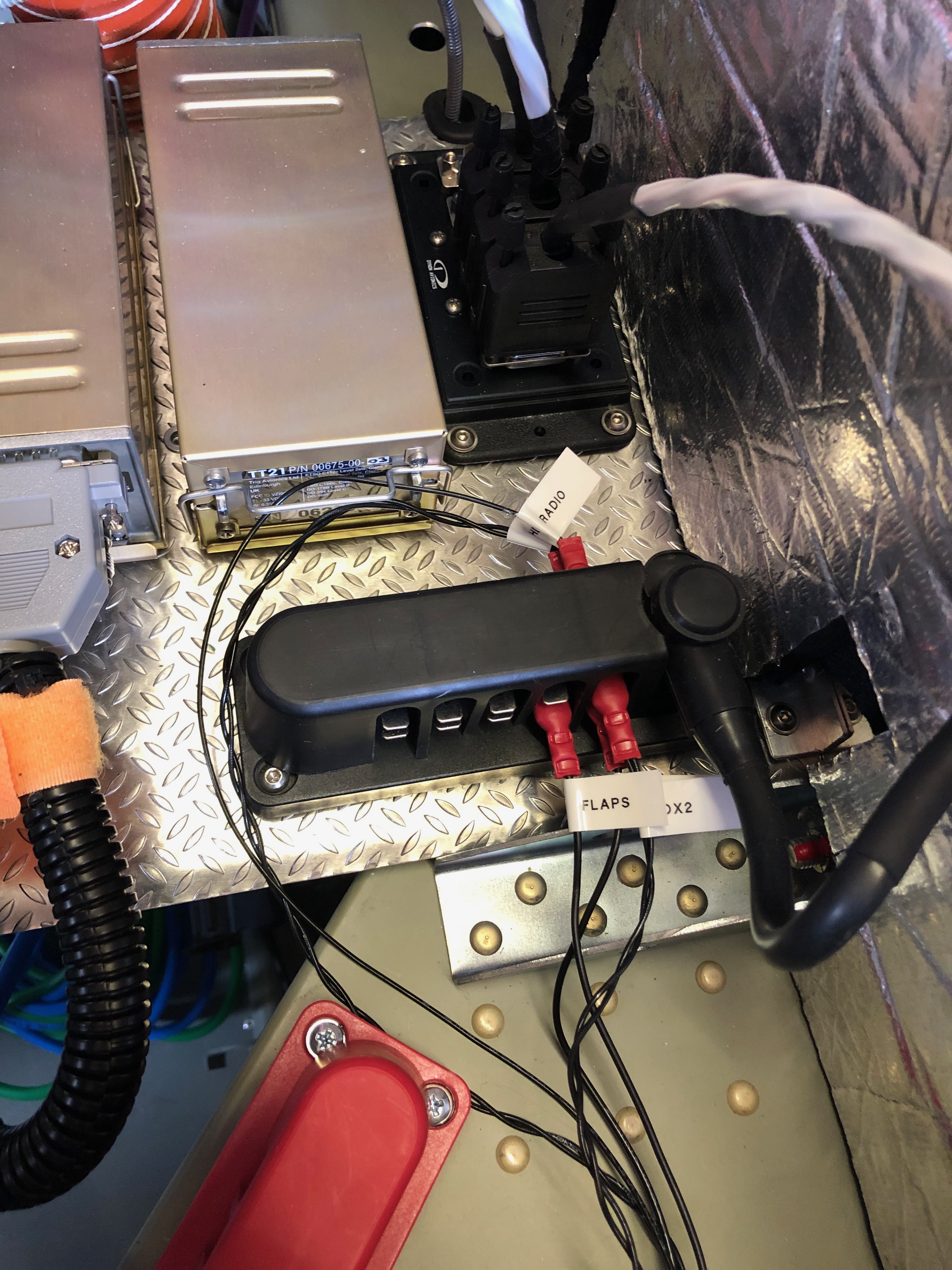
My DPD delivery was a day late but got delivered at 10am so I could get on with the wiring of the Transponder and Radio with the coax.
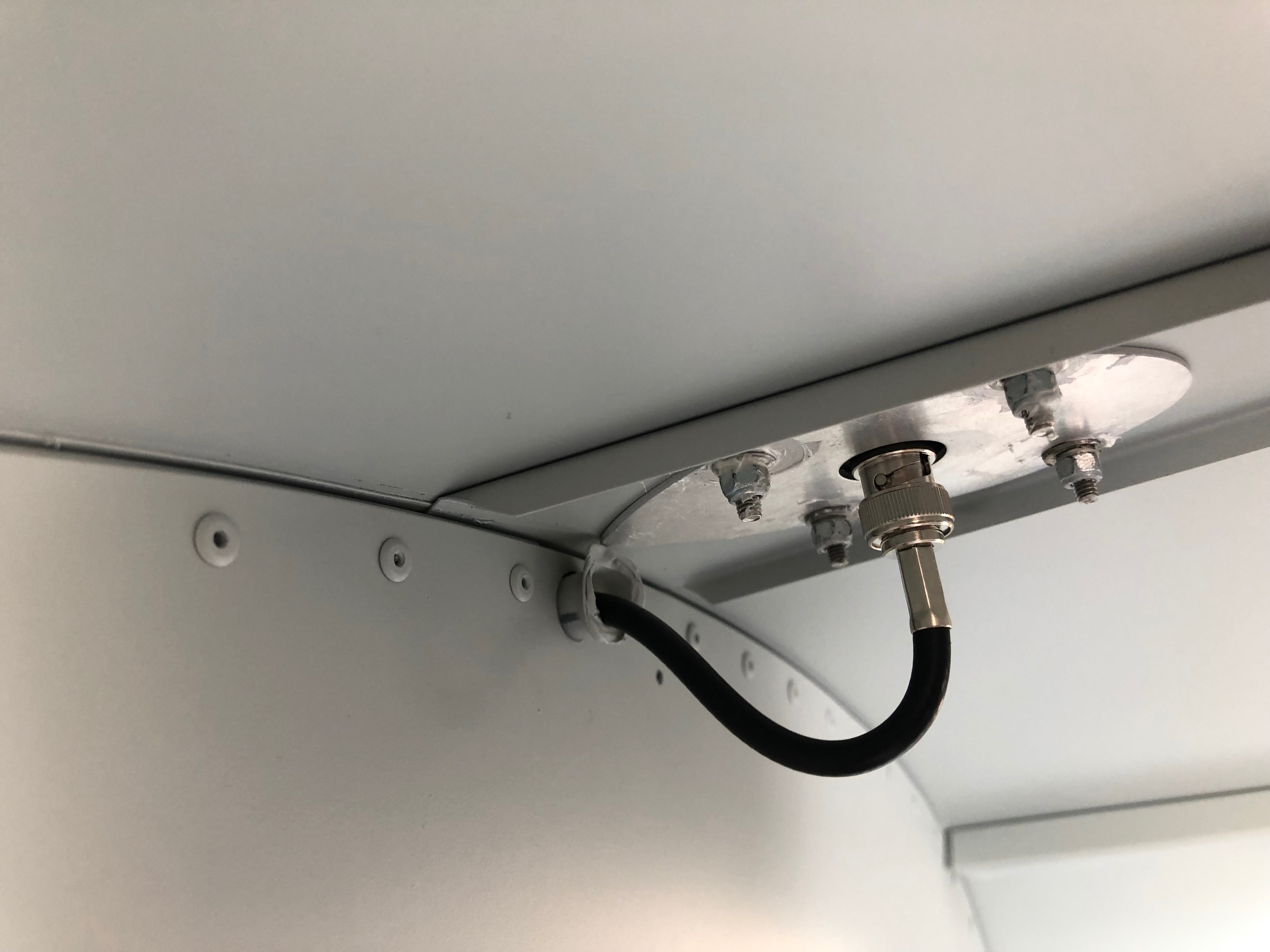
The radio coax cable runs through conduit in the fuselage and is terminated with a TNC connector that I’ll do tomorrow.
With all the cables protected with sleeving or conduit and secured in place I can fit the interior trim.
The rear of the cabin. I’ve checked the radio/headset loom and it works fine so I need to mount the LEMO headset connectors and then I can fix the interior panels.
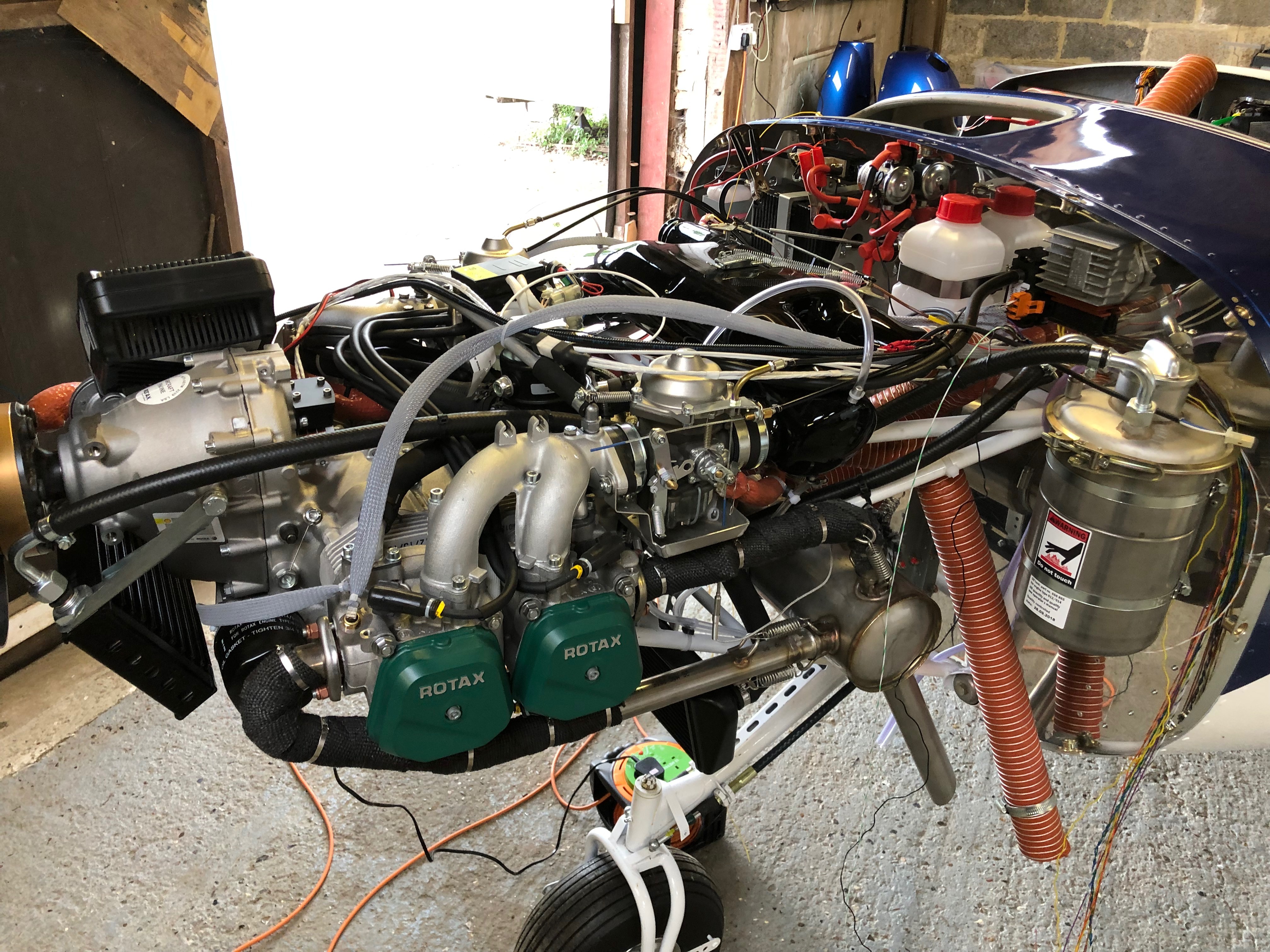
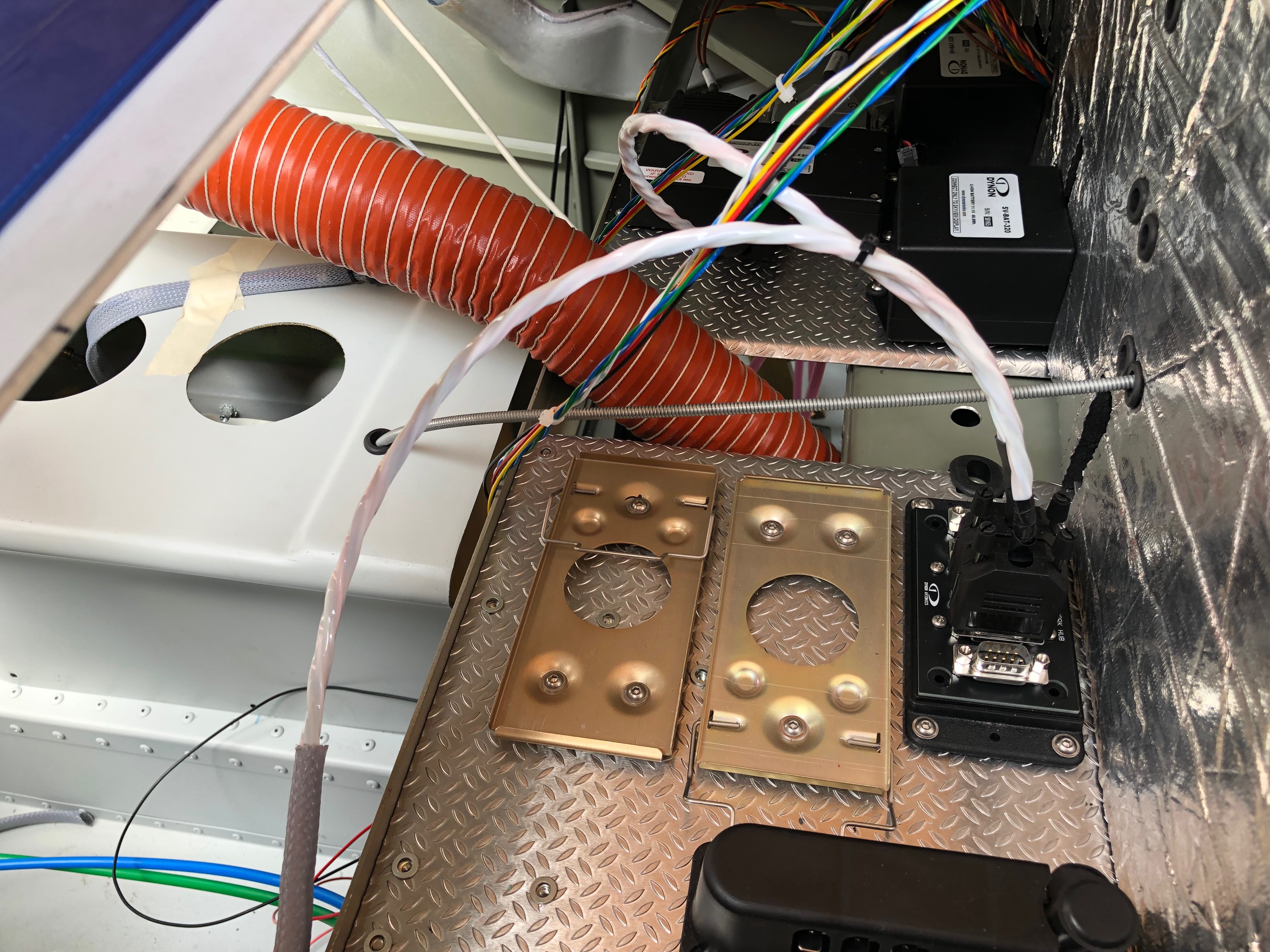
Right side of engine. All the sensors are connected except the Tachometer, soft start module, magneto wires.
Left side of engine.
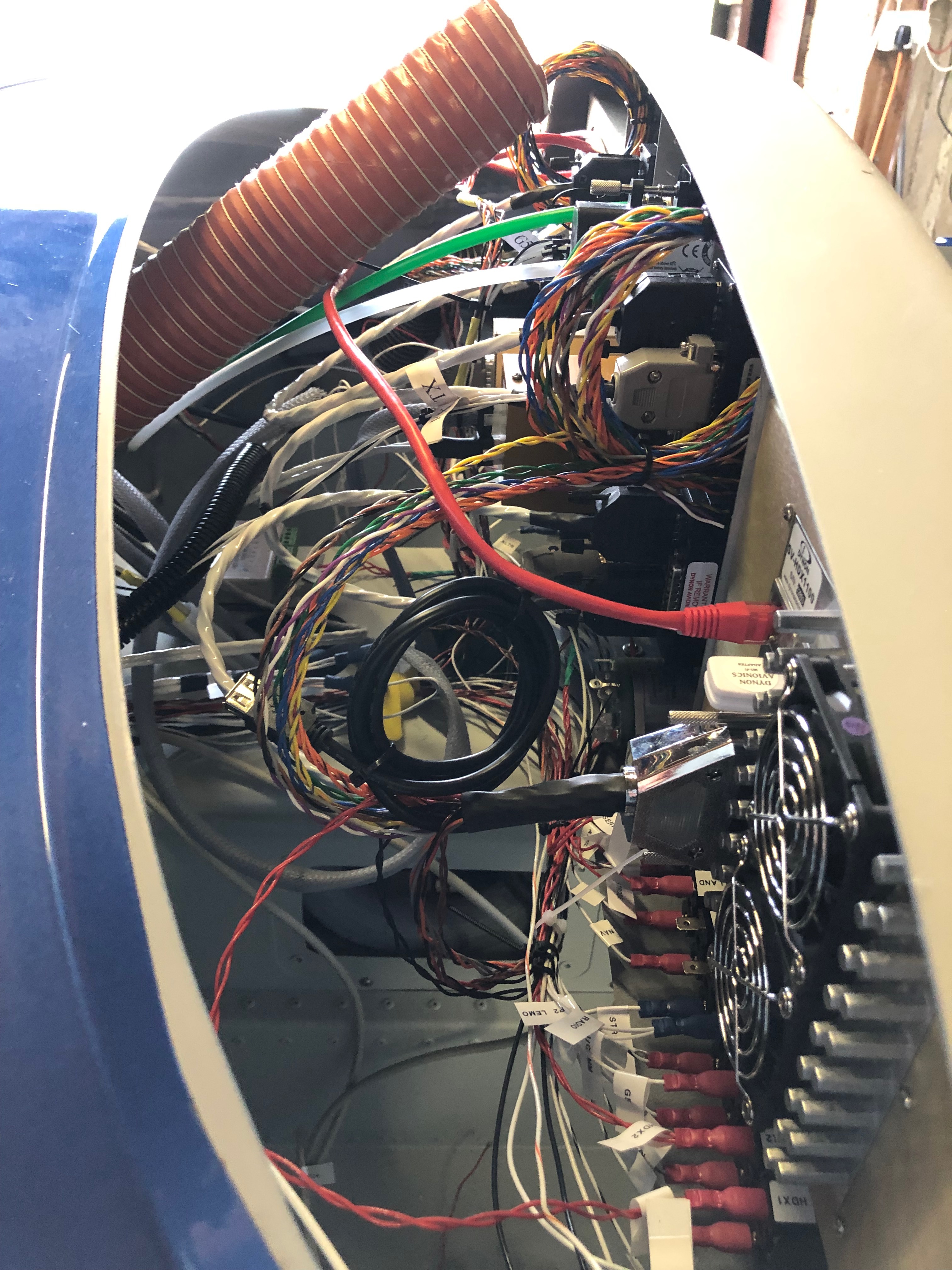
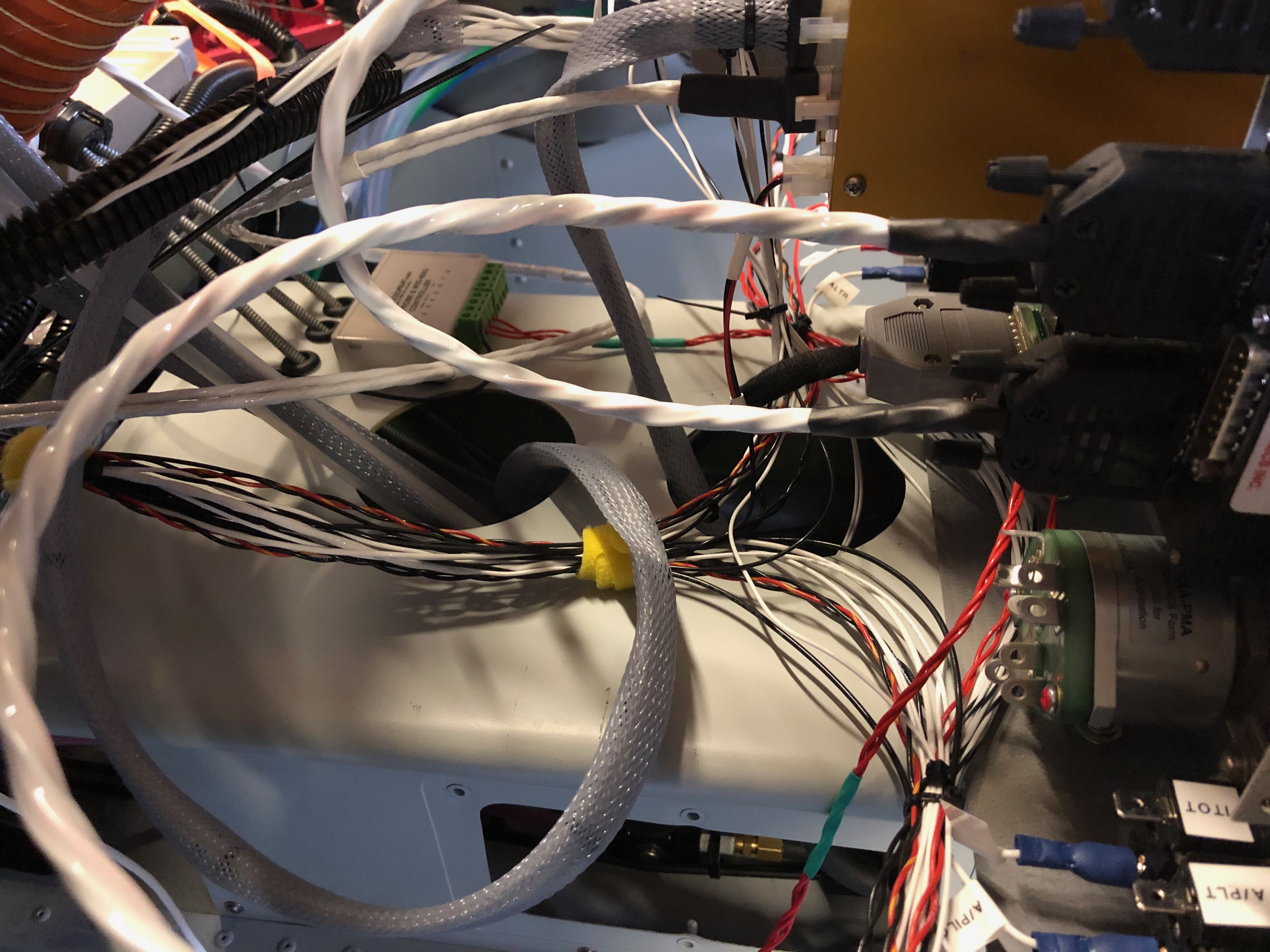
Looks a bit busy but with a bit od tidying it will look a bit neater. Quite pleased with the progress so far.

Wednesday 12th June 2019

Music: Ed Sheeran and Turin Brakes

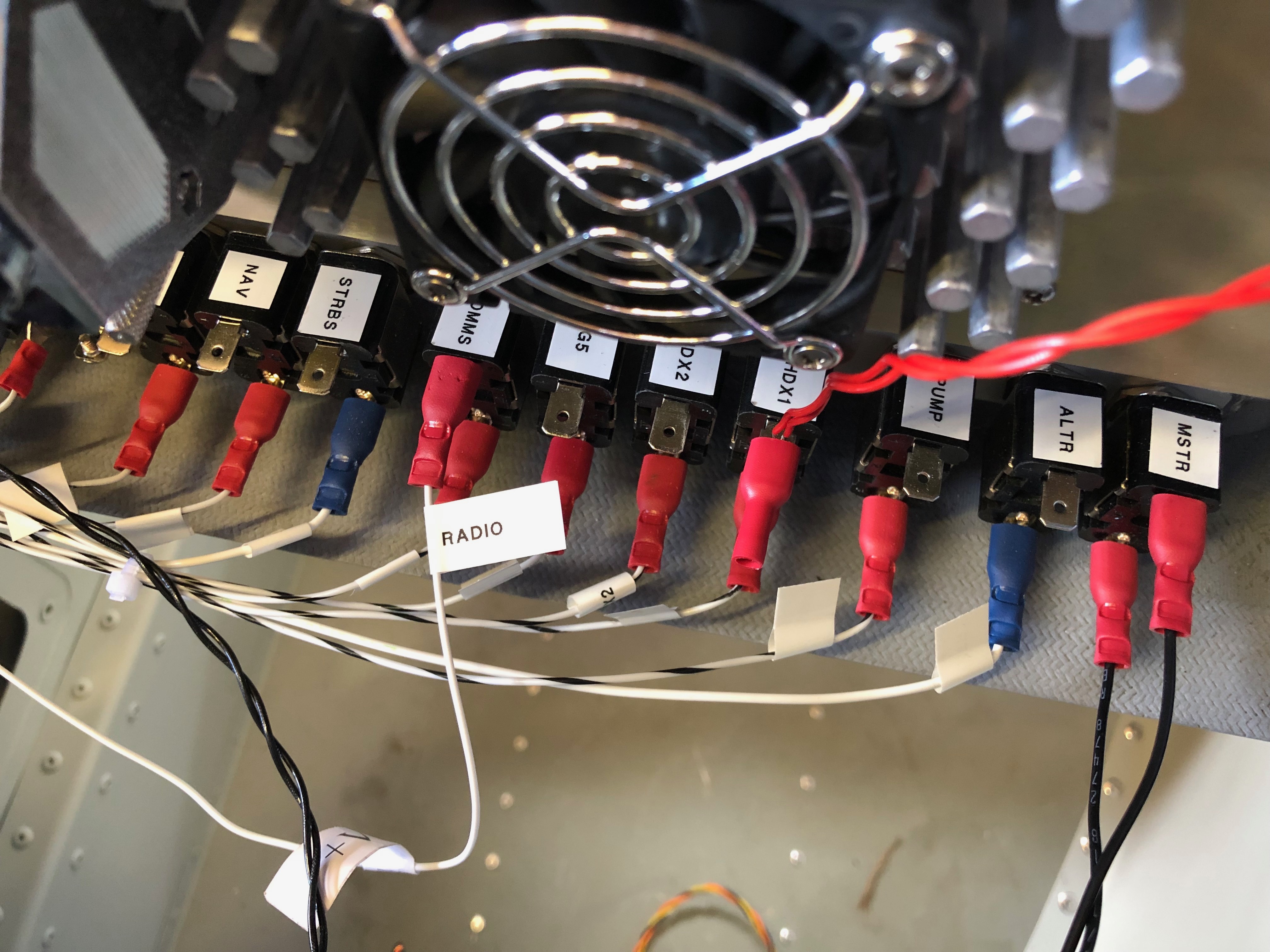
Work continues on the wiring today (and no doubt for a few days more but got quite a lot done today having completed the Master, Fuel Pump, HDX 1, & 2, G5 and Radio circuits.

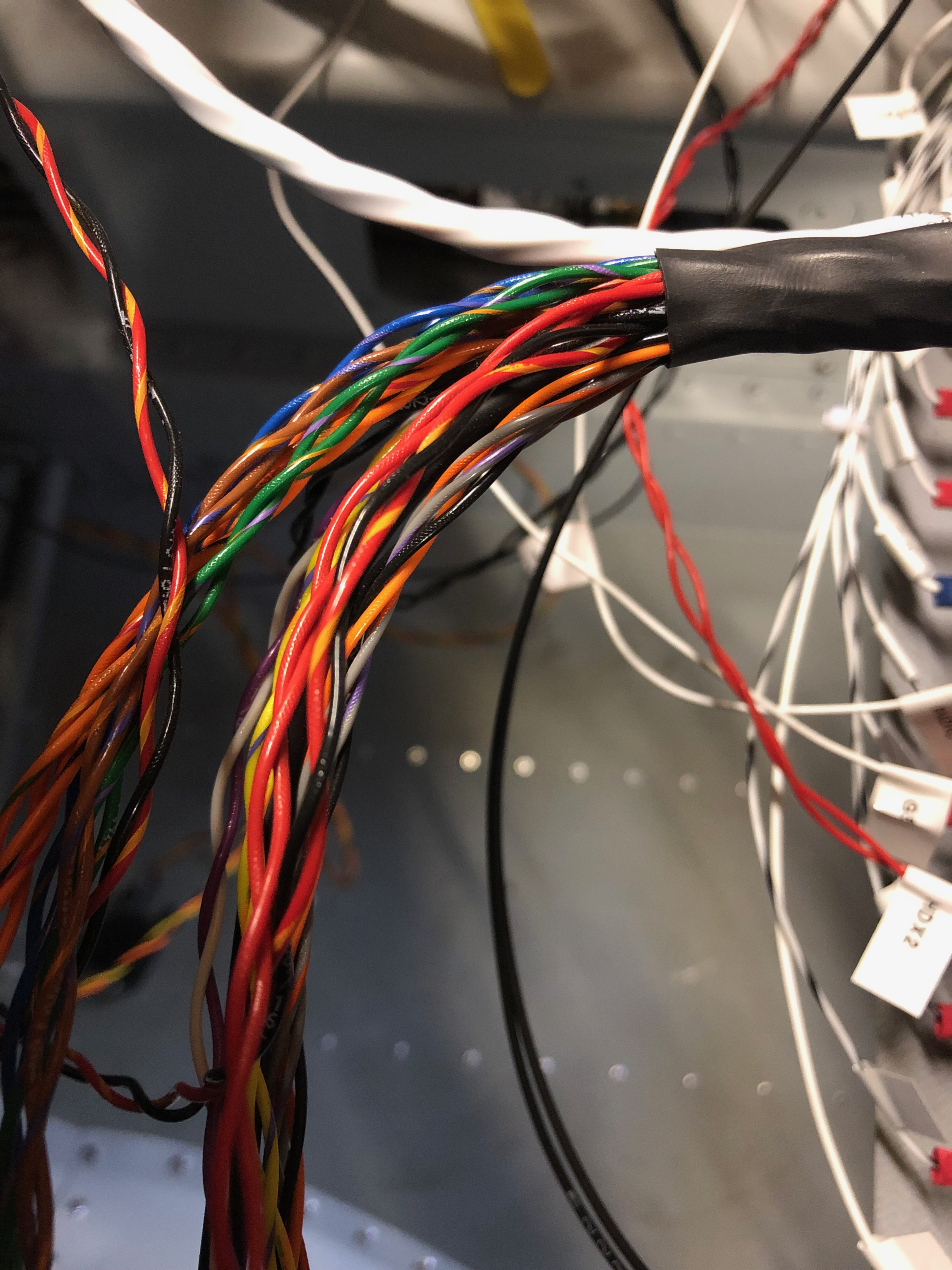
This is the loom for just one of the SkyView HDX screens. It looks intimidating on first looks but they all do something and you just have to work out where they go!
The difficult bit was designing the electrical circuit to power all the devices. As I’d fitted the circuit breakers and switches and fitted the interconnecting wires it makes it quite easy to complete the circuit.
It’s getting quite busy…
so I’m starting to arrange the wire bundles in an orderly fashion as planned.
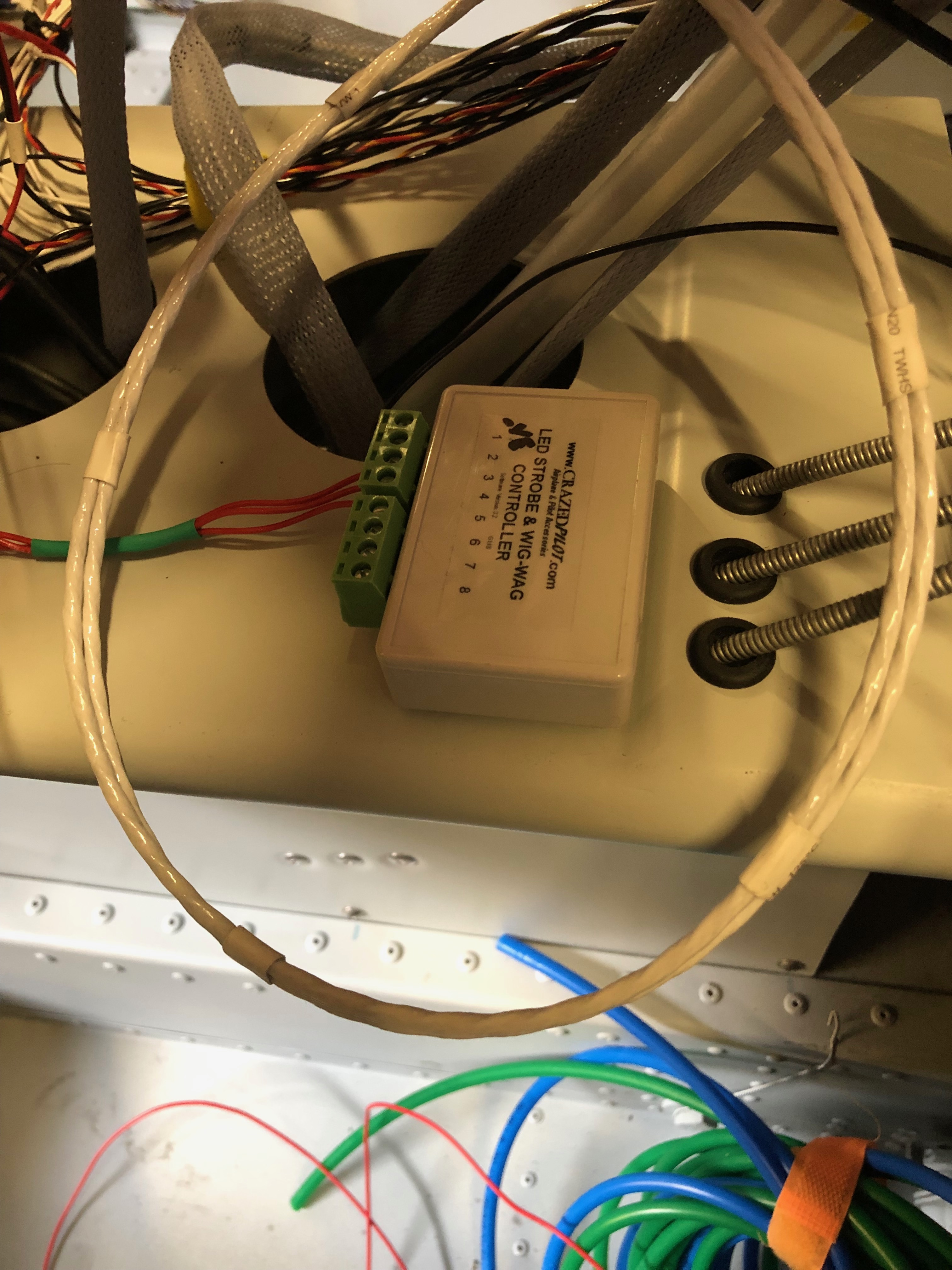
This is the Wig / Wag controller that I bought from the states to give better visibility whilst flying. It allows the landing lights to be steady, flash alternately or flash like a strobe. Just hope it works as promoted!

Tuesday 11th June 2019

Music: Röyksopp and Dido

It’s time to do the wiring. This is going to be long job as there are wires all over the place! There are some things that must be done to make sure that it’s maintainable in the future like labelling as it’s easy to lose track of where wires are going from and to and obviously it’s got to look neat and tidy. First thing is to look at suitable routings for the bundles and make sure they make ‘sense’ then start laying them out. This is one of those jobs that you just have to keep going at and eventually it’s finished!

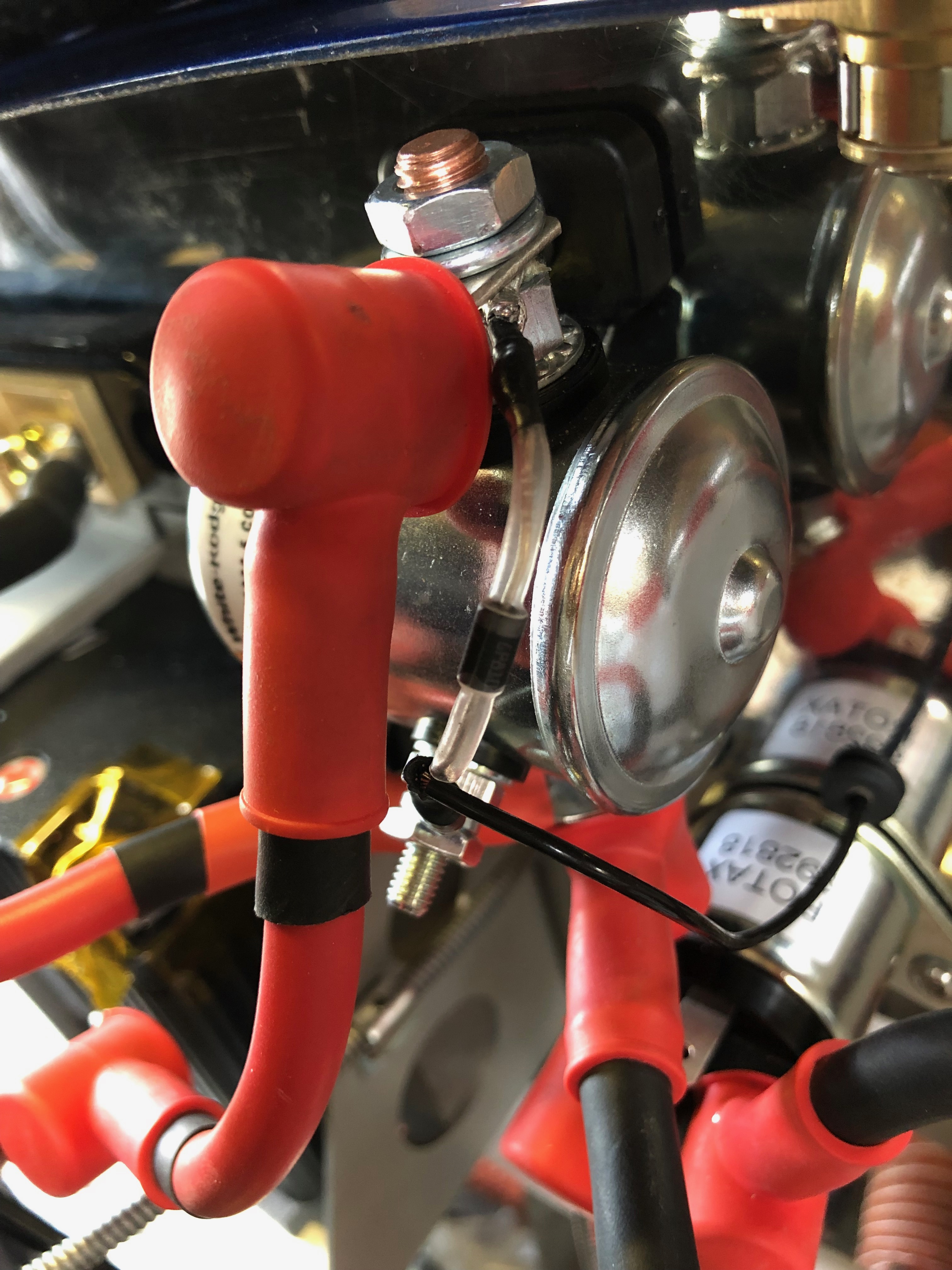
First up is to protect from reverse currents when the master switch is turned off. This is accomplished by placing a diode across the positive and negative posts on the battery contacter.
It looks a quite simple but it gets the job done.
One of the easy jobs is to run all the ‘earths’ back to the earthing block. After terminating each wire with a insulated female connector a label is attached to the lead. These are just printed off a electronic dymo babbling machine and seem to be suitable for the job.
Once the earth is connected, a quick check of the circuit logic and then I can temporarily power up the circuit.
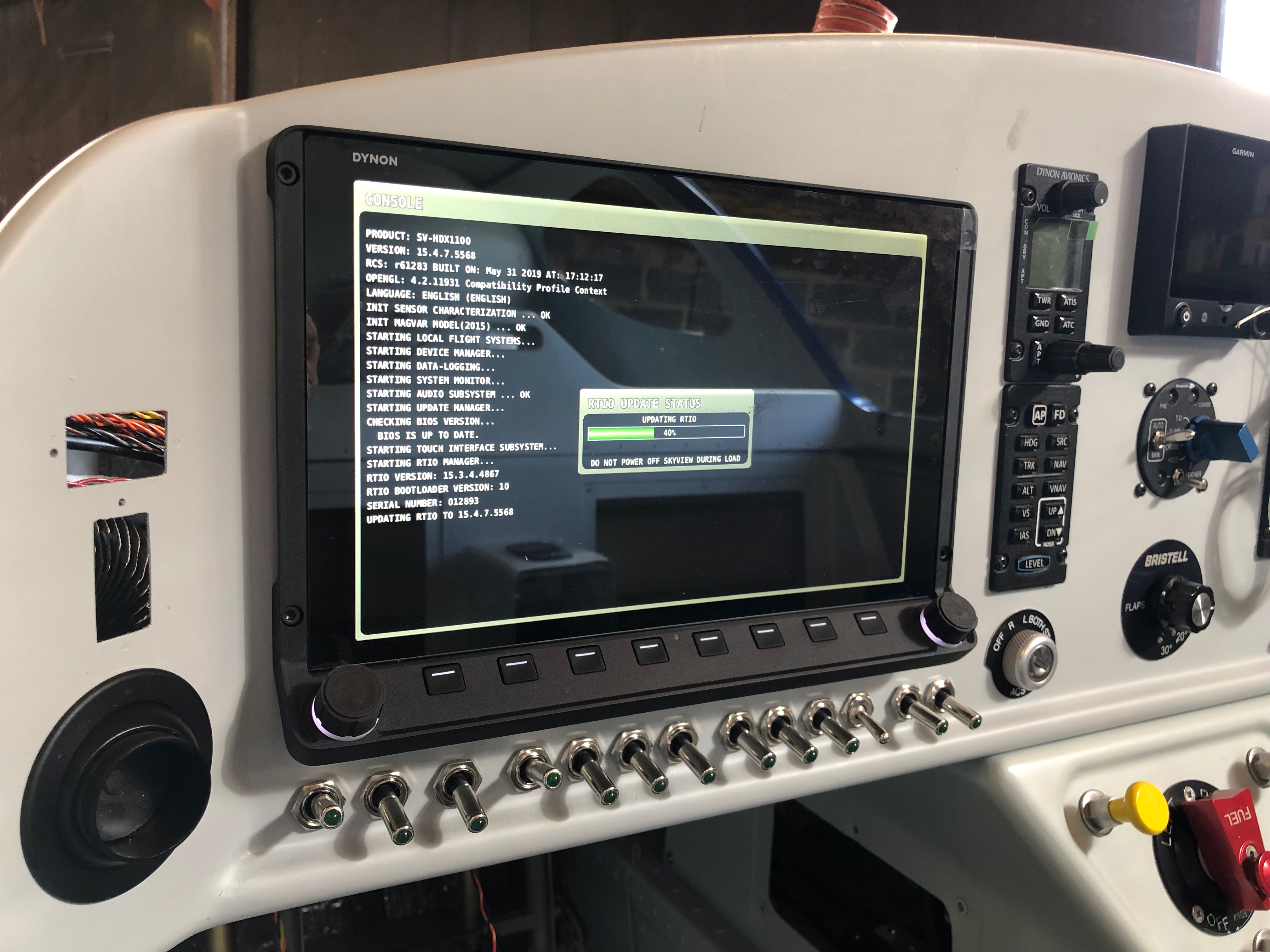
Whilst the screen is powered up on main power I thought I’d update the system software to the latest version. The software has a boot loader that updates all the other attached devices like the autopilot and knob panel.
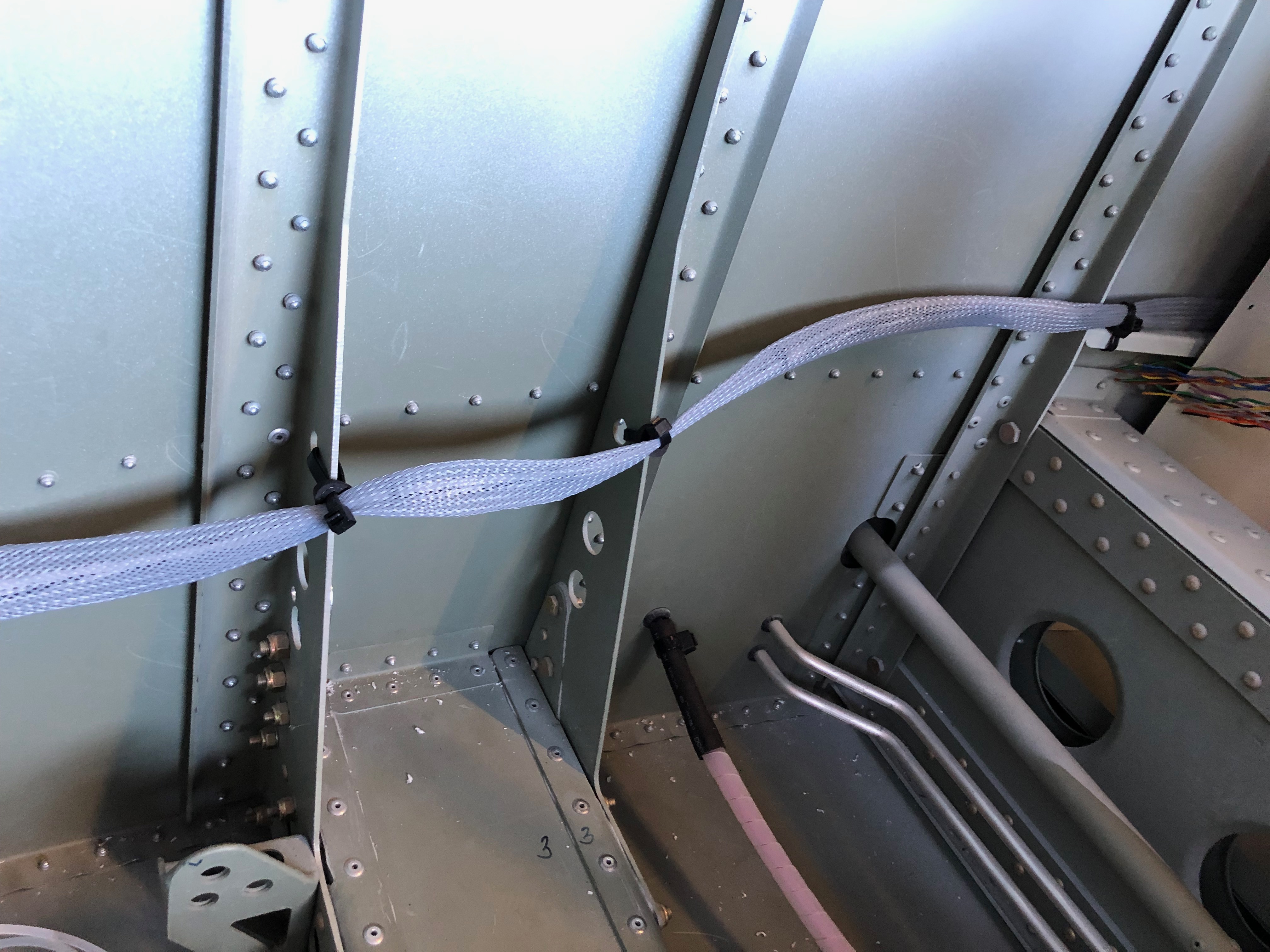
Last job today was to run the G5 to GMU11 loom in and secure in place.

Thursday 6th June 2019

Music: Dido, Easy 90’s

The aim for today was to finish adding the instruments to the panel, install the left and right footwell trims so I can install the instrument panel and get rid of the myriad of associated boxes and packaging!

The spinner of the Airmaster which would look even better on the front of the aircraft. The only problem is I don’t have all the components to fit it. I found out today that I’m missing the M8 Round-Neck Nut Set (of course I am!) They’re not supplied with the engine and not supplied by the propeller manufacturer! Quite amazing really. However a call to CFS Aero and a set are on the way to me for tomorrow.
The G5 has now been installed and one of the Skyviews.
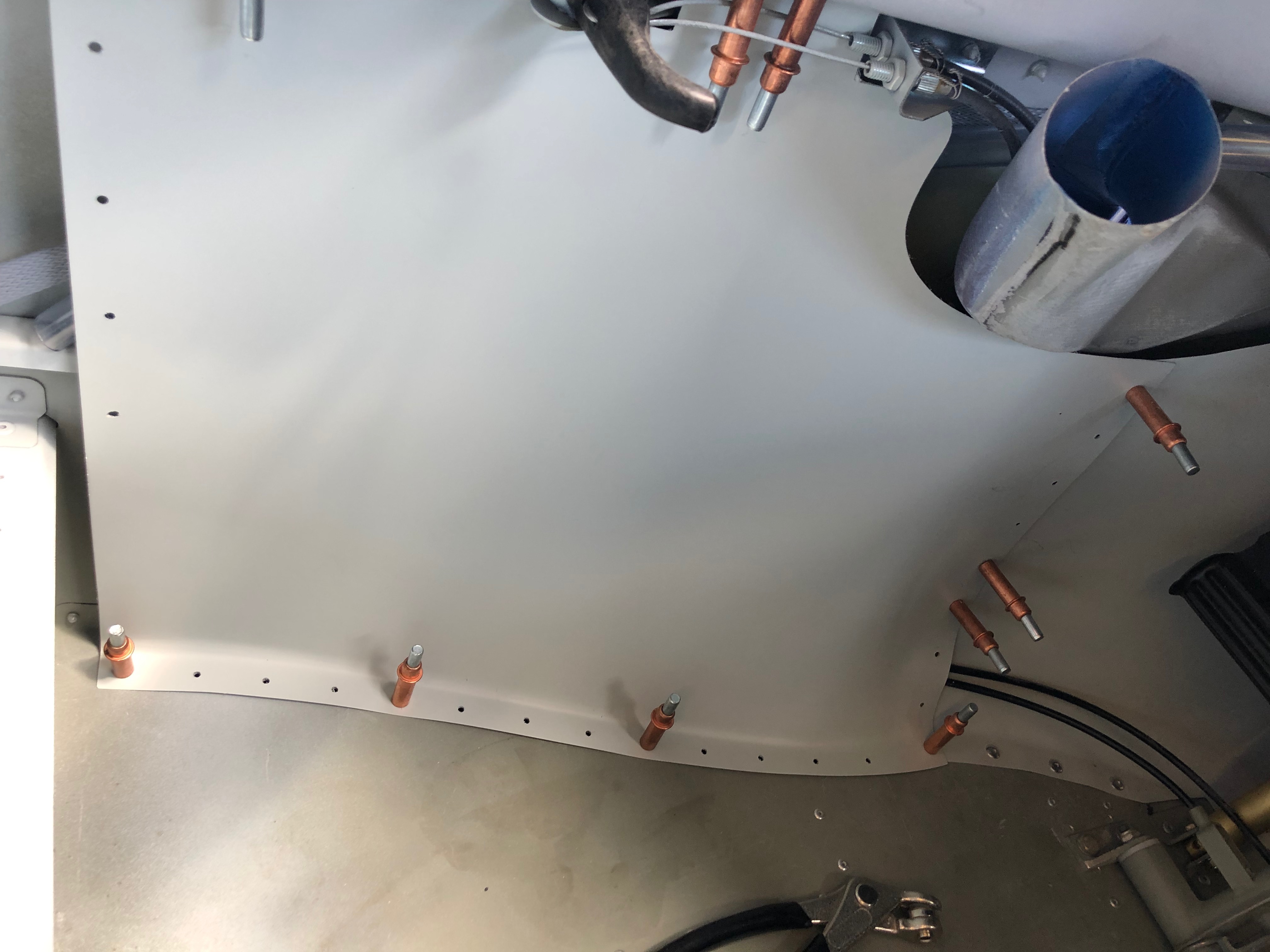
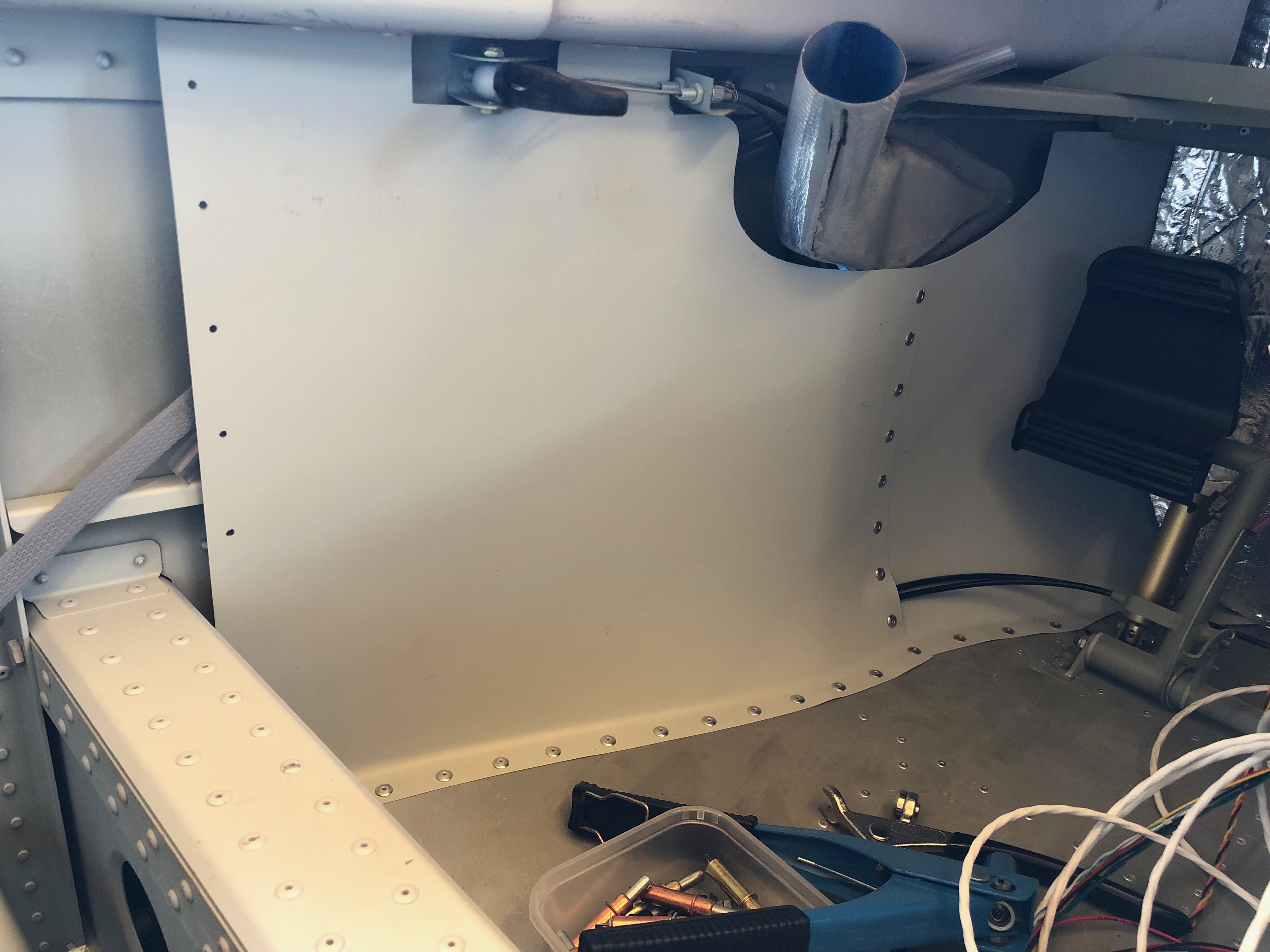
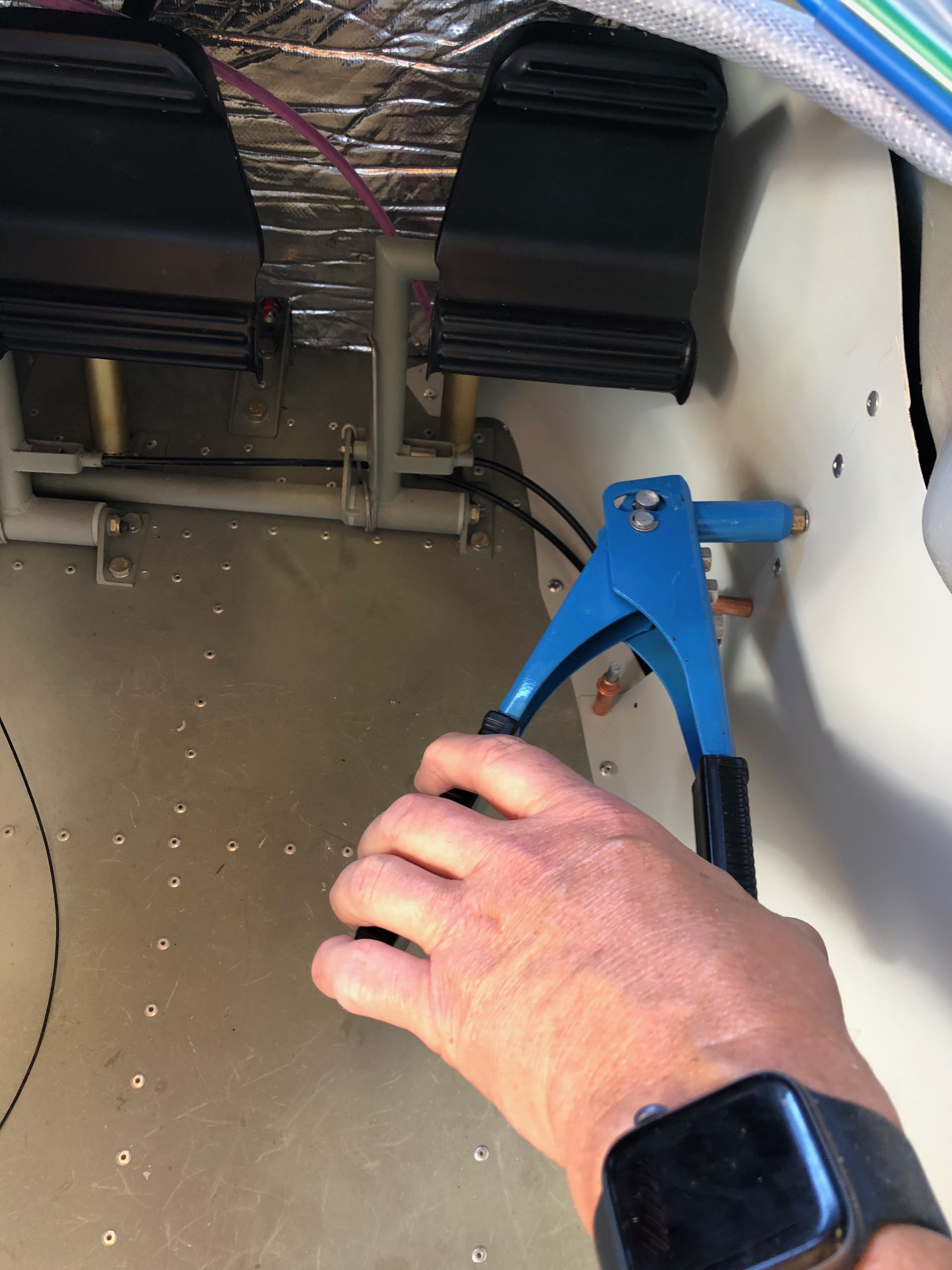
The interior footwell panels are pre-drilled which makes it easier however they still need trimming and you need to make sure you know how they are fitted before starting to rivet. I’ve used some Clecos to secure the panel before riveting.
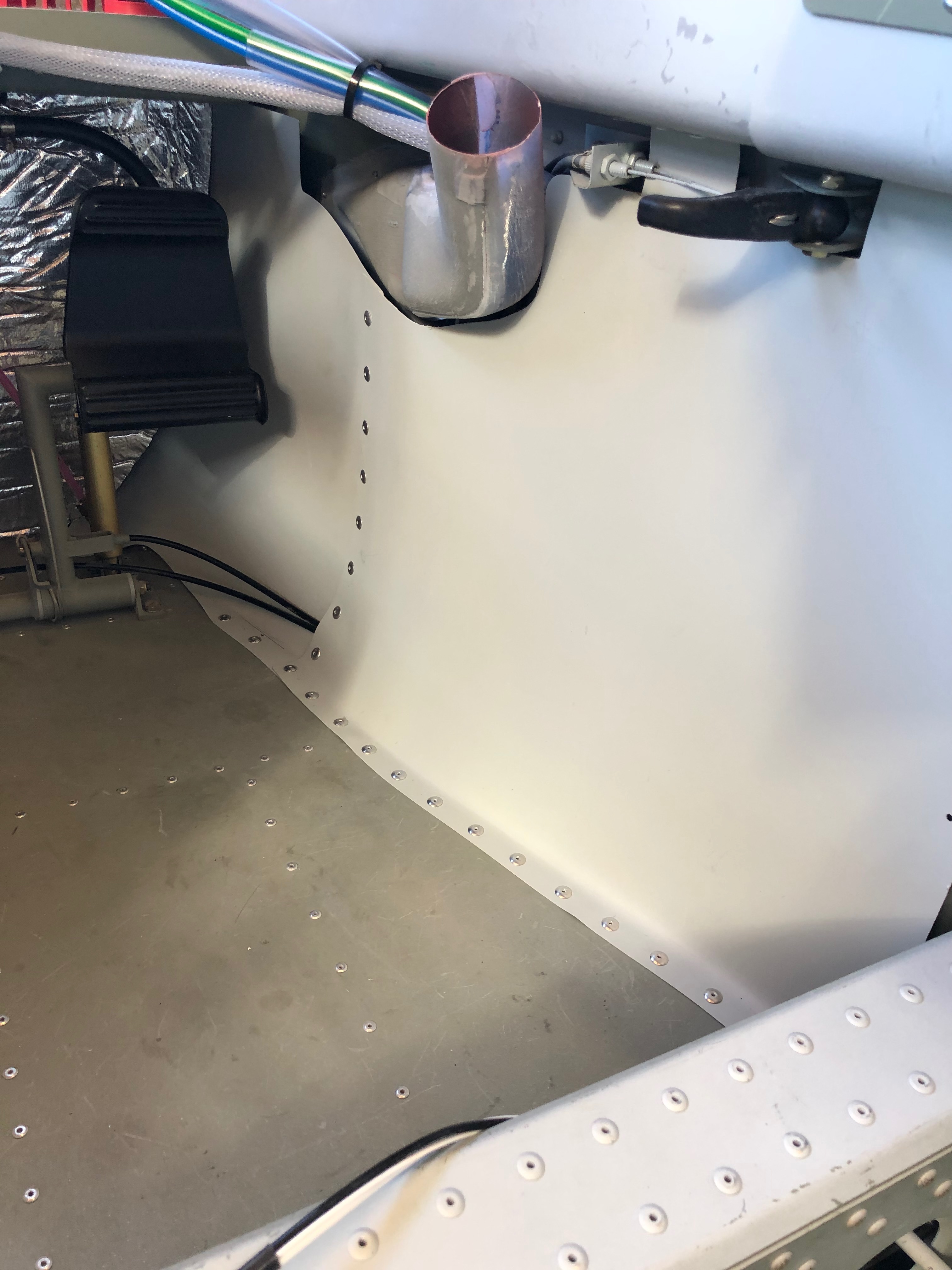
On the rear panels I’ve made them removable but these don’t need to be removable so I’m riveting them.
Of course one was easy to fit and the other took ages…
However all done now and looks quite neat. There’s carpet to cover the floor area which will make it look a little less utilitarian!
Now that’s done and the panel is complete it can be fitted.
It’s secured with 2 screws either side of the panel and 3 screws that screw into the centre console. It provides a very secure fit but may benefit from a couple of lightweight supports at the top of the panel.
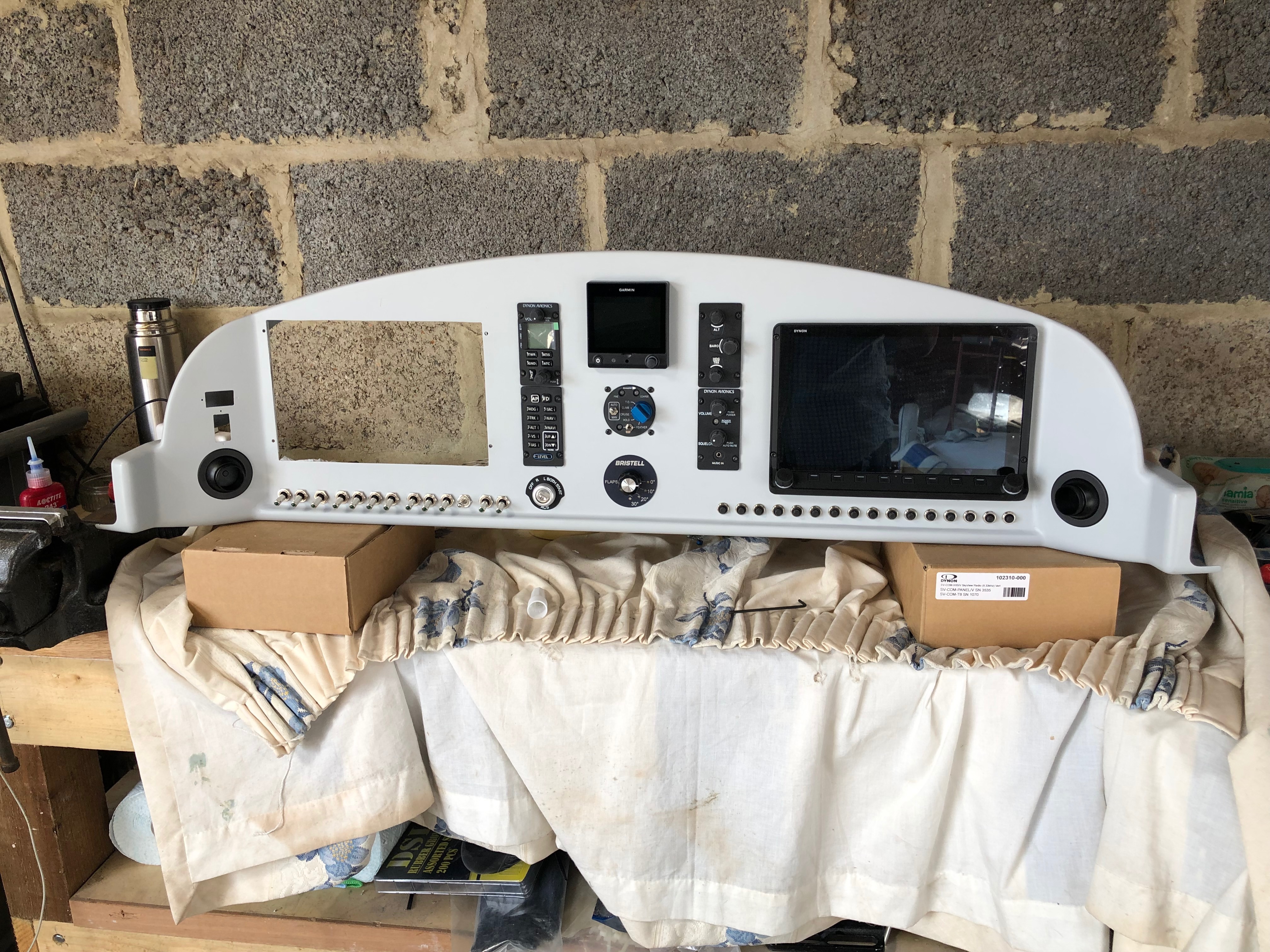
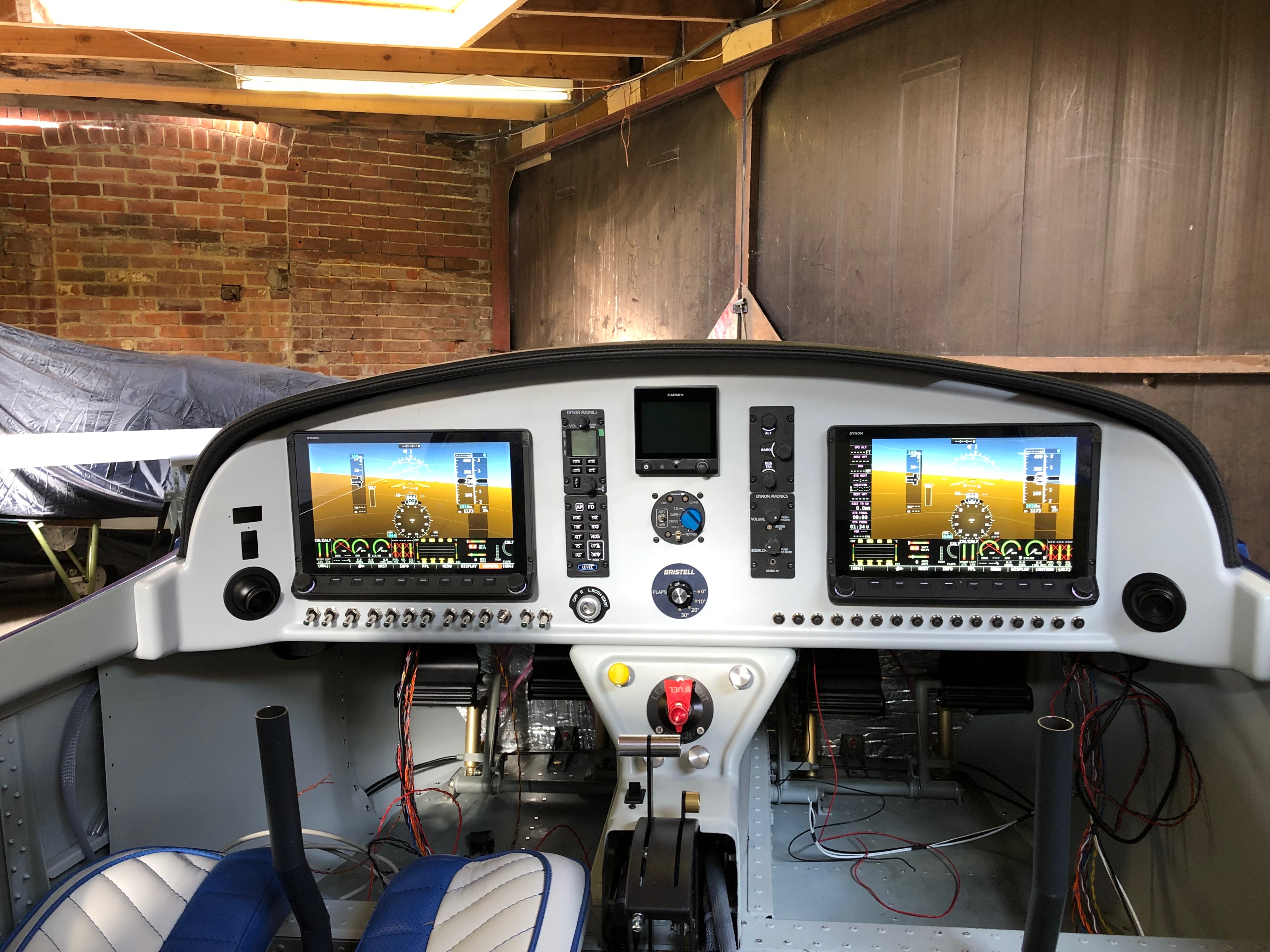
The final panel, all the network cables have been fitted and the glare shield fitted temporarily and powered up using the backup batteries. The G5 backup battery has finally run out so I can’t switch it on which is a shame but overall I’m pleased with the result.

Wednesday 5th June 2019

Music: Roxy Music & Dire Straits

With all the prep to fit the centre console, today’s the day to fit it for the final time. All the control cable outers have been routed and cut, the connections worked out, the pipe runs decided on and checked. Now it’s just a case of carrying out the fit.

The fuel pipe from the selector to the tanks and engine need to be routed so they don’t kink and cut the supply whilst also being kept away from anything that may chaff them.
This shows the support bracket for the park brake cable. It works well.
The outer cables are wire locked to the adjusters so they can’t move once fitted.
The demist control with the connector we made up. It looks a very good solution.
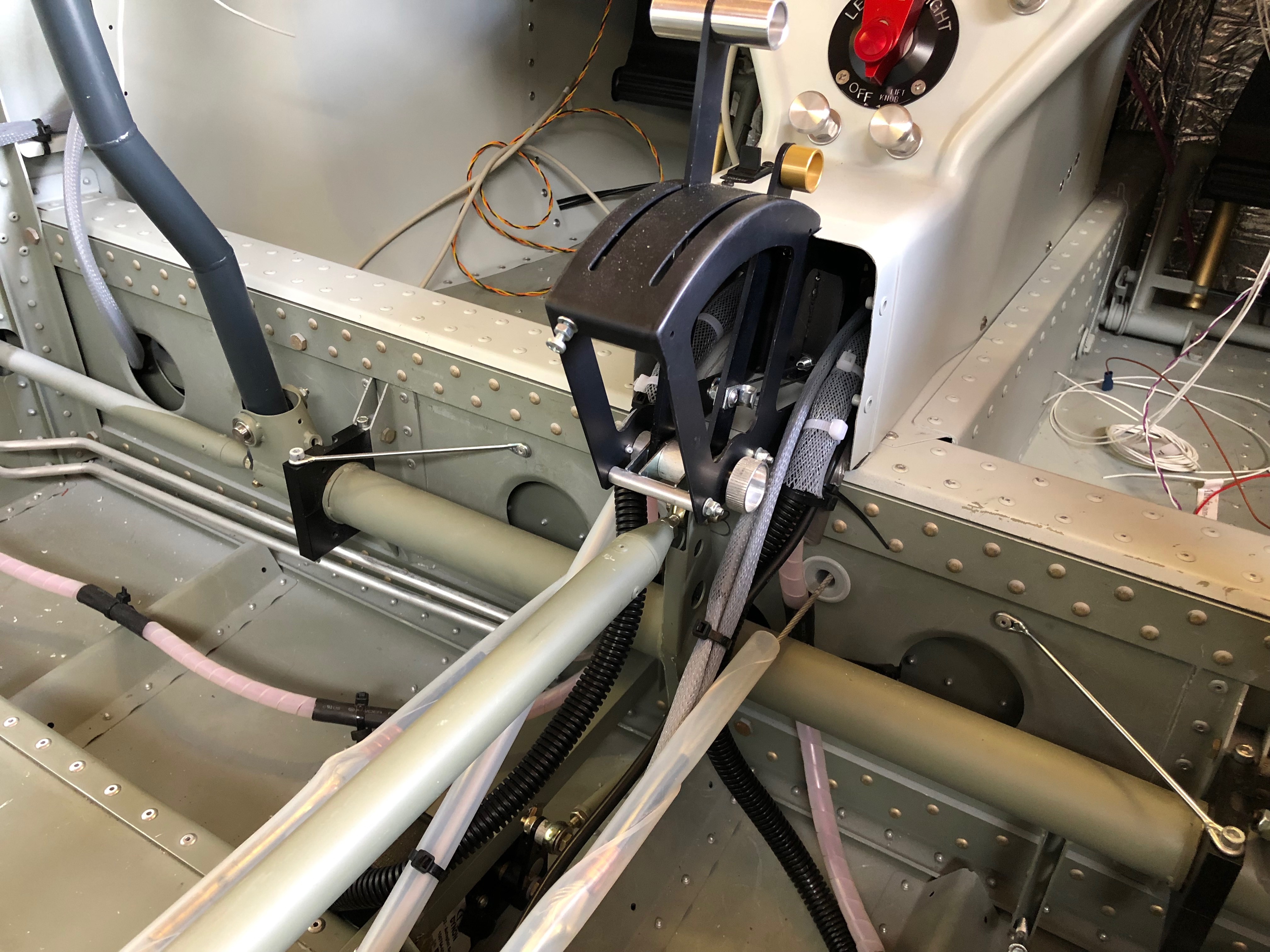
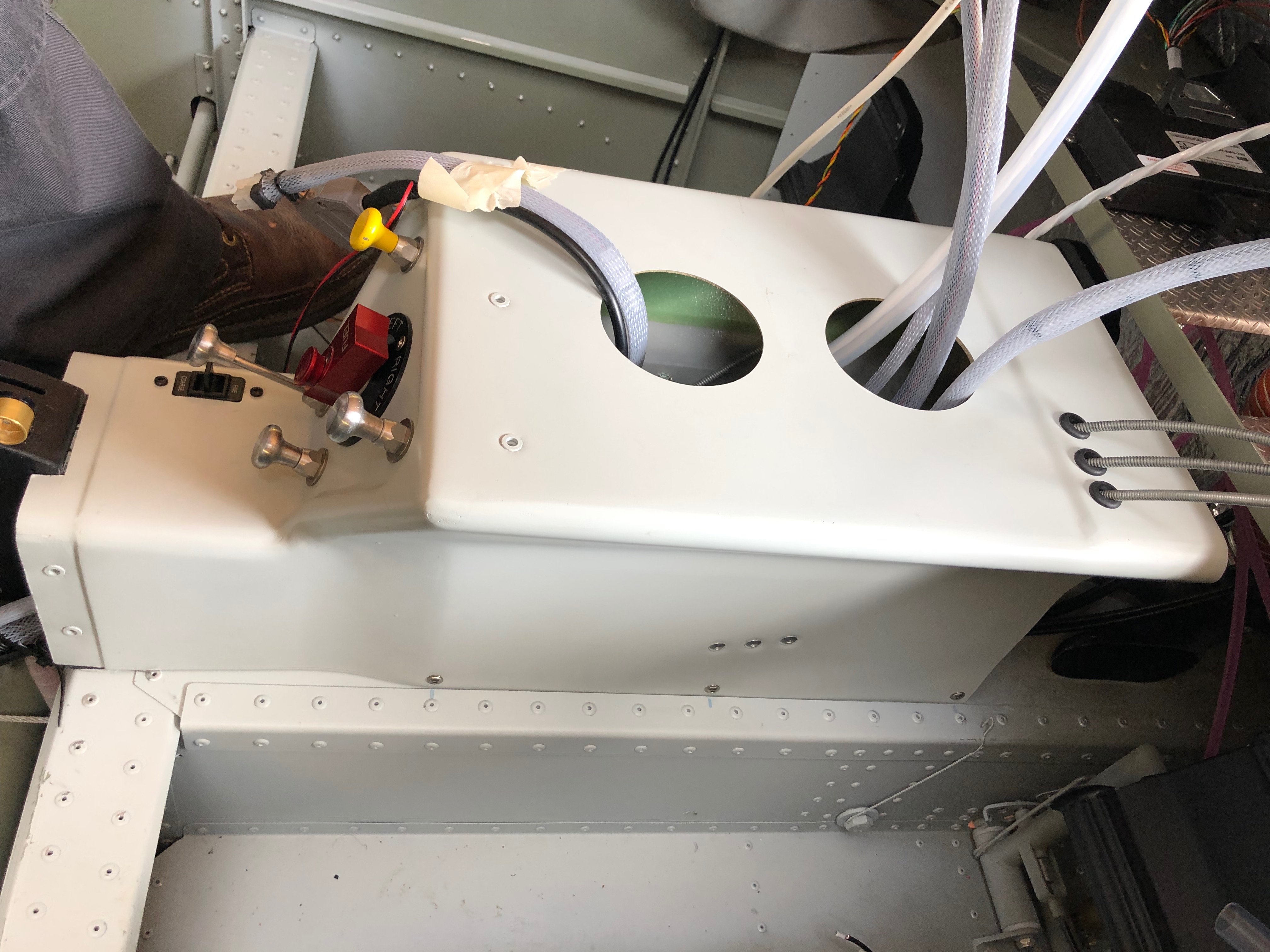
At last the centre console’s complete with all the controls fitted, cables run and fuel pipes fitted.
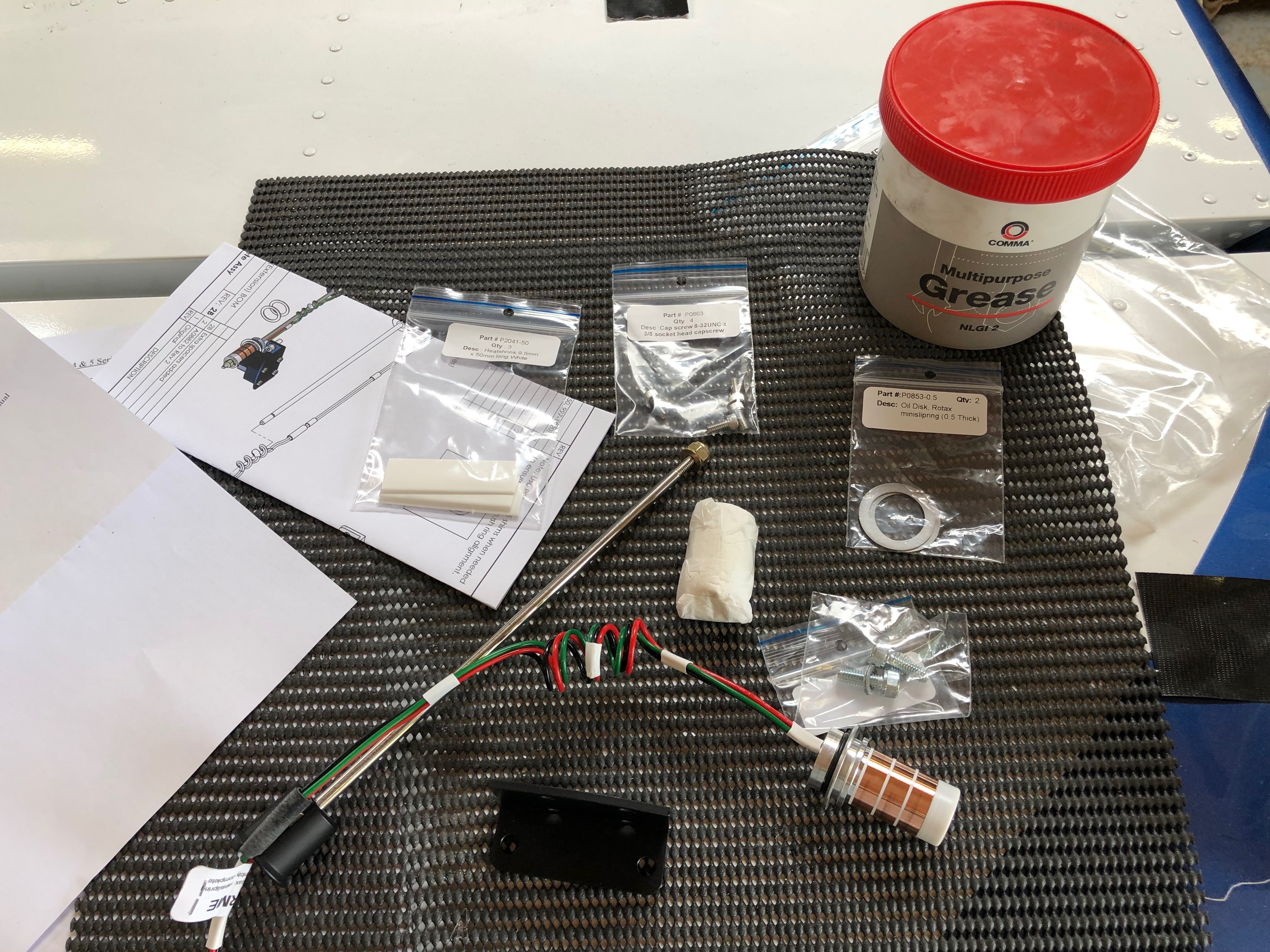
Having received the prop on Monday I can start to install the various bits. This is the mini slip ring available for Rotax 912ULS type 2 engines. It’s fitted to the rear of the gearbox.
and then secured in place with a rod hat runs through the hollow gearbox shaft. The control wires spiral round the rod…
and exit the front of the engine ready for connection to the pitch motor wires in the spinner.
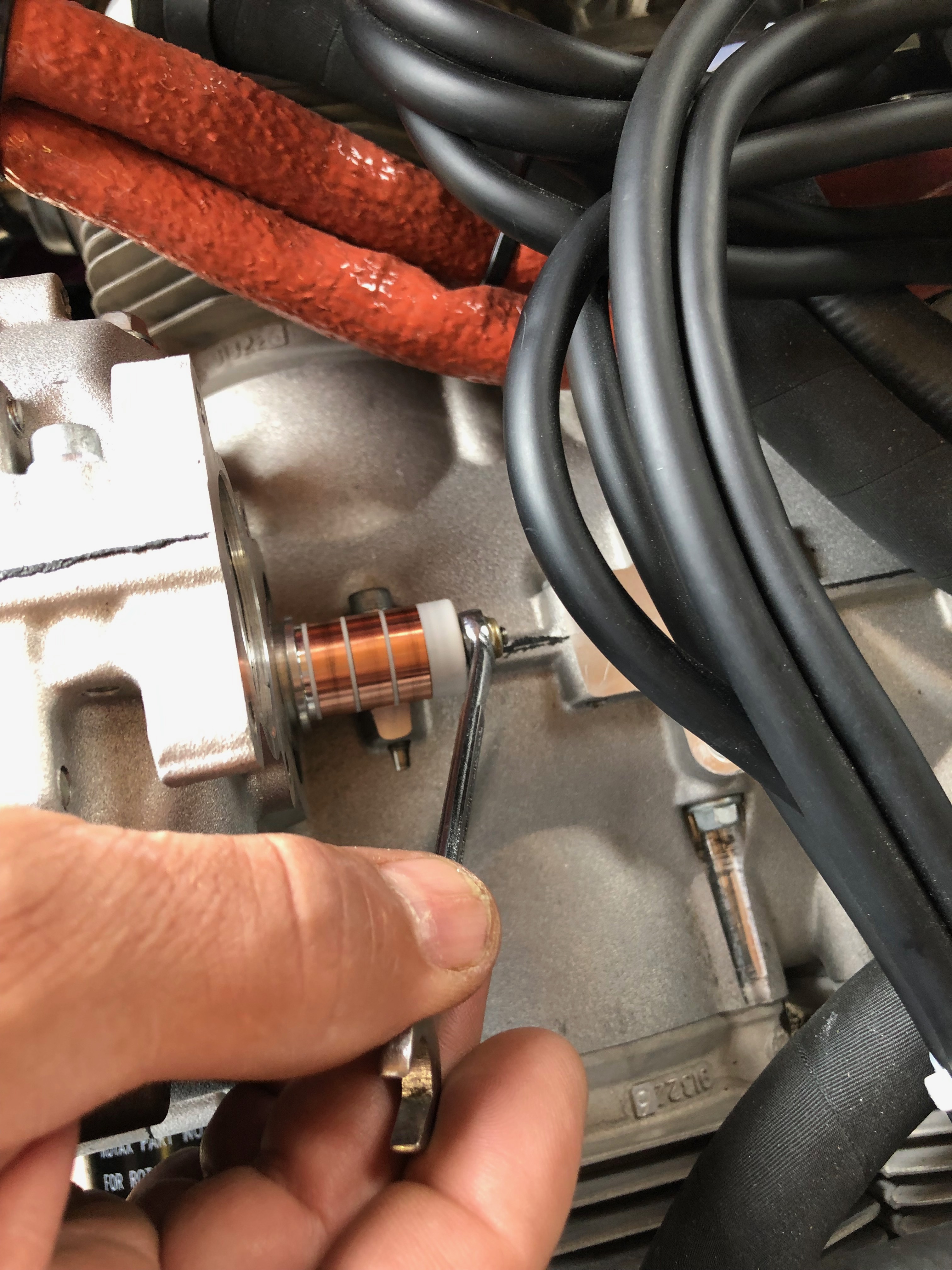
Once the slip ring is fitted the pick up bushes are installed. The bushes need run centrally on the slip ring. That’s all for the prop today, more tomorrow.
Moving on to the panel again. I will fit as much as possible before fitting to the aircraft as it’s a lot easier than fitting the components when the instrument panel has been fitted to the aircraft.
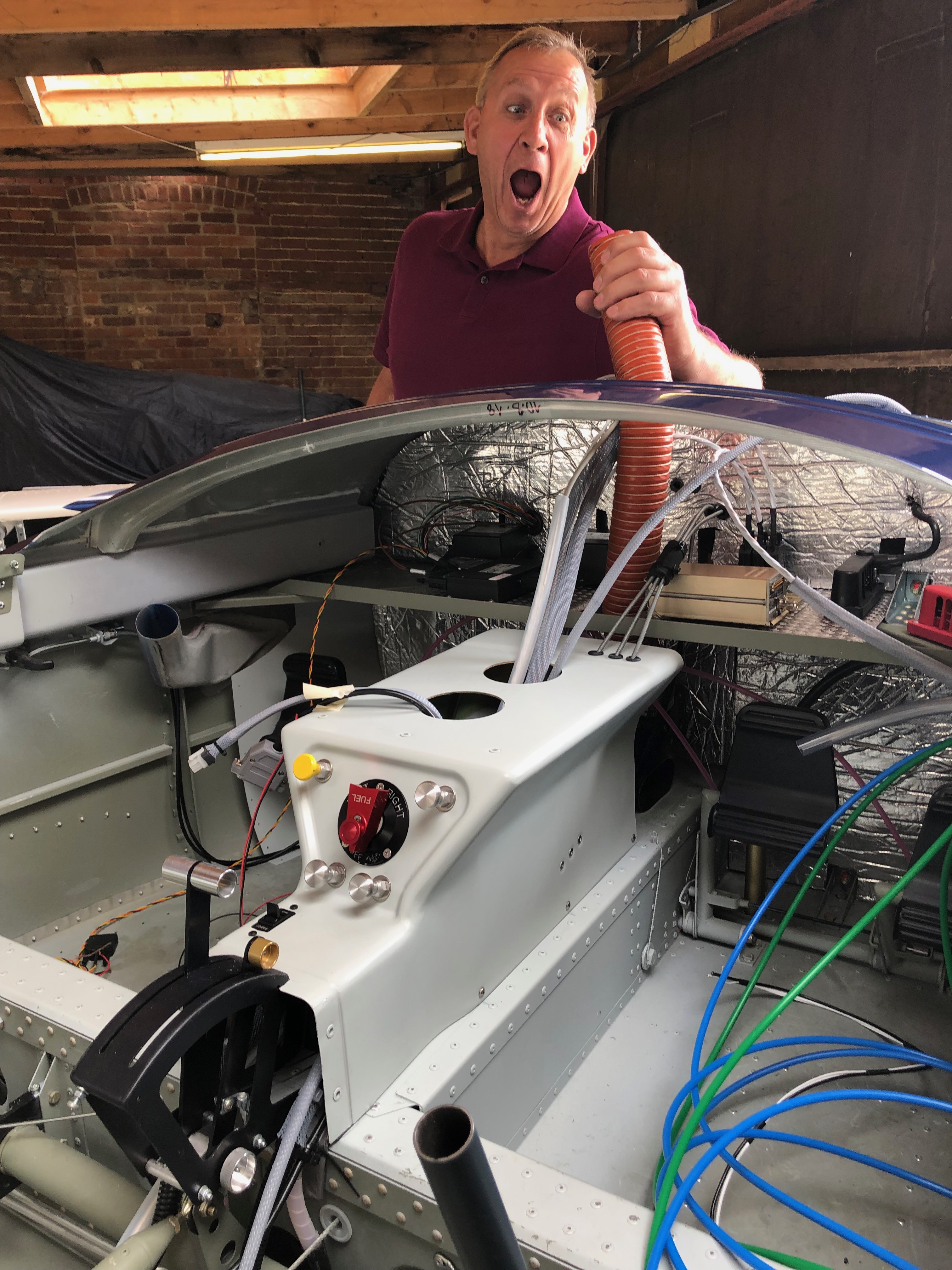
I’m not sure what Tom is doing here? Perhaps he’s going to start to sing? Captions please! He’s going home today so I’m solo again tomorrow!

Monday 3rd June 2019

Music: Röyksopp

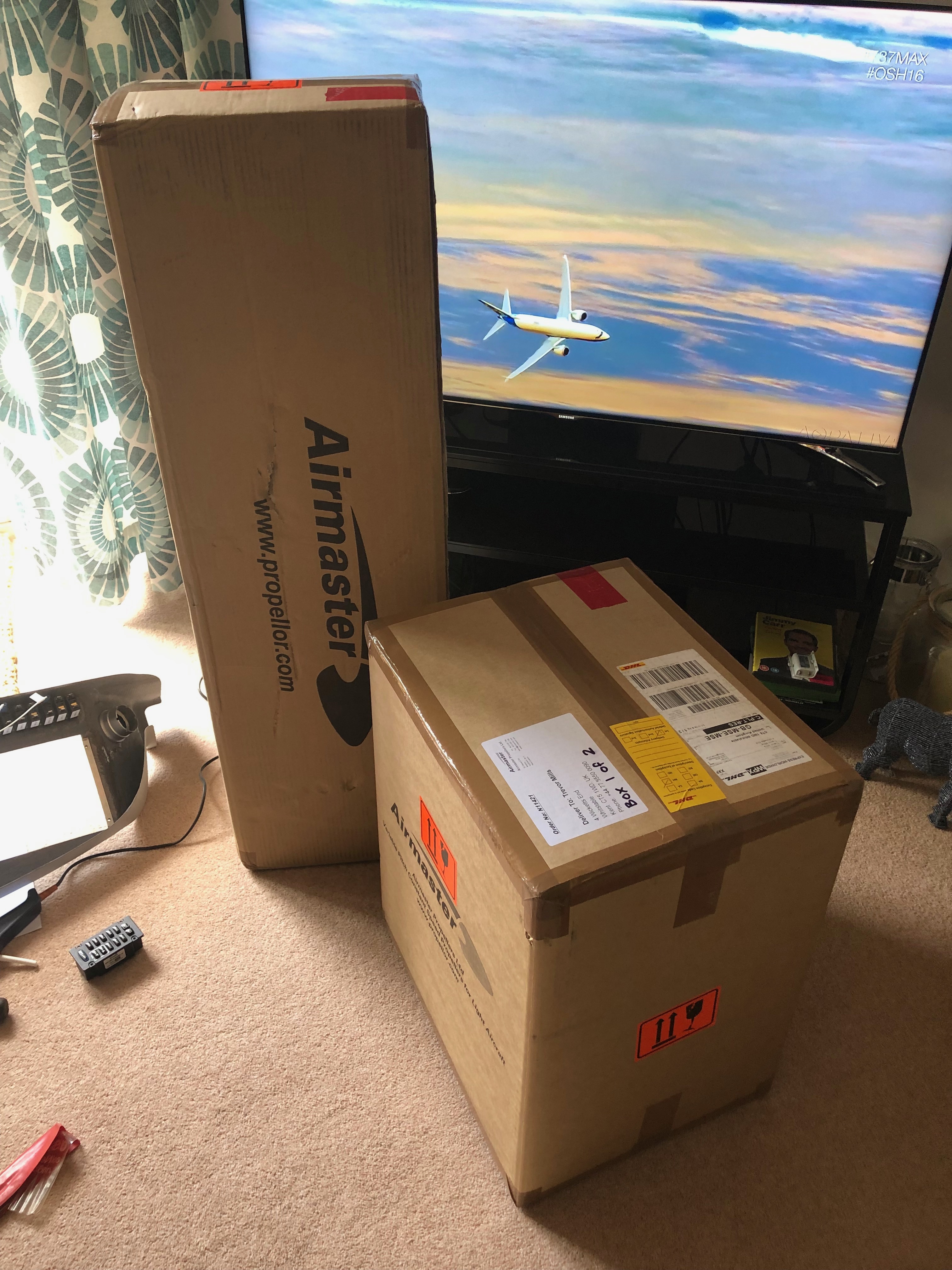
Good news – Today I’m expecting delivery of the Airmaster prop that was ordered in February. So I had brought back the switches and circuit breakers and thought that whilst waiting I would wire them up.

Each circuit breaker is linked to one or more switches depending on the circuit design by making a connecting wire with 22 or 18 AWG wire with a couple of crimped female spade connectors.
The Aveo air vents were next and are secured by screwing the front and back components together.
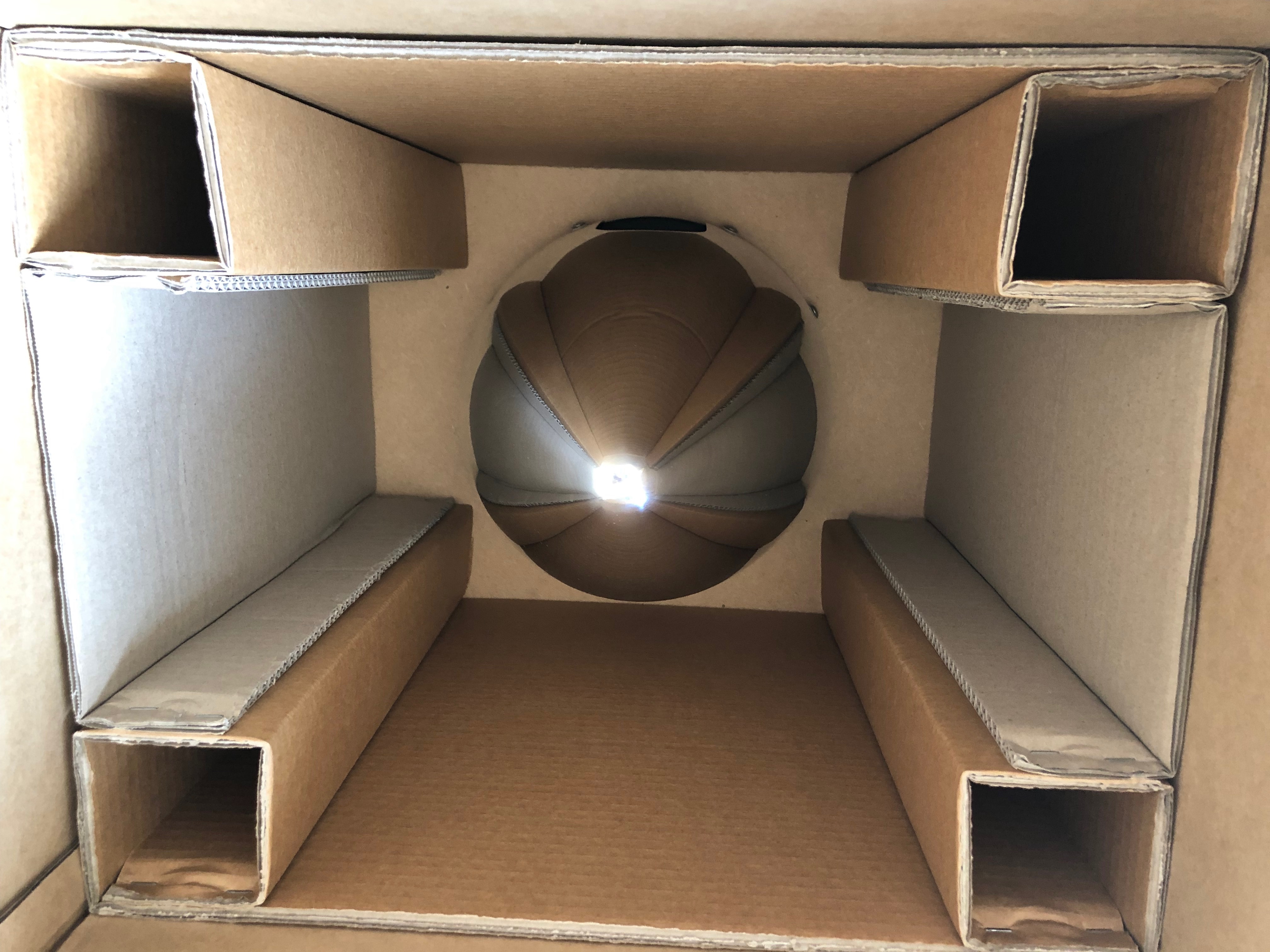
At last! I have finally received the Airmaster prop. On first inspection the hub and spinner box looked fine and undamaged and the inside…
looks good too…
However the box with the blades in had quite a substantial gash in the front.
Luckily, although the cut went through both the outer and inner boxes, whatever caused it never hit the blades – Phew!
One of the carbon fibre blades, looks very swish.

Thursday 30th May 2019

Music: Fleetwood Mac

A couple of jobs to focus on today. The first is to fit the circuit breakers and second is to start the fitment of the centre console that includes the control cables for Carb Heat, Park Brake, Cabin Heater, Demist and fuel pipes to the selector and tank lines.

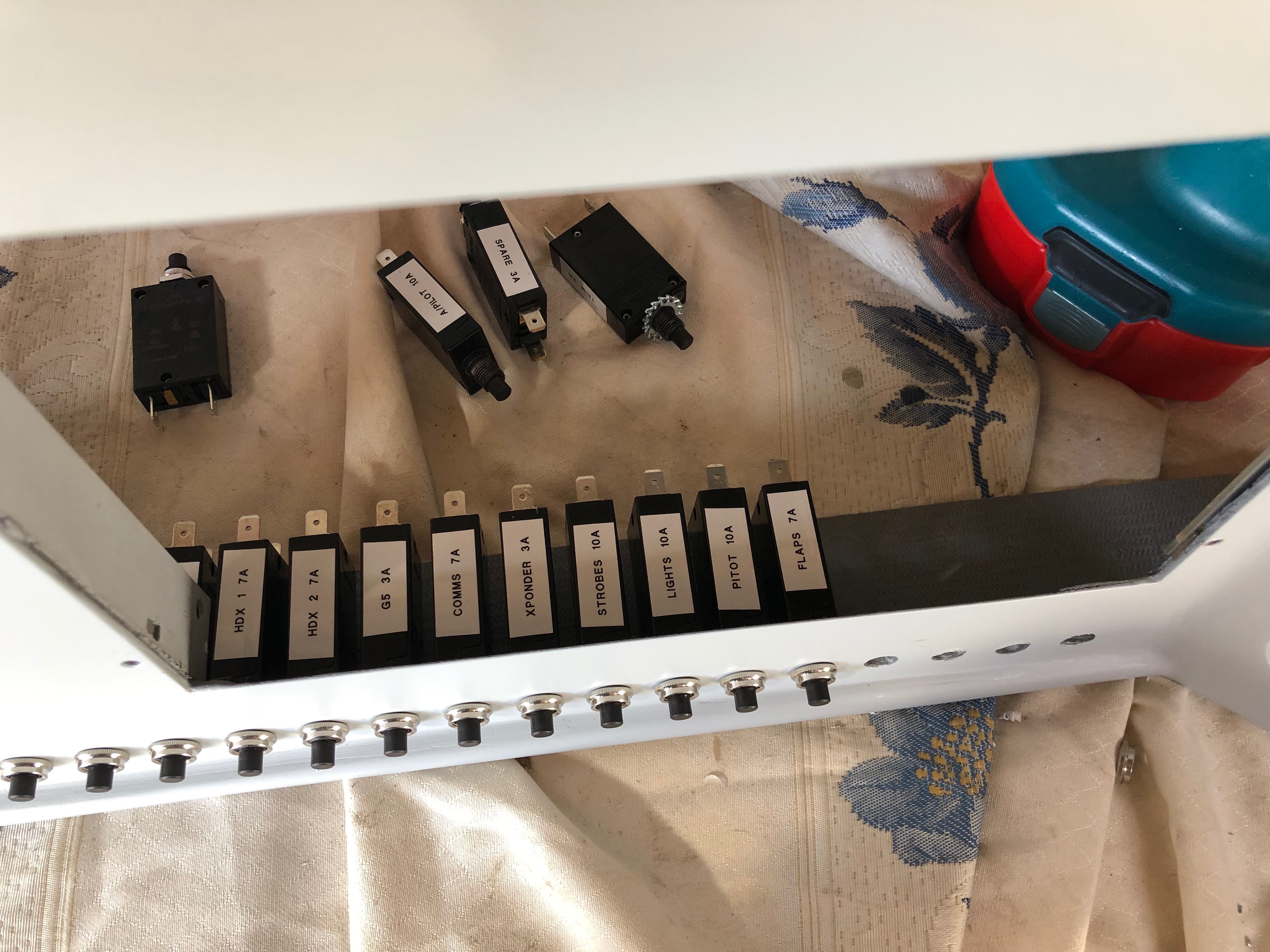
I’ve printed labels using an electronic printer so I can easily identify the circuit breakers and switches once fitted.
Unlike the switches that have a hex nut and can be tightened with a spanner the circuit breakers have a knurled ring that is difficult to grip. I found the best way was to adjust some mole grips so they gripped the ring firmly that allowed me to turn the the ring a quarter of a turn at a time. It took some time but got the job done.
All the switches and circuit breakers are in now. Very pleased with the result, looks quite tidy!
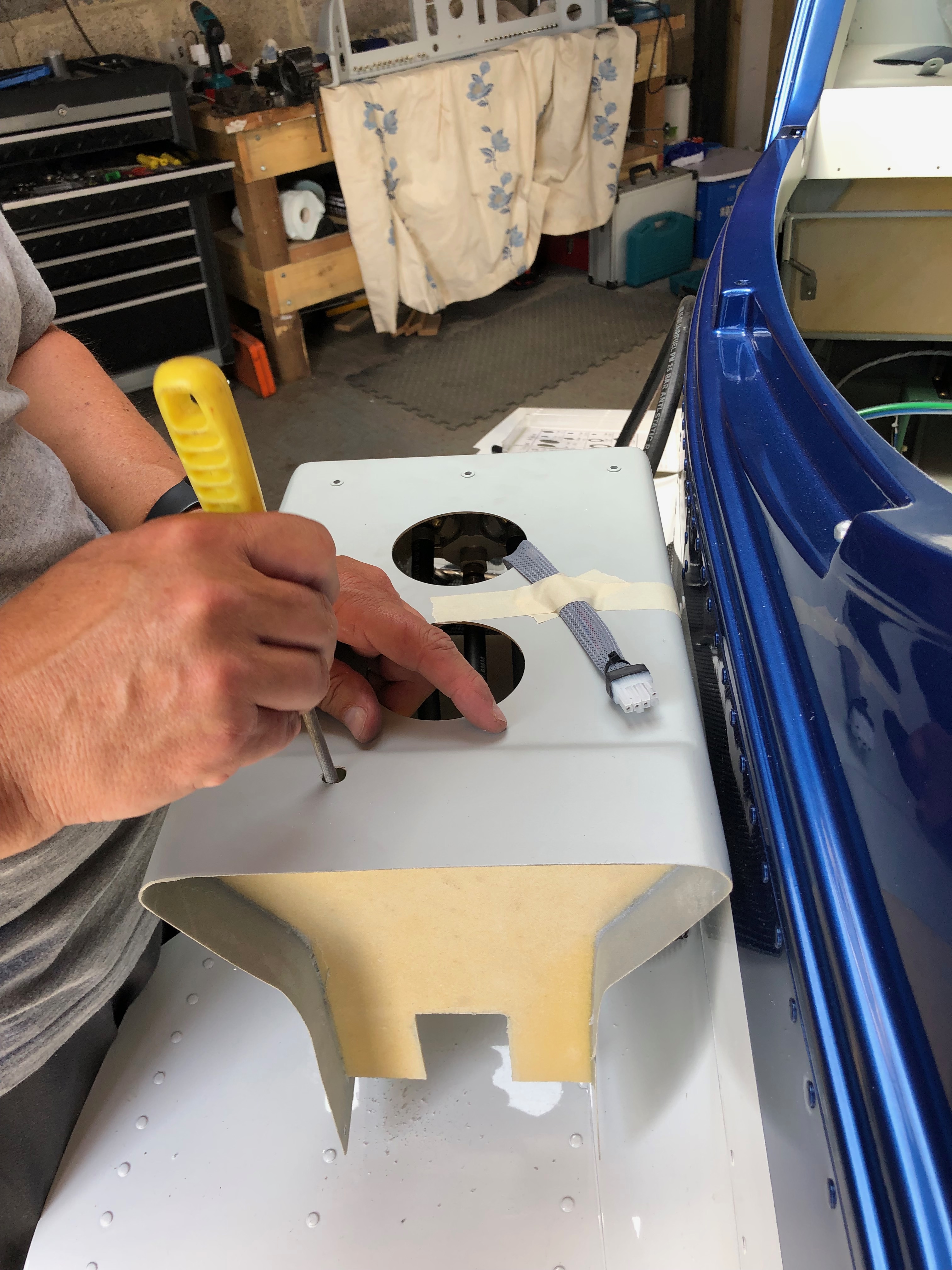
The cables used to control various items have to be routed so they don’t snag. After a couple of trial fits the best route from the front of the panel to the control is to exit the centre console via a hole at the rear. Three cables will exit this way and the fourth which operates the park brake will exit the end of the console and loop back in. This makes sure that the control operates in the correct sense i.e. push is off and pull is on.
With the console in place I can test the routing again and once checked I can drill the other holes.
The carb heat cable is connected to the carb heat control using a radio control model clevis.
The centre console ready to be installed showing the park brake cable that loops round and back in connect to the park brake. Without doing this the park brake would operate incorrectly.
Chris has been helping me over the last couple of days but before he left I thought I’d install a screen and power it up. With the ADAHRS unit installed and wired it’s the first time that I’ve seen it myself – looks quite impressive!

Wednesday 29th May 2019

Music: Elton John and Dire Straits

I received two pieces of good news today. The first was the dispatch notification of my Airmaster propellor which will be delivered on the 4th June. And the second was that the ignition switch that I ordered 5 days ago was arriving from Germany today! With Chris here for a couple of days he can give me a hand to do some of the jobs that I haven’t got round to like installing the rivnuts for the interior panels and fitting the wing locker seals. I continued preparing the panel for the instrument fit and working out how best to install the centre console.
Chris came down to visit and give me a hand with some outstanding items.
As I’ve decided to make the interior panels removable rather than rivet them in Chris’ first job is to install the rivnuts that will take the 3mm button head retaining screws.
Who says I’m a slave driver! A happy worker 🙂
After the rivnuts the next job for Chris is to fit the wing locker seals to ensure that they are waterproof. As the seals are not included in the kit!?!? I’ve brought some draft excluder that should do the job.
Good job done. The seals will ensure that any luggage is kept dry
I continued prepping the panel for the instruments. These aluminium ‘washers’ are to spread the load of the nuts when used to secure the instruments.
Tuesday 28th May 2019

Music: Elton John and Turin Brakes

A few jobs today. Bond the switch plates to the panel, start populating the panel with switches, mark and drill the ignition switch hole, create the looms for the servos and solder to the respective servos.

The panel cutting is largely complete now with just some USB data and power ports to add and an ignition switch. I’ve sprayed it with the paint matched to the interior so it’s ready to have the switches added.
To ensure that the spacing was correct I marked and drilled the holes in a piece of 20 x 1mm aluminium and then drilled through the panel. This is now bonded to the back of the panel to give the switches a solid feel during operation.
I’ve riveted on a couple of spade tabs to the end of the strip just in case I need to use them for earthing.
The switches are installed and tightened with a 14mm ring spanner. Have to be careful here to line them up correctly and make sure that I don’t mark the paint!
I’m still awaiting the arrival of my ignition switch that’s on its way from Germany but luckily Ian had one that I could use to get the positioning right and drill the hole. Now they are in I can leave it to set before installing the circuit breakers.
Now onto creating the look for the autopilot servos. Dynon sells a servo wiring kit with 20′ of multicoloured wire of the correct gauge, it includes 2 female and 1 male D9 connector. There’s ample wire to make 2 looms from it so I’ve cut it in half and bundled the wires together in readiness for soldering to the servos and terminating with a female D9.
There’s a few things that’s important to remember when soldering;
1) Match the colours.
2) Make sure you slide on the heat shrink tubing before you start soldering.
3) Mark each end of the loom so you know what wires you’re working with.
Soldered and protected. The final bit is to slide another piece of heat shrink one the bundle to keep it all together and…
protect the loom with some conduit. I’ve decided to use split conduit from the servo to the throttle quadrant and then I’ll use poly sleeving from there to the connector block.
One of the things that I’m trying to do here is to keep everything neat and tidy for easier maintenance in the future if needed.

Friday 24th May 2019

Music: Easy 80’s

After cutting the holes for the switches, circuit breakers and panels the holes for the retaining screws can be drilled and the panel painted in readiness for the avionics to be fitted.

Most of the instruments sit on top of the panel but the prop controller is fitted from behind so it’s a little more difficult to drill the holes correctly.
Once all the holes for the instruments and screws have been drilled the panel is sanded down with 600 grit wet & dry and then is can be primed with plastic primer.
The rear of the panel showing the strengthening that I’ve installed.
Pleased with the panel so far. Just the ignition switch to fit and a couple of top coats to match tie interior and then I can start installing the switches, circuit breakers and instruments and then start the wiring.