Music: Gerry Cinnamon, Stereophonics, The Libertines
6 months to the day since I took delivery of G-MLSY and it’s coming to the end of the build… but I say that every day to be fair. The next major stage is the testing and lots of paperwork to do and approvals to gain before it can fly.
A few people have dropped by to view how I’m doing and some have sent messages. All I can say is “Thanks”. It’s been a bit like a marathon and the support from those that have taken the time to visit or send messages is very much welcomed and keeps my motivation topped up.
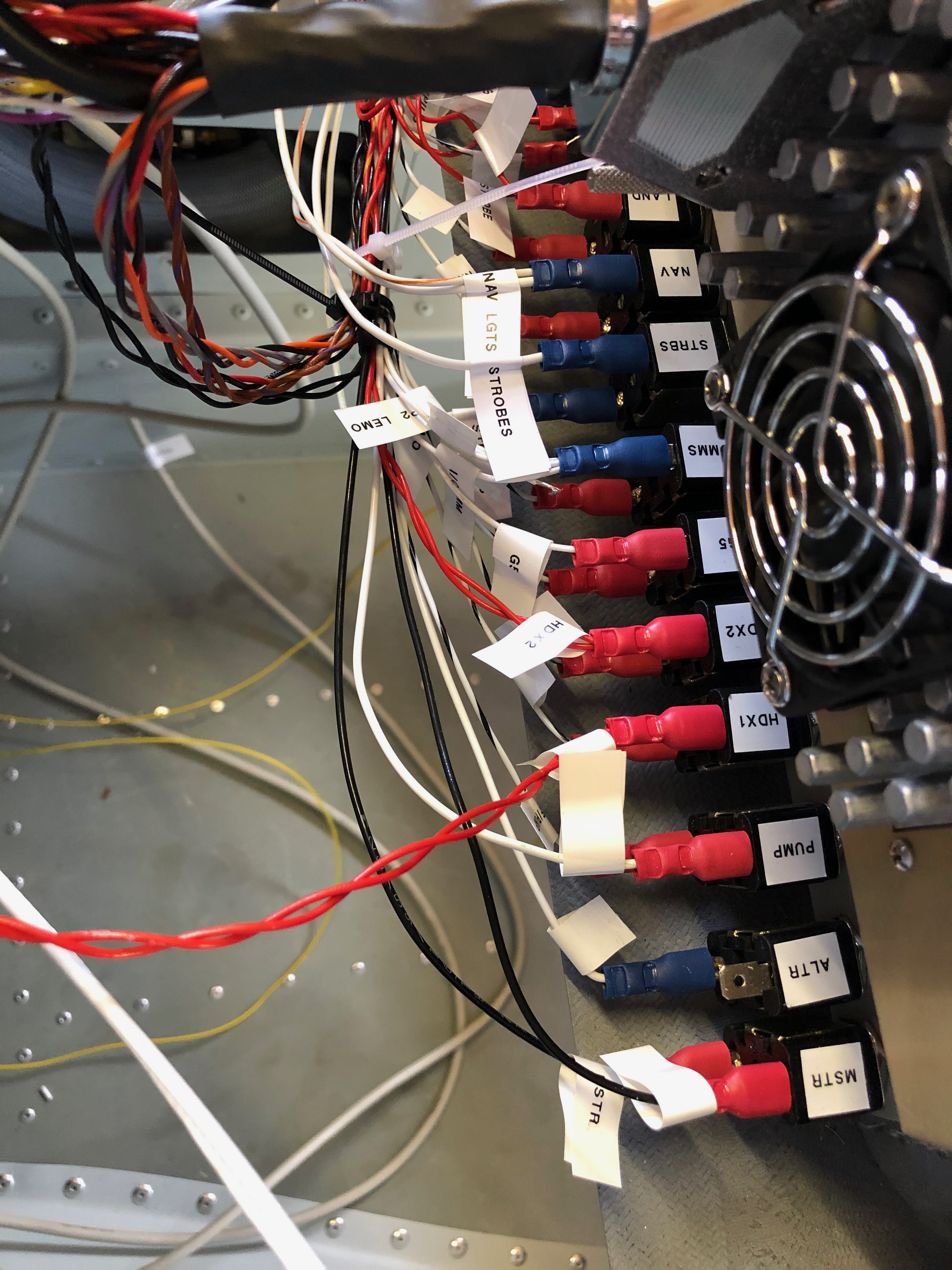
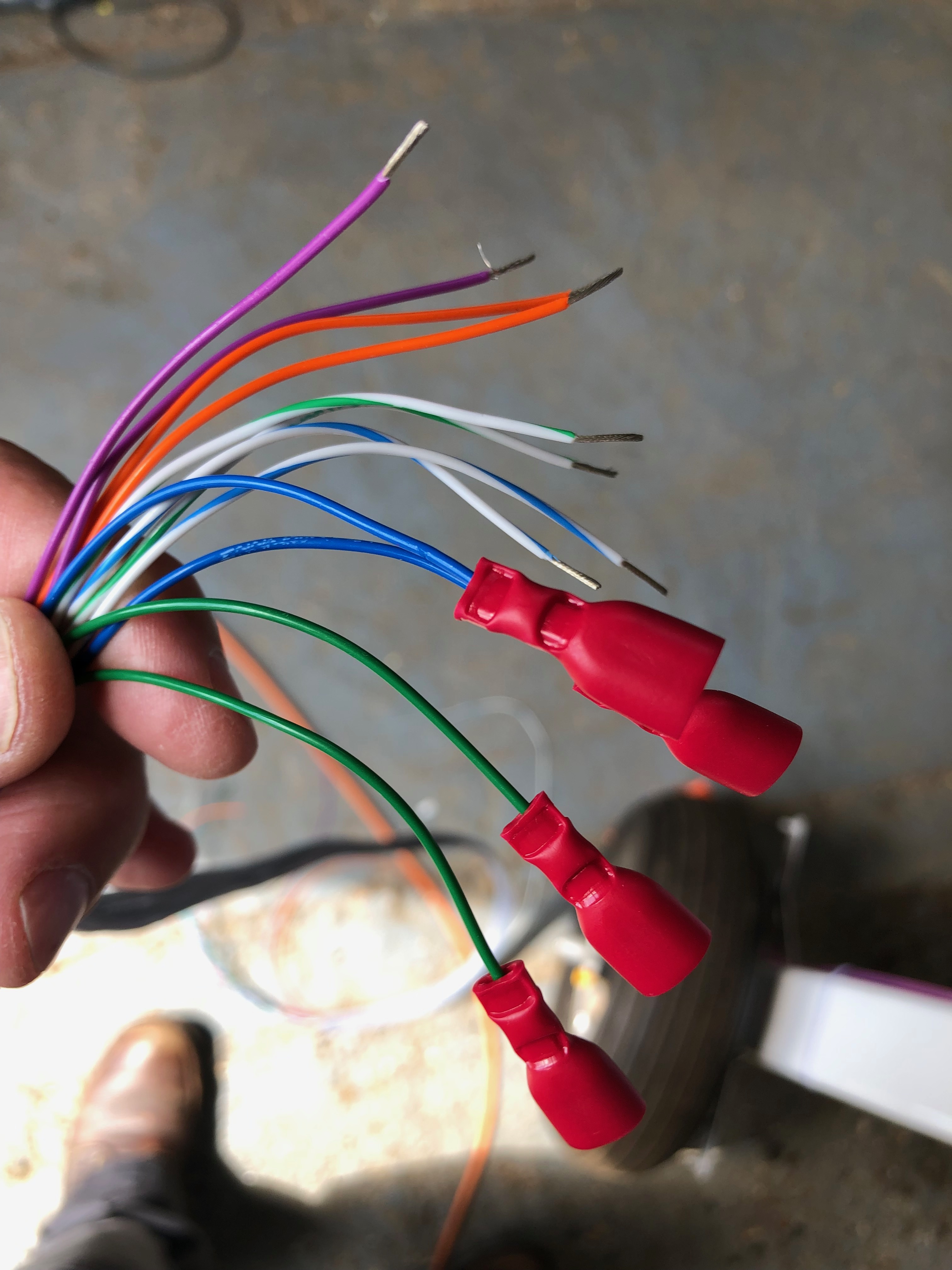
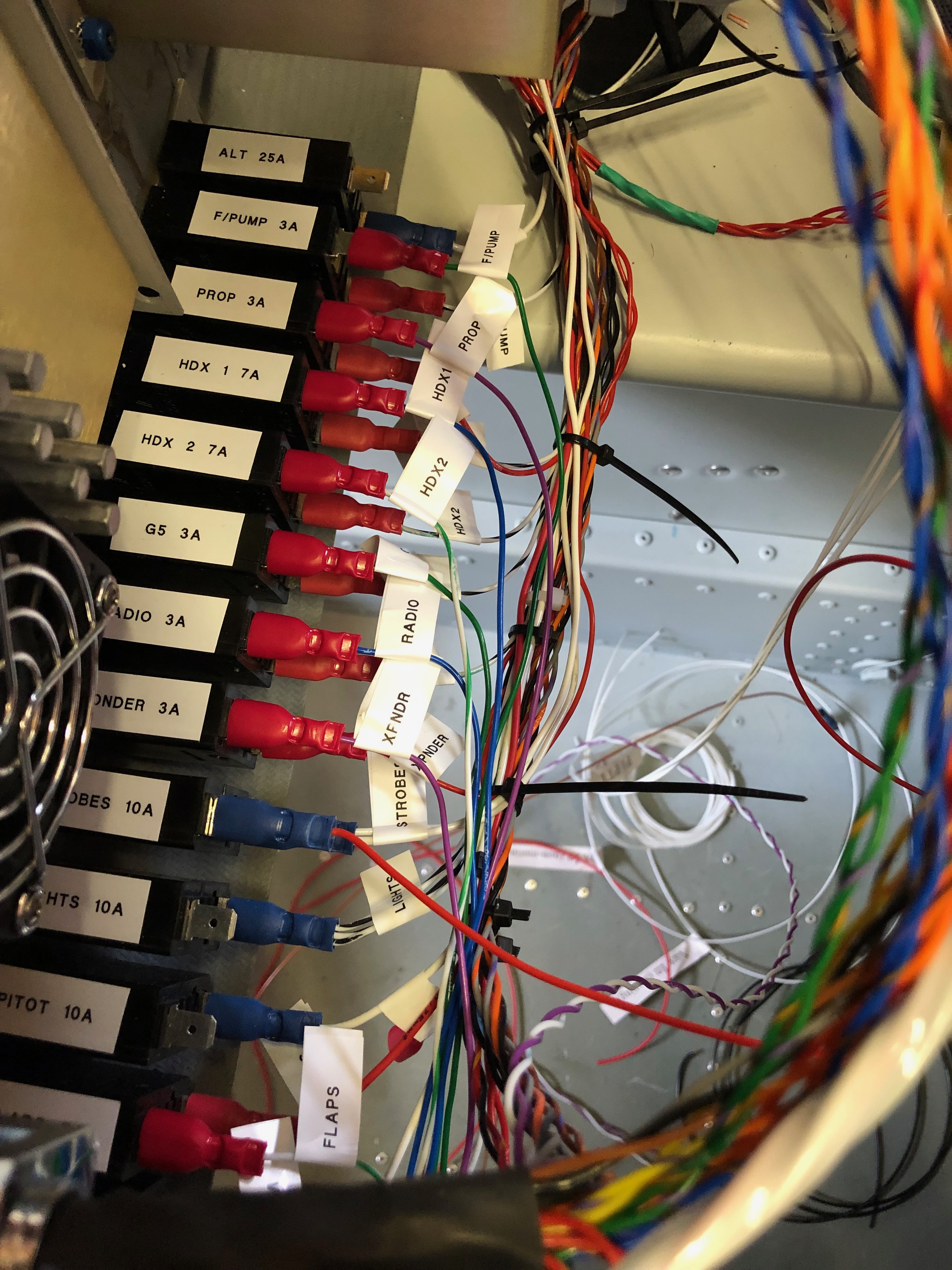
I’ve decided to use the light function on the switches so each switch require an earth lead to be attached to the third contact to enable the function. It required a bit of back tracking but was fairly easy to do. The wings need to come off again so Ian is called to action again helped by Pete Sharpe I need to run the fuel level sensor wiring in, polish the wings and apply the registration before refitting for the final time. When I arrived home the stainless steel ID plate and Radio licence had arrived ticking off another couple of items from the list of Admin that accompanies the build.
Music: Reverend And The Makers, Ian Brown and Razorlight.
A few smaller jobs to do today including the last bit of wiring, wire locking the tailplane, adding a vent pipe to the coolant bottle and adjusting the flap operating arms.
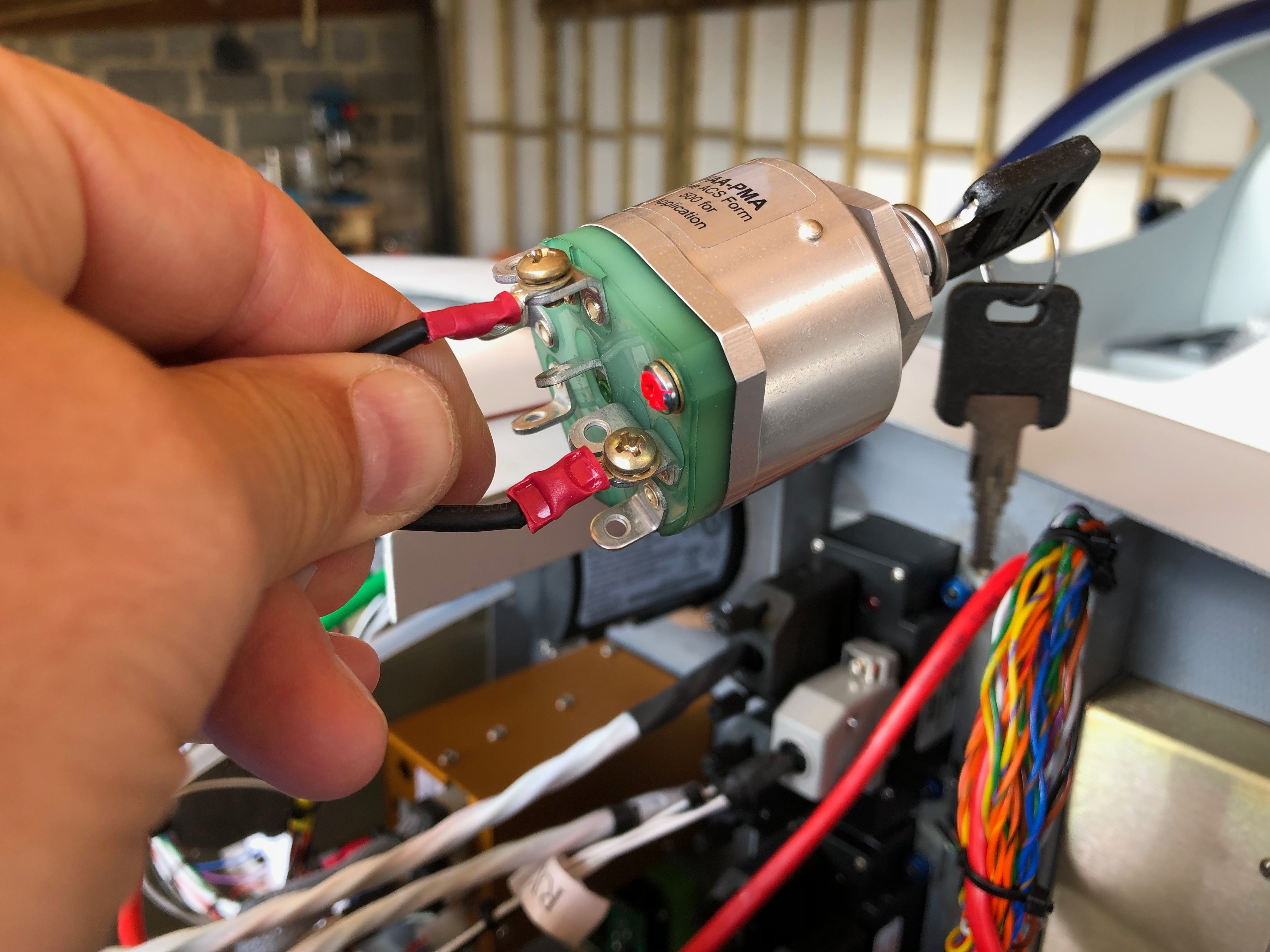
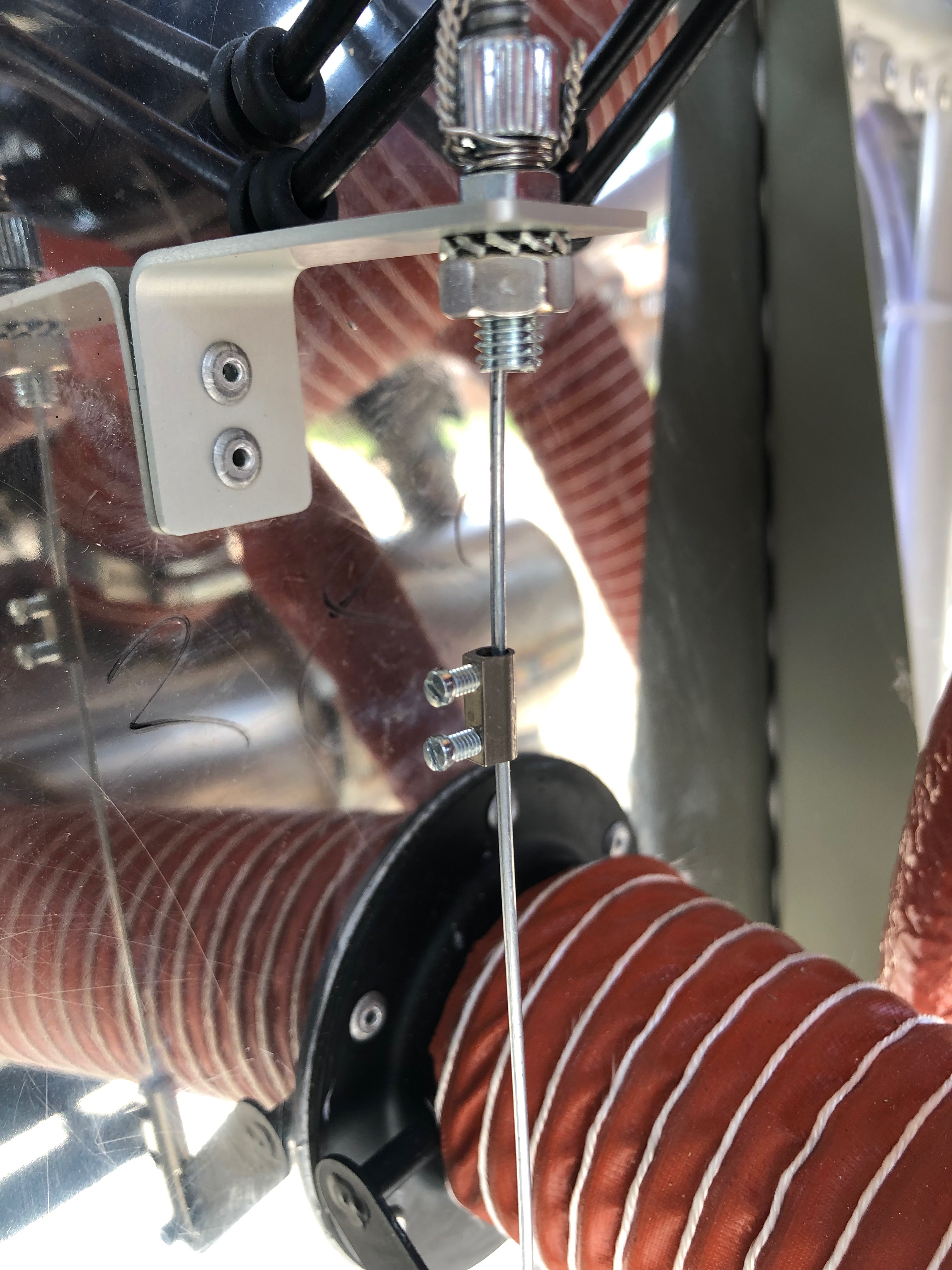
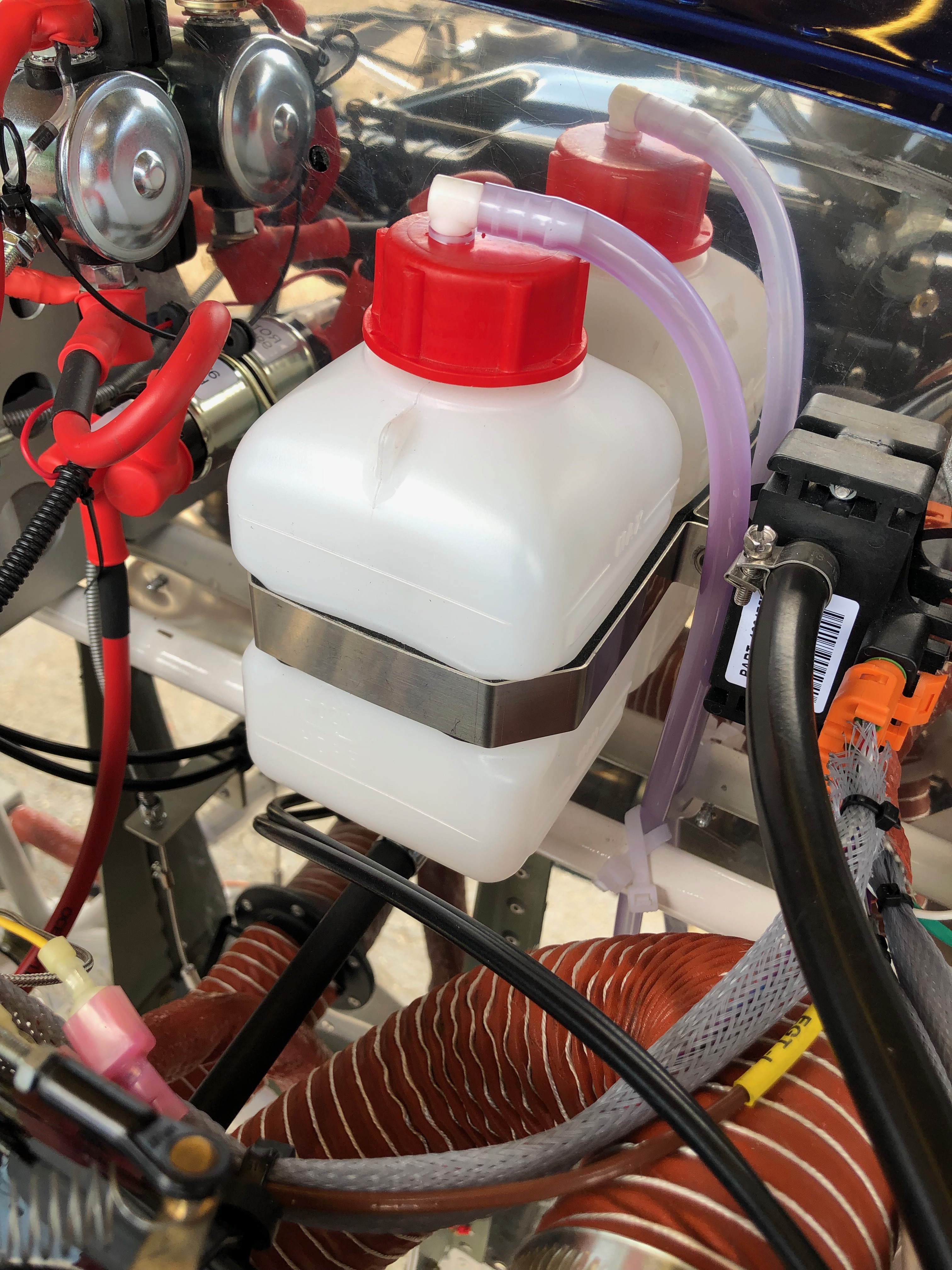
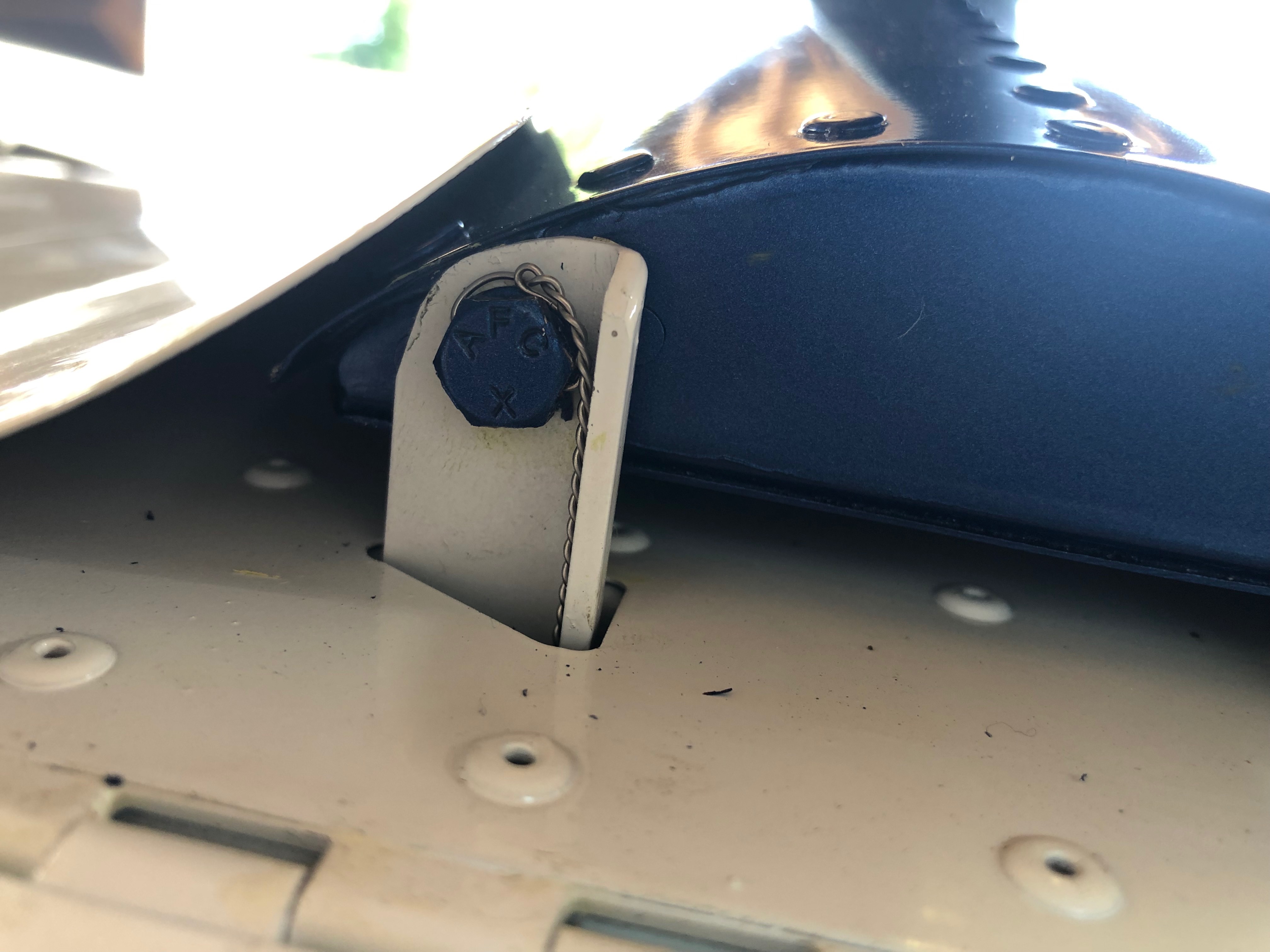
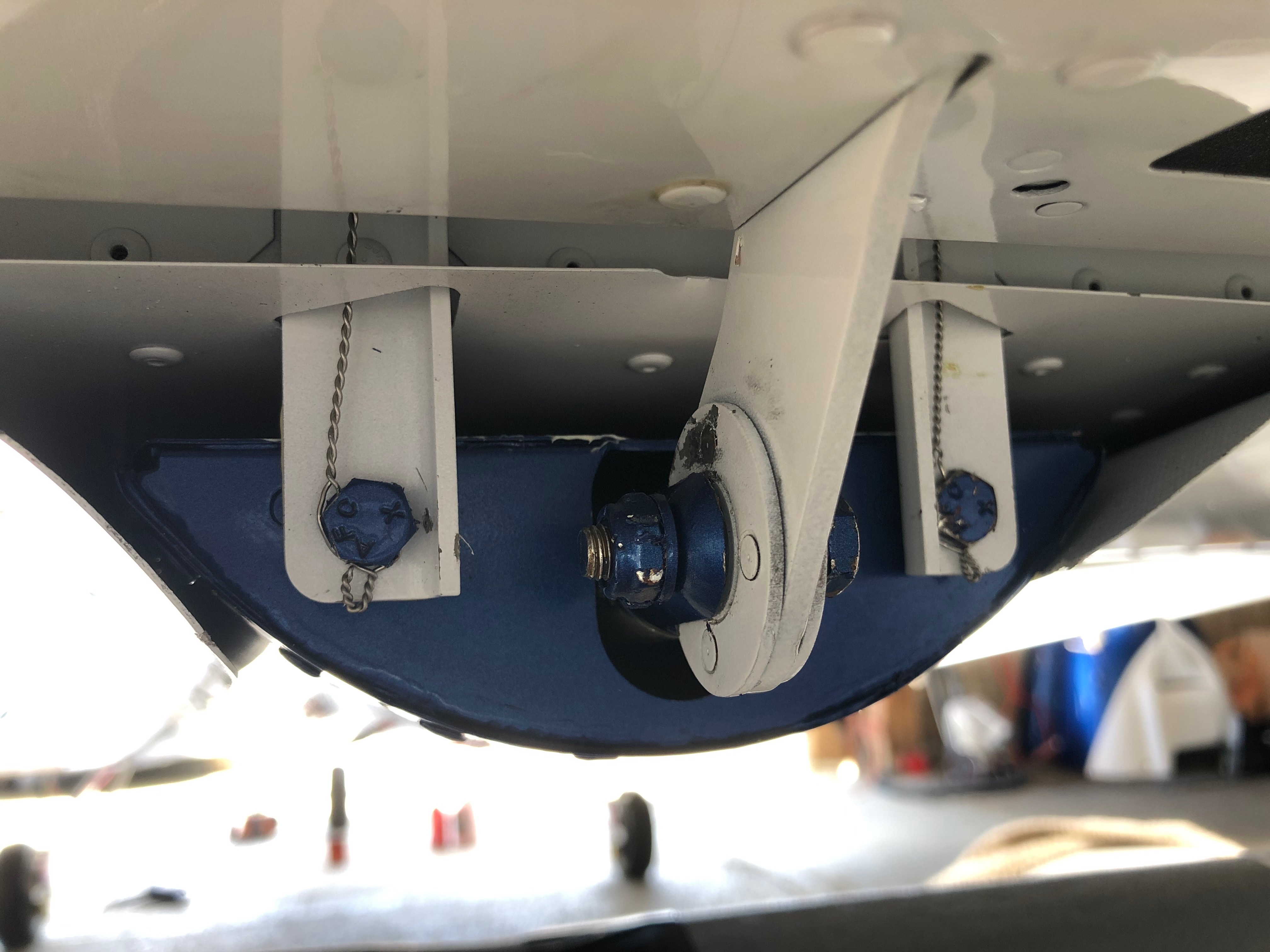
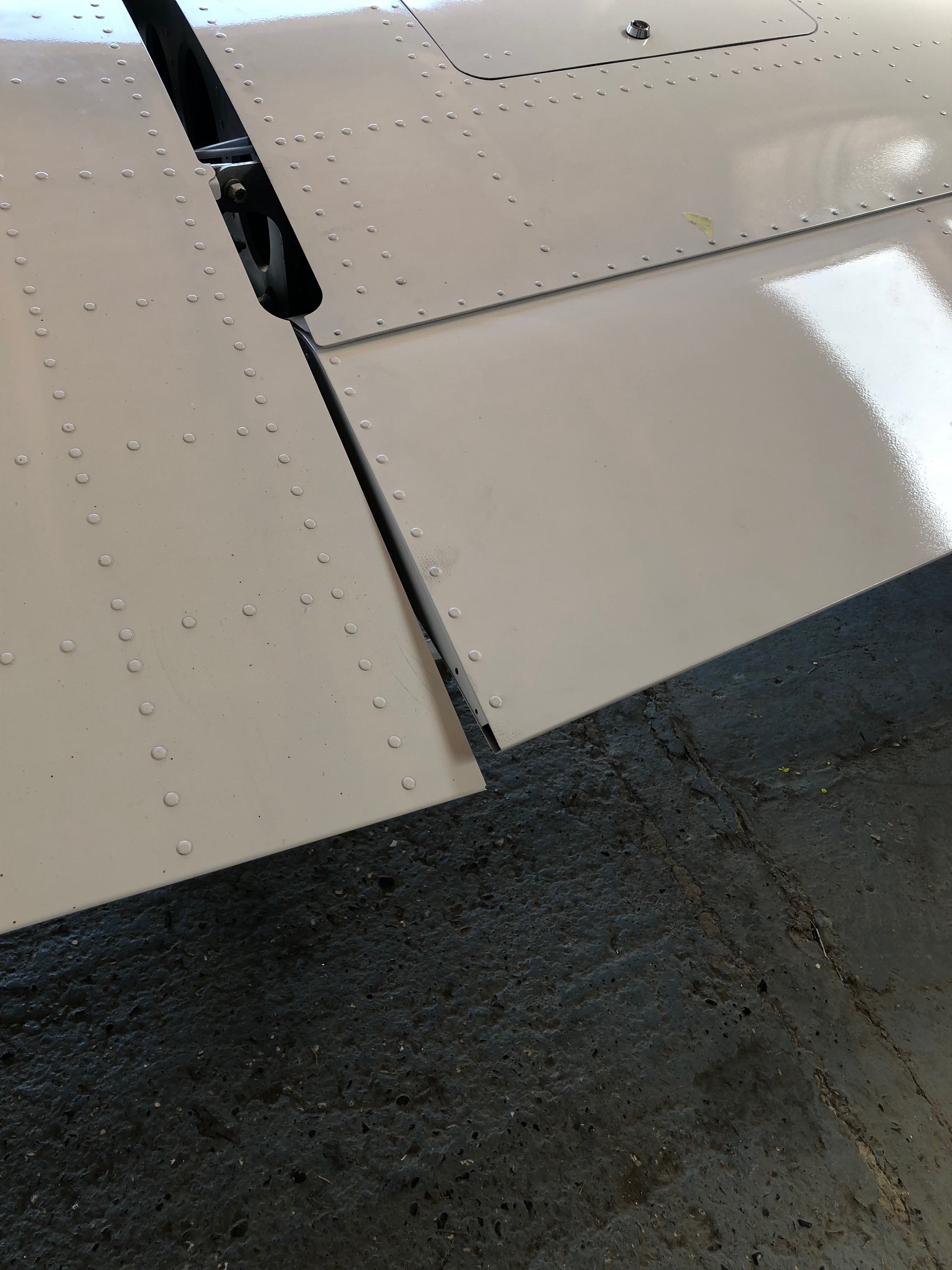
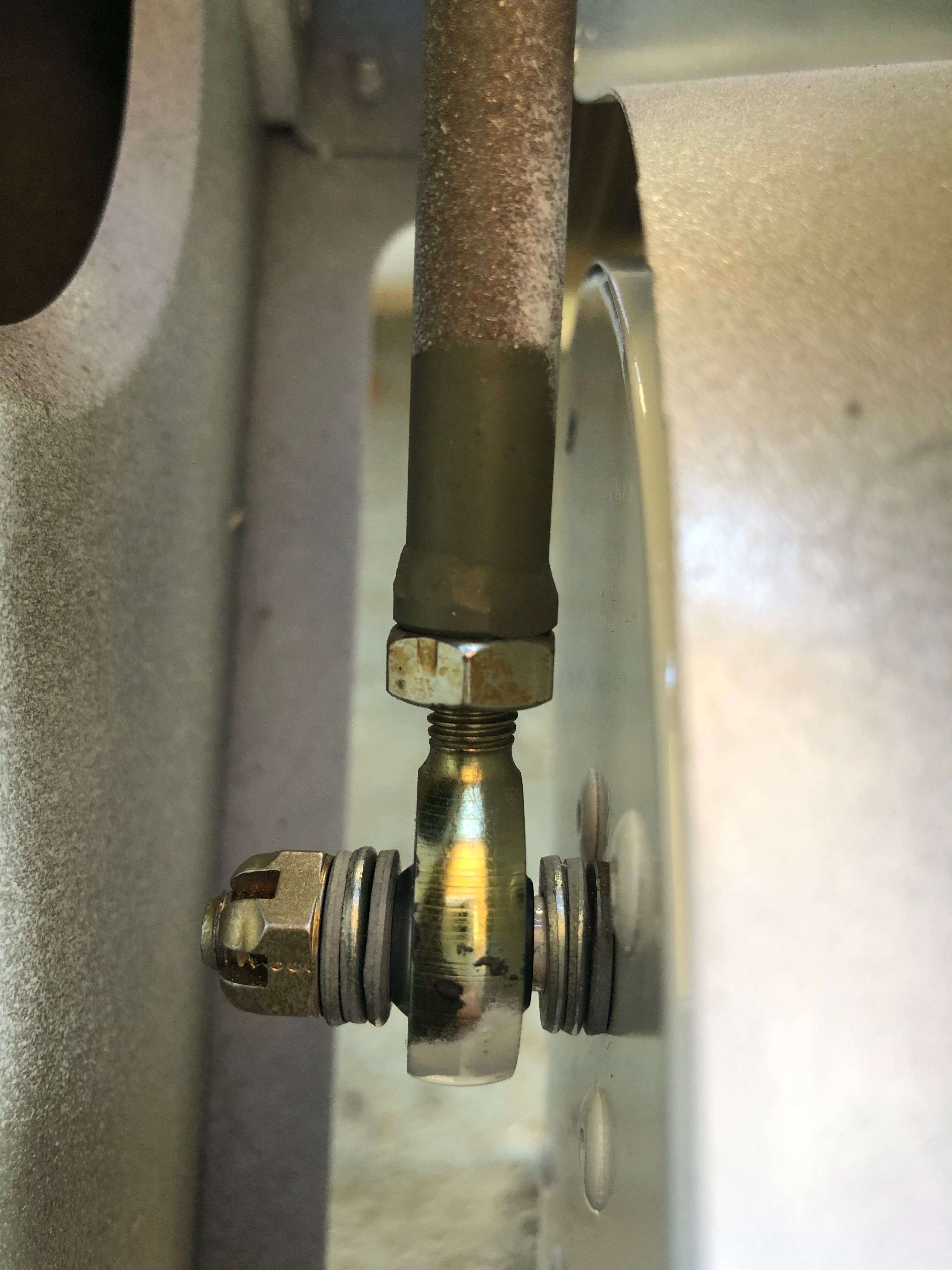
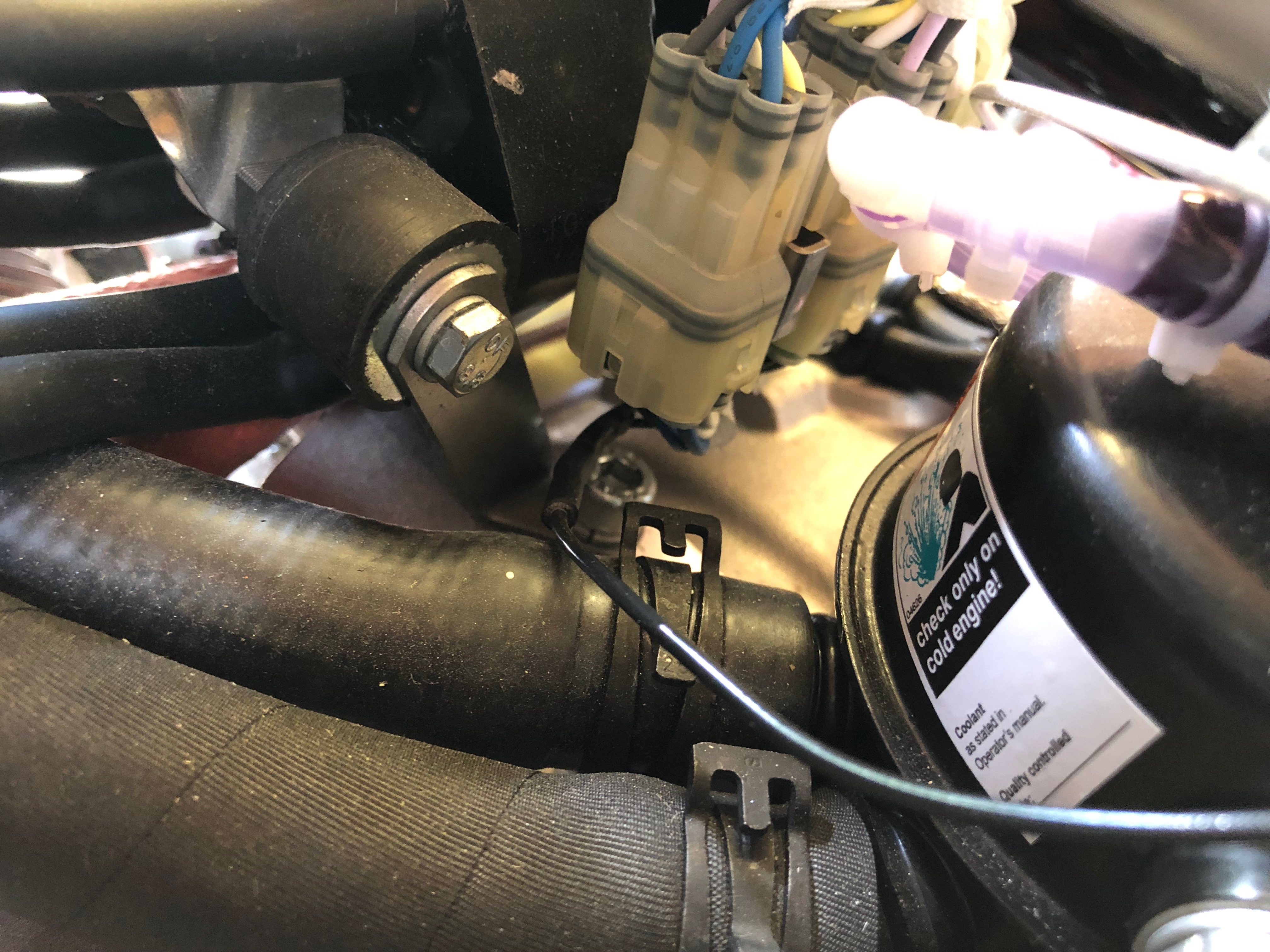
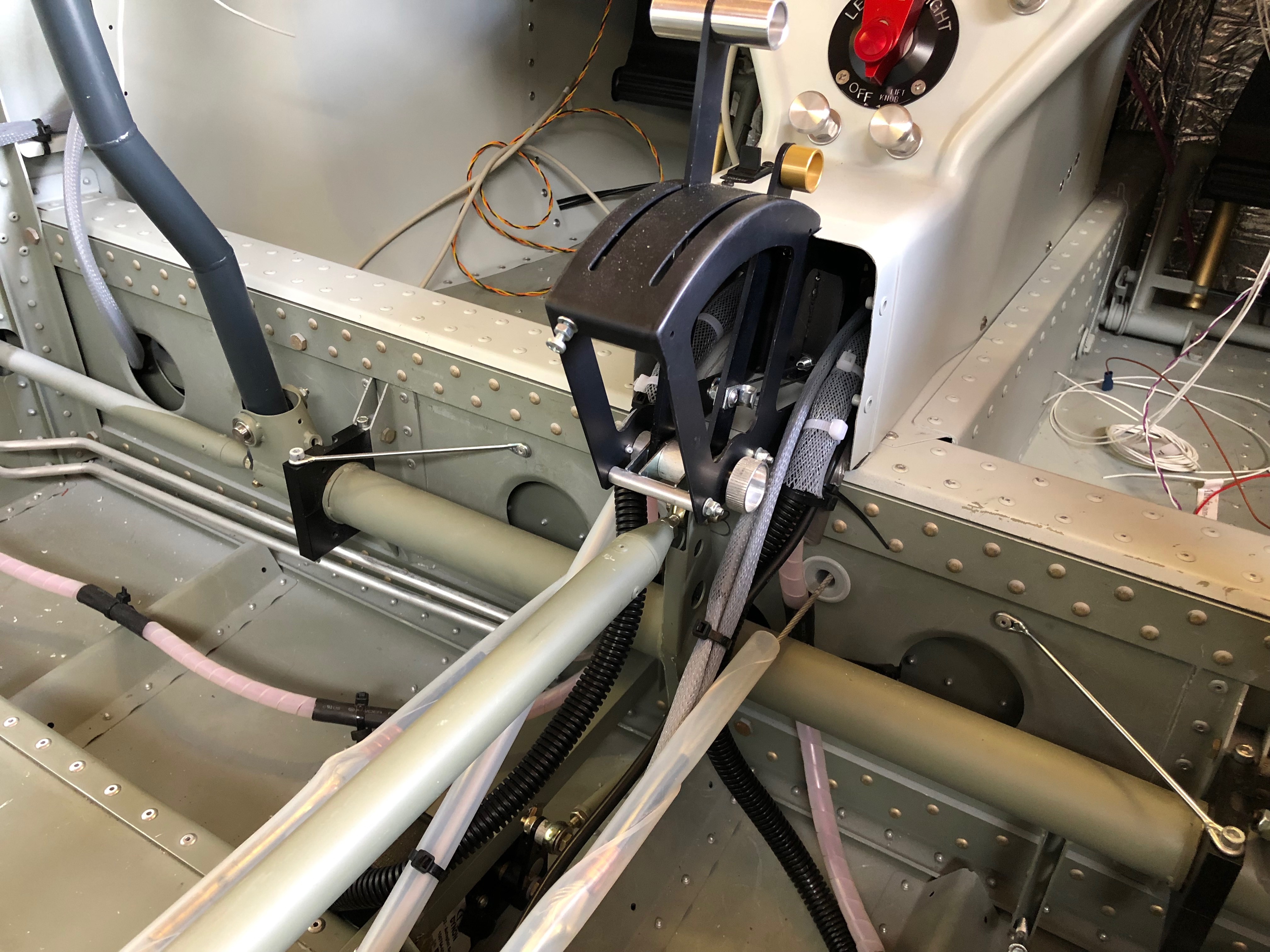
The ACS ignition switch requires 5 wires, Left and Right magnetos, battery, starter solenoid and ground. It uses 4mm ring connectors that are secured with screws and shake proof washers.The carb heat and heater controls require a positive stop to make sure you don’t pull the cable too far. I’ve used a ‘chocolate block’ with the insulation cut off……slid it on the cable and secured it with the 2 screws.The same was done for the heater control.I’ve added a breather in the coolant bootle and run the pipe down the firewall and out under the fuselage.Four bolts secure the tailplane and once torqued to the correct setting are wire locked to ensure they don’t undo.The wire locking is carried through from the top bolt and finished off around the bottom bolt.The flaps require adjusting to be flush with the trailing edge of the wing…The control rod arms have adjusters at either end and are adjusted equally before locking up.
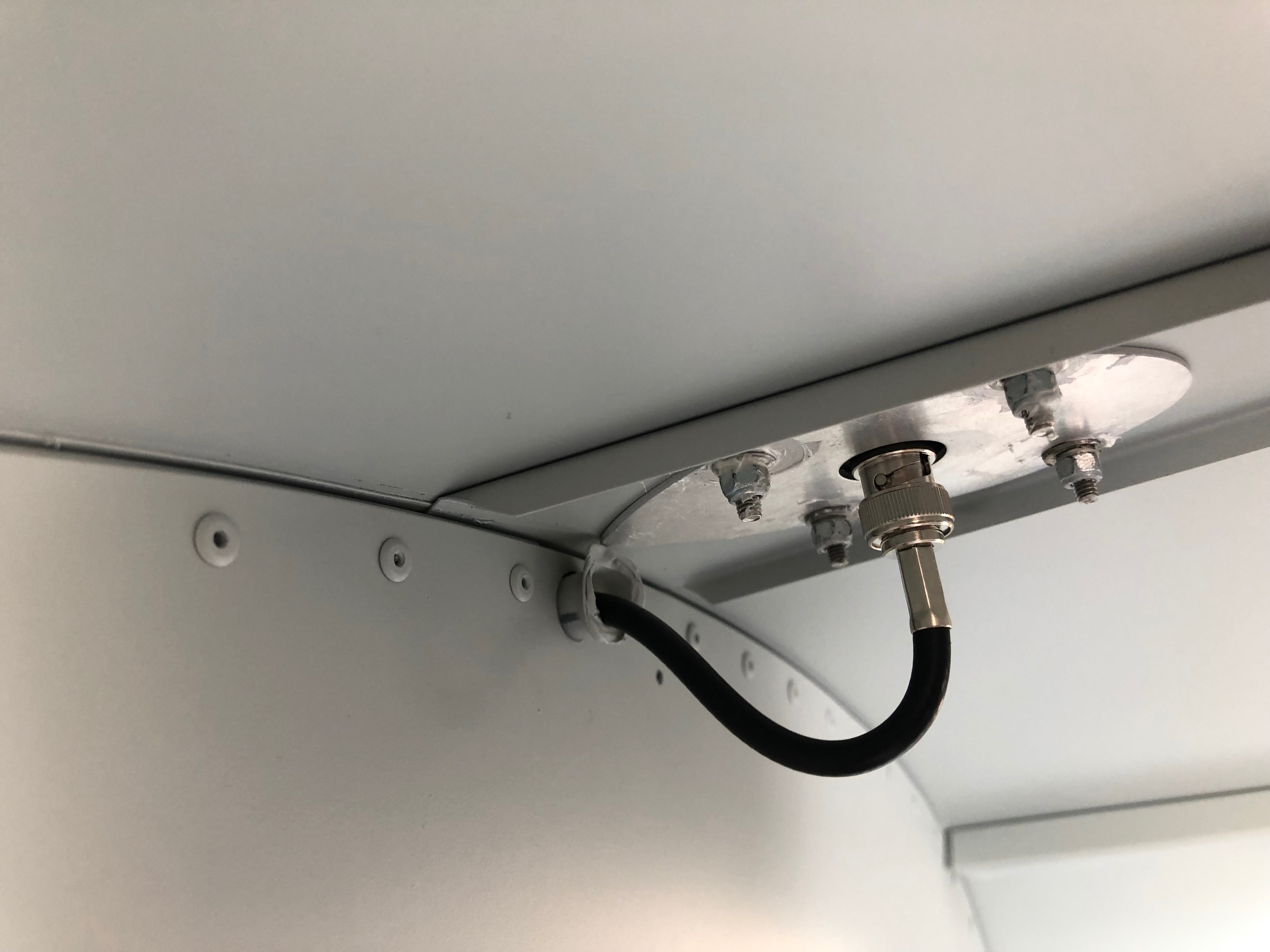
it’s time to fit the wings so I need to add the connectors to the trim, landing lights and heated pitot looms that I have already run in. I’ve also run in the radio coax cable so need to terminate that and carry out a final tidying up of the wiring.
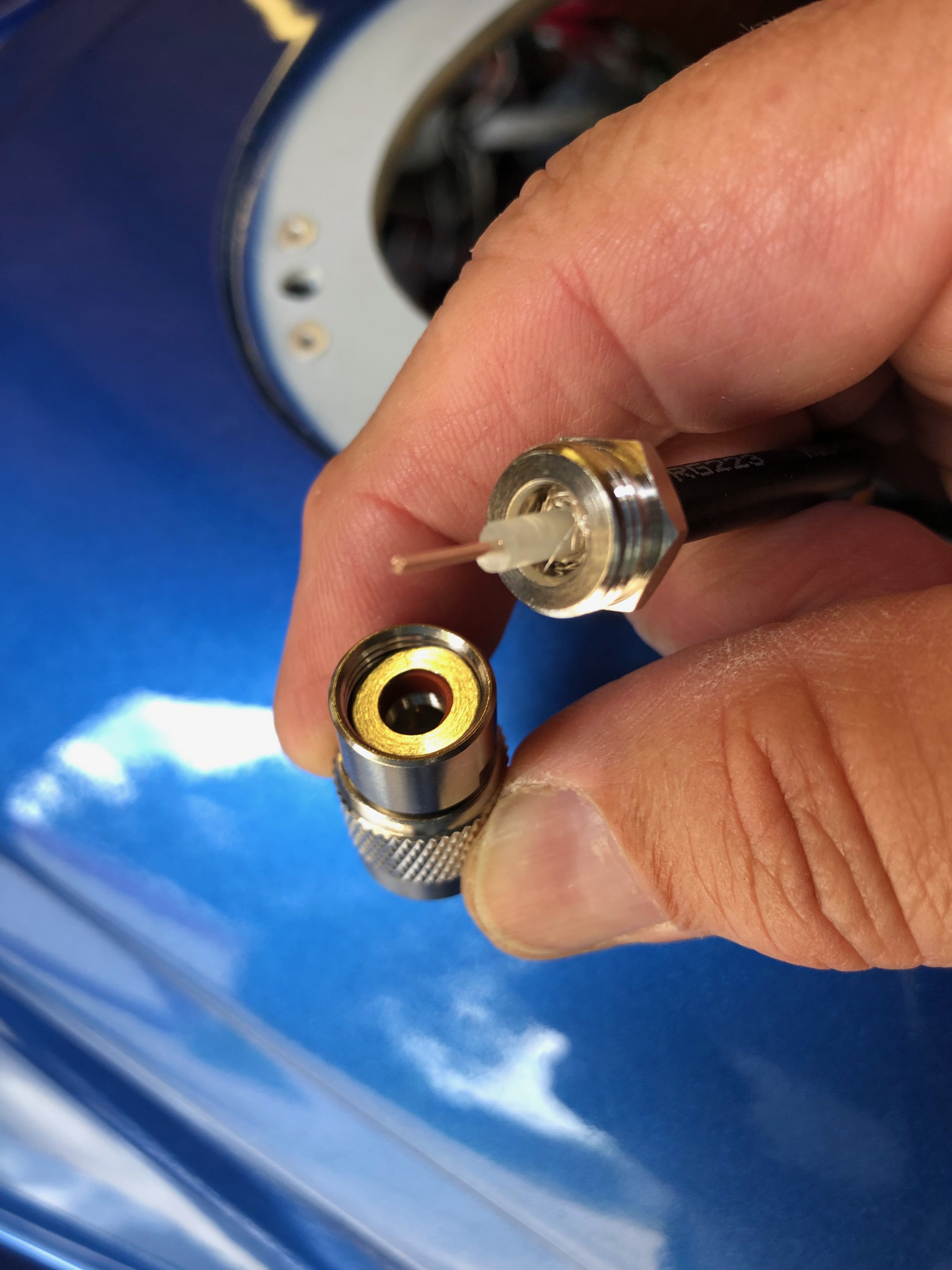
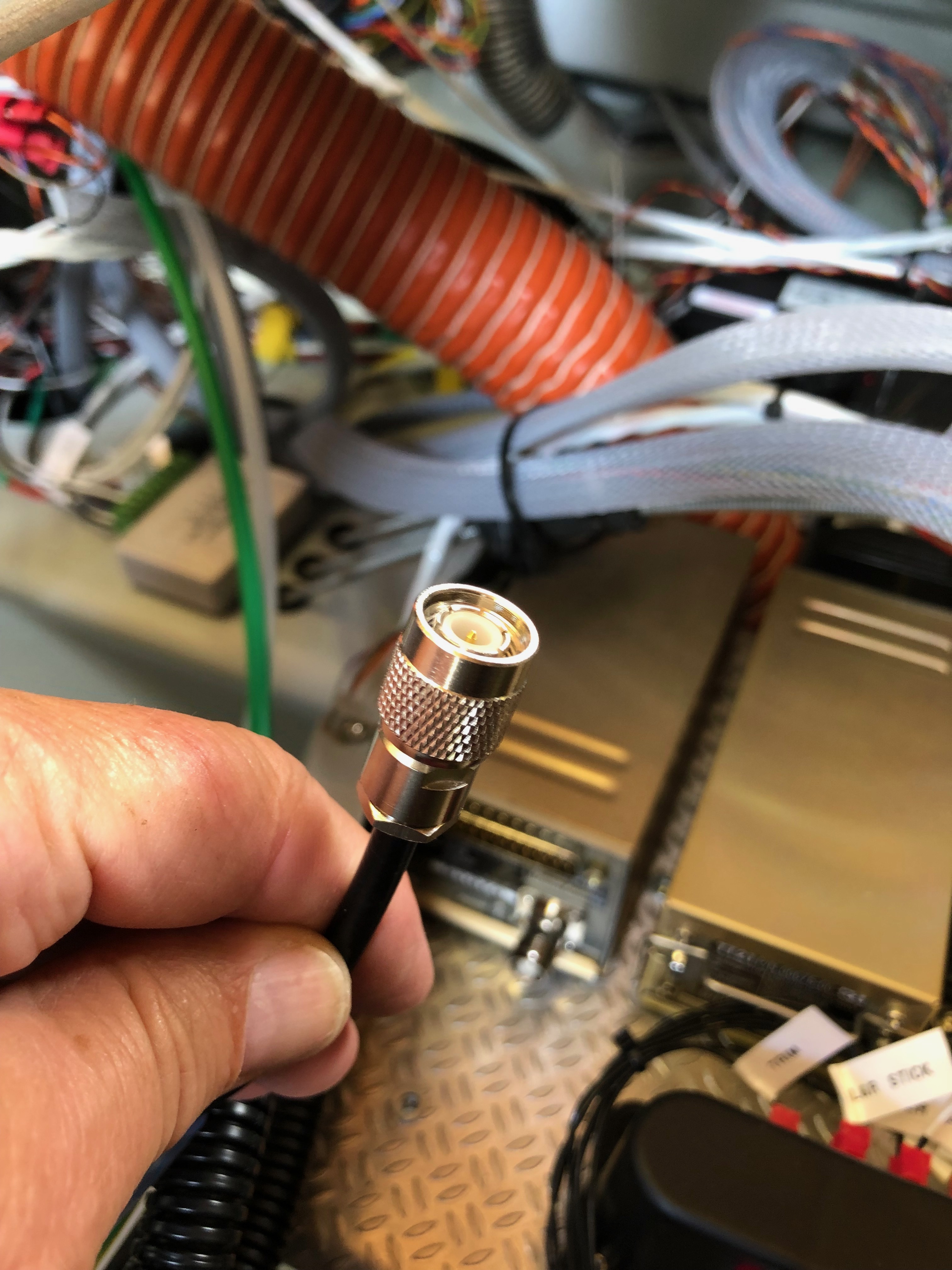
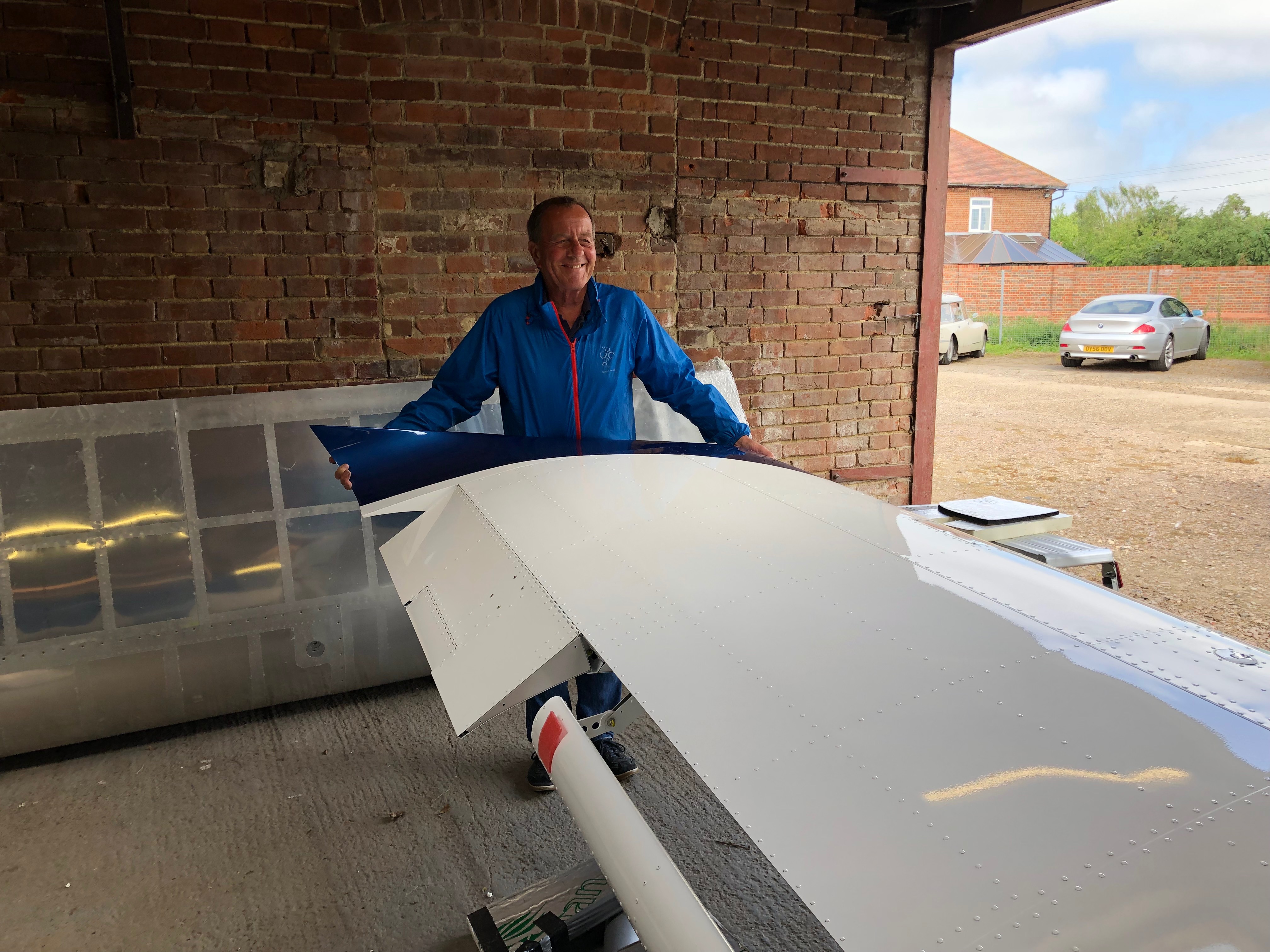
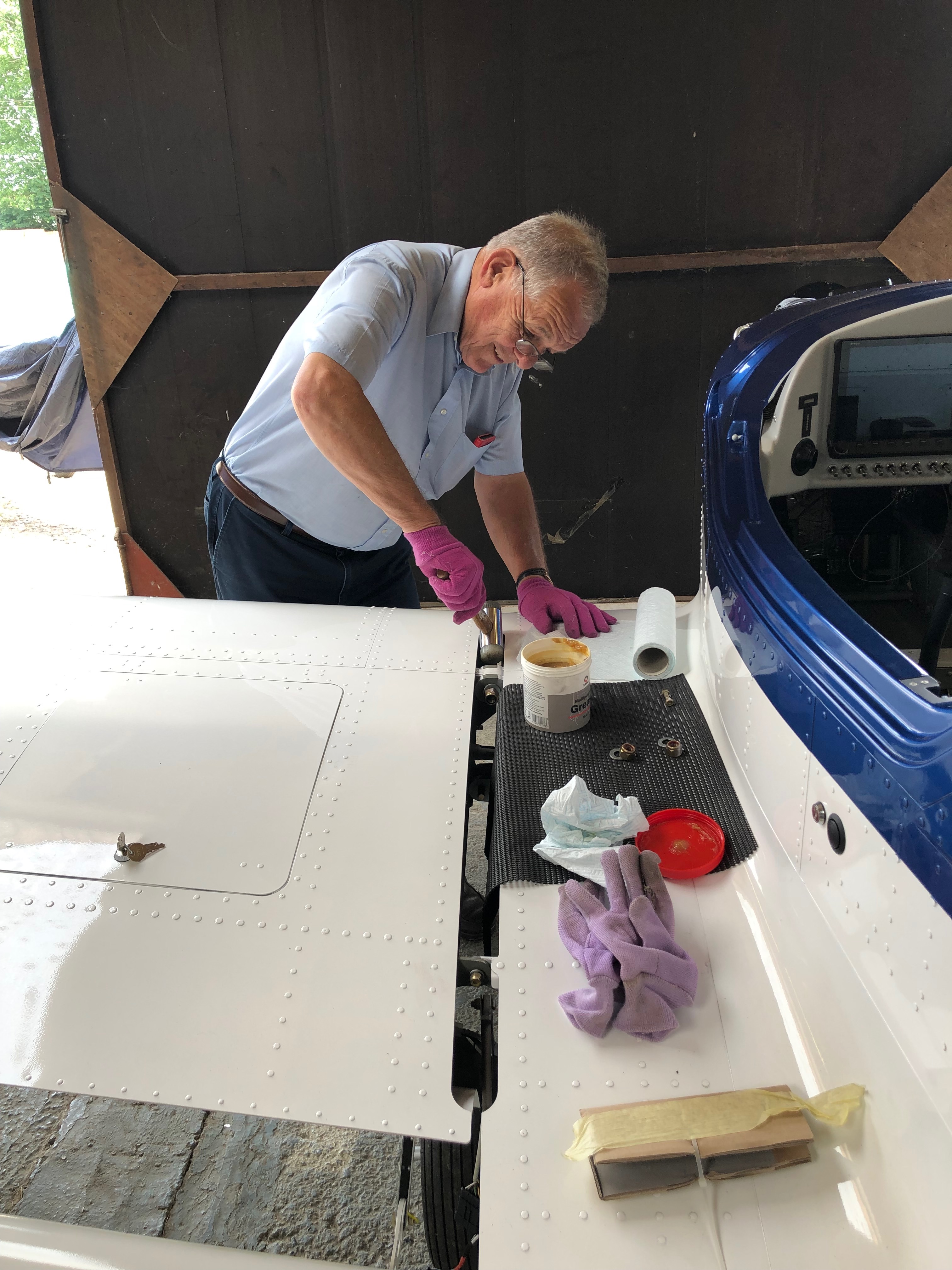
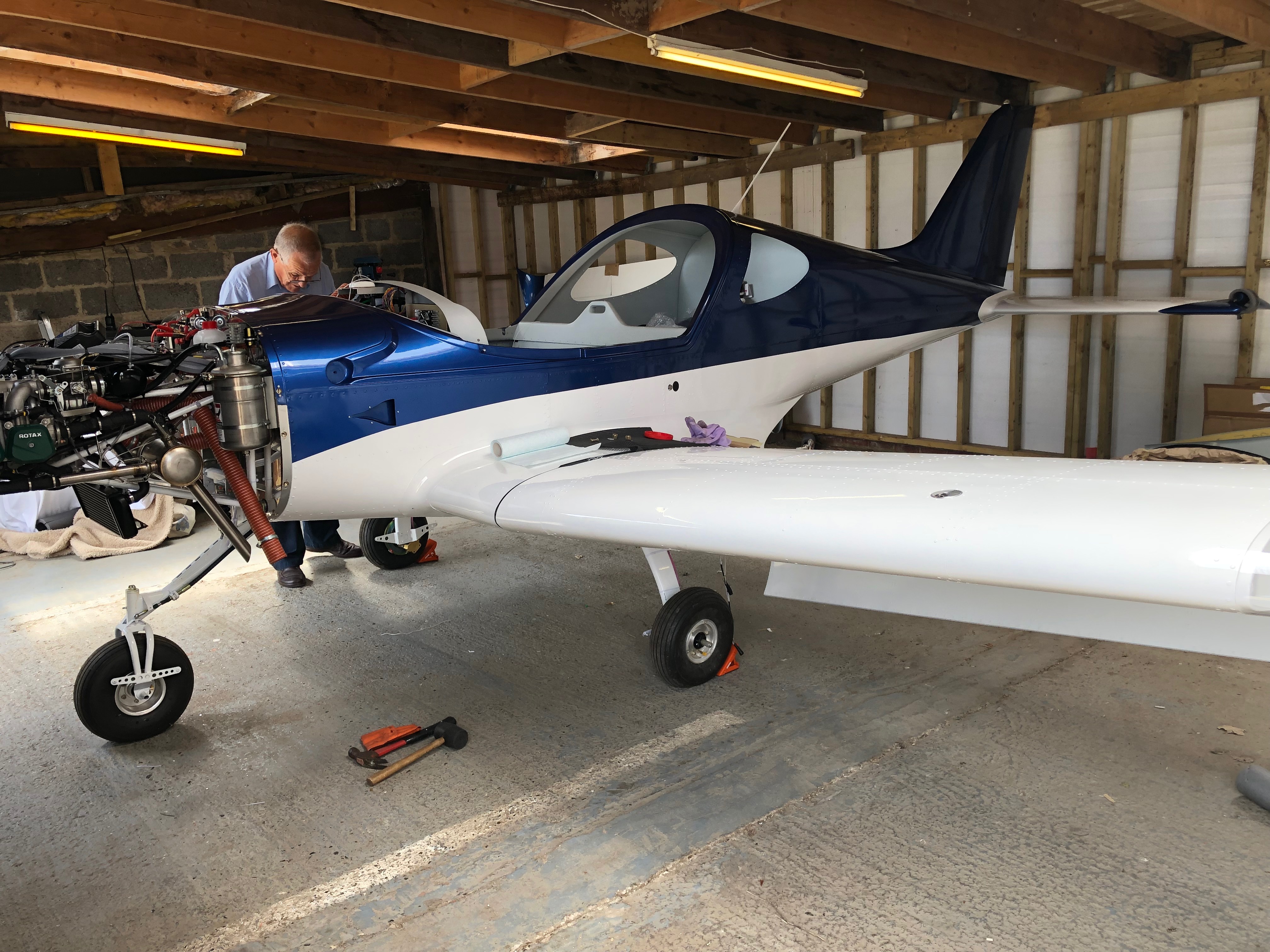
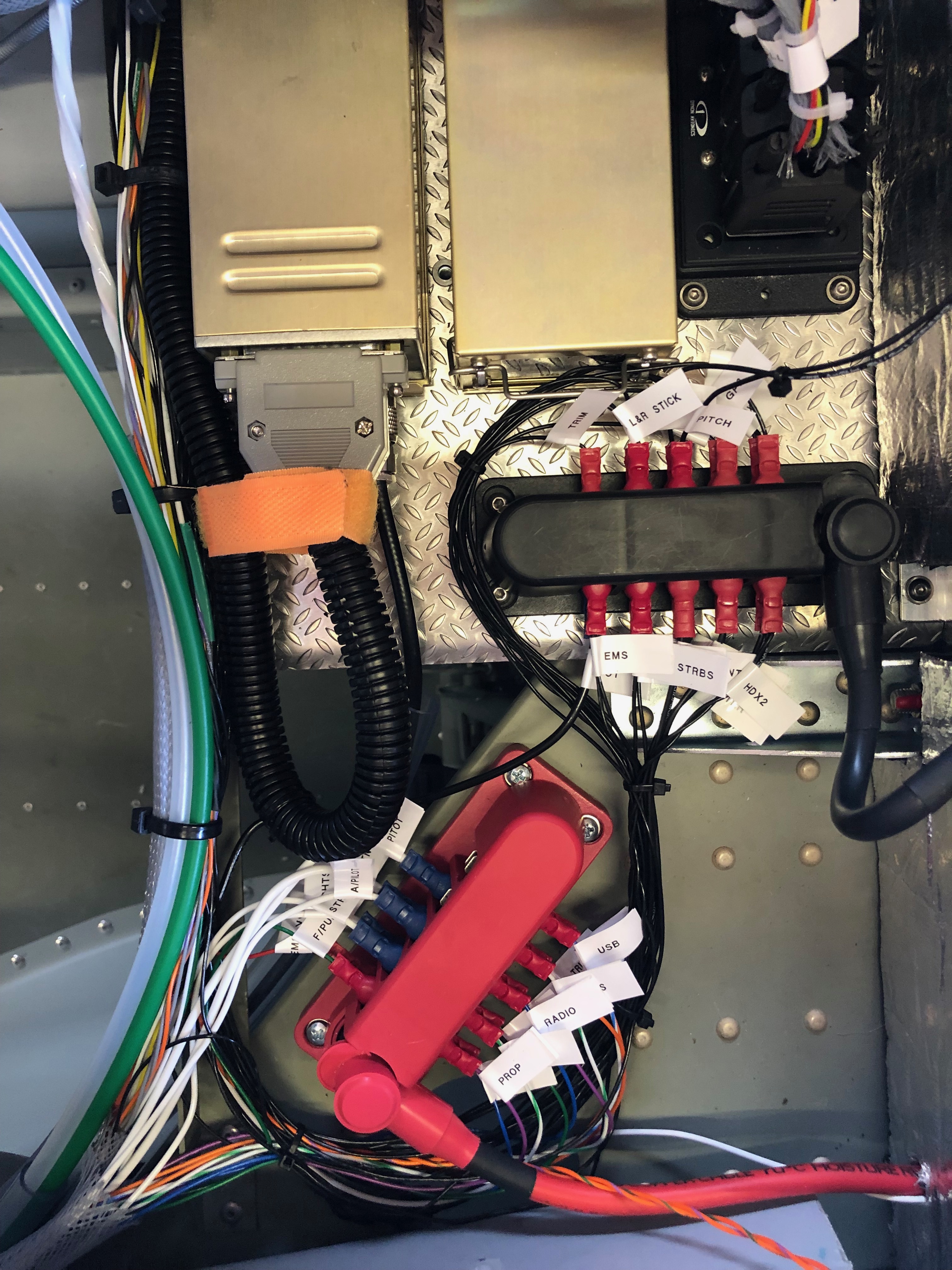
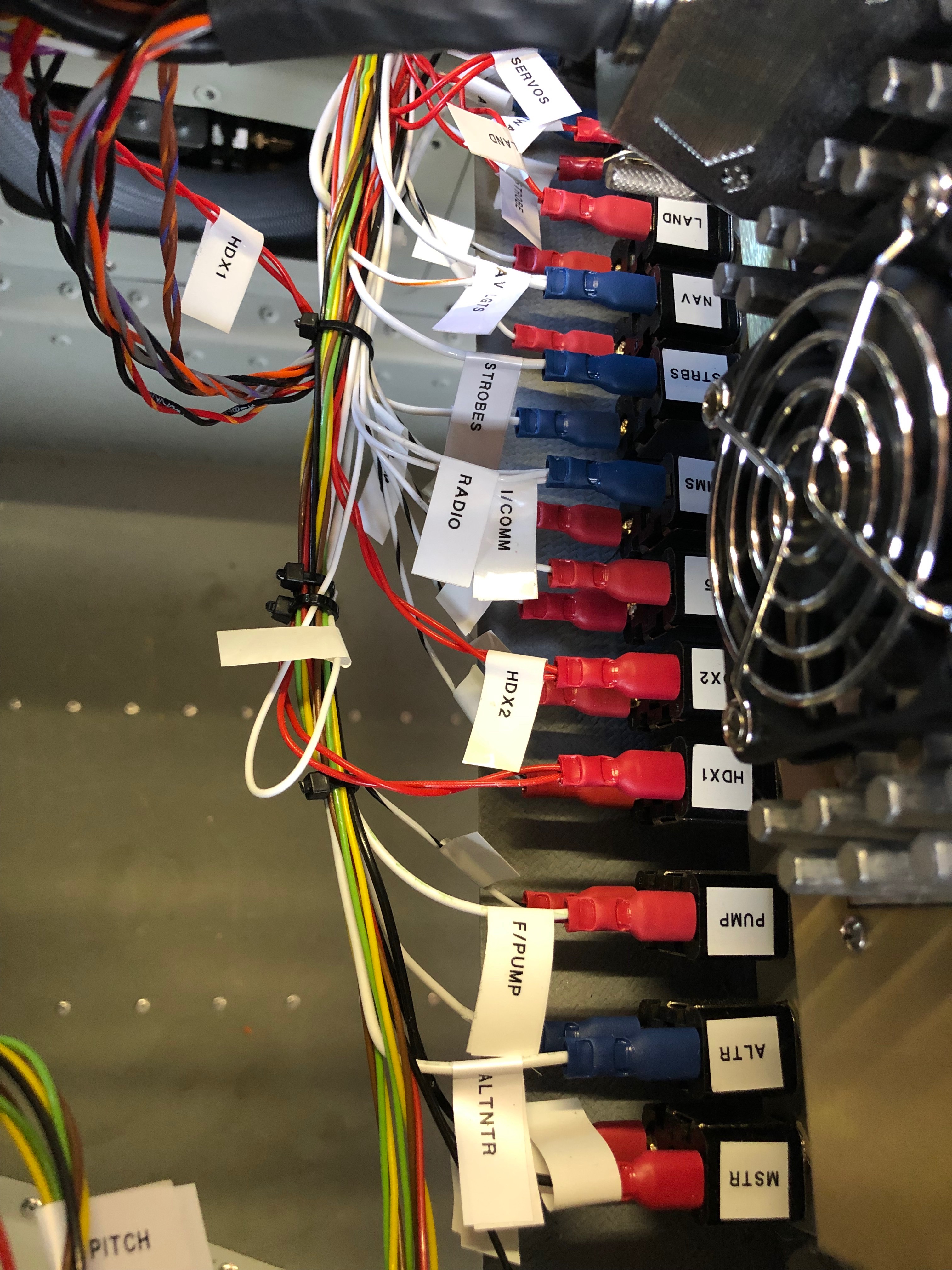
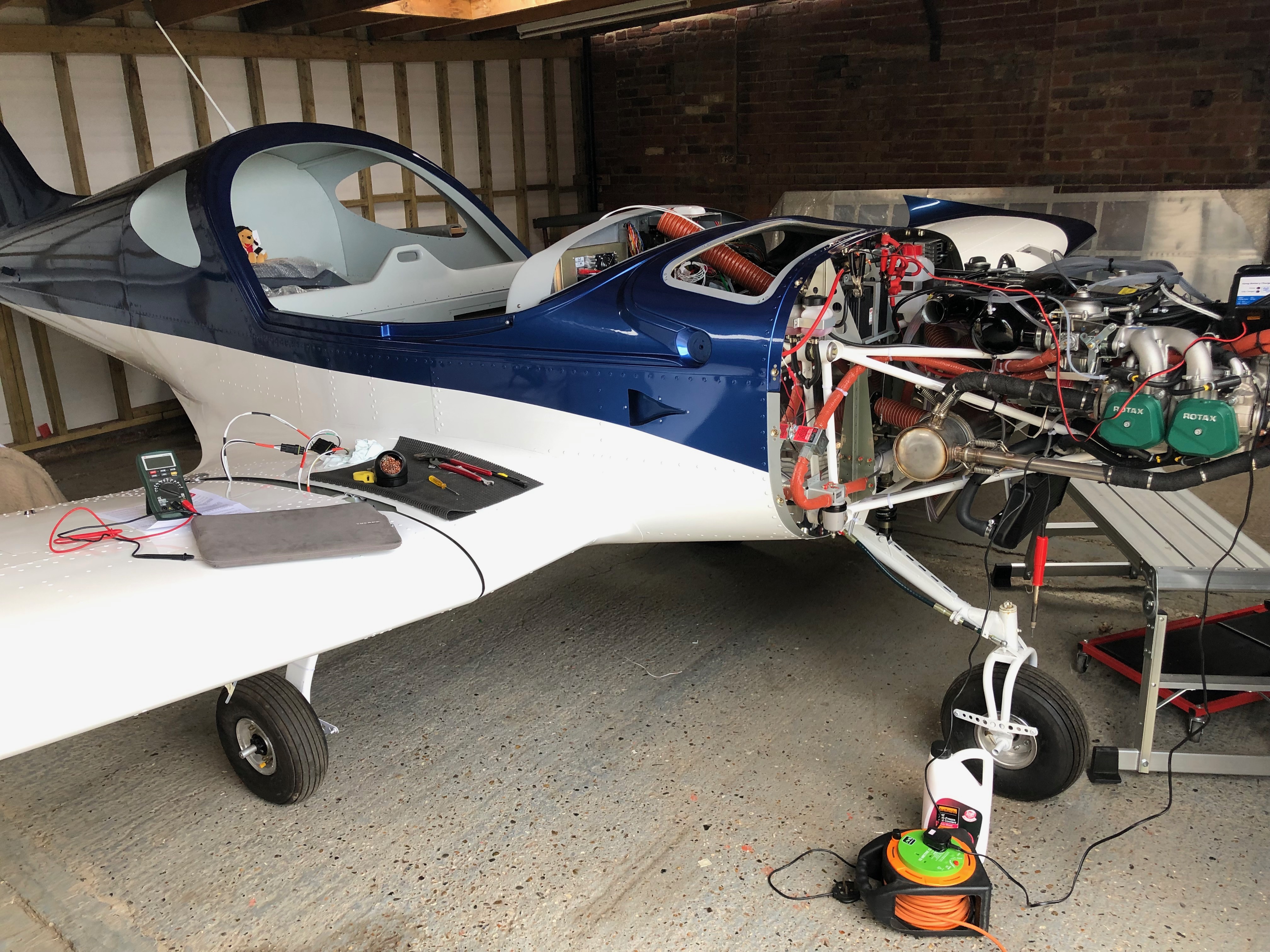
As mentioned before I decided to use superseal connectors as they are failproof and waterproof. I’d already completed quite a few of the connections but was distracted by another job. Whenever I’m distracted I always document what still needs to be done in my project plan.With all the connectors added the next job is to add an Amphenol to the end of the coax cable. It’s quite a complicated connector so I needed to test i on a cut off first. Once cut and trimmed the connector is soldered on to ensure a good connection.The finished connector, fairly straightforward but just needed to be thought about before committing,Now time to fit the wings so I can set all the ailerons, check the pitot, trim, flap, strobe and landing light circuits are working as wired. Ian and Peter Sharpe have offered to help and as usual Ian wears his designer gloves for the wing lift process. He looks quite fetching 🙂 Peter Sharpe at the ‘sharp’ end adding invaluable assistance. Once the wings are attached the main bolts need to be tapped home with a small nylon mallet before the nuts are added.With the wings added she’s a tight fit in the hanger with just 6″ between the front door and rear wall. If I had fitted the prop she wouldn’t fit!Now all the wiring has been completed and checked I can start to tidy th wiring. Ovrall I’m quite pleased with the results. Circuit Breakers……Bus Bars……Equipment trays and connectors…… and switches. All look a lot tidier now.She’s coming along nicely now and it won’t be long before I can start engine tests…
Finishing off the trim wiring, fitting and wiring the control stick grips,
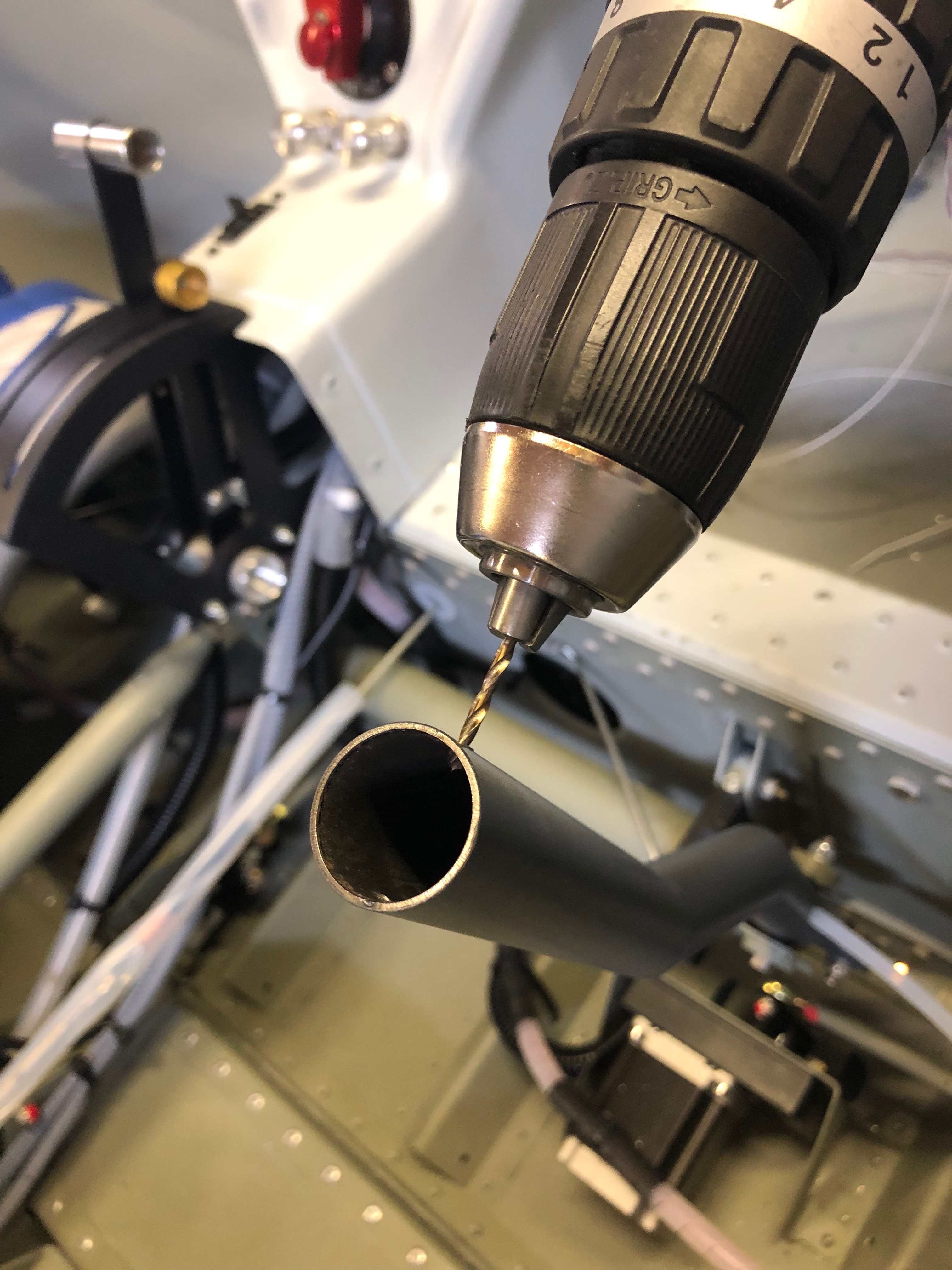
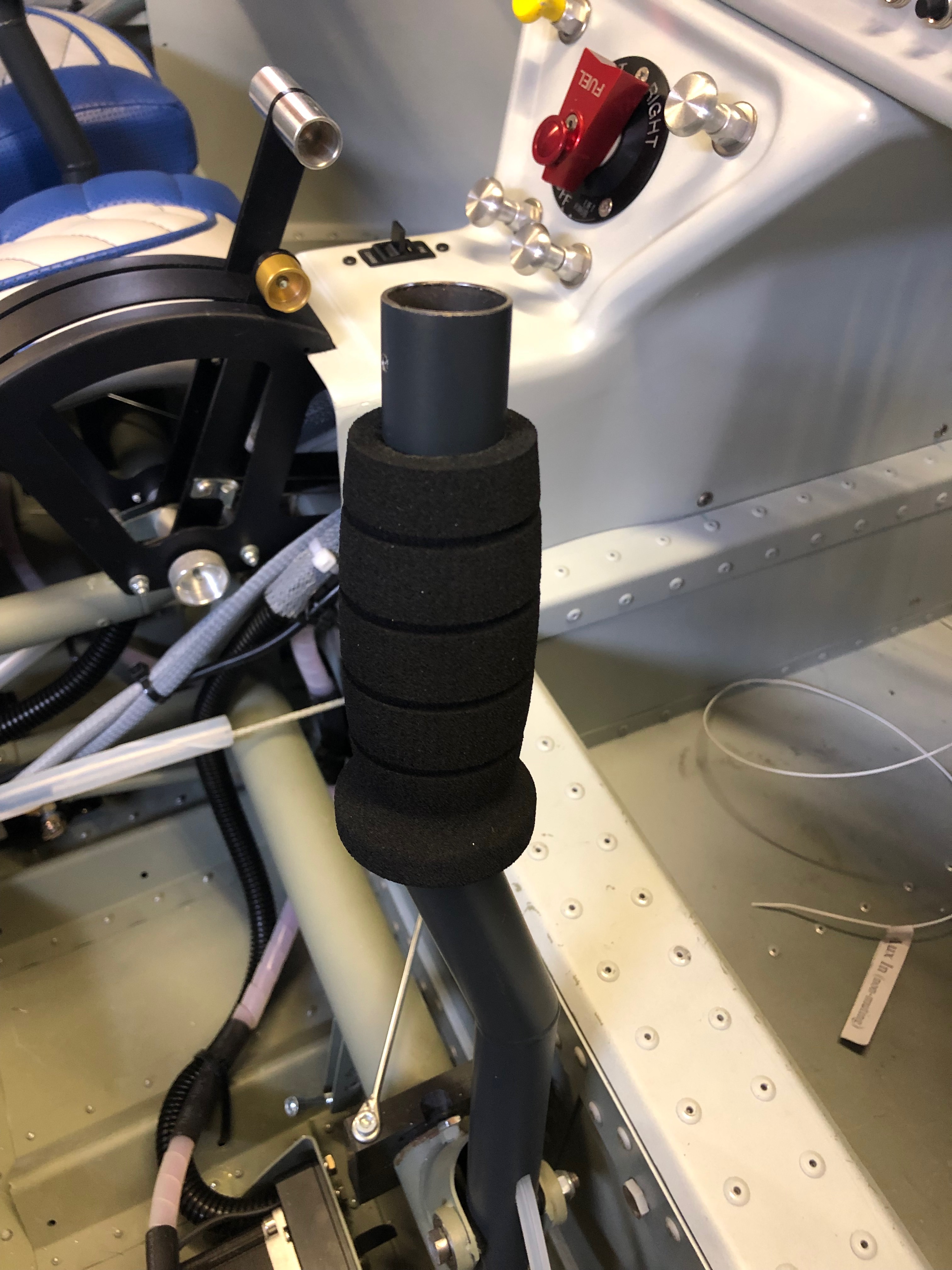
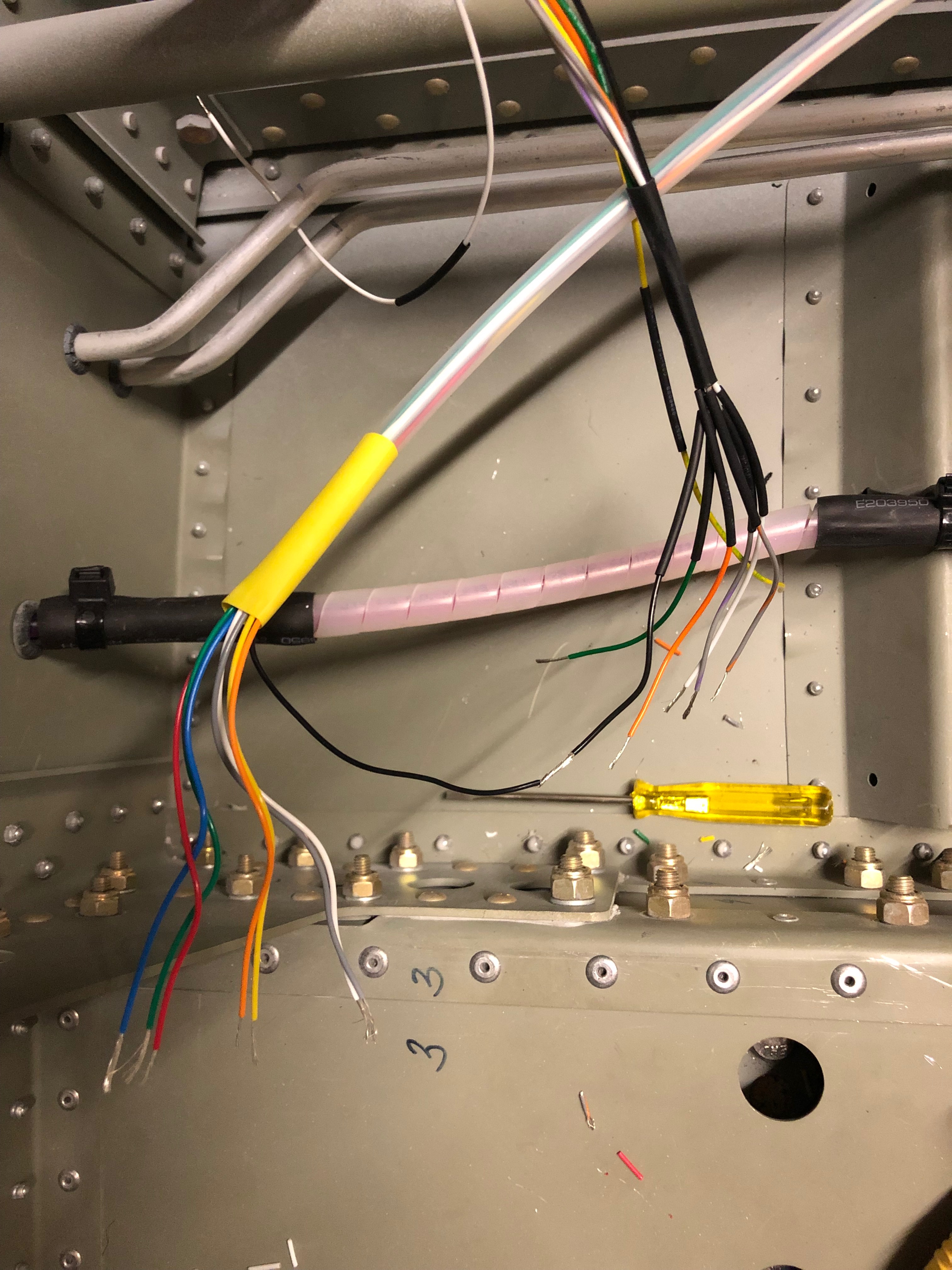
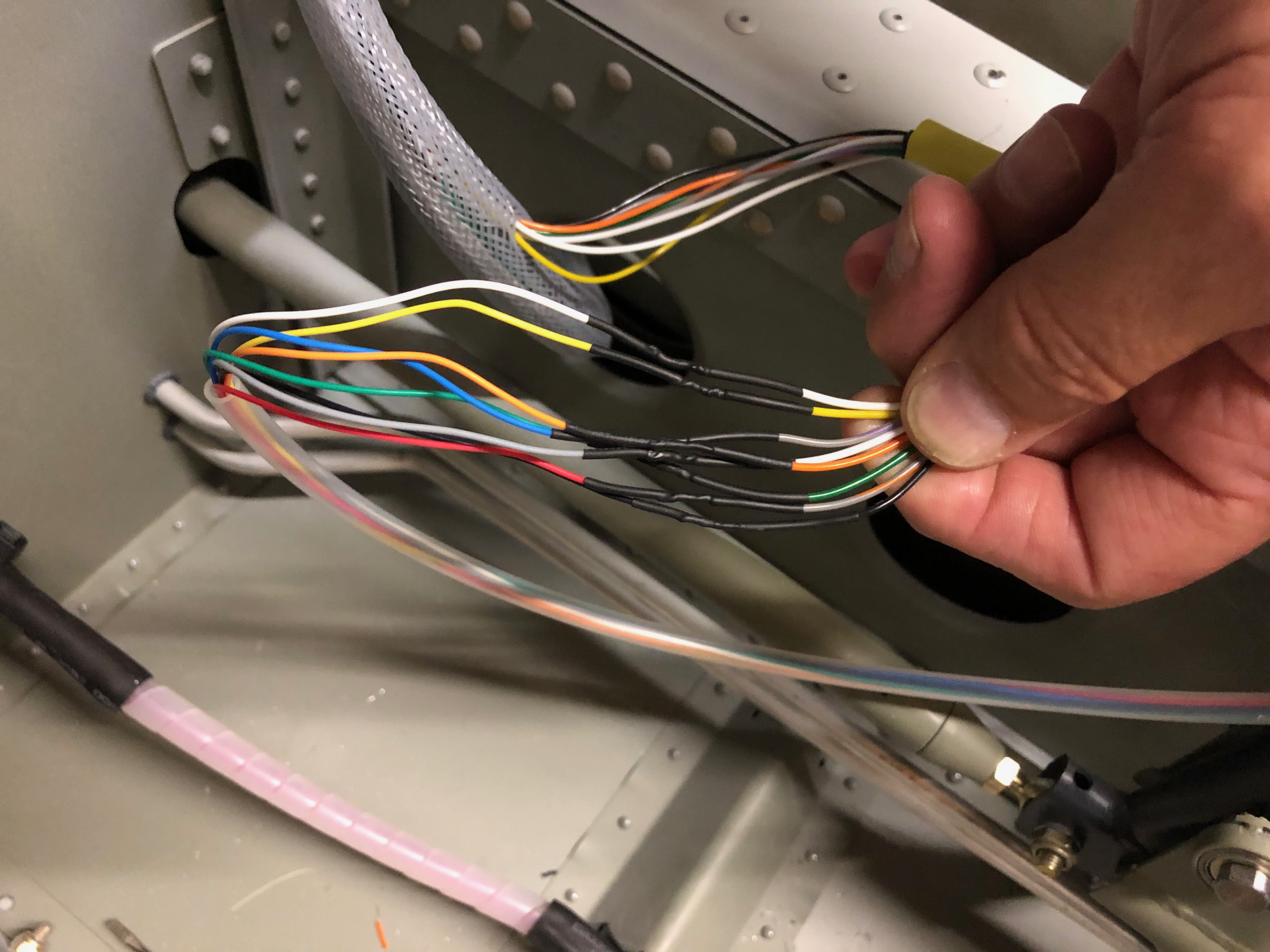
After a lot of head scratching the trim system is finally wired just need to wire up the control sticks to finish off a very long day.The Bristell trim kit supplies G405 stick grips but I wanted to add a autopilot disconnect switch on the stick so went for the G407 instead.It’s suggested that that the stick grips are riveted to the stick but I think it better to drill and tap so you can remove them easily at a later stage if required.I’ve used M3 button head screws to secure the top.The stick grips are slid onto the control stick but are a very tight fit so require a bit of lubrication to ease the process.With the stick grips fitted I just need to wiring them up. Pleased with the result so far..Another batch of wires. This time eight the need to be soldered together. The only difficult bit it mapping the differing colours between the control stick and the wires that are connected to the trim controller.Soldering complete just need to record the colour mapping for my documentation.
Amazingly more wiring today! Next on the list is the trim system. Once that’s complete I’ve arranged to get some help to fit the tailplane and then finishing off with making a start on wiring the ignition switch.
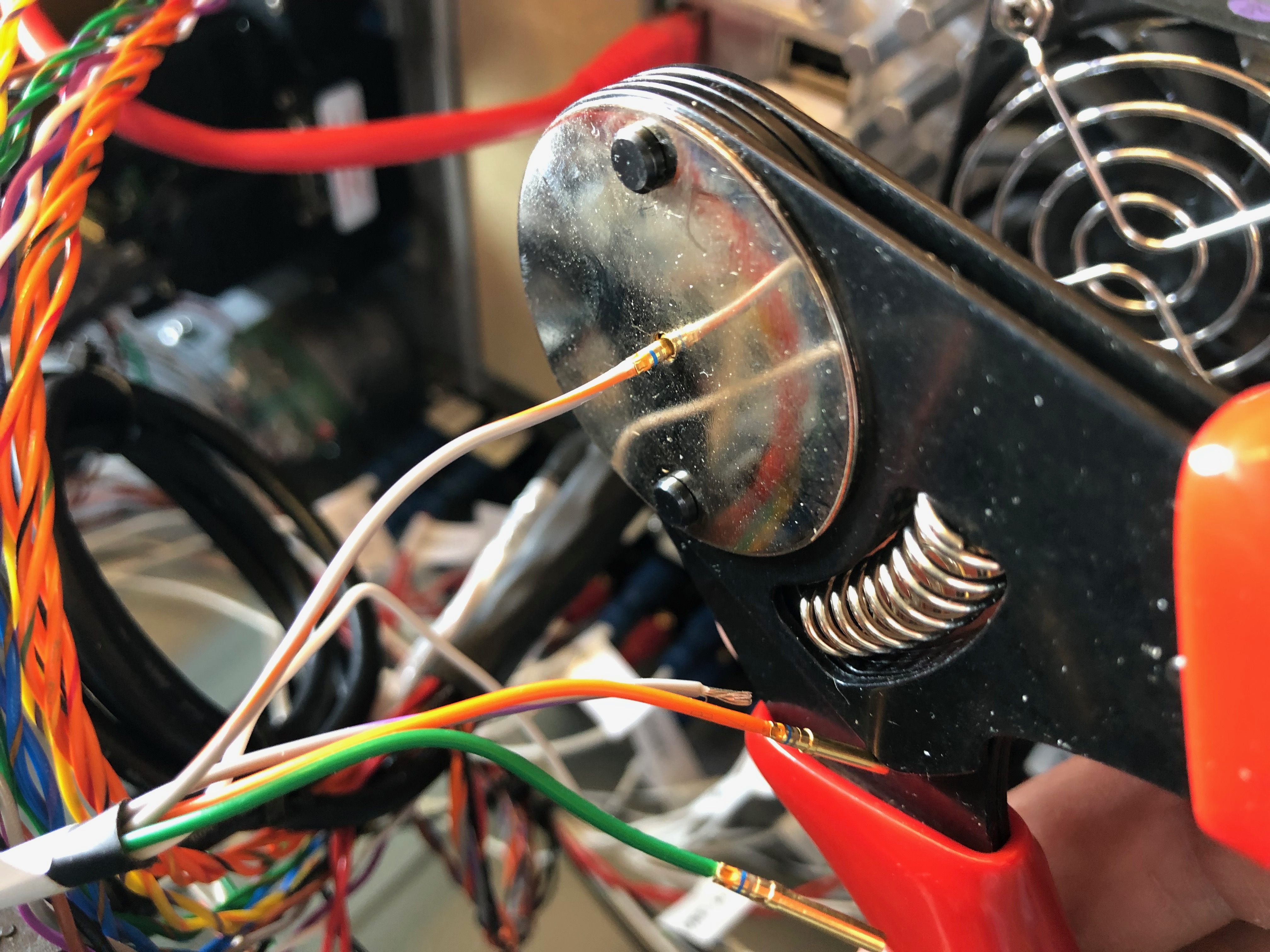
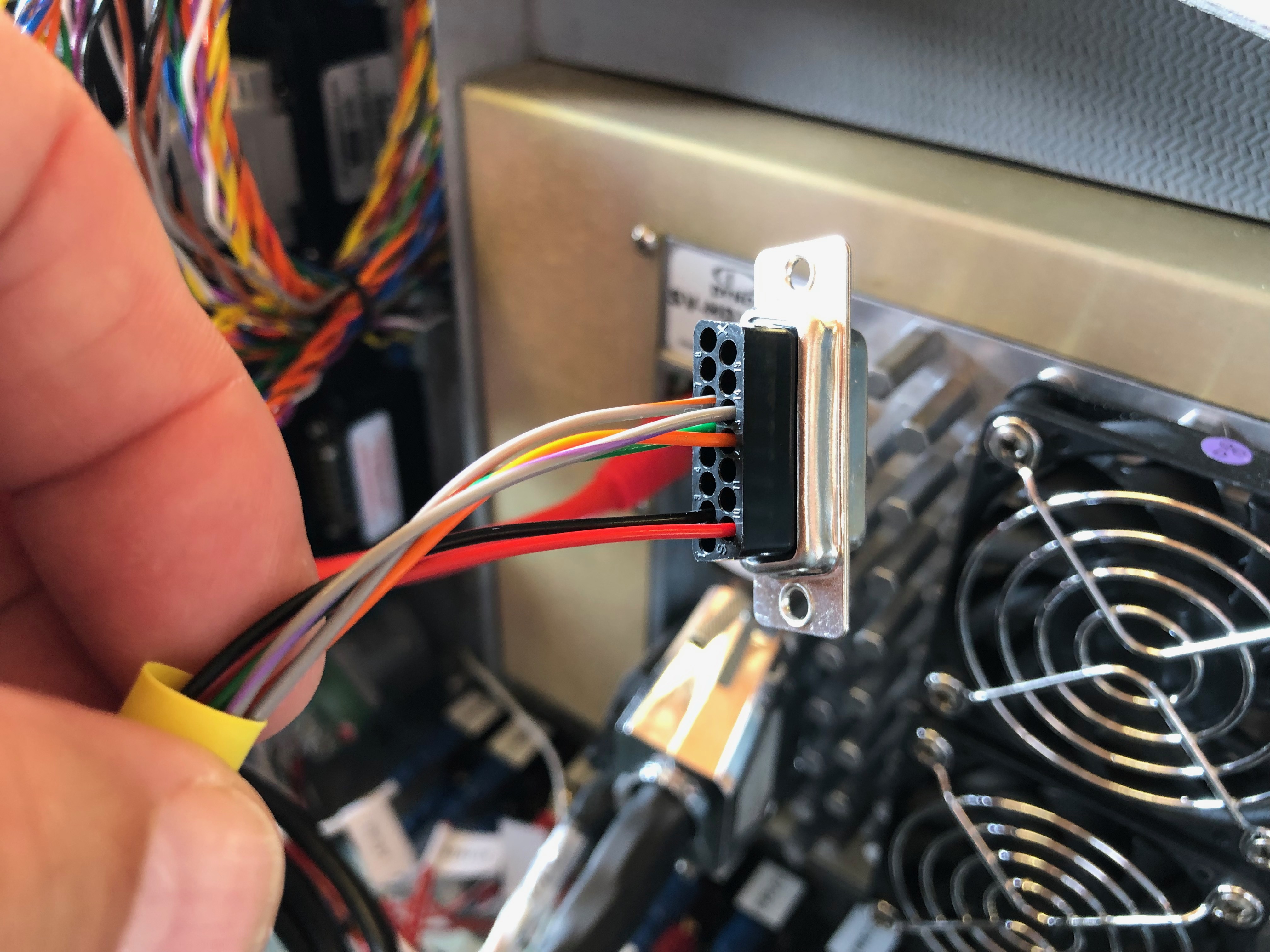
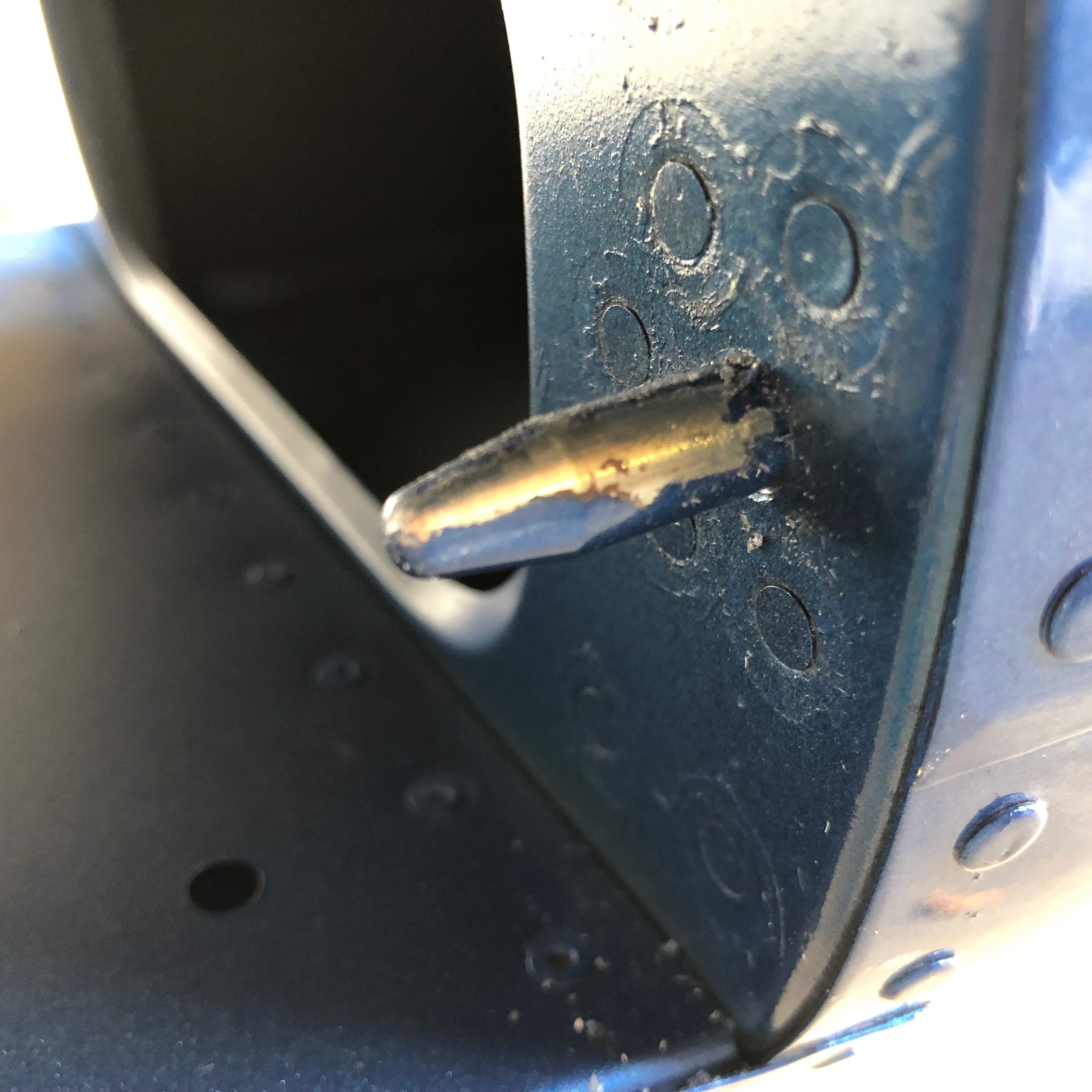
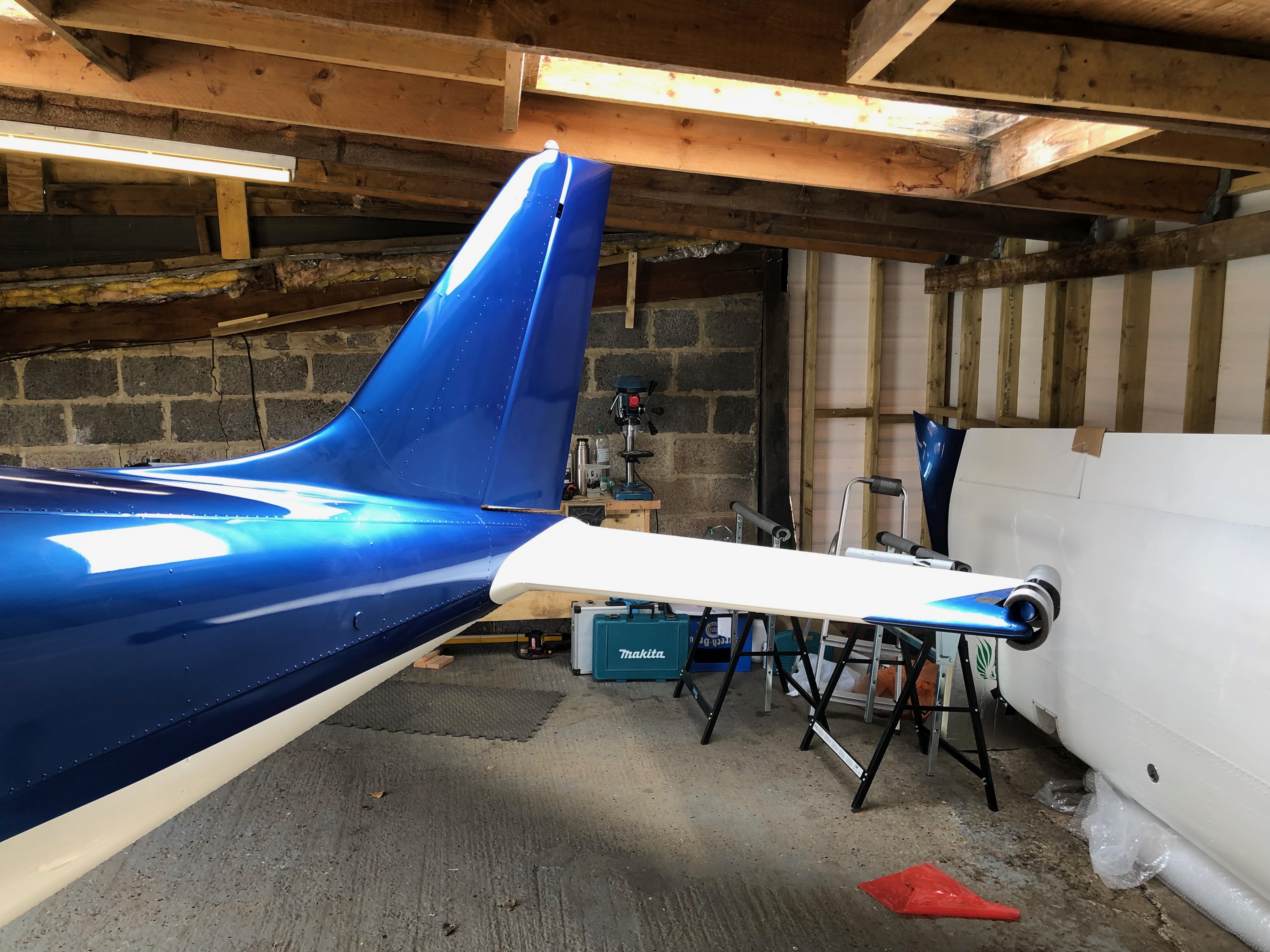
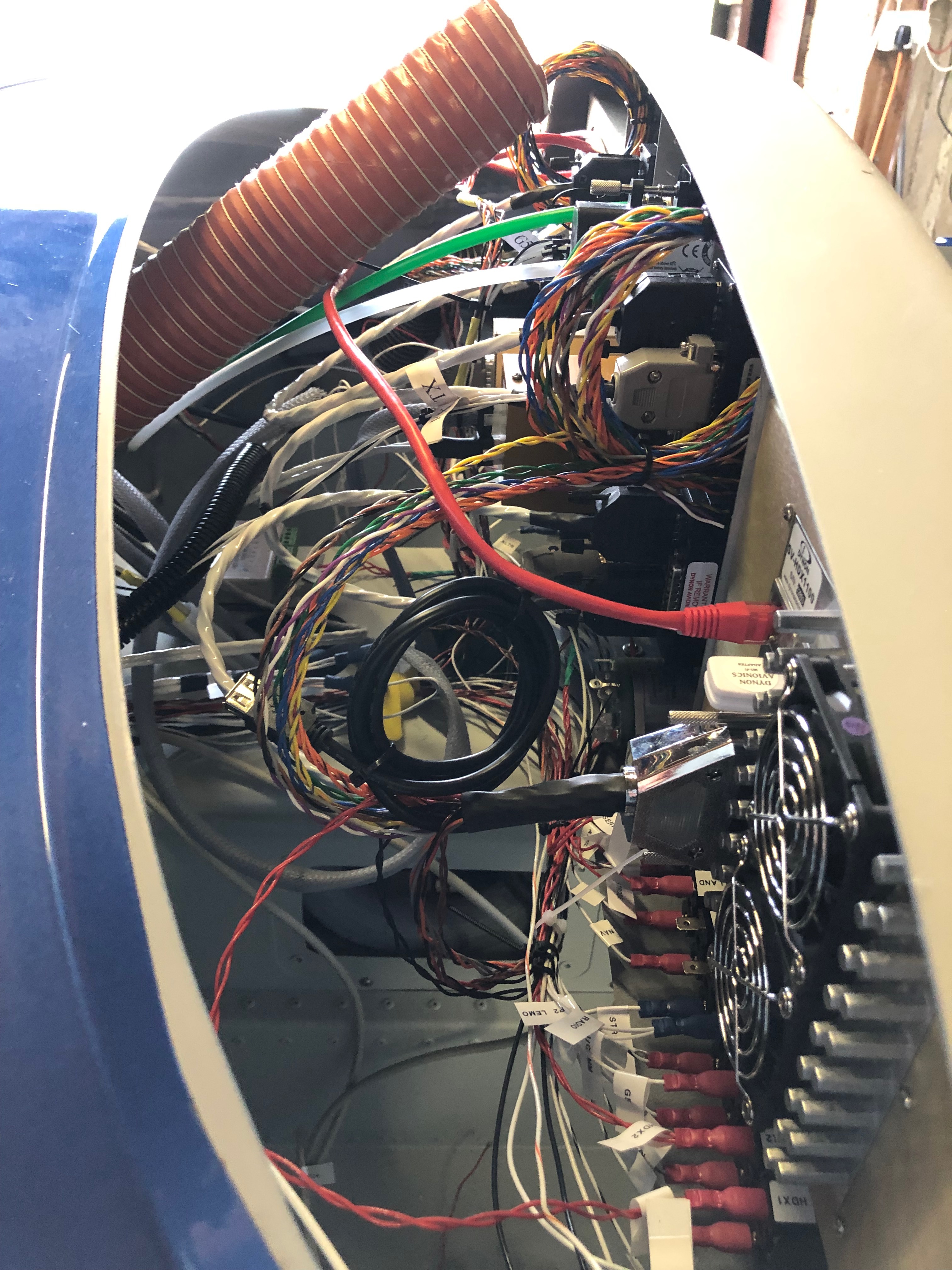
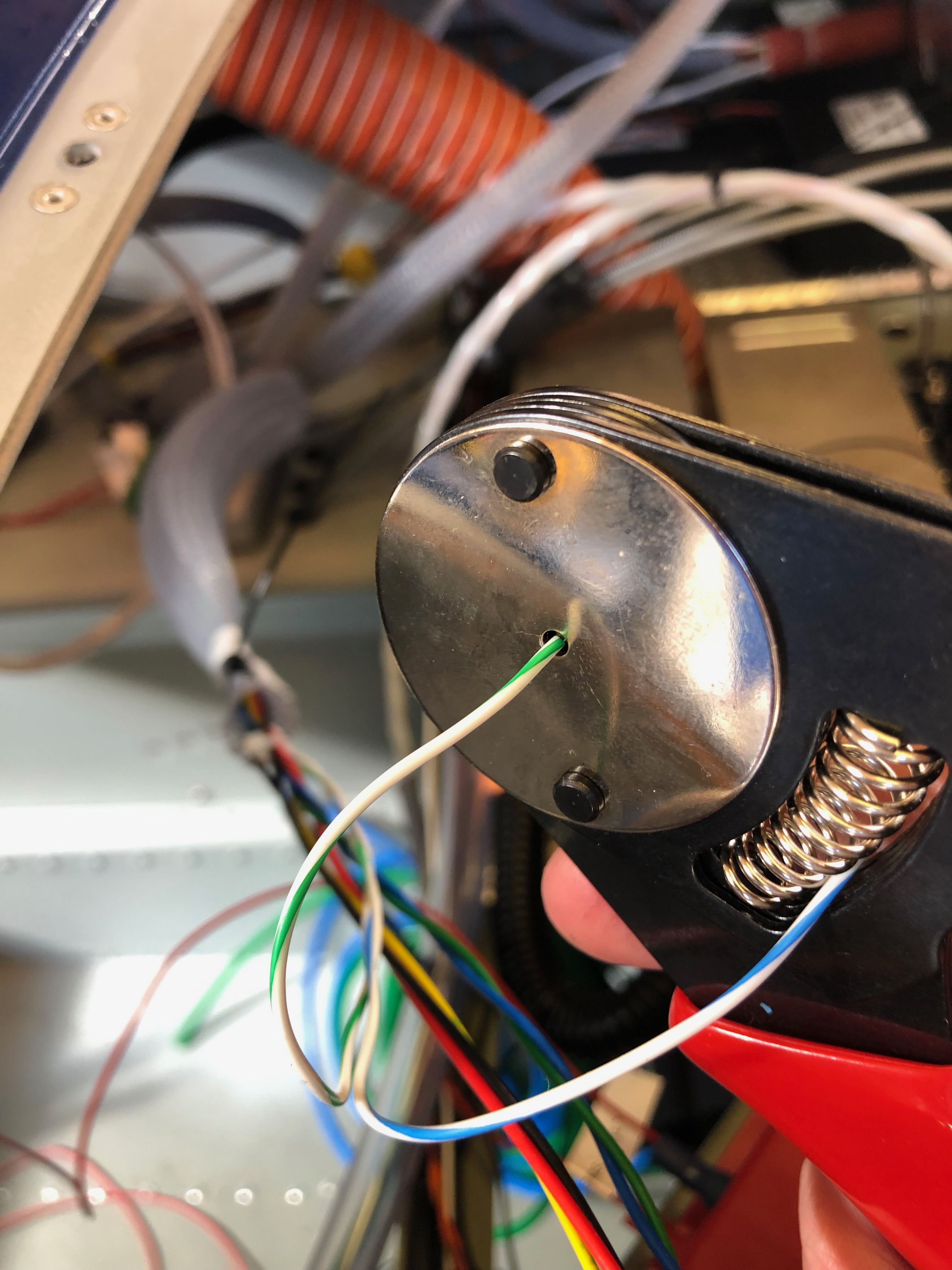
Most of the Dynon connectors consist of a loom of wires but they’re not normally terminated so require the pins to be crimped on with a 4 jaw crimping tool.Partially populated but a lot more wires to add.Fitting the tailplane requires 2 people. It locates on 2 pins that ensures the correct placement. All paint and debris needs to be removed and then greased before attempting to fit the tailplane No pictures of the process as it was quite tricky to fit. Job done. The tailplane is secured by 4 bolts that are torqued and up before being wire locked.Next a start on the magneto switch wiring. The two connectors have two holes that are wired and run to the ignition switch.The wiring of there were very difficult and didn’t go to as I expected. The instructions give the impression that the pins can be slipped into the plug whilst they are still connected but this wasn’t the case. They needed to be separated first before the pins could be inserted. Took about an hour to sort this out.The engine wiring is now complete and look quire neat.
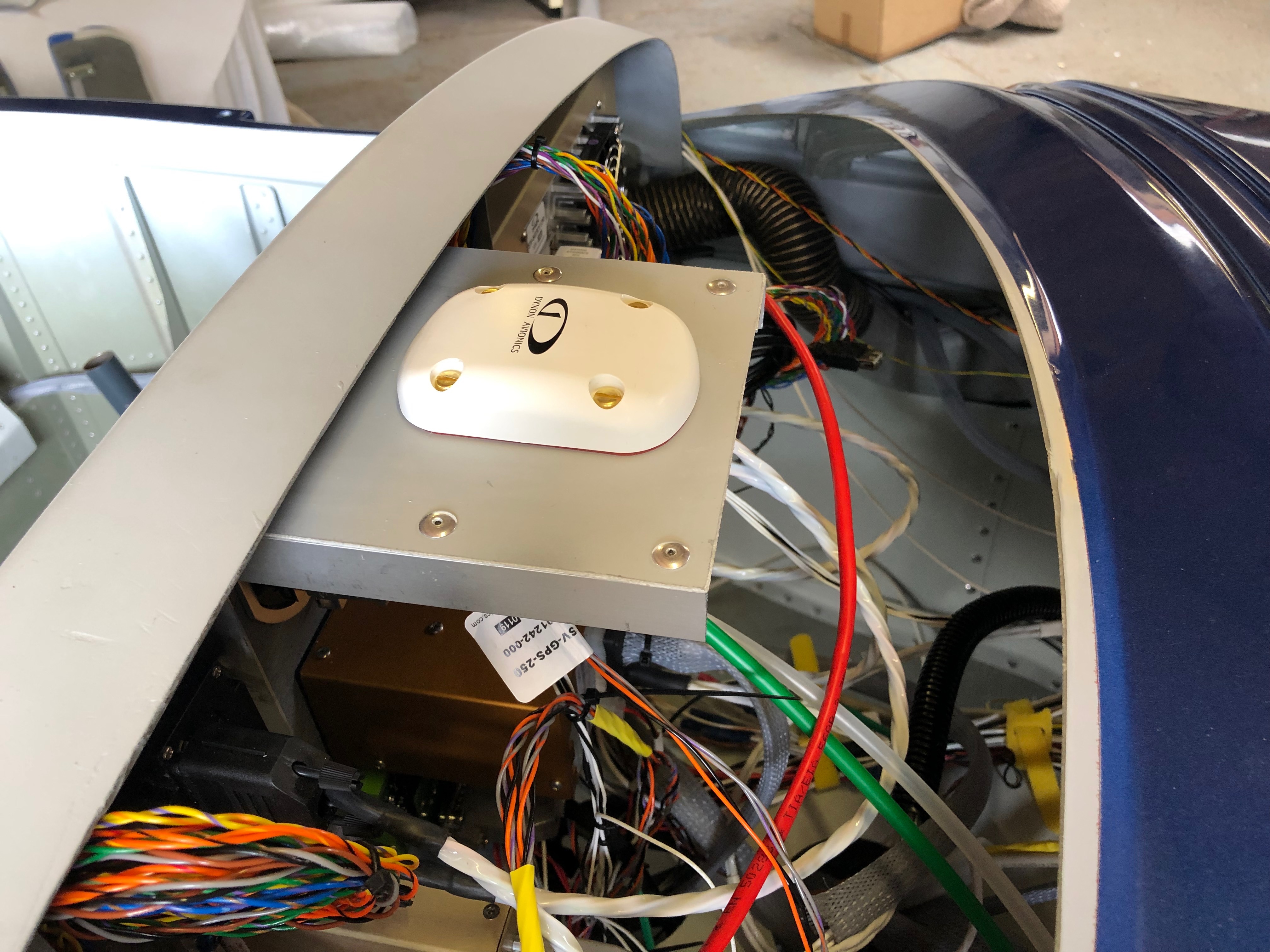
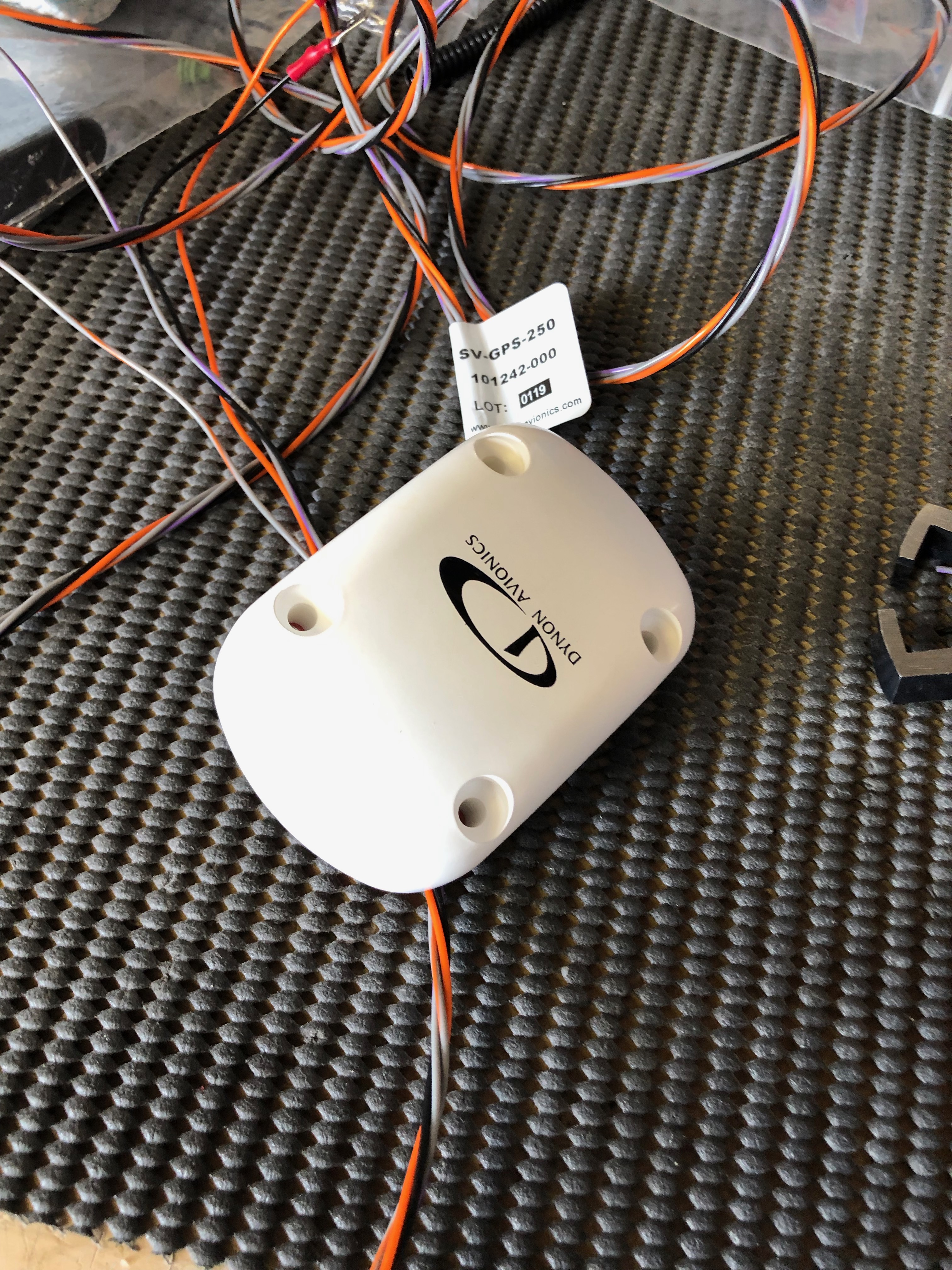
To give me a break from wiring I thought I’d start with a job that included some wiring after I finished it! Installing the GPS unit. Then back to wiring, first the charge circuit and then onto the the control sticks which includes the trim, radio and autopilot functions.
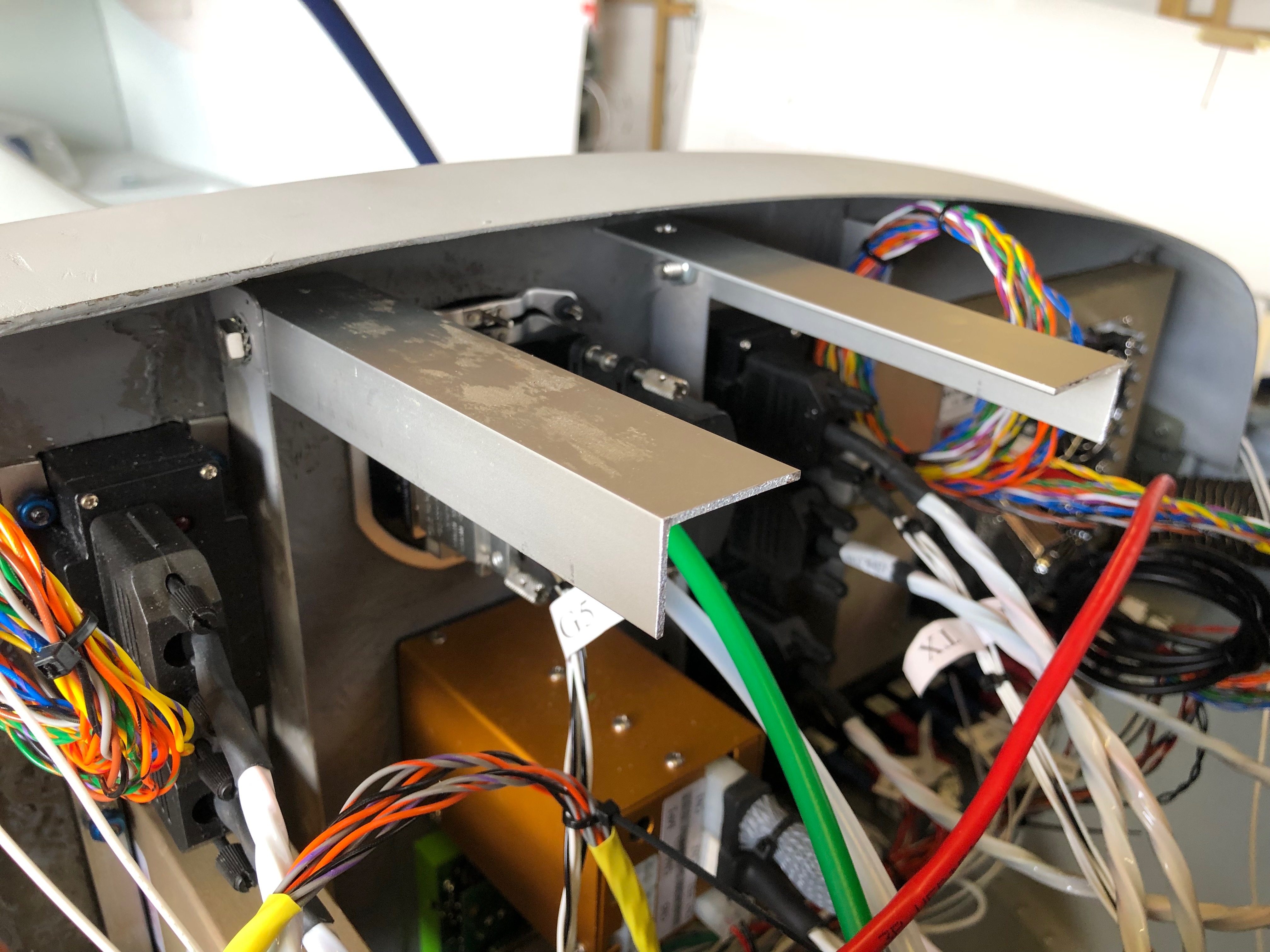
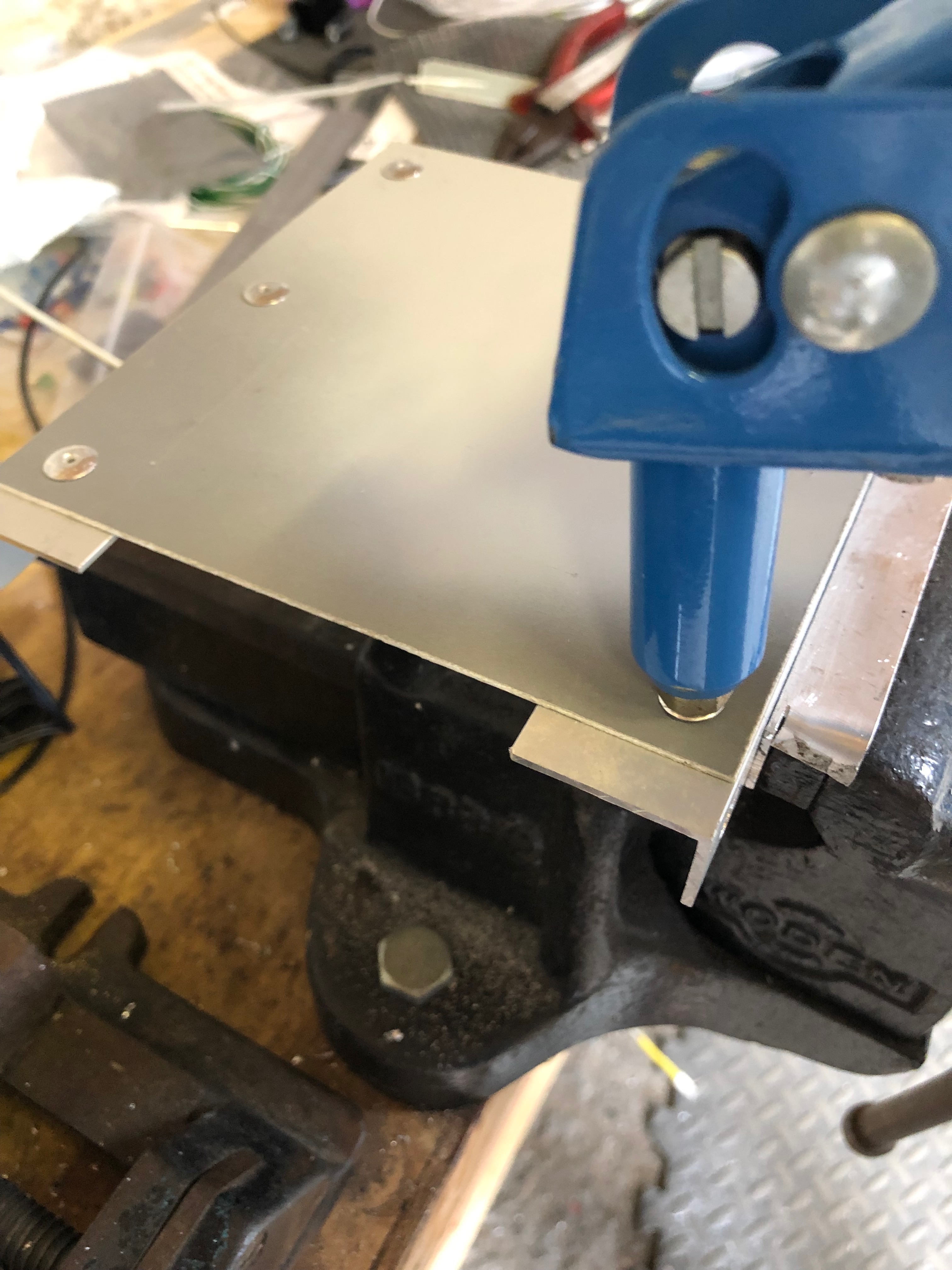
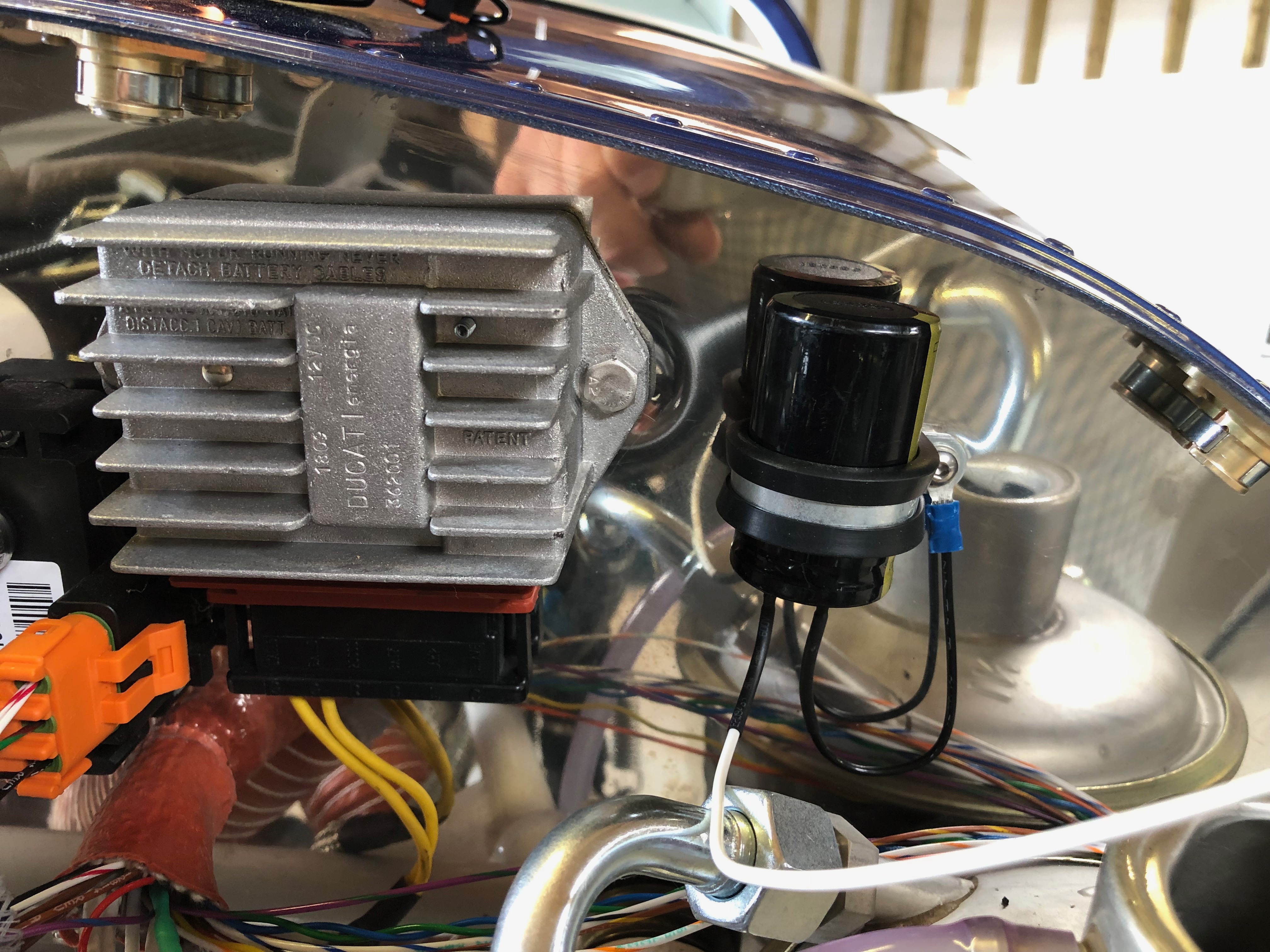
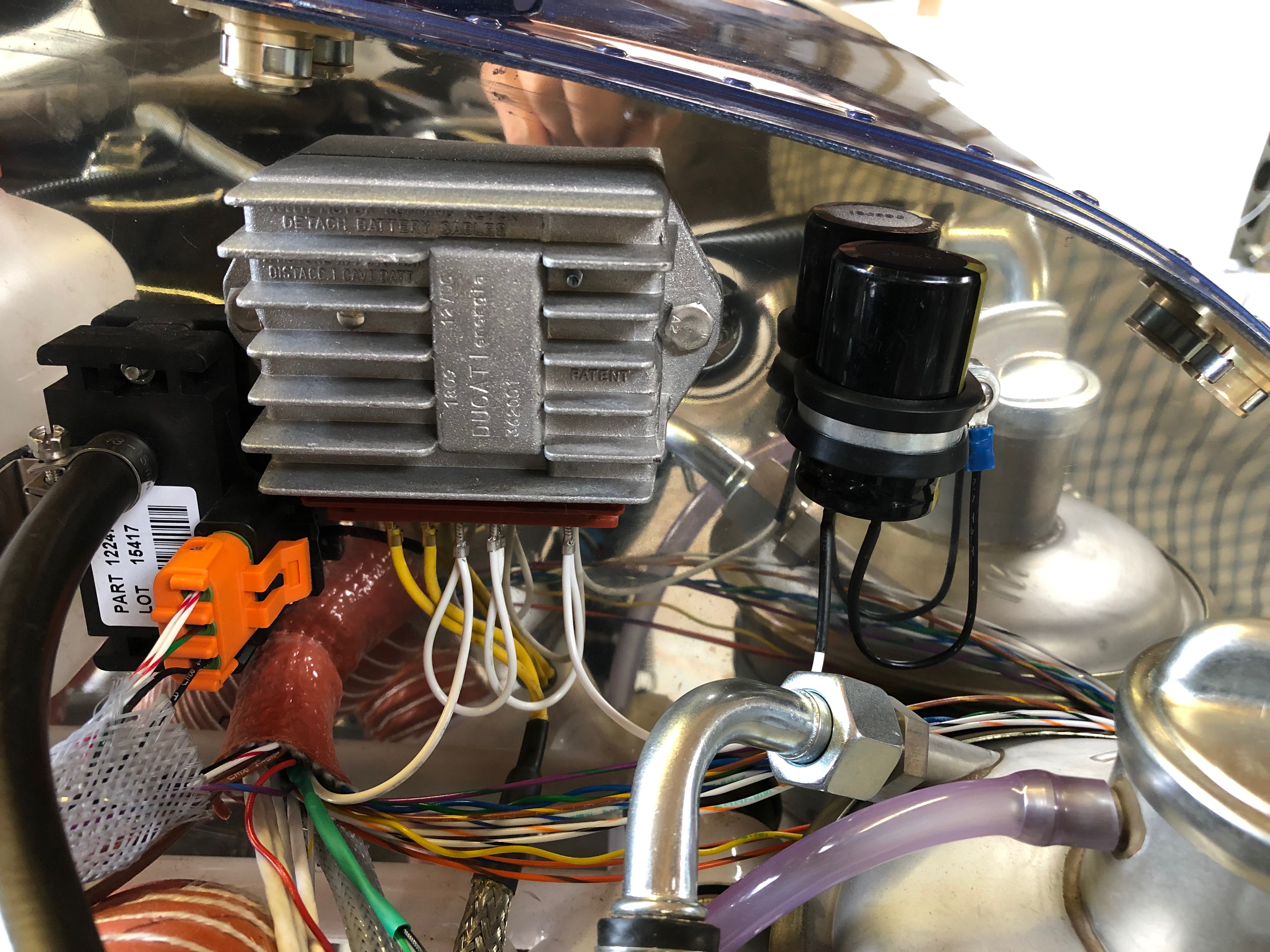
I decided to make a bracket out of some aluminium angle that could be fixed to the strengthening that I added to the rear of the panel.After cutting 2 pieces 15 cm long I riveted a piece of the offcuts from the panel to use as a surface to mount the unit.The mount works well but unfortunately there really isn’t any other place for the GPS so it will sit on this mount under the glare shield. Next up is installing the wiring for the charge circuit. It requires a large capacitor that smoothes the output and protects the regulator unit from overcorrect spikes.. The completed charge circuit. It’s simpler then circuit diagrams make out. I decided to get new Ray Allen control stick grips which are an enhancement on those supplied with the kit. They have 7 buttons instead of 5. The stick wiring requires 8 wires to be run down the control stick and onto various contacts. 4 are for the trim up, down, left and right, 1 is for ground, 1 for PTT and the other two are for whatever you want to use them for. I’ve decided to use one for autopilot disconnect and the other for the autopilot ‘Level’ function.
Wiring continues! Most of the time it takes is making sure that the routing will work for the circuits concerned, keeping it tidy and labelling the wires. Hopefully I’ll be finishing the landing lights, nav lights and pitot circuits if my delivery of wire arrives today. but most of its done now.
The documentation that came with the Rotax engines didn’t have the information on the soft start module. Luckily I’ve found some information on a web site that gives me the information that I needed. Unfortunately I haven’t received the wire that I’d ordered so I diverted on other tasks.I I’ve had a proactive day, completing all the tasks that I’d set myself. The lack of photos is because there’s only so many pictures of wires you can take!The power and ground distribution units are filling up nicely! and all the switches apart from the Alternator switch have been wire. Work resumes on Monday after a day instructing tomorrow and a rest day Sunday!
A lot to do today, as every day! When the delivery arrived I found that some of what I had ordered was out of stock. It’s not a big problem as there are lots of other jobs to do. So I’ll wire up the power side of the system and label, install and test the radio and transponder coax cable.
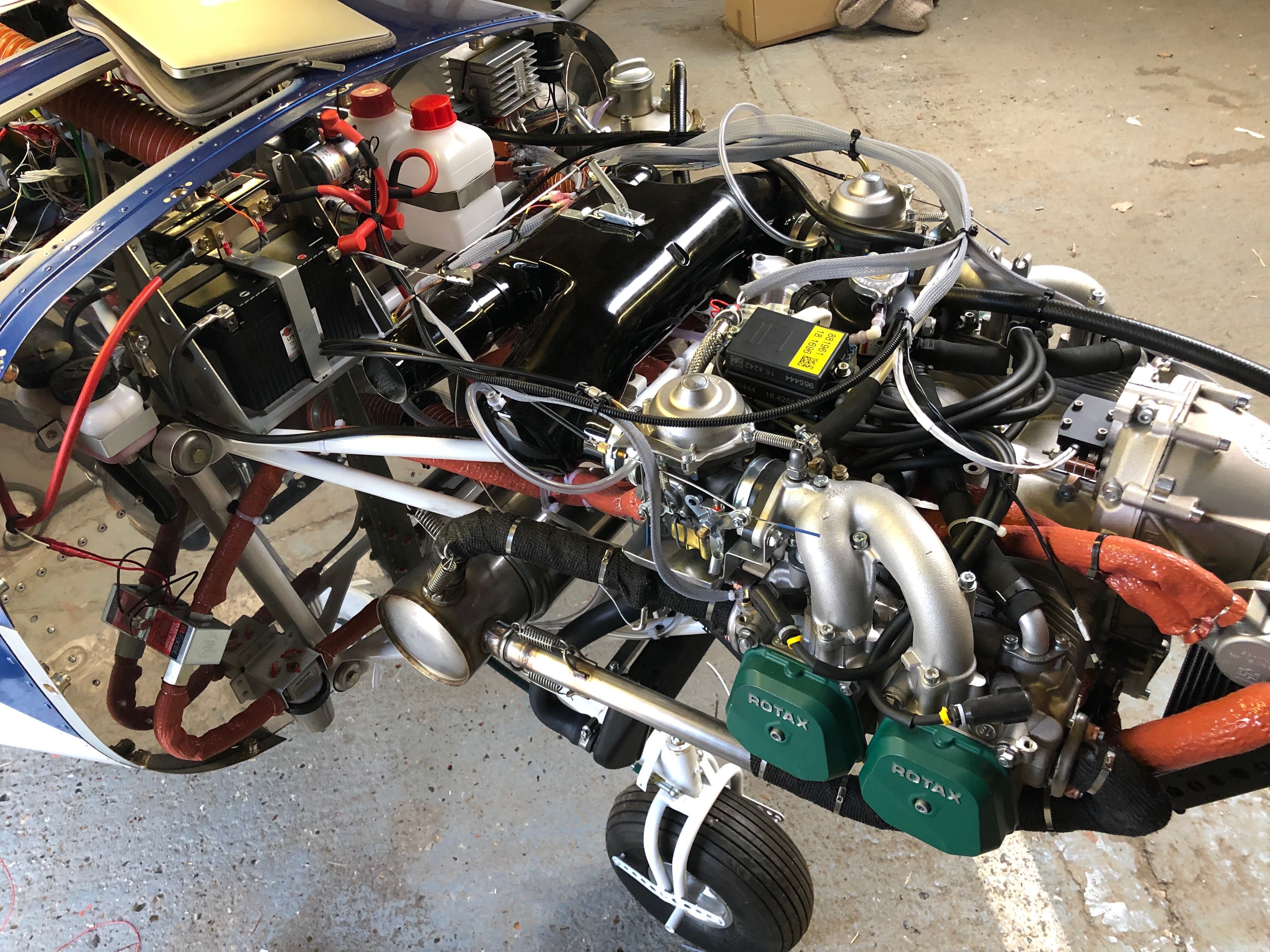
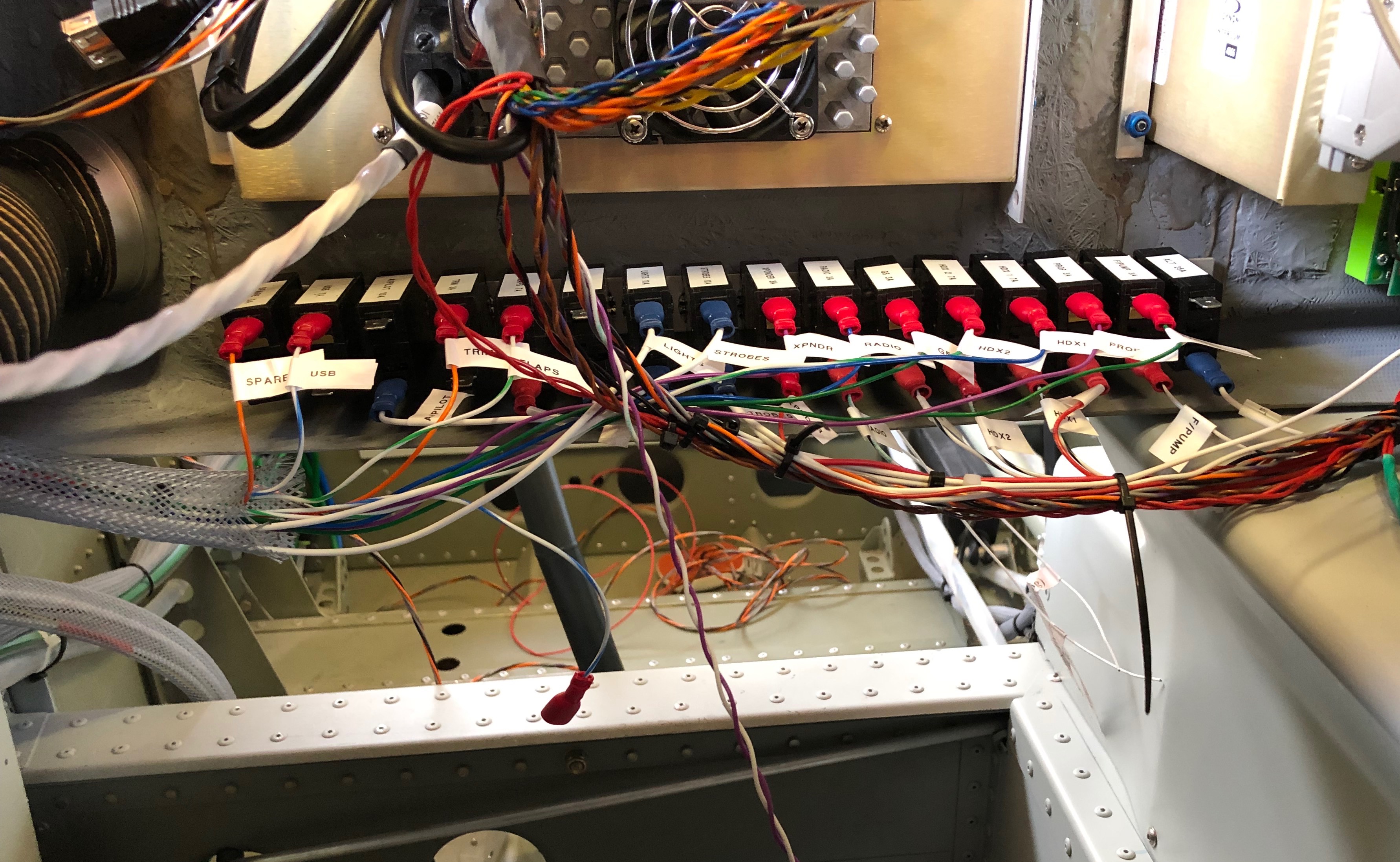
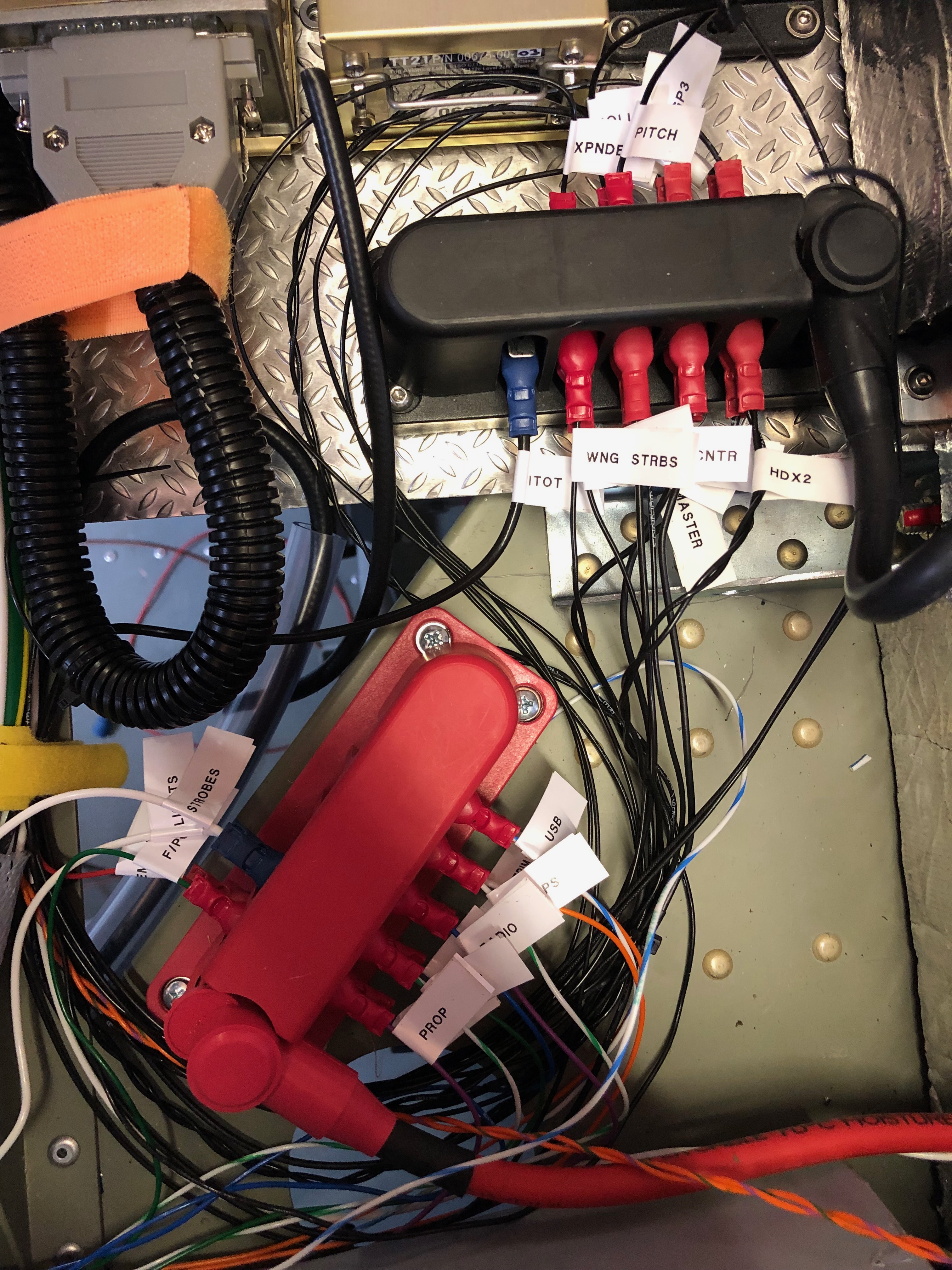
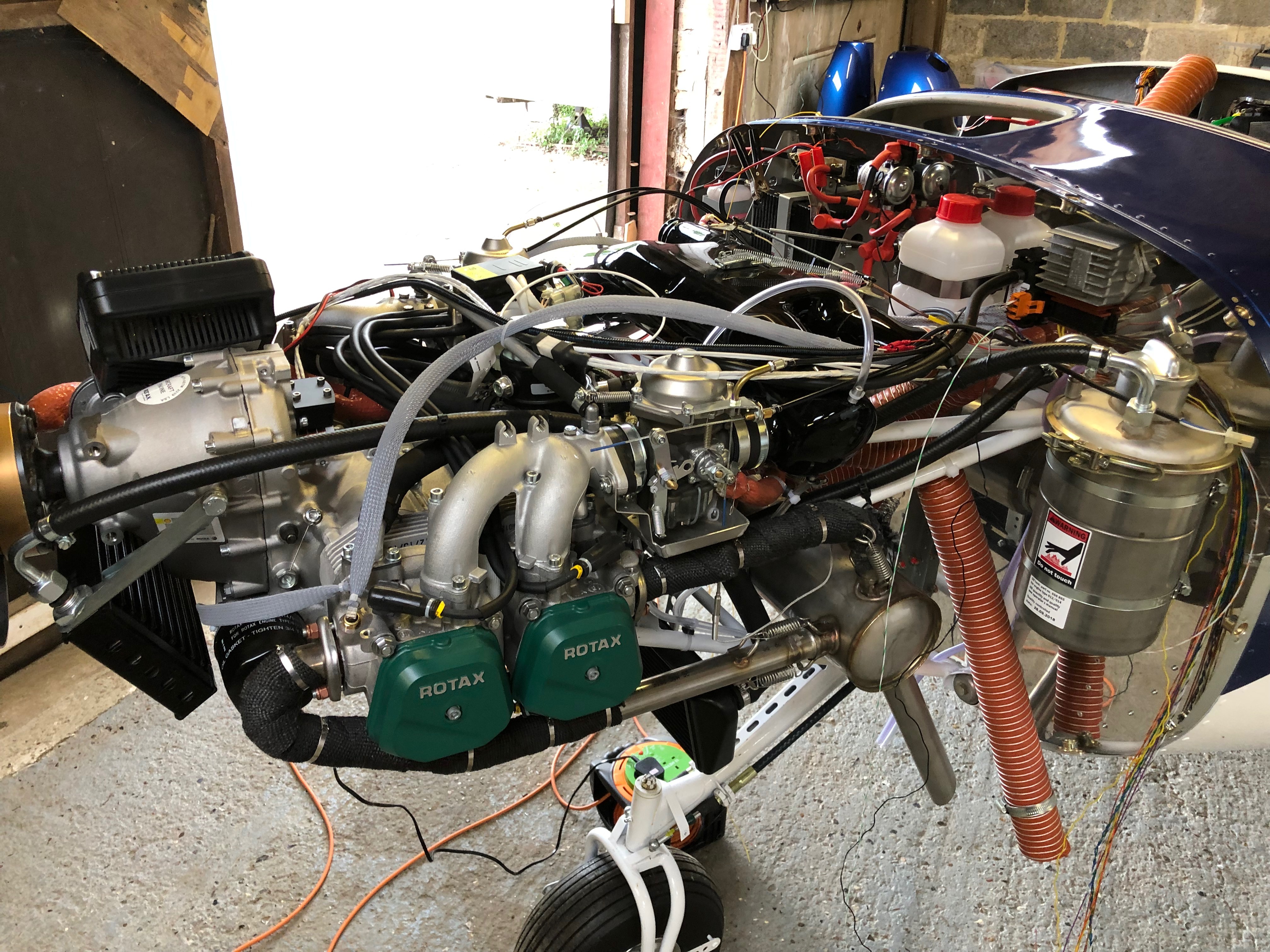
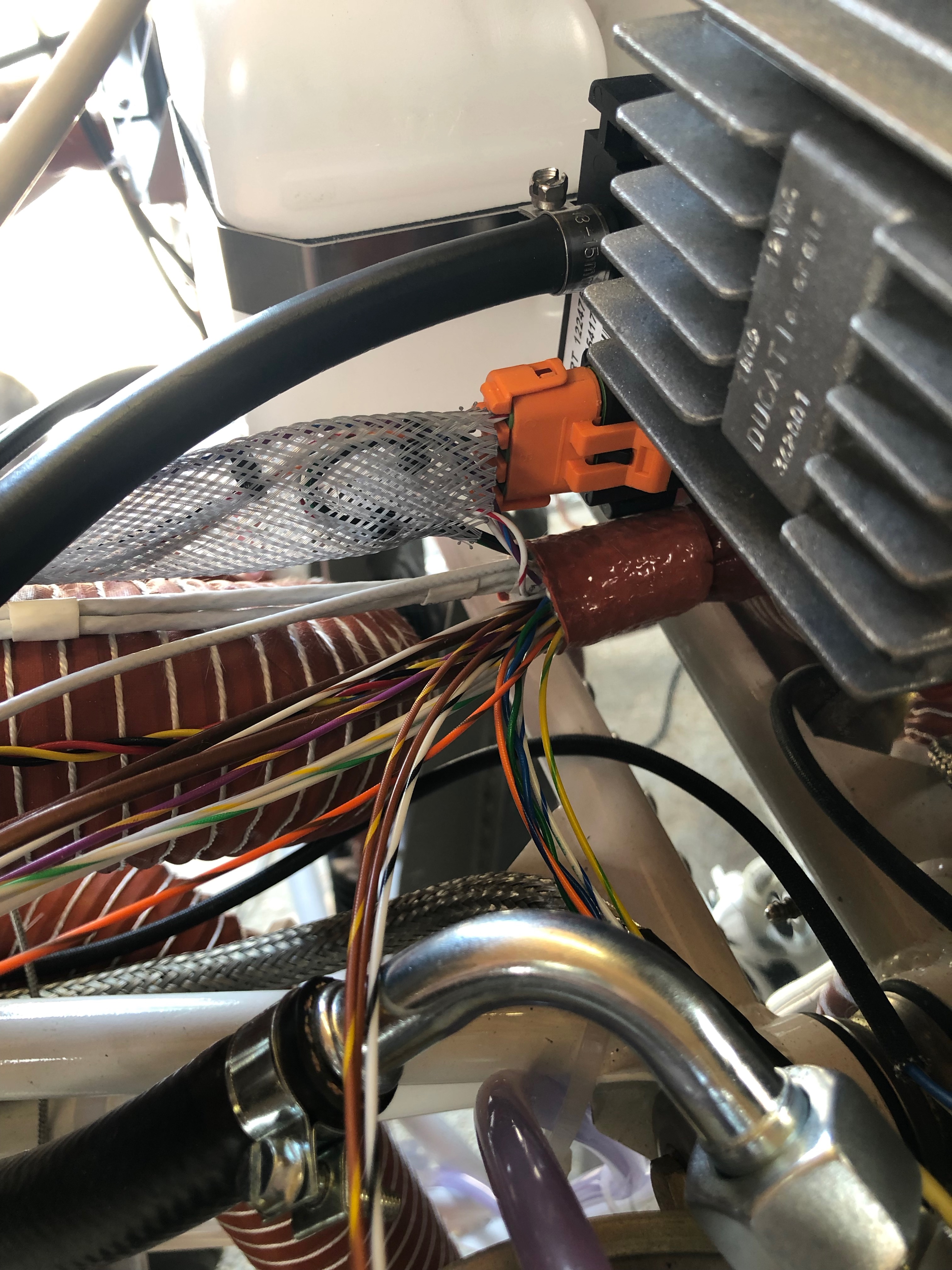
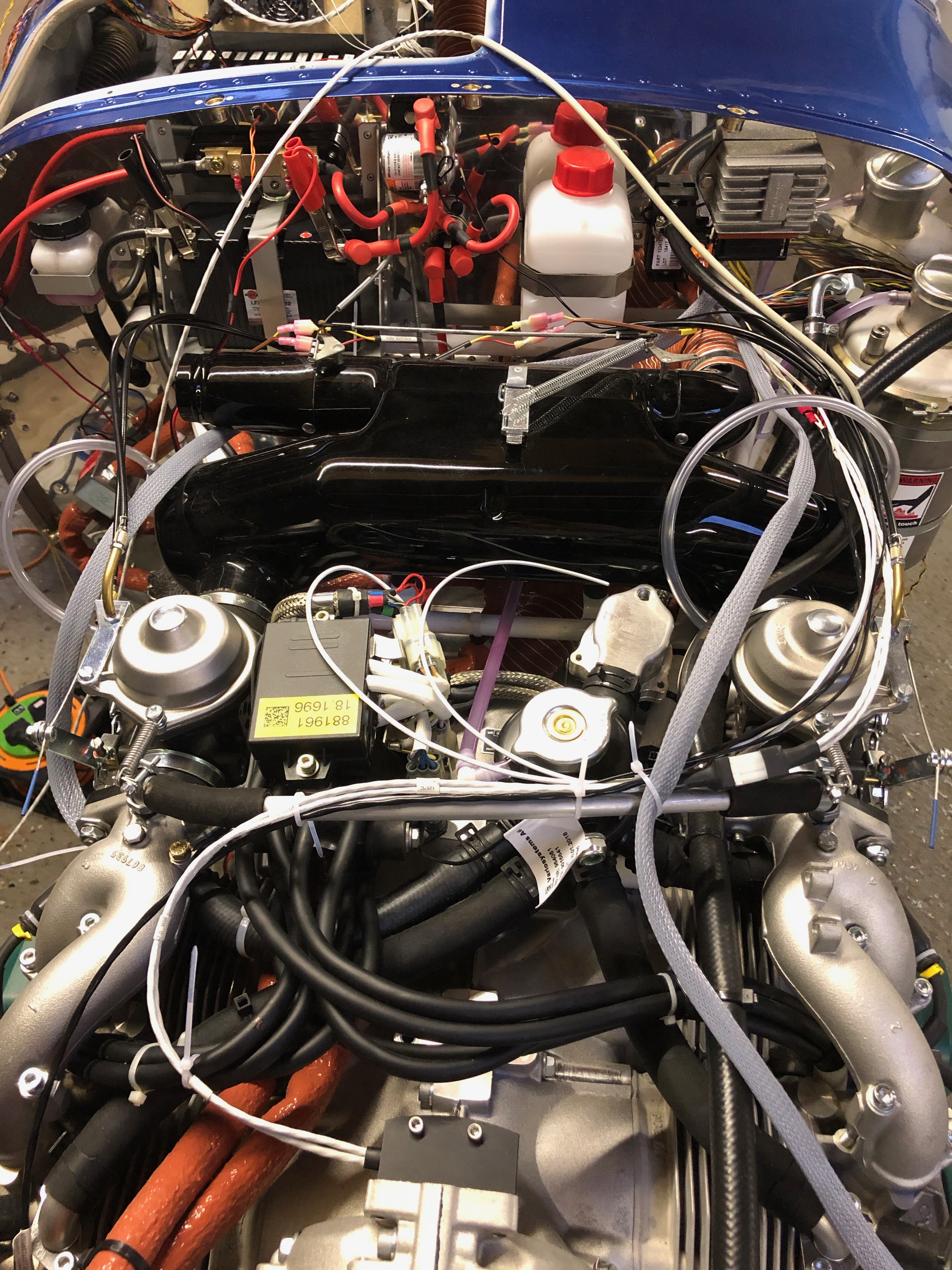
Time to wire up the power side of the electrical system. I’m reusing the wire that I have leftover from the other circuit wires that were trimmed back. There’s plenty to do the job although not a unified colour as long as they are labelled it will be ok.My new friend. A Dymo Label Manager 200 that I bought some years ago. It’s been invaluable and luckily I managed to get some label cartridges.The +ve bus with 11 of the circuits completed.The circuit breakers connected, some tidying will be required but it’s mostly complete.The complete panel powered up for the first time. The system shows a 7 amp power drain which is roughly what I had calculated.My DPD delivery was a day late but got delivered at 10am so I could get on with the wiring of the Transponder and Radio with the coax.The radio coax cable runs through conduit in the fuselage and is terminated with a TNC connector that I’ll do tomorrow.With all the cables protected with sleeving or conduit and secured in place I can fit the interior trim.The rear of the cabin. I’ve checked the radio/headset loom and it works fine so I need to mount the LEMO headset connectors and then I can fix the interior panels.Right side of engine. All the sensors are connected except the Tachometer, soft start module, magneto wires.Left side of engine. Looks a bit busy but with a bit od tidying it will look a bit neater. Quite pleased with the progress so far.
Music: The Pretenders – They were the support to Fleetwood Mac on Sunday at Wembley. I’d forgotten how good their music was!
Time for a short break from wiring but not for long before continuing the battle of the wires!
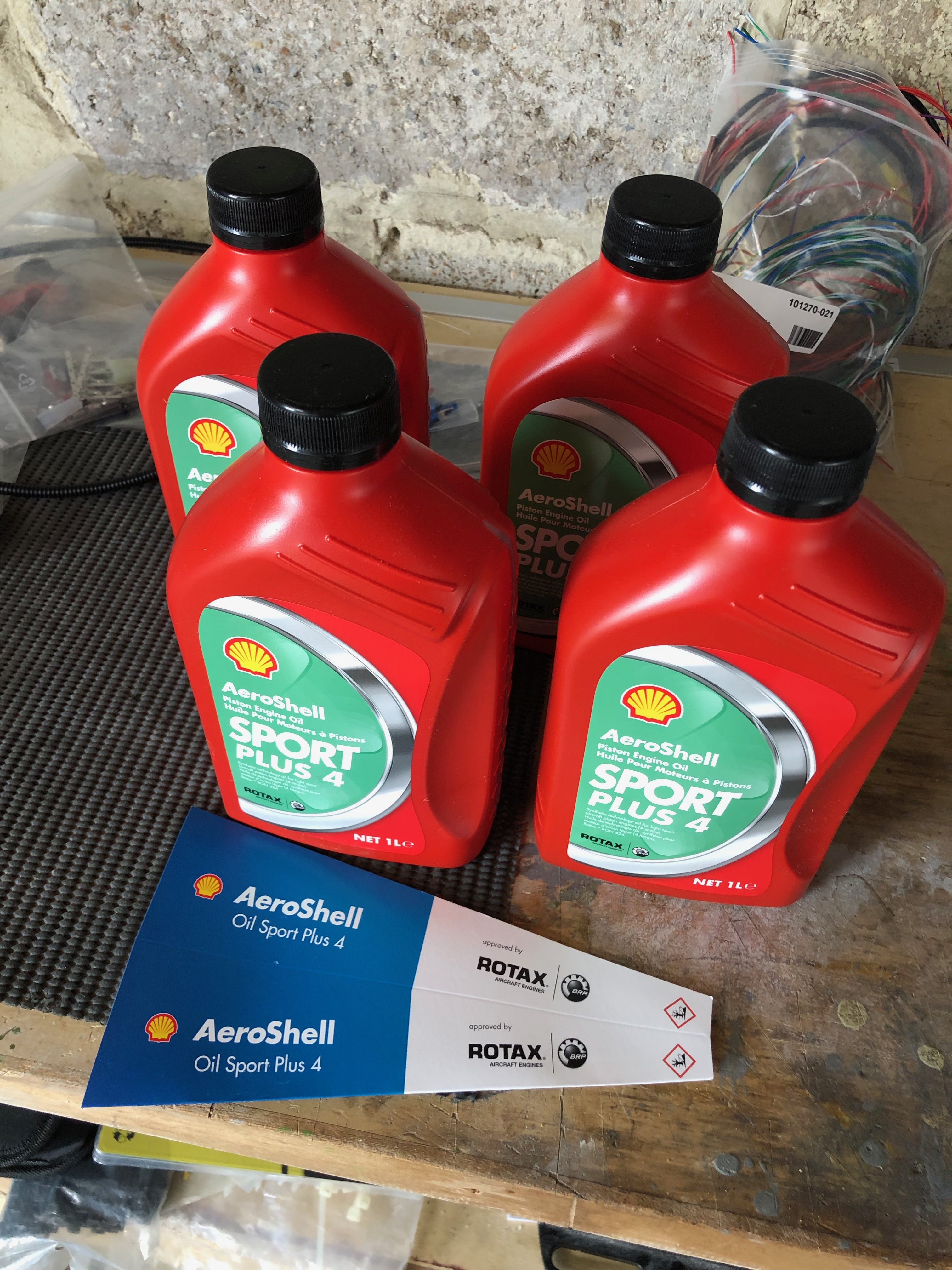
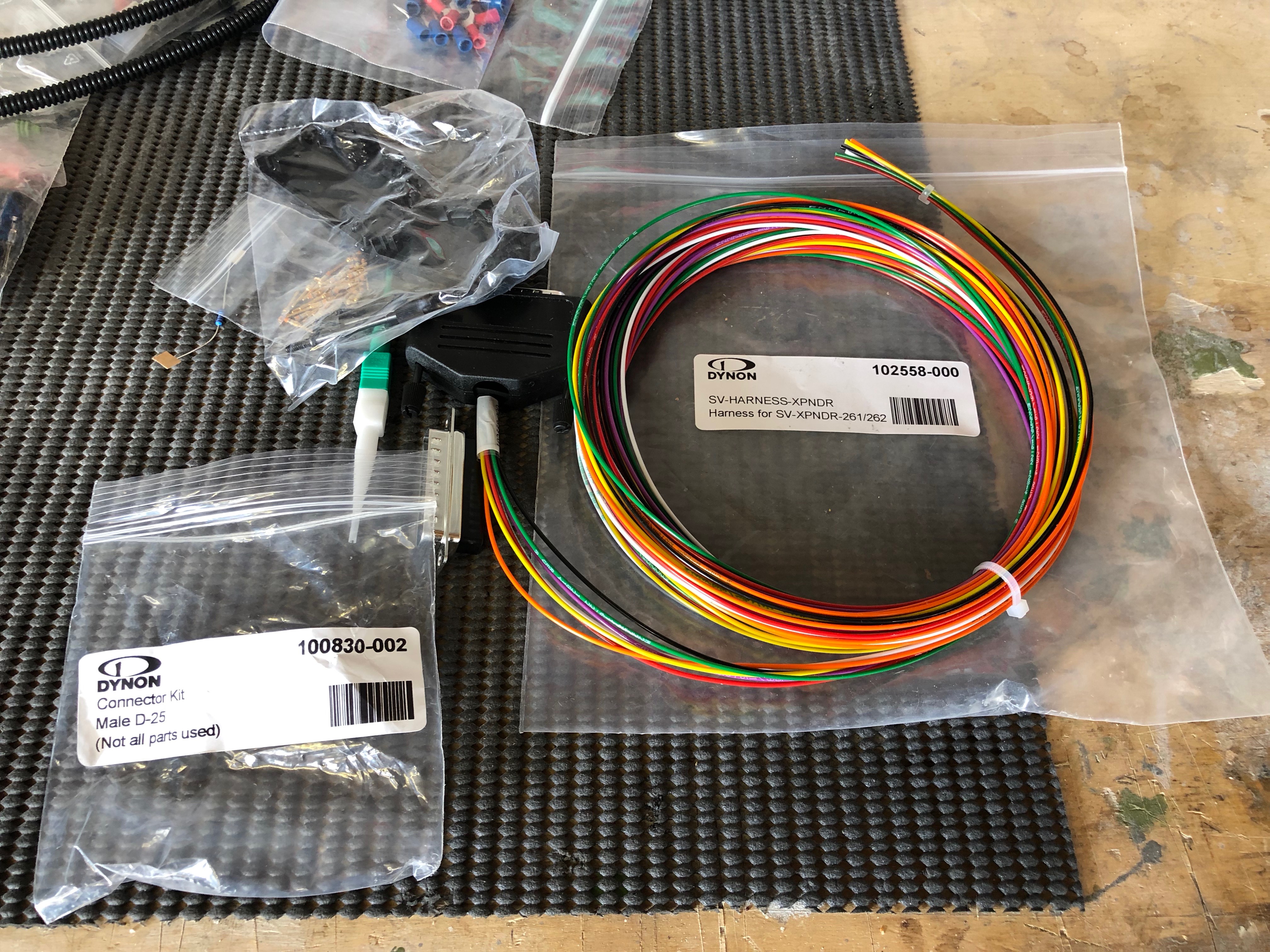
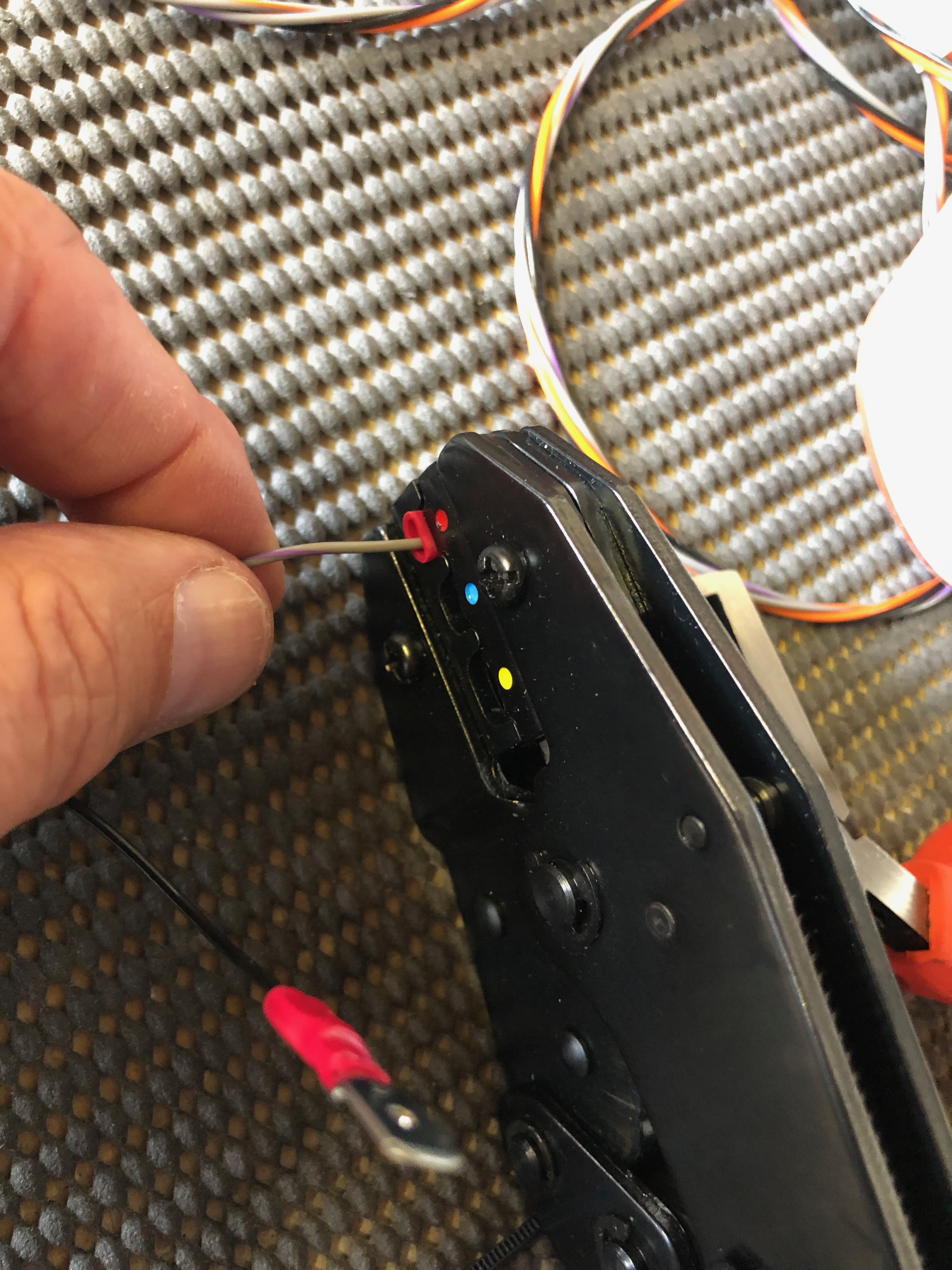
The Rotax engine comes with 4 litres of Aeroshell oil which I thought I’d add to the oil tank as a short break from wiring!I managed to get 3 litres in the tank but I will need to add more when the engine has been turned over a bit as there are a lot of empty oil pipes at the moment!After that very short break it’s back to wiring. This is the transponder loom which is a bit overkill for my needs. As you can see by the coil of wire there is a lot of unused wires but and a lot more has been trimmed from the length of the wires that are used! Once I had checked that it worked as expected I cut the unused wire off and covered the unterminated ends with heat shrink.Before adding a GPS receiver the SkyViews have no idea where they are in the UK, in fact they think they are in the USA! So I’ve taken the power and serial data leads from both SkyViews, spliced them and will connect them to the GPS. There’s a lot of cutting of wires and terminating them, mostly with fully insulated spade connectors using a special crimping tool.Once the GPS is connected a check is made on the connection to make sure it’s not reporting any errors and picking up satellite receivers ok..…and if by magic the SkyView now knows it’s in the UK! The system is reporting height and position correctly from my checks. If you look at the slip indicator you can see that its not in the middle and that’s because the ADAHRS isn’t quite level. There isn’t an adjustment that can be made to correct this so I’ll shim the unit.I’ve positioned the aircraft on a piece of level ground and I’ve shimmed the unit to make sure that it’s level and reporting correctly which it now is.
Music: Fleetwood Mac – Saw them in concert at Wembley last night. A little treat from Karen – Absolutely fantastic!
The wiring continues, after each circuit is wired up a check to see if it’s working as expected. All good so far!
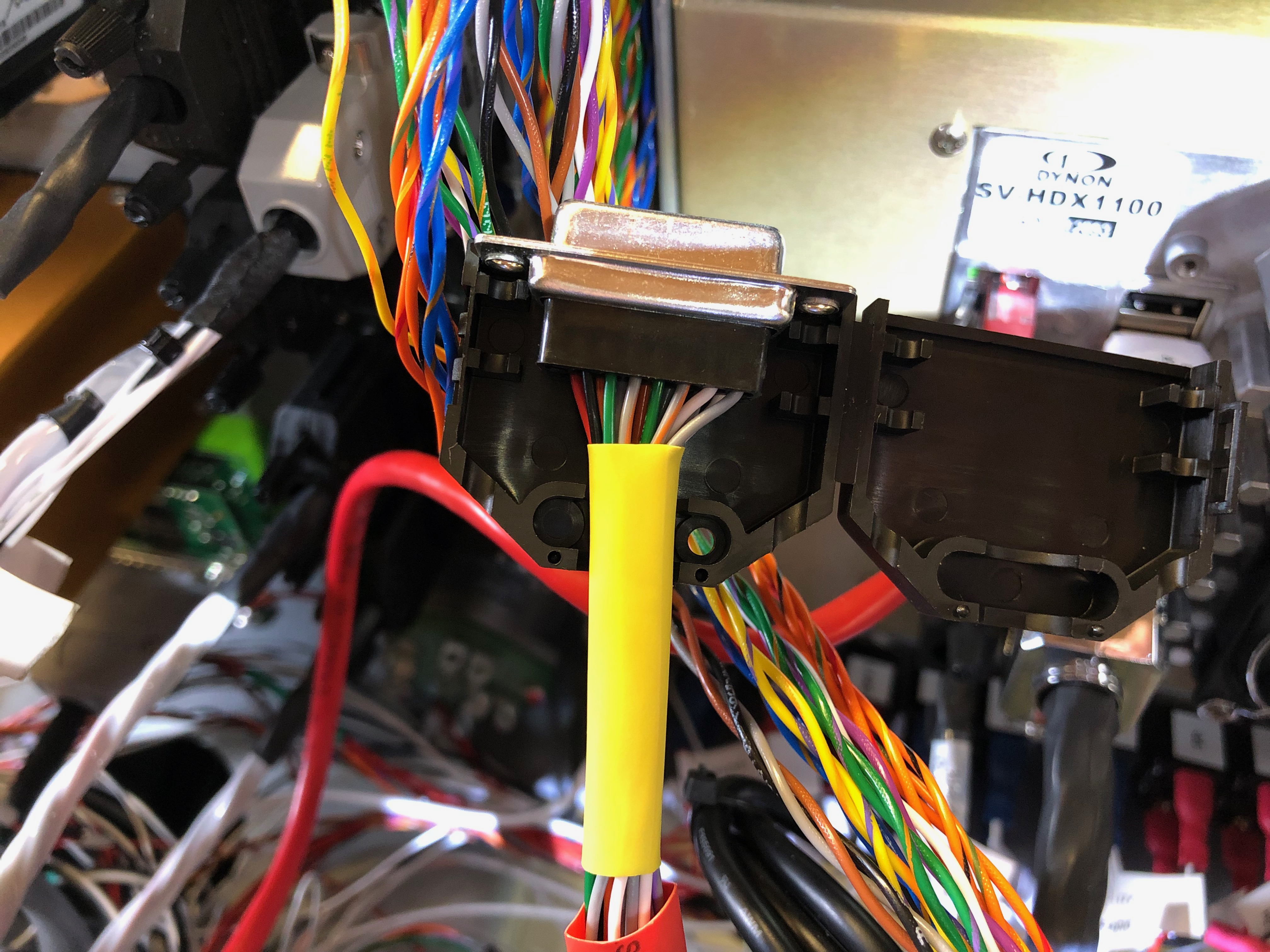
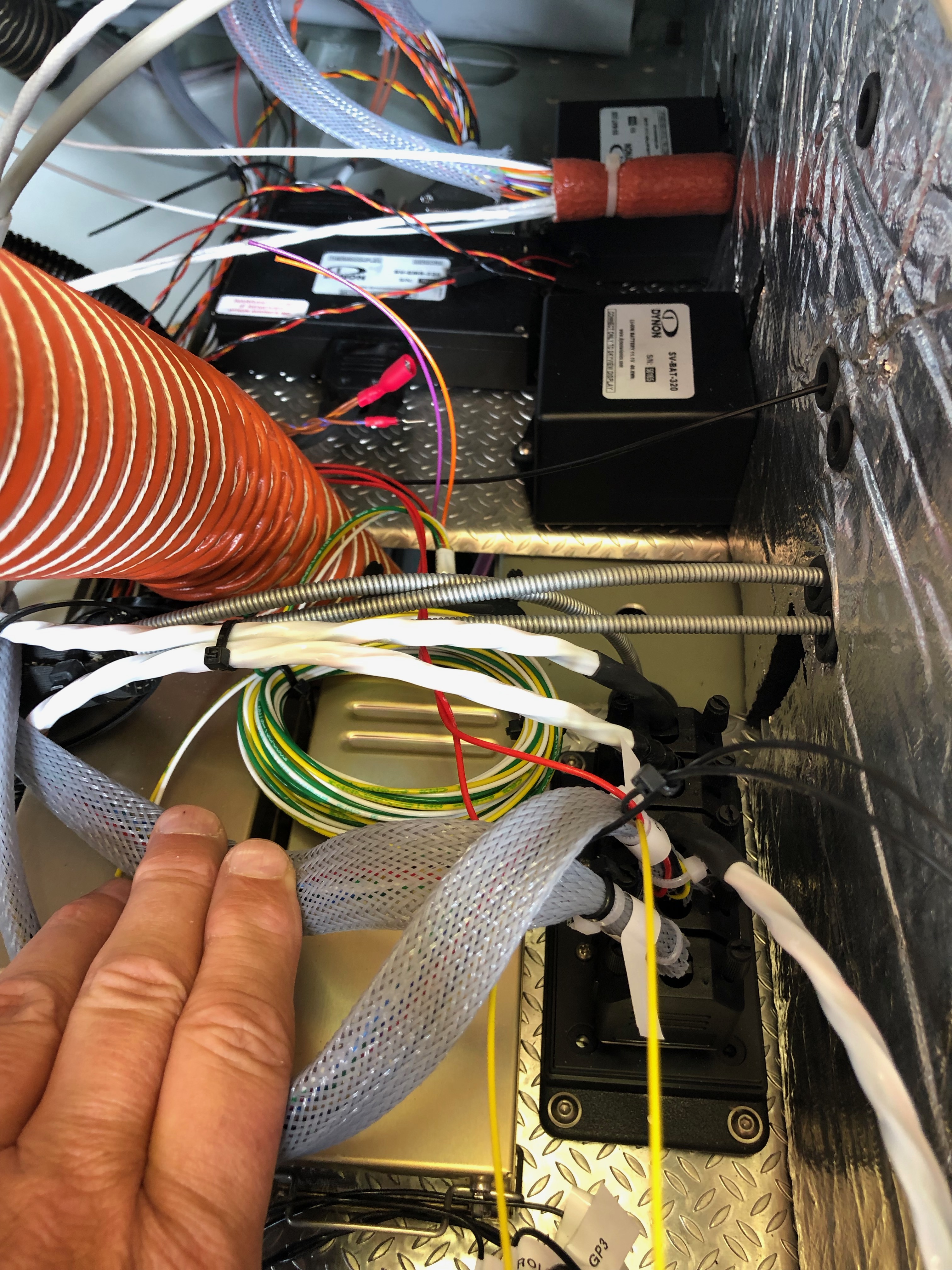
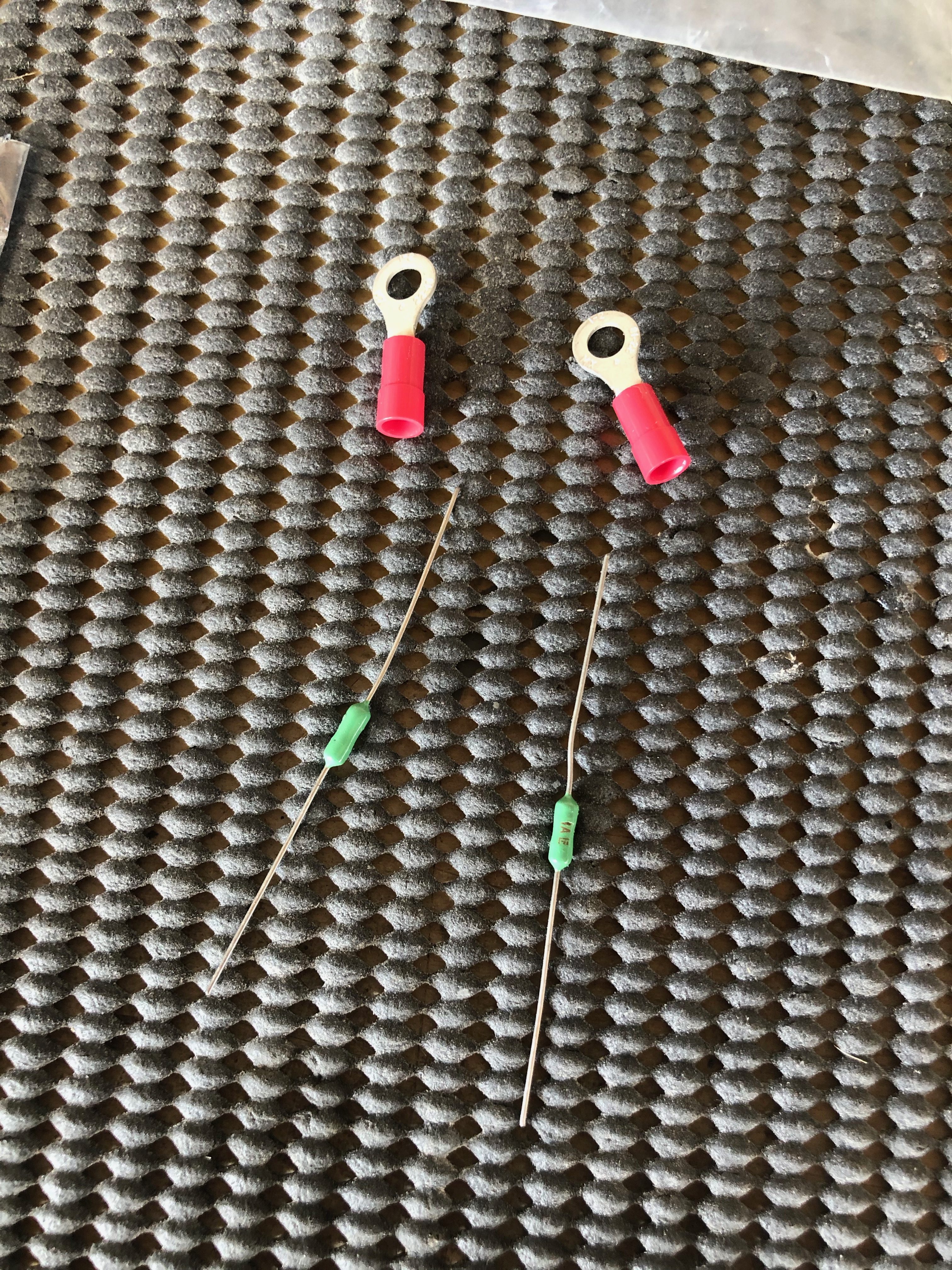
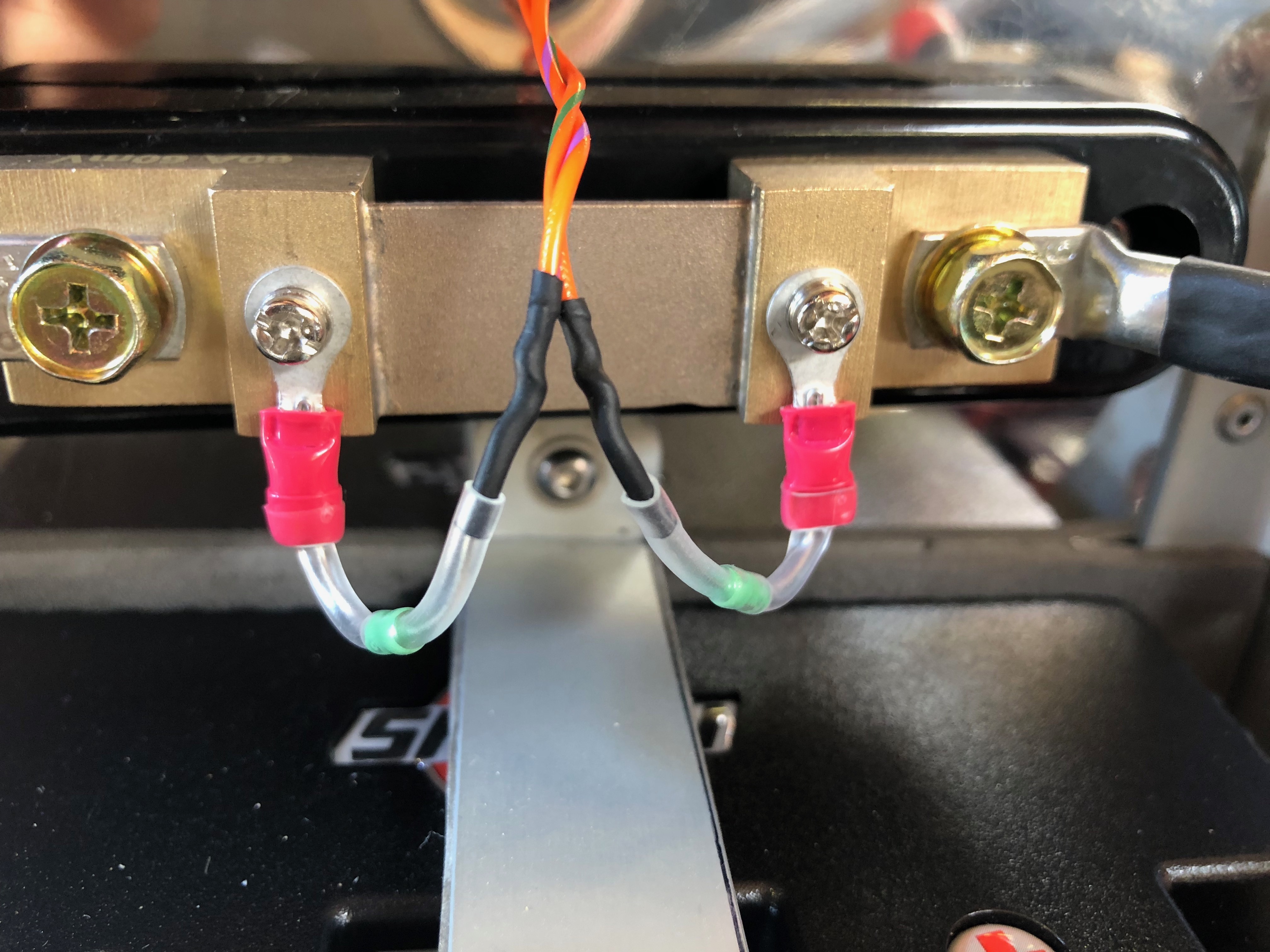
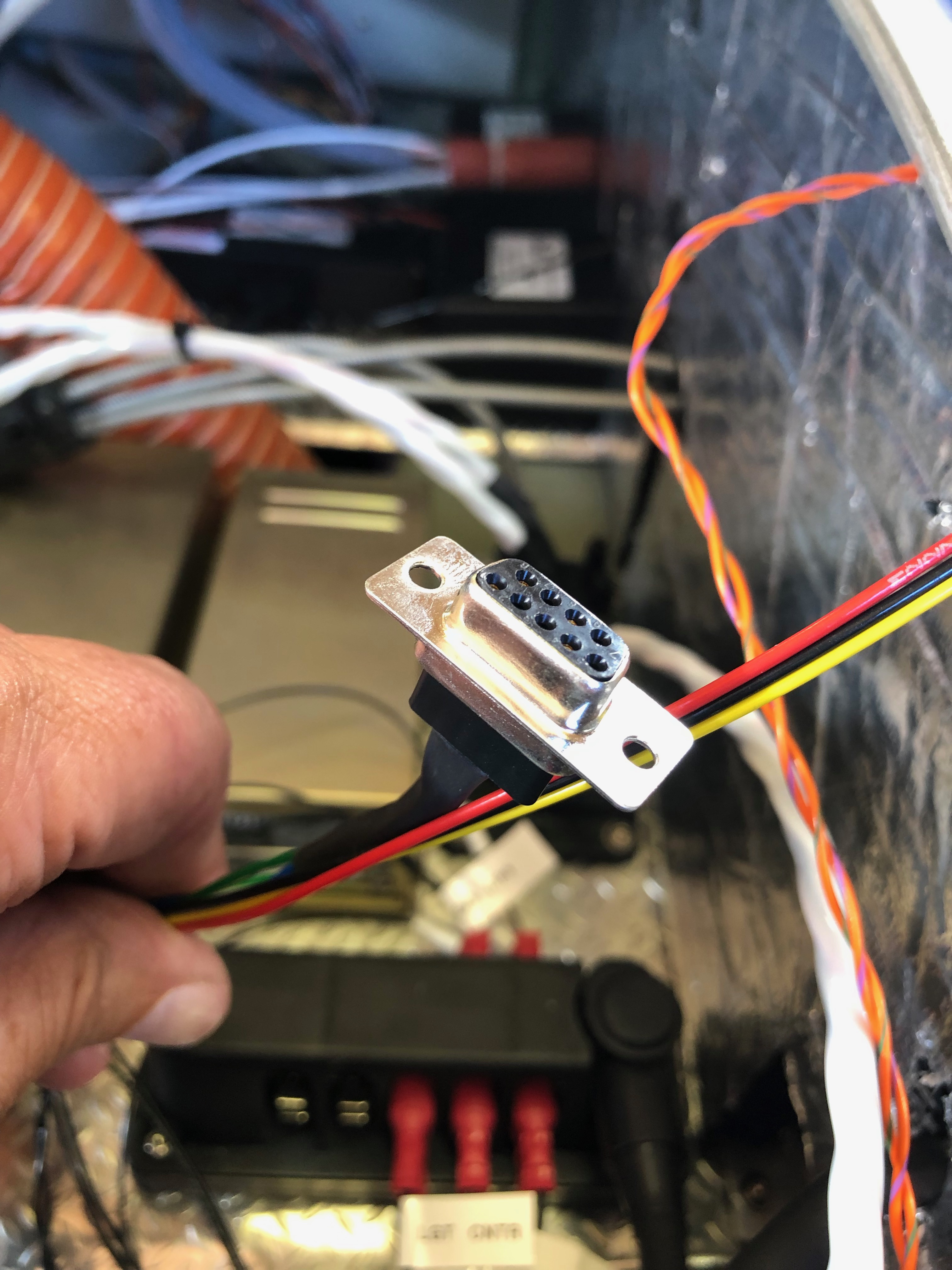
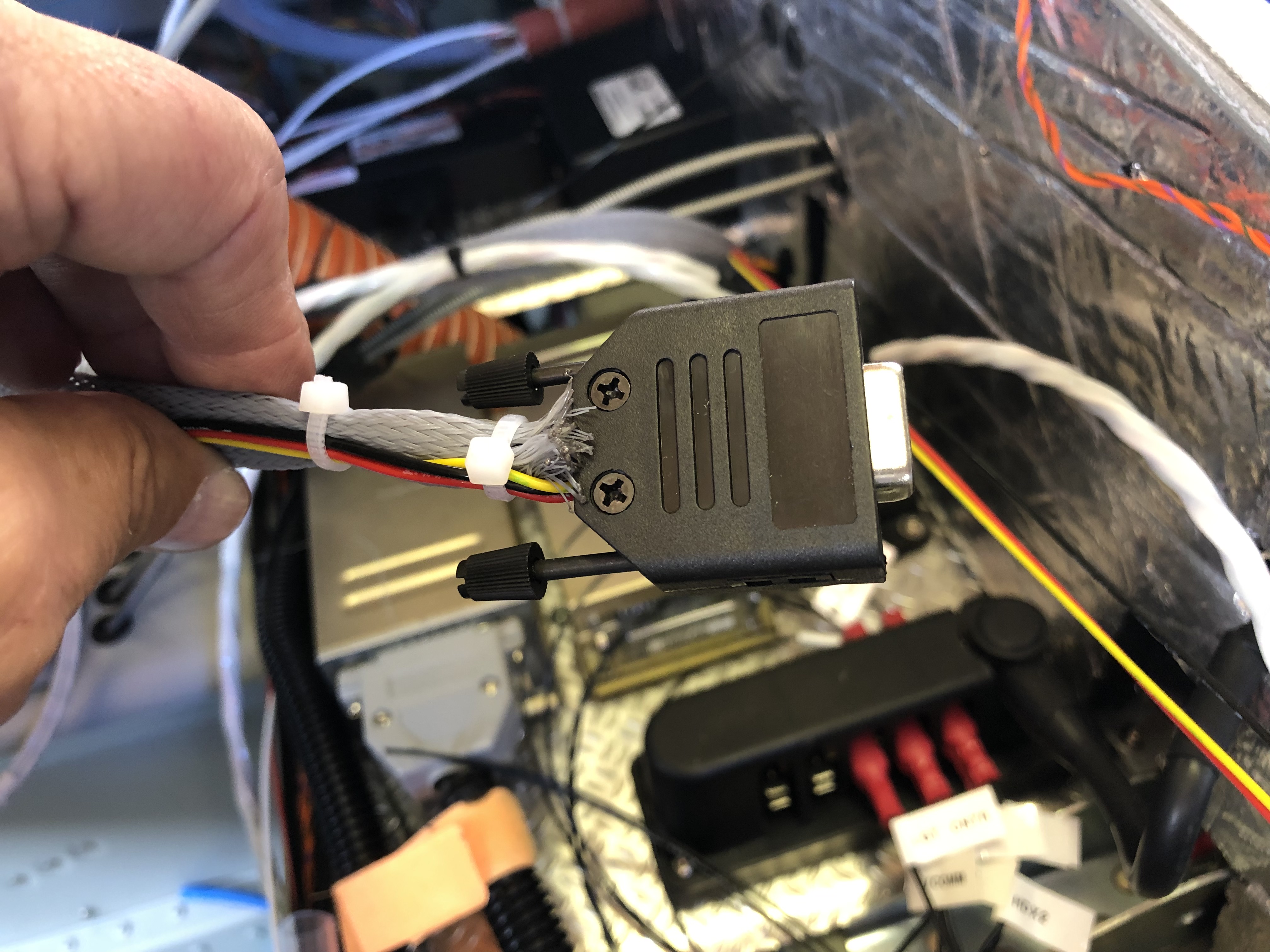
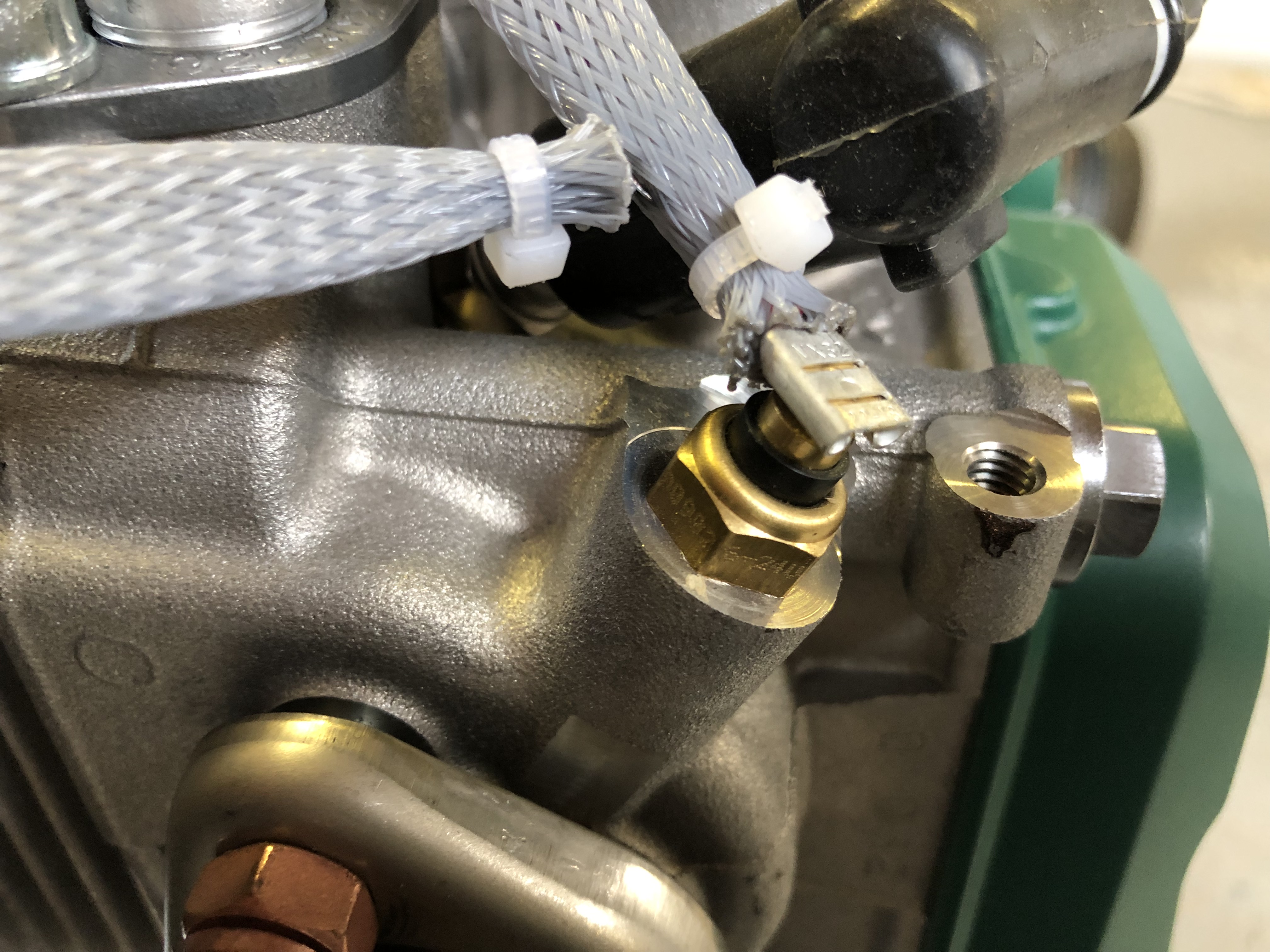
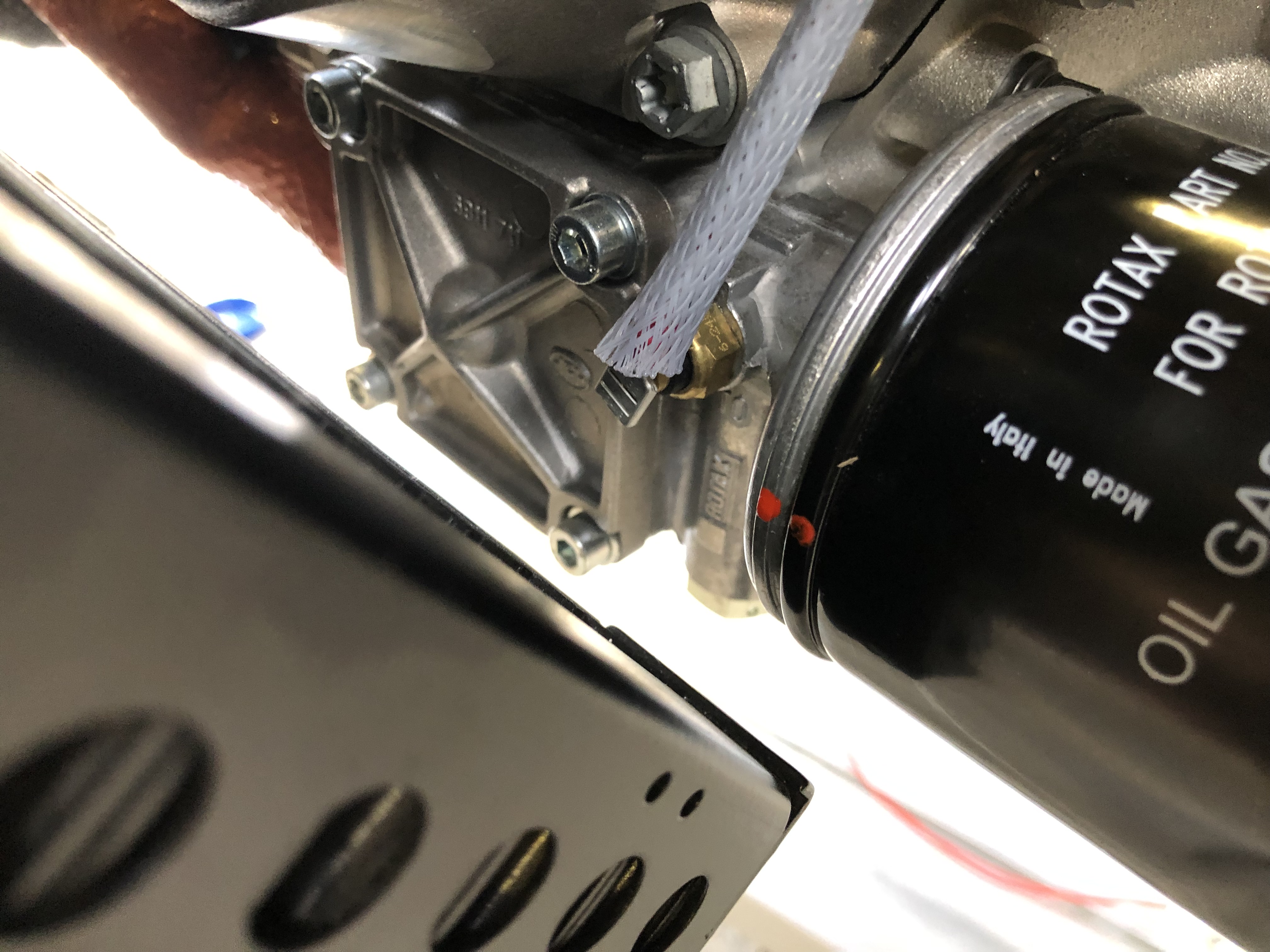
As mentioned previously I need to protect the SkyView from a surge from the Amp Shunt so I’ve purchased some 1 amp inline fuses. They are very small…… and make for a very neat protection solution when positioned inline.With all the wires ‘under the bonnet’ it’s difficult to make it all tidy… …but I layout all wire first to see where best to route them before trimming to correct length and terminating. All these will need to be secured too with stand-offs as required.The servo looms are next. I’ve installed the looms as far as the cockpit and now need to terminate each wire and make up the connector. It requires crimping the pins on each wire with a 4 way crimper.After crimping they are inserted into the D9 block……and the backshell is added. Fairly straightforward but you have to make sure that the crimps are secure. There are two of these, one for roll and one for pitch. Once made up they are plugged onto the SkyView network hub.Next up is to finish off the engine sensor connections. The correct pinout from the D37 connector is identified and the wire routed as described before trimming to the correct length and terminating. In this case a uninsulated spade connector that slips over the sensor connector. This is the LH CHT sensor……and the oil temperature sensor.A quick check that everything is working. The CHTs, EGTs, Oil Temp, Fuel pressure, Oil pressure, Voltmeter, Ammeter and autopilot have now been completed and work as expected.
Following the build of my Bristell NG5 Kit No. 382 Registration G-MLSY
























 G-MLSY