Tuesday was a non event as I was ill with some stomach bug which left me very lethargic.
Back to full strength Wednesday but there are less and less jobs to do as the days pass. It’s very windy today so will leave the engine runs and associated tests until tomorrow. Looking to do final inspection before first flight next week. The original chap can’t do it until after the LAA rally at the end of August which is of no use to me as I’m off to Llanbedr for a couple of weeks Gliding. Luckily Ian has managed to arrange for someone else to do it for me.
I spent the day today doing some ‘little’ jobs.
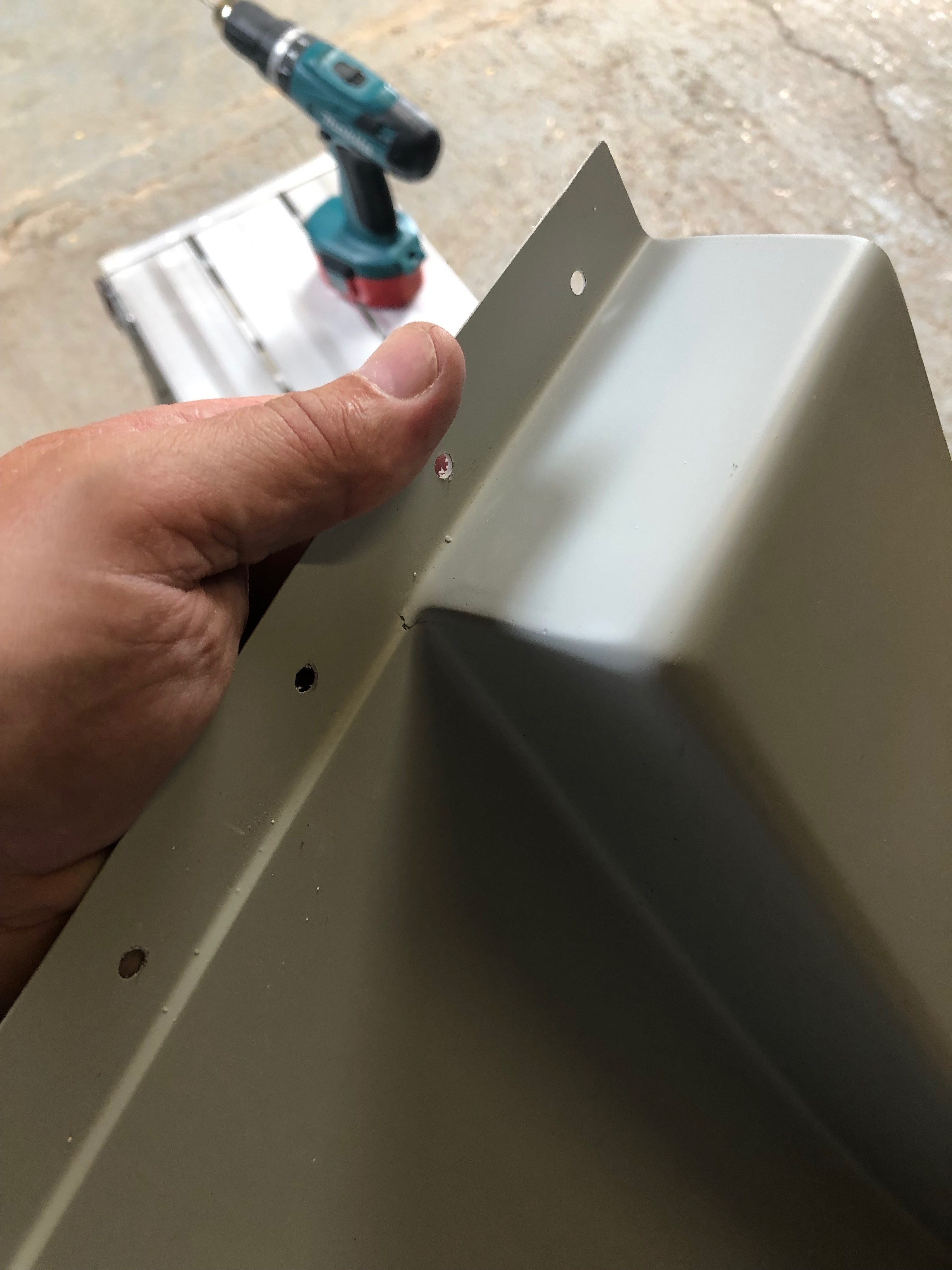
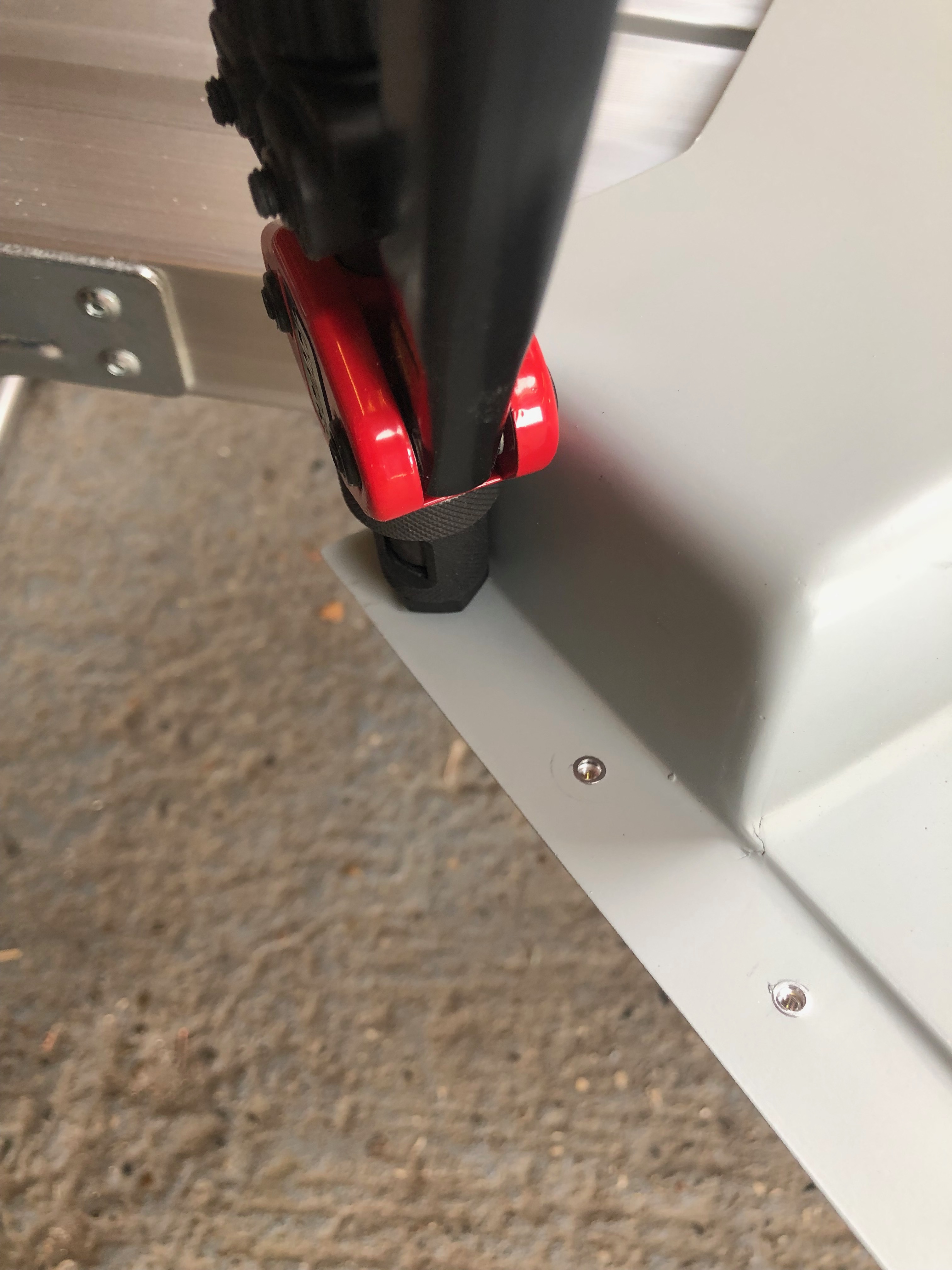
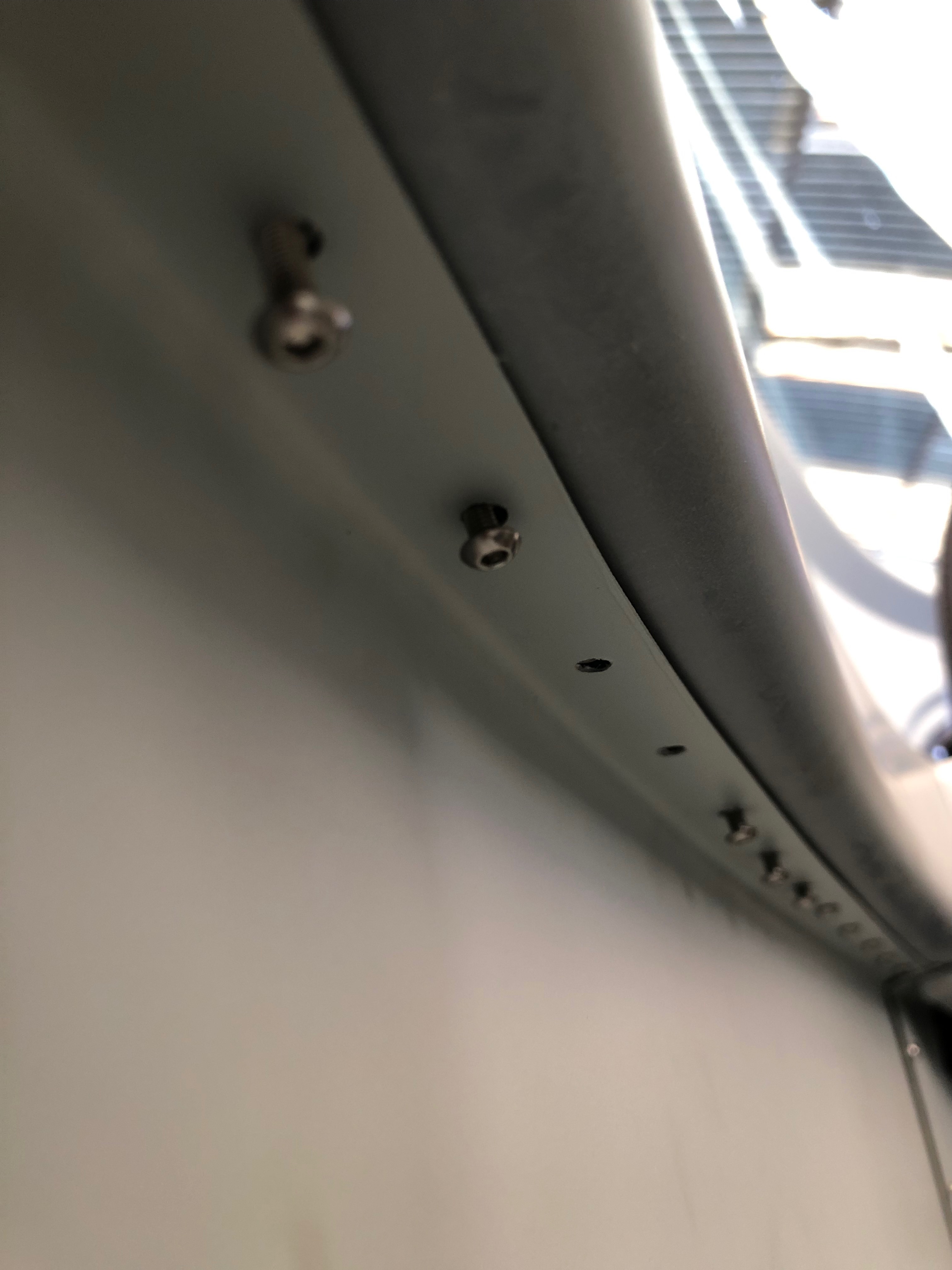
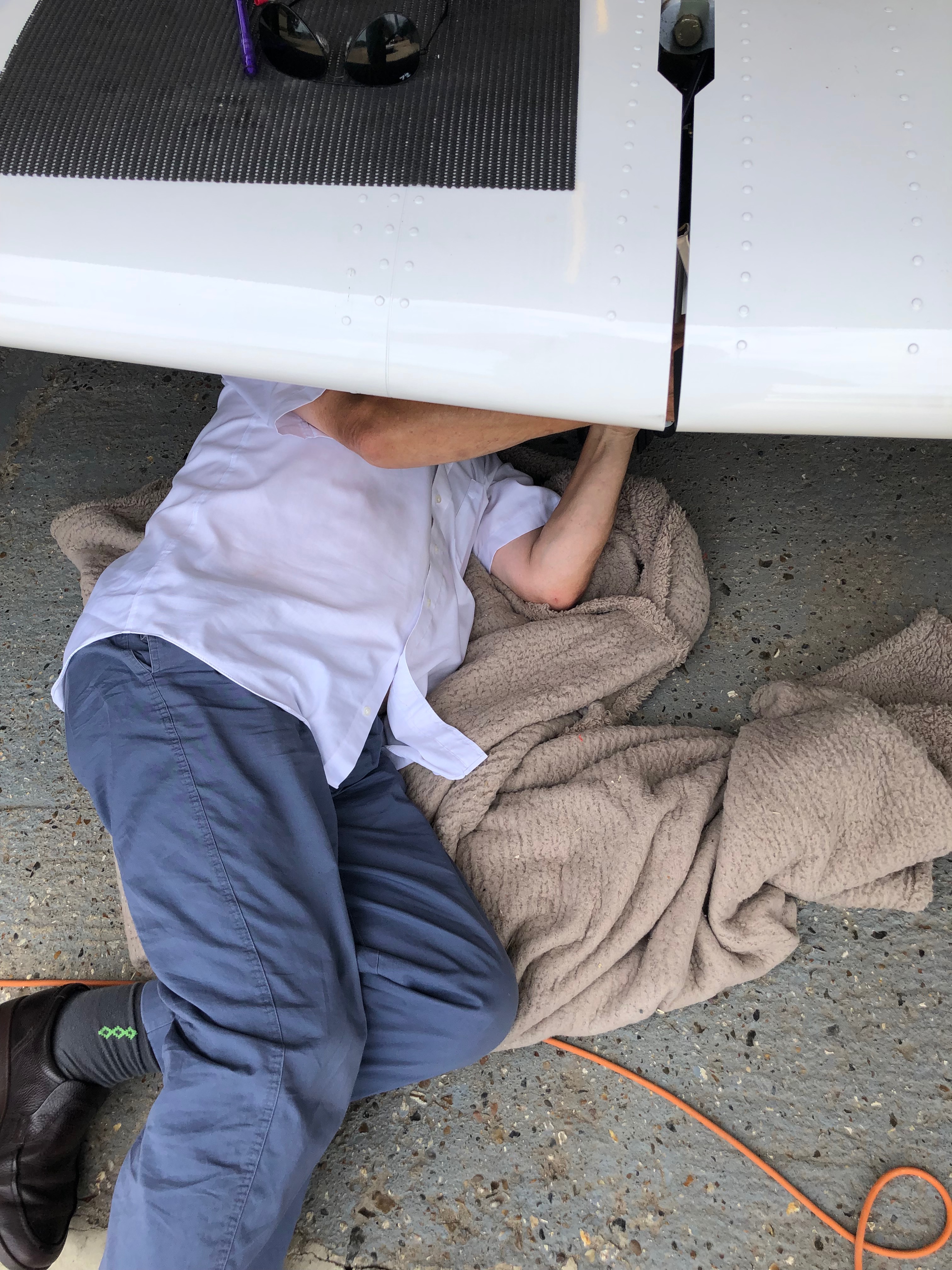
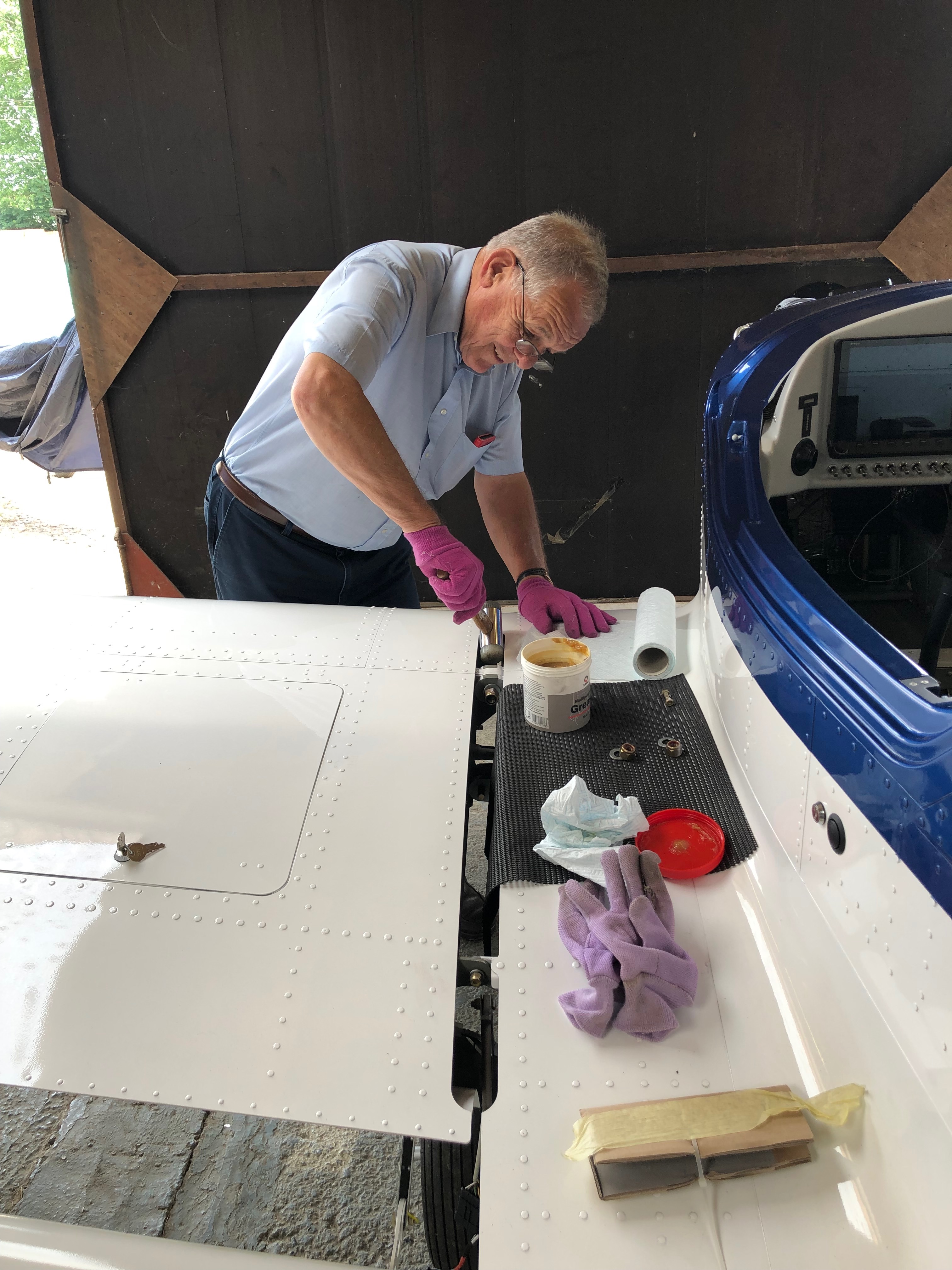
One of the little issues that I found when I first run the engine was the park brake cable travel was too much which could result in the inner coming out of the outer by a couple of mm. I did a small mod, shortened the inner by a few mm and put a more definite cable travel stop on the cable to prevent it pulling out. It works a treat now as do all the other controls.Earlier on in the project I decided after a conversation with Ian to use M3 rivnuts and screws to secure all the internal panels instead of rivets. That would allow me or anyone else that does maintenance or wanting to run extra cables in to easily remove the panels to gain access. This is the side armrest panel I’ve used reduced shoulder M3 rivnuts that don’t protrude so much as others I’ve used and are ideal for this job. You have to be careful though as the material is thin and the there’s not much to ‘get hold of’.There’s loads of holes to secure the panel probably because it’s an armrest so there is an amount of downward pressure. Fixing this panel was no easy job as I had to work ‘upside down’ to find the hole for the screw, line it up and screw it in. I was exhausted after this but it worked well.
With only a few things left to do one of them is to set the control surface deflections. On the face of it, it’s an easy job but it requires a differential movement from fully up to fully down. Due to that specification there’s more than one place to adjust. It requires a bit of juggling to get it right and in the heat of Thursday it wasn’t the day to do it.
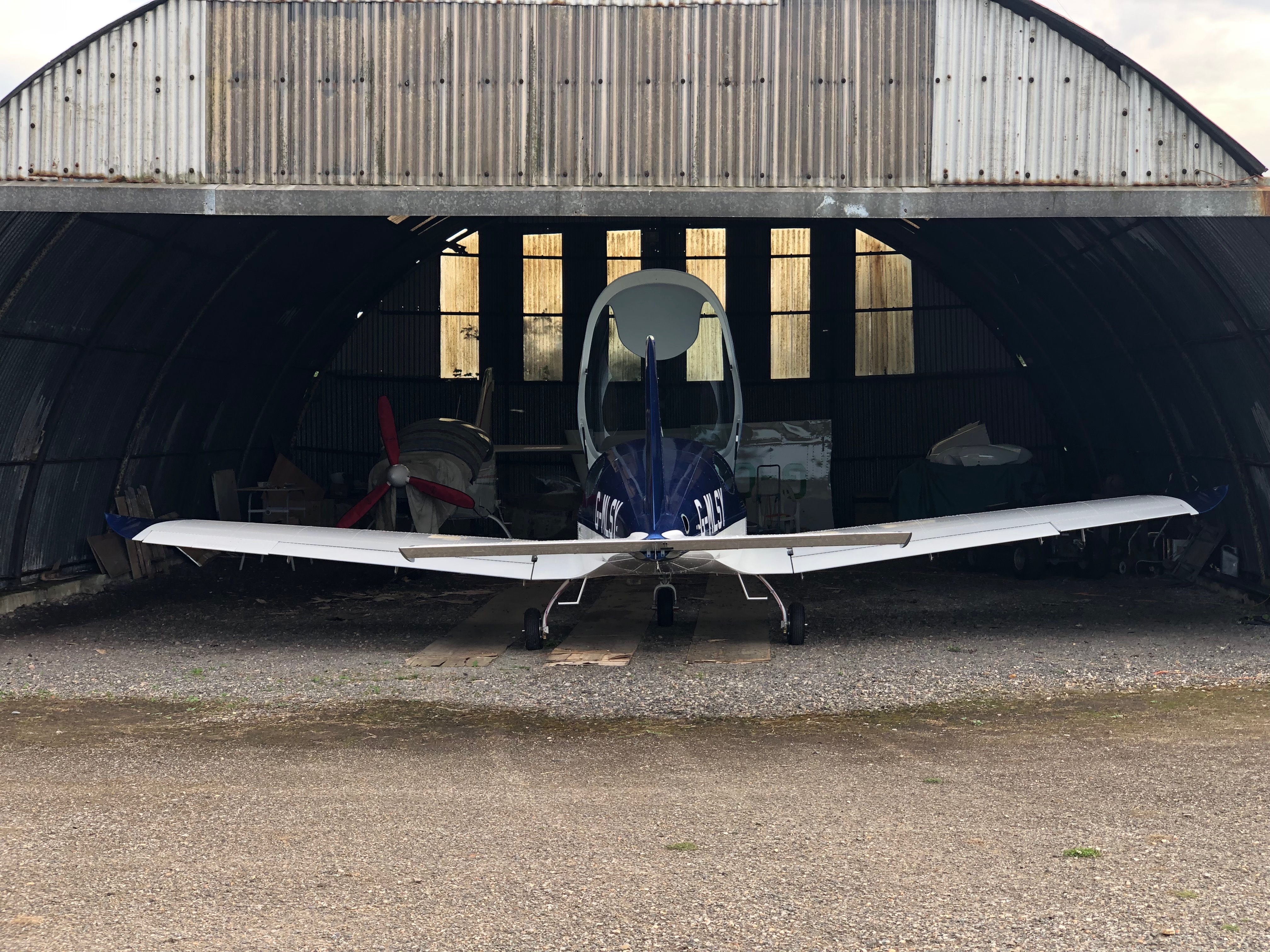
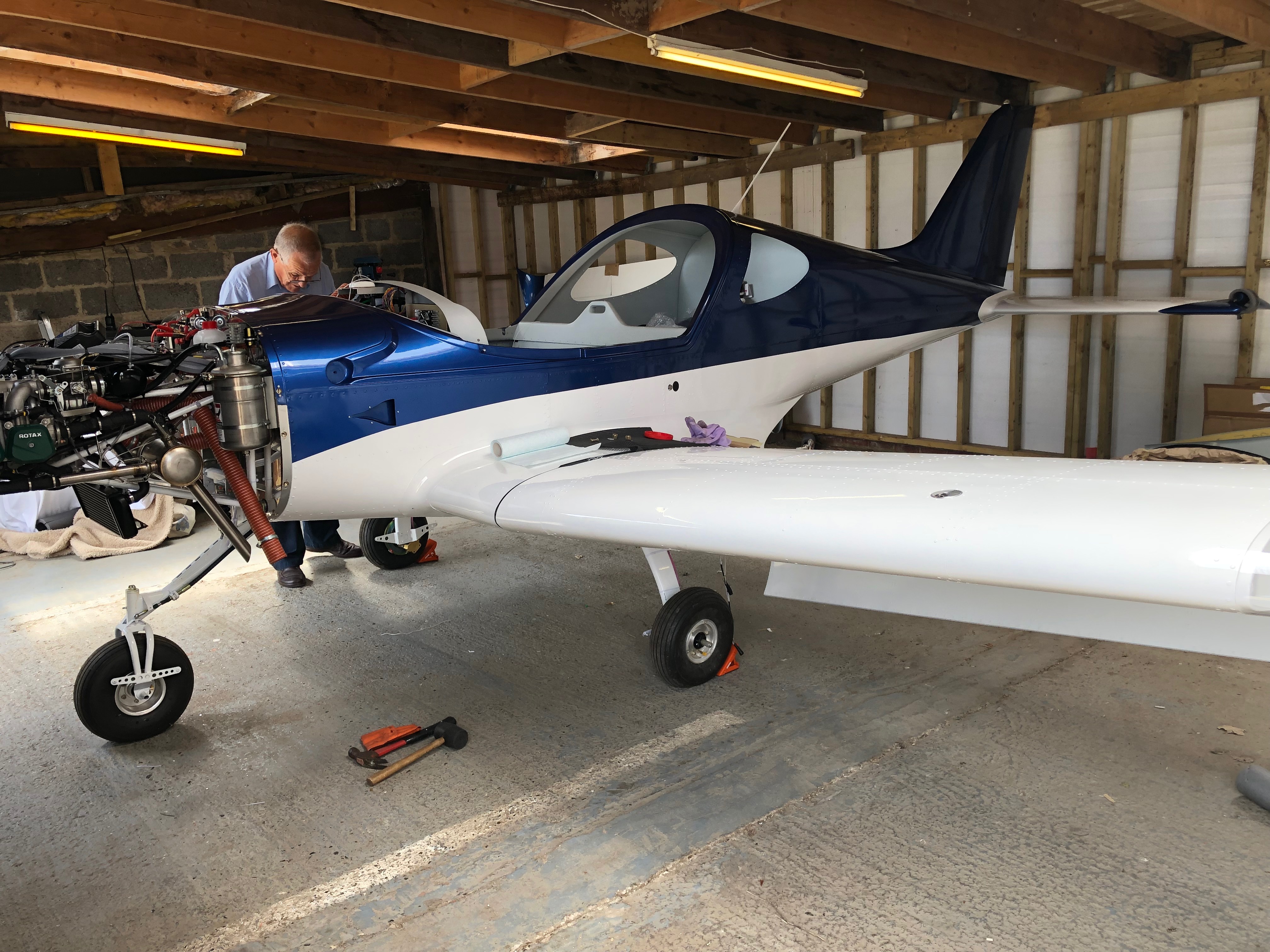
One of the adjustment points in in the rear of the aircraft with a very small inspection panel to undo nuts and make the adjustment. It was very tricky and time-consuming but got there in the end. I used an iPhone inbuilt app for the level that was then checked by Ian who has a digital protractor. Amazingly the iPhone reading match Ian’s readings +30 deg -15 deg.Ian came round to ask if I wanted to run the engine today as he’s away Monday and Tuesday. With the temperatures very much lower today it seemed a good idea so we got on with checking everything was ok before taking it out of the workshop.The workshop ceiling was far too low to fit the canopy so needed to do it once it was out. It took a lot of jiggling to get it out of the workshop and now it’s out it won’t be going back in! Out on the grass away from all the stones and Pete Sharpe recording the event on my iPhone it’s time to do a final check before the first start. The electric fuel pump was switched on to check for leaks from the fuel system, all seems ok. First time in the cockpit for real so another good check to make sure every thing is working as expected. Ian is standing by just in case anything goes wrong with a radio and fire extinguisher!Canopy down, calling “CLEAR PROP” as I turn the ignition key and my baby burst into life on the very first turn – I can only shake my head in disbelief – Amazing!Watching the Ts&Ps as the engine is running Ian does a walk round to check for any obvious problems but there aren’t any. It’s running as sweet as a nut.After being told to smile I look up as one happy chappy… Ian prompted me to taxy the aircraft to spread the noise about a bit so I did a few runs up and down the runway checking brakes, steering, instruments, pitot system and then power checks. All very good apart from the flys on the firewall. Ian carried out a further check once the engine had stopped but all was ok and there were no problems.A very empty workshop. It seemed big enough when I first started but as time went on it proved to be too small to house the aircraft on a permanent basis.So this is where G-MLSY will be for the weekend before being moved to its new position in the main hanger.
Music: Reverend And The Makers, Ian Brown and Razorlight.
A few smaller jobs to do today including the last bit of wiring, wire locking the tailplane, adding a vent pipe to the coolant bottle and adjusting the flap operating arms.
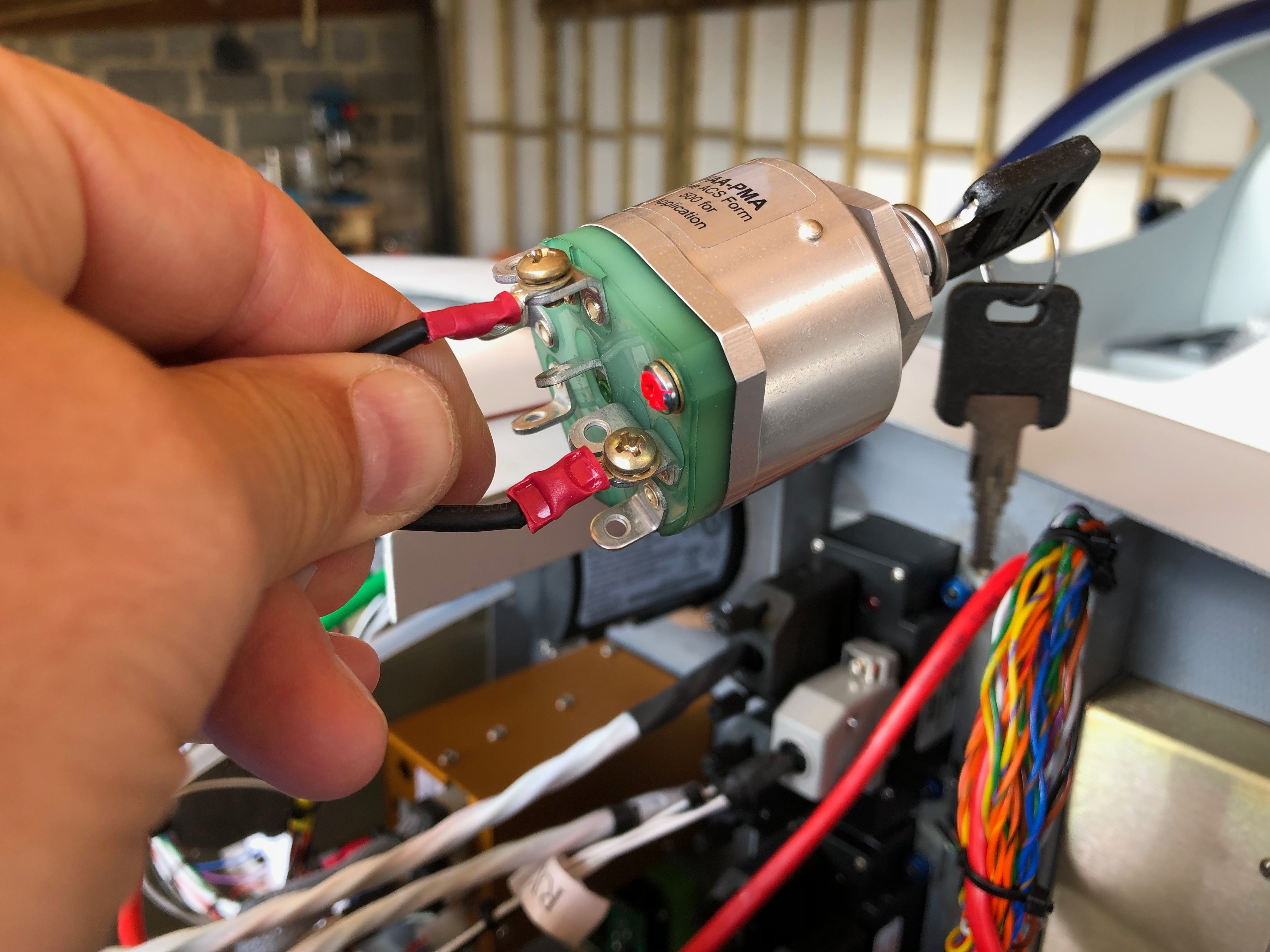
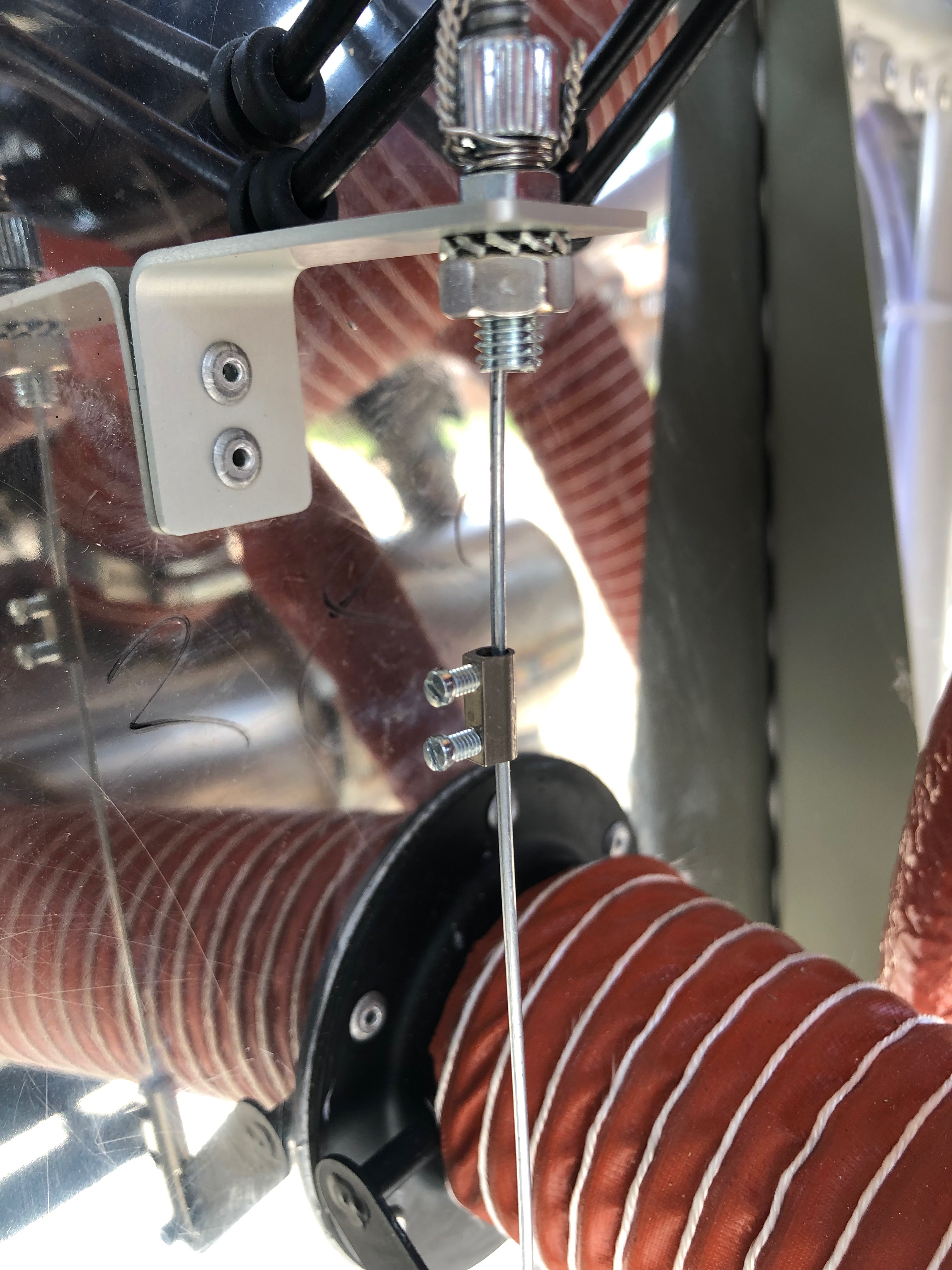
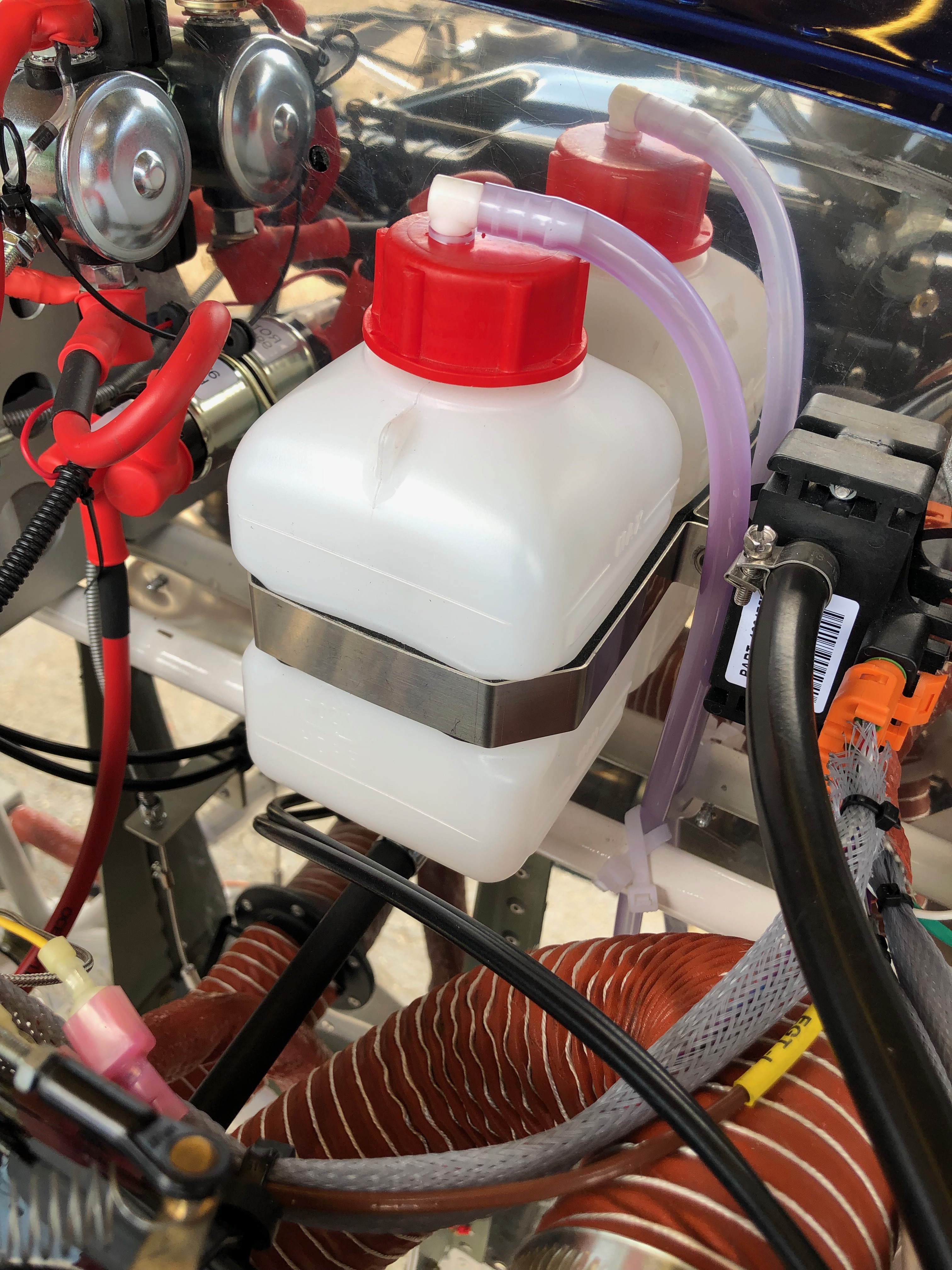
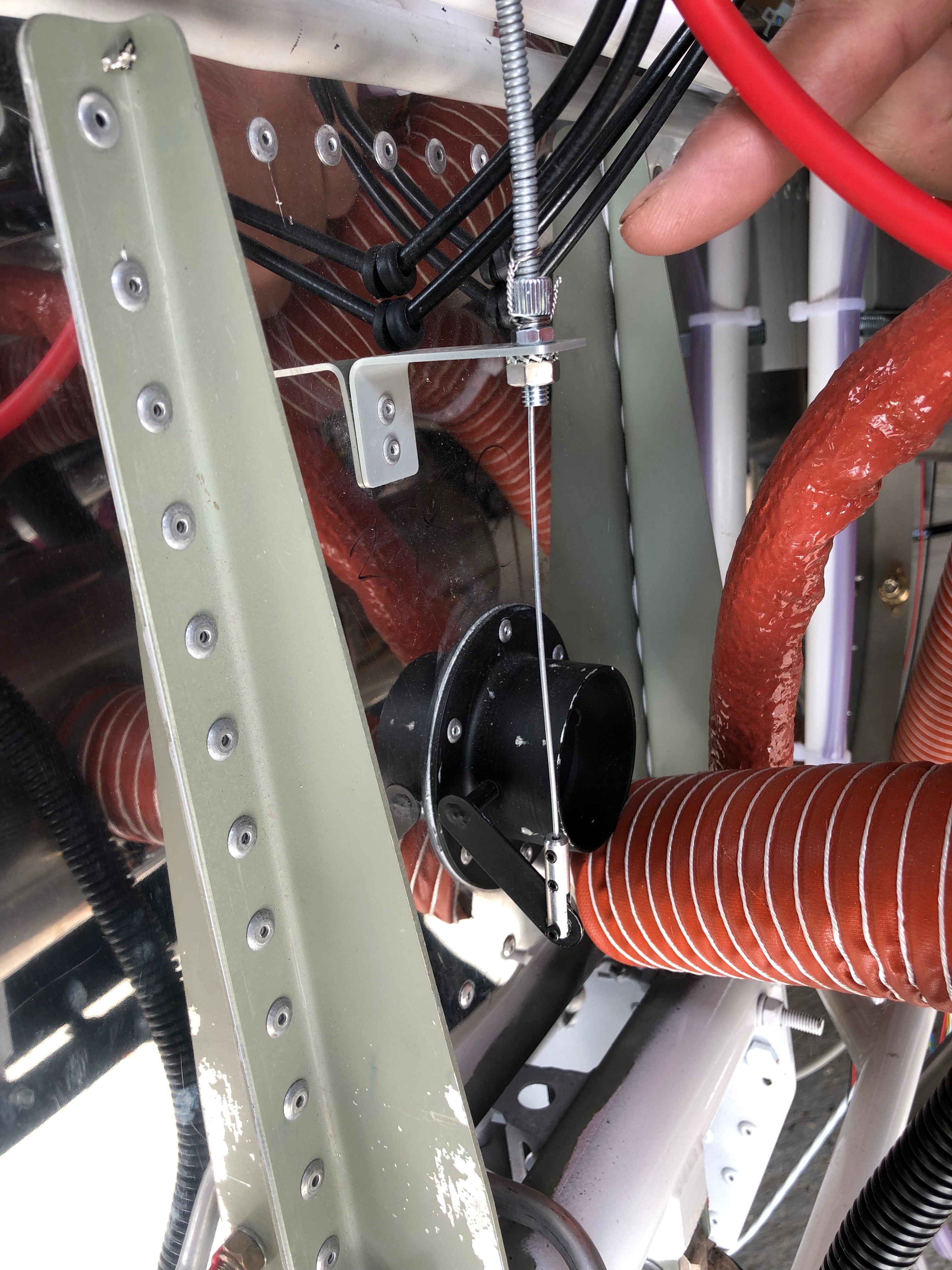
The ACS ignition switch requires 5 wires, Left and Right magnetos, battery, starter solenoid and ground. It uses 4mm ring connectors that are secured with screws and shake proof washers.The carb heat and heater controls require a positive stop to make sure you don’t pull the cable too far. I’ve used a ‘chocolate block’ with the insulation cut off……slid it on the cable and secured it with the 2 screws.The same was done for the heater control.I’ve added a breather in the coolant bootle and run the pipe down the firewall and out under the fuselage.Four bolts secure the tailplane and once torqued to the correct setting are wire locked to ensure they don’t undo.The wire locking is carried through from the top bolt and finished off around the bottom bolt.The flaps require adjusting to be flush with the trailing edge of the wing…The control rod arms have adjusters at either end and are adjusted equally before locking up.
it’s time to fit the wings so I need to add the connectors to the trim, landing lights and heated pitot looms that I have already run in. I’ve also run in the radio coax cable so need to terminate that and carry out a final tidying up of the wiring.
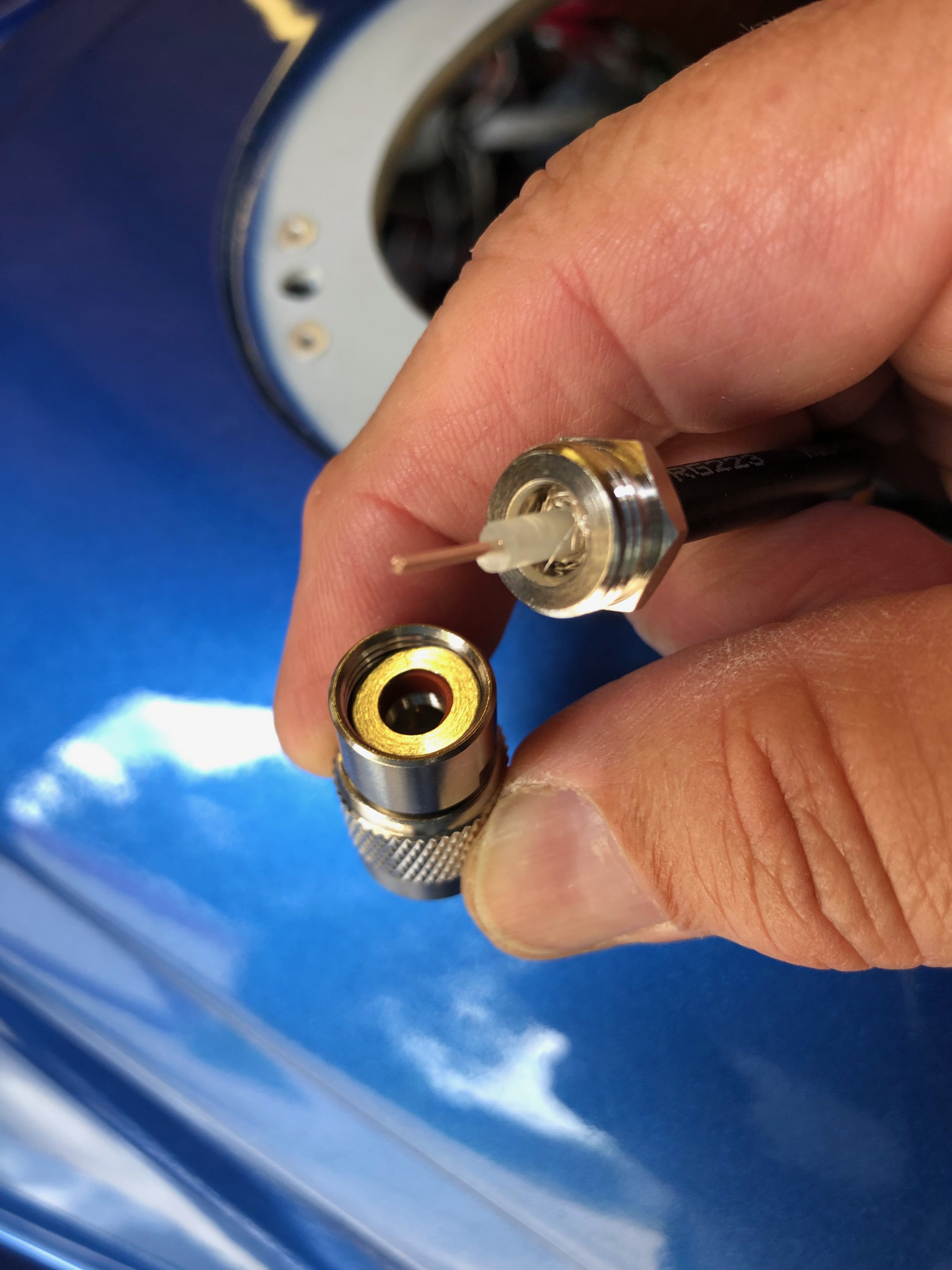
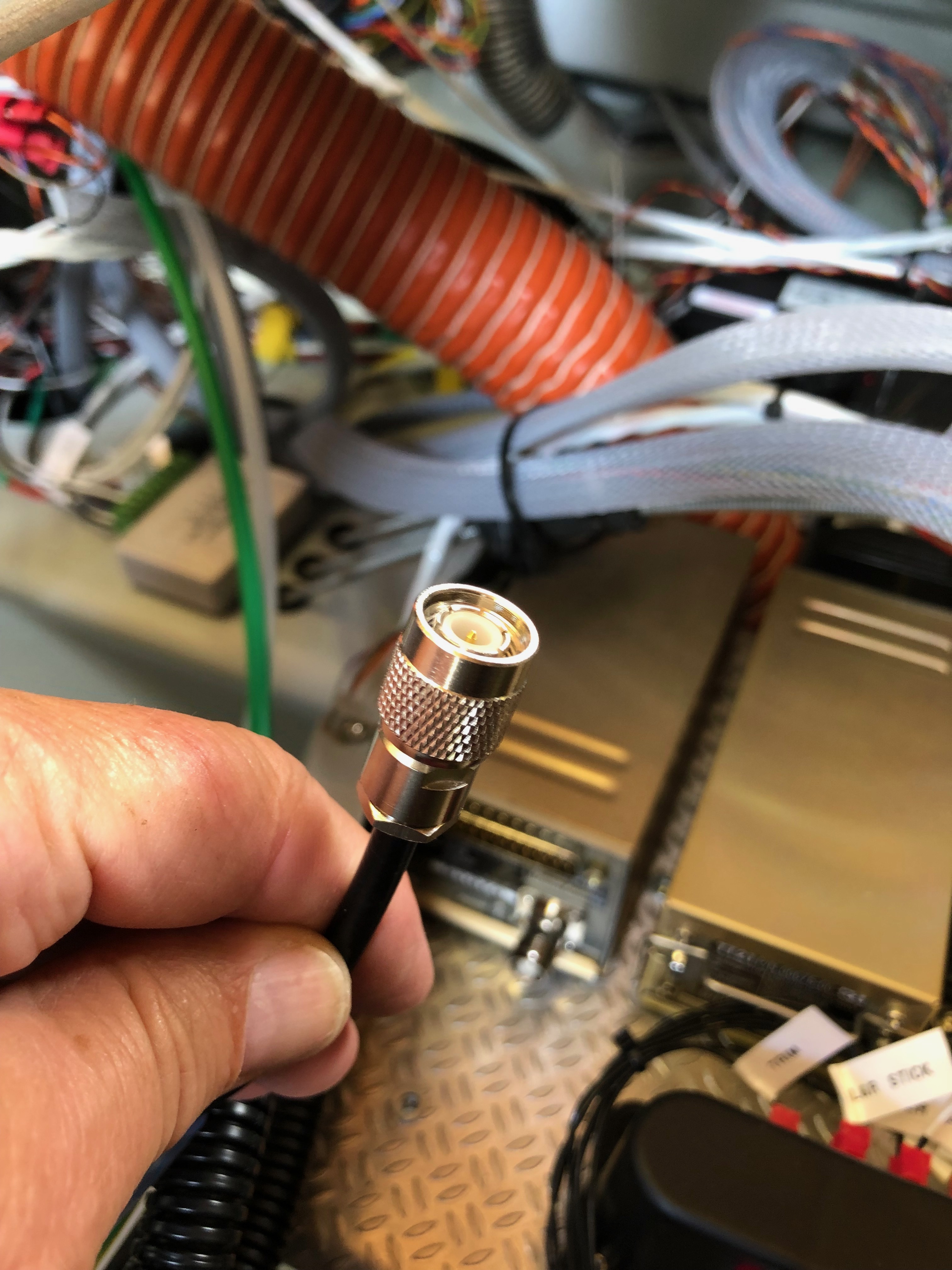
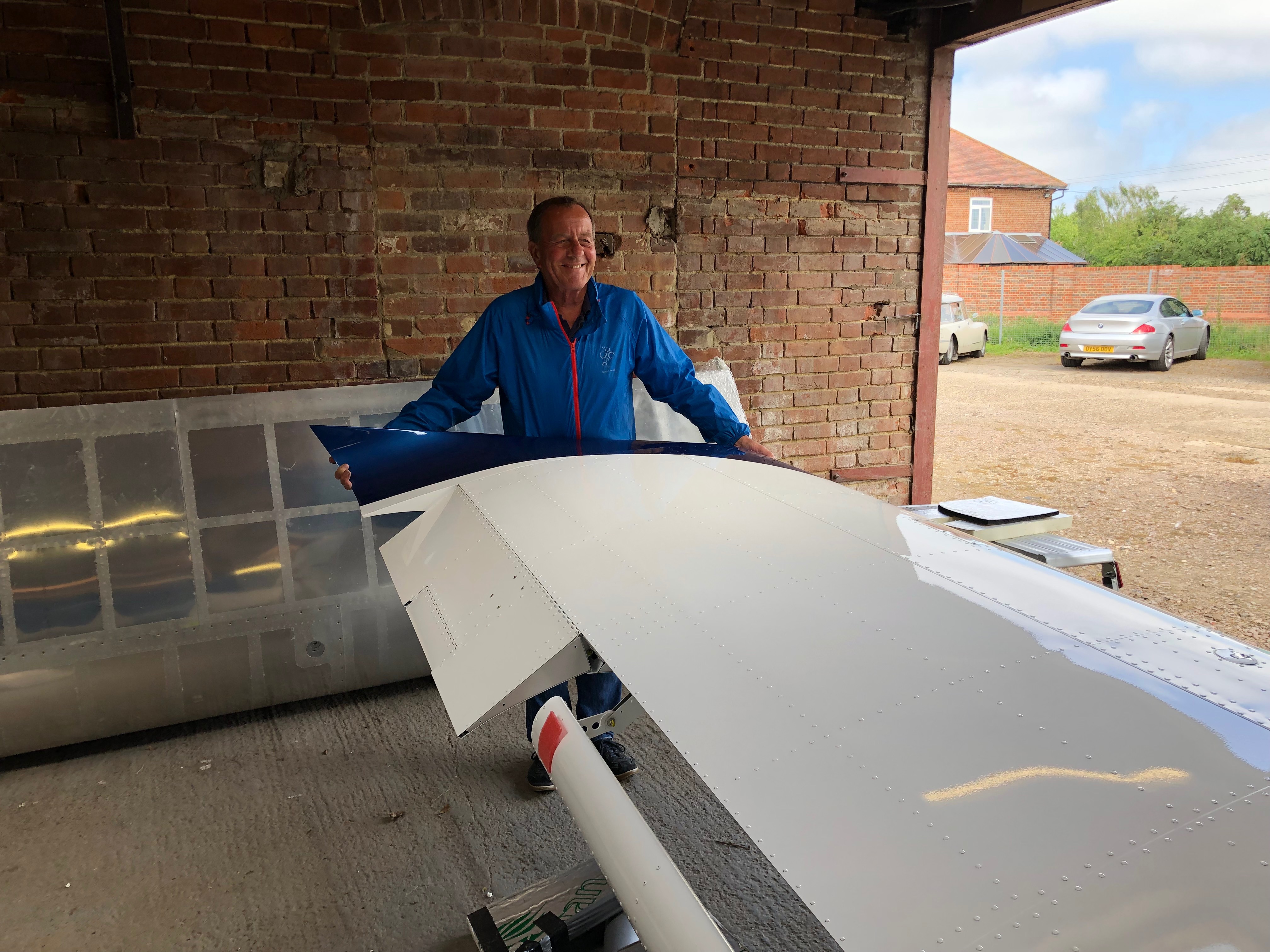
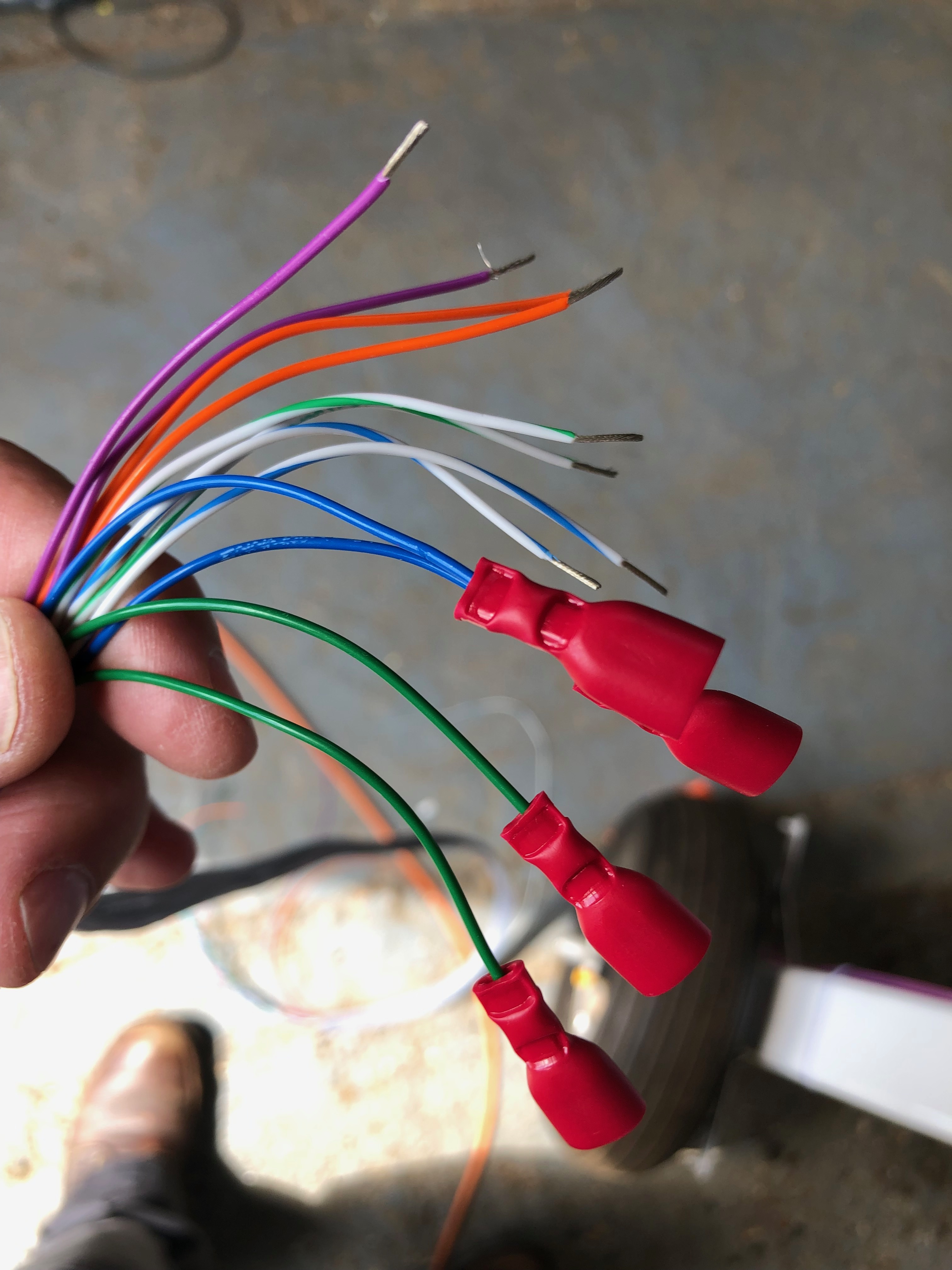
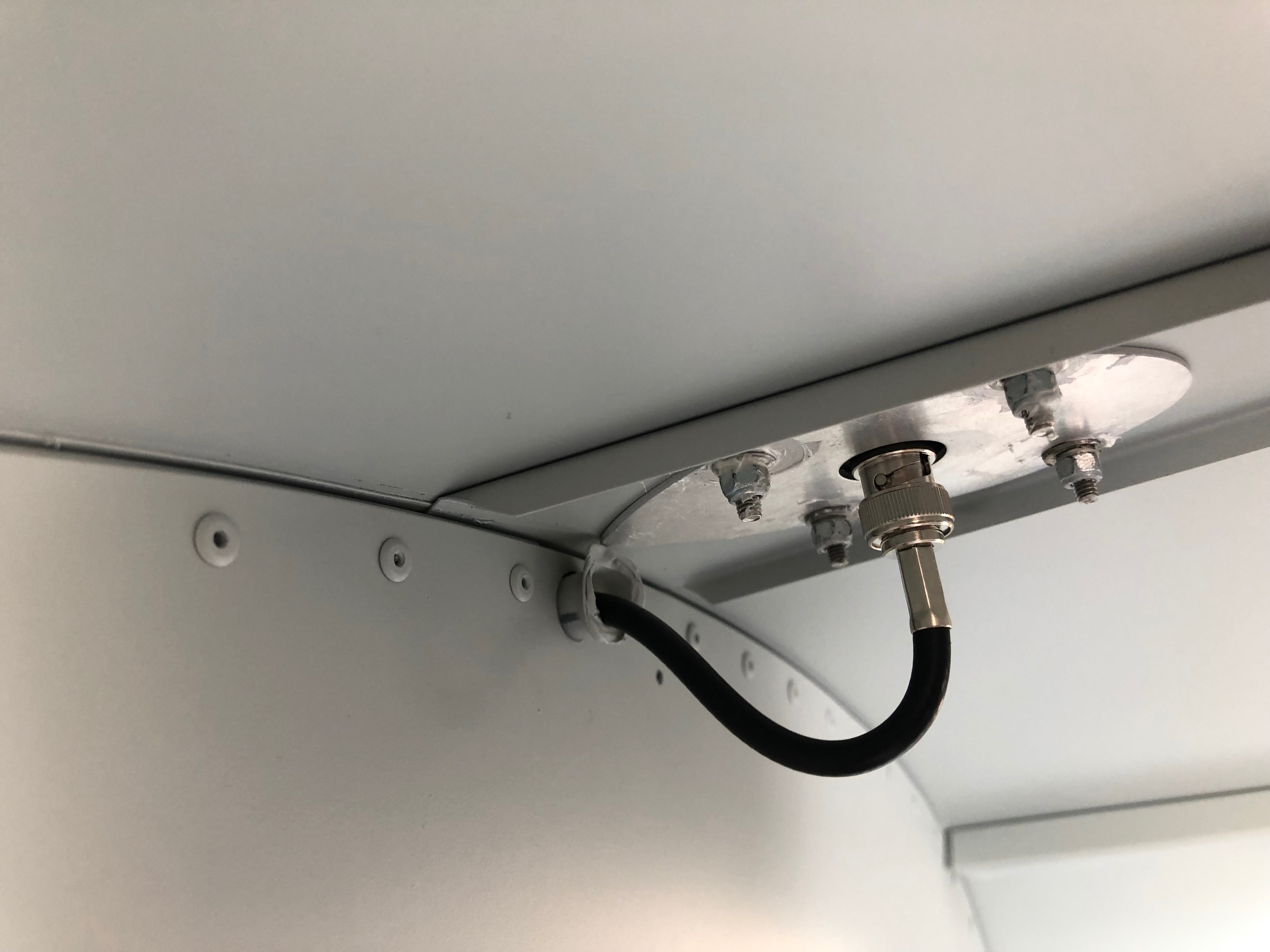
As mentioned before I decided to use superseal connectors as they are failproof and waterproof. I’d already completed quite a few of the connections but was distracted by another job. Whenever I’m distracted I always document what still needs to be done in my project plan.With all the connectors added the next job is to add an Amphenol to the end of the coax cable. It’s quite a complicated connector so I needed to test i on a cut off first. Once cut and trimmed the connector is soldered on to ensure a good connection.The finished connector, fairly straightforward but just needed to be thought about before committing,Now time to fit the wings so I can set all the ailerons, check the pitot, trim, flap, strobe and landing light circuits are working as wired. Ian and Peter Sharpe have offered to help and as usual Ian wears his designer gloves for the wing lift process. He looks quite fetching 🙂 Peter Sharpe at the ‘sharp’ end adding invaluable assistance. Once the wings are attached the main bolts need to be tapped home with a small nylon mallet before the nuts are added.With the wings added she’s a tight fit in the hanger with just 6″ between the front door and rear wall. If I had fitted the prop she wouldn’t fit!Now all the wiring has been completed and checked I can start to tidy th wiring. Ovrall I’m quite pleased with the results. Circuit Breakers……Bus Bars……Equipment trays and connectors…… and switches. All look a lot tidier now.She’s coming along nicely now and it won’t be long before I can start engine tests…
A lot to do today, as every day! When the delivery arrived I found that some of what I had ordered was out of stock. It’s not a big problem as there are lots of other jobs to do. So I’ll wire up the power side of the system and label, install and test the radio and transponder coax cable.
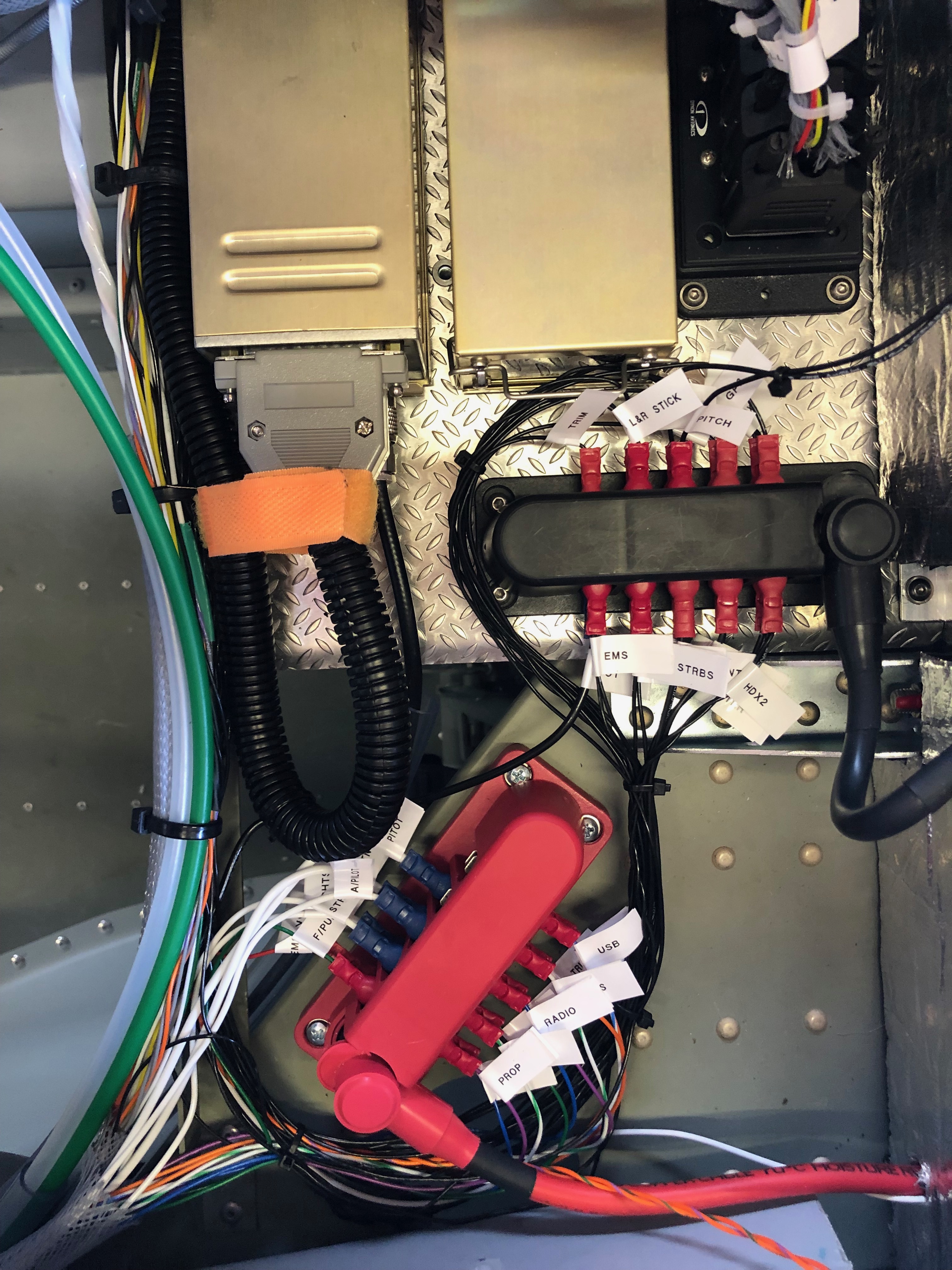
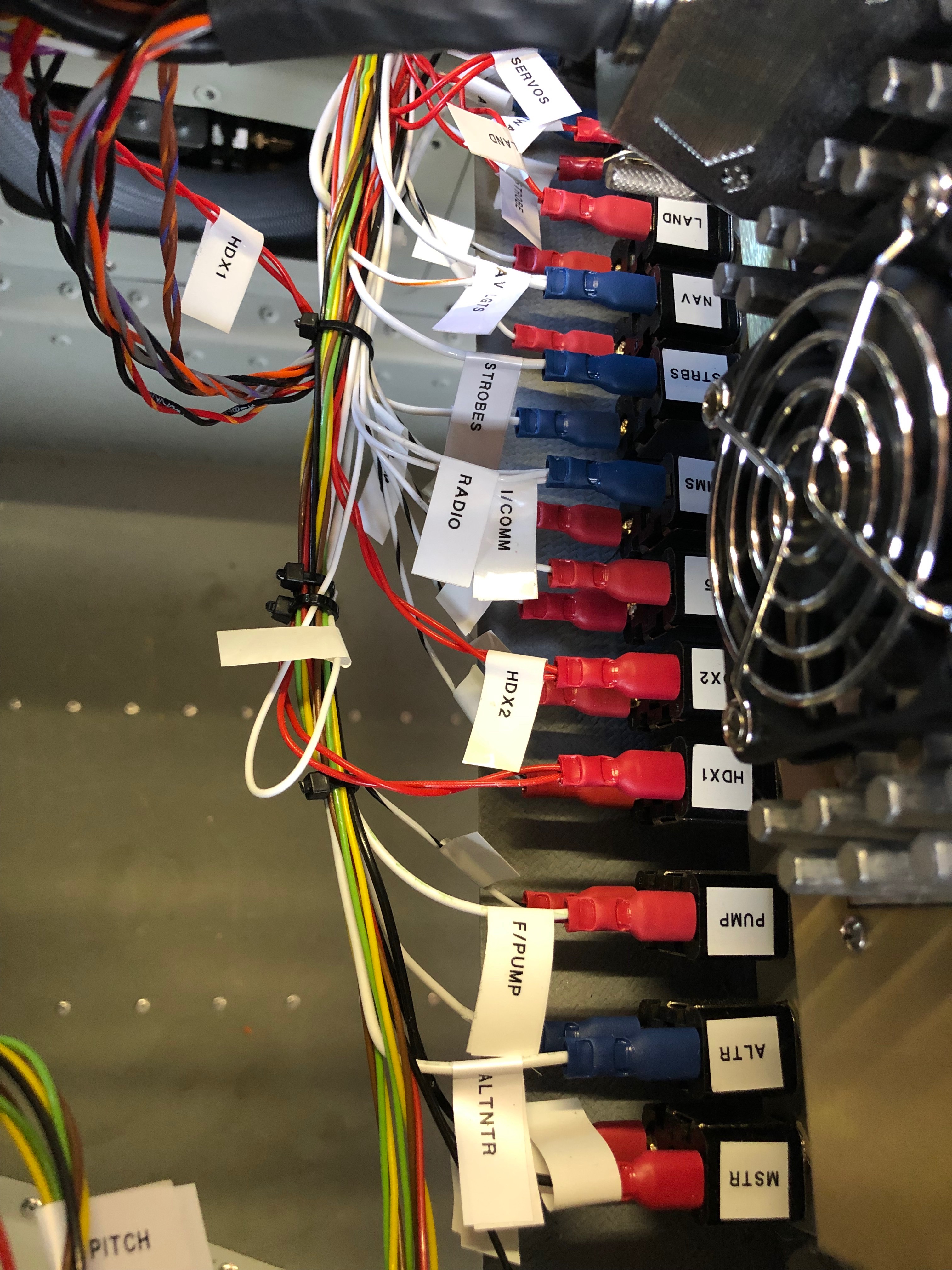
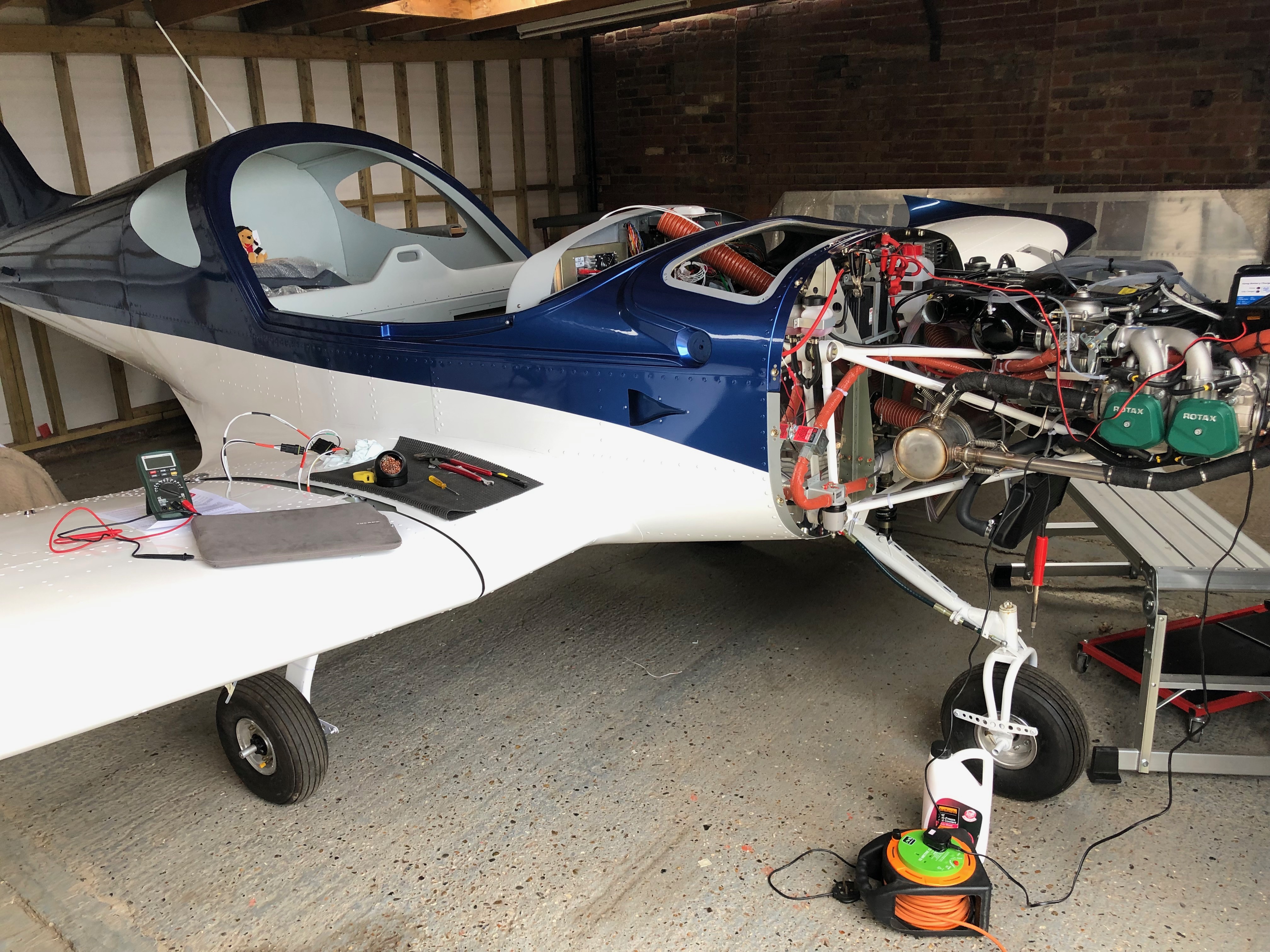
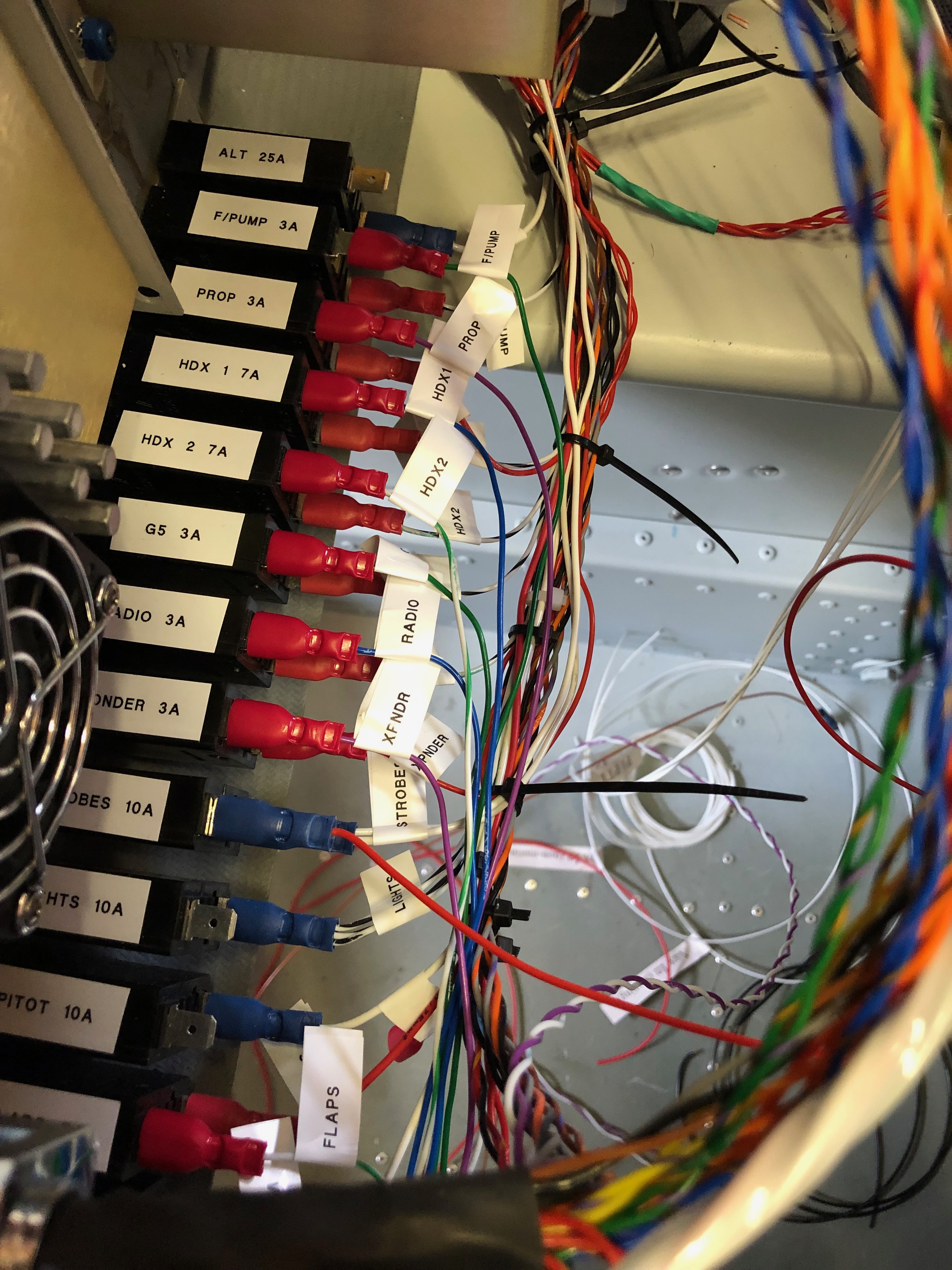
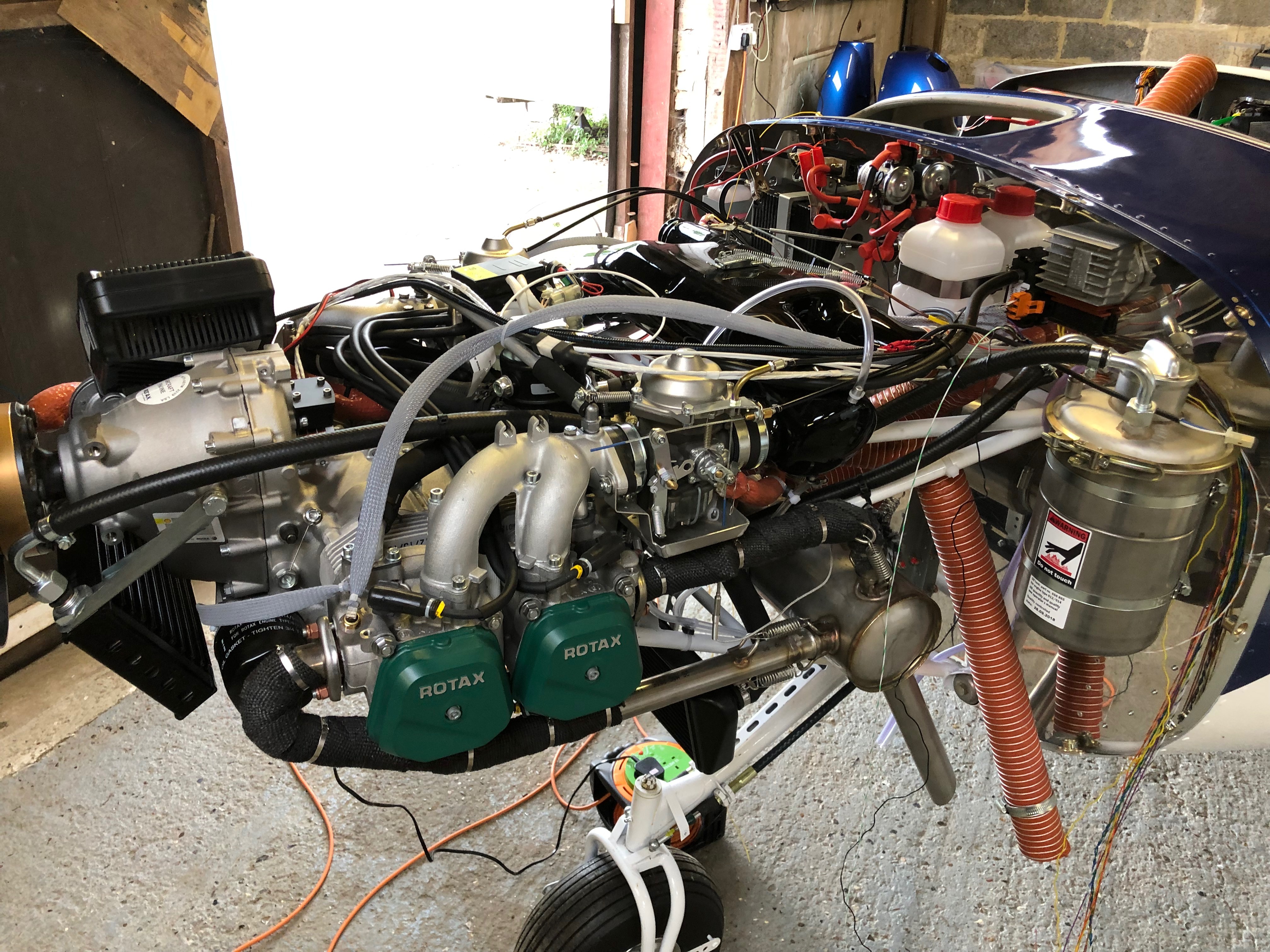
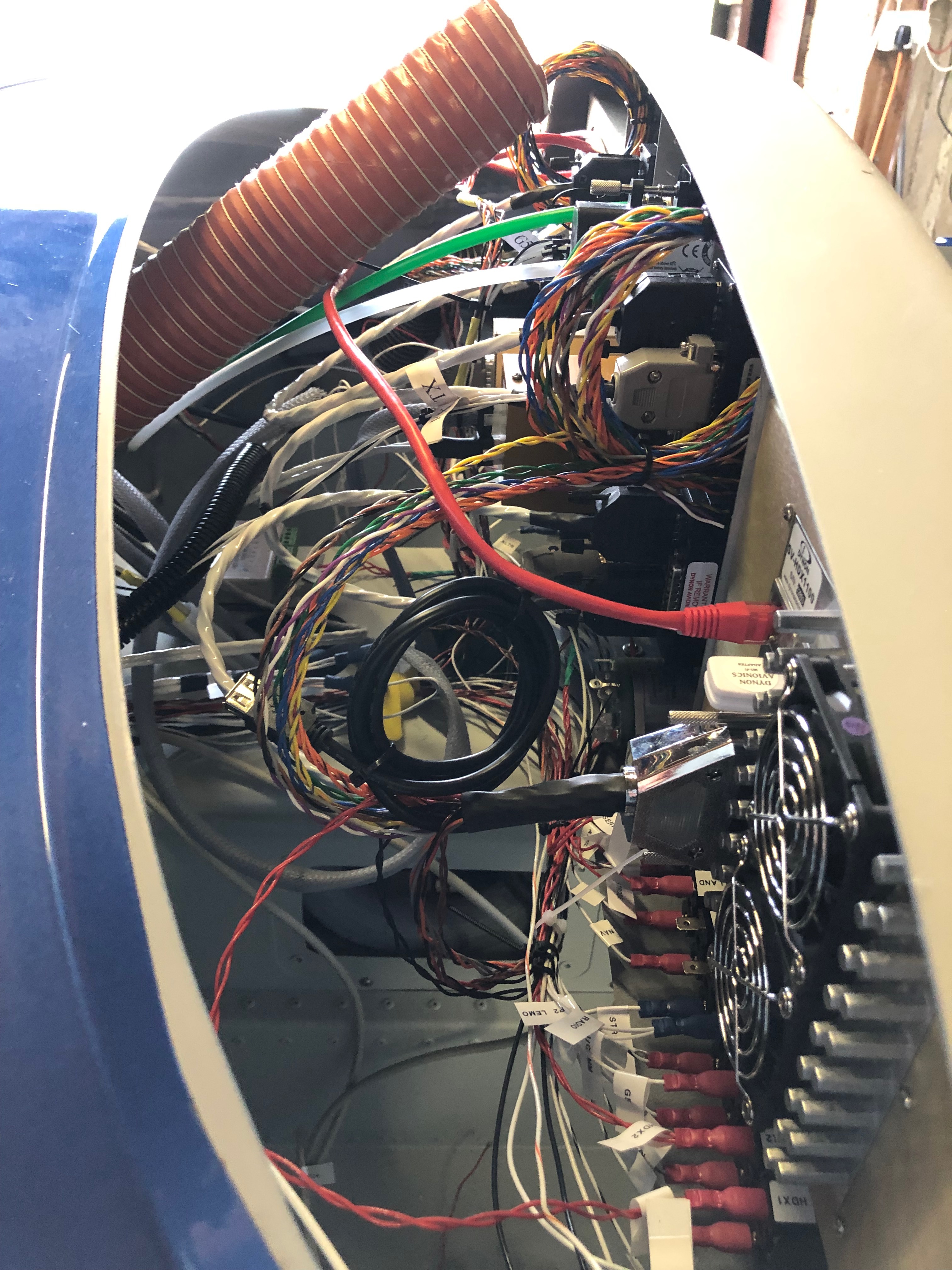
Time to wire up the power side of the electrical system. I’m reusing the wire that I have leftover from the other circuit wires that were trimmed back. There’s plenty to do the job although not a unified colour as long as they are labelled it will be ok.My new friend. A Dymo Label Manager 200 that I bought some years ago. It’s been invaluable and luckily I managed to get some label cartridges.The +ve bus with 11 of the circuits completed.The circuit breakers connected, some tidying will be required but it’s mostly complete.The complete panel powered up for the first time. The system shows a 7 amp power drain which is roughly what I had calculated.My DPD delivery was a day late but got delivered at 10am so I could get on with the wiring of the Transponder and Radio with the coax.The radio coax cable runs through conduit in the fuselage and is terminated with a TNC connector that I’ll do tomorrow.With all the cables protected with sleeving or conduit and secured in place I can fit the interior trim.The rear of the cabin. I’ve checked the radio/headset loom and it works fine so I need to mount the LEMO headset connectors and then I can fix the interior panels.Right side of engine. All the sensors are connected except the Tachometer, soft start module, magneto wires.Left side of engine. Looks a bit busy but with a bit od tidying it will look a bit neater. Quite pleased with the progress so far.
With all the prep to fit the centre console, today’s the day to fit it for the final time. All the control cable outers have been routed and cut, the connections worked out, the pipe runs decided on and checked. Now it’s just a case of carrying out the fit.
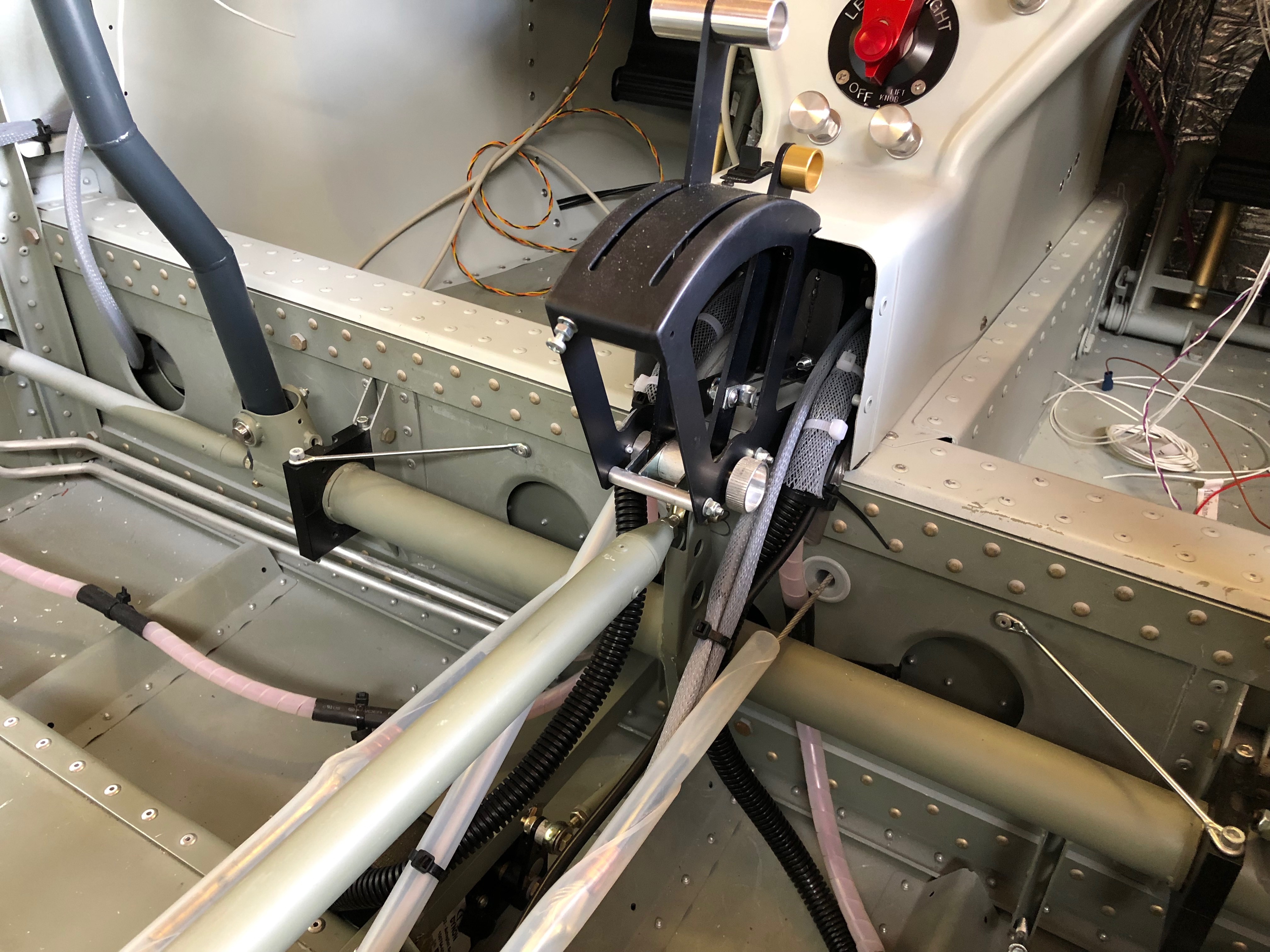
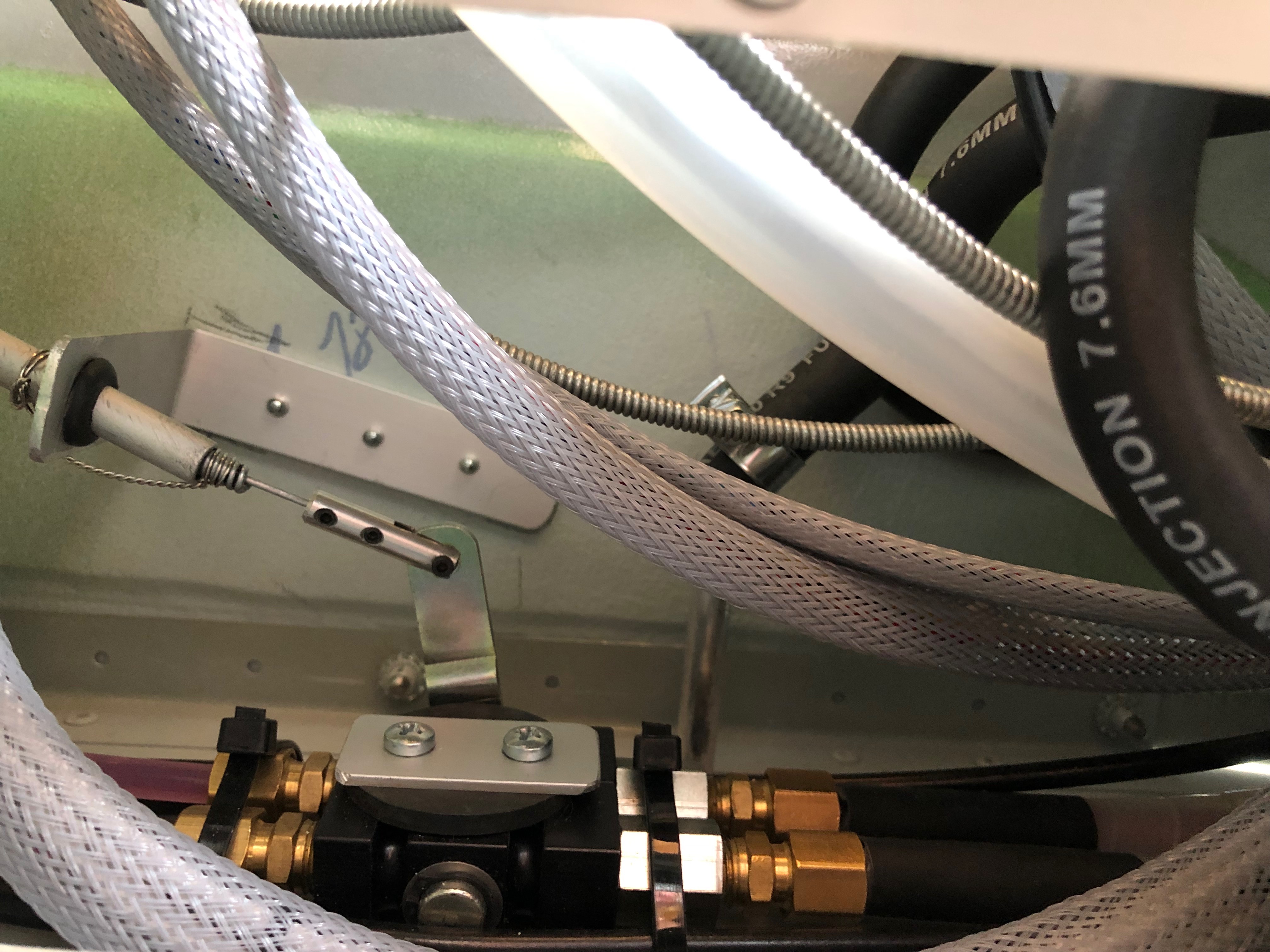
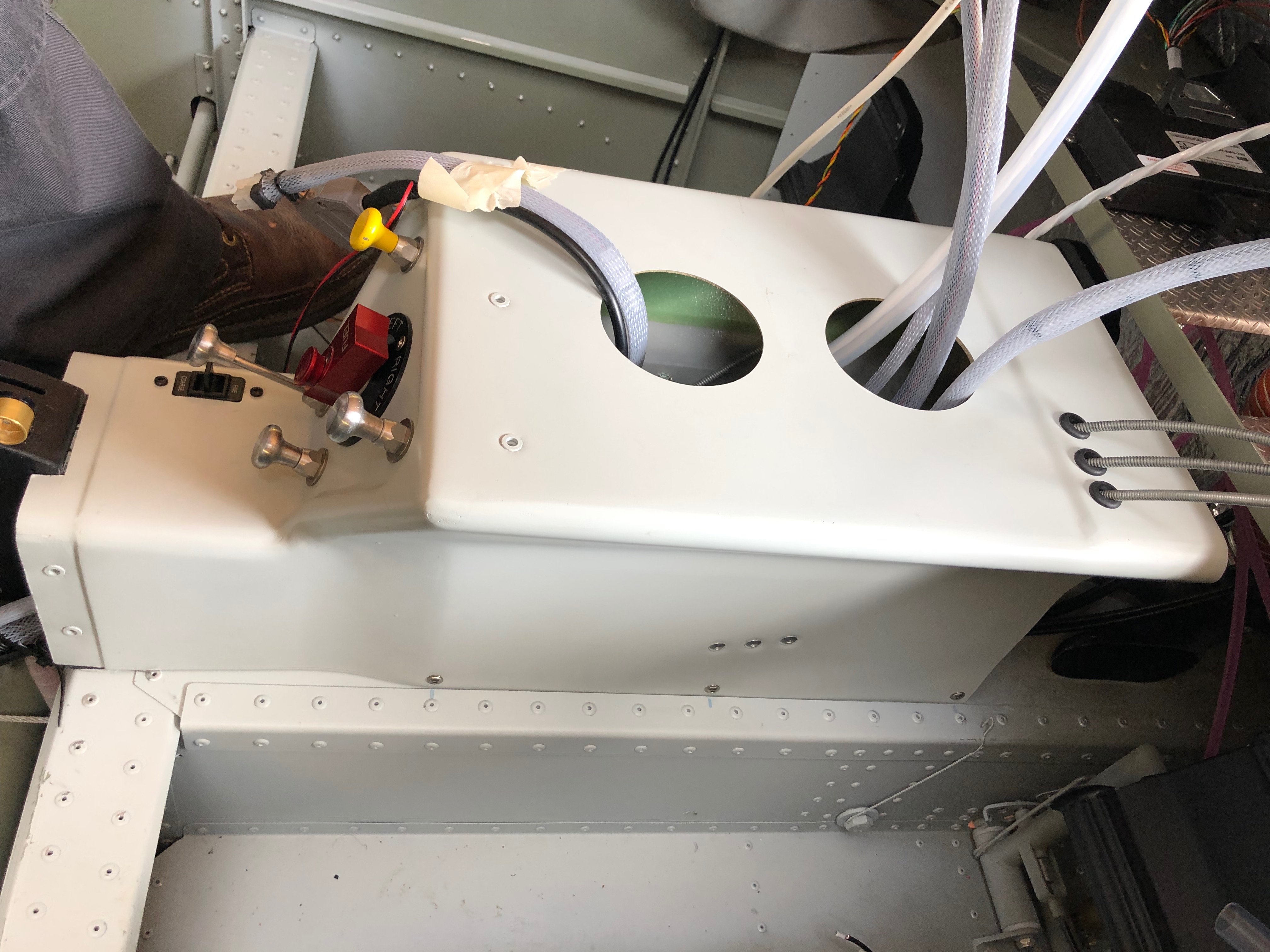
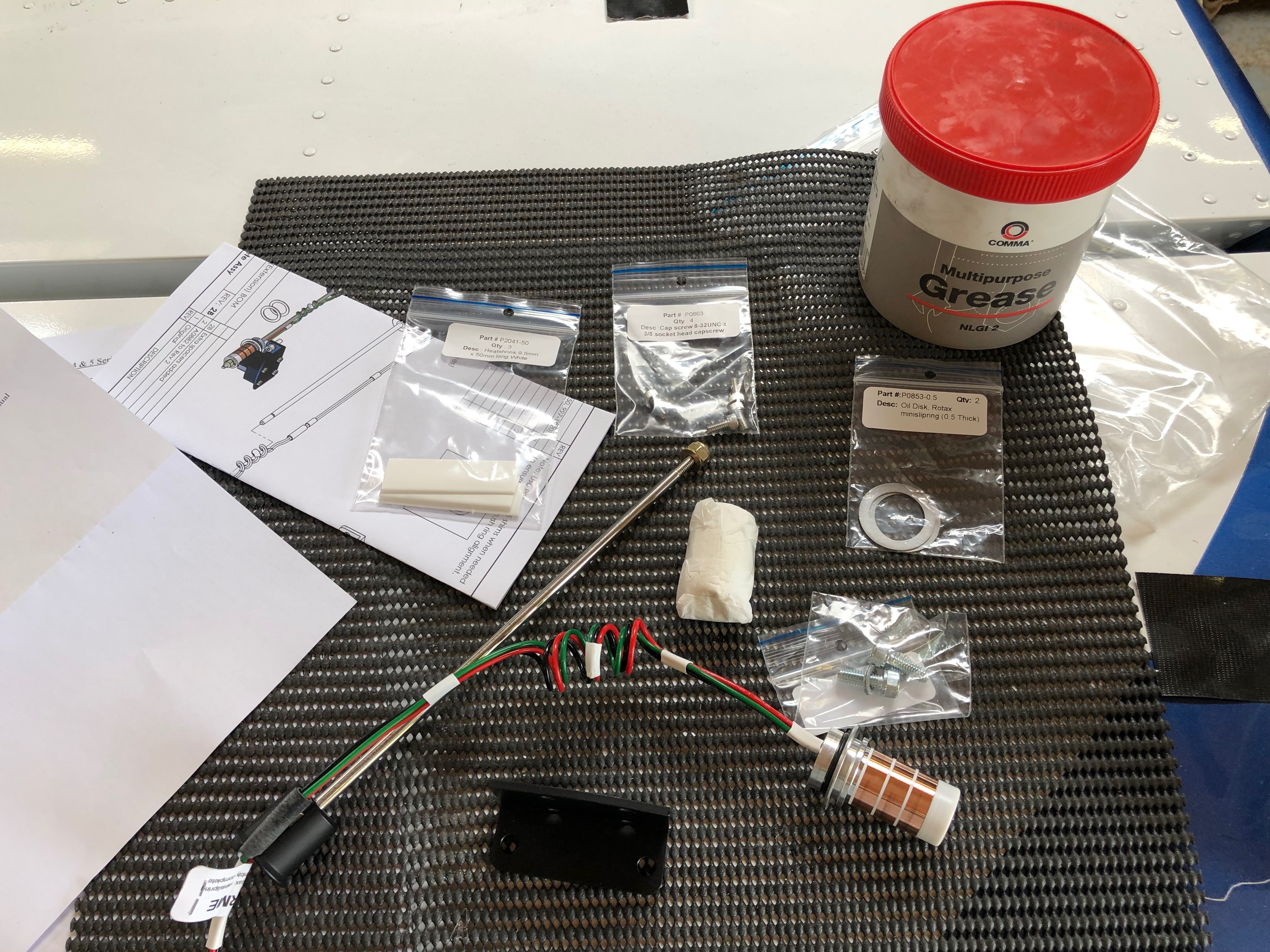
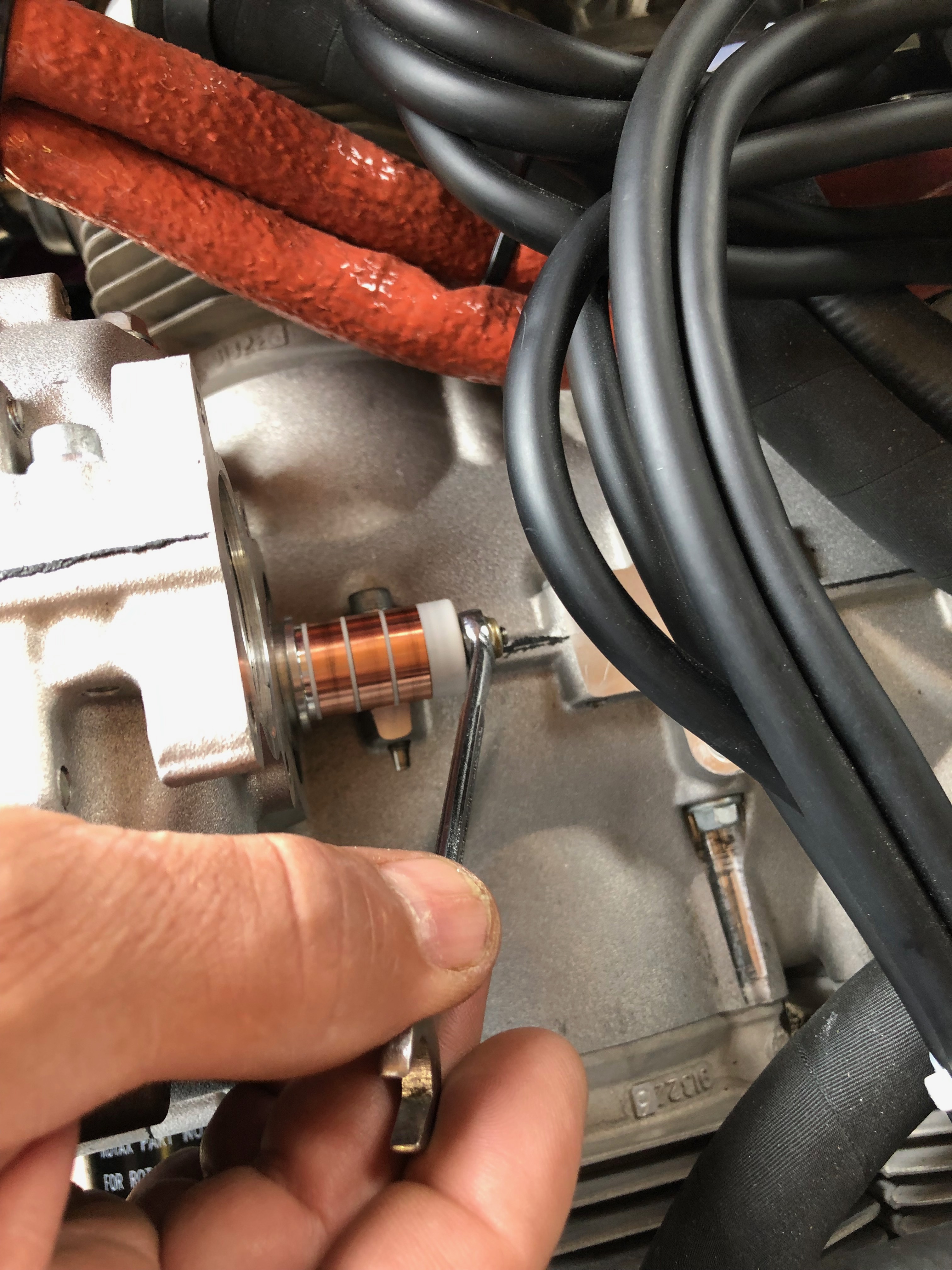
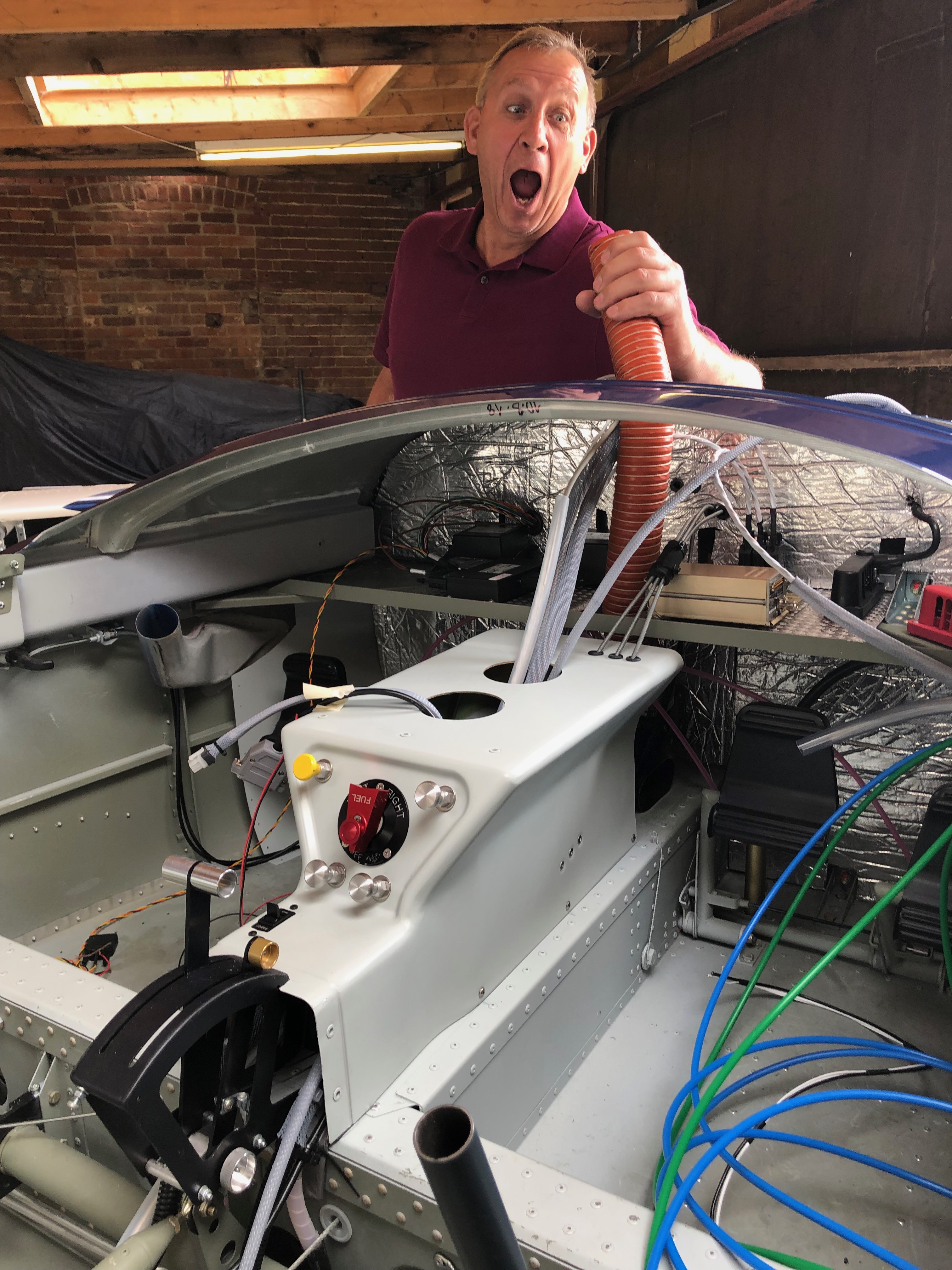
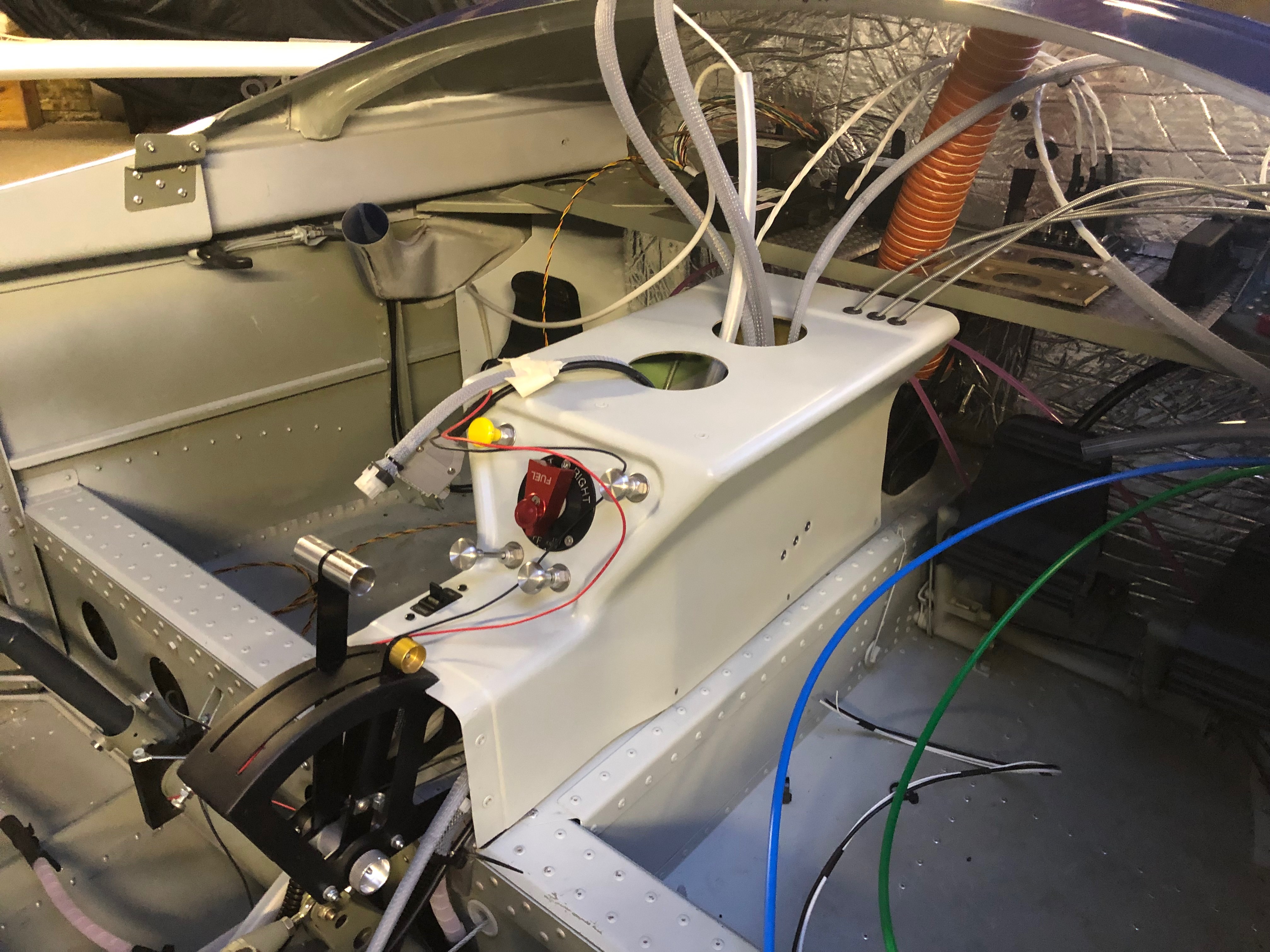
The fuel pipe from the selector to the tanks and engine need to be routed so they don’t kink and cut the supply whilst also being kept away from anything that may chaff them.This shows the support bracket for the park brake cable. It works well.The outer cables are wire locked to the adjusters so they can’t move once fitted.The demist control with the connector we made up. It looks a very good solution.At last the centre console’s complete with all the controls fitted, cables run and fuel pipes fitted. Having received the prop on Monday I can start to install the various bits. This is the mini slip ring available for Rotax 912ULS type 2 engines. It’s fitted to the rear of the gearbox.and then secured in place with a rod hat runs through the hollow gearbox shaft. The control wires spiral round the rod… and exit the front of the engine ready for connection to the pitch motor wires in the spinner.Once the slip ring is fitted the pick up bushes are installed. The bushes need run centrally on the slip ring. That’s all for the prop today, more tomorrow.Moving on to the panel again. I will fit as much as possible before fitting to the aircraft as it’s a lot easier than fitting the components when the instrument panel has been fitted to the aircraft. I’m not sure what Tom is doing here? Perhaps he’s going to start to sing? Captions please! He’s going home today so I’m solo again tomorrow!
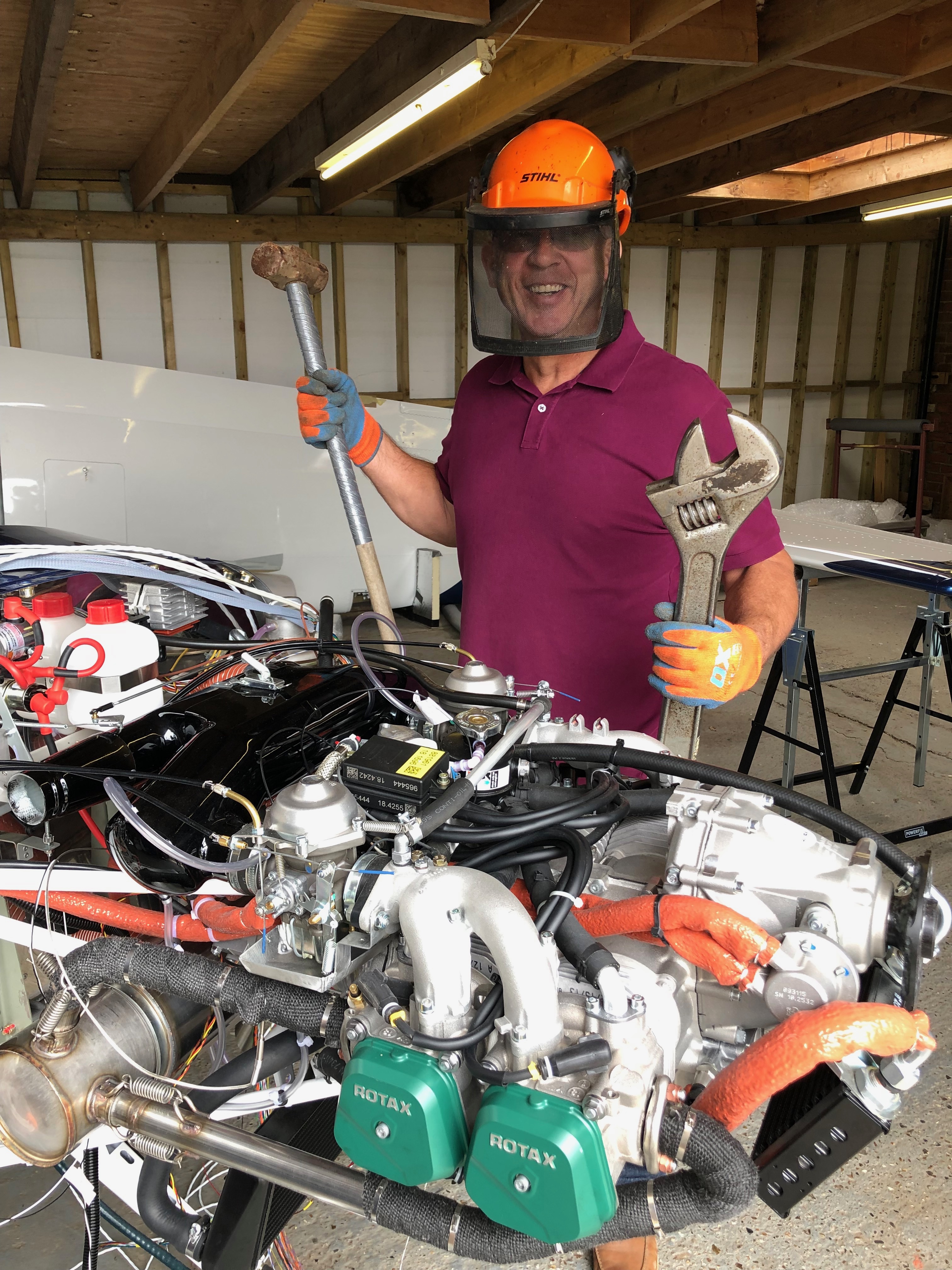
Tom came down to stay for a couple of days and give me a hand. Luckily he bought some tools with him from the land of the giants!
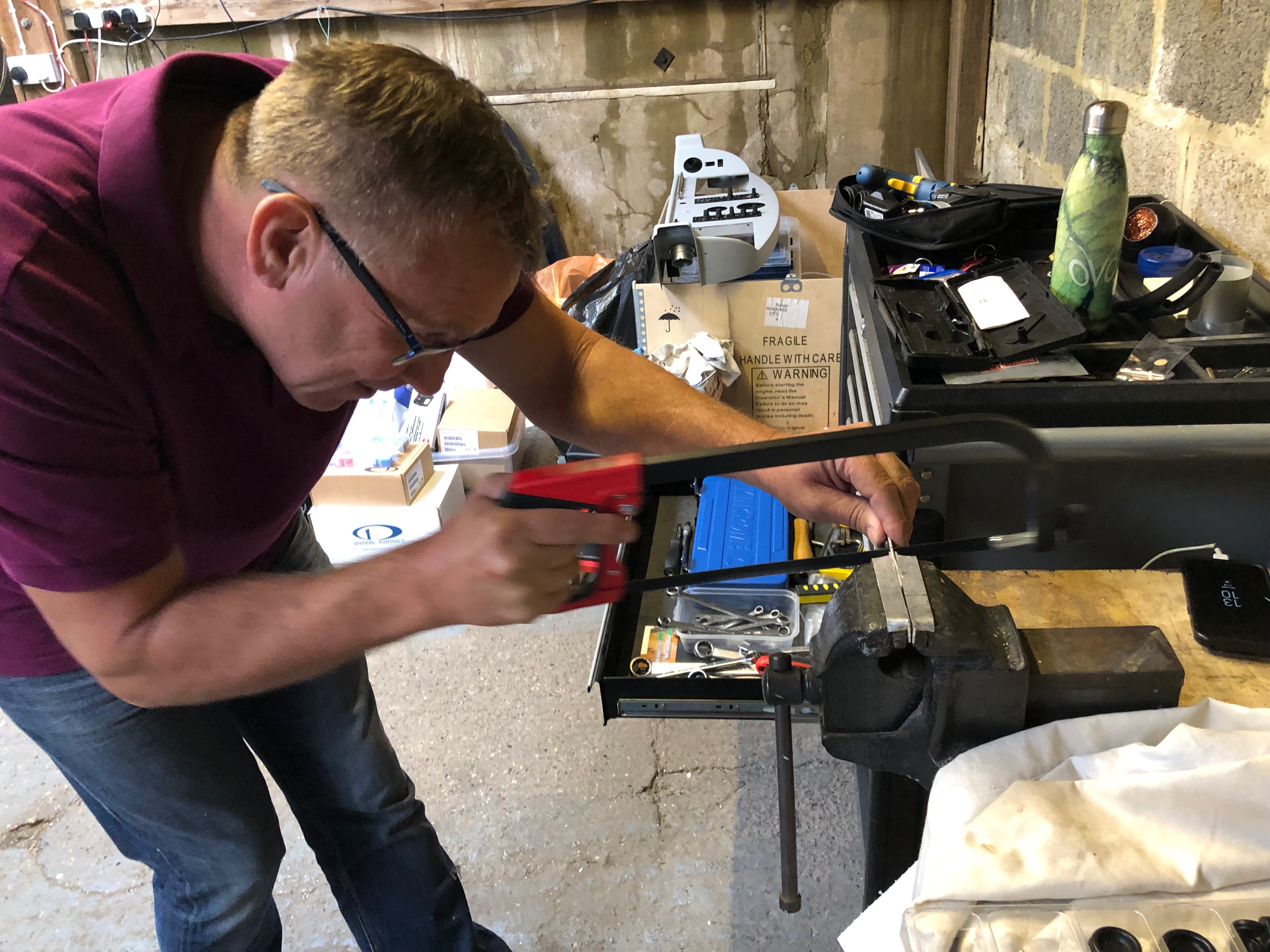
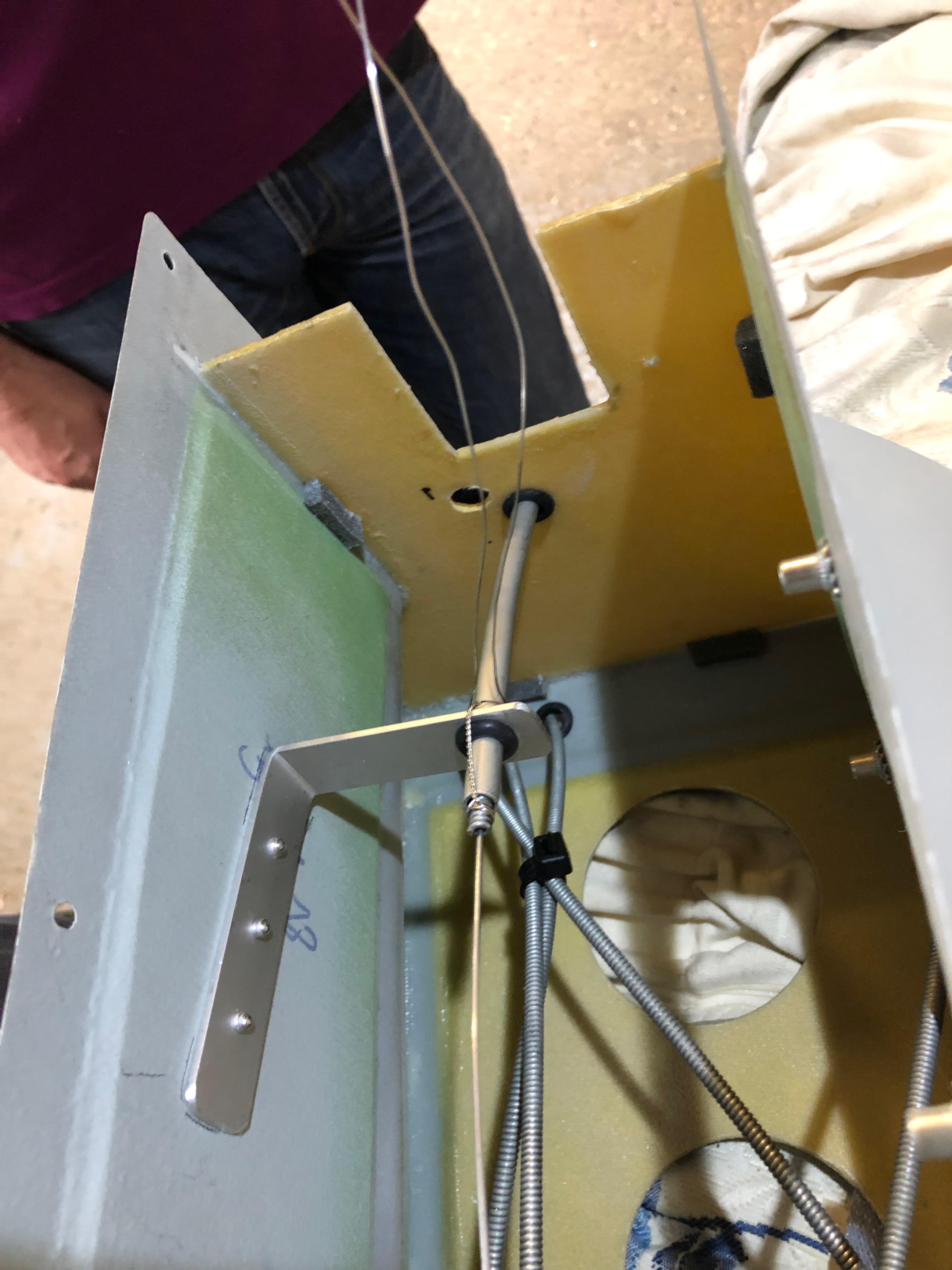
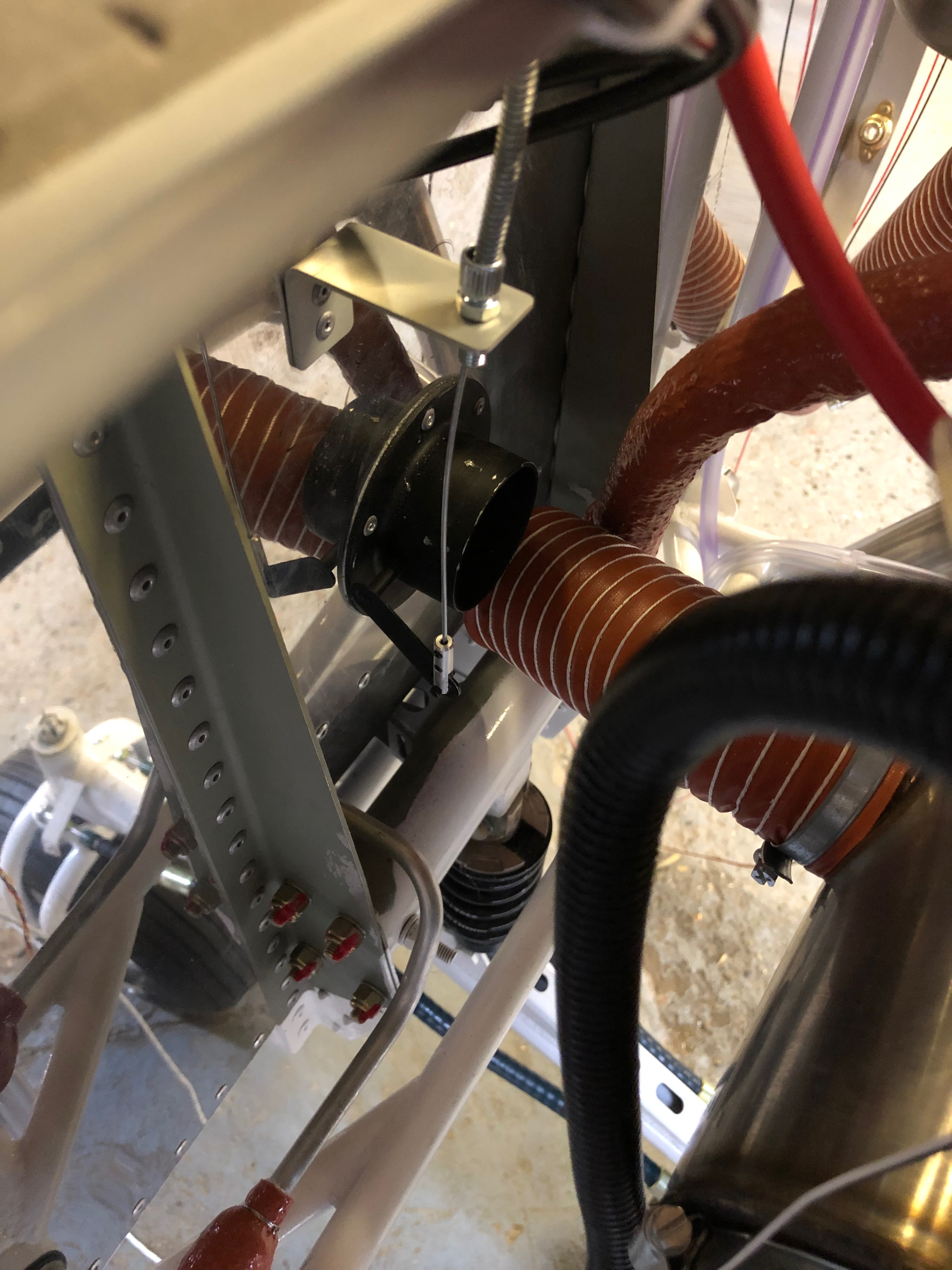
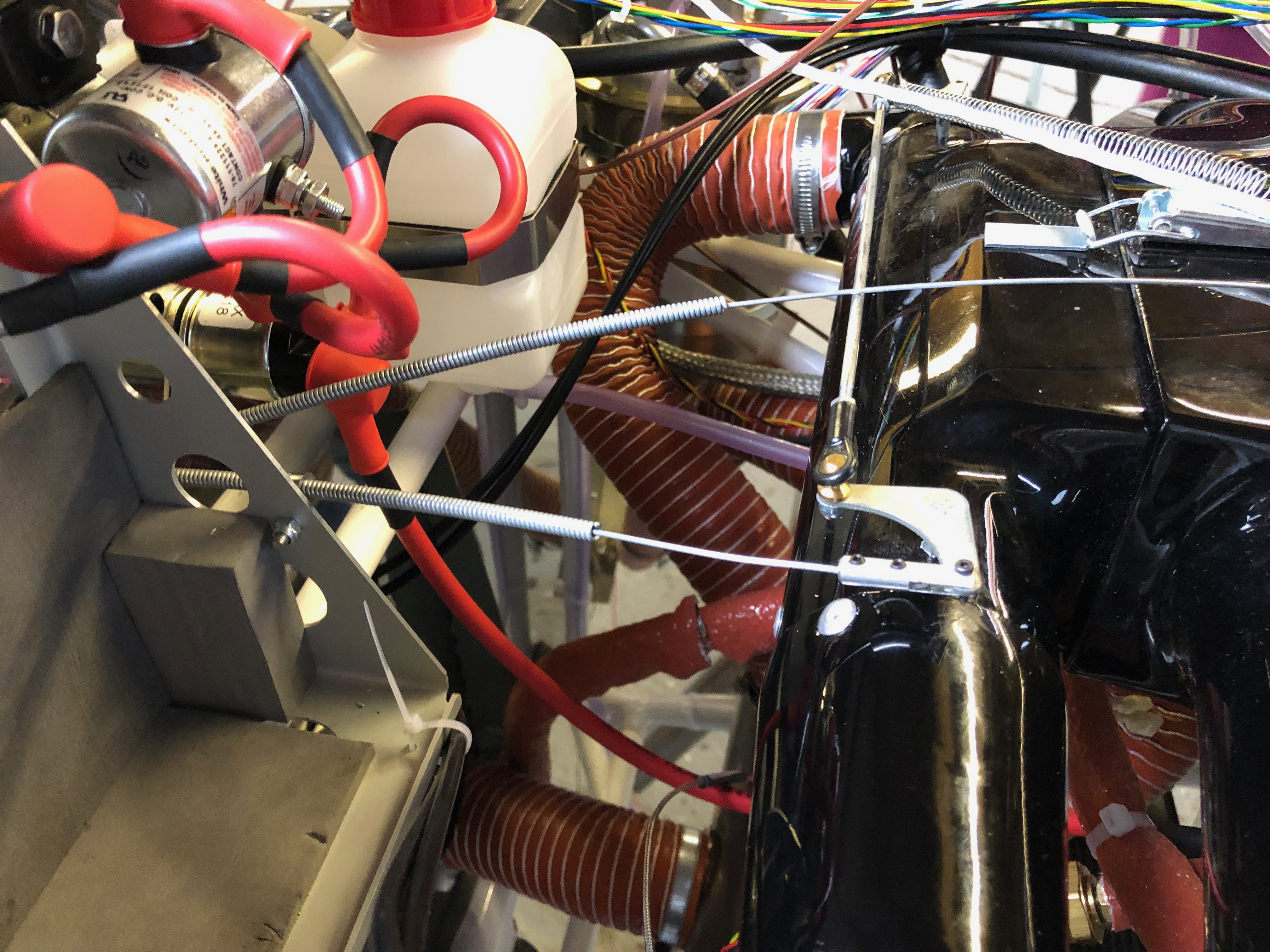
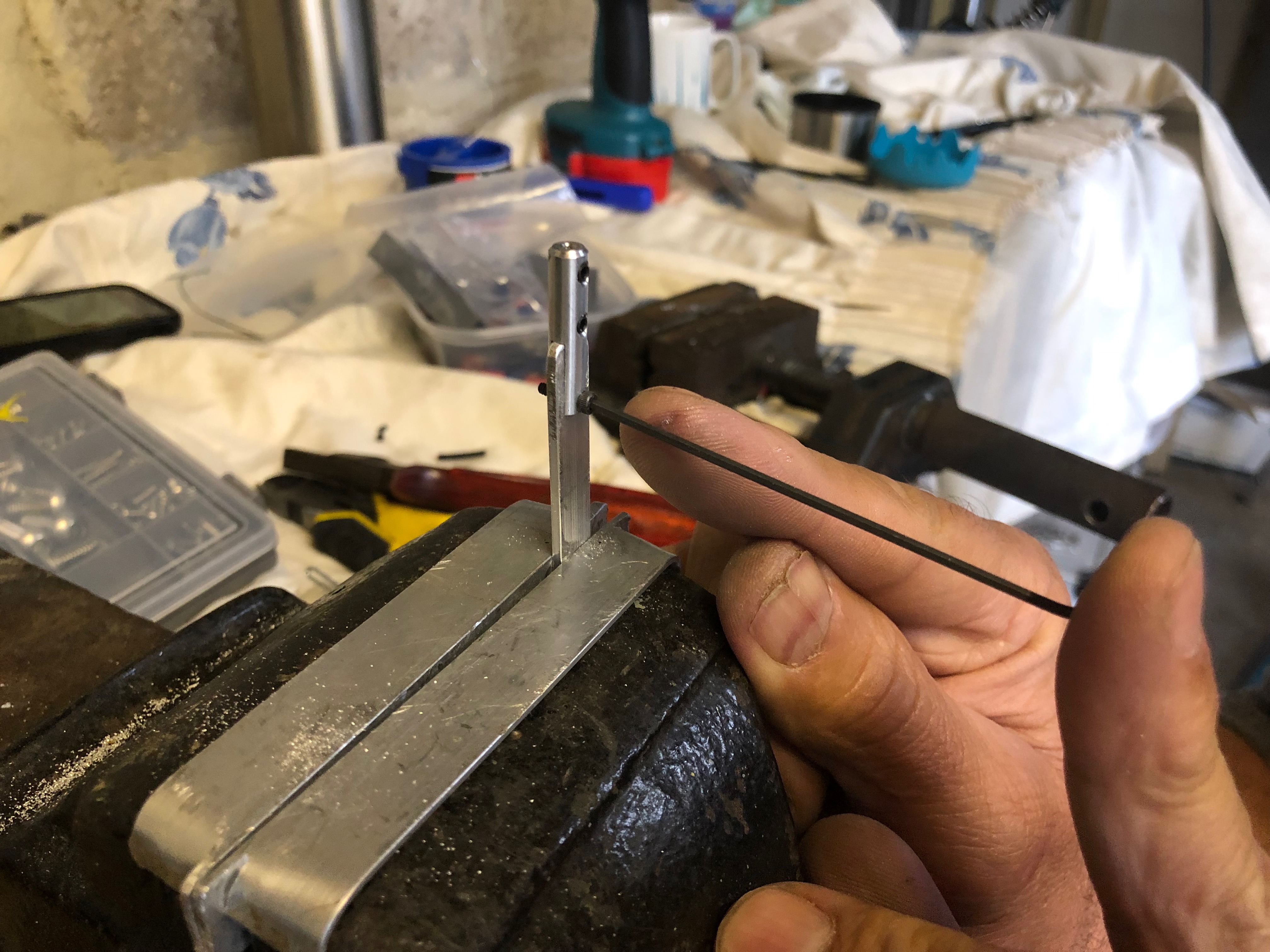
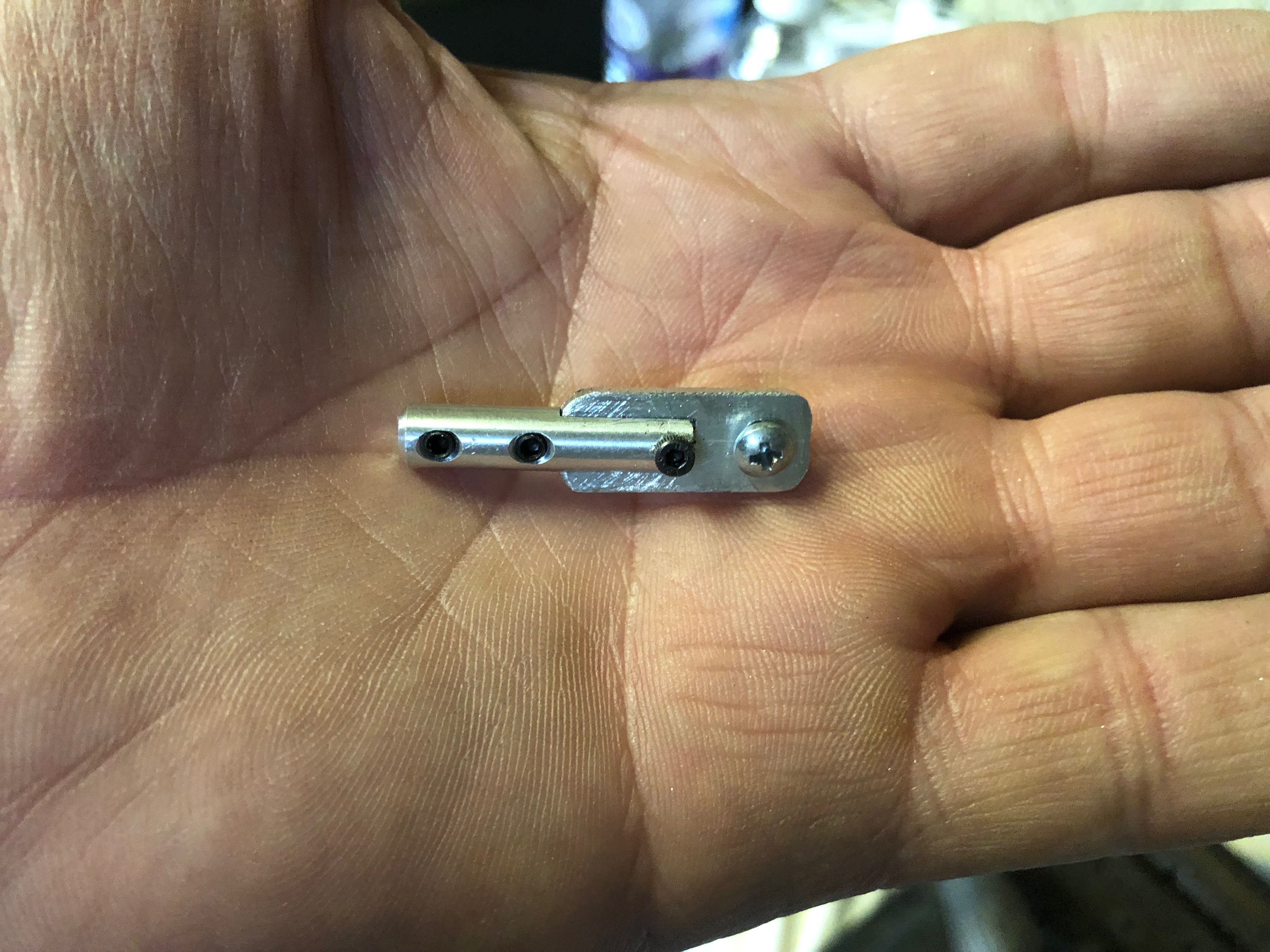
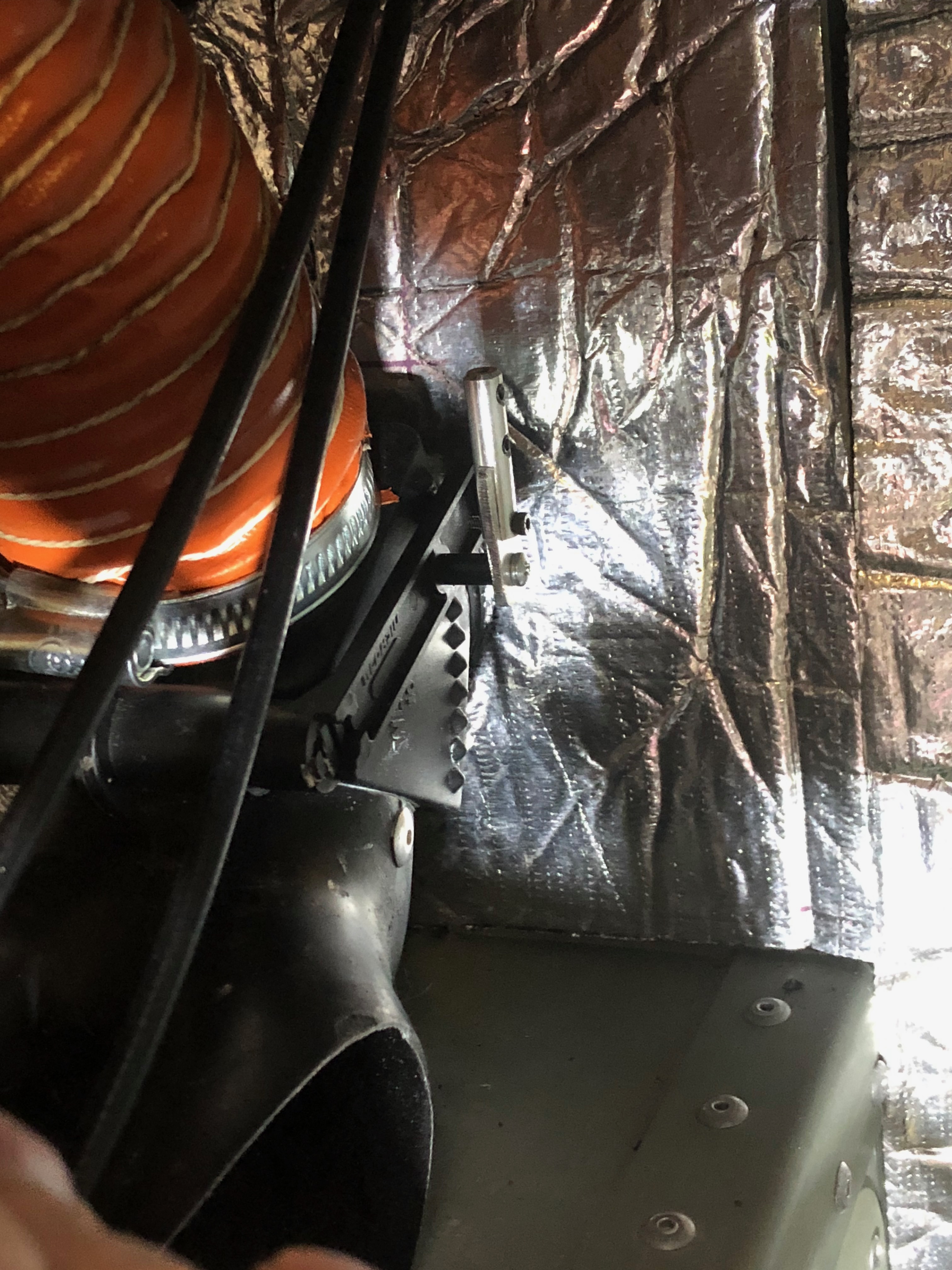
Today we were concentrating on fitting the centre console, ensuring that all the control operate smoothly for the carb heat, cabin heater and demister. The park brake needed some special attention as it needed to operate with push on and pull off. This required the cable to exit the front of the console and loop back in. This would make it operate in the correct source but there would be about 100mm of unsupported cable which would bend and it’s unlikely to operate correctly. The other connection that would need a bit of thought would be the connection to the demister as it had a protrusion to connect to and not a hole like the other controls.
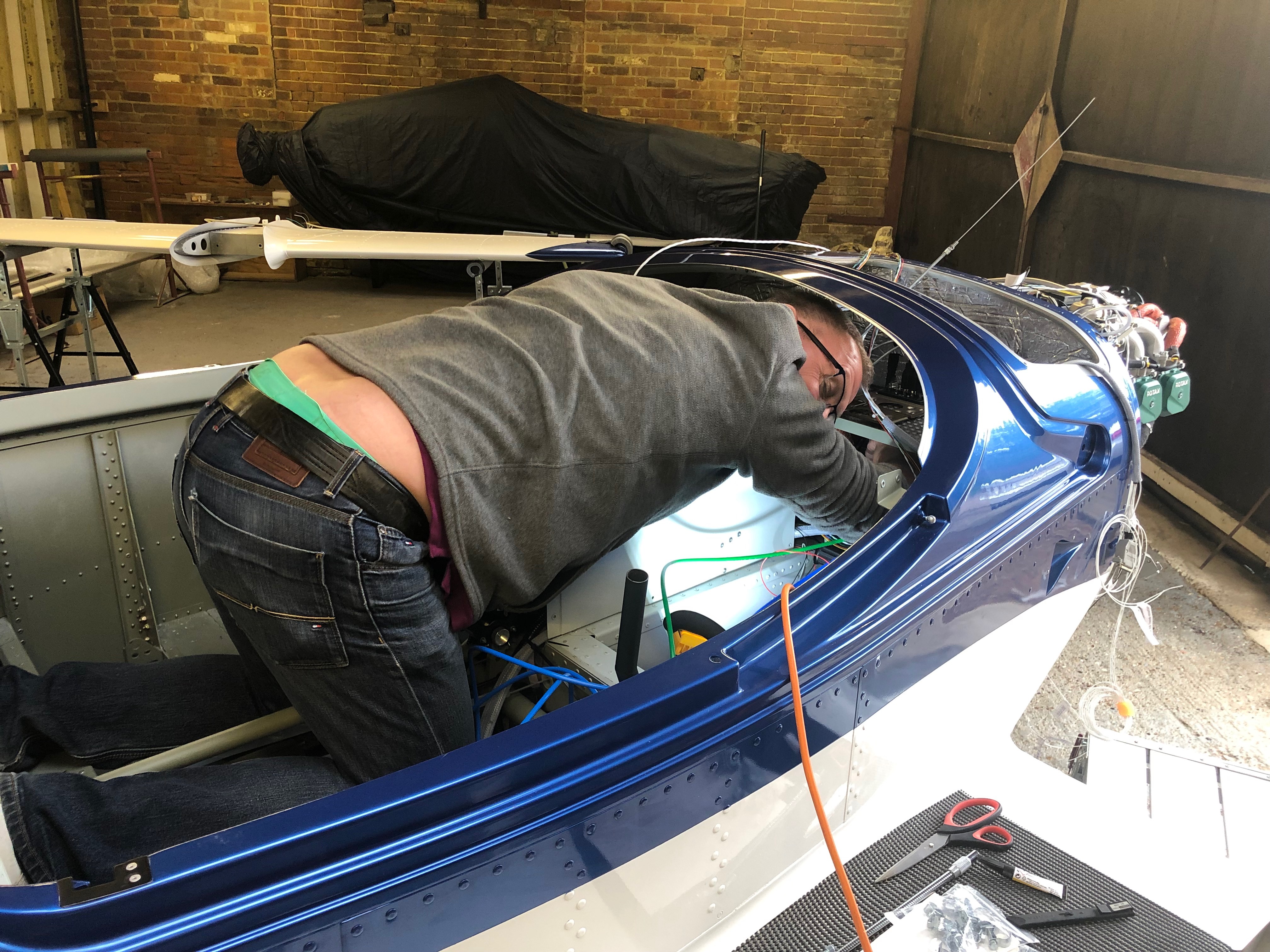
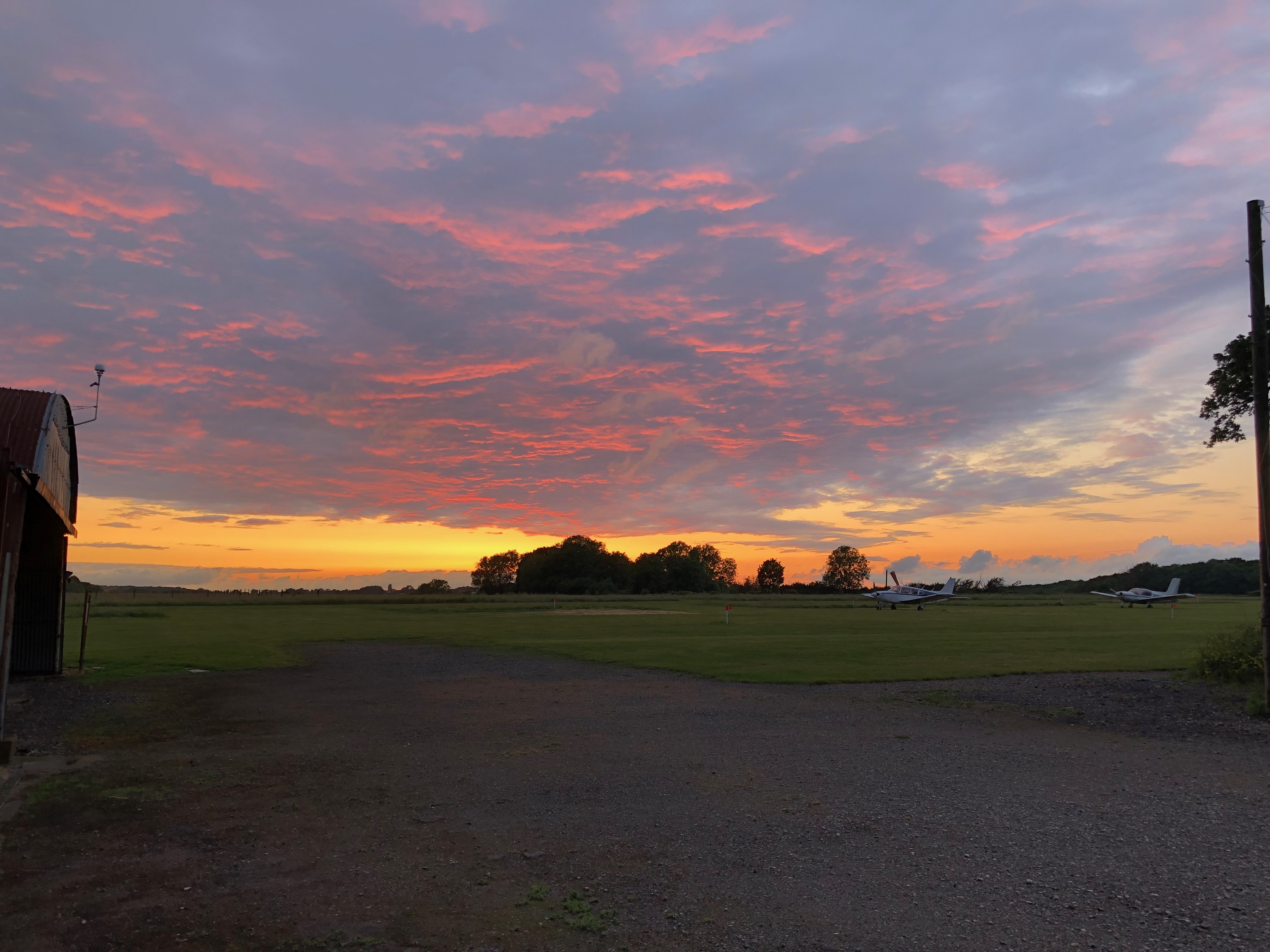
Tom always comes equipped for the job. I think he was was going to work on a JCB not a Bristell!The demist, heater and carb heat control cables routing over the equipment tray.A test of the parking brake proves that the cable will bend and fail to operate without additional support. Inside the centre console there are quite a few other cables and they need to be positioned so they don’t interfere with each other. In addition to this the fuel pipes have to fitted to the fuel selector.Our solution is to prevent the outer cable from bending piece of aluminium tube and then making a bracket to support it in the console.This looks to be a good solution to the problem. A final wire lock ensures that the cable doesn’t move, so full movement is realised.A radio control clevis is used to connect to the cable. Time will tell whether this is a reliable solution.The connector to the heater and……carb heat controls are very straightforward but the outer cables still need to be fully secured otherwise the whole cable will move and fail to operate the attached item.The demist attachment required a different solution and after some thought we came up with the idea of using a piece of 2mm aluminium to extend the RC clevis.The final solution which will do the job. The only thing to do is fit it!So Tom launched into action! It’s all a bit difficult to get to.But the solution worked well.With two out of the three fuel pipes connected and all the wires and cables routed as require we can call it a day. Tomorrow sees the final fit and we can move on to the prep for fitting the panel and prop.Lovely sky as we exited the workshop. Need to get the build finished so we can go fly in skies like these!
A couple of jobs to focus on today. The first is to fit the circuit breakers and second is to start the fitment of the centre console that includes the control cables for Carb Heat, Park Brake, Cabin Heater, Demist and fuel pipes to the selector and tank lines.
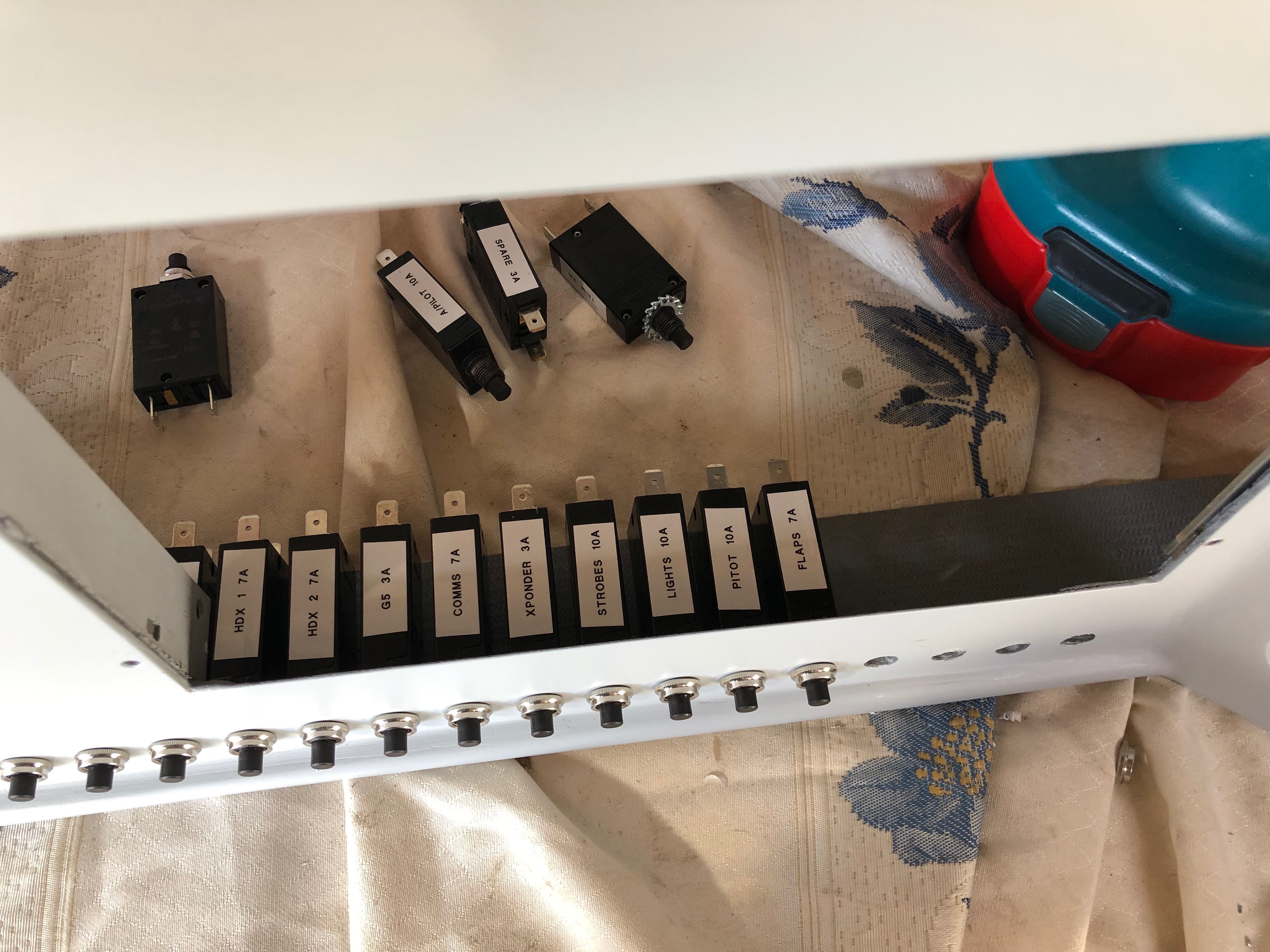
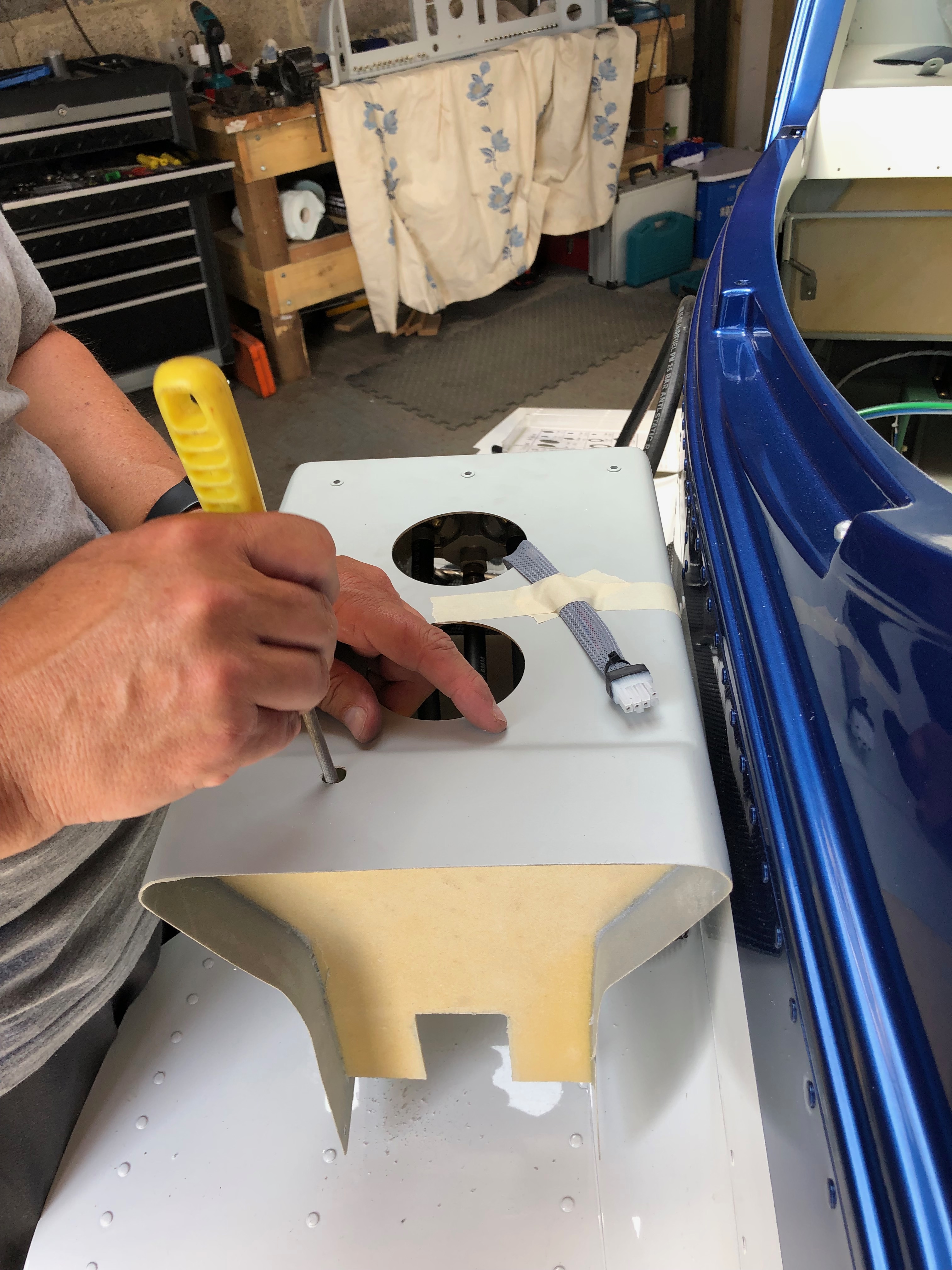
I’ve printed labels using an electronic printer so I can easily identify the circuit breakers and switches once fitted.Unlike the switches that have a hex nut and can be tightened with a spanner the circuit breakers have a knurled ring that is difficult to grip. I found the best way was to adjust some mole grips so they gripped the ring firmly that allowed me to turn the the ring a quarter of a turn at a time. It took some time but got the job done. All the switches and circuit breakers are in now. Very pleased with the result, looks quite tidy!The cables used to control various items have to be routed so they don’t snag. After a couple of trial fits the best route from the front of the panel to the control is to exit the centre console via a hole at the rear. Three cables will exit this way and the fourth which operates the park brake will exit the end of the console and loop back in. This makes sure that the control operates in the correct sense i.e. push is off and pull is on. With the console in place I can test the routing again and once checked I can drill the other holes.The carb heat cable is connected to the carb heat control using a radio control model clevis.The centre console ready to be installed showing the park brake cable that loops round and back in connect to the park brake. Without doing this the park brake would operate incorrectly.Chris has been helping me over the last couple of days but before he left I thought I’d install a screen and power it up. With the ADAHRS unit installed and wired it’s the first time that I’ve seen it myself – looks quite impressive!
Music: The Greatest Showman reimagined and Snow Patrol.
Finishing off the insulation installation, first fit of centre console, autopilot servo install and filling brake system with Aero Shell 41.
One quick job this morning now all the other pipes have been fitted is to run a piece of piping from the water expansion chamber to the water bottle.
I have been given templates for the insulation so I can cut them to size without too much effort.
Some notches, cuts and holes need to be made to make sure it sits properly on the firewall.
It’s a tight fit behind the rudder pedals which makes it difficult to handle once the backing paper has been removed.
The final pieces are fitted around the heated inlet.
The finished insulation, hopefully this should reduce noise from vibration of the firewall and the engine.
Now the servos brackets are in position the servos can be fitted. First the roll servo.
It’s very fiddly and would have been much easier to fit the servo to the bracket whilst it was out of the aircraft.
The pitch servo with the movement limiting bracket fitted which stops the motor running over centre. I still can’t finish the installation as there were items missing from the kit supplied to me – very frustrating as I can’t refit the controls until I fit the roll servo arm.
A first fit of the centre console in readiness for the fuel selector. Need to check with the instrument panel in place to check that the flap control cable is long enough to fit on the panel otherwise is will need to be mounted here instead which I would like to avoid.
After fitting the insulation need to reconnect and tighten the brake hoses before filling.
The brake fluid is filled from the bottom so some plastic pipe is wire locked onto the brake calliper nipple so stop it slipping off. The nipple is unscrewed to allow the fluid to flow into the calliper.
An oil can that has been thoroughly cleaned is filled with Aero Shell 41 and the plastic pipe is fitted to the nozzle.
The filling commences after releasing the park brake valve.
When the fluid reaches the brake oil bottle the brake calliper nipple is tightened and the process is repeated for the lefthand side brakes.
Filling complete but some air bubbles are present. They will need to be purged before use otherwise the brakes may not operate properly.
Due to limited space I couldn’t drill the second set of holes for the retention system. Luckily Ian had a 90 degree attachment the allowed me to drill the holes.
The holes for the rivets that will secure the bracket.
Sometimes you have to leave certain jobs because an immediate opportunity comes up for someone to help you swap wings. This is what happened when I had starboard wing up on the stand so I didn’t get chance to fit the strobe light. So today’s the day to do it.
Once the holes are drilled they need to be countersunk otherwise the strobes won’t fit flush.
Some Loctite 243 on the screws and then they are pinched up, not too tightly, otherwise they will disfigure the rubber mount.
The finished job, let’s hope it matches the other wing!
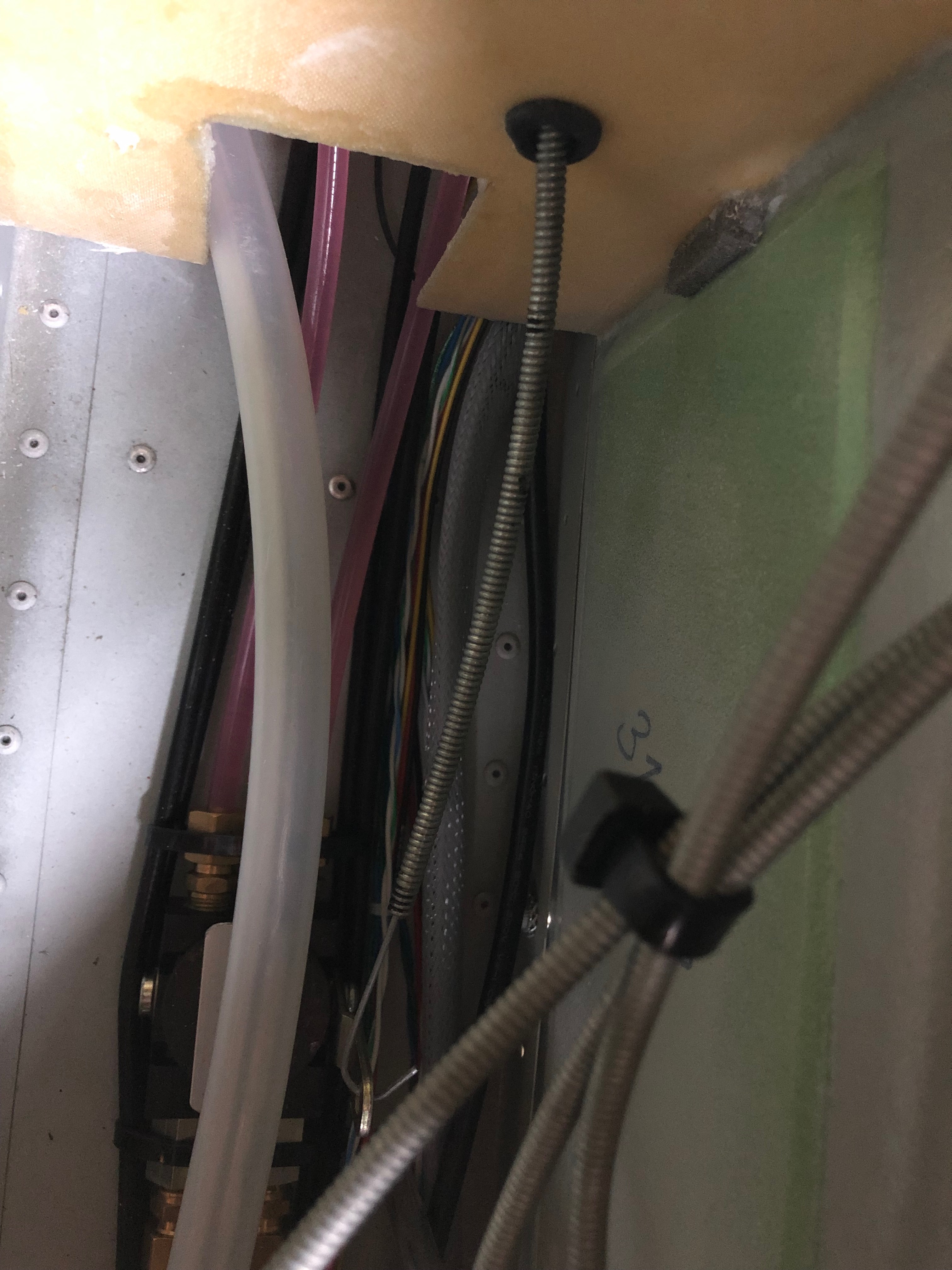
A job I kept forgetting to do is to add a breather pipe to the oil tank.
Now they can be secured with the drip tray and air intake breather tubes that Andy fitted yesterday.
I wanted to try to reduce the amount of vibration and droning from the firewall and noise from the engine. I purchased some sound & vibration deadening heat resistant foil back foam that will do the job.
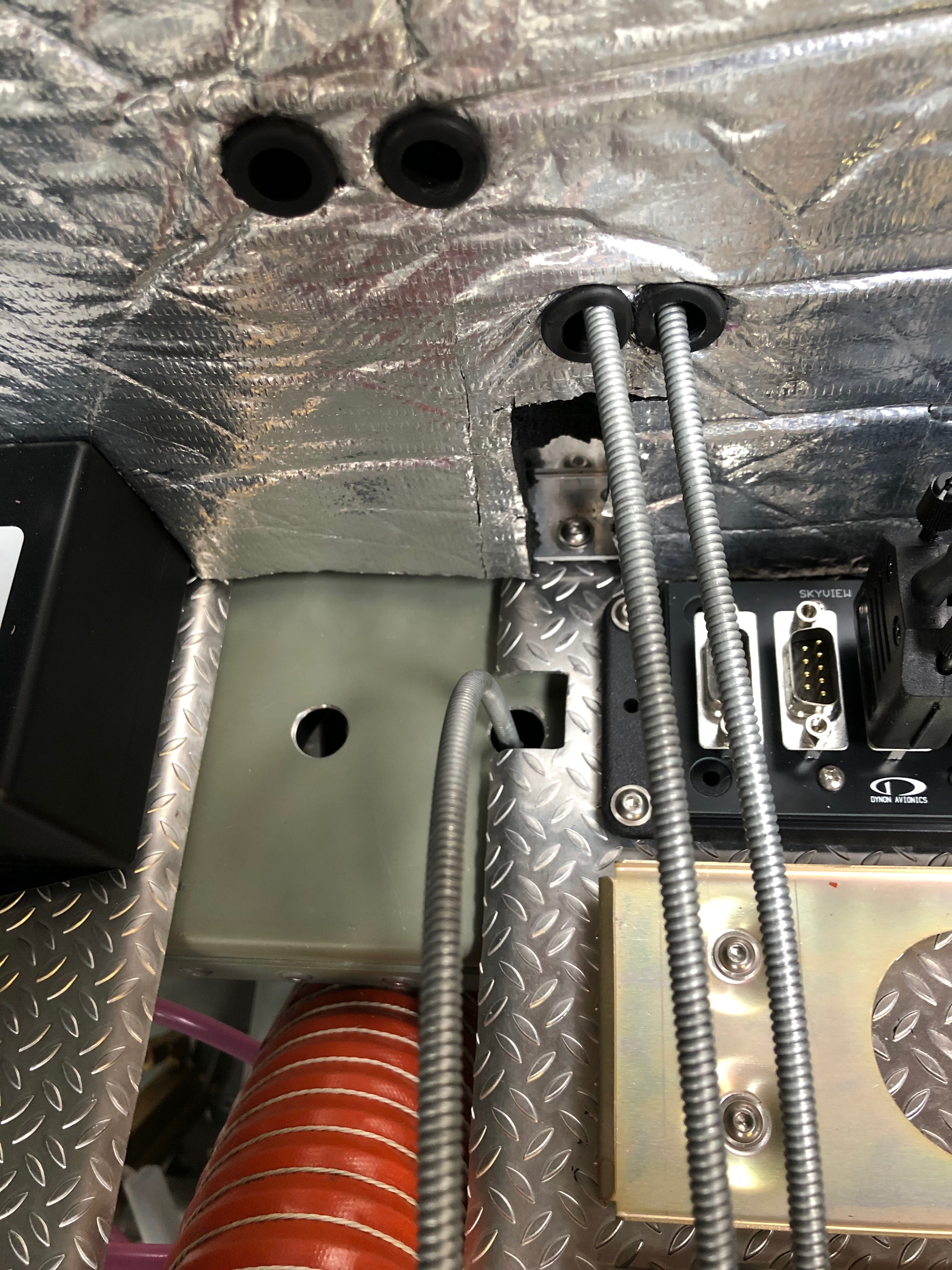
After cutting to size, I’ve made the service holes to match the firewall and added grommets to make it a neater job.
I used some thinners to remove the printing on the foil before fitting. Looks a good fit.
I now need to undo some of the work I’ve done on the brakes and fit the front lower panels so I can fit sound deadening on the firewall behind the rudder pedals but run out of time today so will finish this job Monday.
Following the build of my Bristell NG5 Kit No. 382 Registration G-MLSY


























 G-MLSY