Andy has come to visit for a couple of days and give me a hand on some of the items that need 2 people, like lifting and turning the wings. One of the jobs that would be good for us to start on was carrying out the final fit of the lower cowl that needs modification to gain access to the fuel check valve and ensure that there is sufficient clearance around the radiators and exhaust is service.
Once the cowl is fitted the ‘tight’ spots need to be marked.
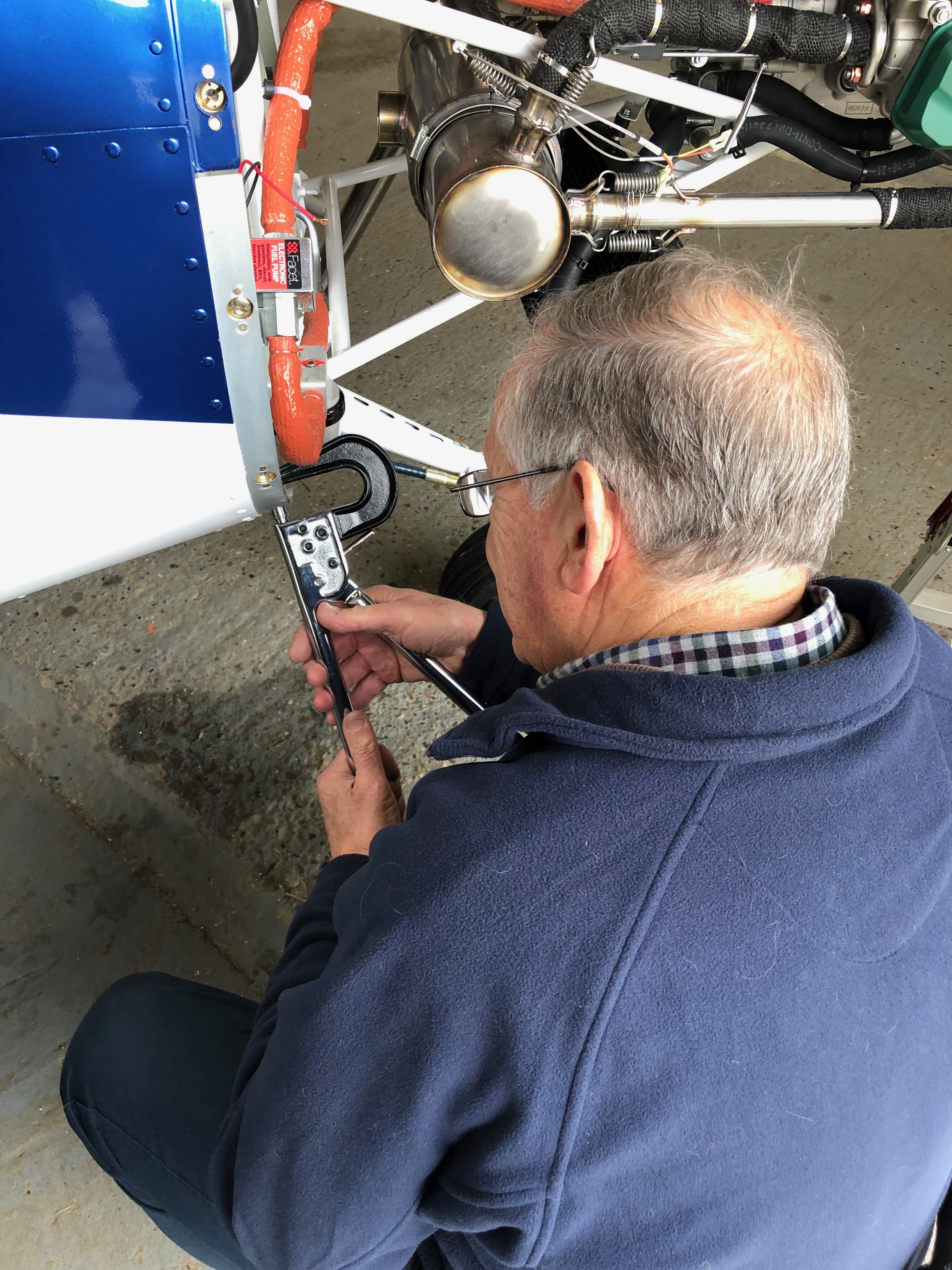
Also the position of the hole for the gasocolator fuel check valve is marked.
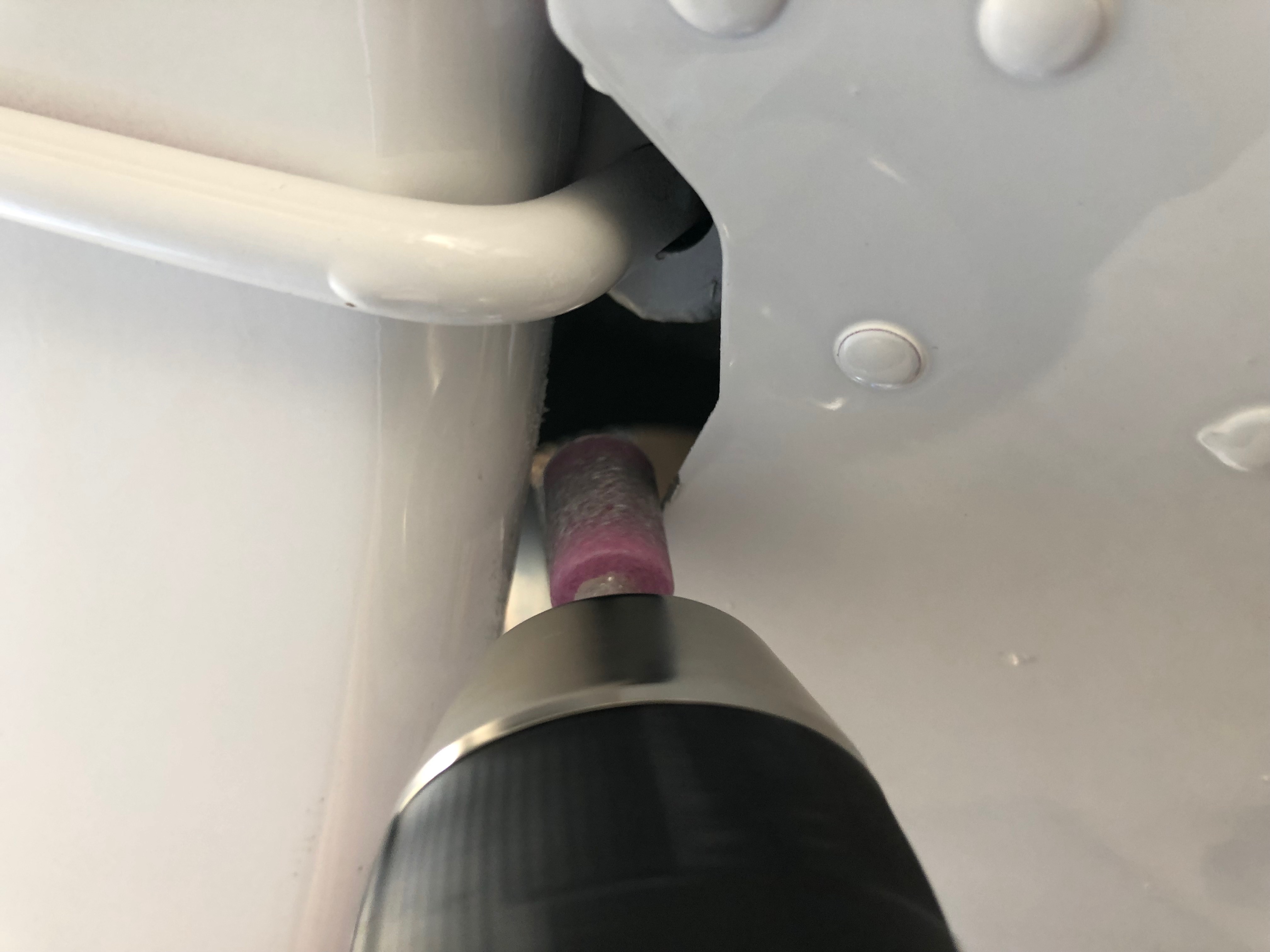
The cowl is made from carbon fibre so the tight spots are filed with a course file to start and finished off with wet and dry.
The cowl is also adjusted for the exhaust downpipe.
Next a hole needs to be drilled in the cowl for the drain valve.
and opened out with a step drill.
Plenty of room now so no chance of rubbing against the exhaust…
… or the water radiator.
The hole is in a perfect position but will need to be opened up further.
The Rotax installation involves running hoses and tubes from everywhere, to everywhere. One of the last tube runs are the drains from the carb drip trays and the air box plenum.
They need to be run to exit underneath the fuselage but miss all the hot spots like the oil, water and exhaust pipes. it’s not straightforward.
But Andy has done a good job.
Meanwhile, I finish off designing and installing the equipment tray retention system which will be rubber mounted to dampen vibration and protect the avionics units mounted on it.
One down and one to go tomorrow…
Andy taking the captains seat as usual after a very productive day.
Today I checked on the delivery status of the Airmaster prop that I’d ordered on 22nd February. I hadn’t heard anything and was expecting to receive a request for payment so thought it would be good to check. I gave them a call at 3am only to find that they had a breakdown of their CNC machine a couple of weeks ago which will delay the delivery of my propeller by 6 weeks. Needless to say that I was shocked by this news which will have a significant impact on the completion of the aircraft and disappointed that they hadn’t had the courtesy to advise me.
A number of jobs planned for today. Complete the engine NACA ducting, install the clevis pins to the carb heat control and cabin heater, install the fuel pressure sensor, install the engine intake air box, install the MAP sensor pipe, adjust and set the cowl quick release fasteners and install the control stick torque supports.
The fuel sensor and adapter were left to set with Loctite 577 overnight so can now be fitted to the fuel hose that I had added for it.
The hose is secured with a hose clamp and fire sleeve is added which is secured in place with locking wire.
The sensor is secured against movement and vibration with a stand-off.
These are the clevis fittings that are used on the carb heat, cabin heater, screen de-mist and park brake.
Now the sealant is set, the air box is mounted on a couple of brackets off the engine mount. It’s secured with a couple of Nyloc nuts underneath. Two short pieces of sturdy rubber hose are fitted over the carburettor inlets and the air box and provide a flexible joint between them.
They are secured in place with jubilee clips.
The SCAT ducting is secured in place with jubilee clips to the air box intake and the starboard lower cowl side NACA duct.
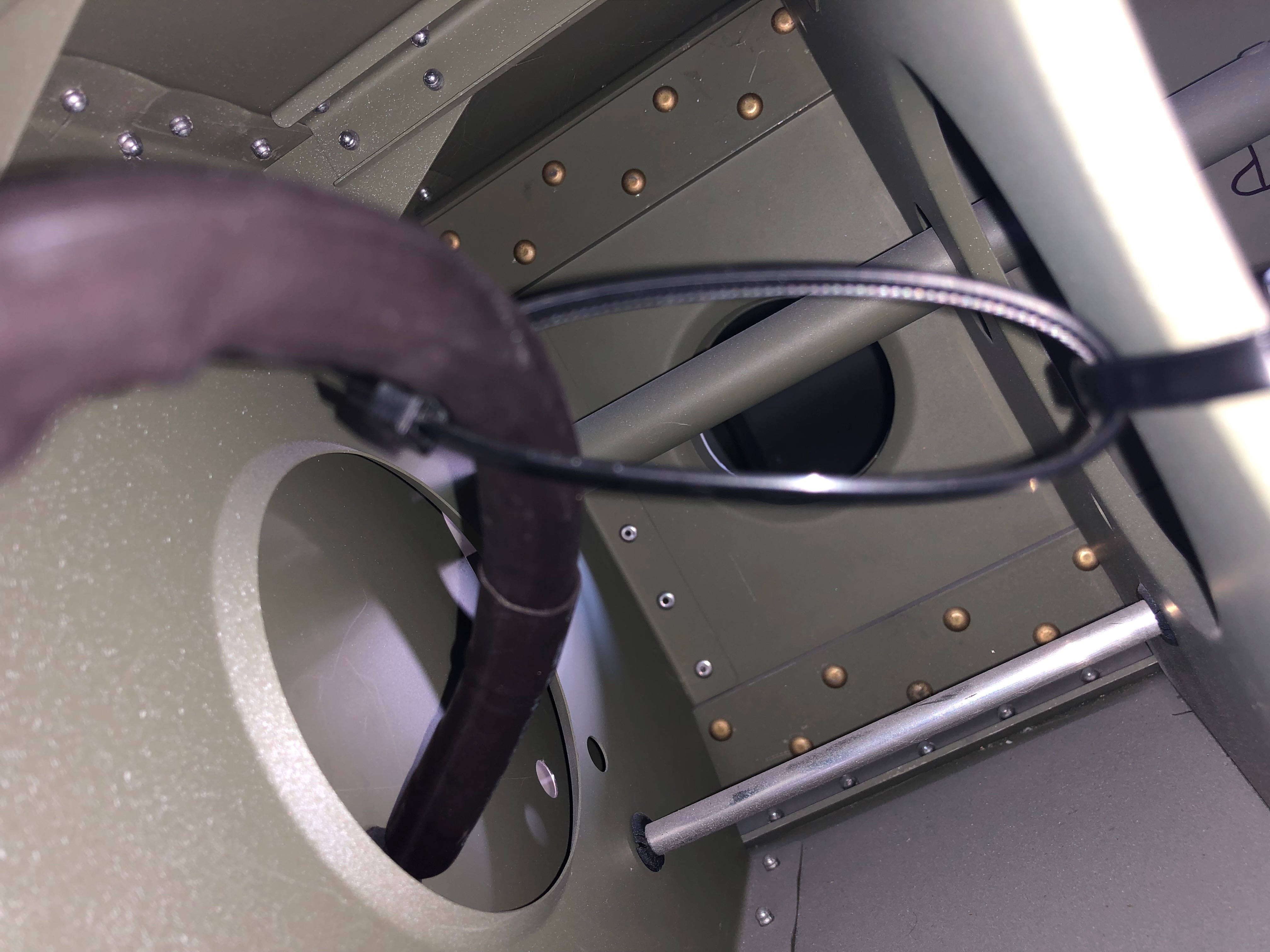
The ducting to the port NACA duct is run to the rear of the exhaust and then into the centre inlet on the heat exchanger, secured with jubilee clips and held in position with a couple of tie wraps.
Port NACA duct.
Even with all the space that the Bristell has It can get a bit tight with all the hoses that are required.
The MAP sensor has already been mounted so just needs a pipe to be run and of course some wiring at a later stage…
I’ve used 5.6mm ID R9 fuel hose between the carburettor balance pipe and the MAP sensor.
The quick release fittings on the fuselage have been riveted in place and now require them to be adjusted and set. First thing is to screw them in…
until they are flush with the cowl.
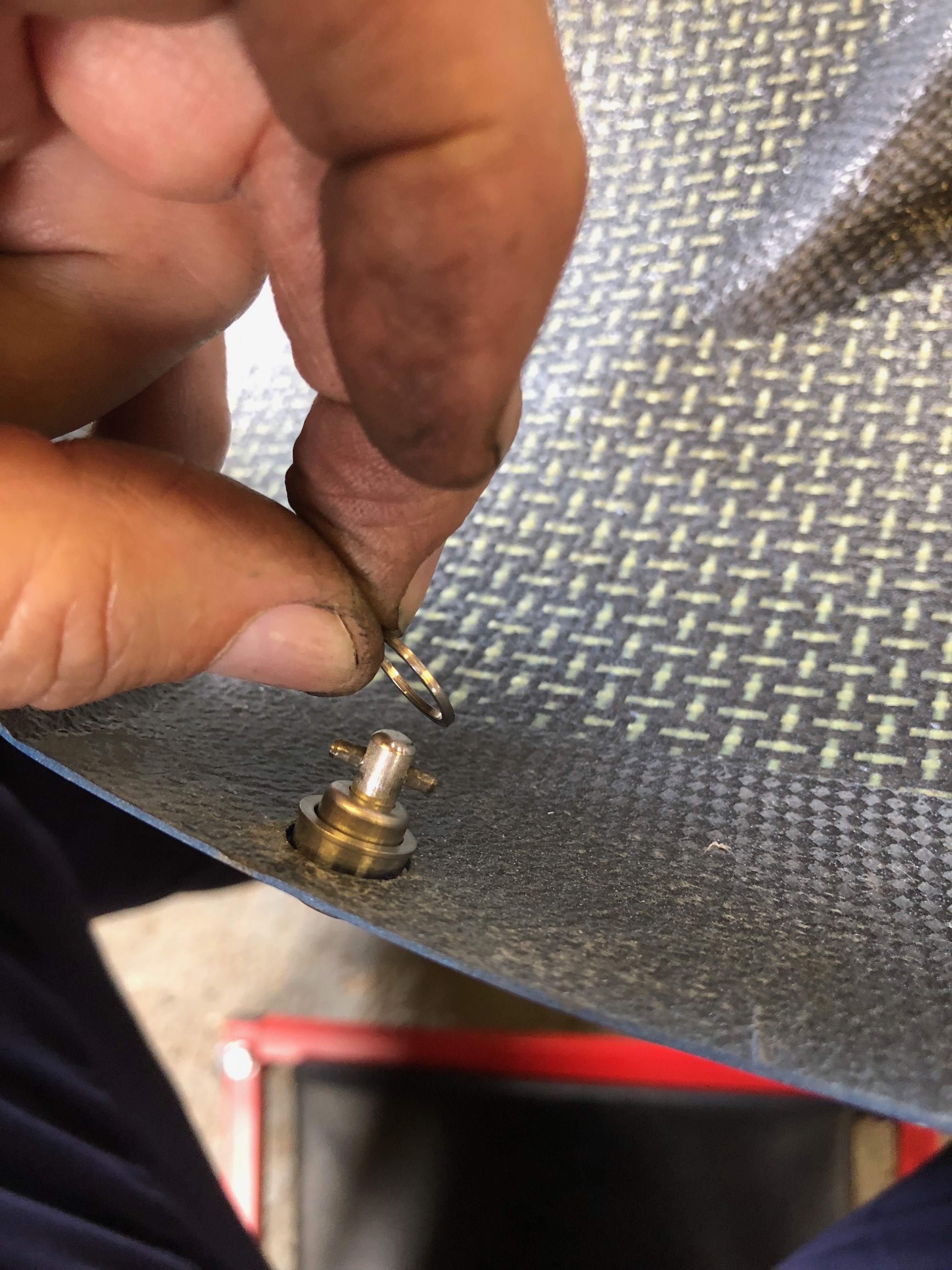
Once adjusted the pin can be pulled that sets them into position.
They are released by a quarter turn of the Philips screw and the fitting stays set in place.
I still need to repeat the process for the top cowl and the oil inspection cover. Ian will be installing the fittings during next week. Unfortunately the rivets need to be ‘squeezed’ and I don’t have the tool to do it.
Now I’ve picked up the control stick torque arms I can start work on the control sticks.
The fittings need to be checked and secured although they will need to be adjusted when the wings are fitted to centralise them, set the limit screws and check aileron deflection are correct.
The torque arm is attached at one end using the bolt from the control stick bearing.
The other end is secured with a 4 x 15mm rivet.
Both torque support arms fitted, completing a fairly productive day.
I’m still not 100% sure on the layout of the screens and associated control panels so I thought it would be good to add the pilot seat so I could check different layouts.
Once the seats were installed I could sit in the aircraft as I would normally fly it. The panel here has most of the bits I need but is missing the flap switch, some warning lights and the air vents.
I’ve stuck the pictures on using glue dots that allow me to move the pictures about. I can then do a ‘touch’ test on the layout to see what works best.
Monday was set aside to travel to Chilsford Farm to collect some of the outstanding items from the kit. So today I could get on with a lot of jobs that had stalled because of the shortages.
On Friday I sealed the canopy perspex with silicone and left it to set. The waste material was removed with a plastic scraper.
And cleaned off with some methylated spirits.
The result is good but not perfect in a couple of places so will need some attention once the canopy is mounted.
Next up is to connect the NACA ducts to the various intakes on the carburettor and cabin heater.
The SCAT ducting for the air intake is secured with a jubilee clip onto the air intake.
The ducting is cut to size and attached to the rear of the righthand NACA inlet on the lower canopy.
The heat exchanger is positioned and secured in place with large jubilee clips.
A short piece of ducting is installed between the heat heat exchanger and the heater intake that runs through the firewall to provide cabin heat and a de-mist facility.
A long pice of ducting is connected to the heater control and will eventually connect to the glare shield that includes the de-mist vents.
The lefthand side ducting runs from the NACA inlet to the middle heat exchanger connection but it’s quite tight so it must be routed so it doesn’t come into contact with the exhaust system.
View from the righthand side.
A spring is cut and installed to ensure that the air intake is supplied from the cold air vent by default.
One of the items I picked up on Monday was the pitot mount. I’ve already taken delivery of the avionics so I can mount the pitot onto the mount.
Instead of drilling holes and using screws I’ve decided to secure the probe into position with silicone which will provide a neat solution.
Once filled with silicone it’s left to set overnight.
The carburettor air box has two ‘horns’ that the SCAT hose connects to. They require sealing with heat resistant silicone and secured with three rivets.
The finished air box which will be left to set overnight.
The cabin air vents are supplied with fresh air from NACA ducts in the side of the fuselage. They require installing in the instrument panel and then connecting up with some scat hose. So a temporary fit of the panel is required to get the hose length.
Two brackets are clecoed into position and the panel is secure by two screws each side.
With the panel installed it give me an idea of the space I have for the avionics and possible positioning. Tomorrow I will fit the air vents and hose.
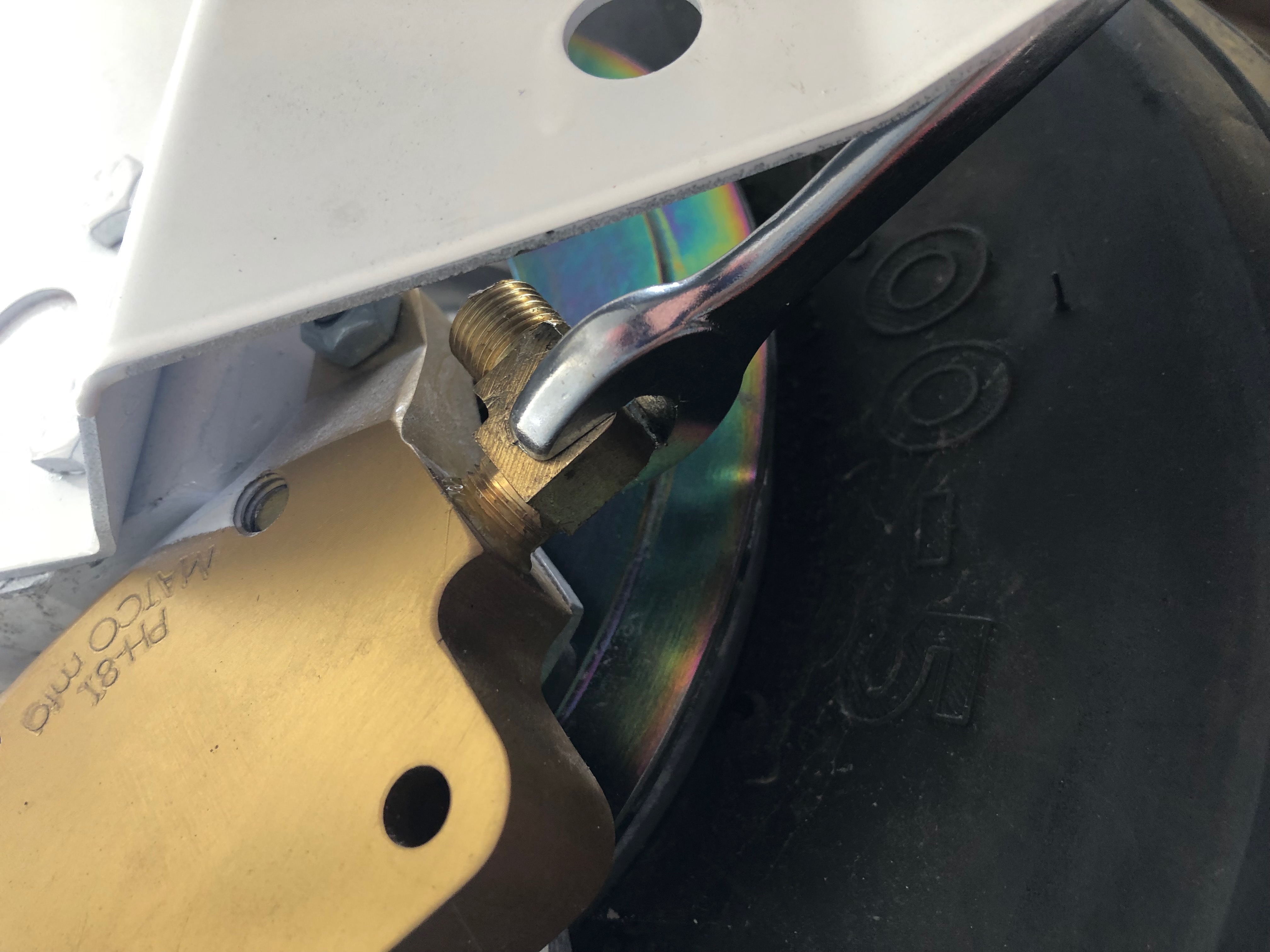
One job left over from installing the fuel system is to fit the fuel pressure sensor. The sensor cannot be connected directly to the hose. A 1/8″ NPT female to 6mm barb adapter is required.
As it will come into contact with fuel Loctite 577 is used to seal the thread before fitting.
The pressure sensor and adapter before being screwed together. They will be left overnight to set.
The final job for today was to trim the cowl to ensure is doesn’t come into contact withe the water radiator.
Today was spent mainly wiring up the aileron trim motor, installing the port strobe before starting on the starboard wing landing light.
One little job to do today was to install an overflow pipe from the water expansion tank to the water bottle mounted on the firewall.
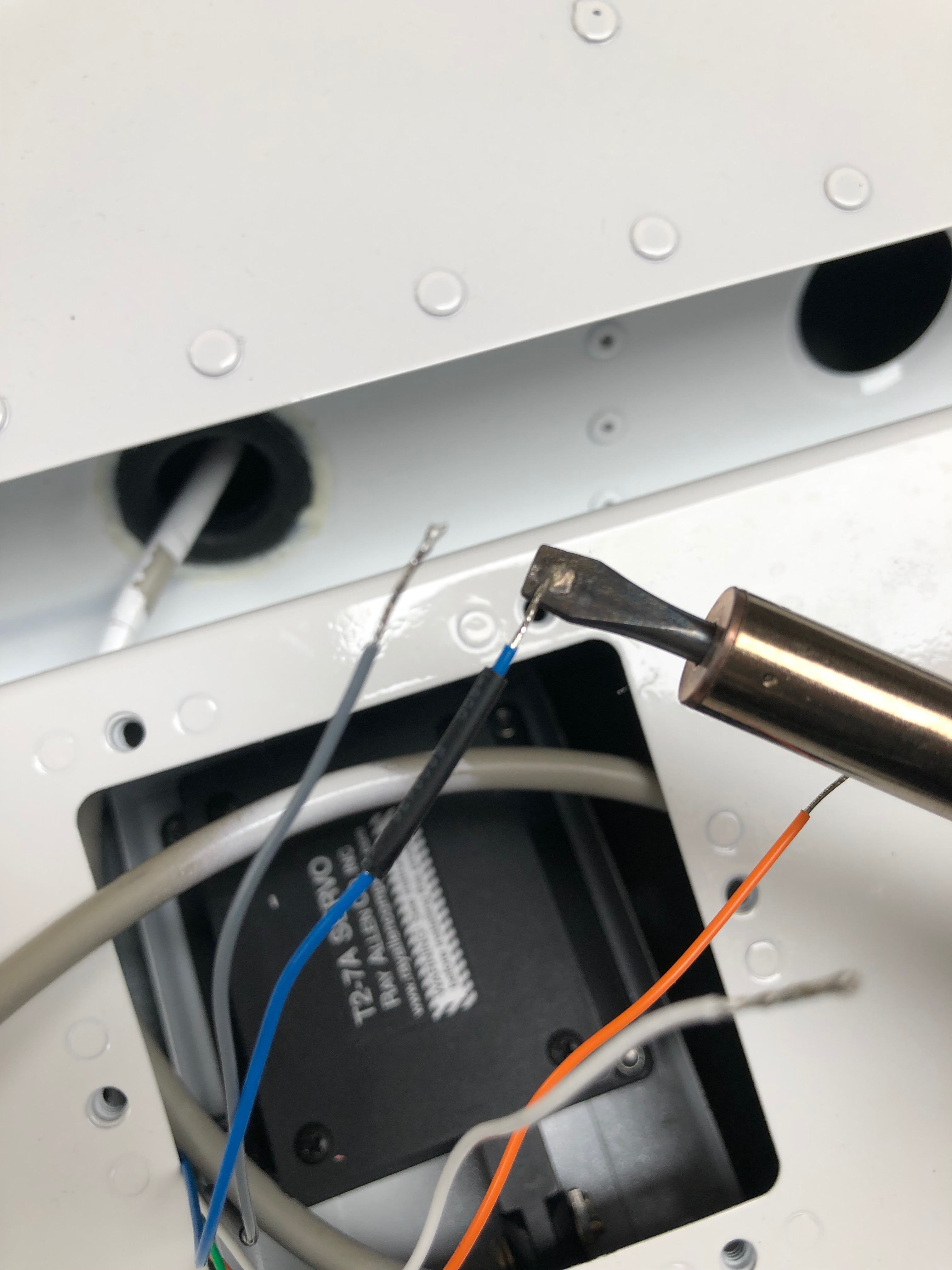
The aileron trim motor is connected to the wire installed in the wing. The ends are stripped and tinned.
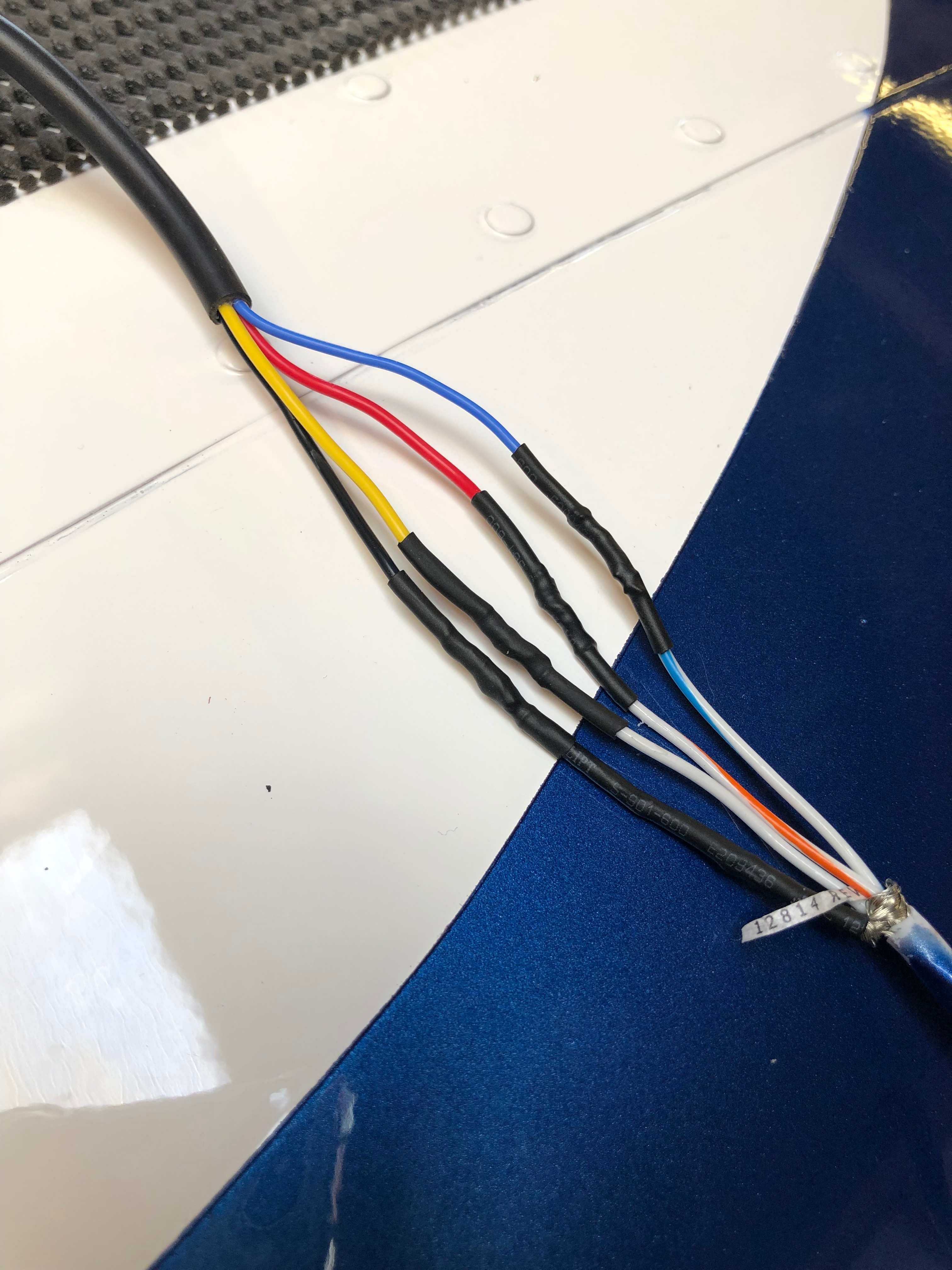
Heat shrink tube is slid onto the wires before the soldering is done to make sure that they are well insulated.
The colours don’t match between the trim motor and the wing wire so that will have to be documented in the aircraft wiring diagram.
A heat gun is used to shrink the tube over the wires and then a bigger piece (yellow tubing in picture) is slid over all the connections.
The wire is kept in place to stop it moving in operation with a spot of glue.
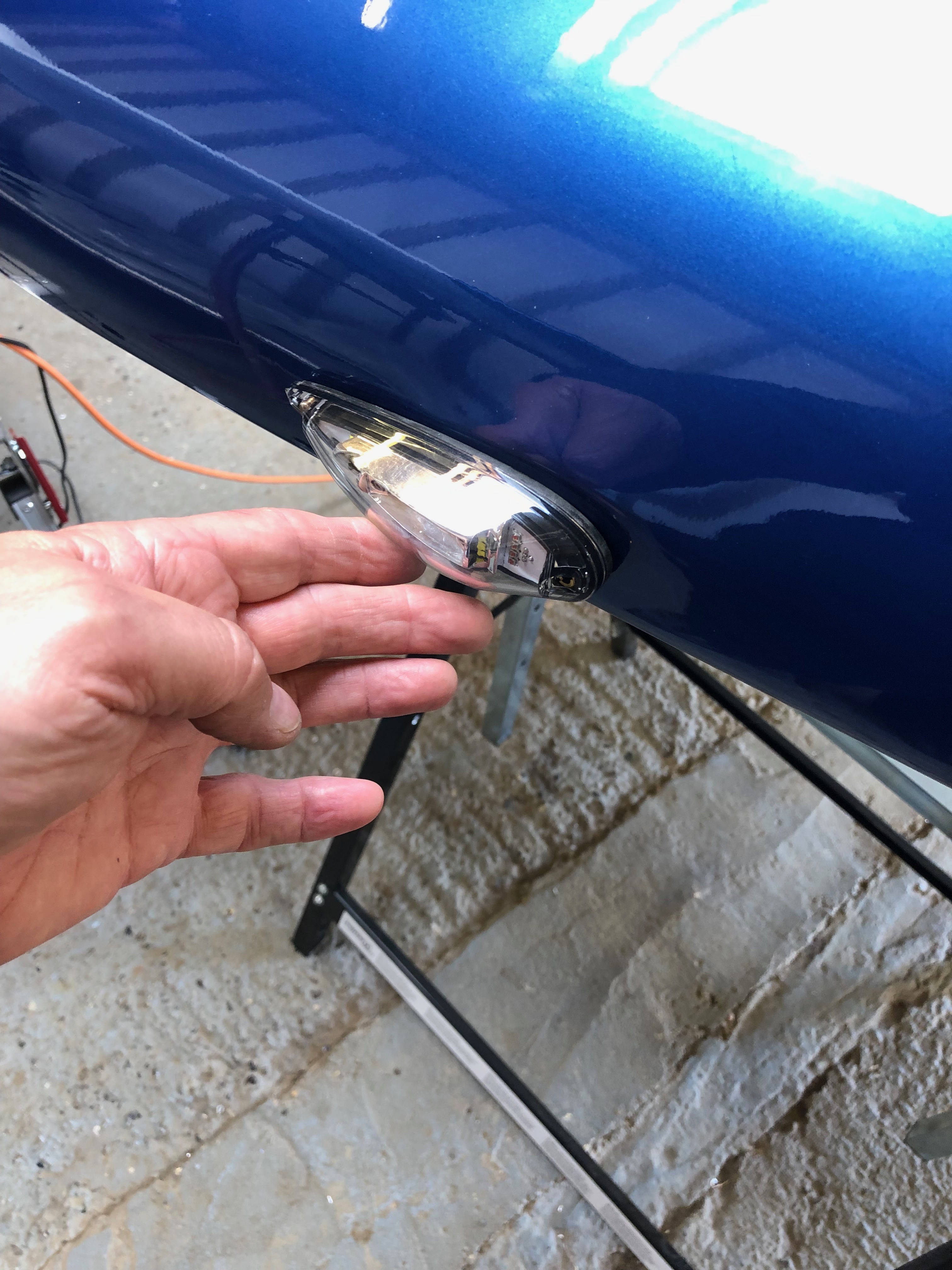
The strobes are next . Very important to mount the correct one on the correct side. Red is being installed on the left wing.
The same method is used to solder and secure the wire joints.
The strobe position is not marked so it’s important to get the right angle. I haven’t got any M3 rivnuts so will have to get some and do this tomorrow.
So the right wing is put on stands and I can now start on the landing lights and strobes for this wing. The pitot/AOA probe is installed on this wing but I don’t have the mount as it’s with Farry. So a 5 hour trip is required on Monday to get that and the most of the rest of the outstanding items.
The spade connectors are crimped and inserted into the connector block.
The landing light is installed. It’s upside down as the wing is upside down!
The installed landing light ready for the cover which I’ll do tomorrow now as I’ve run out of time.
When the aircraft was painted the cowls fasteners were fitted however they weren’t fitted very well. I decided to remove all of them and start again. Having spoken to Ian Daniels my LAA inspector he agreed and said that he would refit them with solid rivets.
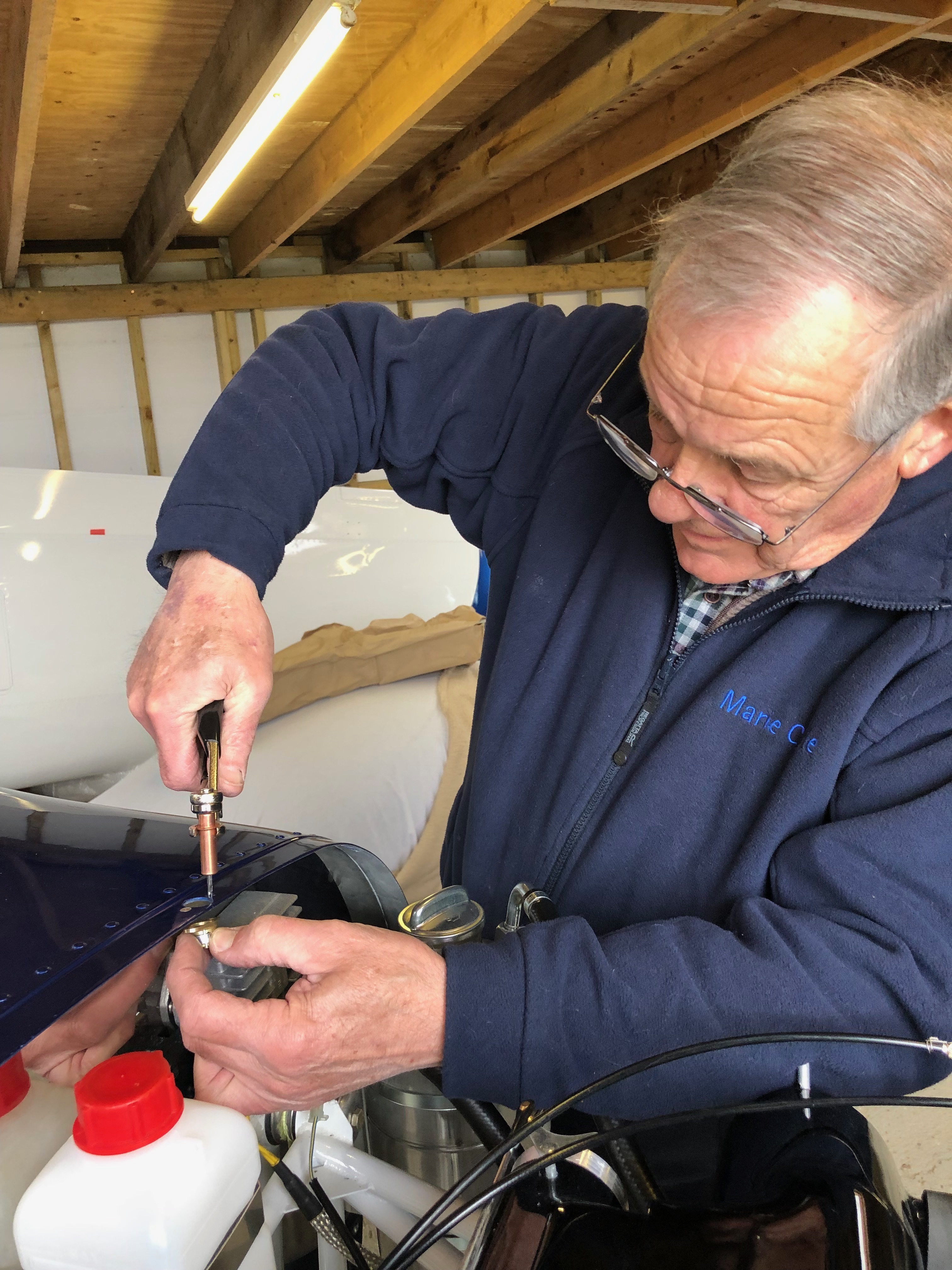
First thing was to use a parallel drift to punch out the hardened pin from the rivet.
Then the head needs to be removed with a large drill bit. Need to be very careful here as there is a chance that the hole could be enlarged which would cause problems when re riveting.
The fitting is removed and the old rivets are punched out.
Ian doesn’t lend his rivet squeezer out so did the job for me – saved me a job.
The result is much better, they are completely flush now and won’t rub on the underside of the cowling.
Ian in action squeezing one of many solid rivets.
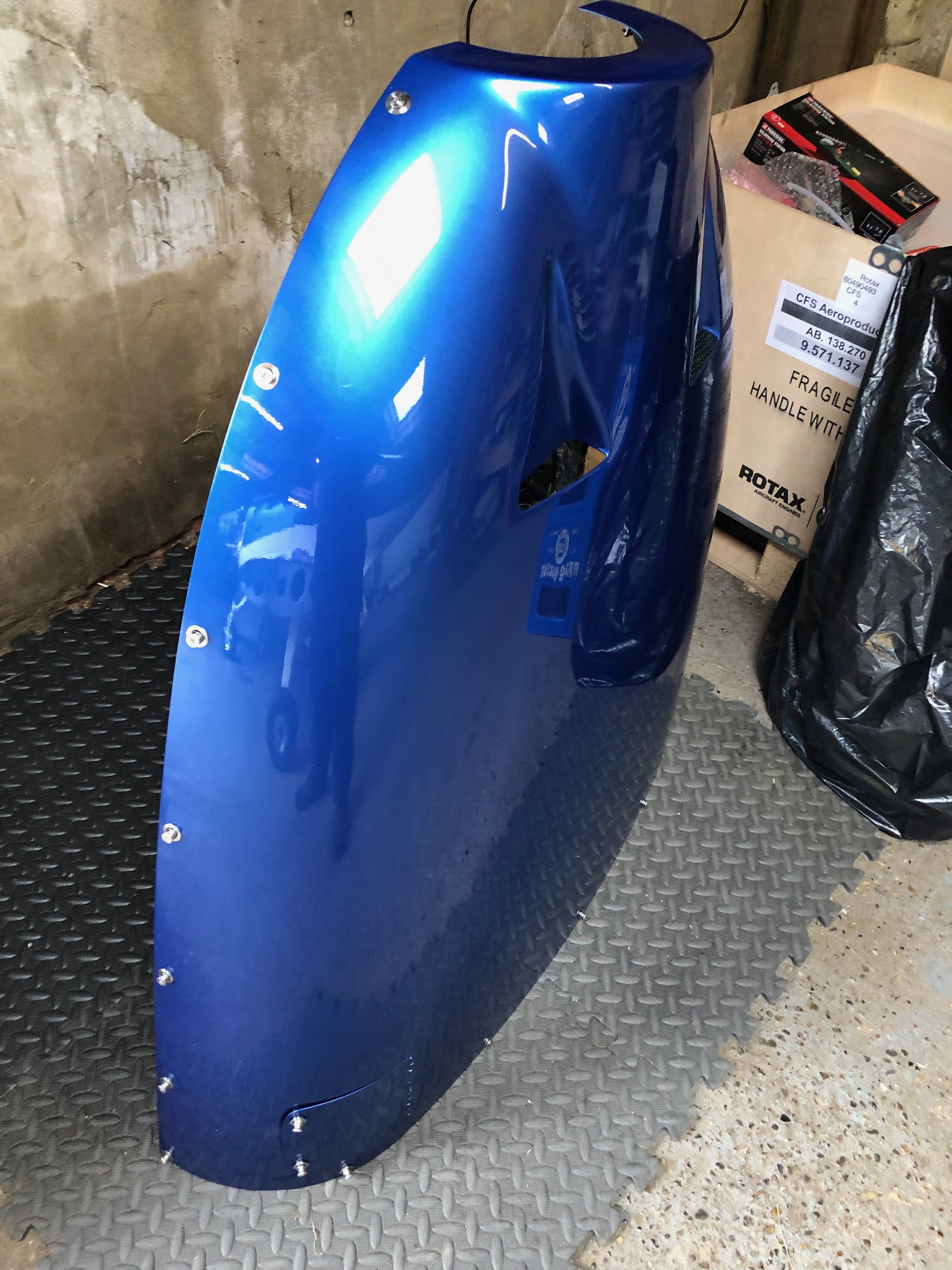
The cowl is secured by quick twist screws which are held in position by spring washers. These are installed in the top cowl.
A little fiddly to install when you first start out but they are quite easy to install with the help of a small screwdriver.
The top cowl with the quick twist screws in place including the ones for the oil inspection cover.
The bottom cowl quick release fasteners are fitted, the ill fitting fasteners will be removed, re countersunk and the fitting secure with solid rivets as described before.
One final job was to replace the exhaust system spring wire locking I had applied as I wasn’t quite happy with the way I had done it. The wire should prevent debris being dropped from the plane and create FOD should the spring fail in service.
Now I’ve received the water thermostat I can finish the water system, install the EGT sensors and complete the exhaust system.
Thermostat, hoses & clips for install.
The thermostat is fitted behind the expansion tank.
The hoses are attached…
and the radiator bottom support bracket is installed…
Once the radiator is fully installed I can check the cowls fit properly.
As you can see there is some trimming that needs to be carried out to make sure the cowl doesn’t foul the radiator.
Looks ok from the front.
The exhaust seems to clear the cowl however another check will be made before final assembly. The gascolator is located on the opposite side to the exhaust pipe and requires a hole to be drilled which will enable fuel checks to be carried out before flight.
The installed thermostat with just a ‘stand off’ to be fitted to make sure it doesn’t rub against the adjacent engine mount.
Now the cowl fitting has proven All the clips are fitted – job done.
I purchased a Kavlico EMS kit so the EGT sensors need to be installed.
A 3.2mm hole needs to be drilled in the rear exhaust downpipes 4″ from the flange.
Once the hole is drilled and sensor fitted it is held in place with the supplied, modified jubilee clip. The sensor has a ‘collar’ that ensures that the hole is sealed.
The downpipes are re-fitted and re-wrapped, securing in place with stainless steel ties.
To ensure the springs don’t fall and cause a runway hazard if they fail in service they are wire locked. Tomorrow I will fill the centres of the springs with heat resistant silicone which reduces any resonance from the springs.
A few smaller jobs, including exhaust wrapping, sensor fitting and cable oiling ahead of fitting the water thermostat that I finally received today.
The landing lights come with a couple of spade connectors that need to be crimped on…
and then slipped into the connector block. I’ll need to do the same thing when I come to install the LEDs into the wing.
The MAP sensor is fitted to the firewall in a suitable position making sure that the plug don’t foul one another.
The space between the water bottle and regulator seems to work well.
The front exhaust pipes covered in exhaust wrap and secured in place with stainless steel ties.
There’s several cables that need to be installed later in the build. Unlike the throttle cables these aren’t lined so require some lubrication.
Received at last! Good ol’ Parcel Force have had this since the 5th March but never left a card. It’s lucky I asked for an update on delivery from Silent Hektik otherwise I’d still be waiting. This is the 3rd time Parcel Force have completely screwed up on a delivery to me – I will never use them again!
Today was dedicated to completing the brake installation and starting on the exhaust wrap.
First up is to add Loctite 577 to the last two hydraulic elbows and fit them to the brake callipers.
I thought it would be a good idea to cover the spiral wrap with some heat shrink tubing to protect the hydraulic pipes as it emerges from the fuselage and runs down the first part of the landing gear leg.
A slight change to the opening needed to be made to accommodate the extra width of the covered pipe.
The cover is slid over the pipe and secured in place with a tie wrap.
The pipe will be subject to movement when taking off and landing so the pipe is cut long to provide a loop to accommodate the movement.
The pipe run from the the master cylinder fitting to the park brake unit looked to be under stress so I removed it, cleaned it up and refitted using a different angle which allowed the pipe to ‘flow’ better.
Before tightening the compression fittings a metal anti-crush ferrule is inserted.
The pipe run runs over a ‘sharp’ edge so I added some protection to avoid chaffing.
The pipe is held lightly in place with some cable ties.
Took much longer than I expected but the brake system is complete – at last!
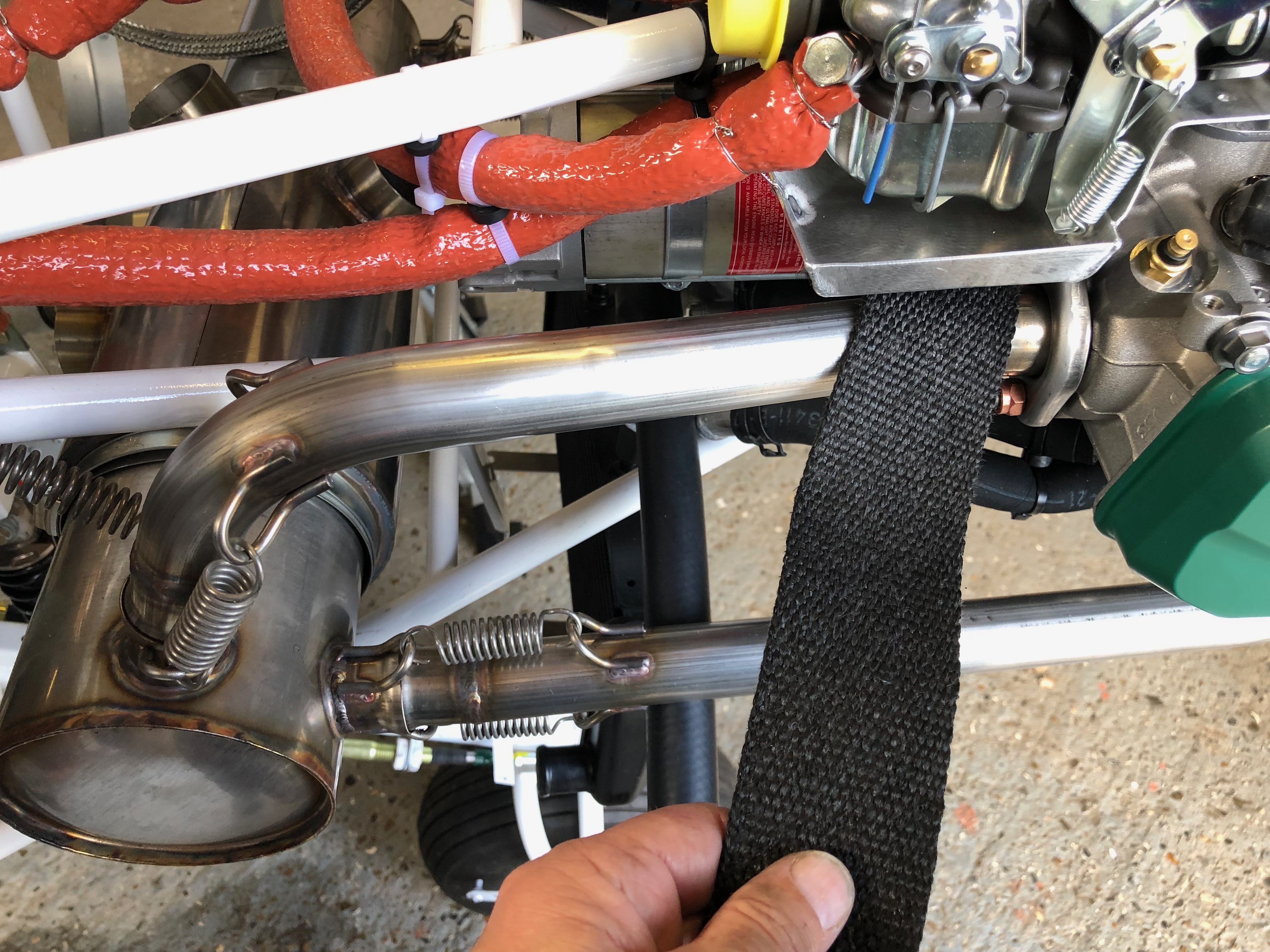
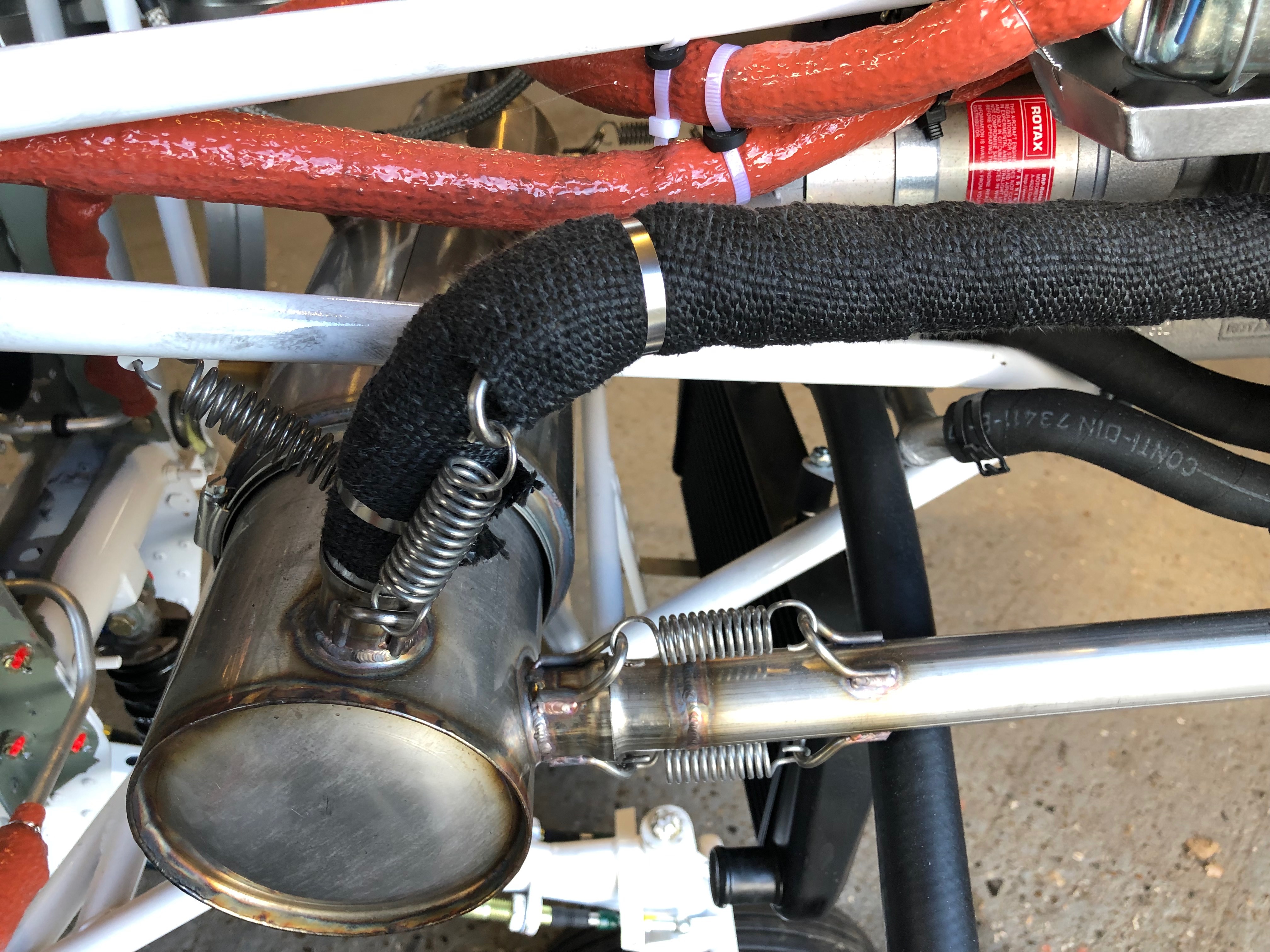
To protect the adjacent pipes from the heat of the exhaust I decided to cover the downpipes with exhaust wrap.
The starboard rear downpipes completed.
Run out of time but will take the landing lights home and fit the spade connectors as it’s a small job that can be done at home.
As I’ve now ordered the avionics for the build I thought I’d make a mock up of the panel and see what it looks like in the plane.
One of the jobs left over from the fuel system install was to fit a 1/8″ NPT blanking plug in the top of the gascolator. Luckily Ian Daniels had one spare. Loctite 577 was applied before tightening.
Next up was to start the install of the brake system. The picture shows the components that make up the system. I ordered hydraulic brakes with the parking brake option.
The brake sub assembly is made up outside the plane as it’s quite difficult to work in the front of the fuselage in the space behind the pedals.
The master cylinder fittings are added and threads sealed with Loctite 577.
The brake pipes are cut to size and added to the fittings to test the assembly looks right.
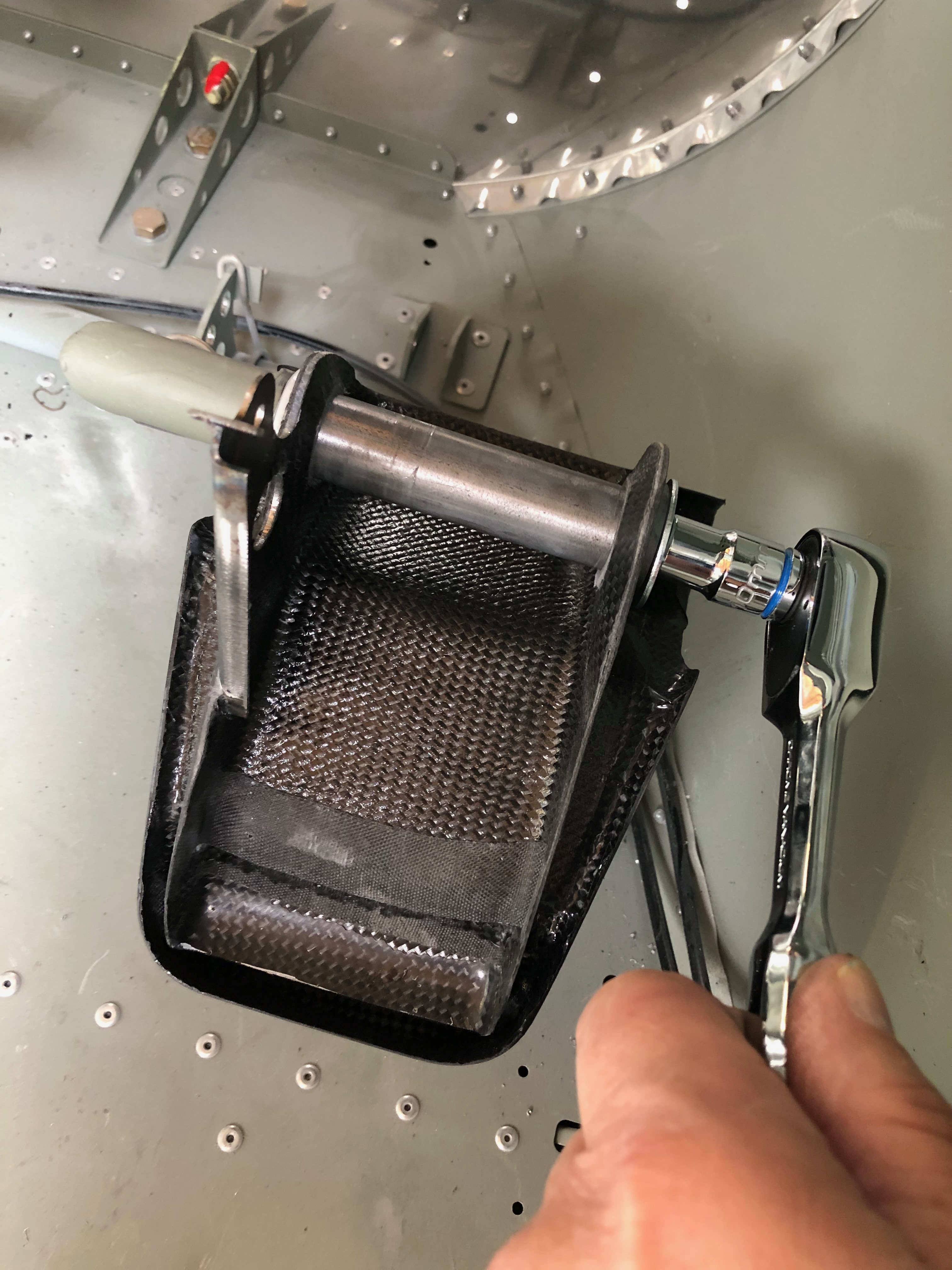
The brake pedals are added and secured with an M6 bolt and 30mm washer secured with Loctite 243.
All four rudder pedals in place.
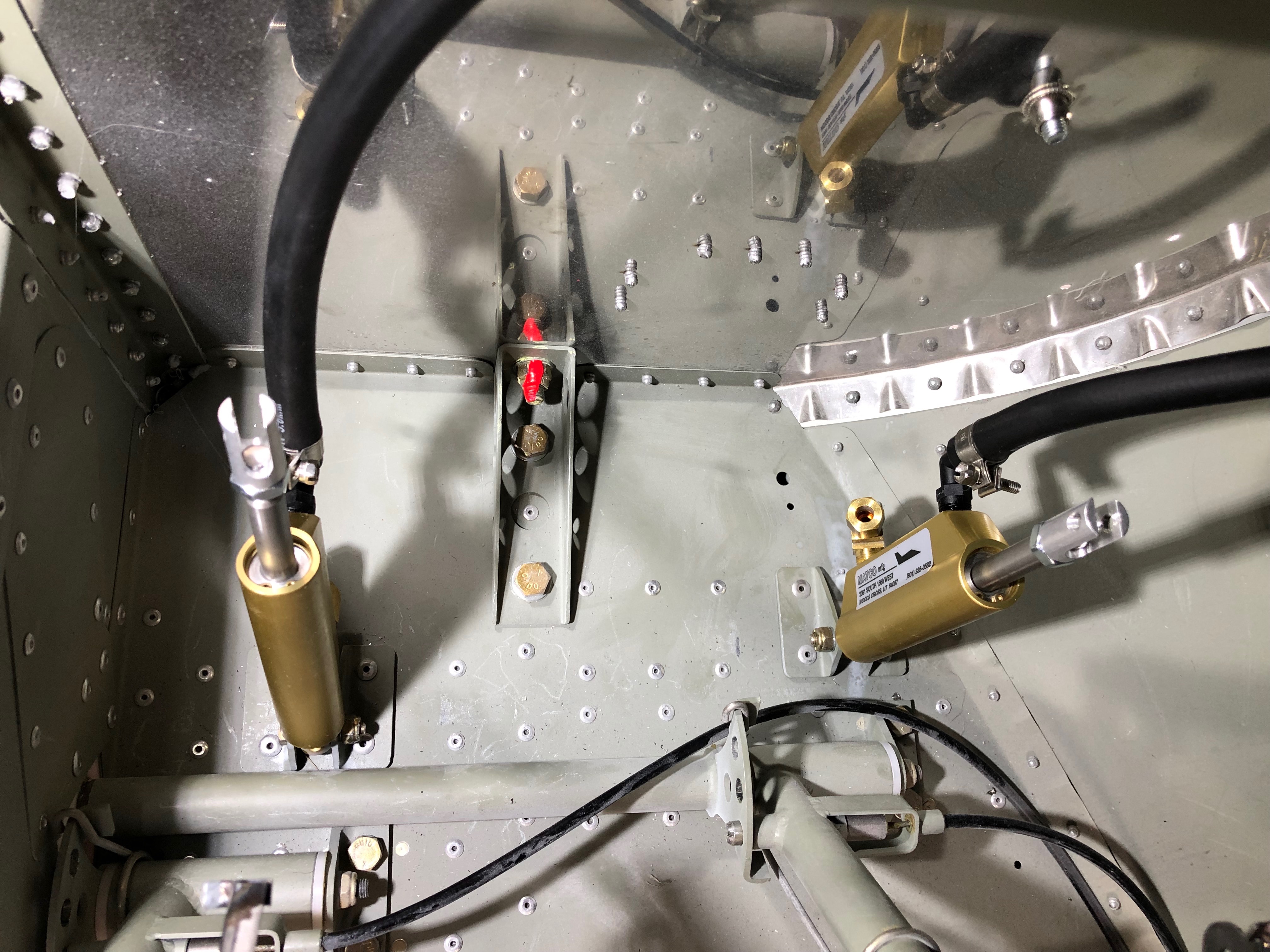
The master cylinders are fitted next using a m3 bolt and nyloc.
Following the build of my Bristell NG5 Kit No. 382 Registration G-MLSY

















 G-MLSY