Today was Hot, Hot, Hot. In fact too hot. I had planned to flush the fuel lines before the first engine run but it didn’t quite work like that. I wanted Ian to be around to check for issues as I started the engine just in case. However Ian was delayed so I got on and did the placards and labels.
When Ian arrived we started to carry out the control surface deflection adjustments but it was just too hot so we will re-engage tomorrow.
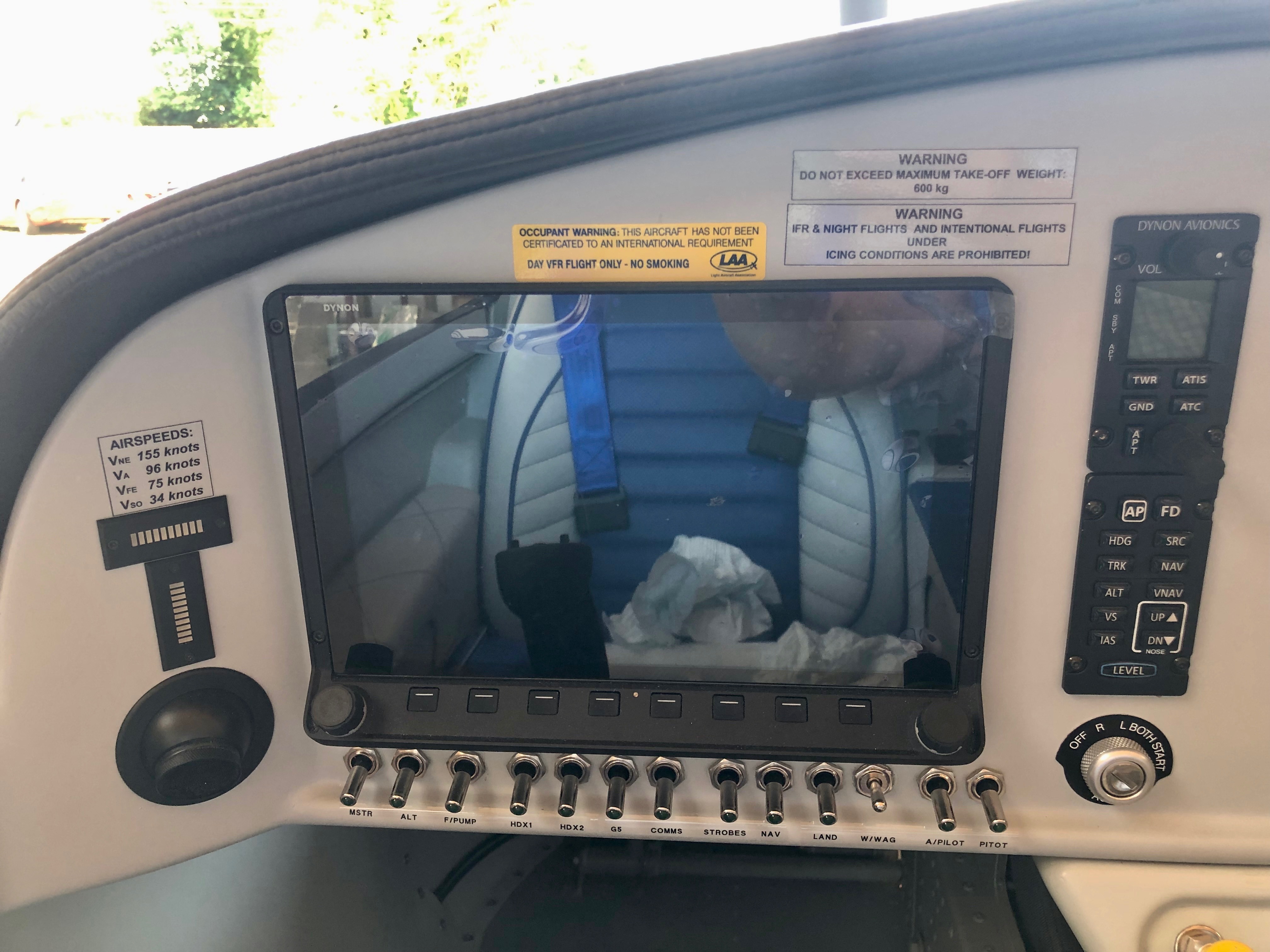
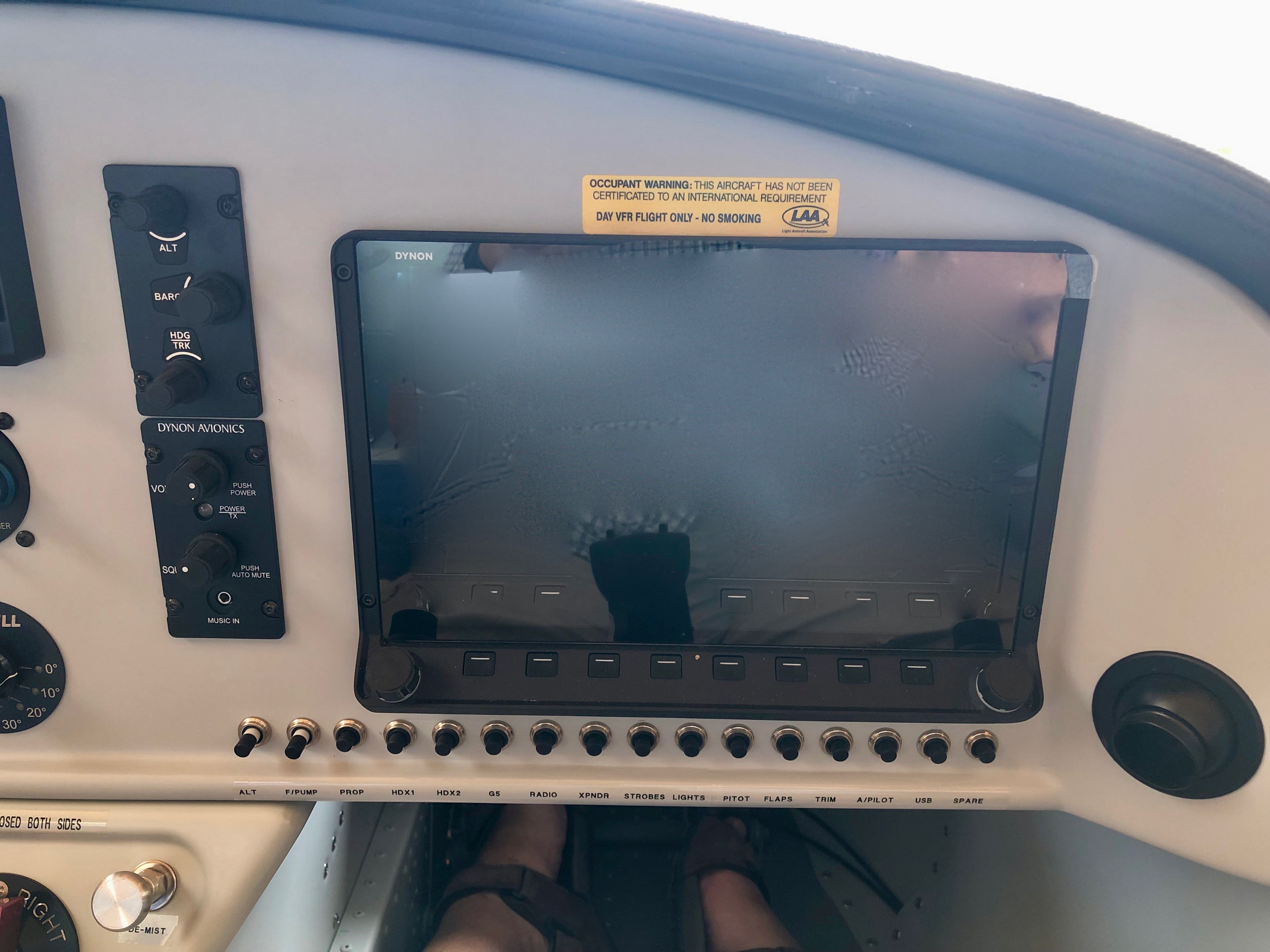
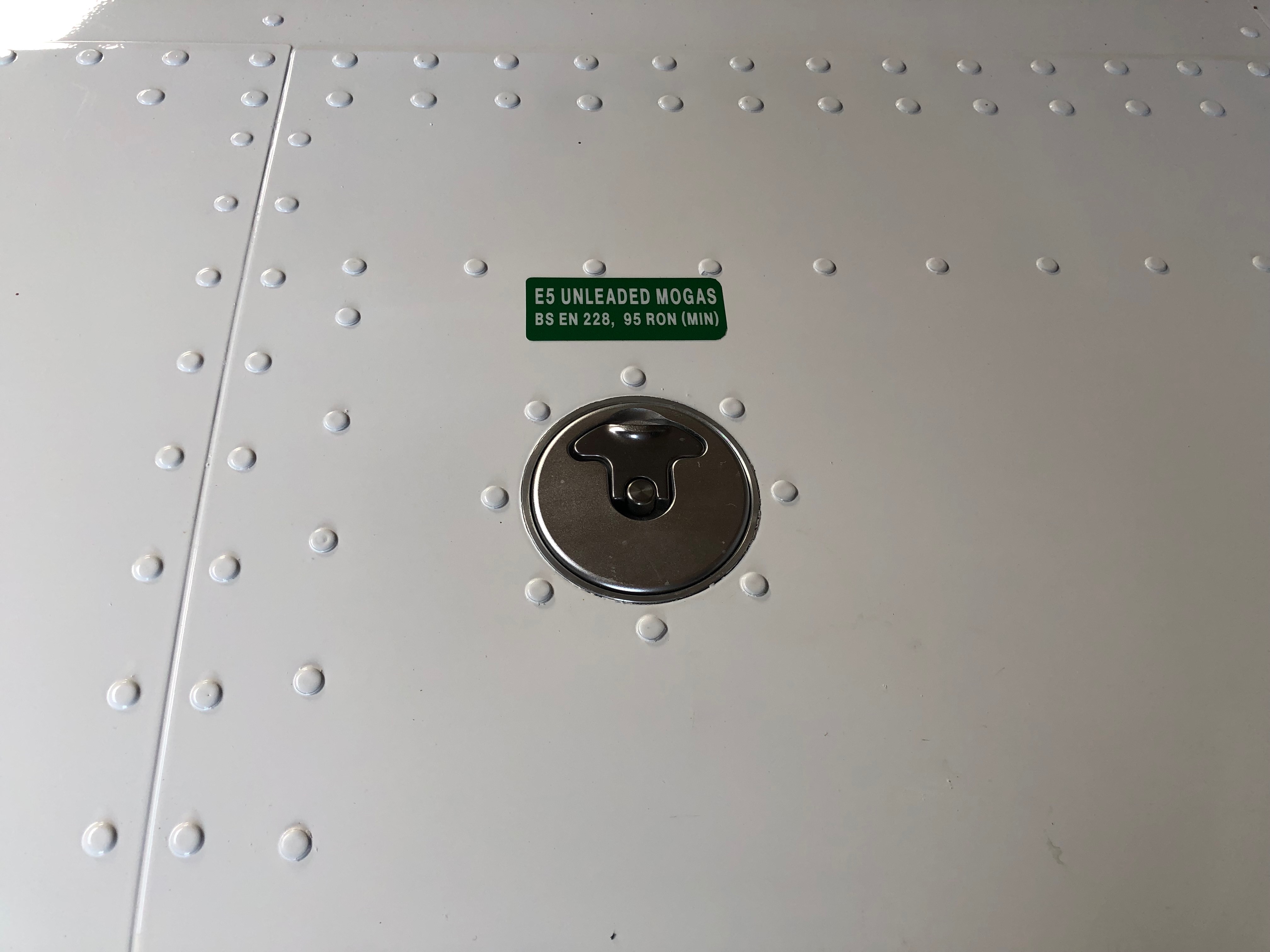
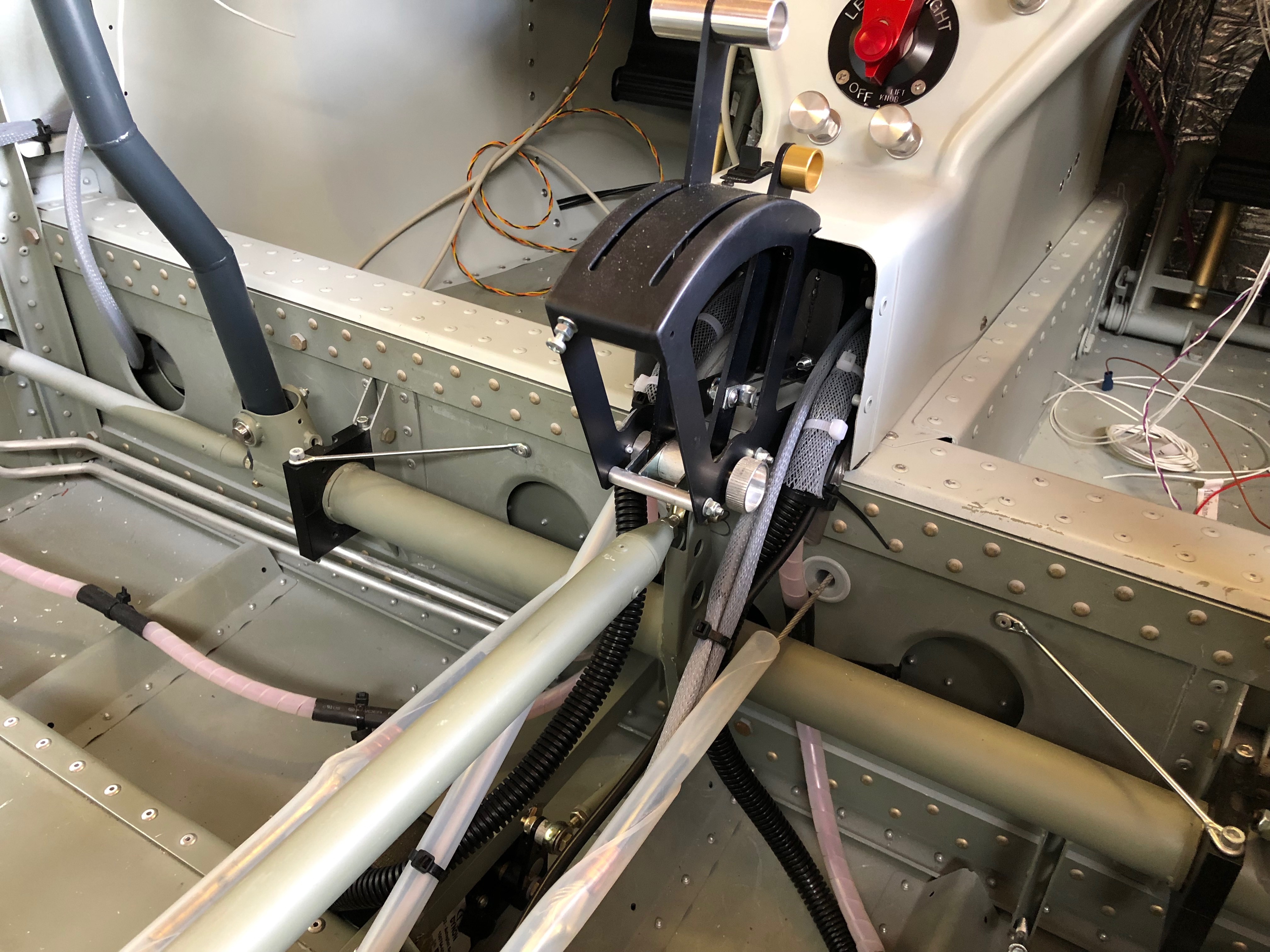
I’ve used an Inkjet printer to print on an inkjet transparent sticky backed labels. This was suggested by Alan Radford after I saw his Bristell panel and label. They have worked much better than I expected. As they are transparent they’re not so unsightly as some I’ve seen. The yellow one in the middle was supplied by the LAA.The centre console with the labels applied for the throttle quadrant and various controls.The switches and circuit breaker labels were printed using a electronic Demo LableMaker 200 with Black on Transparent tape. It works very well but there is a limit on how long it can print at one time so I had to do it in two passes. Also it’s quite tricky getting the spacing right so I needed to adjust the spacing after printing the first time and then print again. A little wasteful but it worked out ok,These are supplied by the LAA FOC so it would be silly not to use them.
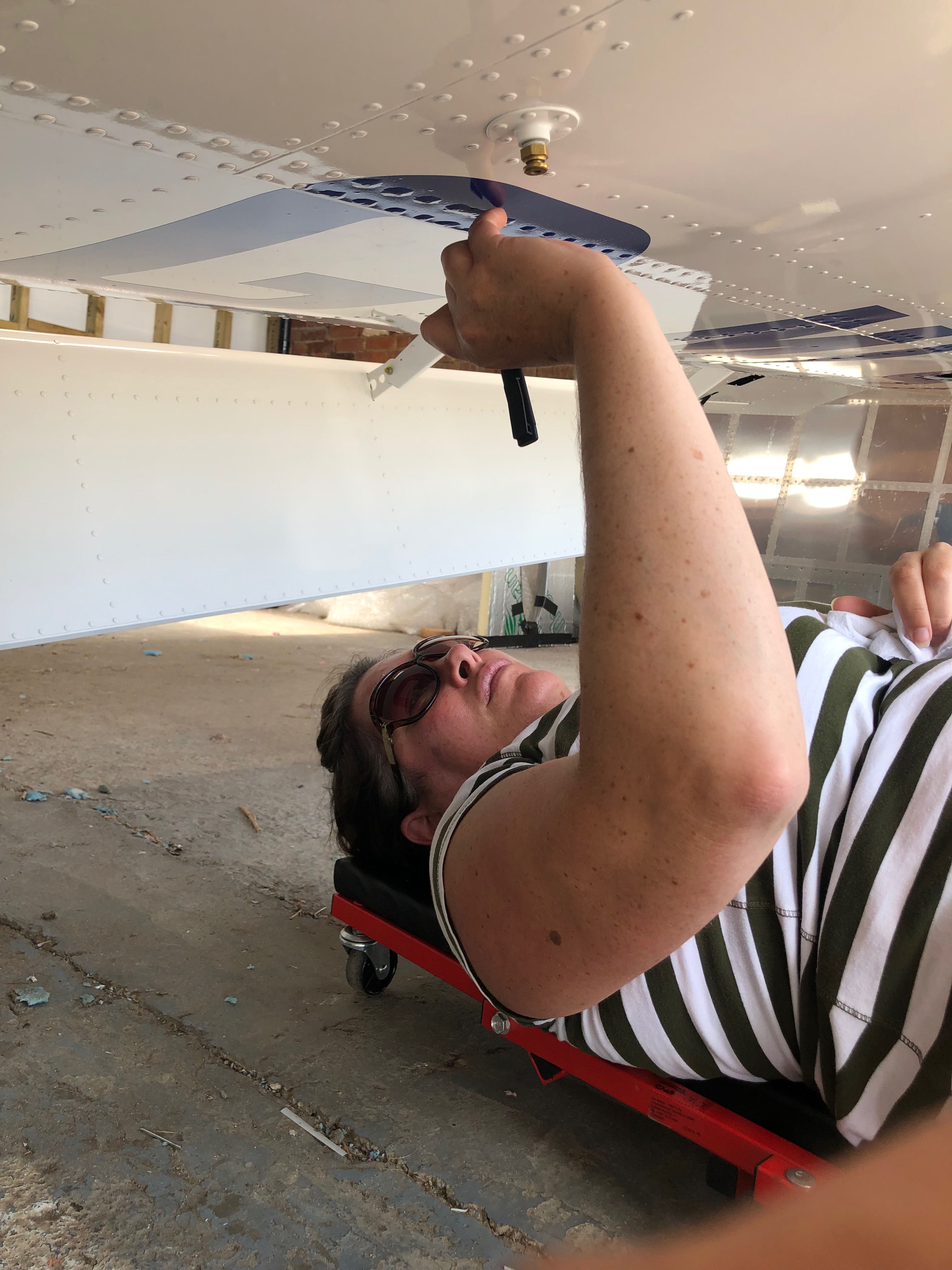
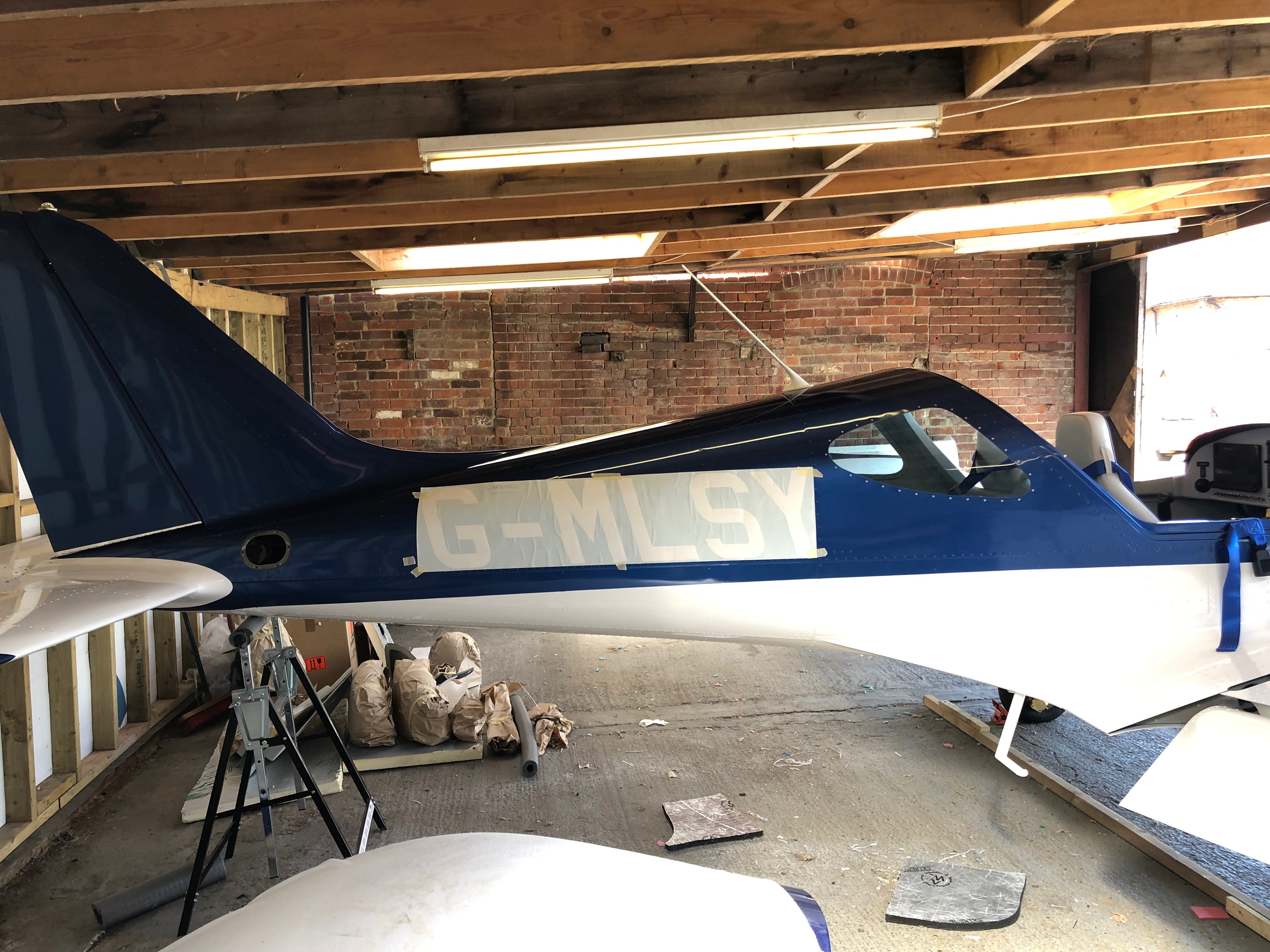
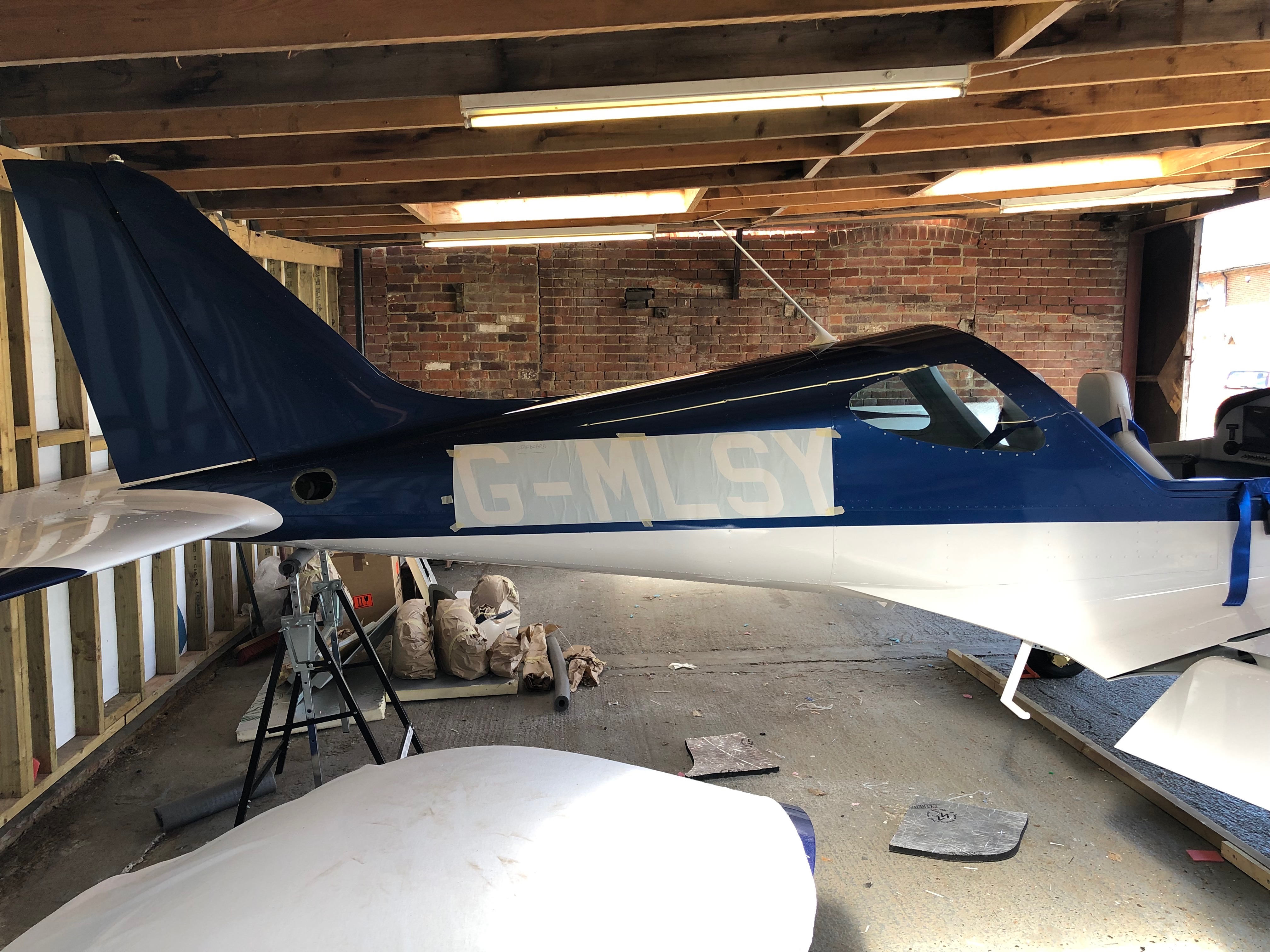
Karen came to the airfield today to help get rid of the little air bubbles around each of the rivets on the wing, did a sterling job as well. We tried several positions for the side registration to see which would look better. Pete Thomas, a friend from the London Gliding Club is coming down on Monday to do the weight and balance so I started to add all the bits and pieces that need to be on the aircraft from the weighing.
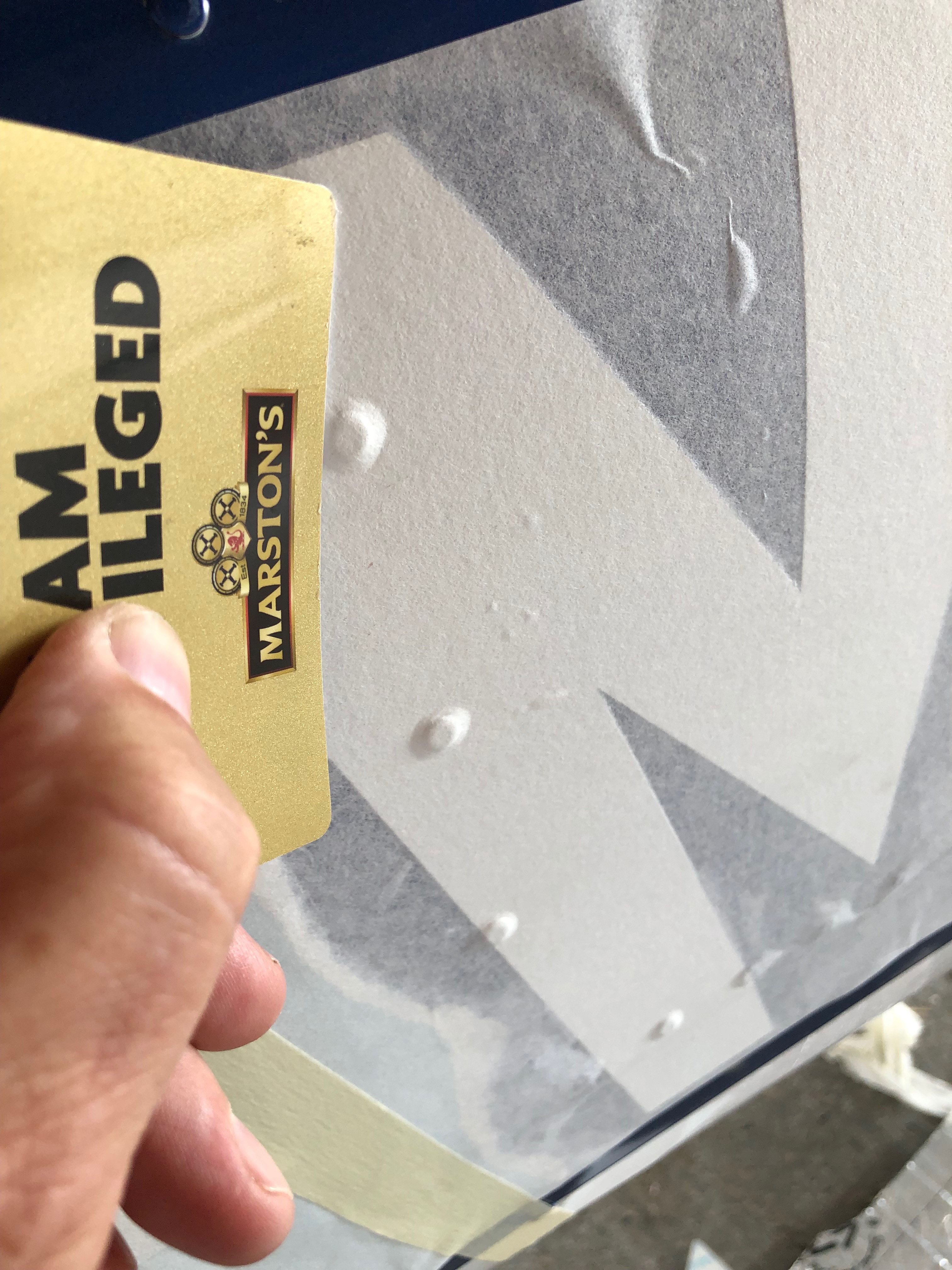
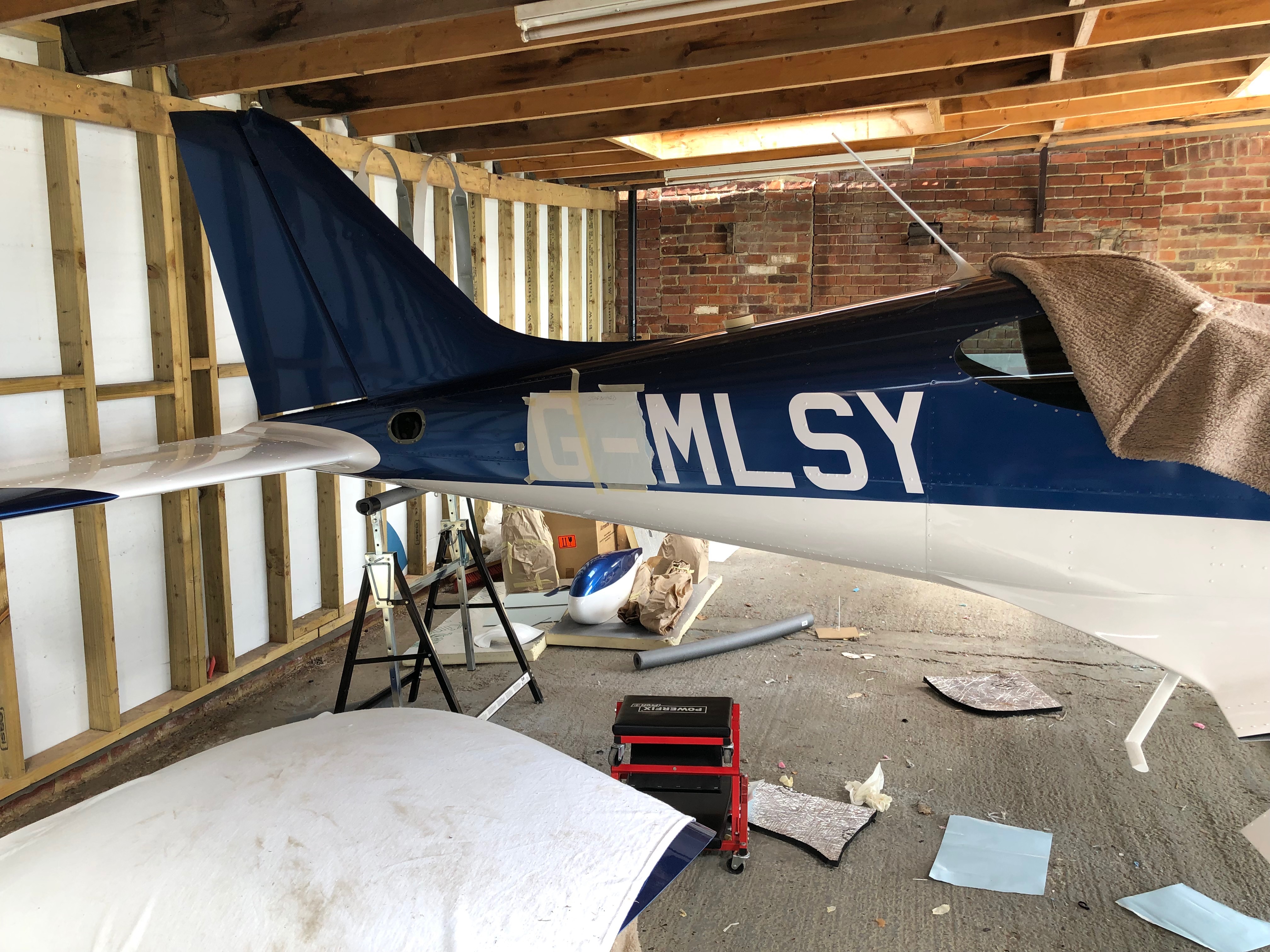
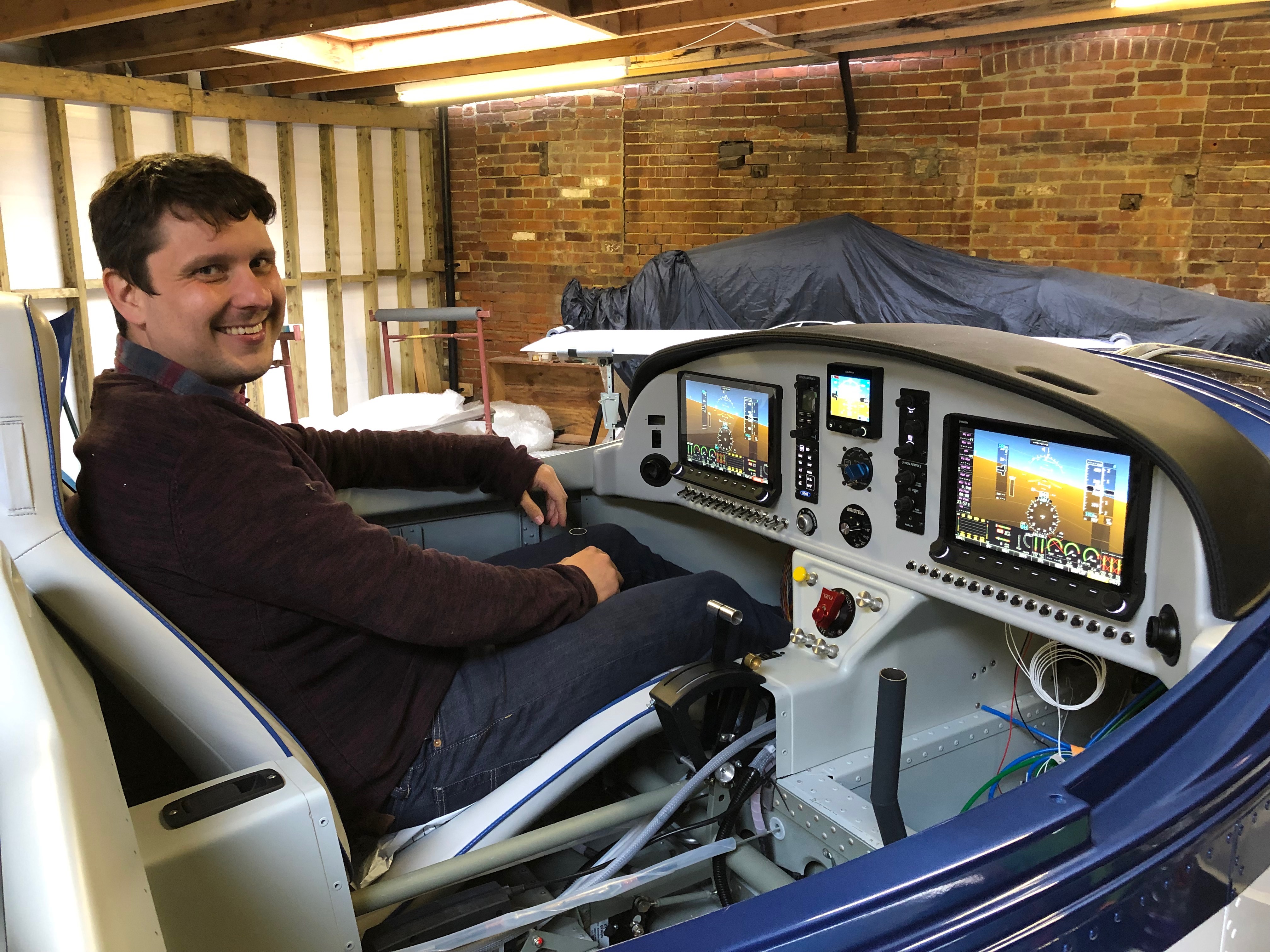
The vinyl registration doesn’t sit well around each rivet that it covers. A little air bubble is present on nearly every one of them. Karen used a fine point to pierce the vinyl and then gently pressed out the air. The result was fantastic and a big thanks to Karen giving up some her weekend to help me.Which looks better? aligning with the rivet line or ……the paint line. We both decided that the paint line was a better option so the decision is made.The spats need to go on as does the spinner and cowlings ready for weighing on Monday.Application of the registration starts. Not many pictures here on how to do it as I was worried about mucking it up.Part way though and it’s looking good. The next bit is to take a little of the spacing out between the ‘G’, ‘-‘ and the ‘M’ as it’ll look a bit better. I should have asked Pete from Mirage Signs to do that for me but I forgot!The final look. Very pleased with the result.A picture shows the inside of G-MLSY with all the seats and trim in place and a very happy me!
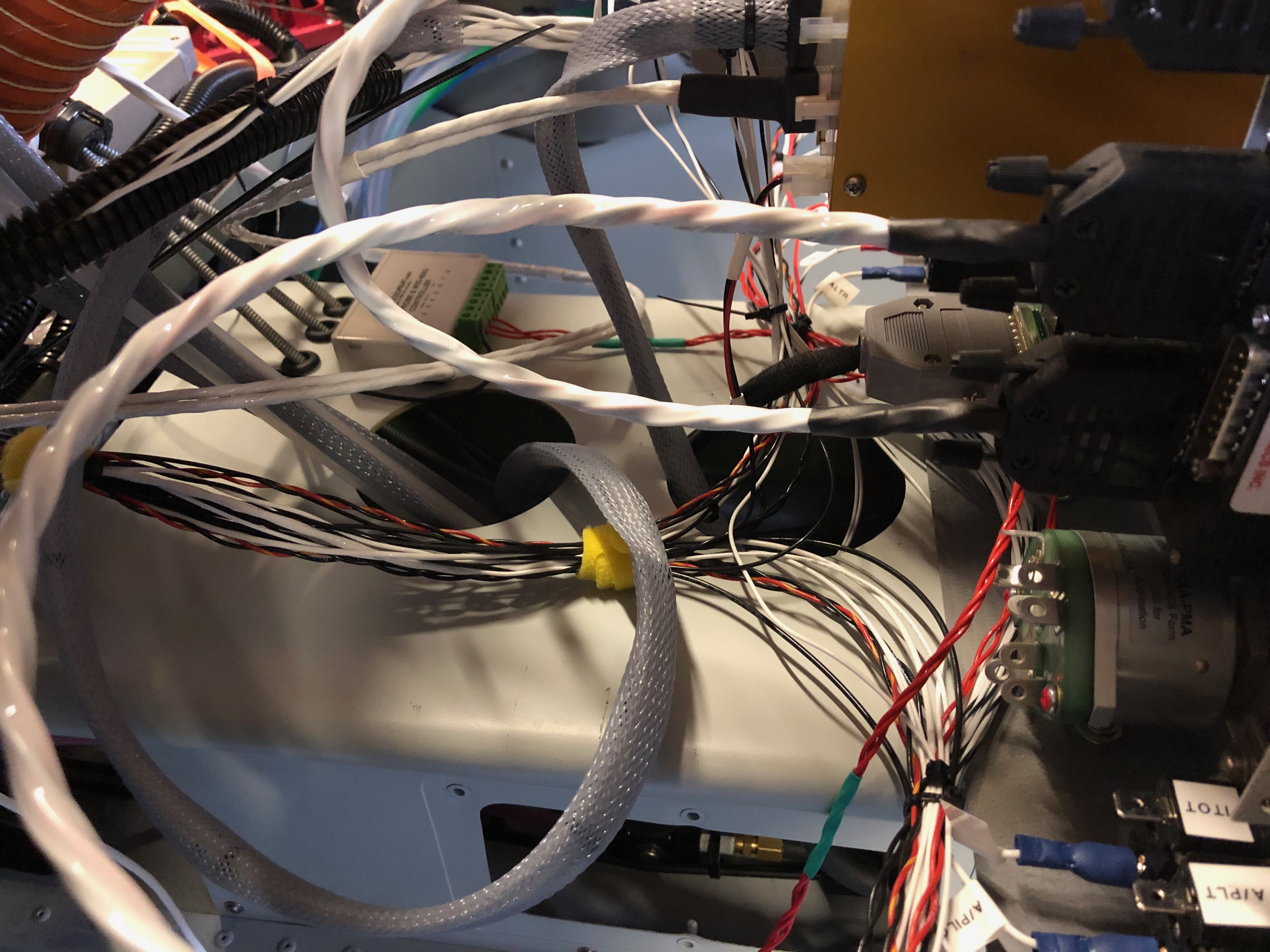
Wiring continues! Most of the time it takes is making sure that the routing will work for the circuits concerned, keeping it tidy and labelling the wires. Hopefully I’ll be finishing the landing lights, nav lights and pitot circuits if my delivery of wire arrives today. but most of its done now.
The documentation that came with the Rotax engines didn’t have the information on the soft start module. Luckily I’ve found some information on a web site that gives me the information that I needed. Unfortunately I haven’t received the wire that I’d ordered so I diverted on other tasks.I I’ve had a proactive day, completing all the tasks that I’d set myself. The lack of photos is because there’s only so many pictures of wires you can take!The power and ground distribution units are filling up nicely! and all the switches apart from the Alternator switch have been wire. Work resumes on Monday after a day instructing tomorrow and a rest day Sunday!
A lot to do today, as every day! When the delivery arrived I found that some of what I had ordered was out of stock. It’s not a big problem as there are lots of other jobs to do. So I’ll wire up the power side of the system and label, install and test the radio and transponder coax cable.
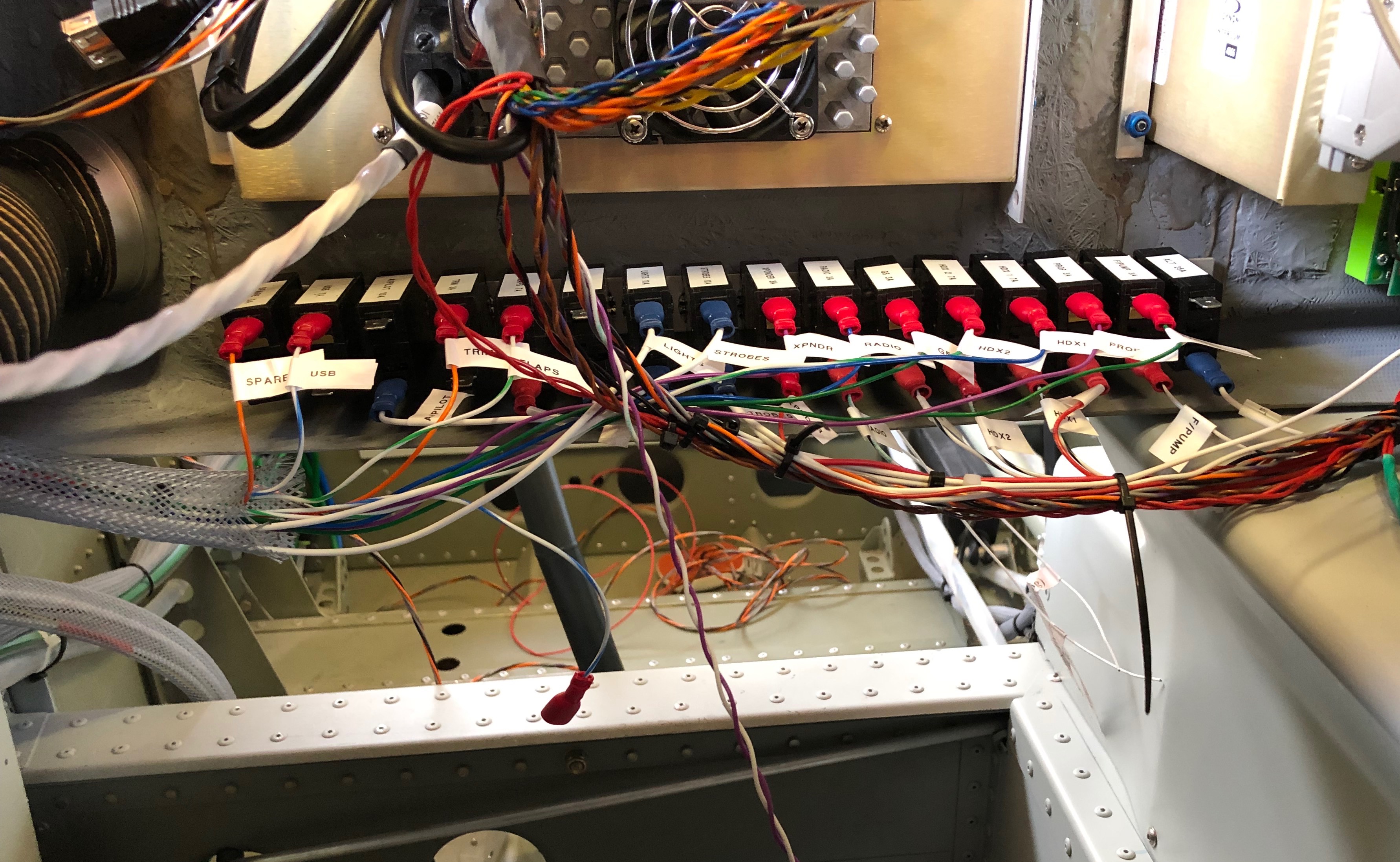
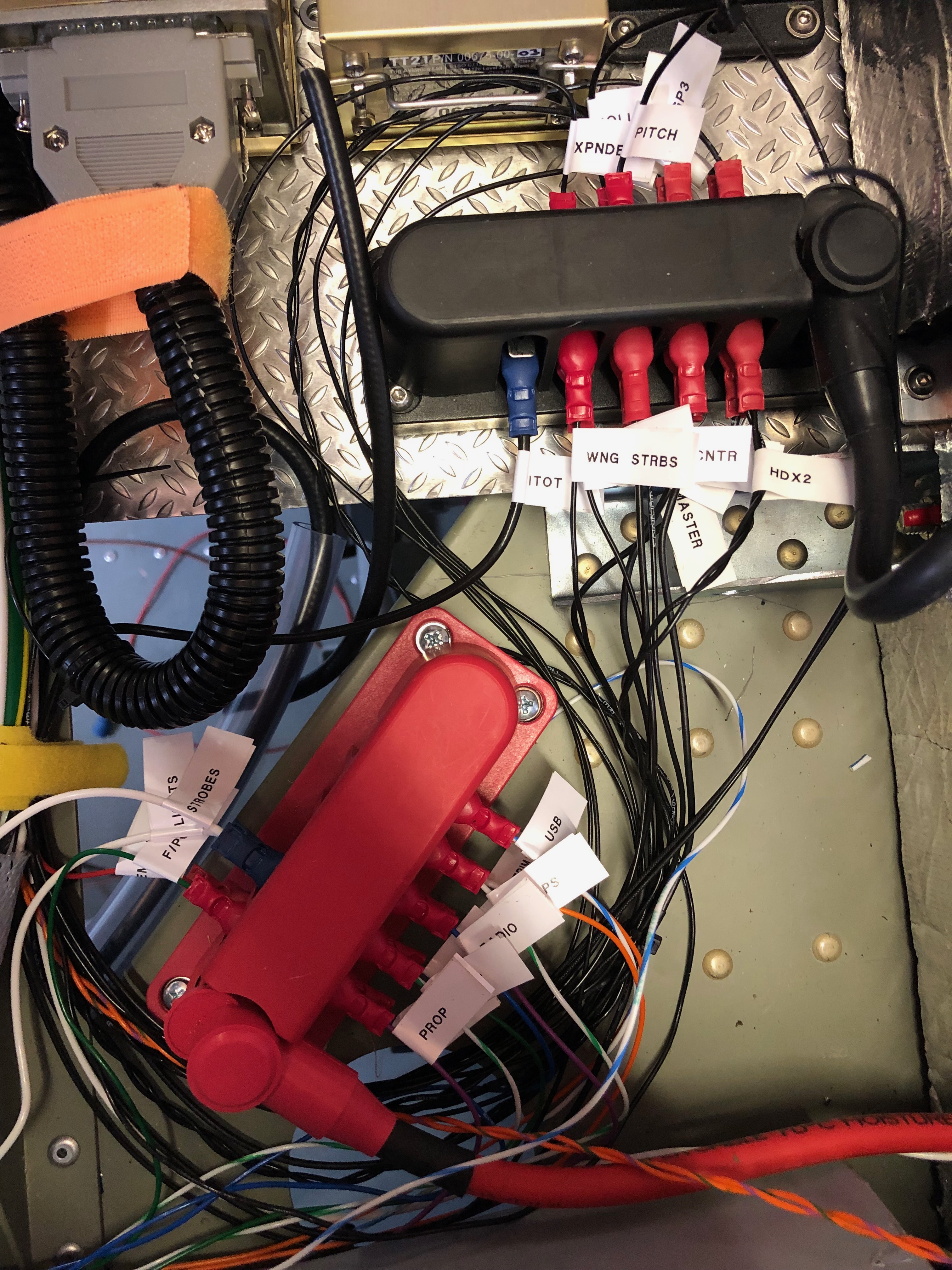
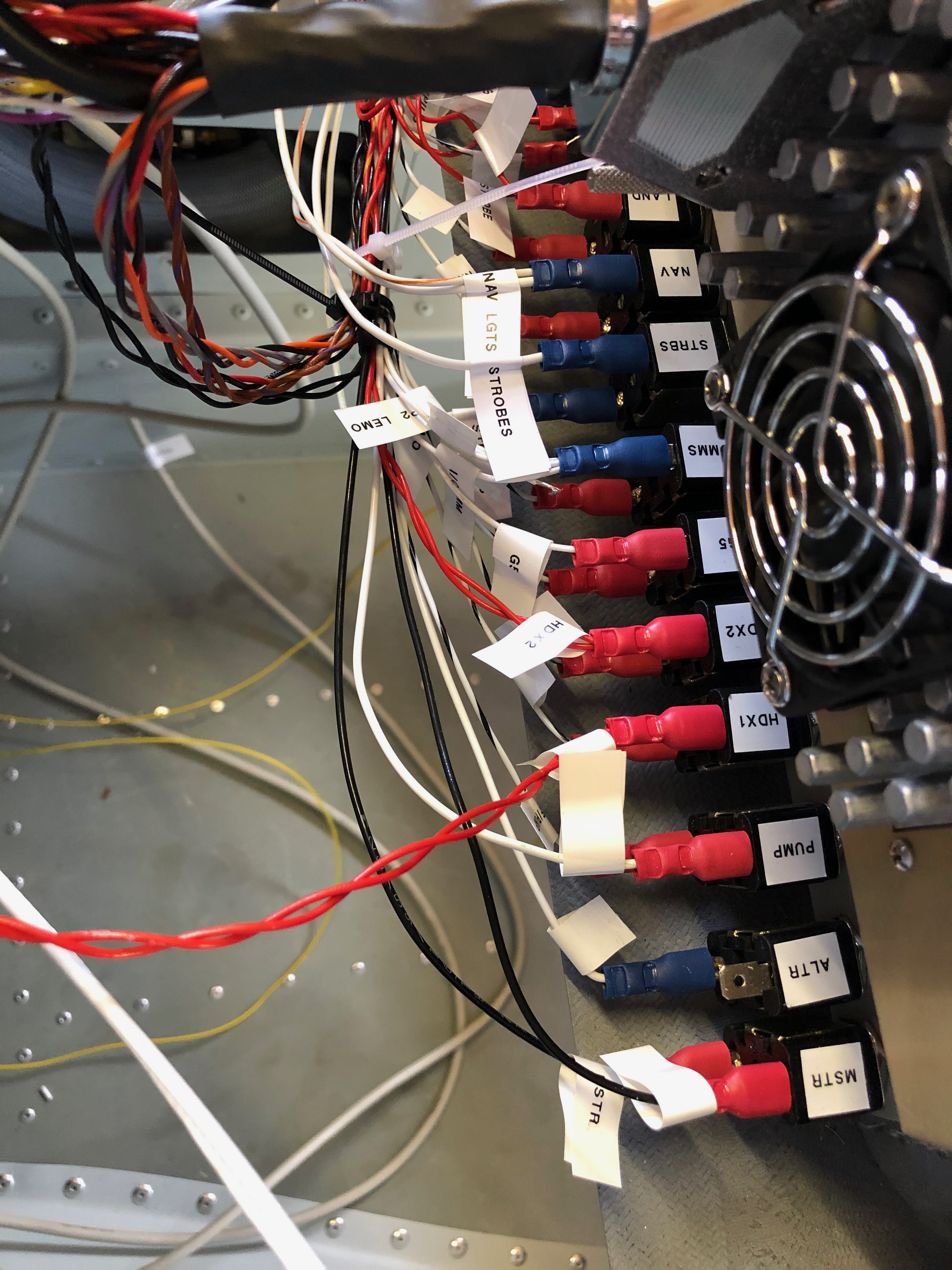
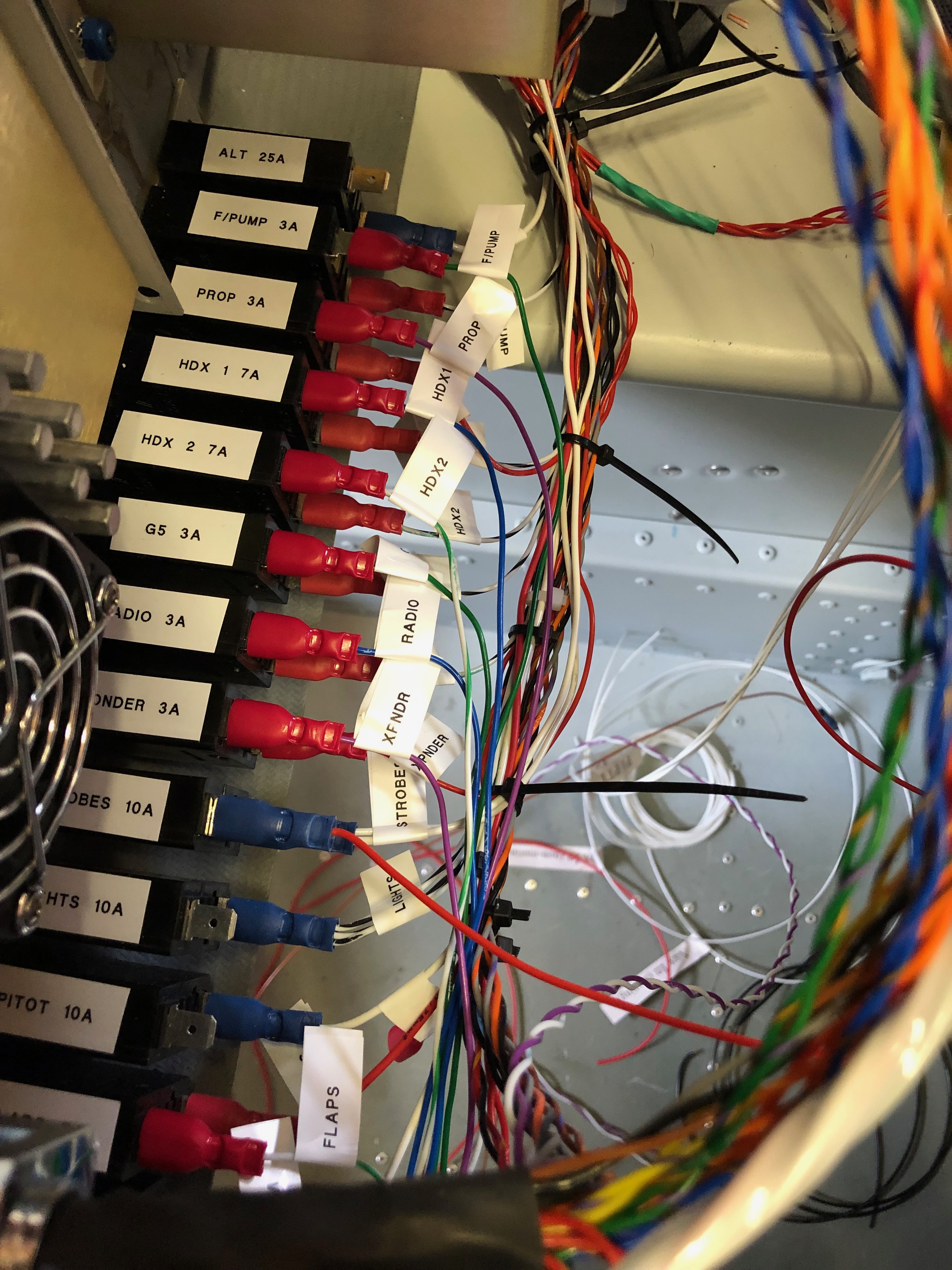
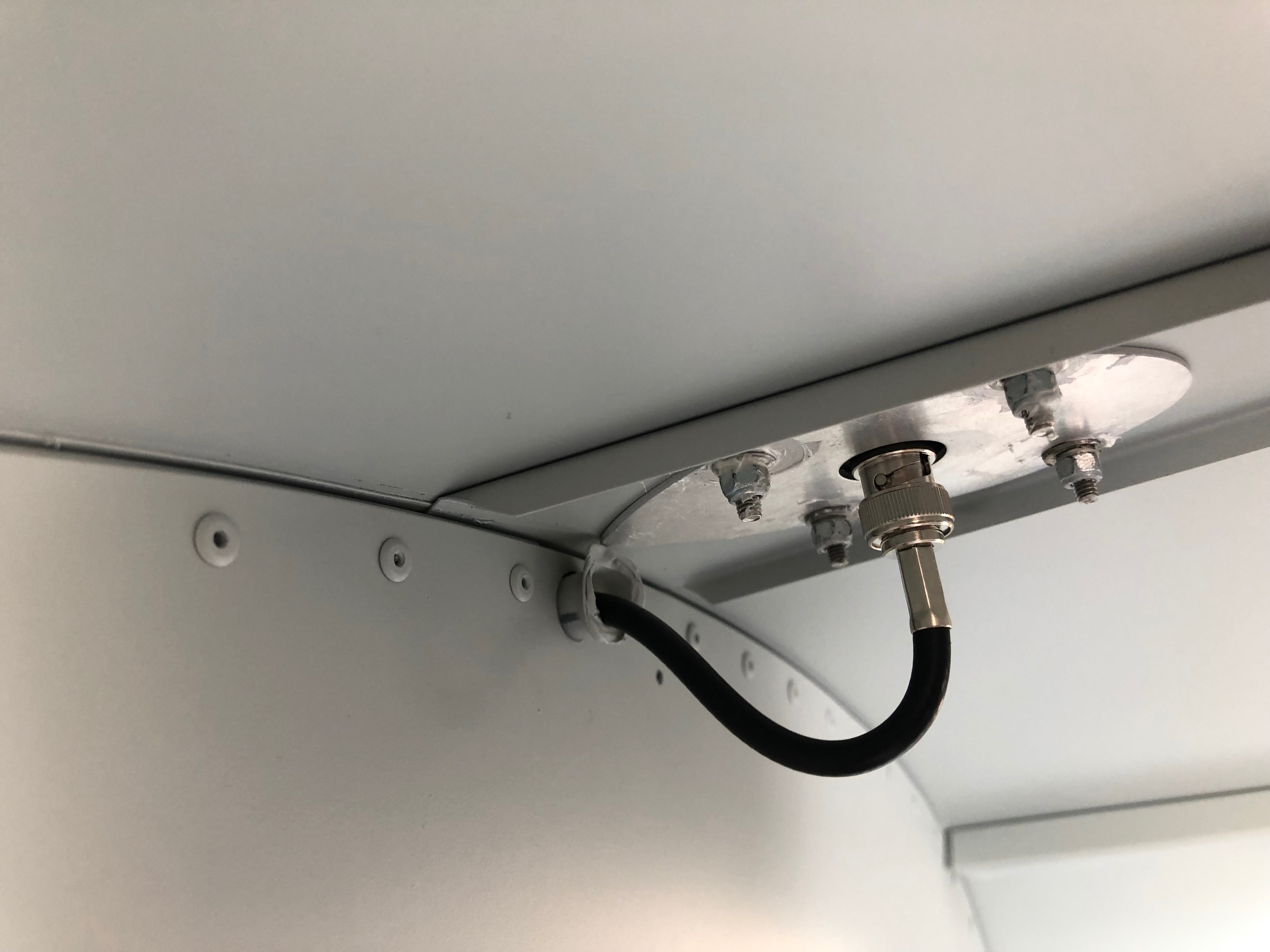
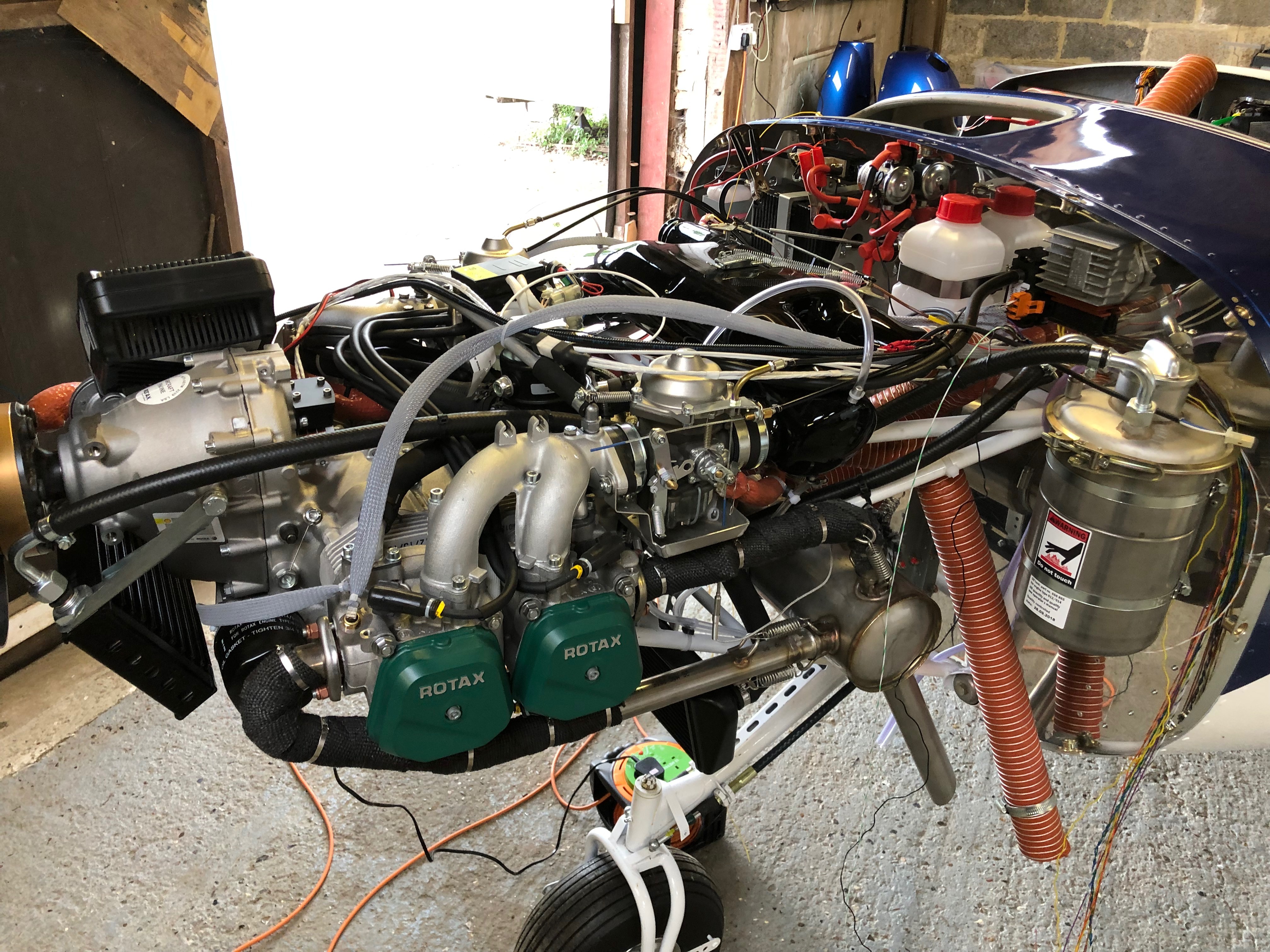
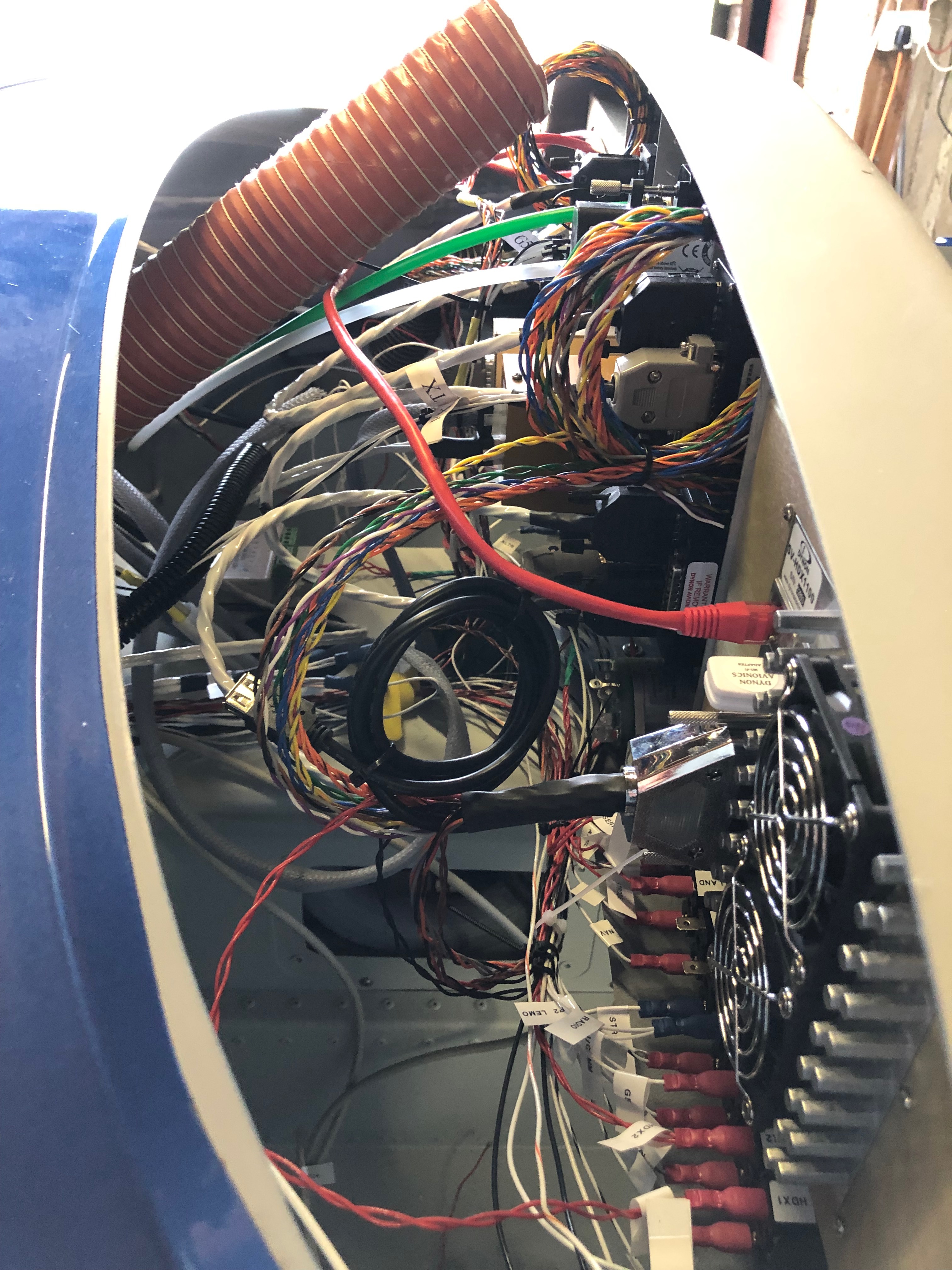
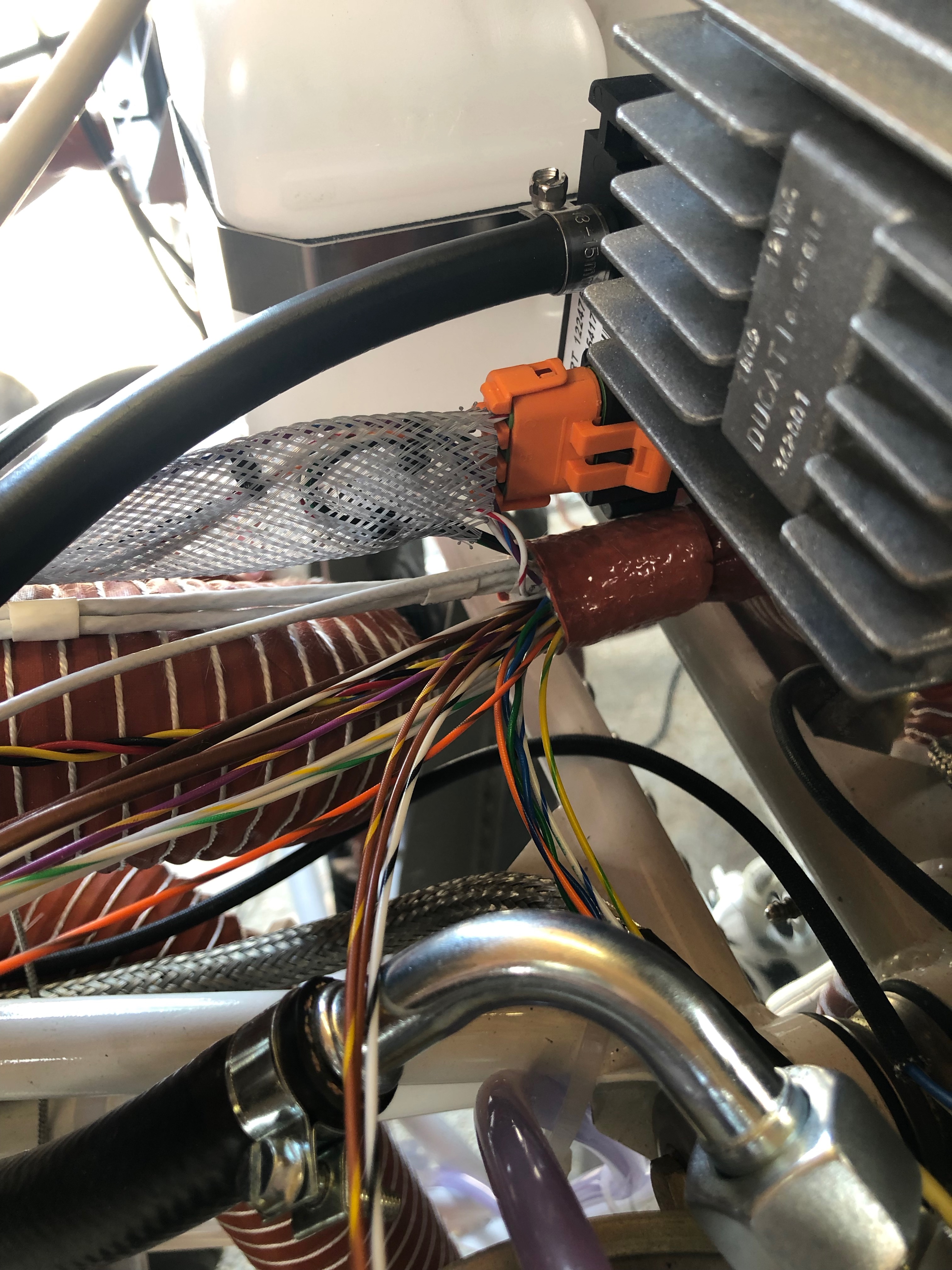
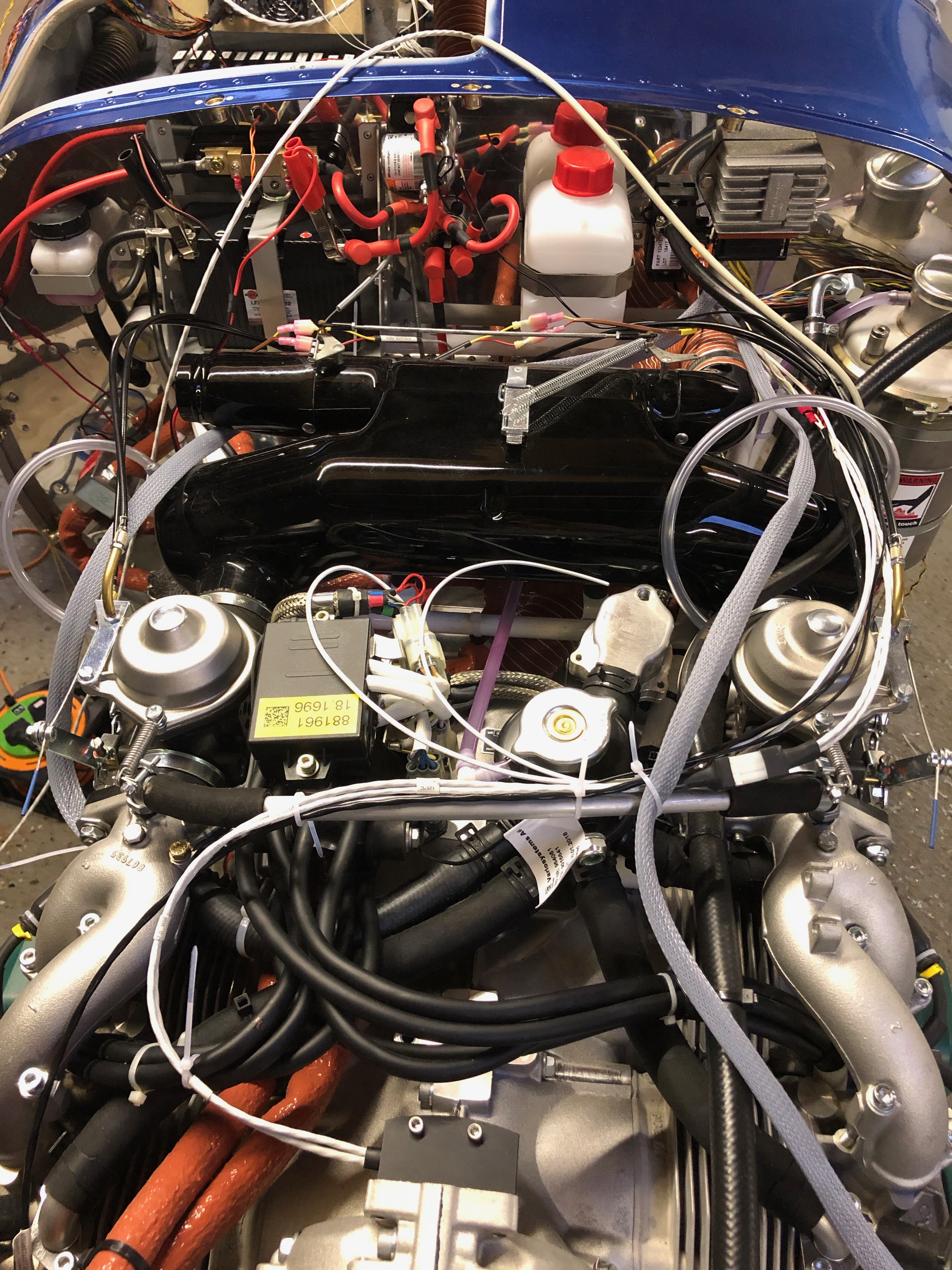
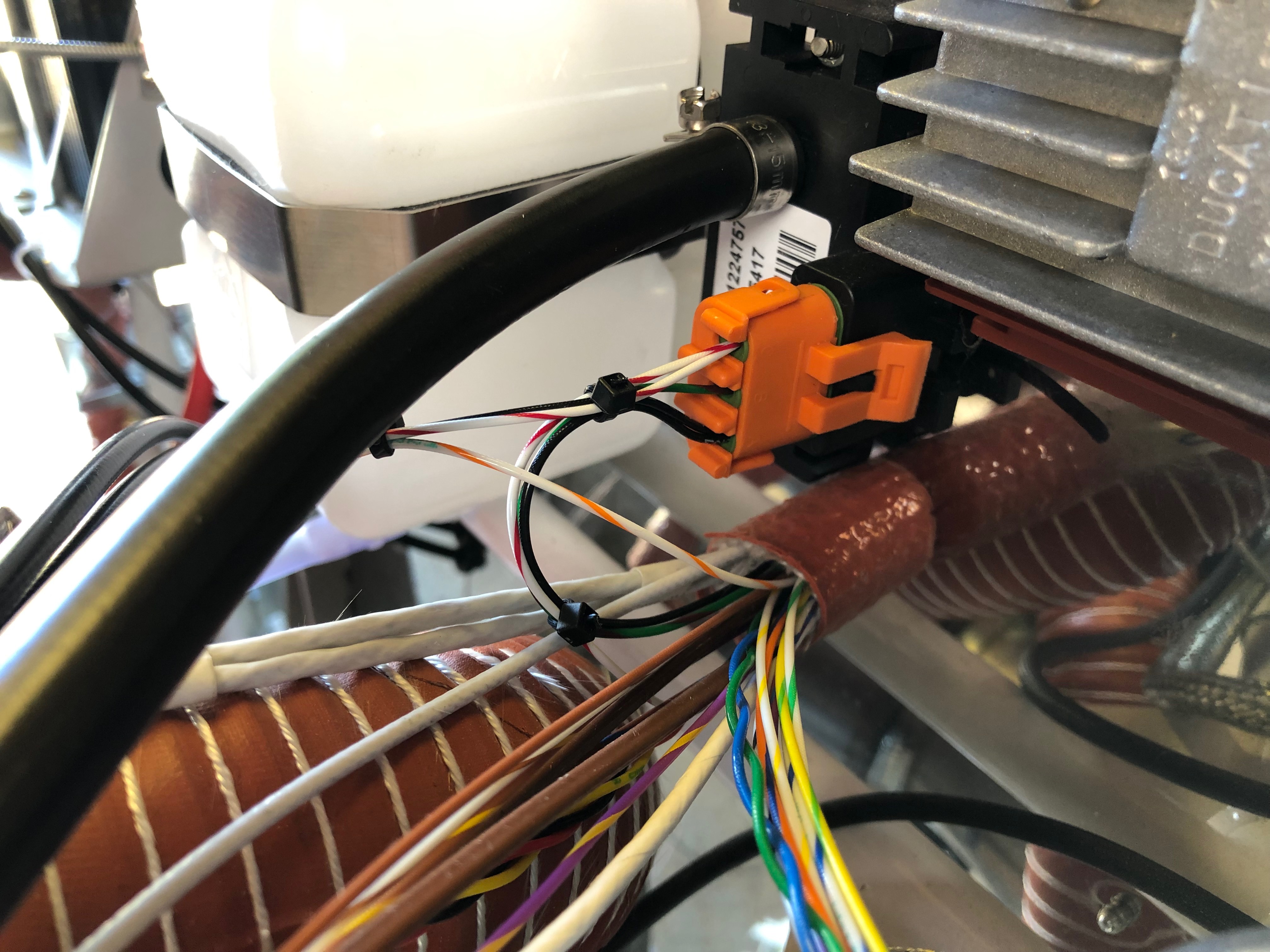
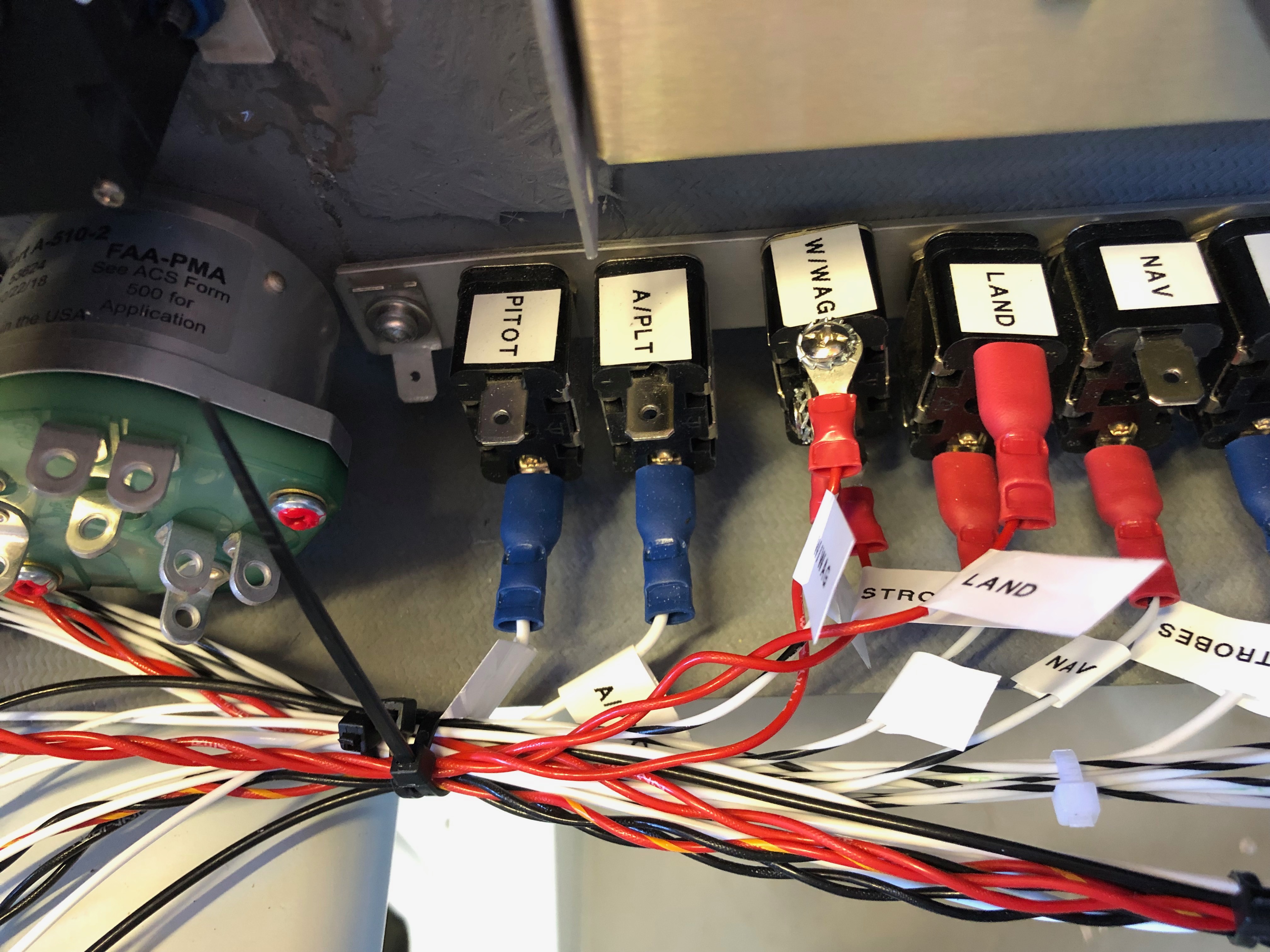
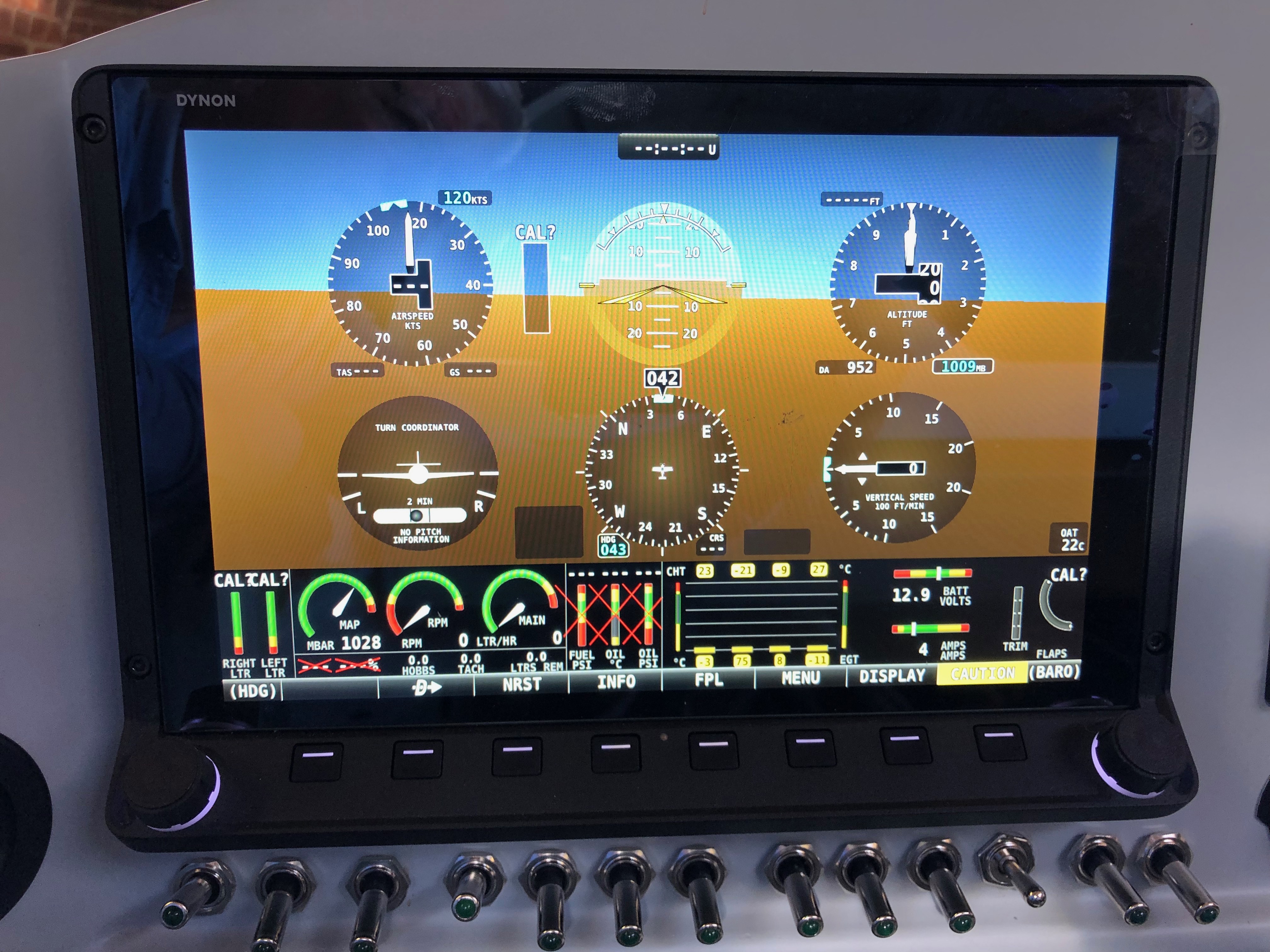
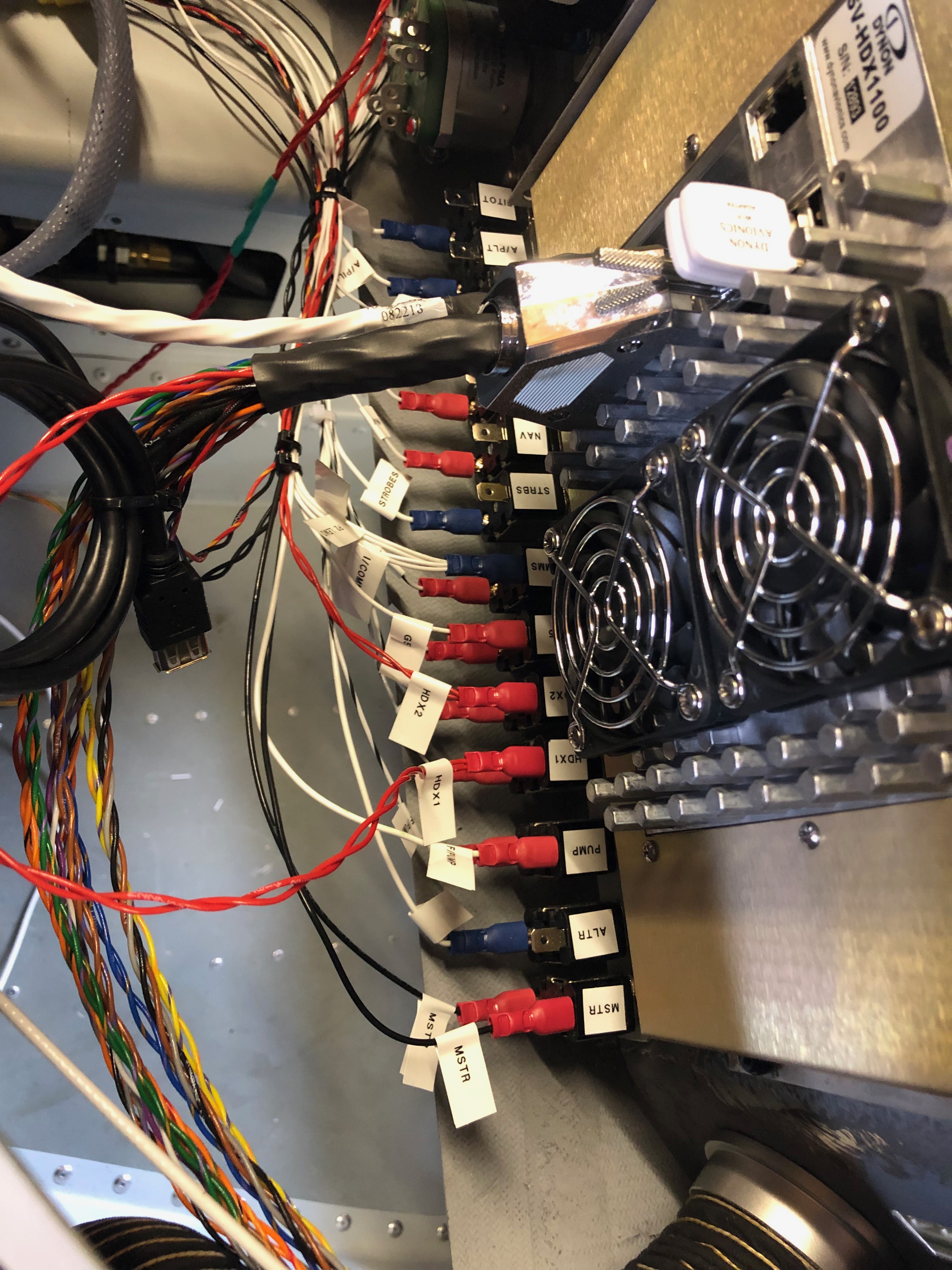
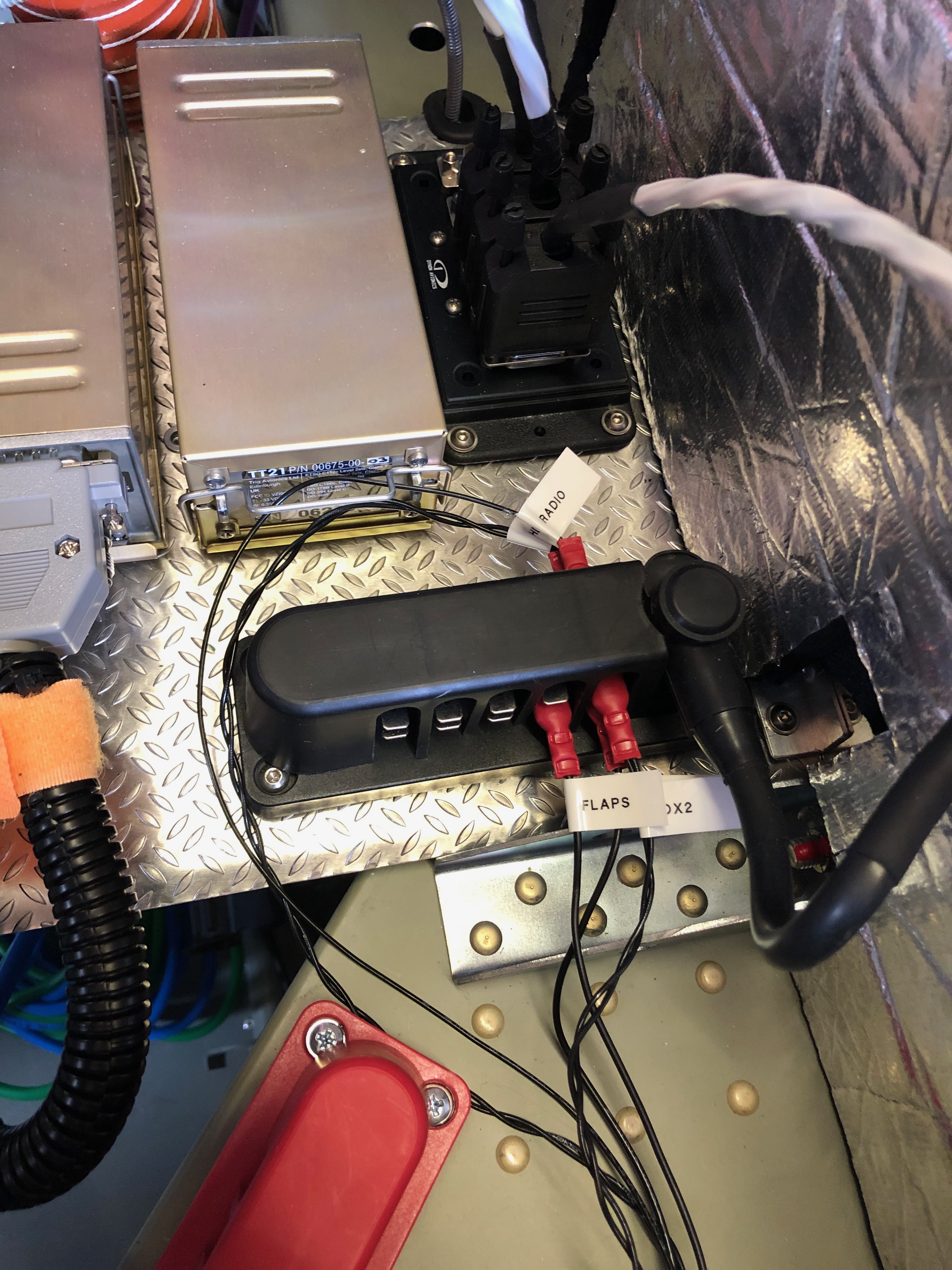
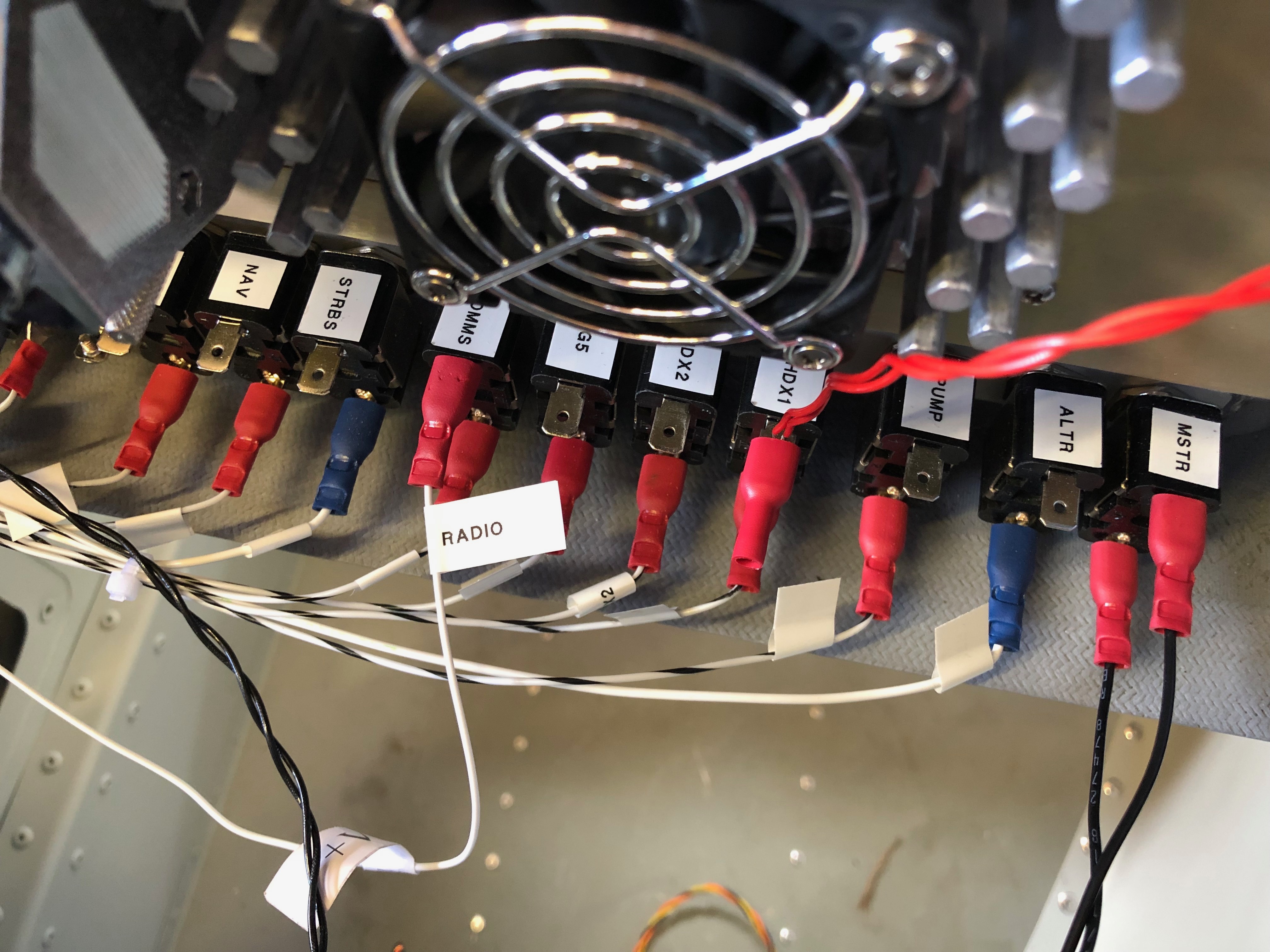
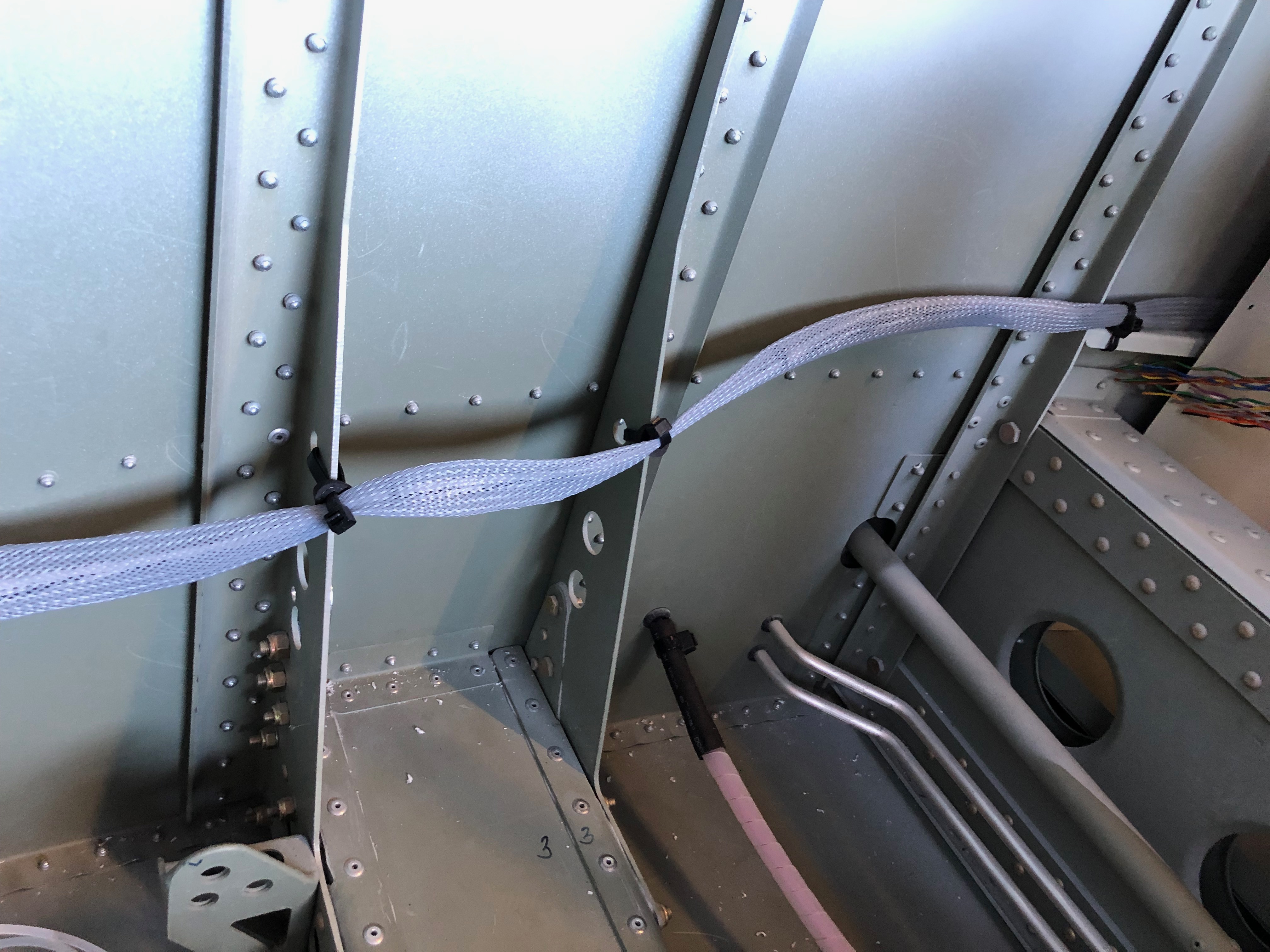
Time to wire up the power side of the electrical system. I’m reusing the wire that I have leftover from the other circuit wires that were trimmed back. There’s plenty to do the job although not a unified colour as long as they are labelled it will be ok.My new friend. A Dymo Label Manager 200 that I bought some years ago. It’s been invaluable and luckily I managed to get some label cartridges.The +ve bus with 11 of the circuits completed.The circuit breakers connected, some tidying will be required but it’s mostly complete.The complete panel powered up for the first time. The system shows a 7 amp power drain which is roughly what I had calculated.My DPD delivery was a day late but got delivered at 10am so I could get on with the wiring of the Transponder and Radio with the coax.The radio coax cable runs through conduit in the fuselage and is terminated with a TNC connector that I’ll do tomorrow.With all the cables protected with sleeving or conduit and secured in place I can fit the interior trim.The rear of the cabin. I’ve checked the radio/headset loom and it works fine so I need to mount the LEMO headset connectors and then I can fix the interior panels.Right side of engine. All the sensors are connected except the Tachometer, soft start module, magneto wires.Left side of engine. Looks a bit busy but with a bit od tidying it will look a bit neater. Quite pleased with the progress so far.
The wiring continues today with a couple of other items that I had put on the back burner. The tail strobe circuit was completed and wing strobe wiring started. One being the wiring of the extension wire for the elevator trim and the other the pressure plumbing for the G5.
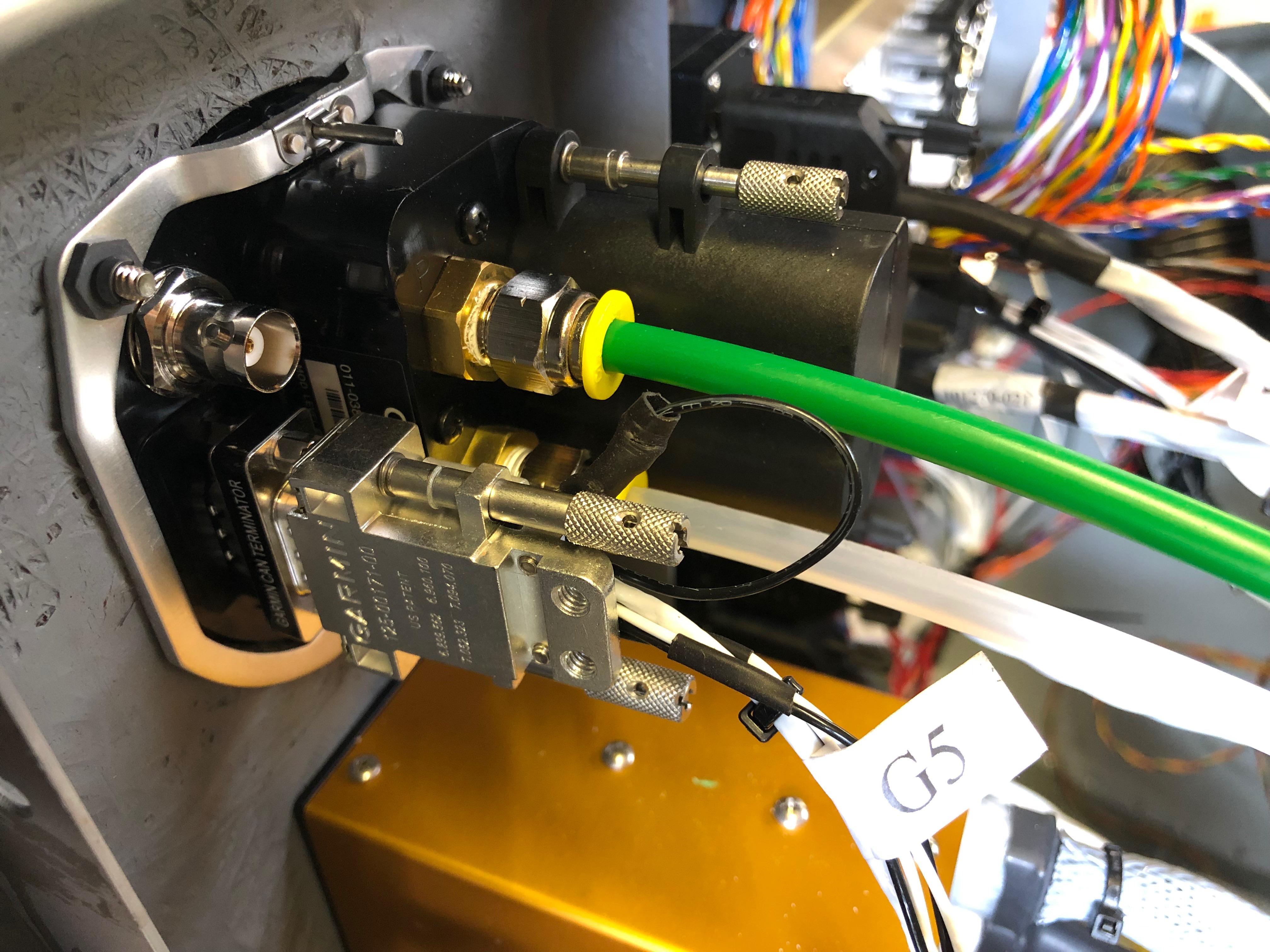
After shimming the ADAHRS unit last night I replumbed the pressure system to make it tidier……allowing me complete the plumbing to the G5. I thought I’d start on the trim motor wiring but unfortunately DPD failed to deliver the wire I’d ordered so will do that another day! One of the jobs that I had been diverted from was the wiring up of the elevator trim so first thing is to solder them together and make sure that the colours match what I did for the aileron trim motor.
Music: Fleetwood Mac – Saw them in concert at Wembley last night. A little treat from Karen – Absolutely fantastic!
The wiring continues, after each circuit is wired up a check to see if it’s working as expected. All good so far!
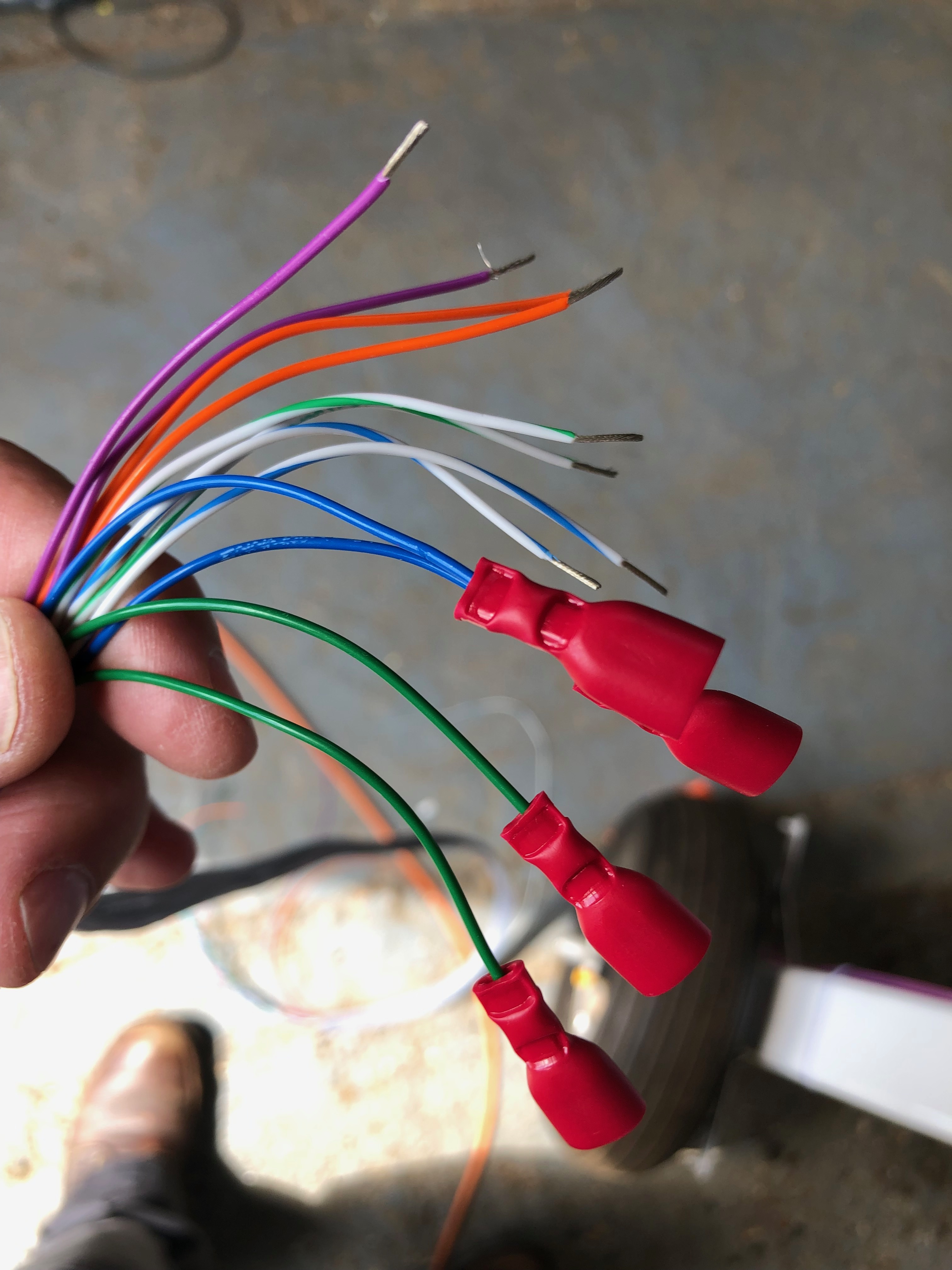
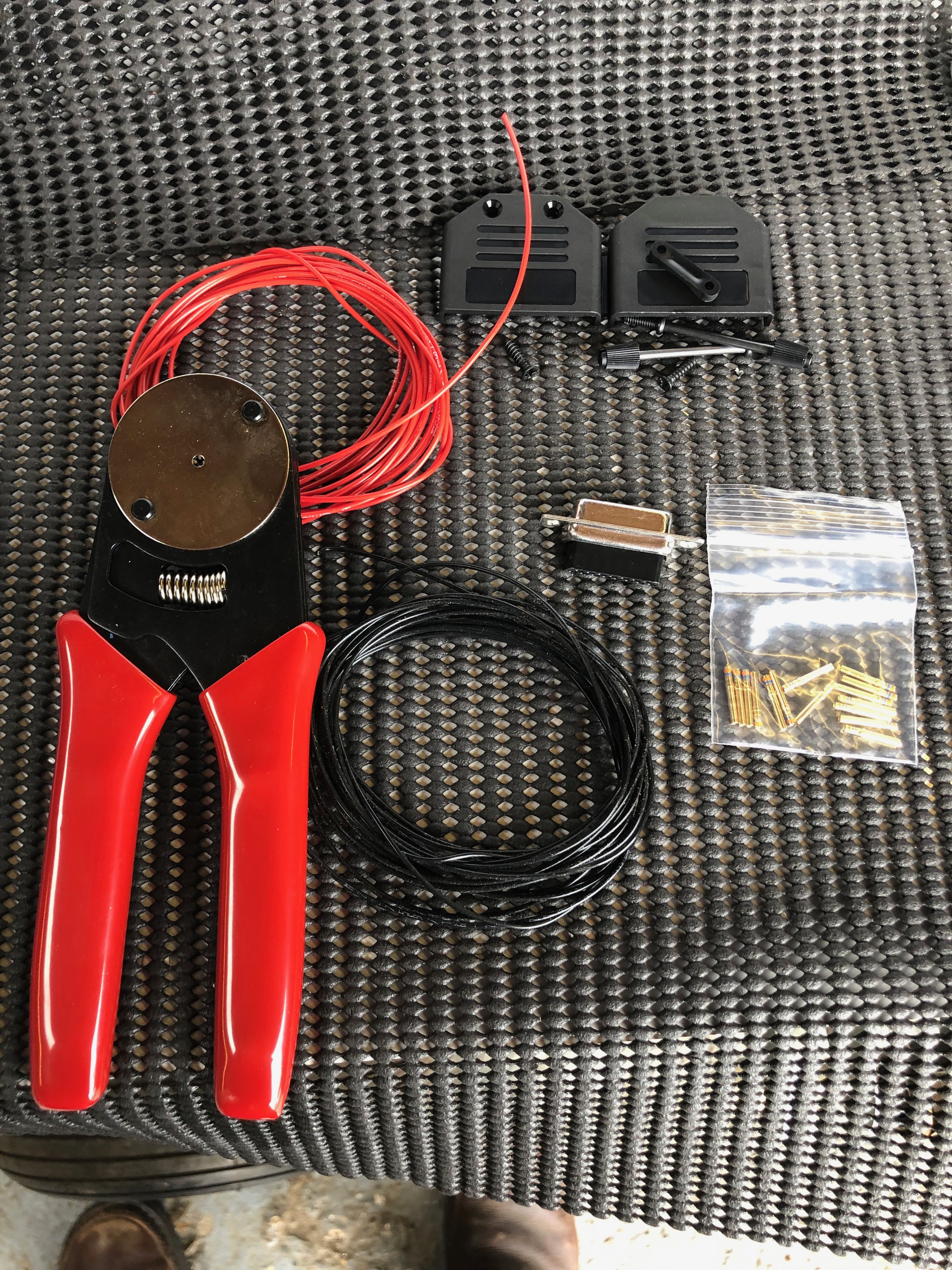
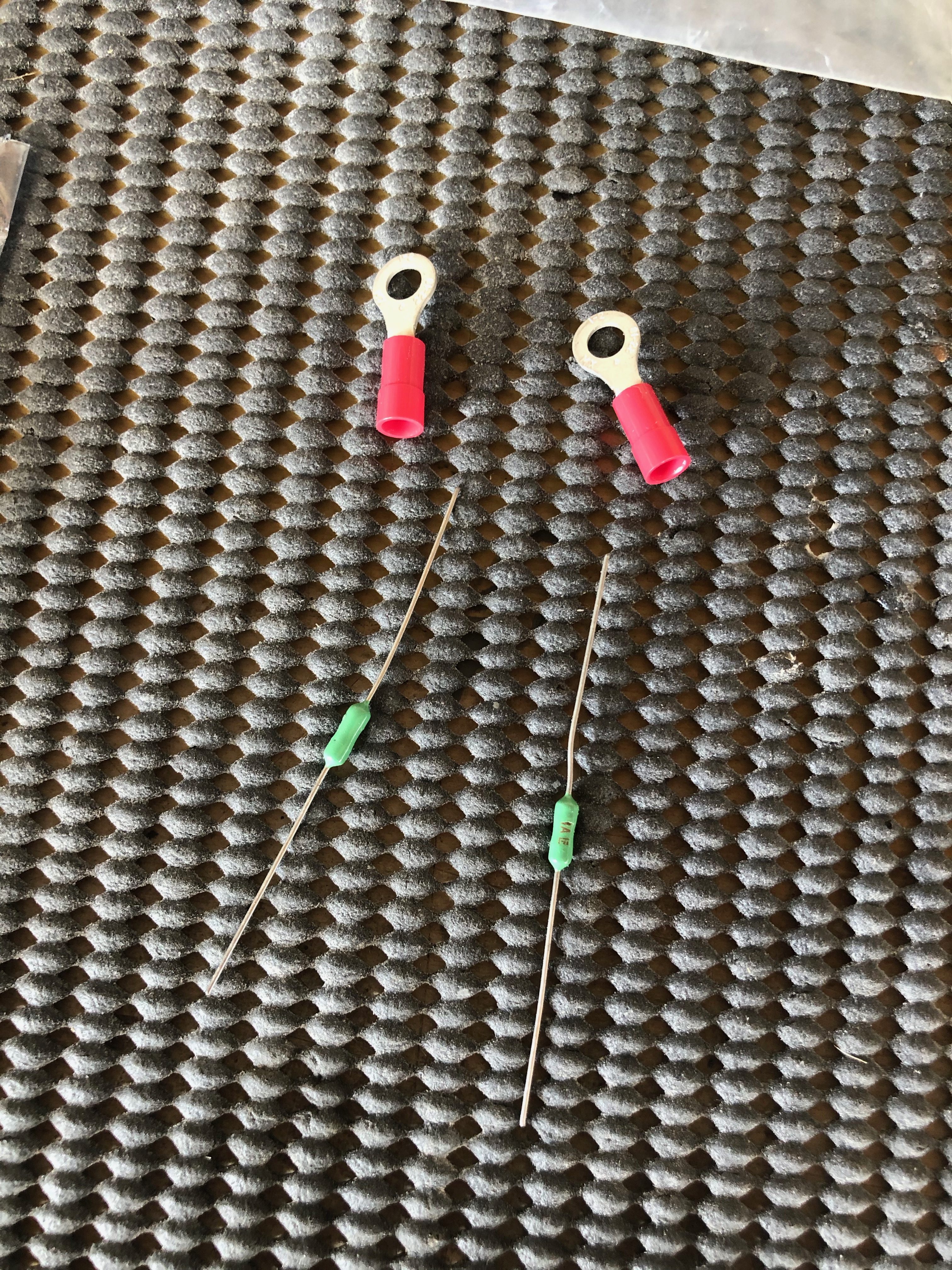
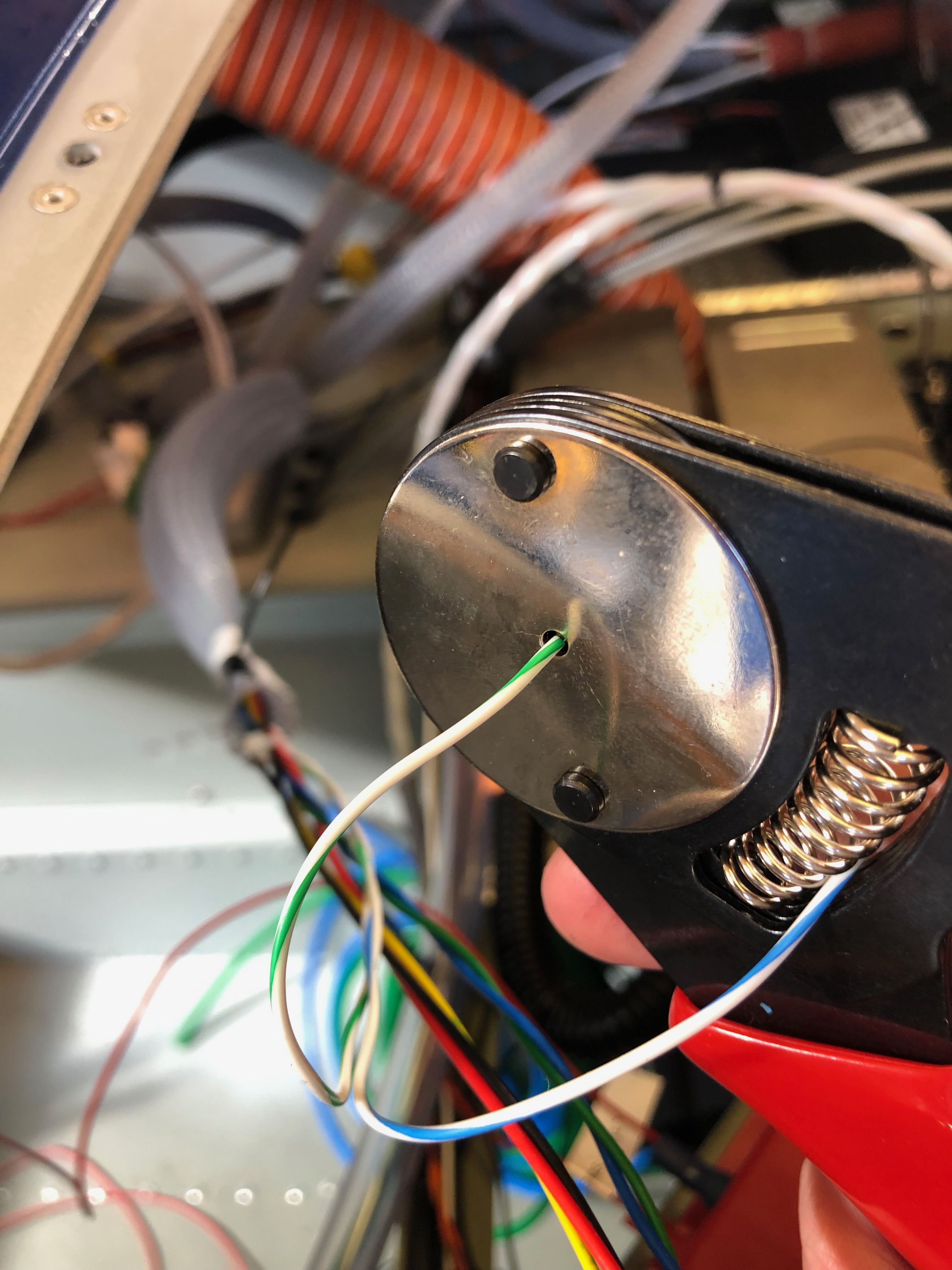
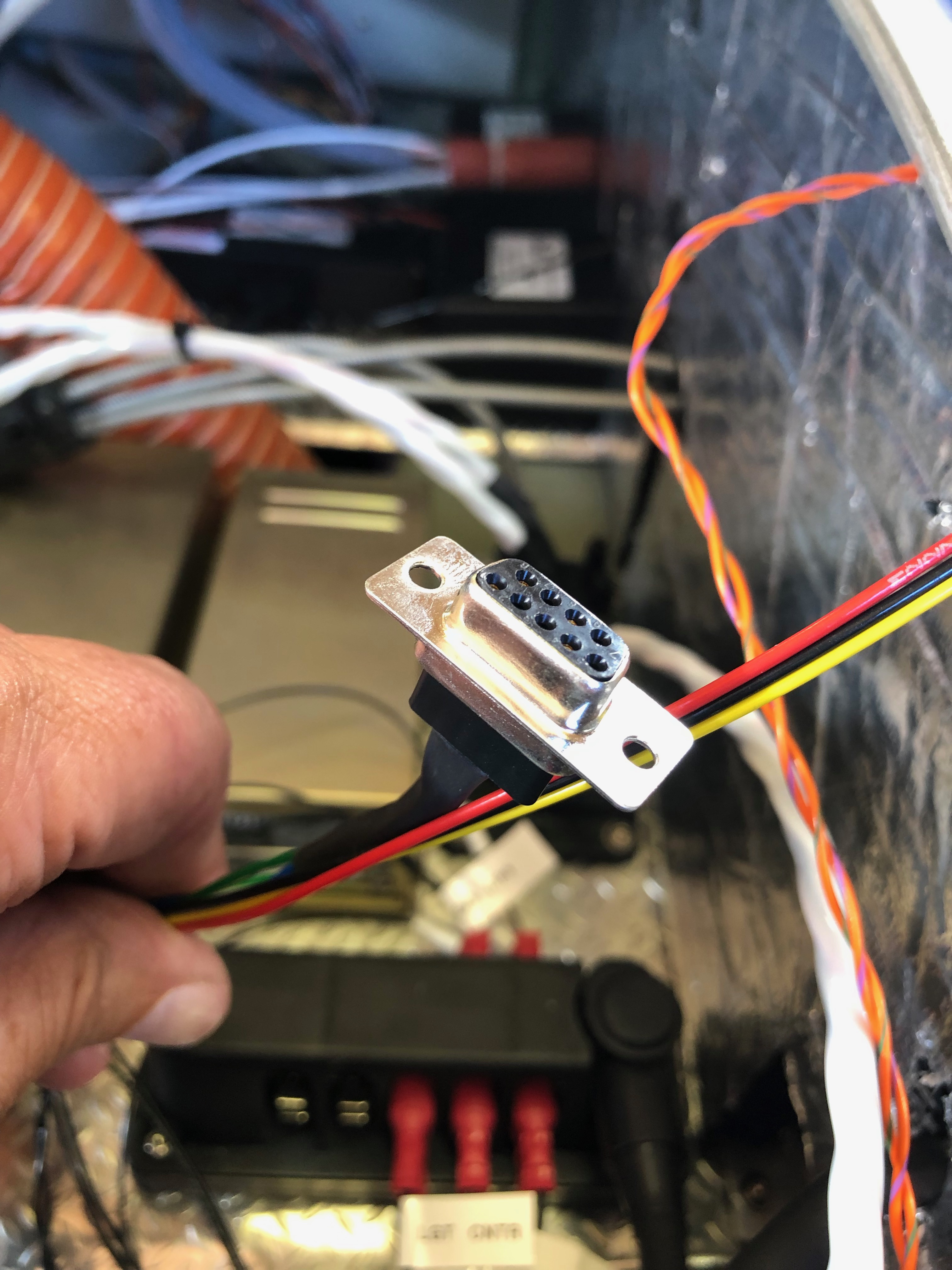
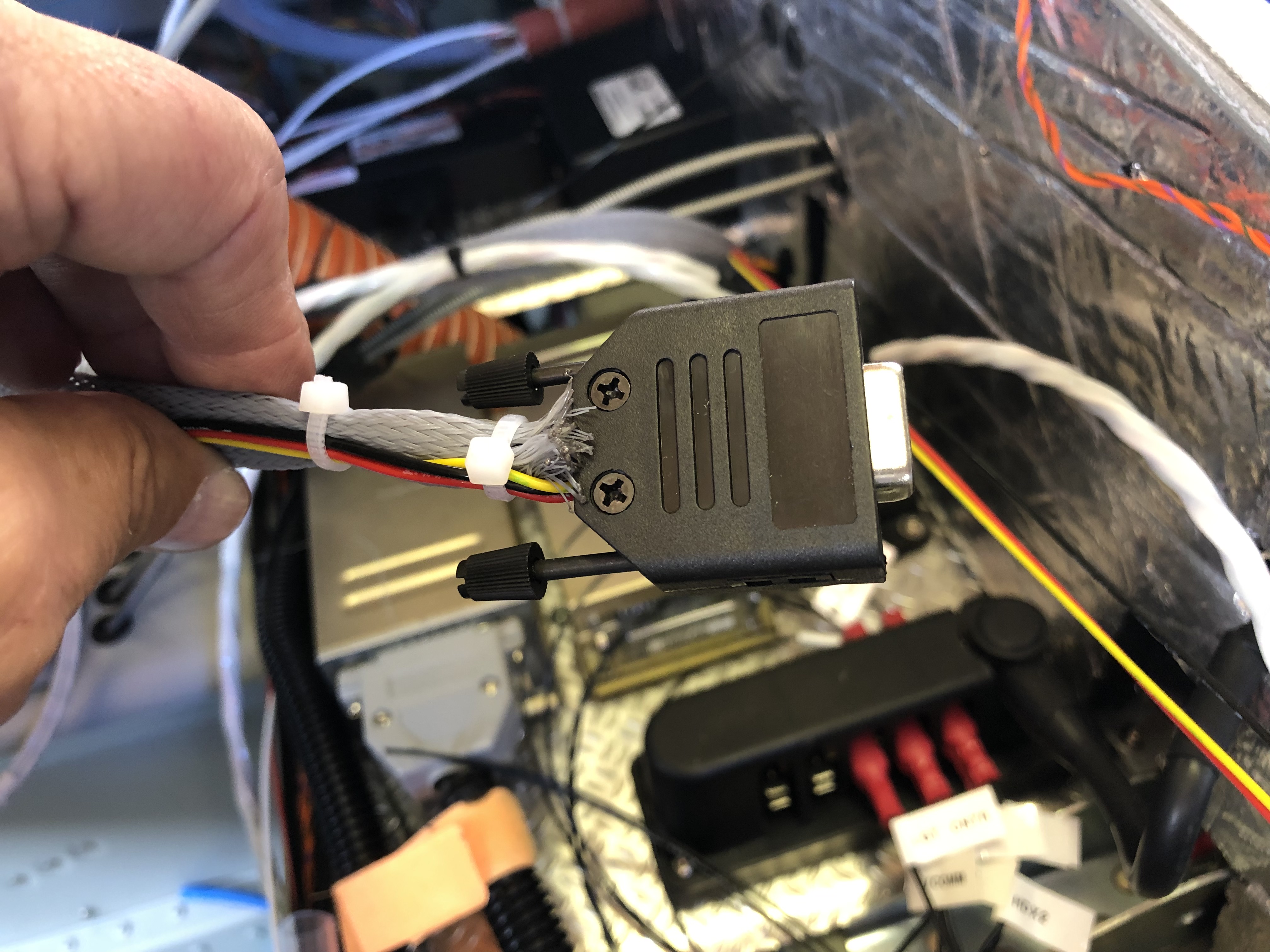
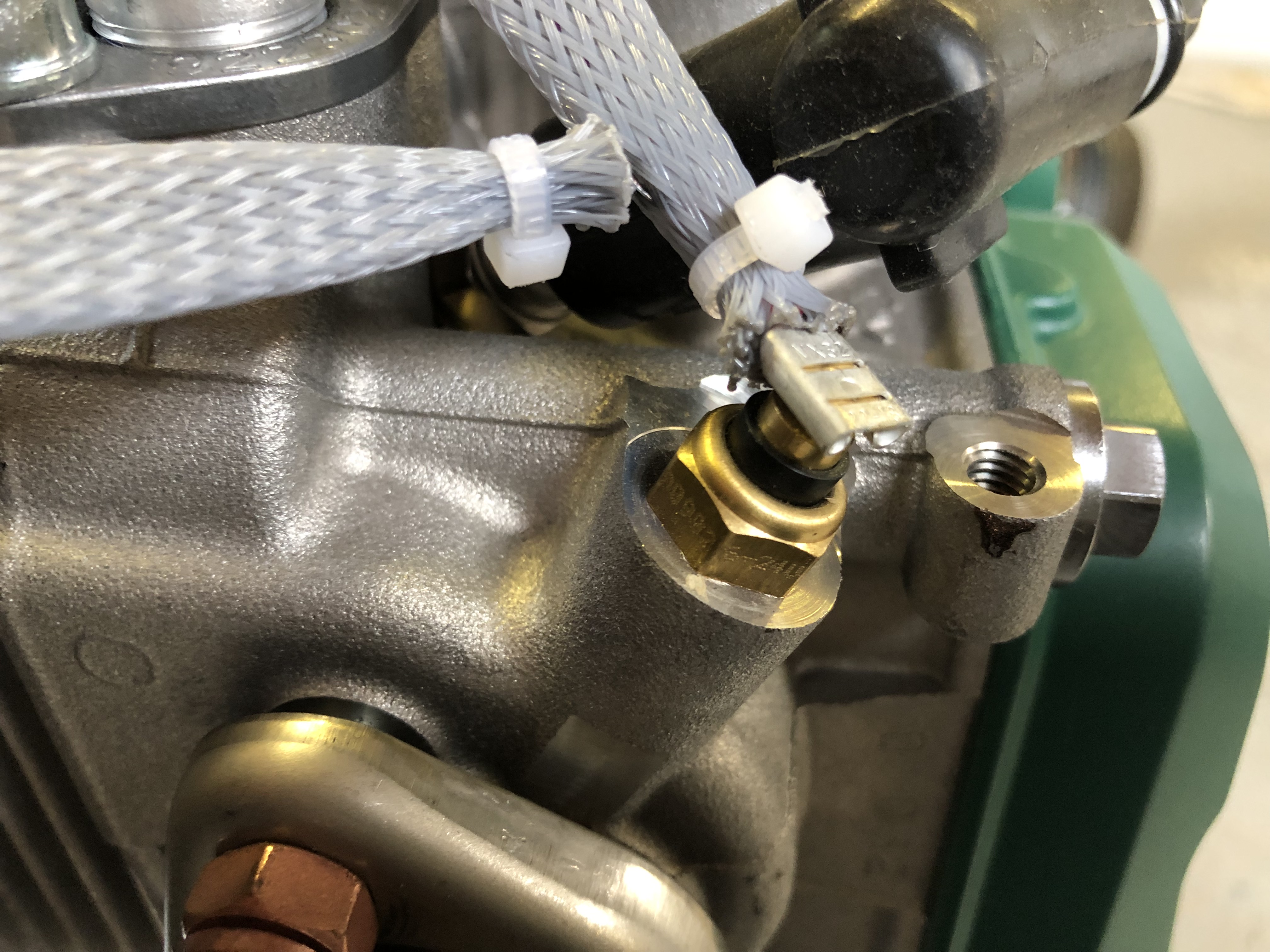
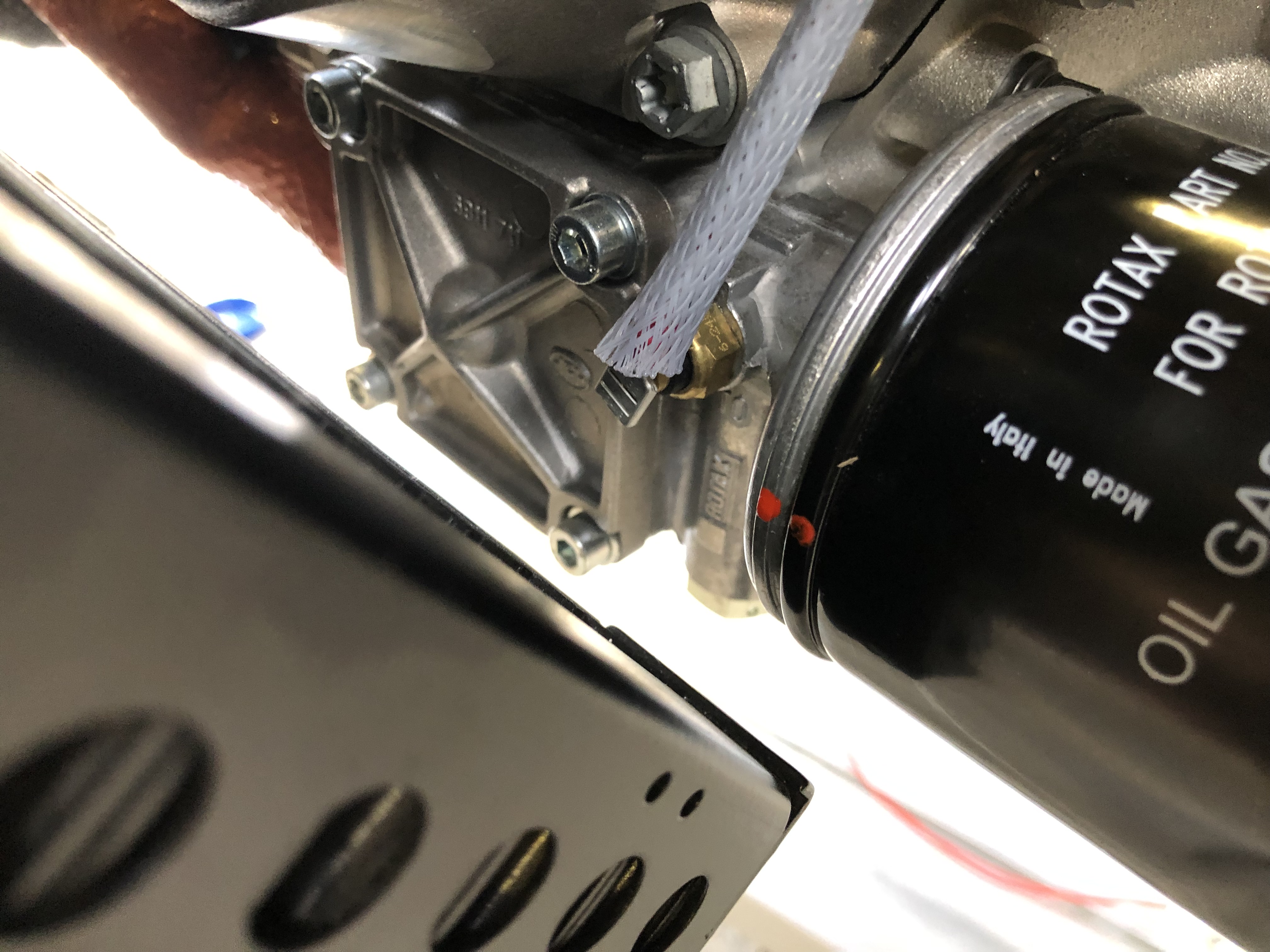
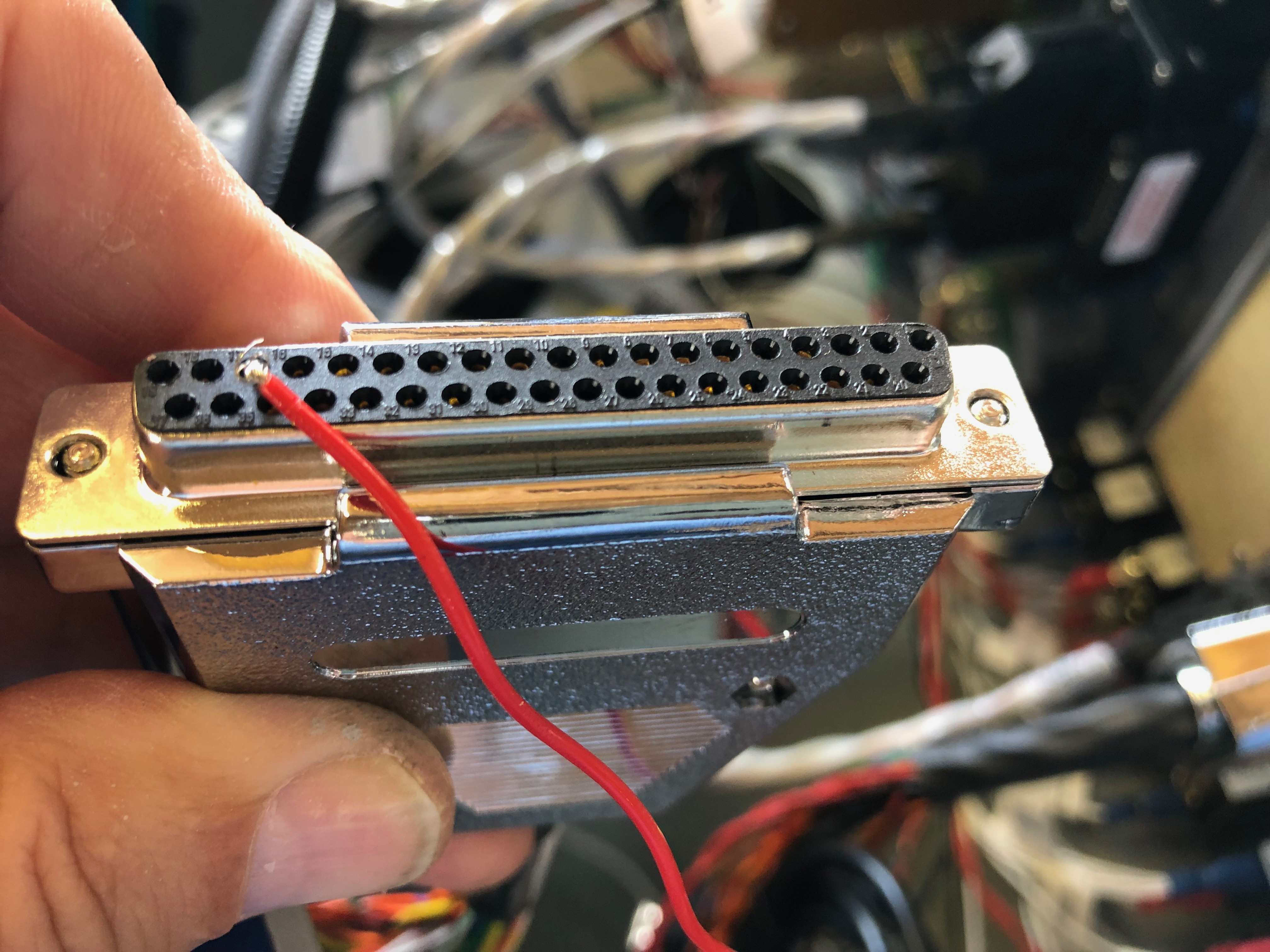
As mentioned previously I need to protect the SkyView from a surge from the Amp Shunt so I’ve purchased some 1 amp inline fuses. They are very small…… and make for a very neat protection solution when positioned inline.With all the wires ‘under the bonnet’ it’s difficult to make it all tidy… …but I layout all wire first to see where best to route them before trimming to correct length and terminating. All these will need to be secured too with stand-offs as required.The servo looms are next. I’ve installed the looms as far as the cockpit and now need to terminate each wire and make up the connector. It requires crimping the pins on each wire with a 4 way crimper.After crimping they are inserted into the D9 block……and the backshell is added. Fairly straightforward but you have to make sure that the crimps are secure. There are two of these, one for roll and one for pitch. Once made up they are plugged onto the SkyView network hub.Next up is to finish off the engine sensor connections. The correct pinout from the D37 connector is identified and the wire routed as described before trimming to the correct length and terminating. In this case a uninsulated spade connector that slips over the sensor connector. This is the LH CHT sensor……and the oil temperature sensor.A quick check that everything is working. The CHTs, EGTs, Oil Temp, Fuel pressure, Oil pressure, Voltmeter, Ammeter and autopilot have now been completed and work as expected.
I decided to visit Air Expo at Booker yesterday but I can honestly say the show was a complete waste of my time. It was raining all day and a lot of the exhibitors had scaled down their stalls and some hadn’t turned up at all! I did buy a Sky Echo II there so I’ll see how that works when I finally get the plane flying.
The aim for today was to continue the wiring and connect a few of the sensors.
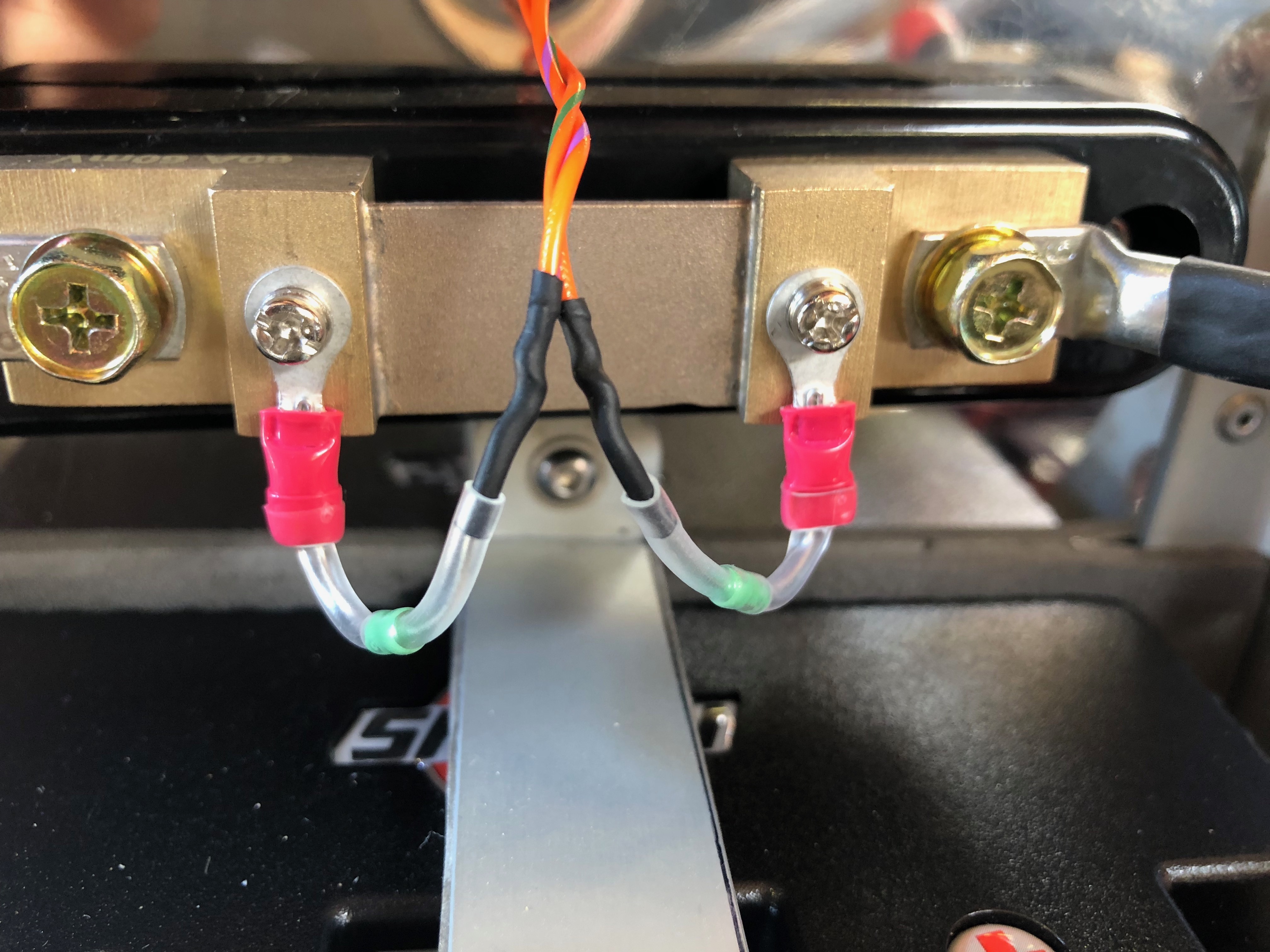
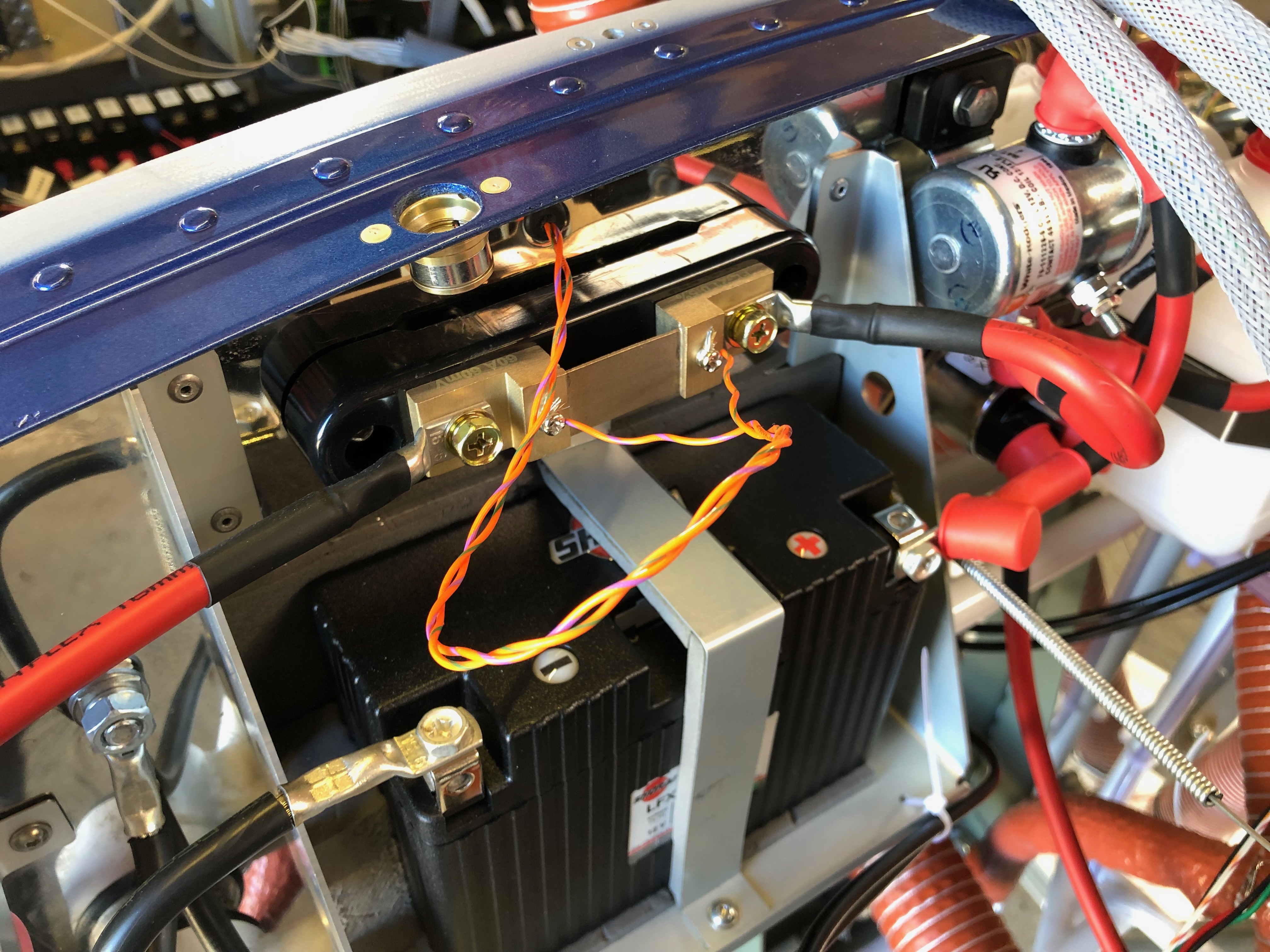
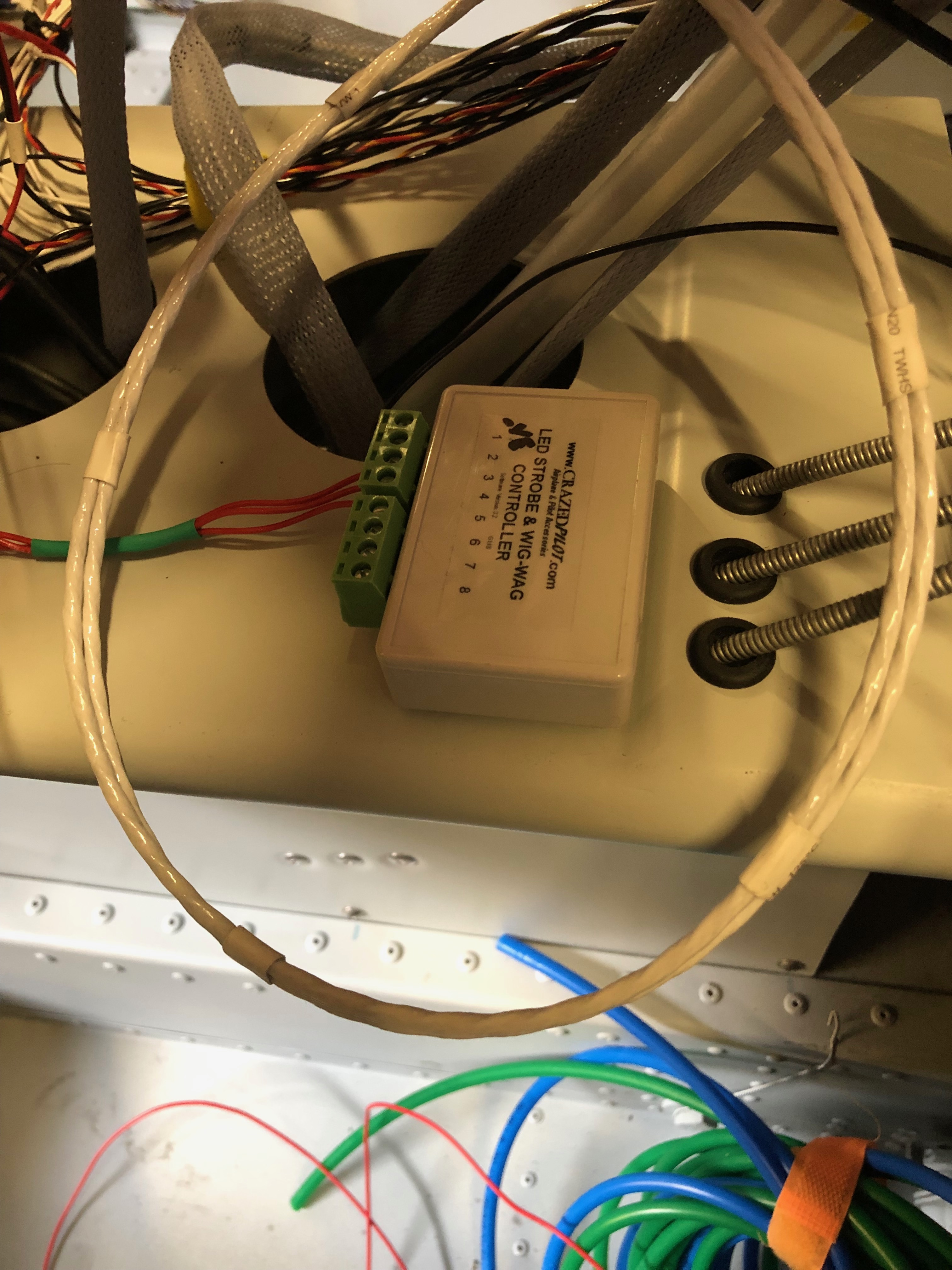
The EMS loom has a D37 that connects to all the various sensors around the aircraft. It’s good to check the pin out with a multimeter before connecting to any of the sensors. First up is the MAP sensor. The power and ground on this sensor can be shared with other sensors so I’ve broken out those pins to use for the the fuel pressure sensor.The system power load can be displayed on the SkyView by measuring the potential difference across a precise resistive load, in this case a Amp shunt. The wires connect to either side of the resister. To protect the SkyView from high currents a 1 amp fuse is connected inline which I’ve ordered and will be arriving Sunday so I’ll fit on Monday.The landing light controller that I bought from the States is wired up to a 3 position switch. I’ve designed the lights to be steady, wig wag and strobe. Hopefully it’ll work as designed.To get the light functions I need a 3 pole and 2 pole switch.The fuel pressure sensor is next but will be done on Monday now as I’ve run out of time.The HDX displaying in s ‘6 pack’ mode but you can see some of the sensors working correctly including the MAP, voltmeter and ammeter readings.
Work continues on the wiring today (and no doubt for a few days more but got quite a lot done today having completed the Master, Fuel Pump, HDX 1, & 2, G5 and Radio circuits.
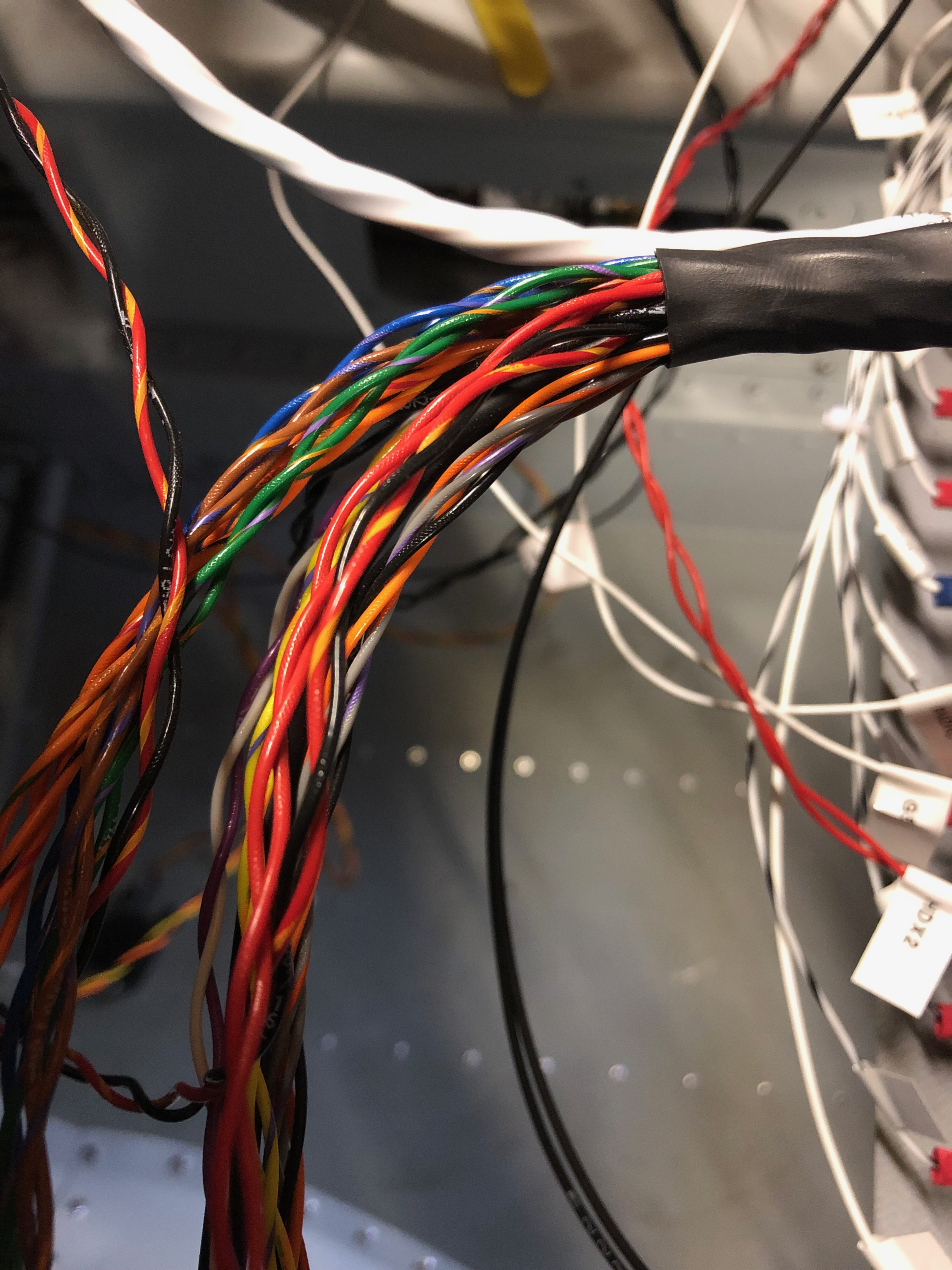
This is the loom for just one of the SkyView HDX screens. It looks intimidating on first looks but they all do something and you just have to work out where they go!The difficult bit was designing the electrical circuit to power all the devices. As I’d fitted the circuit breakers and switches and fitted the interconnecting wires it makes it quite easy to complete the circuit. It’s getting quite busy…so I’m starting to arrange the wire bundles in an orderly fashion as planned.This is the Wig / Wag controller that I bought from the states to give better visibility whilst flying. It allows the landing lights to be steady, flash alternately or flash like a strobe. Just hope it works as promoted!
It’s time to do the wiring. This is going to be long job as there are wires all over the place! There are some things that must be done to make sure that it’s maintainable in the future like labelling as it’s easy to lose track of where wires are going from and to and obviously it’s got to look neat and tidy. First thing is to look at suitable routings for the bundles and make sure they make ‘sense’ then start laying them out. This is one of those jobs that you just have to keep going at and eventually it’s finished!
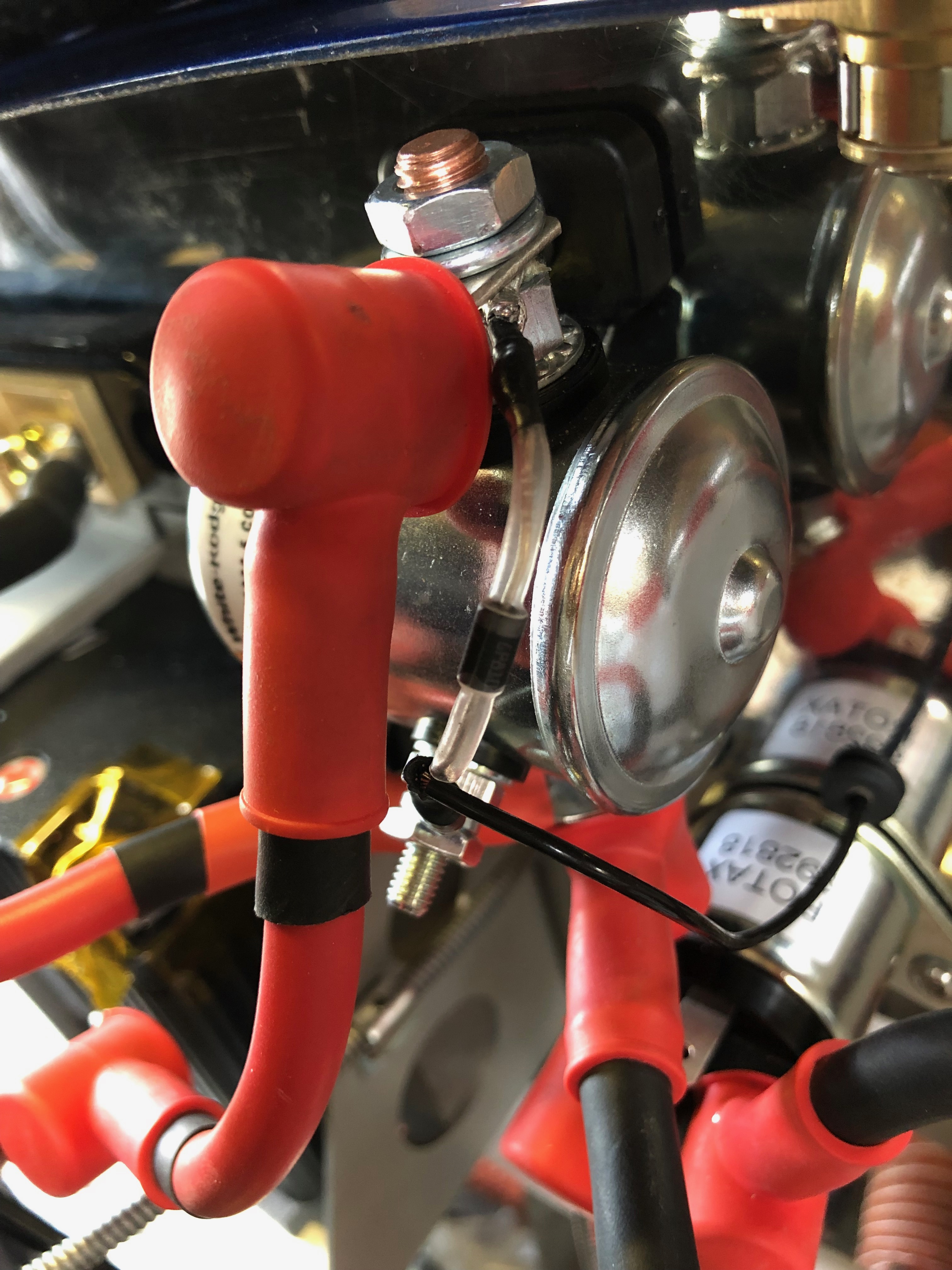
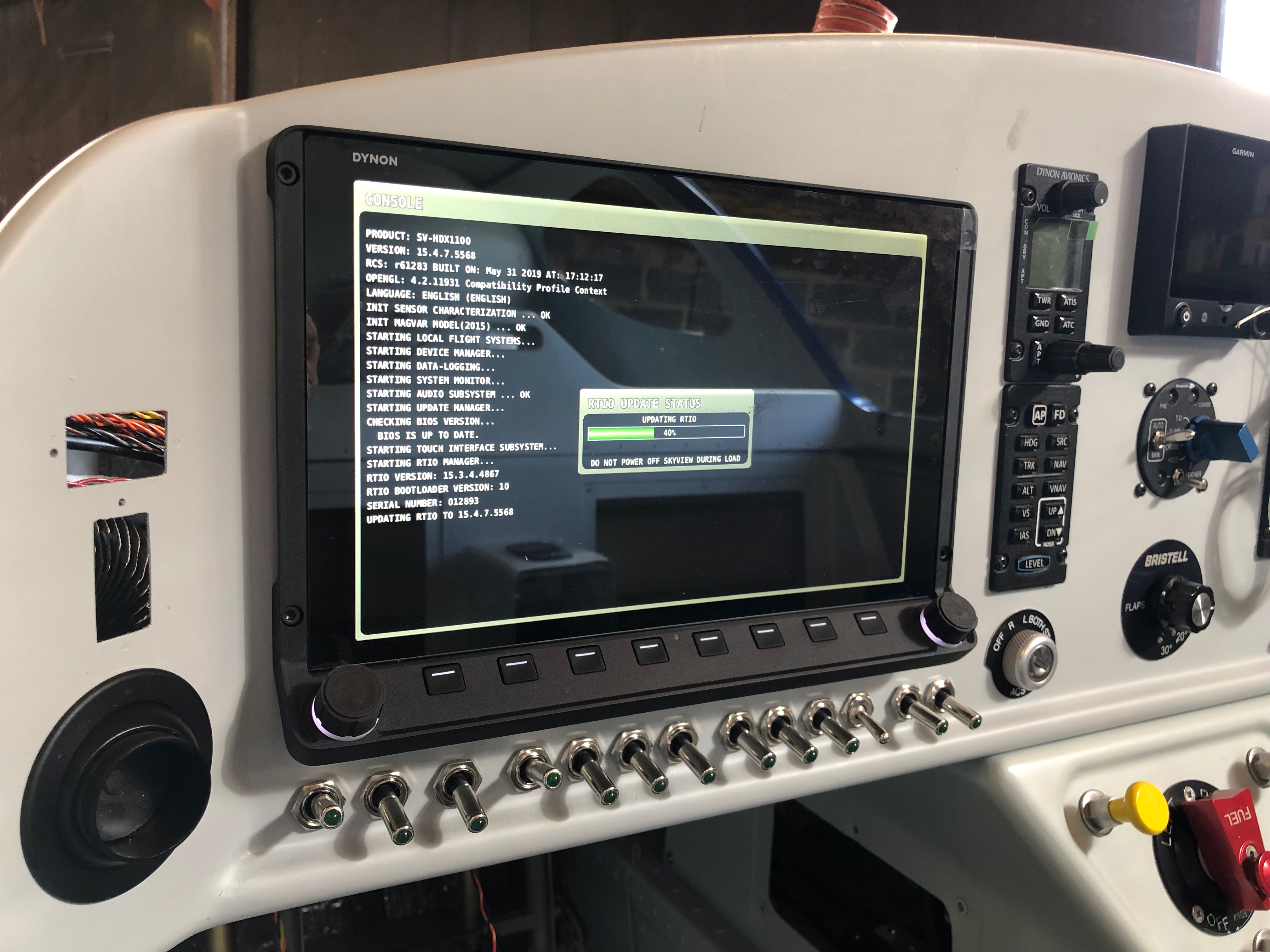
First up is to protect from reverse currents when the master switch is turned off. This is accomplished by placing a diode across the positive and negative posts on the battery contacter.It looks a quite simple but it gets the job done.One of the easy jobs is to run all the ‘earths’ back to the earthing block. After terminating each wire with a insulated female connector a label is attached to the lead. These are just printed off a electronic dymo babbling machine and seem to be suitable for the job. Once the earth is connected, a quick check of the circuit logic and then I can temporarily power up the circuit.Whilst the screen is powered up on main power I thought I’d update the system software to the latest version. The software has a boot loader that updates all the other attached devices like the autopilot and knob panel.Last job today was to run the G5 to GMU11 loom in and secure in place.
Dave came down to spend a day with me to see how the build is going so far and help me with fitting the prop hub and transponder aerial.
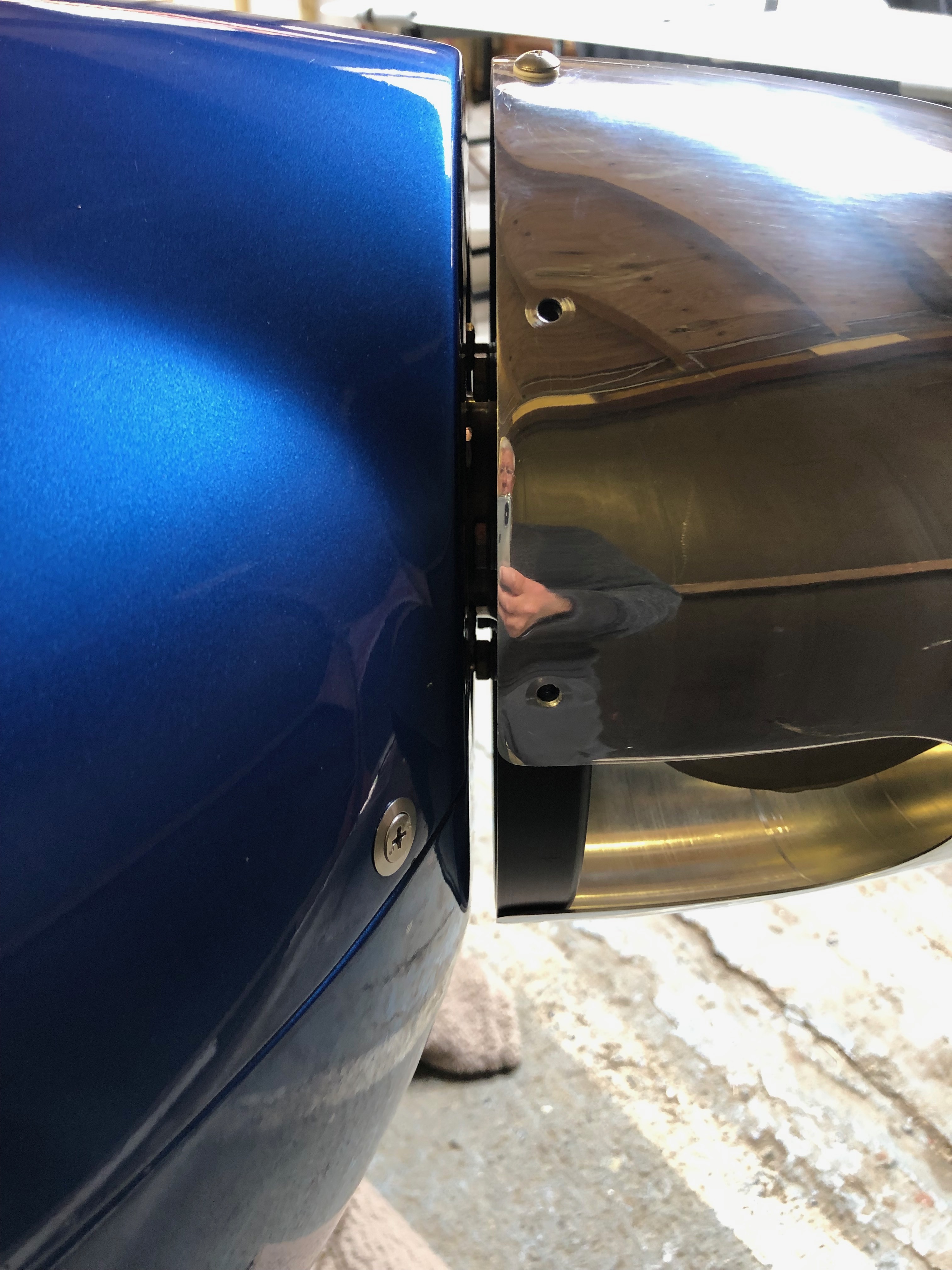
Forgot to attach the panel air vent ducting before I installed the panel. It’s a lot more fiddly i can tell you!Now I’ve received the drive lugs I ordered from CFS Aero I can attach the prop extension to the drive plate. The bolts to attach the extension to the drive plate are 8mm and the bolts to attache the prop back plate are AN5. So metric and imperial in the same installation – how ridiculous! The drive lugs are press fit and have a slight taper so the bolts are used to draw the lugs into the drive plate.The bolts have been lightly tightened before torquing up to 24NM.The mini slip ring control wires are adjusted so they hang just out the of the front of the prop extension.Heat shrink tubing is added to each wire and the hub offered up to allow the control wires to be connected.A heat gun is used to heat the heat shrink and the wires are pushed into the hollow shaft.Some Duralac is added to the lugs that enter the hub to ease disassembly and the bolts tightened.Time to check that I’ve got the measurements right for the prop extension so the engine cowlings are fixed in place.A good fit with an acceptable gap, so shouldn’t rub in service. I’ll fit the blades closer to finishing the plane to save them getting damaged.Next up is to install the transponder aerial. I’ve decided to mount it centrally between the main wheels. Still have to make up the coax for the radio and transponder but going to Air Expo on Thursday so will look to pick it up there.Dave checking out the pilots seat before leaving for home.So most of the main work has been completed so it’s time to start on the wiring. Not sure how long it’s going to take but need to make a tidy job of it and make sure that it’s easy to trace and maintain in the future.
Following the build of my Bristell NG5 Kit No. 382 Registration G-MLSY





















 G-MLSY