I had restricted myself from taking passengers until I had 15 flights in MLSY. This was to ensure that I had fully tested the reliability of the aircraft and got used to its flight characteristics.
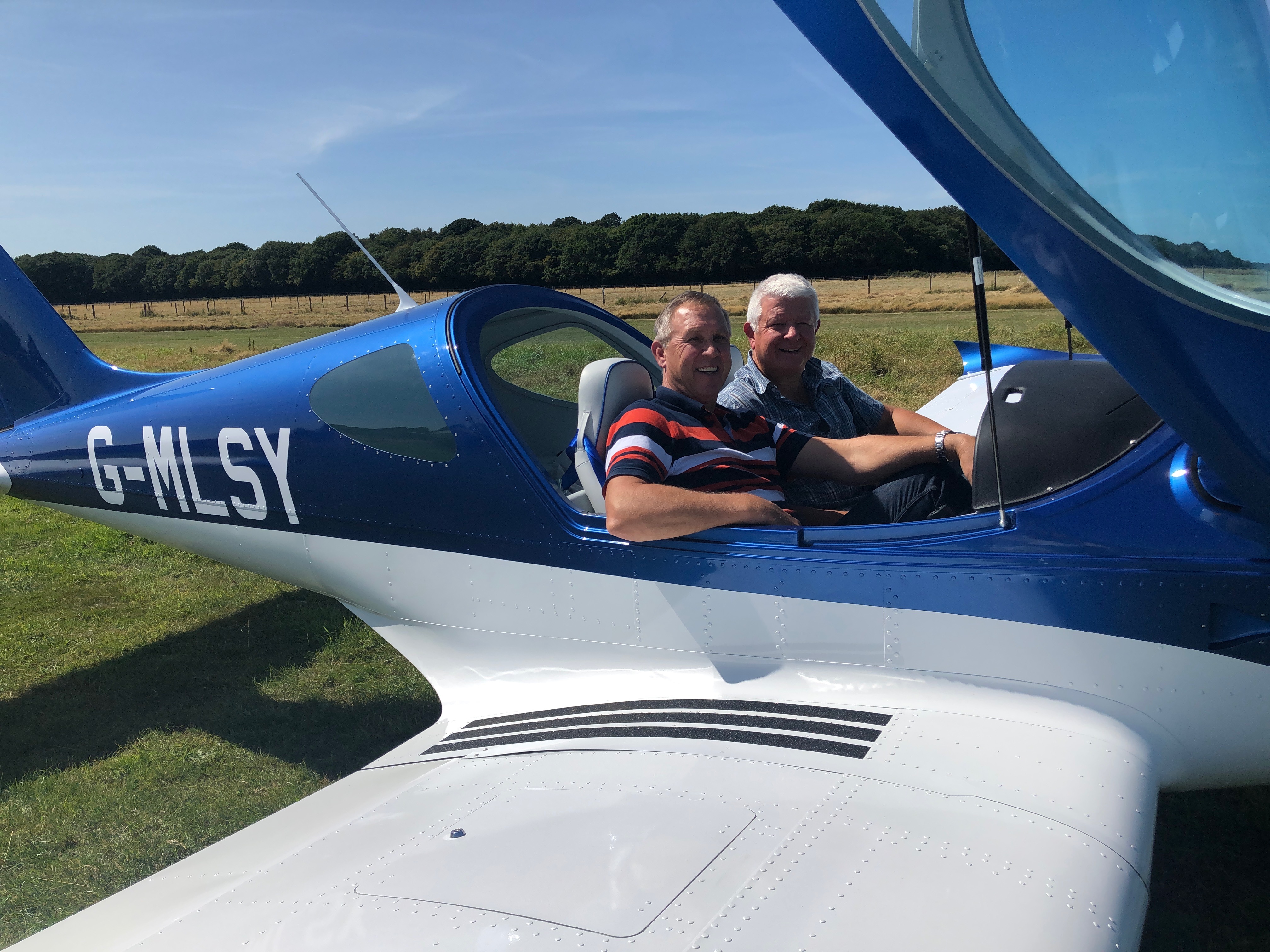
So I looking forward at the weather I saw a window of opportunity to take Karen on her first flight. The weather was good with blue skies and a 8-10 kts of SSW winds quite perfect for runway 20. After preparing the aircraft I walked the grass runway to check its suitability for use. It was slightly soft but ok to use.
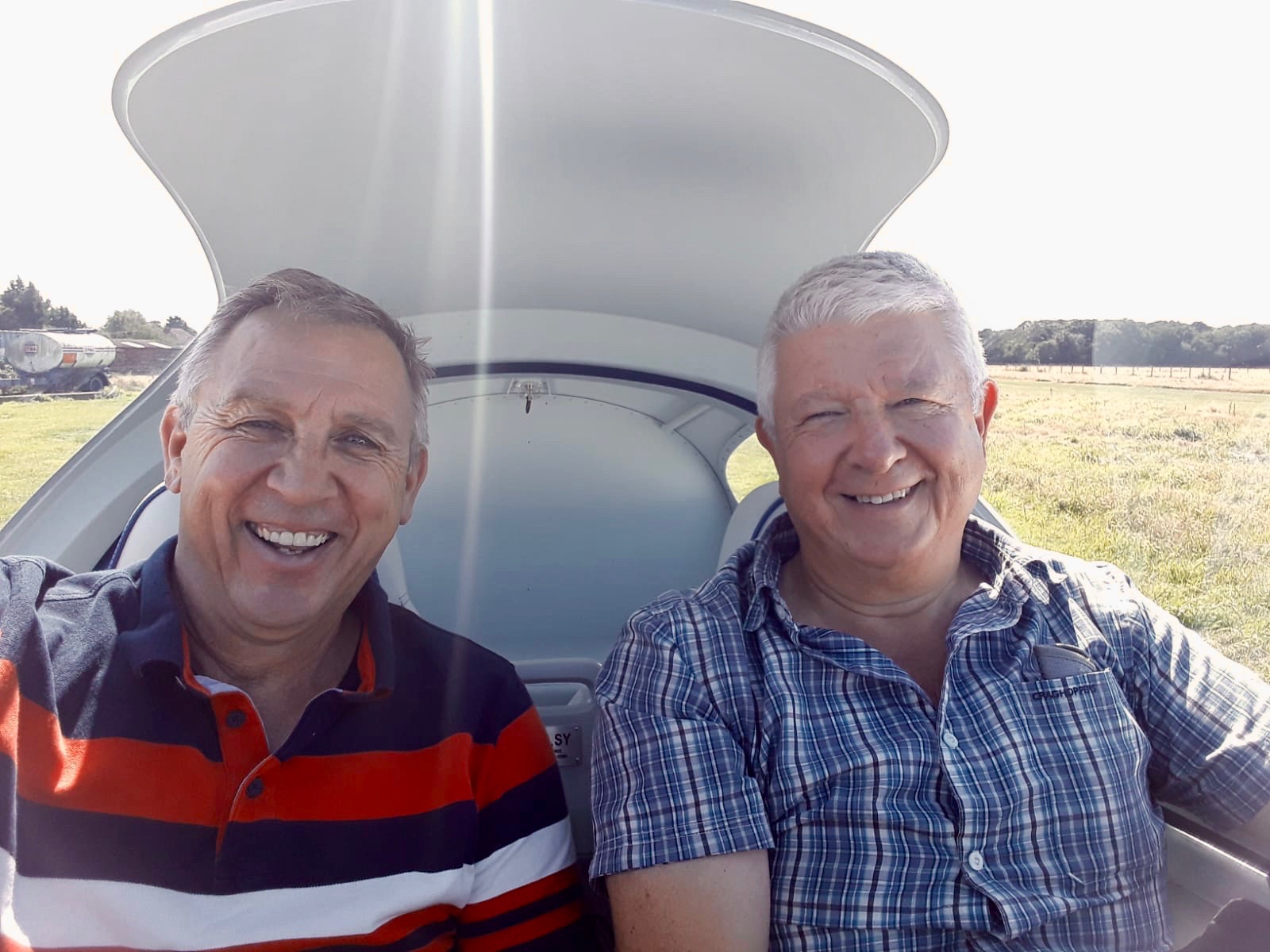
Once Karen was seated and strapped in I briefed her on the emergency procedures and we headed for the runway. Even with the slightly soft runway and ‘two up’ MLSY leapt into the air and we headed for a trip round the coast.
It’s good to see that Karen was taking her first flight seriously! Although someone mentioned later that it’s only a 2 seater!
We flew at 1200′ most of the time and it lasted around an hour. I said to Karen not to worry about taking pictures or videos as I had the GoPro running however once I had landed I found that I had forgotten to start it – doh!
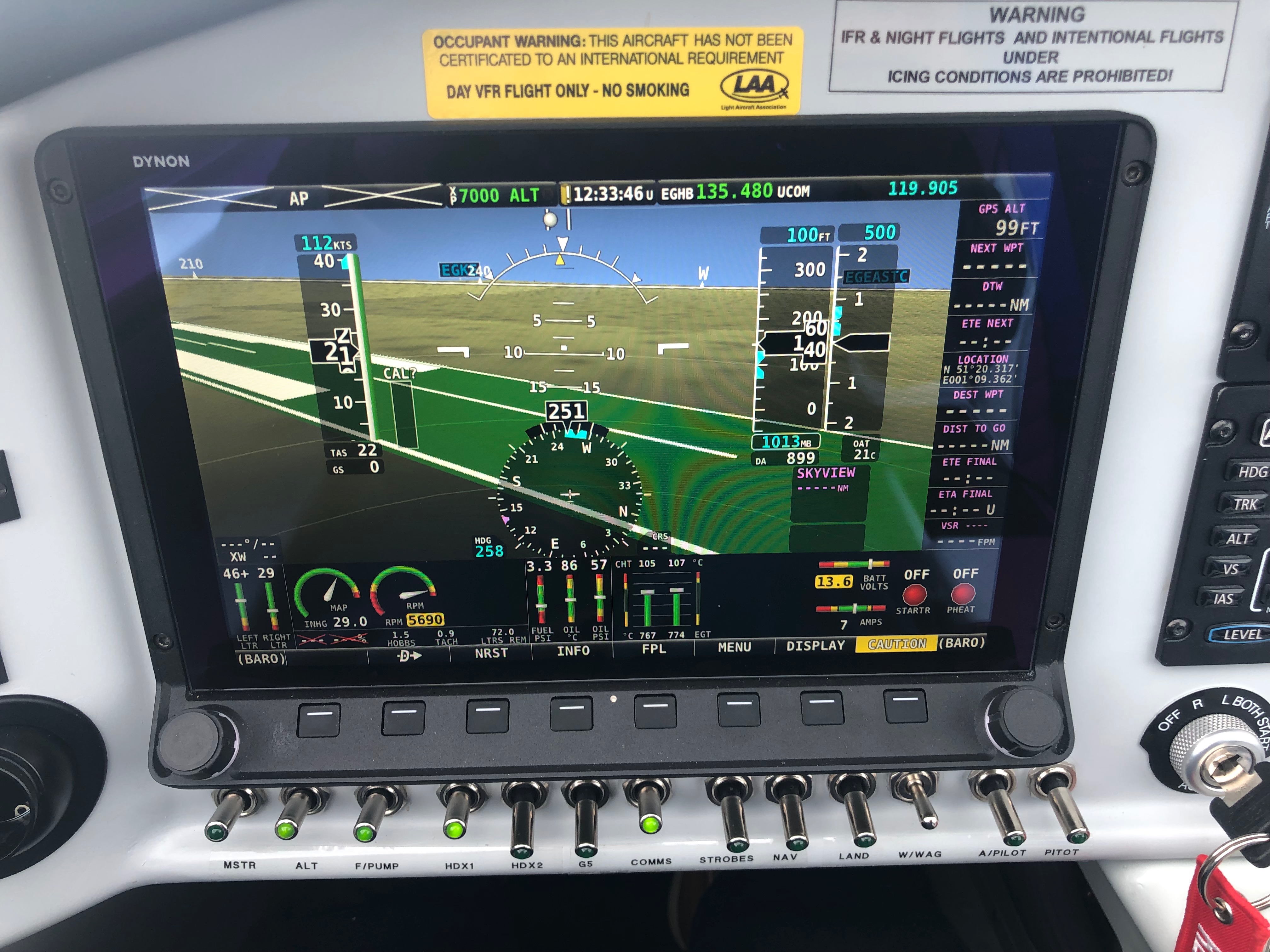
One of the great things about the SkyView HDX EFIS’ is the fact that it records every parameter of the flight. I’ve set it up to record every second which is suitable for what I want.
On approach I noticed that the wind had veered to become a crosswind. The landing proved challenging as the runway conditions further down were much softer. With the top section of the runway coned off I had to flare much higher and ended up running into the soft section and decided to go round. The second approach was better and I landed shorter but still had to taxi through the softer ground so caused some rutting that we walked out.
Maypole was closed two days later after further rain made the runway unusable.
With all the paperwork now complete and sent to the LAA it’s now a waiting game. As I’m away for the first couple of weeks in September it looks likely that the first test flight will be around the 3rd week in September. Hopefully there won’t be any queries and it goes through quickly.
For now I can just get it out of the hanger and give it a run up and down the runway to further test the engine and systems and then give it a good clean afterwards.
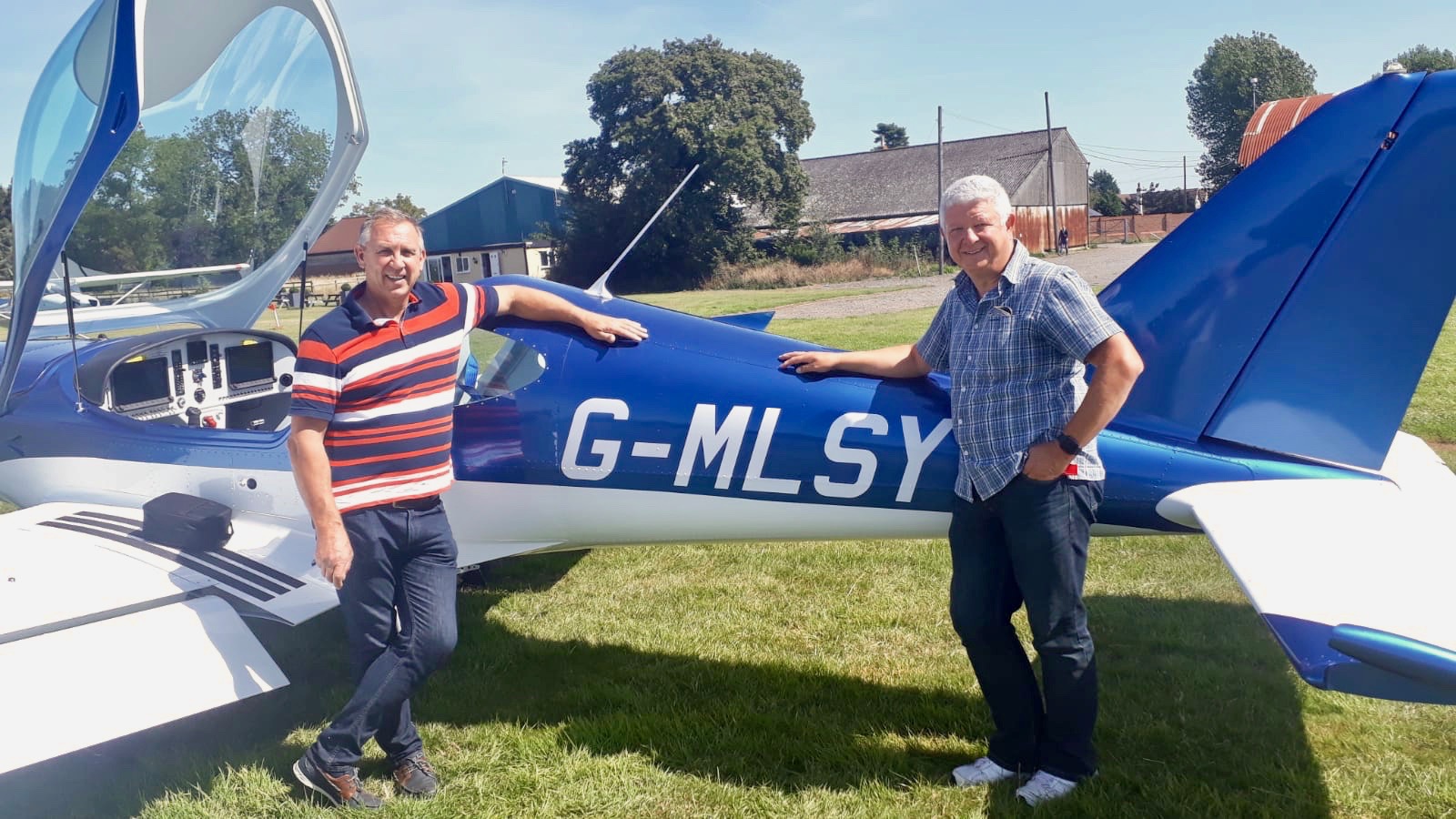
Today, Tom and his Mum came down to visit so Tom got a ‘fast’ taxi run – my first passenger!
Today is the anniversary of gaining my PPL 17 years ago, so it was quite fitting that today G-MLSY is officially finished.
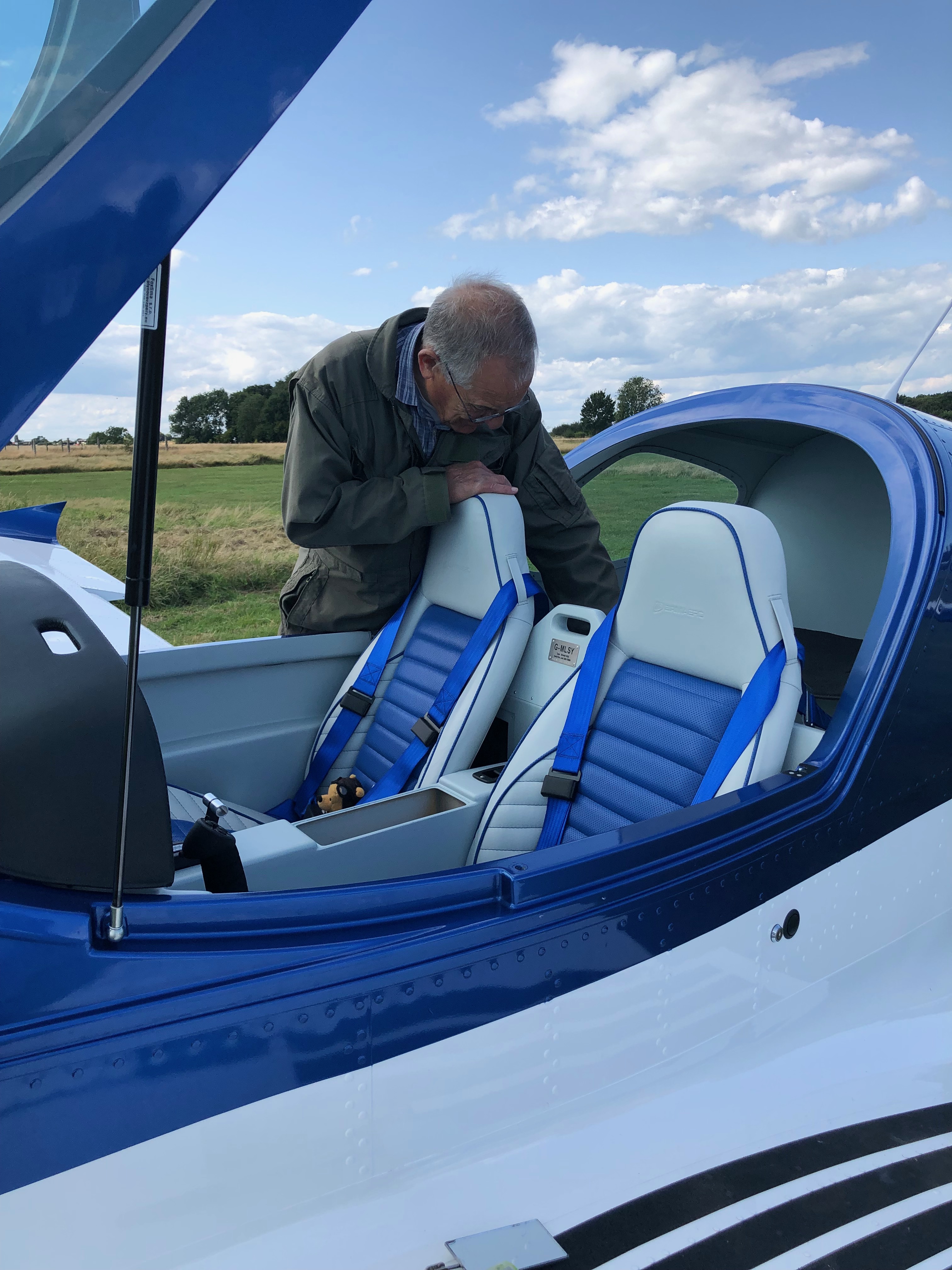
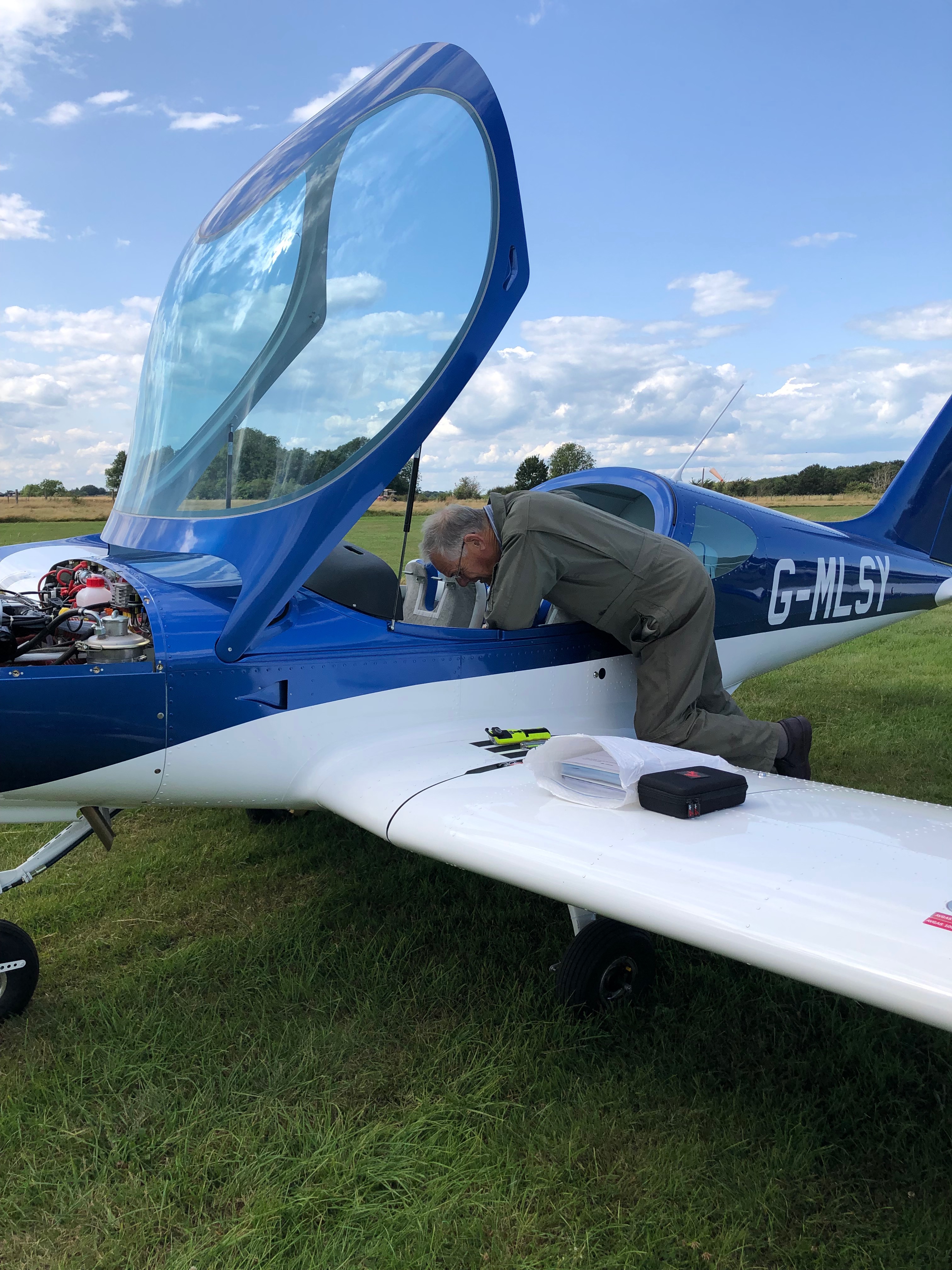
Ian inspected every single millimetre of the aircraft on Tuesday and Graham Smith spent the whole morning doing a very similar inspection and also reviewed all the paperwork that has been completed over the past few weeks before signing it off.
The result was a solid pass with Graham complimenting me on an immaculately built and presented aircraft. Quite pleased with that!
So now it’s time to gather up all the paperwork and check it thoroughly again the then send to the LAA for the “Application for Issue of a permit to Fly’ to allow it to be test flown.
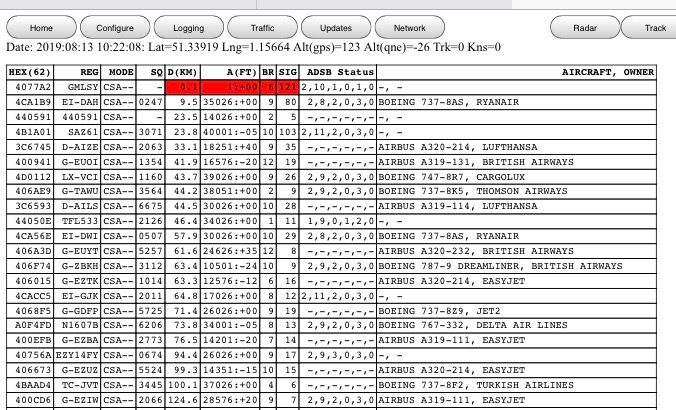
First off today was to get a printout from a PilotAware system to prove that my Aircraft is transmitting the correct codes. This has to be done as a part of the Avionics approvals.Ian starting the inspection. He has already seen every stage of the build as he regularly visited my workshop but this super inspection still needs to be done and all the paperwork associated, done!All the inspection panels are off and the seats are removed to ensure he can get to the autopilot and controls. This inspection took all day. Graham and I had to carry out a joint inspection before he could sign it off the final, final inspection sheets but it’s all good The only thing I forgot to do was take a picture of him doing it!
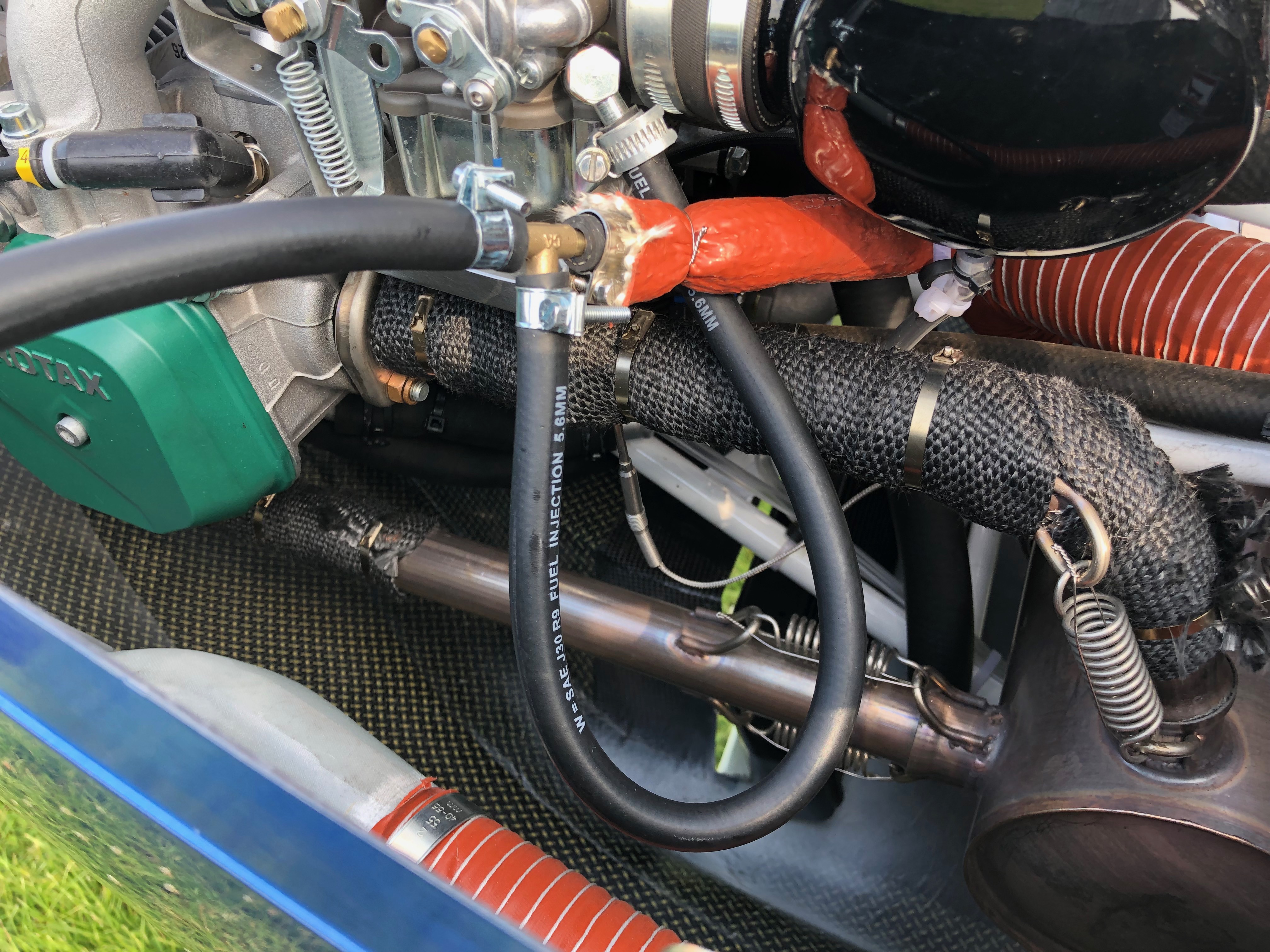
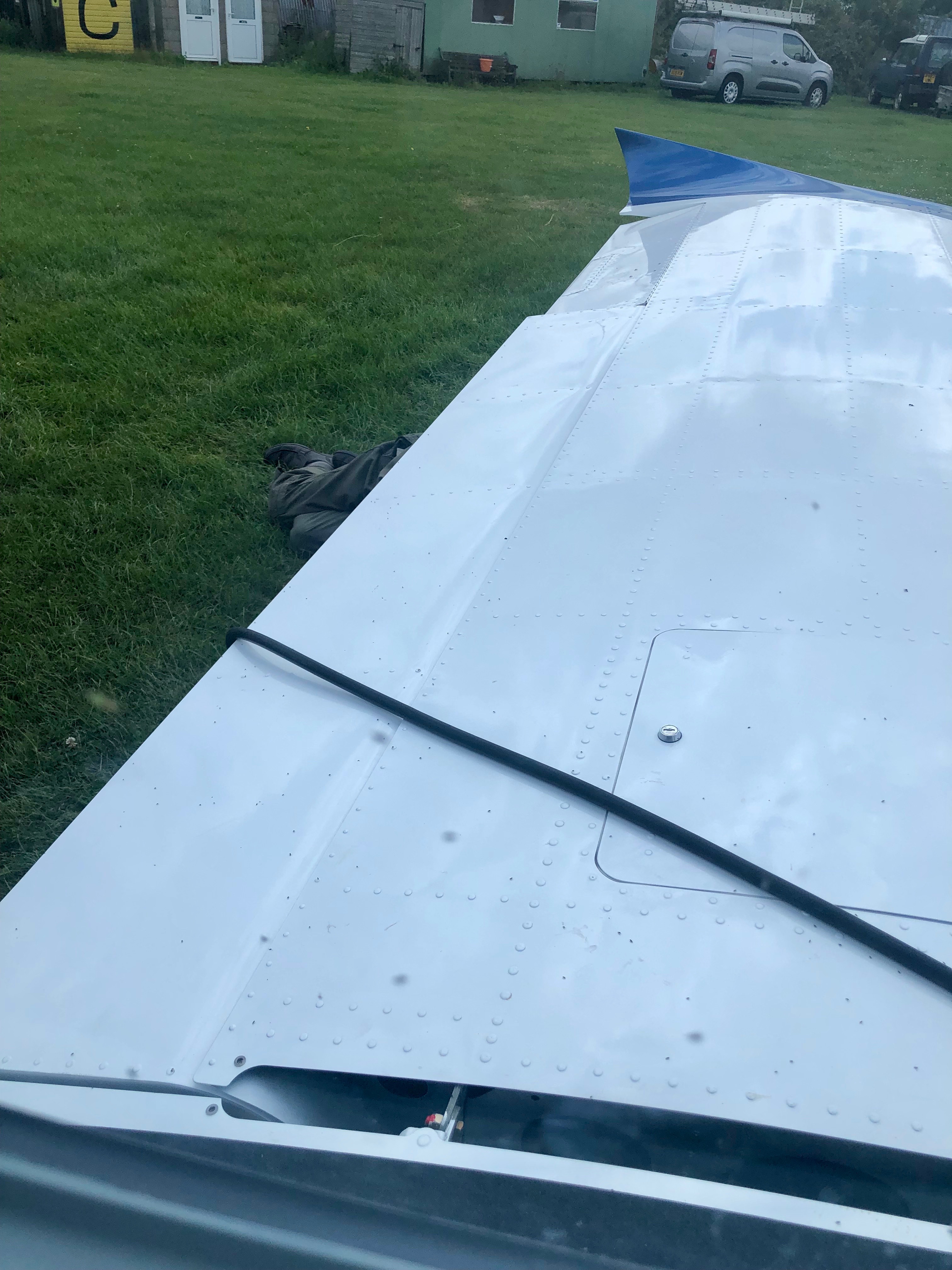
One of the jobs that I’ve not looked forward to is the fuel flow test. Not because it’s difficult or complicated but more that it seems dangerous. It involves taking a feed off of the carb line and running a long pipe away from the engine and prop. Several timed measurements take place using the electric pump on it’s own with the engine stopped, one with the engine running at full bore using just the mechanical pump and one with the mechanical and electric pumps working together. The aircraft has to be choked and Ian offered to do the work outside the cockpit. We used radios to signal the start and stop of each engine run.
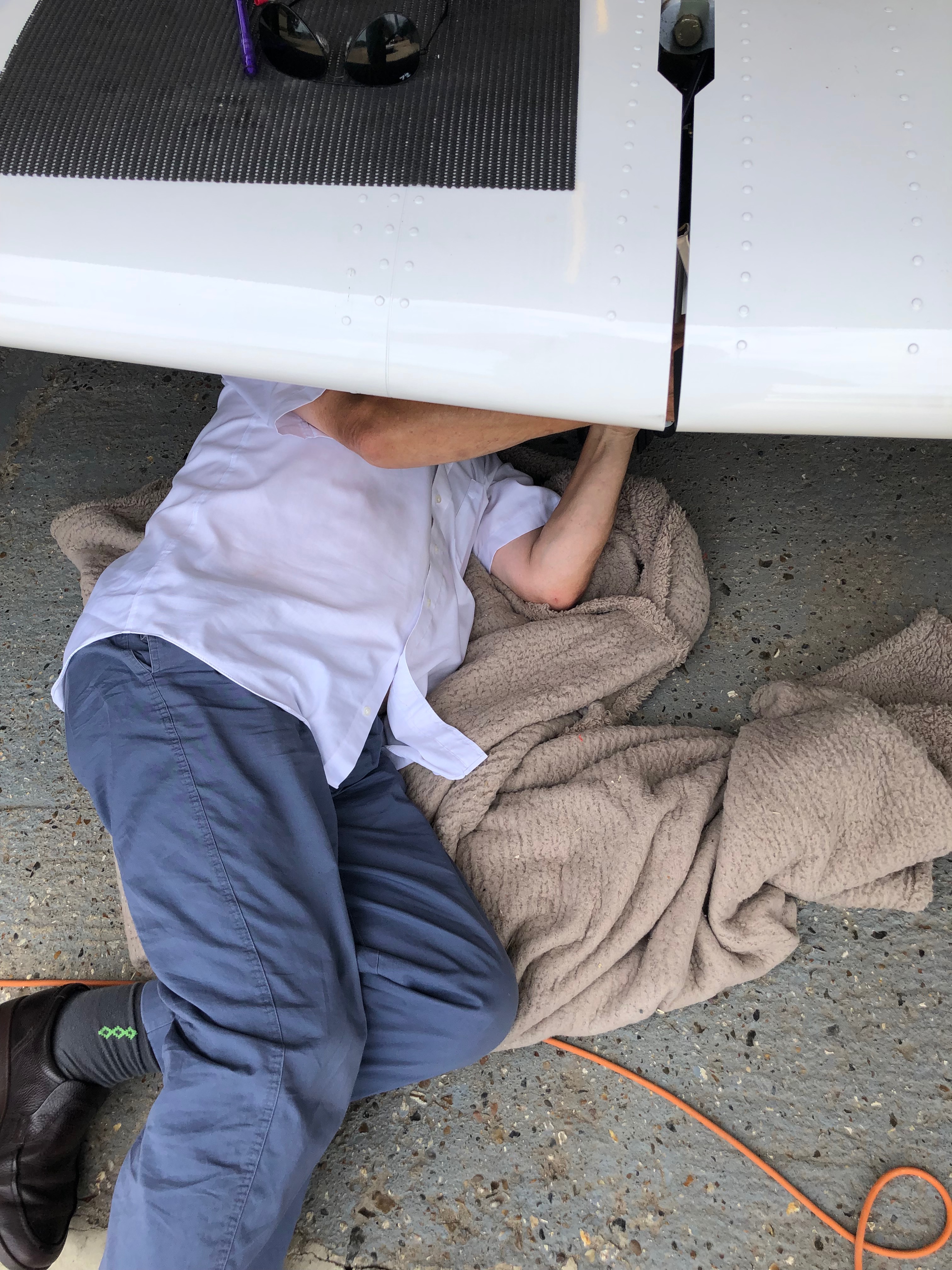
The run off from the carb fuel line using a ‘Tee’Ian hiding under the wing carrying out the fuel & time measurements. For the electric pump only run the amount that needs to flow is 125% of the maximum litres per hour for the Rotax. For the measurements where the engine is running at full bore, 27 litres will be used by the engine before any excess is collected so the excess should be 25% of the maximum per hour fuel amount so were expecting 6.75 litres as a minimum.The T&Ps at full chat look ok and the fuel flow results are far in excess of what’s required. Poor Ian need a new set of ears now though!
With only a few things left to do one of them is to set the control surface deflections. On the face of it, it’s an easy job but it requires a differential movement from fully up to fully down. Due to that specification there’s more than one place to adjust. It requires a bit of juggling to get it right and in the heat of Thursday it wasn’t the day to do it.
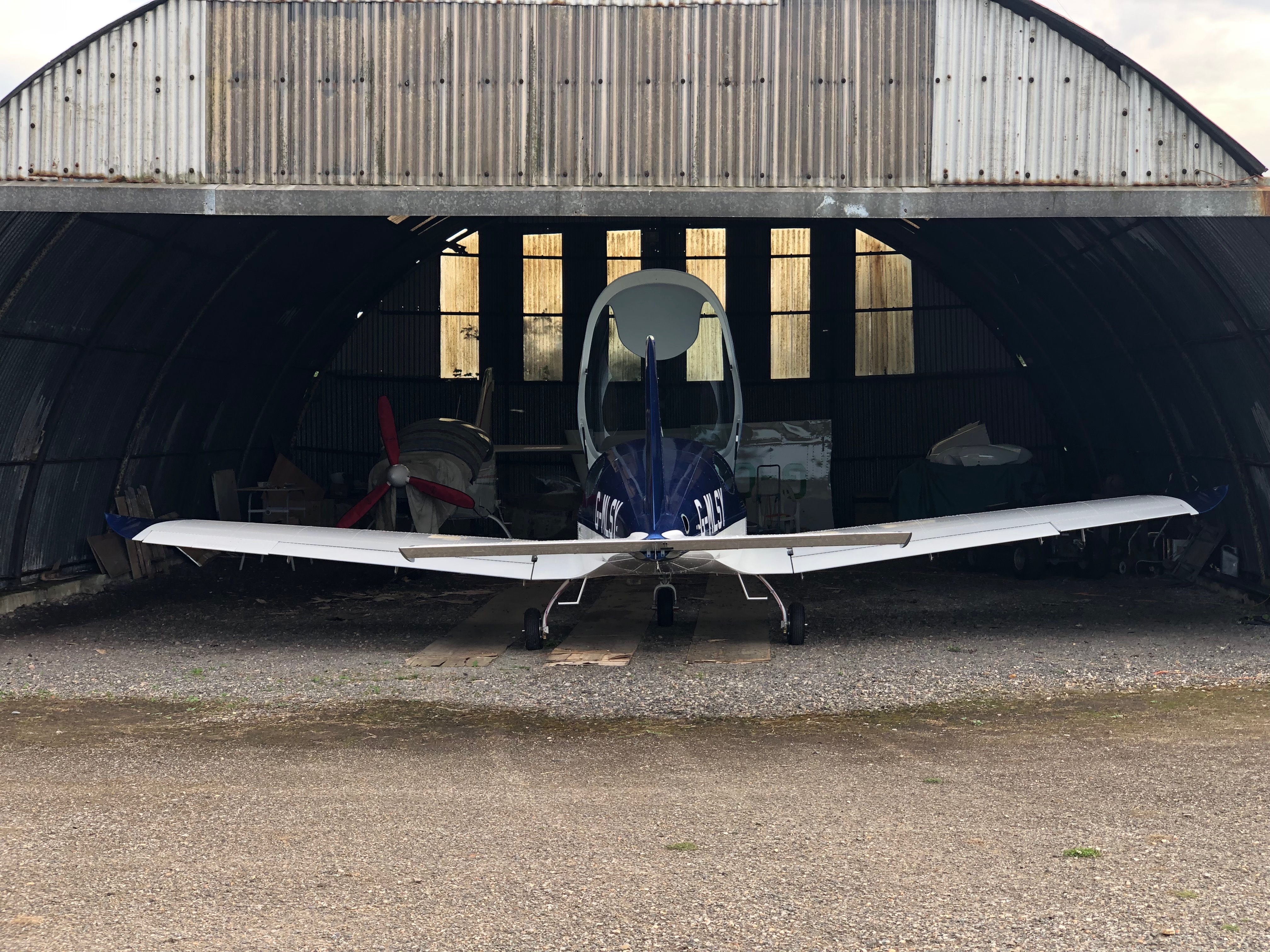
One of the adjustment points in in the rear of the aircraft with a very small inspection panel to undo nuts and make the adjustment. It was very tricky and time-consuming but got there in the end. I used an iPhone inbuilt app for the level that was then checked by Ian who has a digital protractor. Amazingly the iPhone reading match Ian’s readings +30 deg -15 deg.Ian came round to ask if I wanted to run the engine today as he’s away Monday and Tuesday. With the temperatures very much lower today it seemed a good idea so we got on with checking everything was ok before taking it out of the workshop.The workshop ceiling was far too low to fit the canopy so needed to do it once it was out. It took a lot of jiggling to get it out of the workshop and now it’s out it won’t be going back in! Out on the grass away from all the stones and Pete Sharpe recording the event on my iPhone it’s time to do a final check before the first start. The electric fuel pump was switched on to check for leaks from the fuel system, all seems ok. First time in the cockpit for real so another good check to make sure every thing is working as expected. Ian is standing by just in case anything goes wrong with a radio and fire extinguisher!Canopy down, calling “CLEAR PROP” as I turn the ignition key and my baby burst into life on the very first turn – I can only shake my head in disbelief – Amazing!Watching the Ts&Ps as the engine is running Ian does a walk round to check for any obvious problems but there aren’t any. It’s running as sweet as a nut.After being told to smile I look up as one happy chappy… Ian prompted me to taxy the aircraft to spread the noise about a bit so I did a few runs up and down the runway checking brakes, steering, instruments, pitot system and then power checks. All very good apart from the flys on the firewall. Ian carried out a further check once the engine had stopped but all was ok and there were no problems.A very empty workshop. It seemed big enough when I first started but as time went on it proved to be too small to house the aircraft on a permanent basis.So this is where G-MLSY will be for the weekend before being moved to its new position in the main hanger.
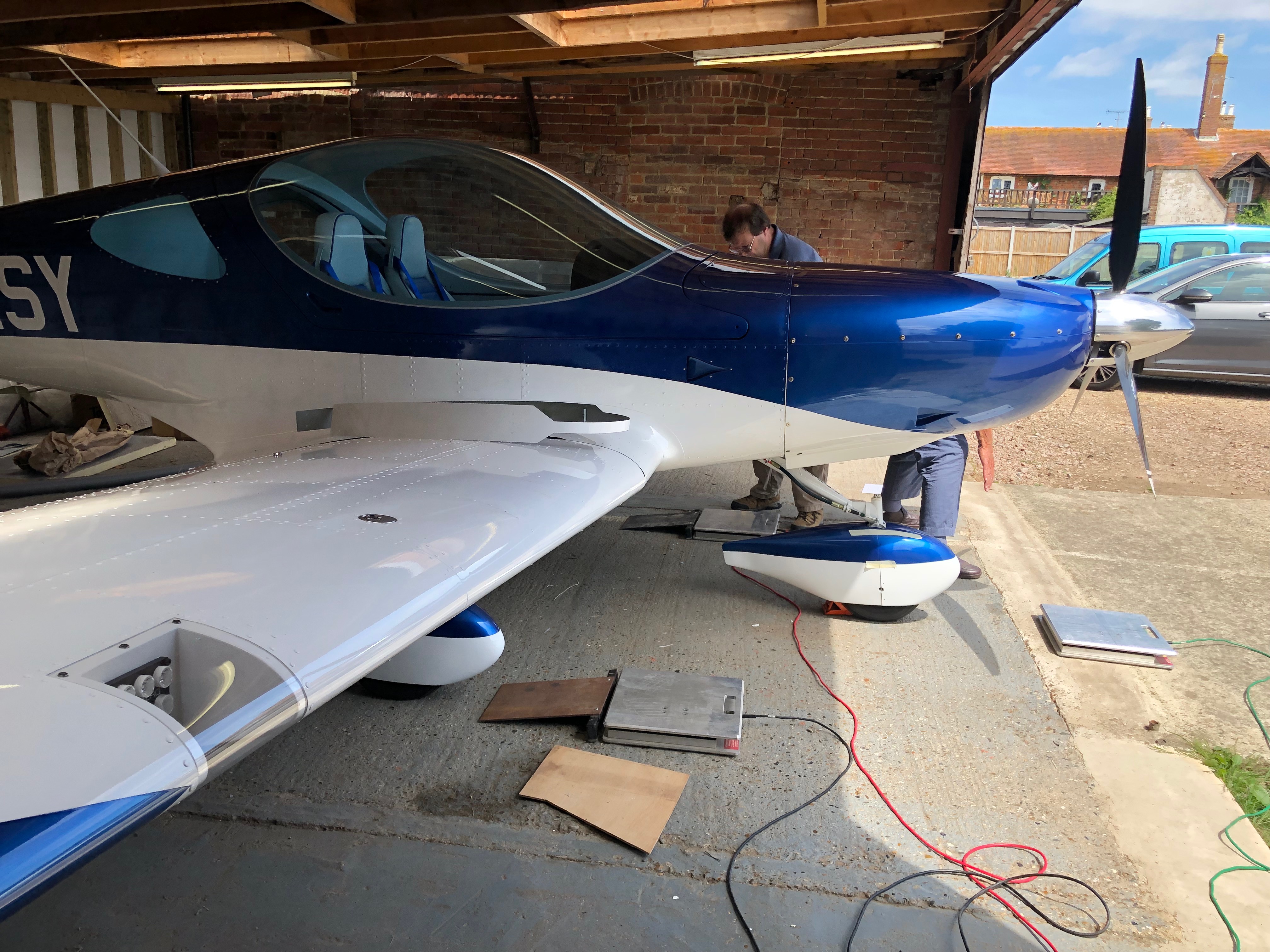
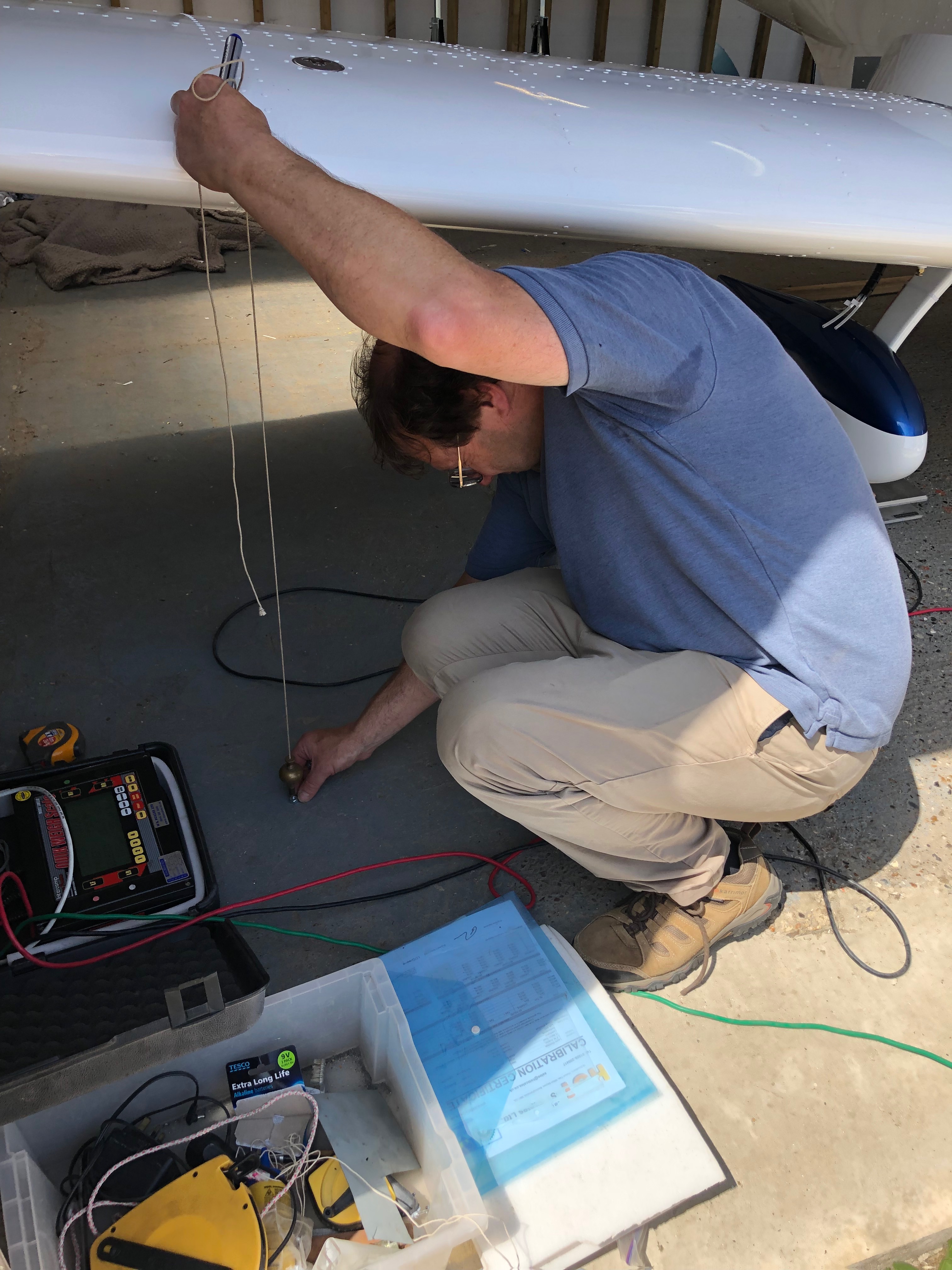
Weighing day today! Pete Thomas a good friend from the London Gliding Club offered to come down to weigh G-MLSY and today’s the day!
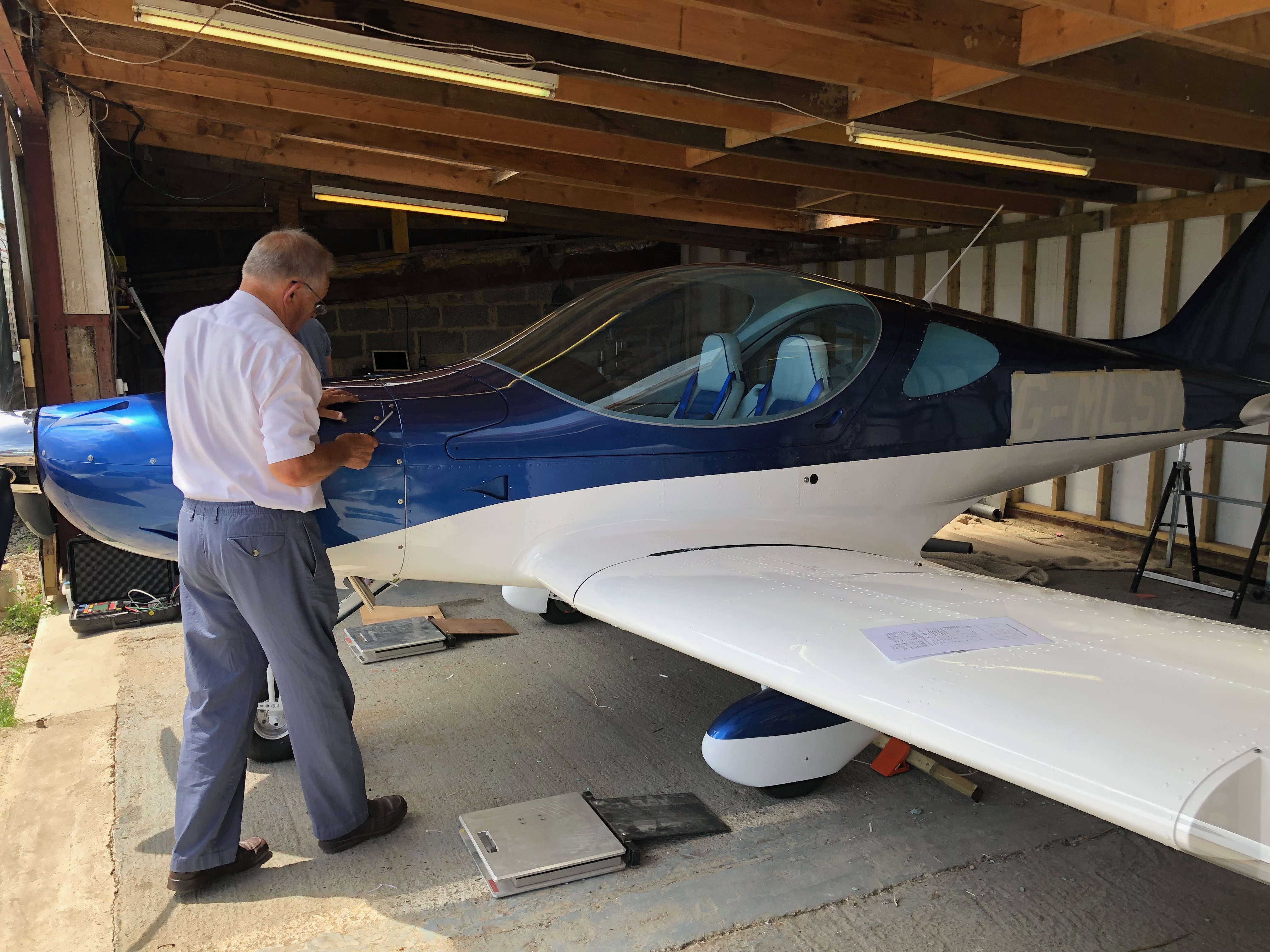
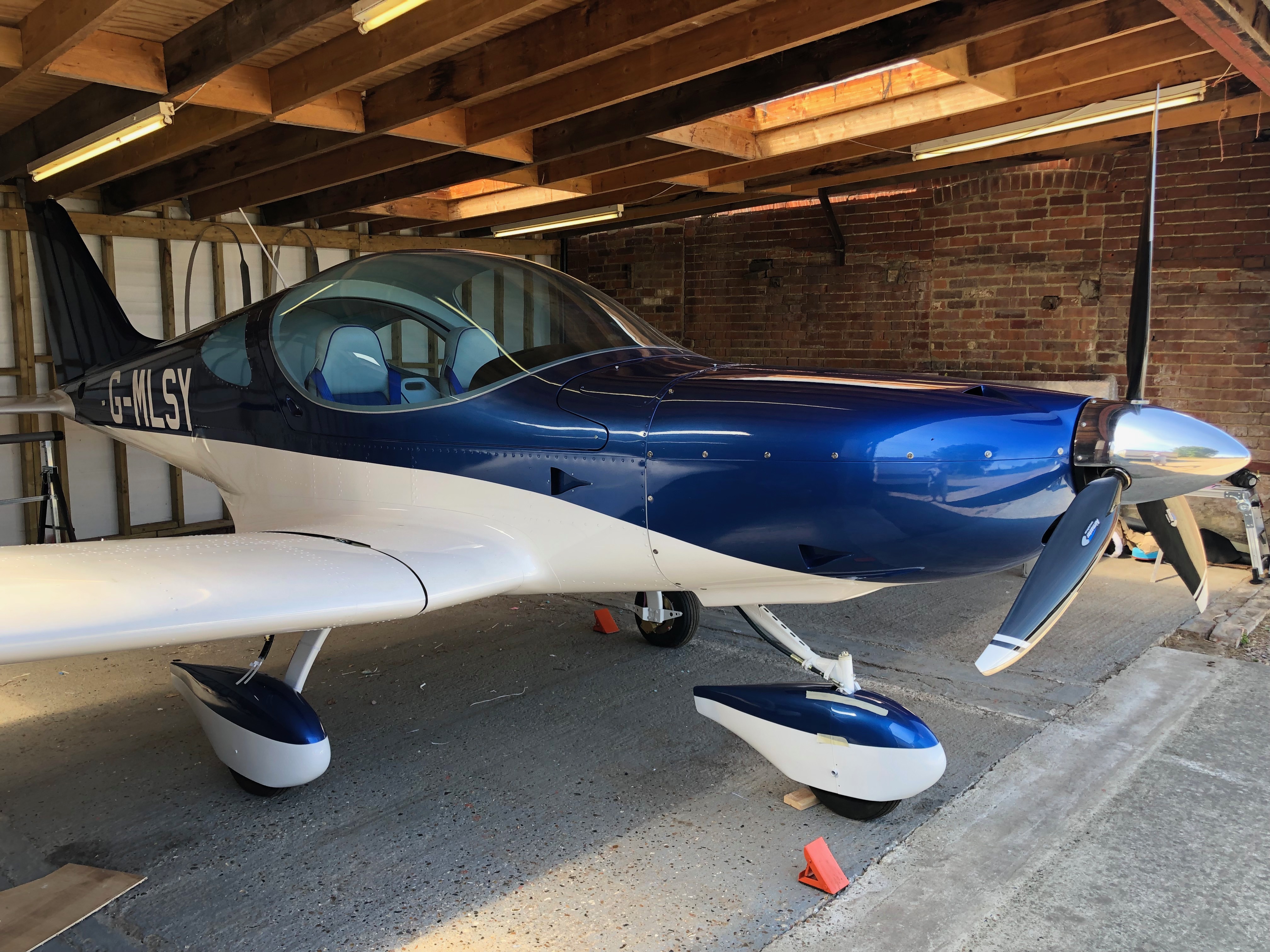
Everything needs to be fitted for the weighing. So the spinner is first and the canopy is lifted on but is won’t be secured yet.Ian as my LAA inspector is overseeing the process to make sure it’s down to the LAA standard.Pete starts the process of laying out the pressure pads.The aircraft has to be exactly level for this so a spirit level is placed across the cockpit and on the cockpit edge and adjustments are made as appropriate. With the aircraft sitting on the pads and levelled both lat and lon weighing can begin.The datum marks have to be calculated so a plumb line is dropped from the reference points and a position marked on the floor. These marks will be used later in the calculations.Pete in action marking the front datum.All done now but a quick pic with everything on before we start to take it off again for the final set of inspections.I’ve done the wing and starboard side registrations but didn’t get chance to go the port side. It’s amazing how quick I did this side compared with the other. At least twice as quick no I know what I’m doing!Now a pick from the left. Looks quite nice.The end of another day. Please with the process so far and not long now to the first engine runs and flight.
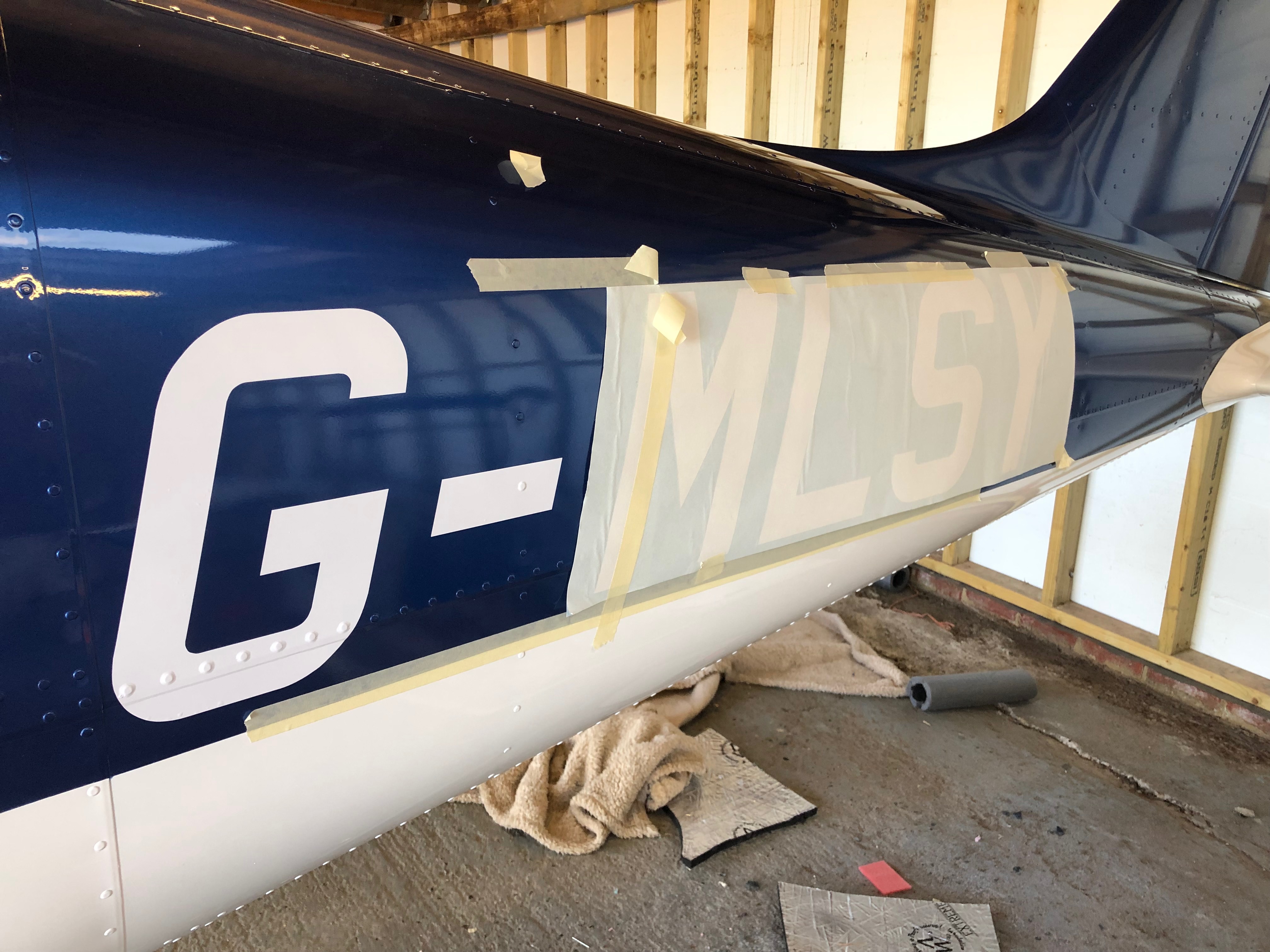
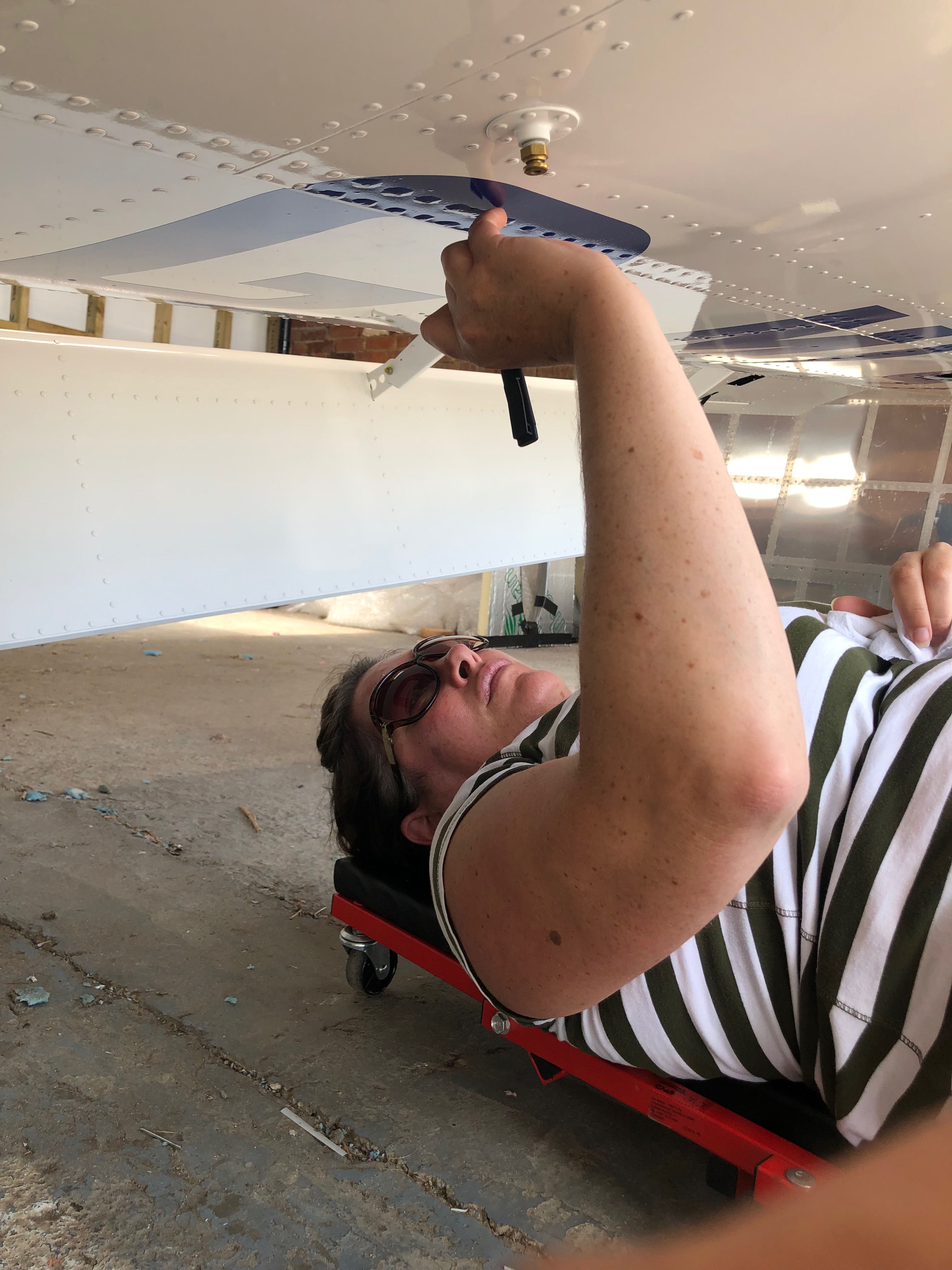
Karen came to the airfield today to help get rid of the little air bubbles around each of the rivets on the wing, did a sterling job as well. We tried several positions for the side registration to see which would look better. Pete Thomas, a friend from the London Gliding Club is coming down on Monday to do the weight and balance so I started to add all the bits and pieces that need to be on the aircraft from the weighing.
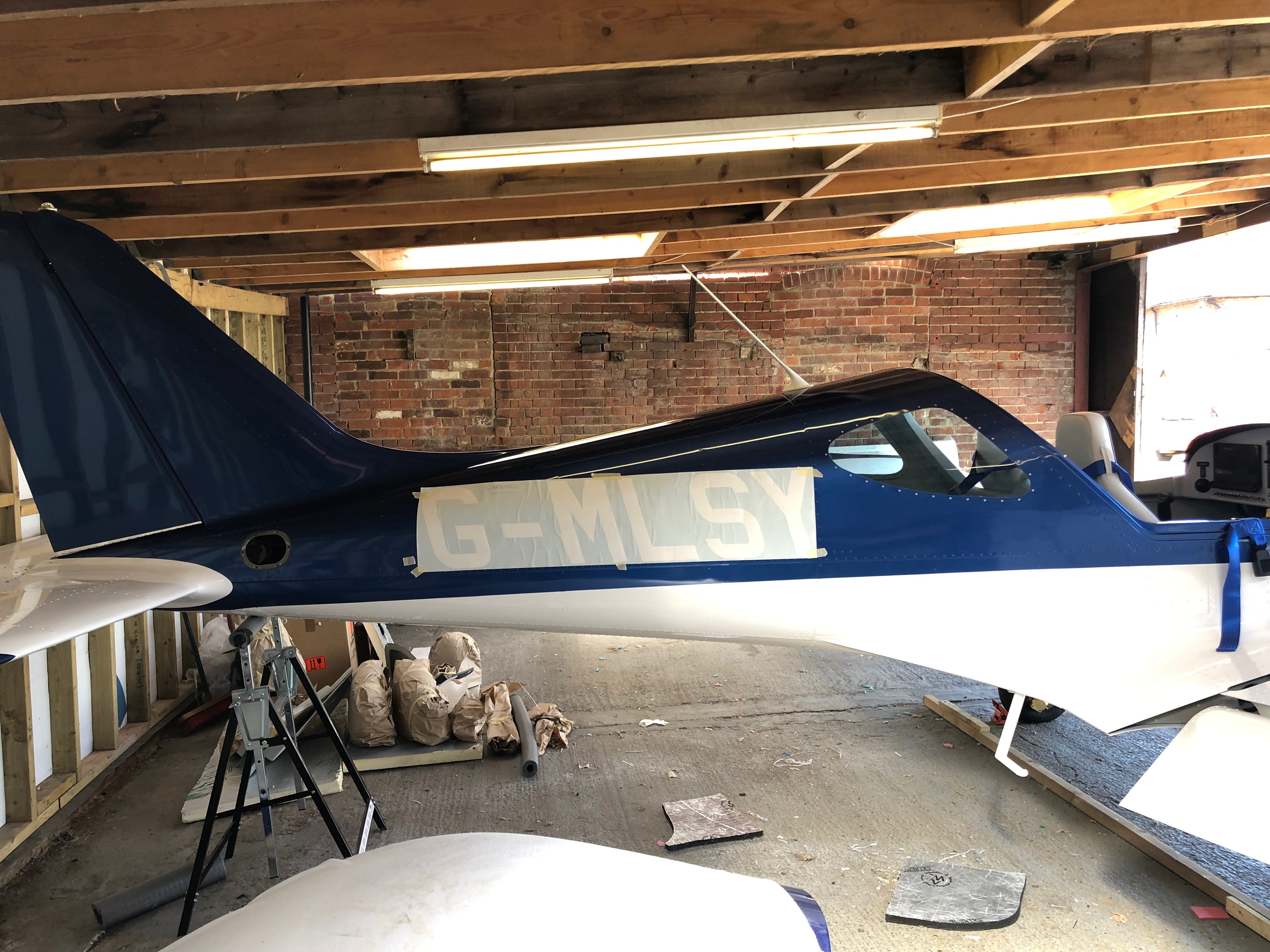
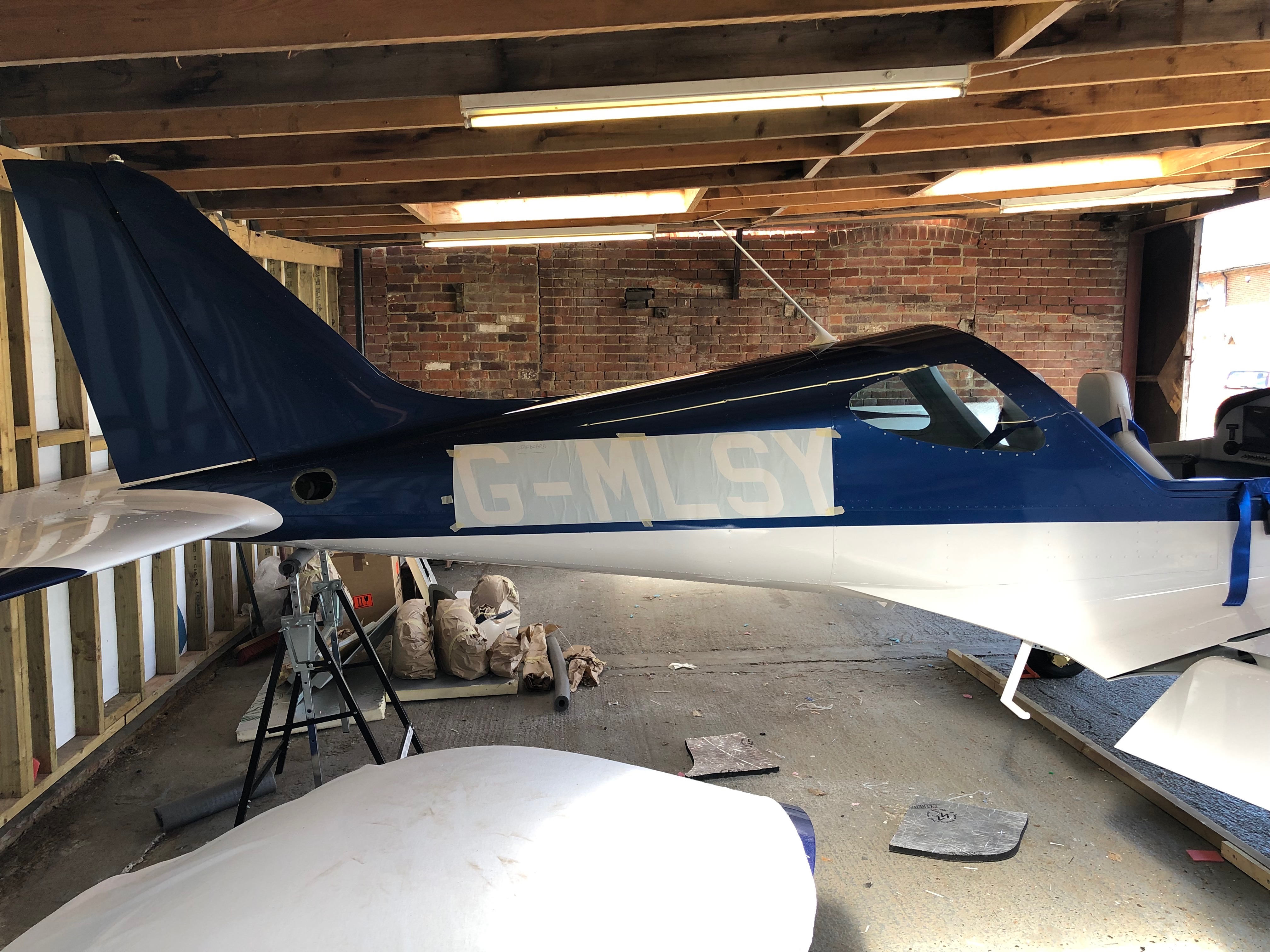
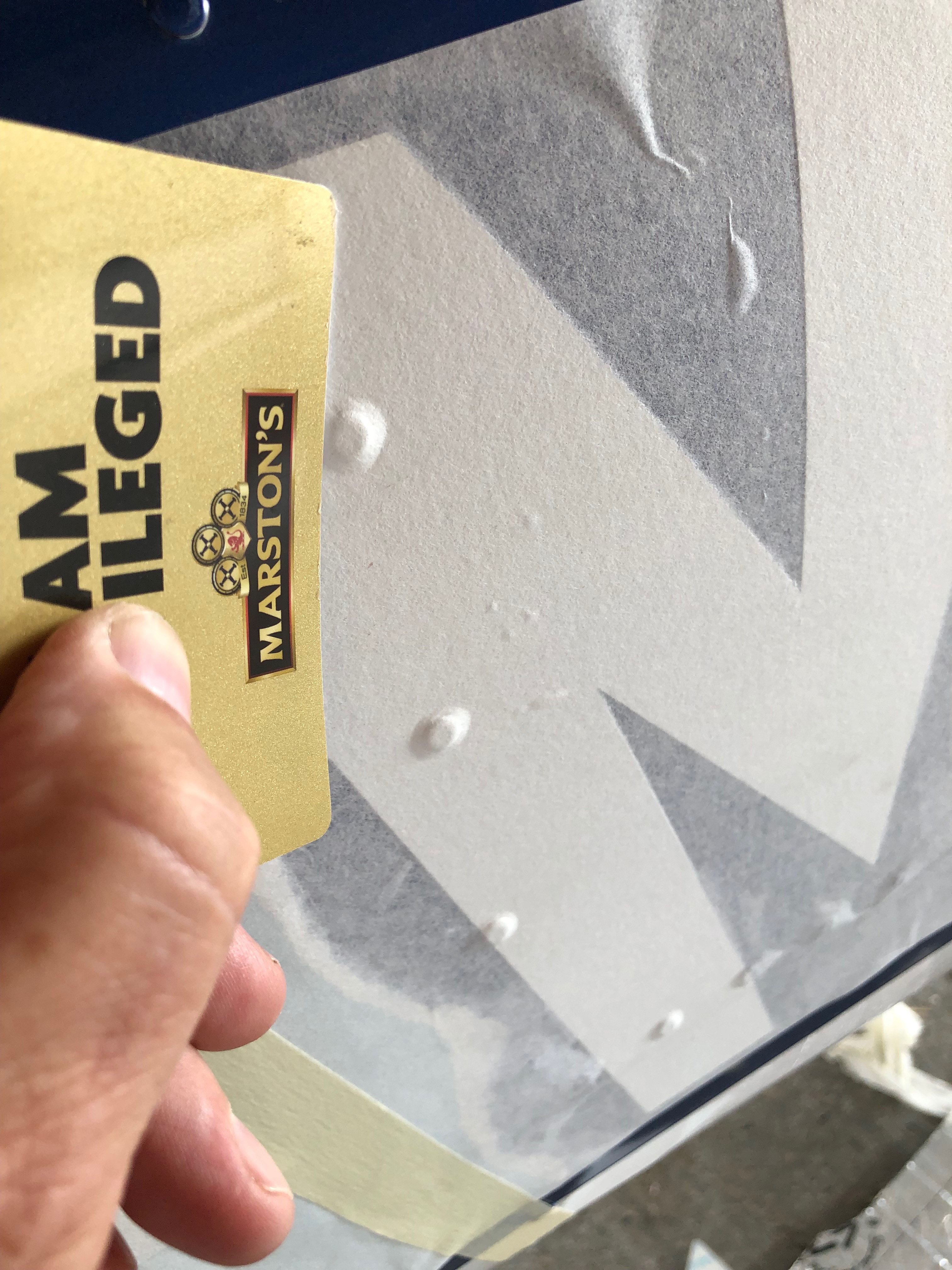
The vinyl registration doesn’t sit well around each rivet that it covers. A little air bubble is present on nearly every one of them. Karen used a fine point to pierce the vinyl and then gently pressed out the air. The result was fantastic and a big thanks to Karen giving up some her weekend to help me.Which looks better? aligning with the rivet line or ……the paint line. We both decided that the paint line was a better option so the decision is made.The spats need to go on as does the spinner and cowlings ready for weighing on Monday.Application of the registration starts. Not many pictures here on how to do it as I was worried about mucking it up.Part way though and it’s looking good. The next bit is to take a little of the spacing out between the ‘G’, ‘-‘ and the ‘M’ as it’ll look a bit better. I should have asked Pete from Mirage Signs to do that for me but I forgot!The final look. Very pleased with the result.A picture shows the inside of G-MLSY with all the seats and trim in place and a very happy me!
Music: Gerry Cinnamon, Stereophonics, The Libertines
6 months to the day since I took delivery of G-MLSY and it’s coming to the end of the build… but I say that every day to be fair. The next major stage is the testing and lots of paperwork to do and approvals to gain before it can fly.
A few people have dropped by to view how I’m doing and some have sent messages. All I can say is “Thanks”. It’s been a bit like a marathon and the support from those that have taken the time to visit or send messages is very much welcomed and keeps my motivation topped up.
I’ve decided to use the light function on the switches so each switch require an earth lead to be attached to the third contact to enable the function. It required a bit of back tracking but was fairly easy to do. The wings need to come off again so Ian is called to action again helped by Pete Sharpe I need to run the fuel level sensor wiring in, polish the wings and apply the registration before refitting for the final time. When I arrived home the stainless steel ID plate and Radio licence had arrived ticking off another couple of items from the list of Admin that accompanies the build.
Getting close to finishing now so some small outstanding jobs to do including wiring starter solenoid protection, a stuck starter indicator connection and external level button on each stick top hat. I also trial fitted the registration and polished the fuselage ready to apply it.
I received the registration vinyls on Friday so today I need to ready the fuselage for them to be applied. Just a case to working out the best placing for them. Along the line of paintwork line or along the rivet line? that’s the question!I’ve bought a polishing machine to make the job easier with some G6 cutting liquid cutting compound. It takes a bit of getting used to using it but it makes a good job it. The paintwork needs to be de-greased before I can apply the registration letters.When I sent the aircraft for spraying they noticed that one rivet hadn’t been squeezed on the trailing edge of the wing. So Ian brought his rivet squeezers in with a special head for this type of rivet. A little more wiring to do. A diode is placed from the starter solenoid to earth to kill any spikes caused from the contacts releasing when starting the engine. Also I’ve wired up a contact on the Dynon screens to that will show a ‘stuck starter’ situation. I was a little worried that a higher voltage may find it’s way back to the EFIS so I’ve protected the connection with a diode to prevent spikes and a 1 amp fuse.
Music: Karen was in charge of music so played tracks like ‘I can fix you’ and ‘All right now’ Very funny Karen!
As I was packing up last night I noticed a wet patch under the front tyre. When I investigated I found a very small leak from two of the modified water pump pipes. Unfortunately there was no way round it, the pump will have to be removed, the pipes removed and resealed. A call to Tony Palmer revealed that there had been other cases of leaking and was put down to a loose fitting pipe. The solution is to cut the thread slightly further down the pipe so it’s a tight fit when at the correct angle. Karen came along to give me a hand.
The slight leak. Can’t ignore it, if it leaks with no pressure in the system it’ll certainly leak a lot more when the engine is running.So the coolant needs to be drained……so I can remove the pump. I’ve removed the pipes from the water pump, cleaned the thread but now have to order an 18mm die. I’ll use the die to cut a slightly longer thread.As I can’t do anymore on the water pump I though i’d Loctite the12 set screws, 4 on each blade and…… add some Torque Seal on the set screws to allow any movement to be identified. I know have to wait for the Die to come before I can finish off the water pump.
Following the build of my Bristell NG5 Kit No. 382 Registration G-MLSY
















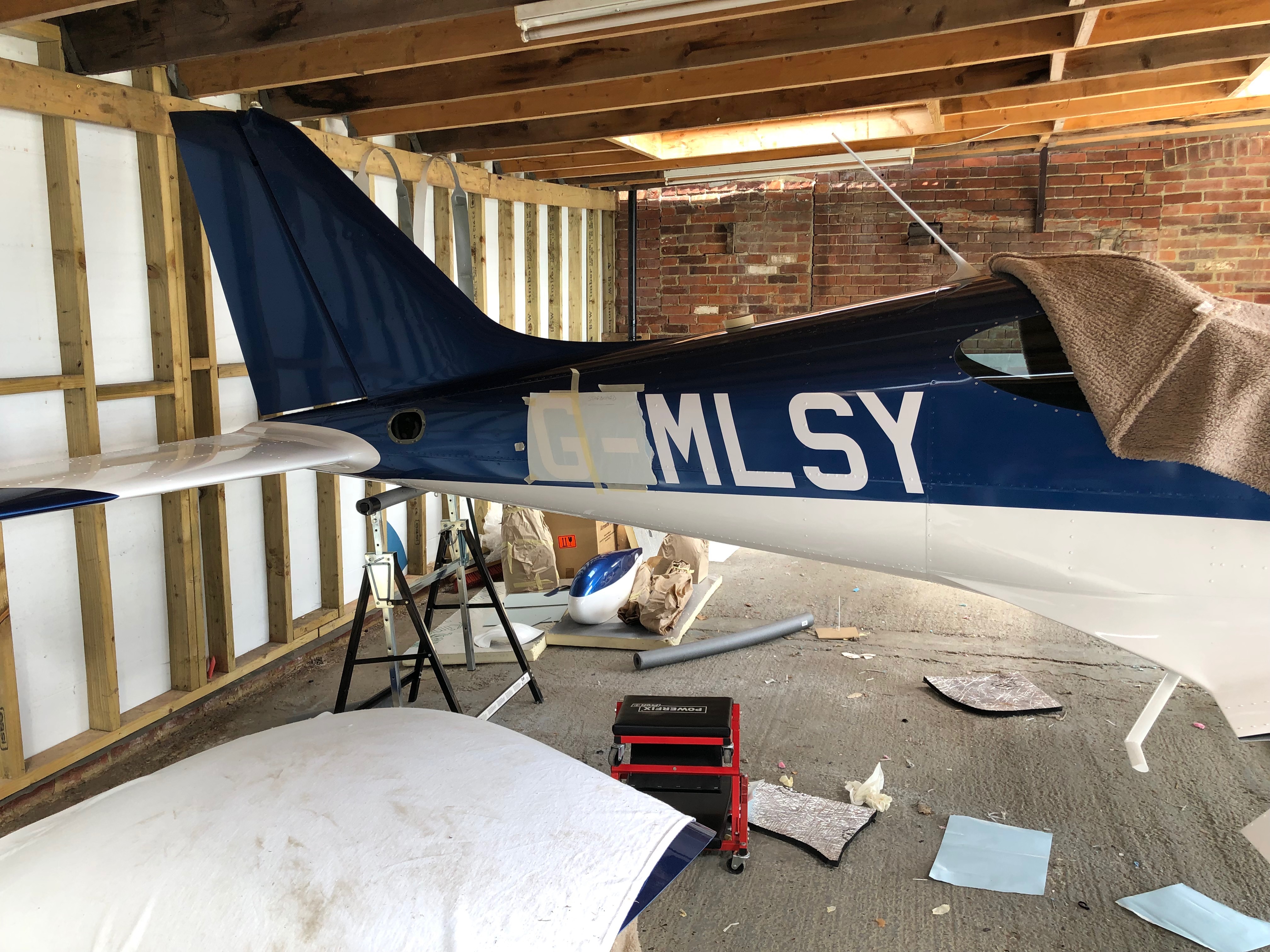


 G-MLSY