Category Archives: Pitot System

Monday 13th May 2019

Music: Elton John, Dido

With the delivery of a number of outstanding parts I was able to complete the wing locker and servo operating arm installs.

Now I have the fittings for the wing lockers I can finally finish off a long overdue job.
The weather-proofing washer is put over the lock barrel and the unit is inserted into the pre-drilled hole…
and locked into position with a nut.
The locking bar mechanism is fitted onto the lock barrel and held in place with a screw and shake proof washer.
The final part of the install is running a rubber seal around the inside edge of the wing locker to make it watertight. The same process is carried out for the starboard wing locker.
The wings are now complete!
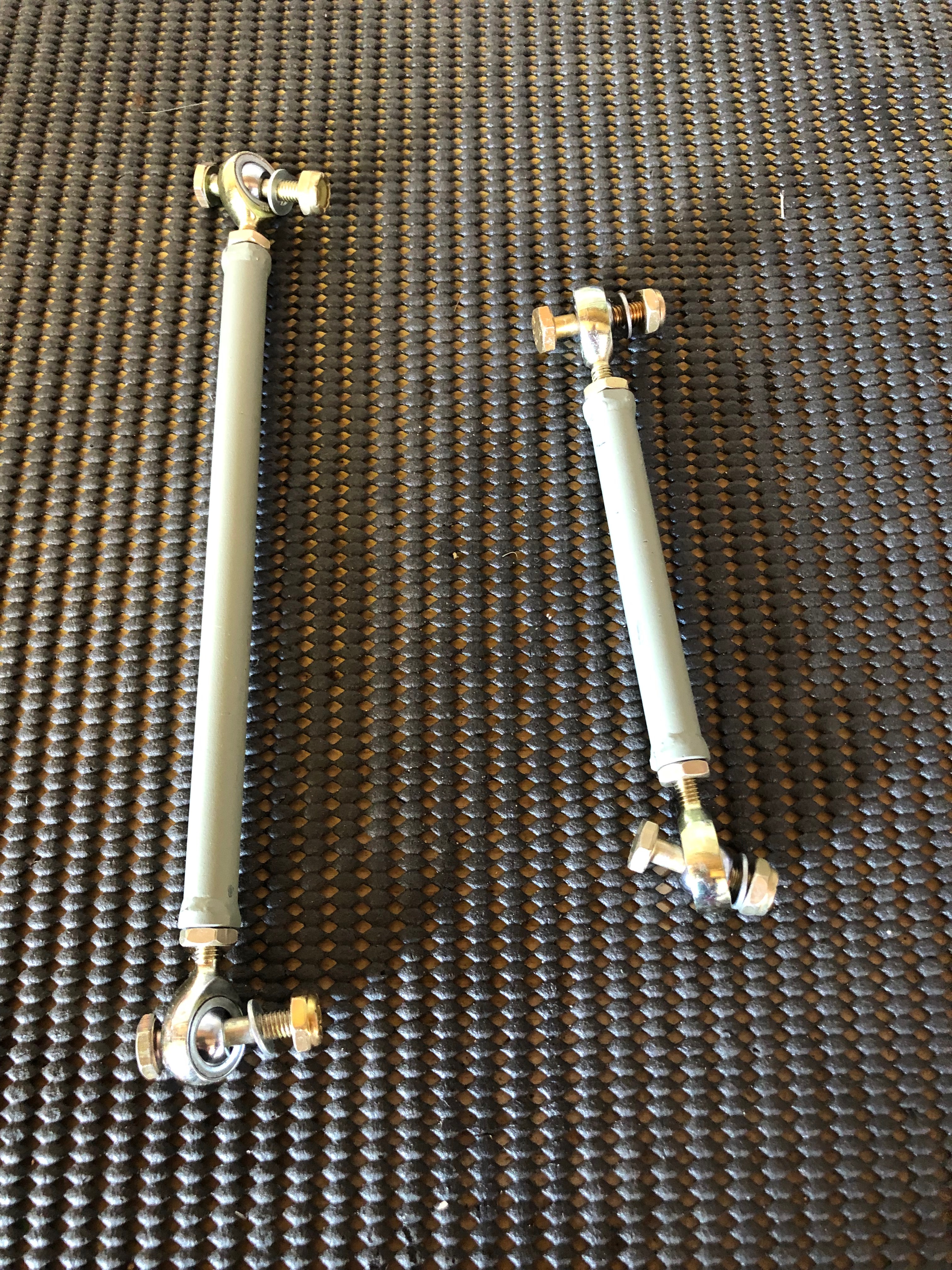
Another item I’ve been waiting for is the servo operating arms so I could finish the servo install.
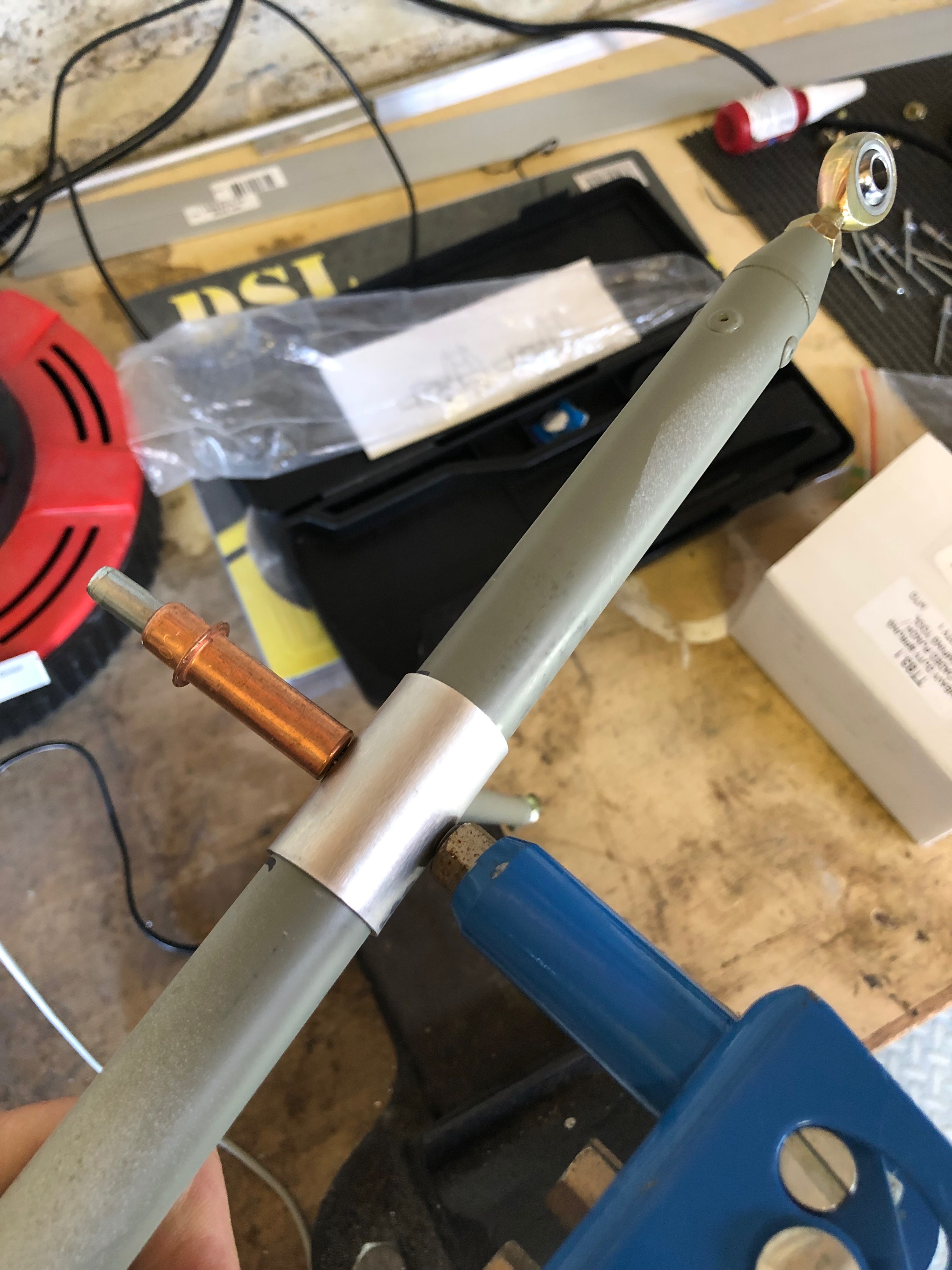
The roll servo is connected to the aileron operating rod with a clamp.
attached to the servo arm. The control stick and servo arm are centralised and the clamp position is marked so it can be riveted in place.
The only way you can get the aileron control rod out to is by dismantling a lot of the fittings that hold the control sticks
The clamp has two pre-drilled holes holes either side of the clamp that are used as a guide for the rivets. The first hole is drilled and cleco’d in position to ensure it doesn’t moved when drilling the other side.
Two 3.2mm rivets are used to further secure the clamp before refitting.
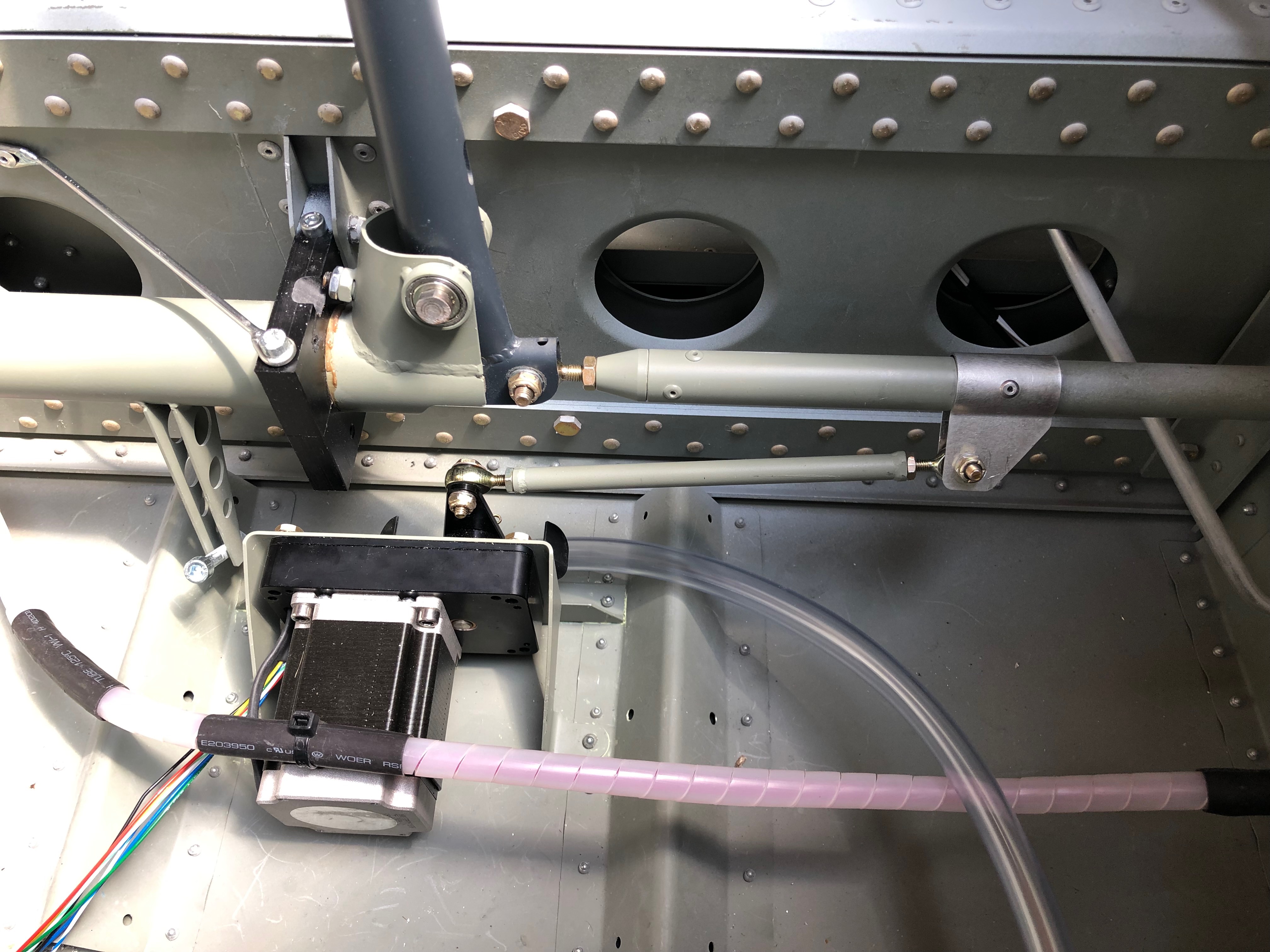
The pitch servo rod is a lot simpler to fit. Two AN3 nuts and bolts secure the rod in place and the final adjustment is made once the aircraft is rigged.
The roll servo and control arms completed.
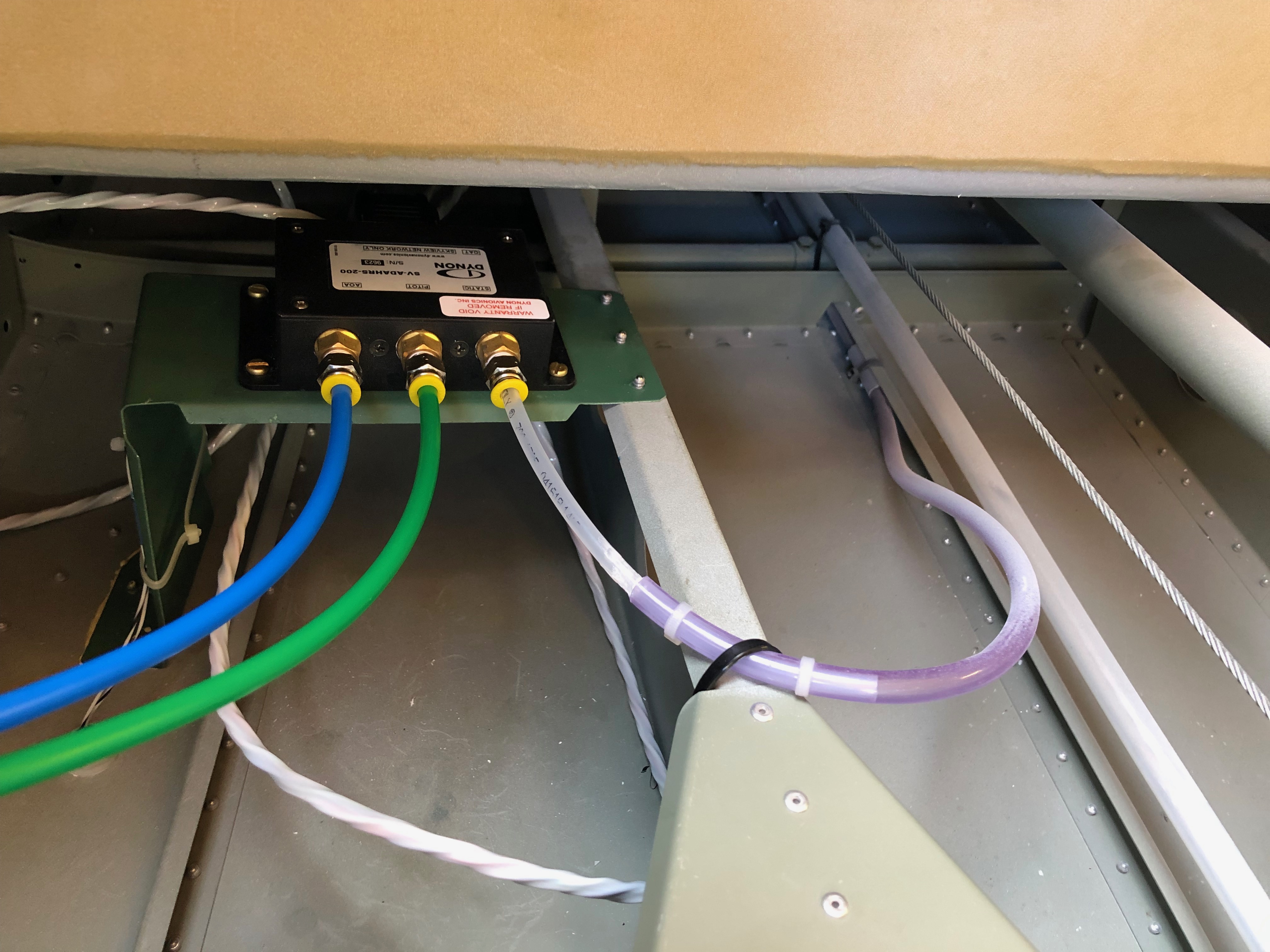
Final job for today is to start installing the pressure system pipework for the pitot, AOA and static fittings

Friday 10th May 2019

Music: Elton John

I had ordered several items whilst I was away in Prague which had been delivered by the time I got home so I was eager to get back to the build. These included a Shorai LiFePO4 battery and circuit breakers. I also received the servo connecting rods and wing locker fittings from Farry and replacement Aveo air vents that will allow me to finish off those two jobs.
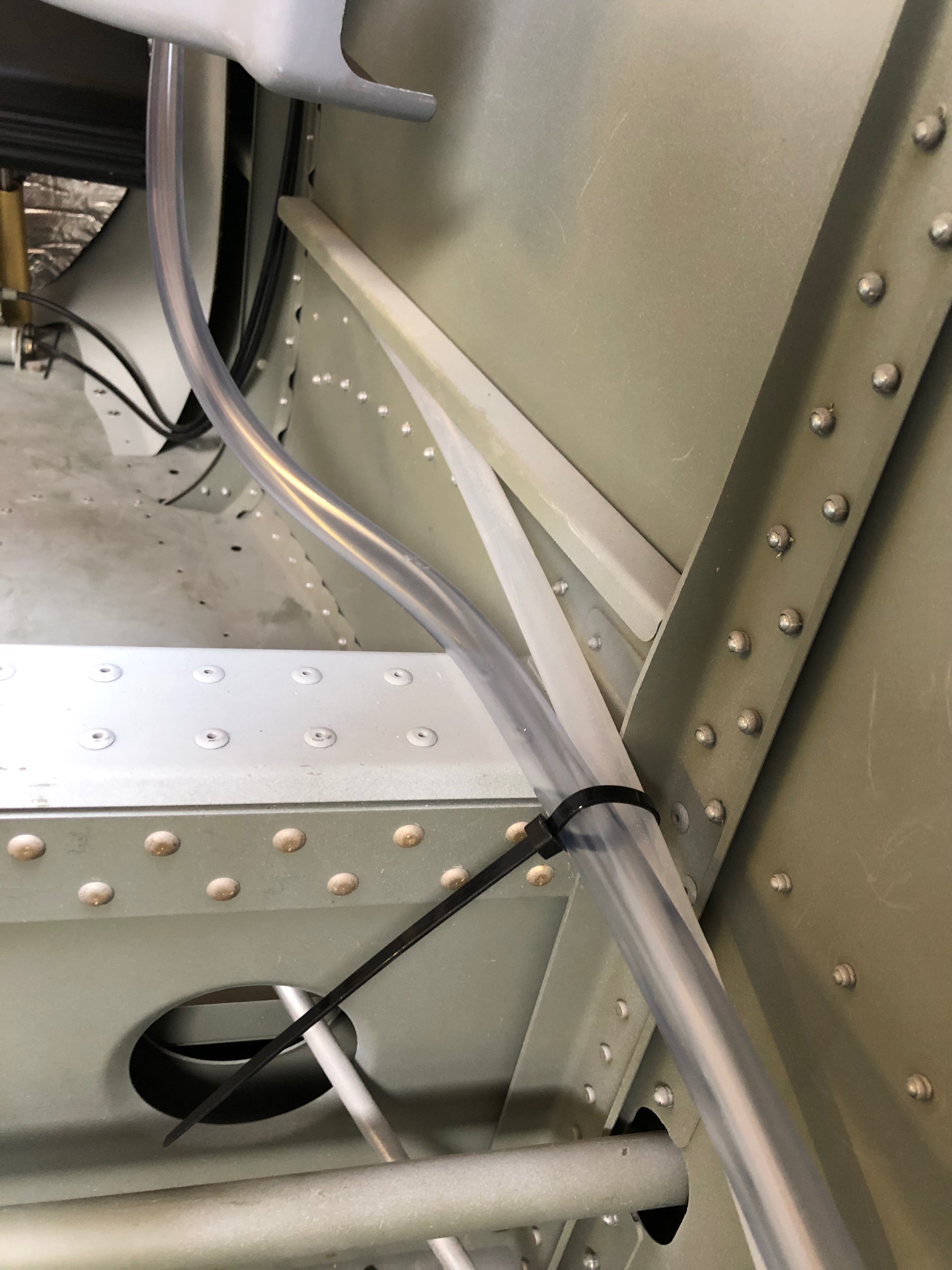
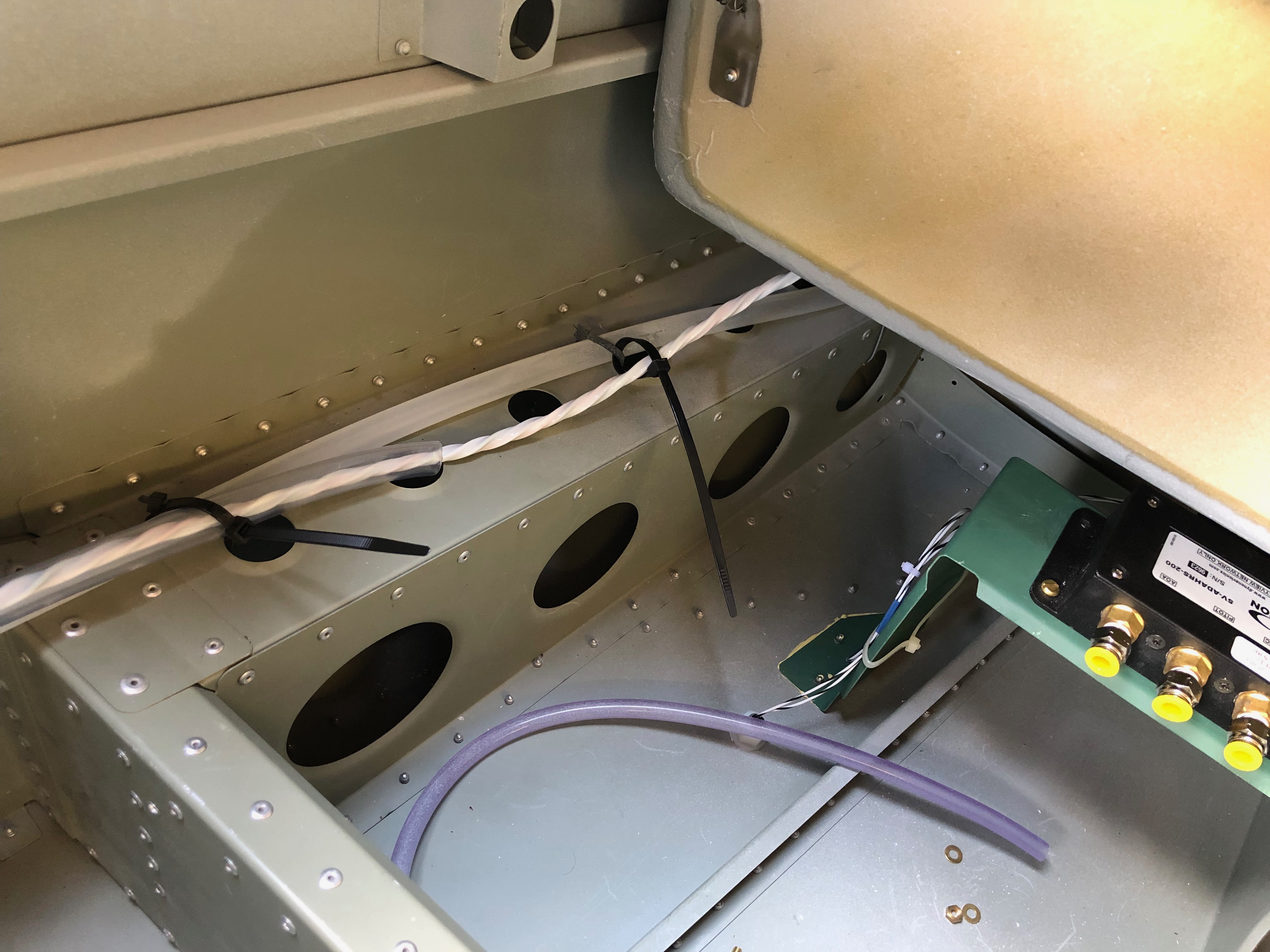
As you can imagine there are a lot of cables running up and down the aircraft so I’m experimenting with conduit that will allow me to run new cables or service the ones already installed. This is some 12.5mm polytube that works quite well for the ADAHRS cable.
Just needs to be run in with some thought to make sure that it doesn’t chaff against other things so will probably need stand-offs.
One of the jobs I had to leave was to terminate and connect the pitot heat control unit to the power cable I had run in earlier.
I’ve tidied the cables around the unit but will have to see if this induces any EMF whilst in use. It’s not close to any other electrical item so should be ok.
One of the items delivered was the Amp Superseal connectors that allowed me to terminate the pitot, landing and strobe lights. They are a little fiddly to crimp the connecting pins on but should allow for a weatherproof connection in service.
Instead of the normal lead acid battery that weighs several kilograms…
I decided to go for a LiFePO4. They are approved with a standard mod and this one has the same capacity as a standard battery but much better cranking power. It’s amazingly small and light weighing just over 1 Kg.
So the first job is to make up a retaining bracket for it with some self adhesive padding that was supplied with the battery.
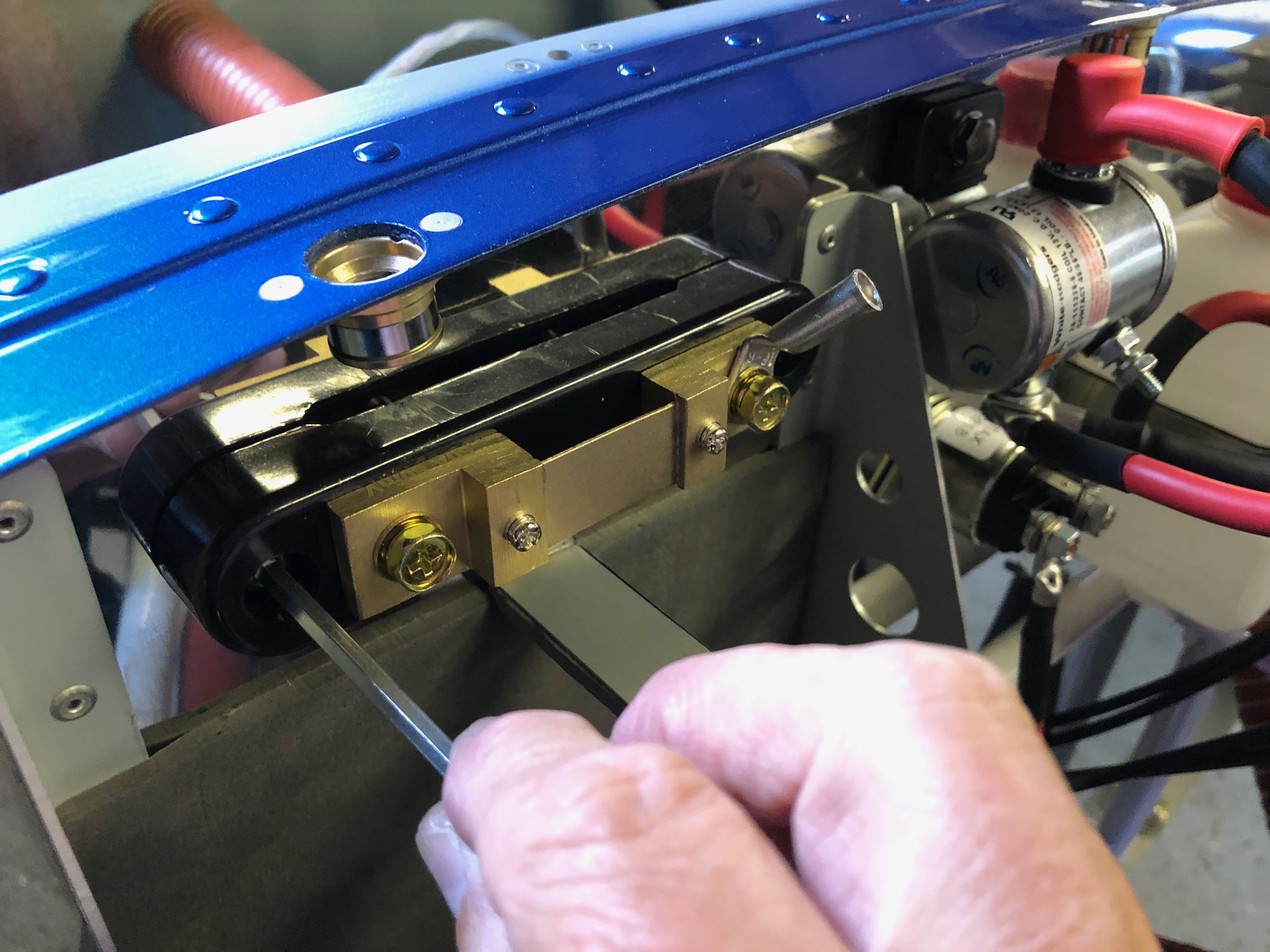
The small size of the battery has given me some space to mount the ammeter shunt that measures the power draw from the battery and is displayed on the SkyView displays.
The finished installation with battery retaining strap and ammeter shunt.

Thursday 2nd May 2019

Music: Snow Patrol and Celine Dion

Finished off the installation of the tail strobe and pitot unit before starting work on the primary power system. Also 10 stages of the build were signed off by Ian.

First job today is to finish off the installation of the tail strobe.

The strobe and wire have different colours but can be matched up logically, following the same scheme as the wing strobes.

The purple and orange structure in the background is a multi arm clamp that can be used to hold wires whilst I solder them.
The tail strobe wire is fed into the fin but there is no room for any slack so I put a loop in the wire by the rear inspection access hole so I can get to the strobe and solder connections if necessary.
The pitot has two aluminium tube, one for airspeed and one for angle of attack. The can be connected to the nylon pipes by warming the pipe and pushing oner the pipes but a better solution is to use connectors supplied in the pitot installation kit. These need installed using a ‘Flaring tool’ to ensure the connection is air tight.
I didn’t want to buy a flaring tool for just two pipes but luckily Ian Daniels came to the rescue and the result is two very nice flared pipes.
The final assembly ready for fixing to the underside of the starboard wing.
Some silicon seal is used to provide so weather proofing prior to riveting on.
The unit is held in place with clecos whilst riveting.
As shown before the power unit for the pitot heat is mounted on the access panel. The excess wires could be cut but I’ve tidied them up by coiling round the unit and using a cable tie to hold in place.
The first crimps of many!
The last thing to do is cut the pitot power wire to the correct length and connect them up before securing the panel in place. The only problem is I don’t have any male spade connectors so I’ll have to finish that job off when they arrive.
Moving on to the primary power system I’ve decided to add a master battery relay. This allows the switching high currents from the battery to the starter and the main bus by a normal 25amp switch.
Now the master relay is mounted the primary power system can be connected. I’ve decided to make my own cables up so I’ve purchased a sprung loaded crimper that uses a vice or hammer to make the crimp.

First of a few cable required to be fitted.

Ian Daniels agreed to keep an eye on my build and sign of the completed stages. So that’s it for today whilst Ian inspects the work I’ve done so far.
He’s a busy man with several projects on the go but came in today to inspect my work so far and sign off another 10 stages. The photo shows a build record sheet. I now have 17 out of the 27 stages signed off.

Wednesday 1st May 2019

Music: Elton John who we’re seeing in Prague next week!

Haven’t got a full day today but thought I could install some of the cables that I received yesterday in the post and the tail strobe.

The Pitot power cable requires quite a heavy duty wire as it can draw up to 10 amps so for the run from the wing to the power it requires 12awg. So the power cables and sensor wires need to be made up into a simple wire loom. I’ve just used some heat shrink tubing along the length.
So this needs to be run into the wing conduit.
Using a draw wire to pull the wire through I’ve used a piece of heat shrink tubing to join them together.
And then pull it through this conduit and hope the heat shrink works which it did.
Next is to run the strobe power and sync cable from the tail to the front of the fuselage. Again there is a conduit that makes it relatively painless to do but there is a already a trim control wire running in the conduit so it’s a little tight to feed through.
The is the strobe that will be put on the tail fin.
The mounting holes need to be drilled using a step drill.
And M3 rivnuts and cap head screws are used to secure but I’ve run out of time so will finish off tomorrow.

Tuesday 30th April 2019

Music: Snow Patrol

A few jobs whilst Andy is still here to help including the internal trim panels, OAT sensor, bleeding the brakes and pitot system installations.

The rear panel in normally riveted into the aircraft and has two access panels cut in with covers. I thought it would be a better idea if it was removable so decided to use 3mm screws and rivnuts to secure it instead. First job drill the 5mm hole for rivnuts.

The install the 37 rivnuts in the rear panel…

and 8 along this panel.
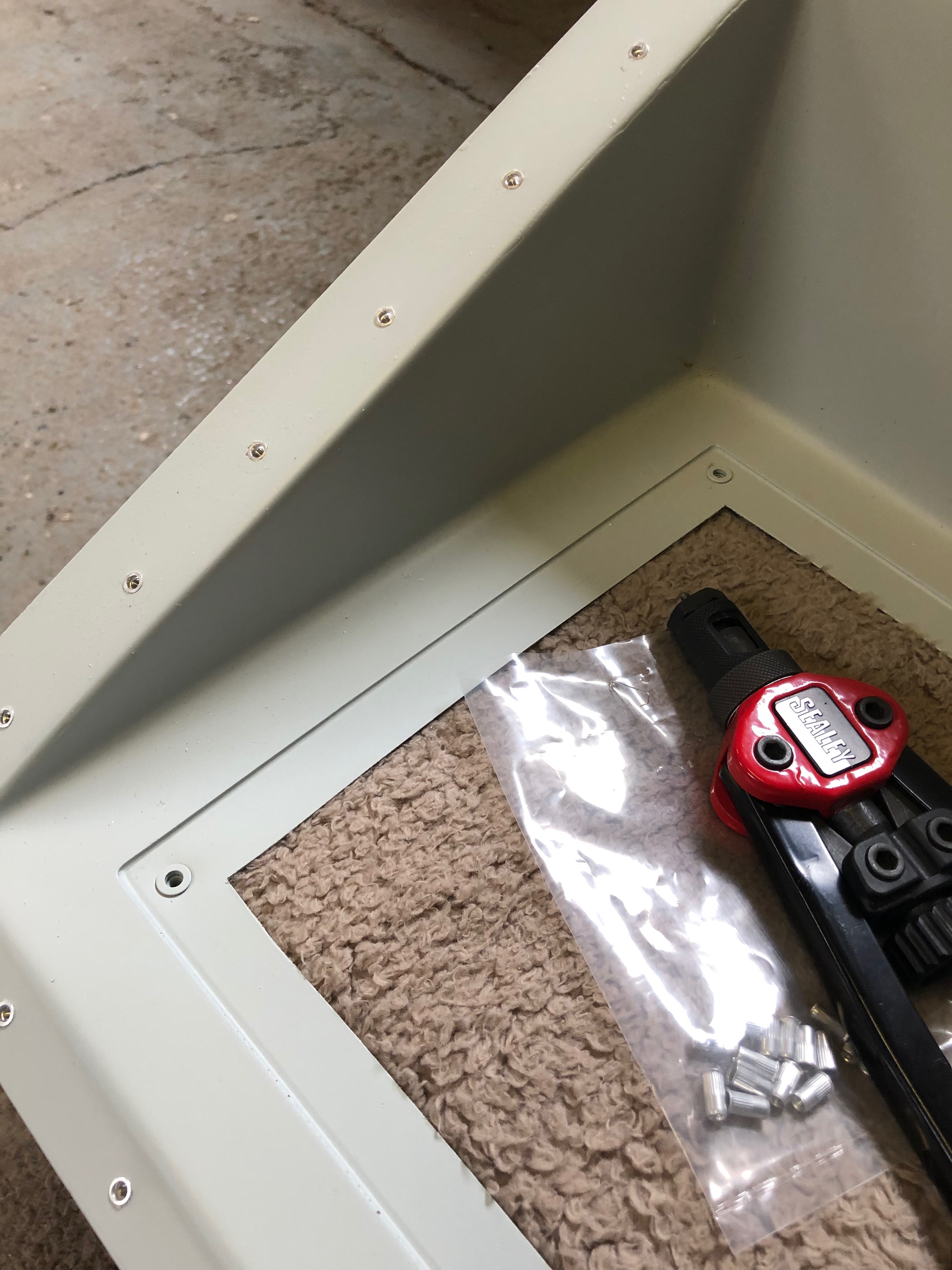
The finished job which looks quite good.

The supplied OAT cable is several metres long but I’ve decided to mount it close to the ADAHRS unit so I shortened it out by cutting some wire out of the the middle of the cable and soldered together which removes the need to crimp new ends on.

The OAT sensor is fitted from below and secured with a nylon nut and washer. I’ve used a bit of silicon to make it even more water tight from below before fitting.

The finished installation needs to be within 2 degrees of level in all planes so once the aircraft is finished I may have to shim the unit.

After bleeding the brakes I have two very small air bubbles left in the brake lines that need to be purged. The normal method didn’t work so thought using an electric pump might work. The whole thing turned into a disaster. The first attempt resulted in the electric pump sucking in air. The second attempt resulted in the pump forcing off the pipe. Then on the third attempt the pump failed after 5 seconds of continuous use. I gave up! will try again another time…

Moving onto the pitot installation. I’ve purchased an electrically headed pitot that needs power to it so I need to run power to the unit. There is conduit in the wing so will use this but it’s difficult to get to.

The only place I can easily mount the heater power unit is on access cover but the unit is just little bit big for the access hole so I had to cut the corners of the mounting bracket.

It’s secured onto the of the access panel with M4 screws, washers and nylocs.

It’s a perfect fit..

The view from the underside.

just needs to be connected and wires run up the conduit.

It’s a very tight fit but need to get my arm into the access panel to get to the conduit.

Wednesday 3rd April 2019

Music: Elton John, ELO & America

Monday was set aside to travel to Chilsford Farm to collect some of the outstanding items from the kit. So today I could get on with a lot of jobs that had stalled because of the shortages.

On Friday I sealed the canopy perspex with silicone and left it to set. The waste material was removed with a plastic scraper.

And cleaned off with some methylated spirits.

The result is good but not perfect in a couple of places so will need some attention once the canopy is mounted.

Next up is to connect the NACA ducts to the various intakes on the carburettor and cabin heater.

The SCAT ducting for the air intake is secured with a jubilee clip onto the air intake.

The ducting is cut to size and attached to the rear of the righthand NACA inlet on the lower canopy.

The heat exchanger is positioned and secured in place with large jubilee clips.

A short piece of ducting is installed between the heat heat exchanger and the heater intake that runs through the firewall to provide cabin heat and a de-mist facility.

A long pice of ducting is connected to the heater control and will eventually connect to the glare shield that includes the de-mist vents.

The lefthand side ducting runs from the NACA inlet to the middle heat exchanger connection but it’s quite tight so it must be routed so it doesn’t come into contact with the exhaust system.

View from the righthand side.

A spring is cut and installed to ensure that the air intake is supplied from the cold air vent by default.

One of the items I picked up on Monday was the pitot mount. I’ve already taken delivery of the avionics so I can mount the pitot onto the mount.

Instead of drilling holes and using screws I’ve decided to secure the probe into position with silicone which will provide a neat solution.

Once filled with silicone it’s left to set overnight.

The carburettor air box has two ‘horns’ that the SCAT hose connects to. They require sealing with heat resistant silicone and secured with three rivets.

The finished air box which will be left to set overnight.

The cabin air vents are supplied with fresh air from NACA ducts in the side of the fuselage. They require installing in the instrument panel and then connecting up with some scat hose. So a temporary fit of the panel is required to get the hose length.

Two brackets are clecoed into position and the panel is secure by two screws each side.

With the panel installed it give me an idea of the space I have for the avionics and possible positioning. Tomorrow I will fit the air vents and hose.

One job left over from installing the fuel system is to fit the fuel pressure sensor. The sensor cannot be connected directly to the hose. A 1/8″ NPT female to 6mm barb adapter is required.

As it will come into contact with fuel Loctite 577 is used to seal the thread before fitting.

The pressure sensor and adapter before being screwed together. They will be left overnight to set.

The final job for today was to trim the cowl to ensure is doesn’t come into contact withe the water radiator.