Category Archives: Primary Power

Friday 8th November 2019 – Fitting the Spats

Whilst waiting for the permit to fly to hit the doormat I can complete a few jobs that didn’t need to be done before the flight testing. This includes fitting the wheel spats, applying the internal leather trims and other miscellaneous jobs.

The leather interior trim was very easy to fit but required the seats to be removed. The last thing to do here is to fit the centre storage cover where ‘Pilot Pooh’ normally sits so he will need to sit somewhere else when the cover is fitted. The centre storage box can be removed so this allowed me to put an ’emergency release’ in for the canopy just in case the main release mechanism fails.
The main spats have one hole predrilled but the other four holes on each spat have to be precisely measured and drilled to ensure that they are level and inline with the airflow to reduce drag. What seemed to be a very straightforward job took quite sometime to get right.
Fitting the nose leg cover was very straightforward. The nose wheel spat took about the same amount of time to fit as the main gear but the result is a much cleaner and streamlined look. Hopefully it will give an increase in cruise speed as well!
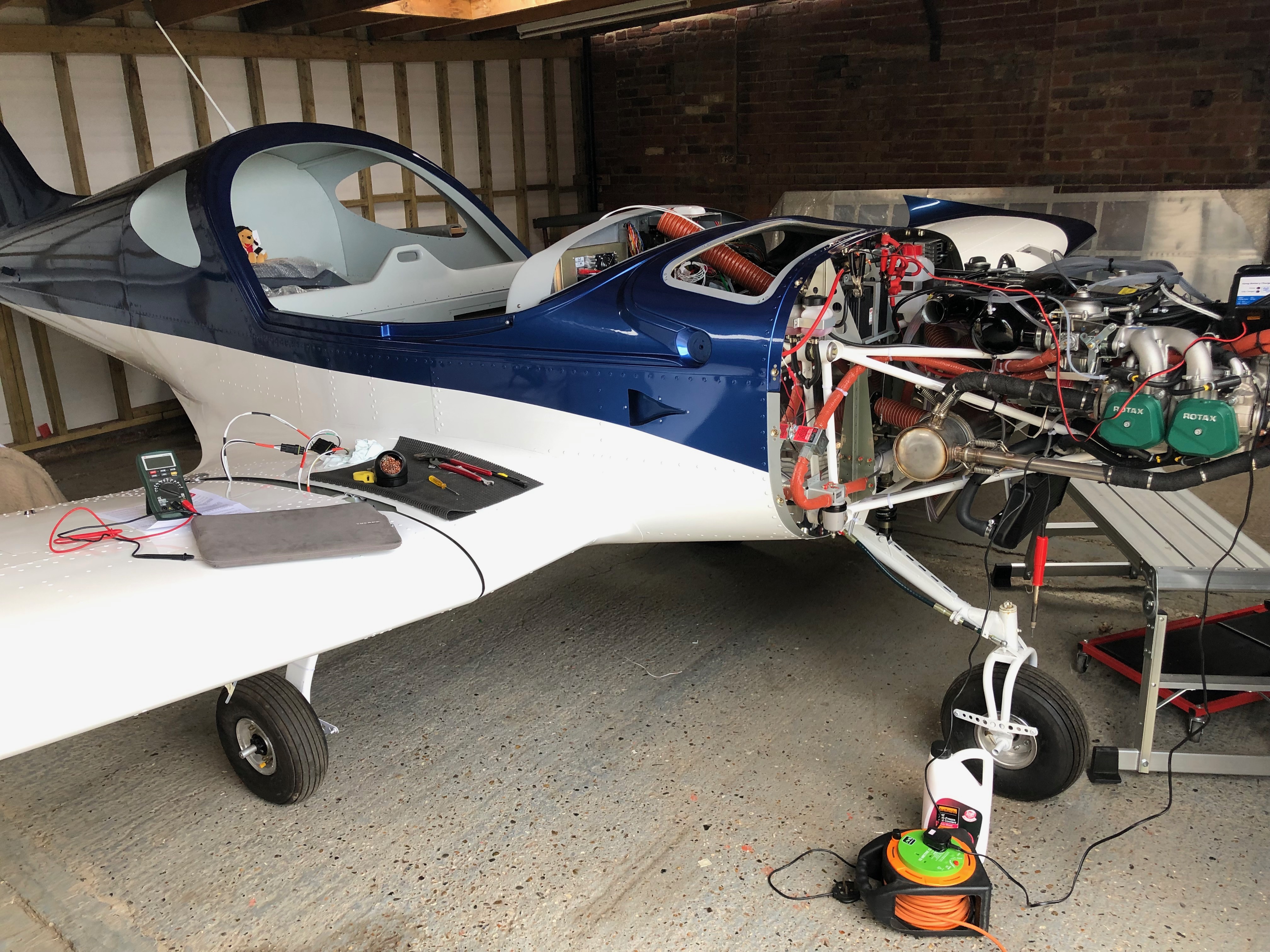
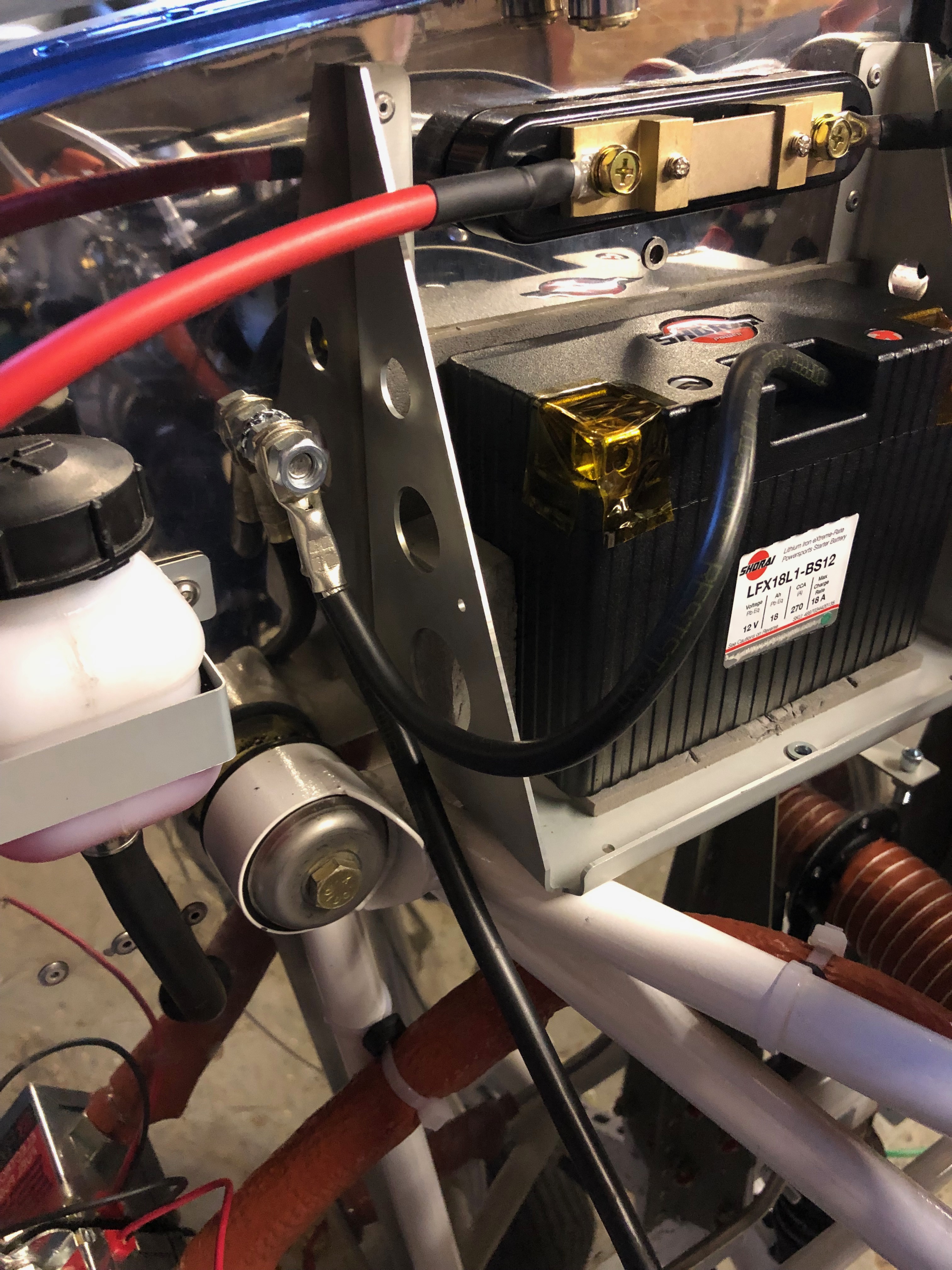
To reduce weight I decided to add a Lithium Iron battery. The battery is normally charged when the engine is running and can also be charged with a normal low amperage battery charger. If the battery runs flat or requires a top up it would normally mean that the top cowling would have to be removed to attach the battery charging leads which is quite a clumsy arrangement. Shorai sell a battery charger that is specifically designed to charge / condition the battery. They also sell a charging lead that can be permanently attached to the battery so I purchased one and run the lead to the oil inspection hatch. This allows me to keep the battery topped up when it’s not used for a period of time. Quite a neat solution.

Thursday 27th June 2019

Music:

it’s time to fit the wings so I need to add the connectors to the trim, landing lights and heated pitot looms that I have already run in. I’ve also run in the radio coax cable so need to terminate that and carry out a final tidying up of the wiring.

As mentioned before I decided to use superseal connectors as they are failproof and waterproof. I’d already completed quite a few of the connections but was distracted by another job. Whenever I’m distracted I always document what still needs to be done in my project plan.
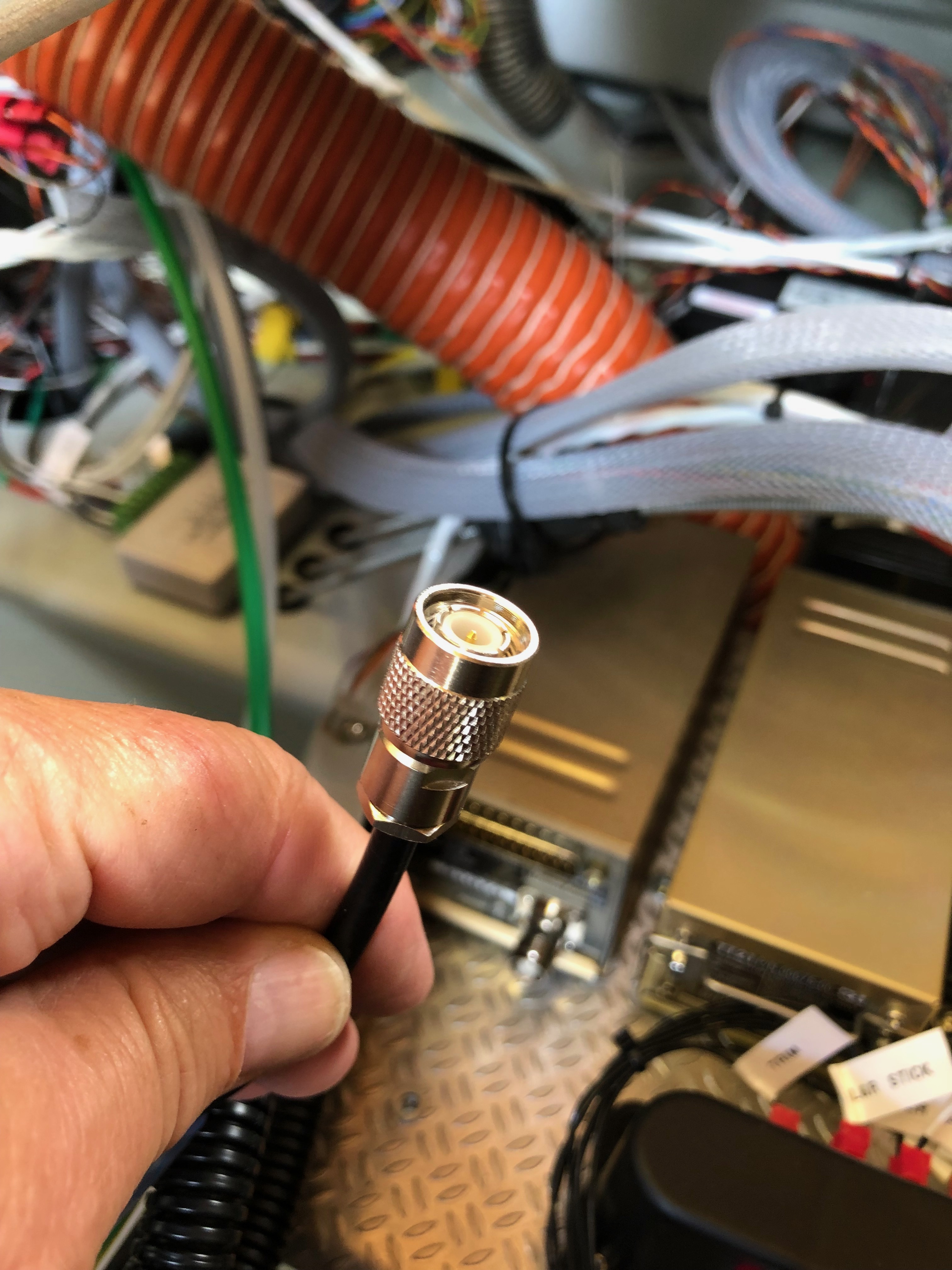
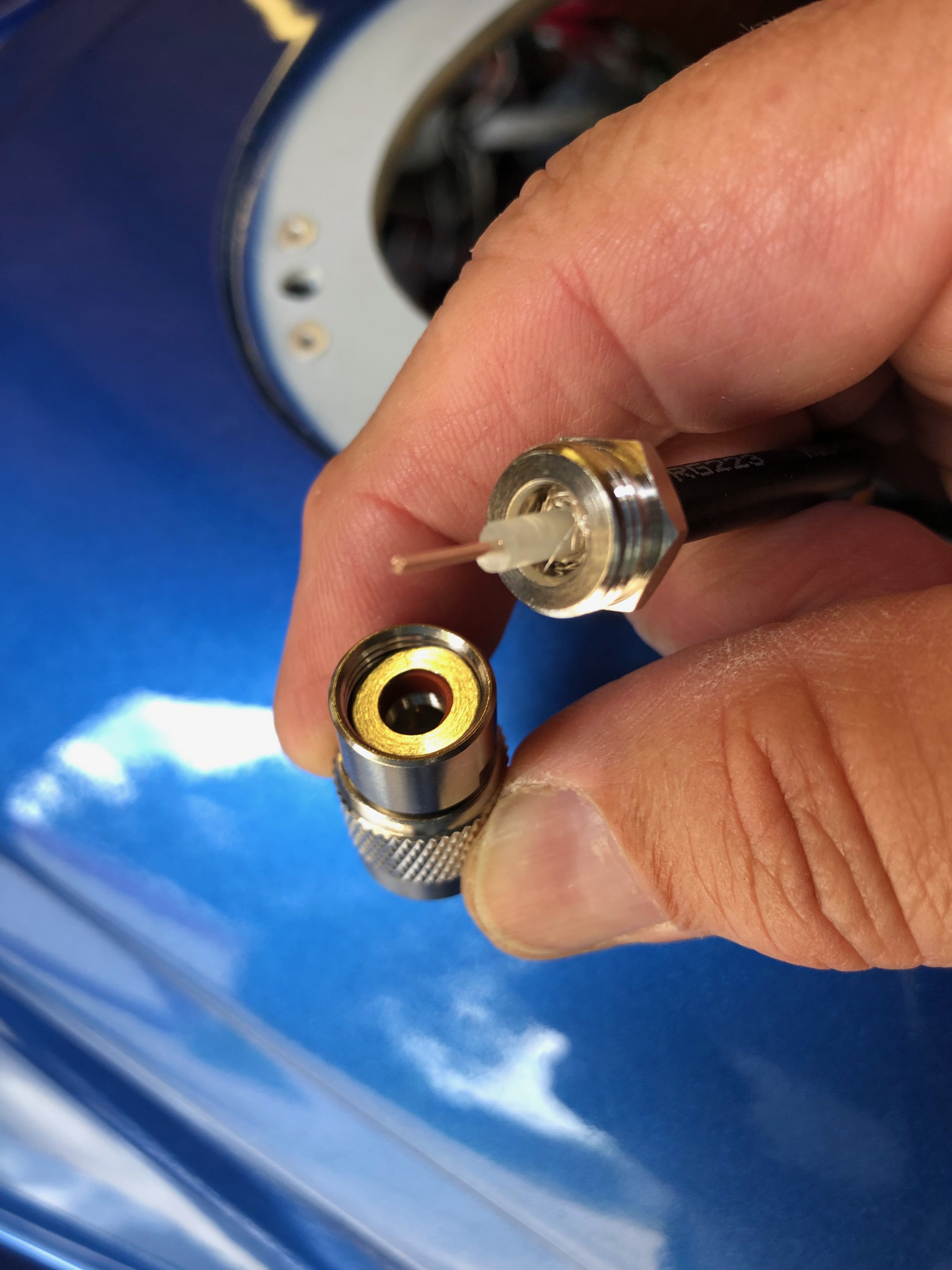
With all the connectors added the next job is to add an Amphenol to the end of the coax cable. It’s quite a complicated connector so I needed to test i on a cut off first. Once cut and trimmed the connector is soldered on to ensure a good connection.
The finished connector, fairly straightforward but just needed to be thought about before committing,
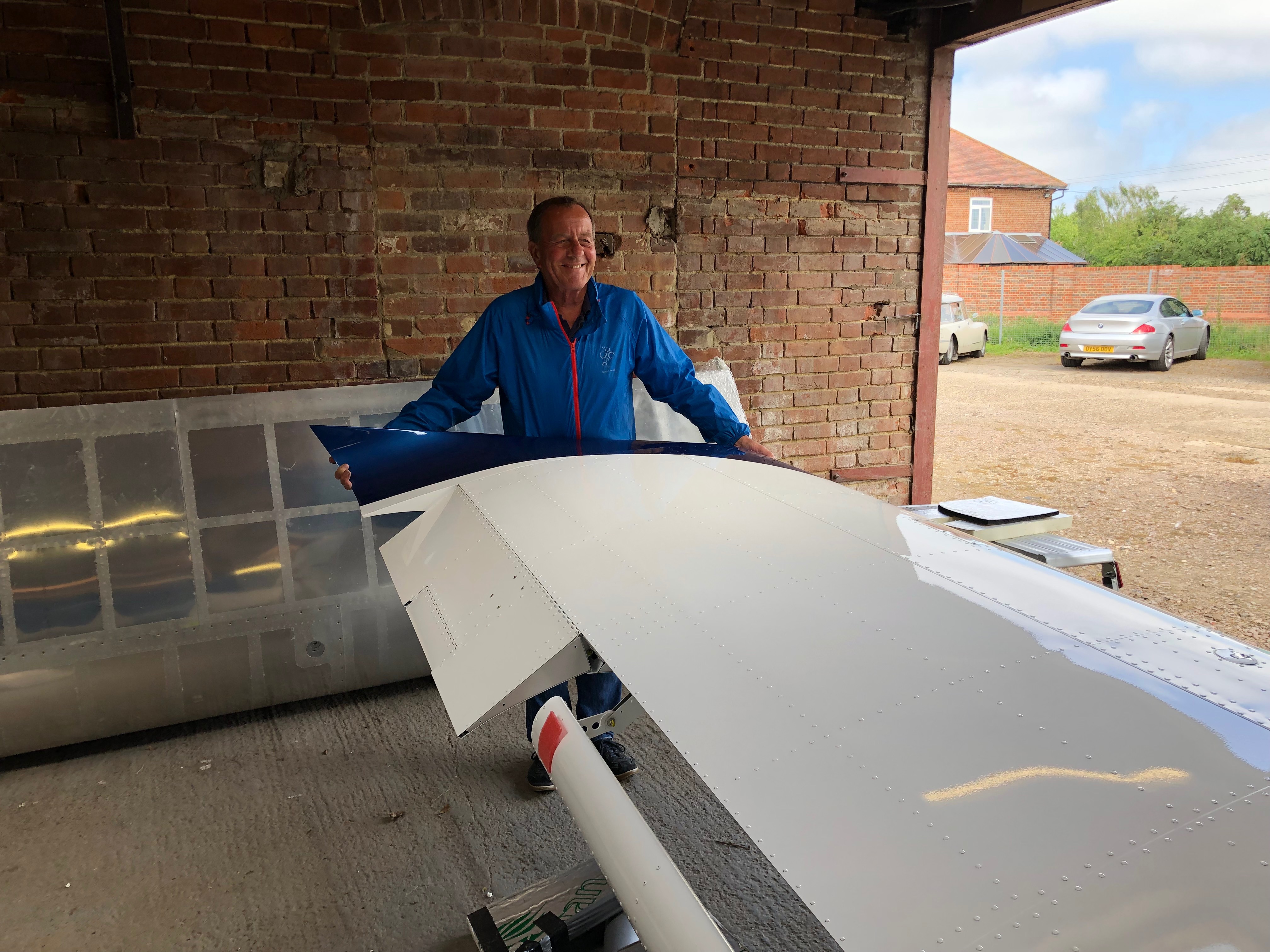
Now time to fit the wings so I can set all the ailerons, check the pitot, trim, flap, strobe and landing light circuits are working as wired. Ian and Peter Sharpe have offered to help and as usual Ian wears his designer gloves for the wing lift process. He looks quite fetching 🙂
Peter Sharpe at the ‘sharp’ end adding invaluable assistance.
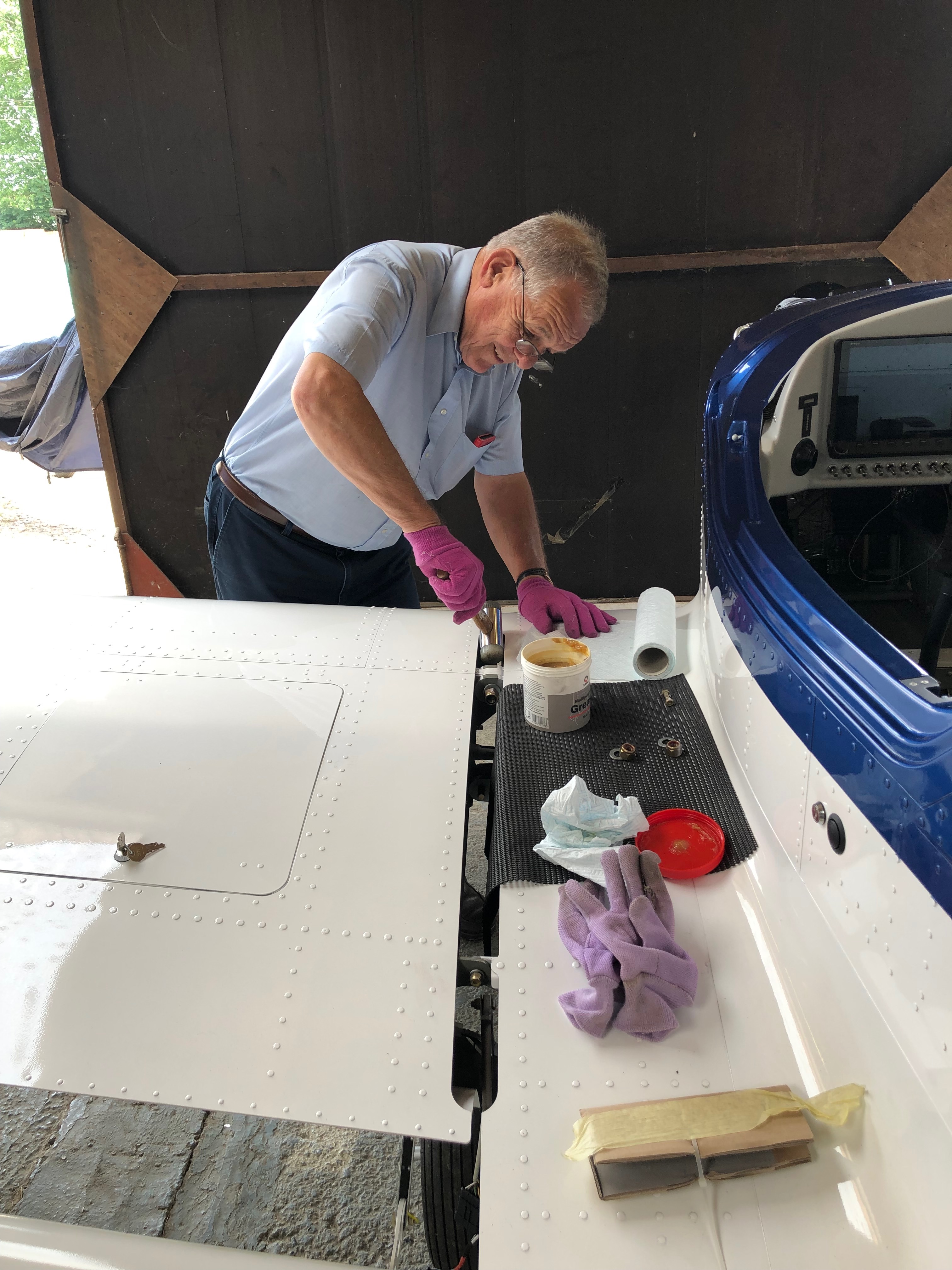
Once the wings are attached the main bolts need to be tapped home with a small nylon mallet before the nuts are added.
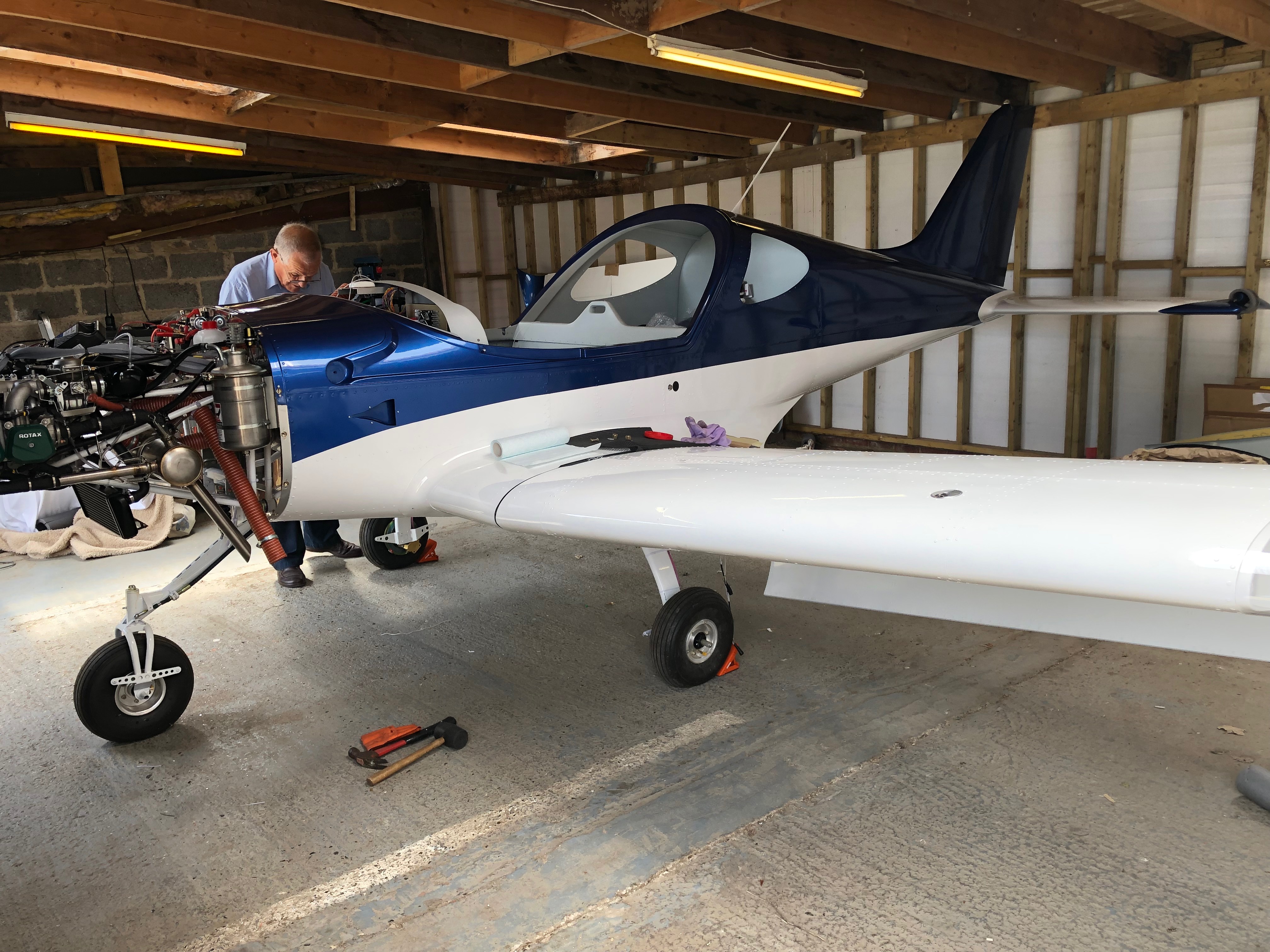
With the wings added she’s a tight fit in the hanger with just 6″ between the front door and rear wall. If I had fitted the prop she wouldn’t fit!
Now all the wiring has been completed and checked I can start to tidy th wiring. Ovrall I’m quite pleased with the results. Circuit Breakers…
…Bus Bars…
…Equipment trays and connectors…
… and switches. All look a lot tidier now.
She’s coming along nicely now and it won’t be long before I can start engine tests…

Tuesday 11th June 2019

Music: Röyksopp and Dido

It’s time to do the wiring. This is going to be long job as there are wires all over the place! There are some things that must be done to make sure that it’s maintainable in the future like labelling as it’s easy to lose track of where wires are going from and to and obviously it’s got to look neat and tidy. First thing is to look at suitable routings for the bundles and make sure they make ‘sense’ then start laying them out. This is one of those jobs that you just have to keep going at and eventually it’s finished!

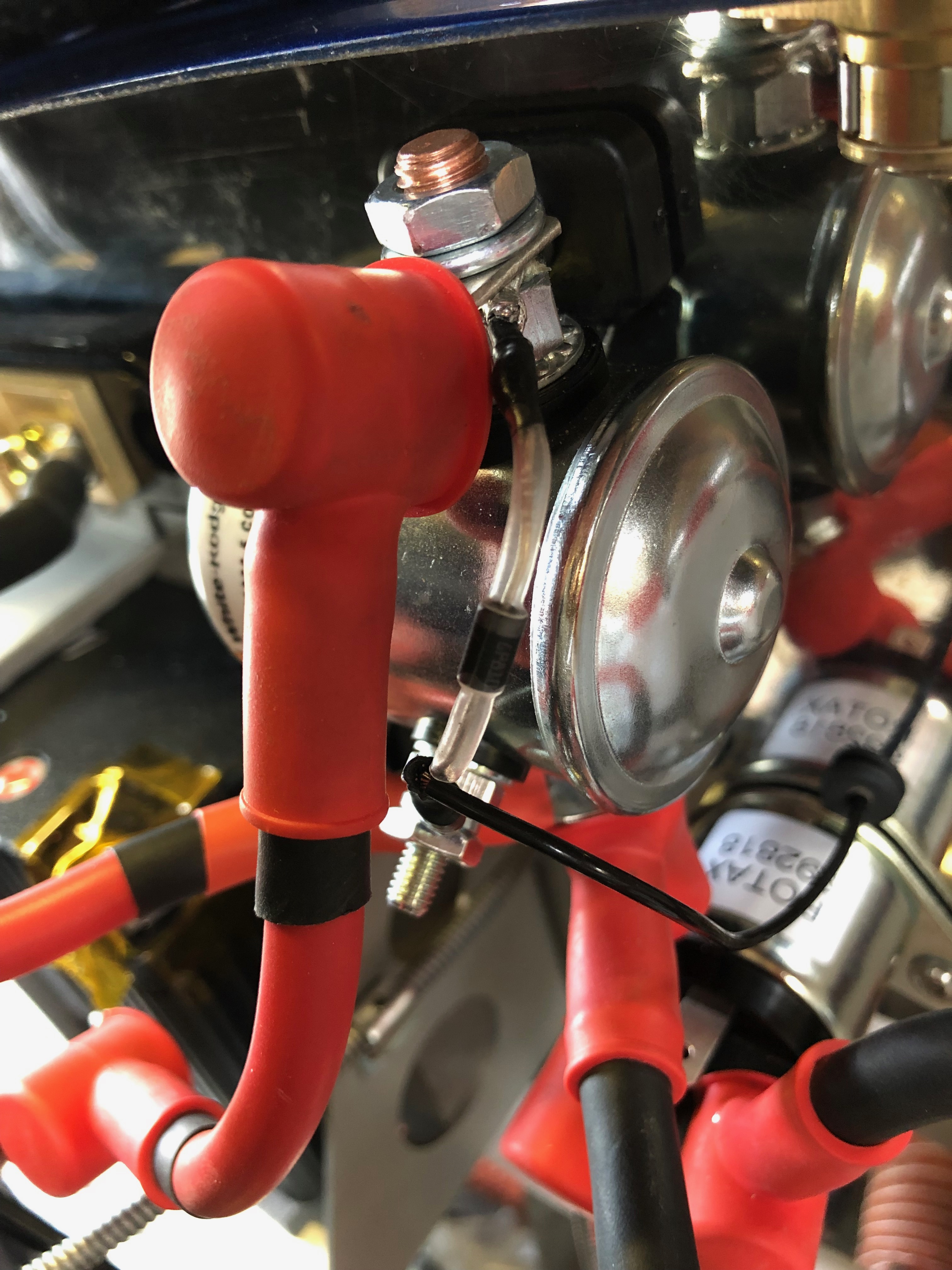
First up is to protect from reverse currents when the master switch is turned off. This is accomplished by placing a diode across the positive and negative posts on the battery contacter.
It looks a quite simple but it gets the job done.
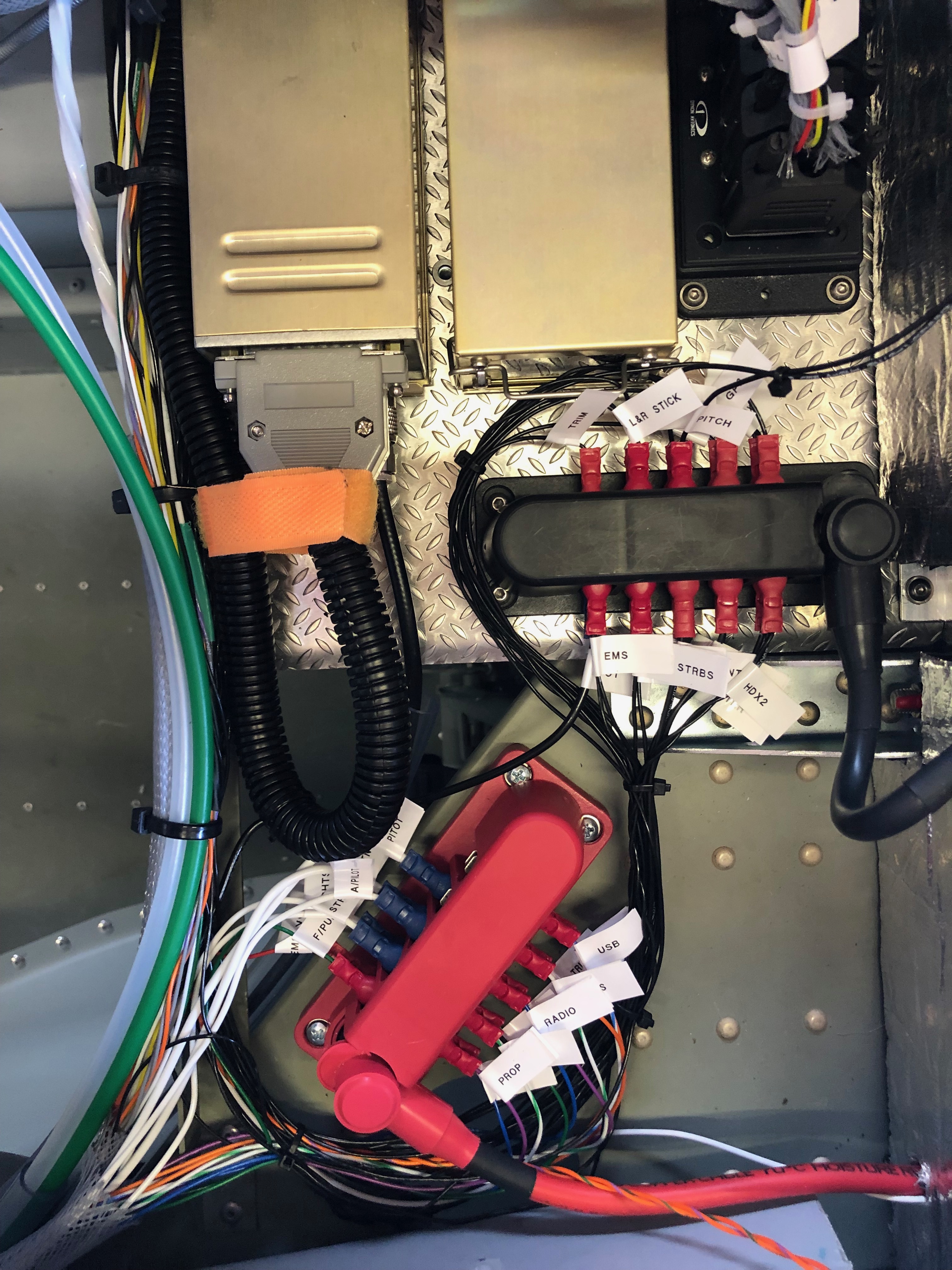
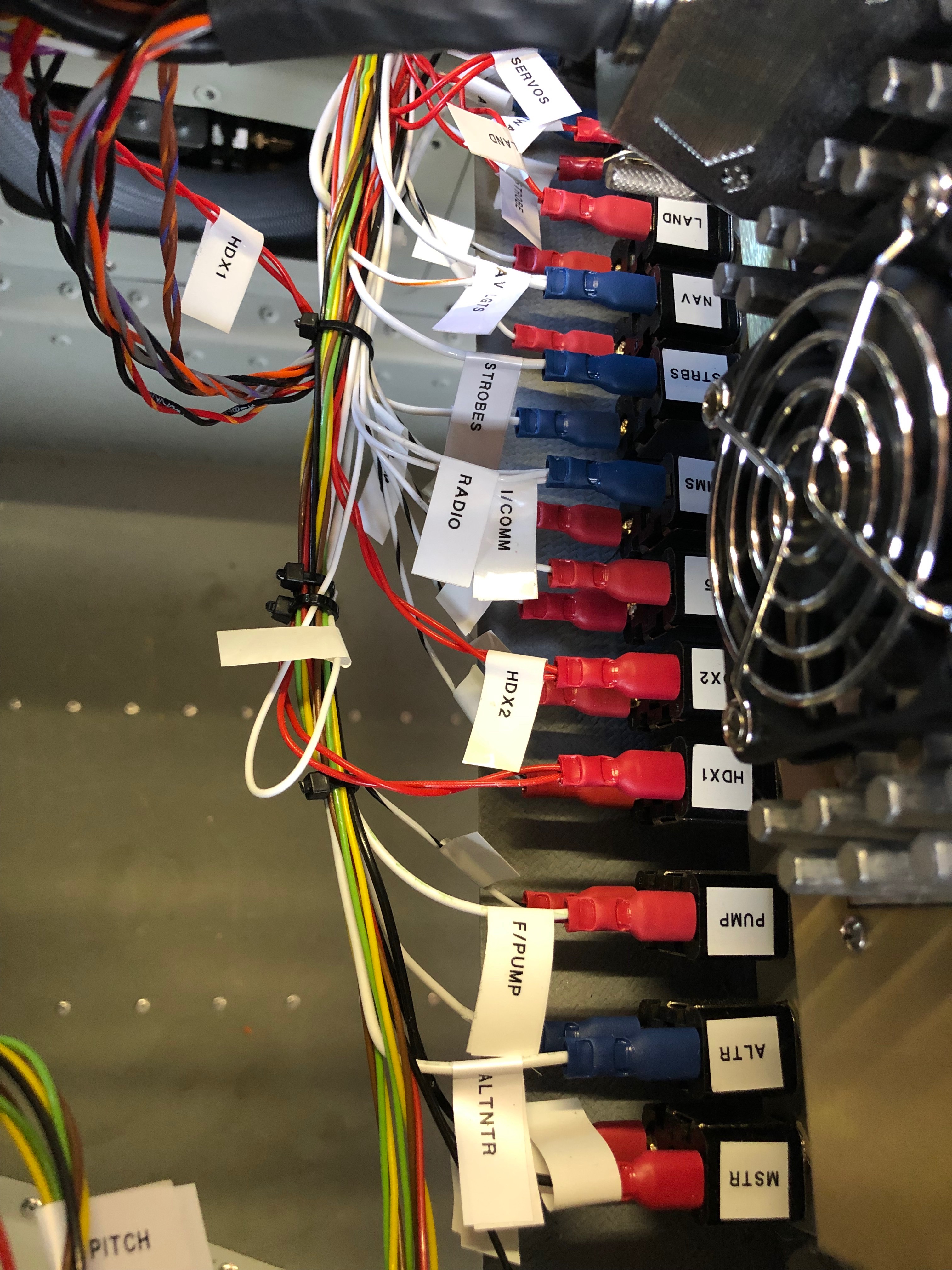
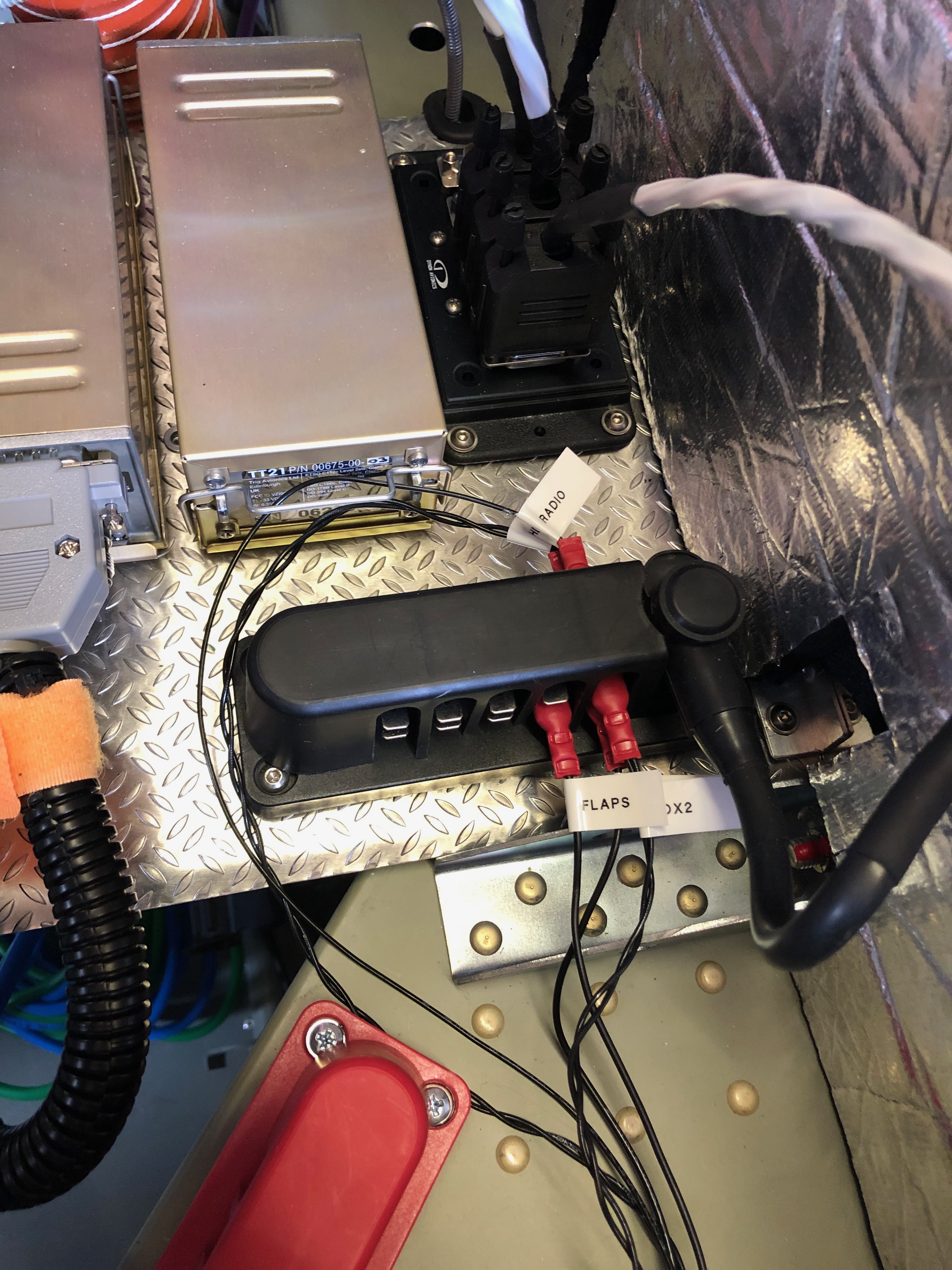
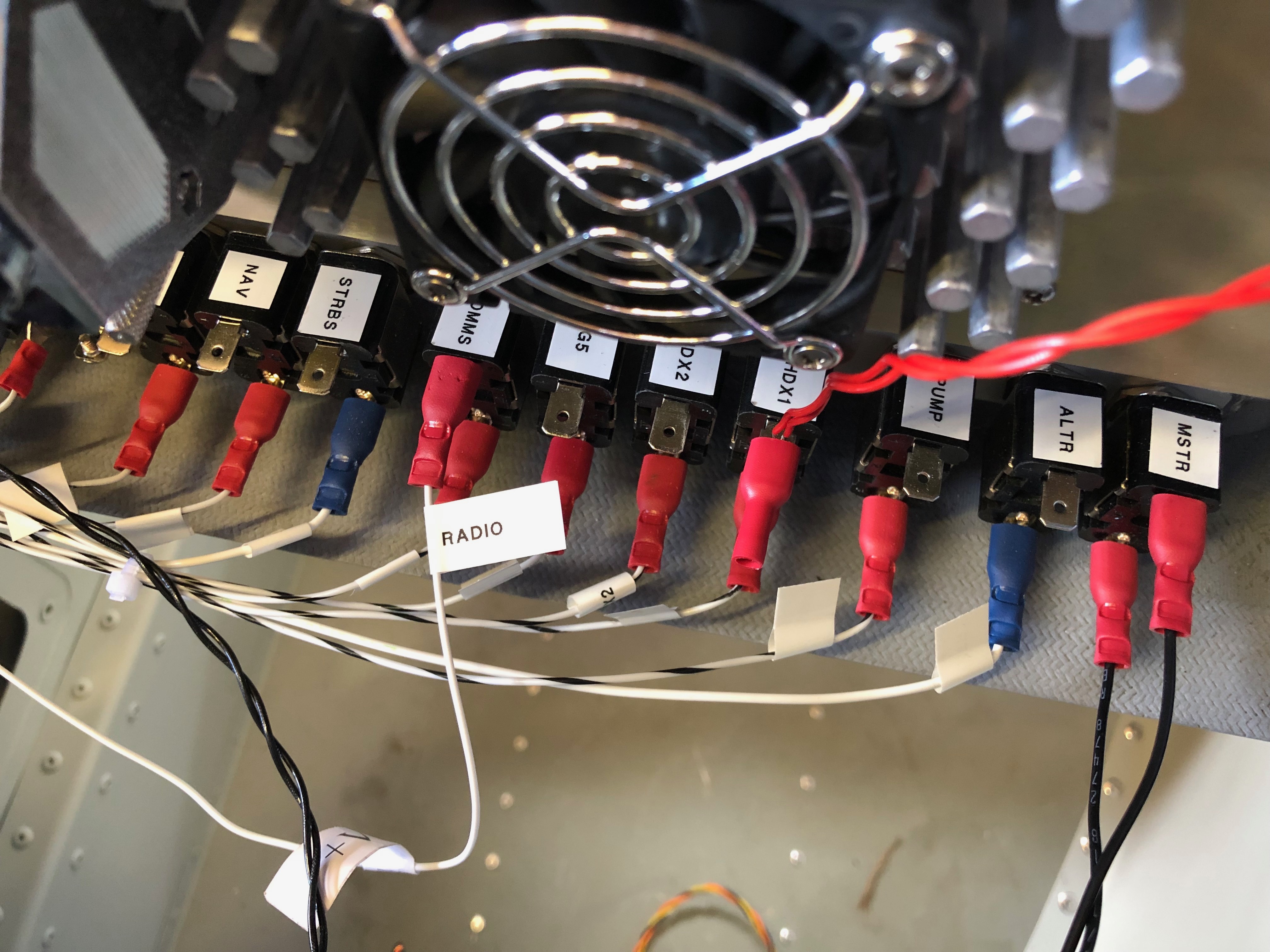
One of the easy jobs is to run all the ‘earths’ back to the earthing block. After terminating each wire with a insulated female connector a label is attached to the lead. These are just printed off a electronic dymo babbling machine and seem to be suitable for the job.
Once the earth is connected, a quick check of the circuit logic and then I can temporarily power up the circuit.
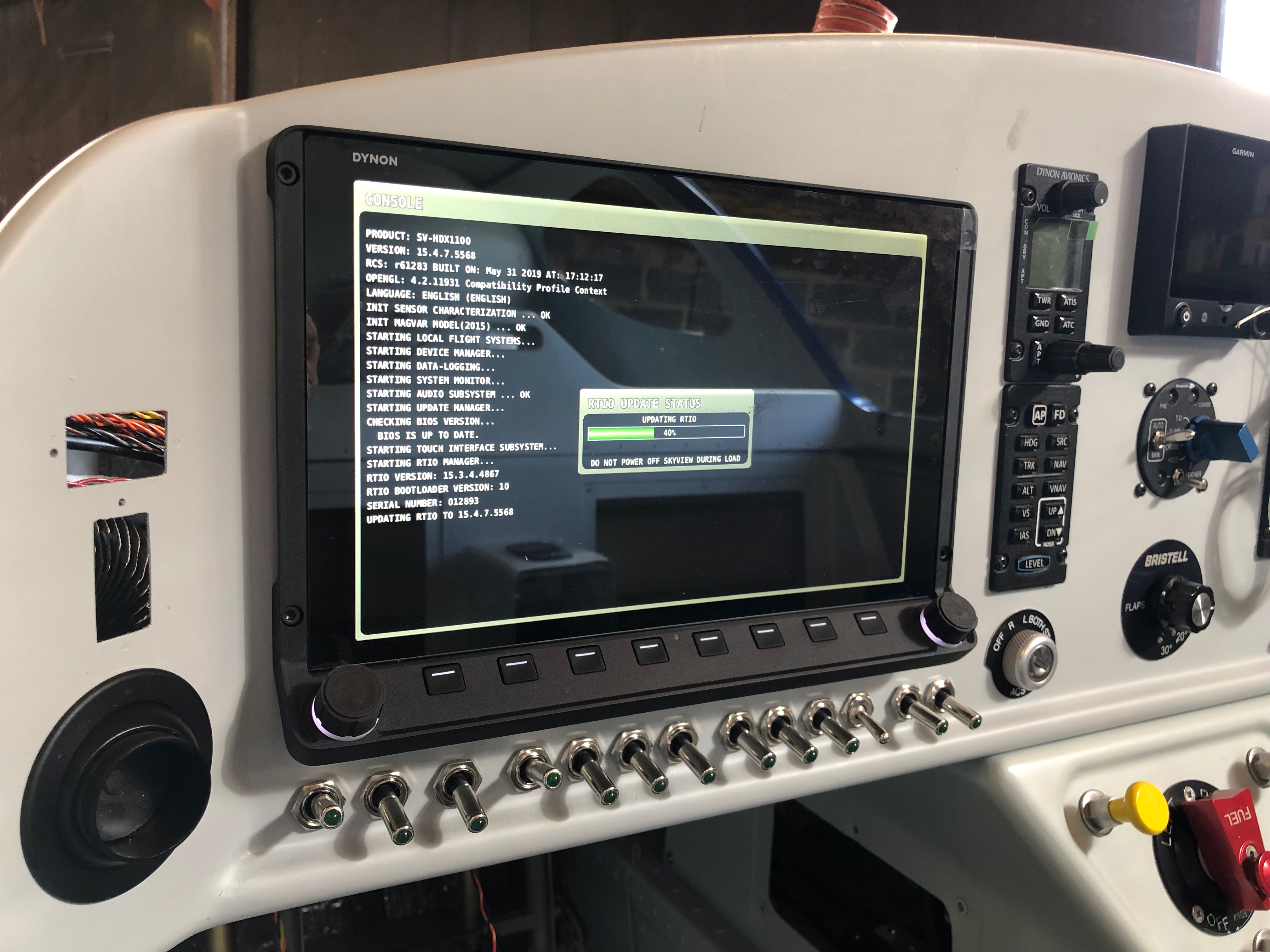
Whilst the screen is powered up on main power I thought I’d update the system software to the latest version. The software has a boot loader that updates all the other attached devices like the autopilot and knob panel.
Last job today was to run the G5 to GMU11 loom in and secure in place.

Friday 17th May 2019

Music: James Taylor and Oh Wonder

A couple of days away to do some flying and meet up with an old mate for a beer or two and now back to the grindstone!

A couple of items to complete the installation of the primary power system. The power and earthing arrangements that I’ve decided to use necessitates rearranging the items on the comms tray. Once this stage is complete and with virtually all the other activities complete until the prop arrives it’s time to move on to wiring the all the systems together. It’s getting to the stage where I need to finalise my panel design and start cutting it out. I haven’t decided whether I will do it myself of get a company to water cut it.

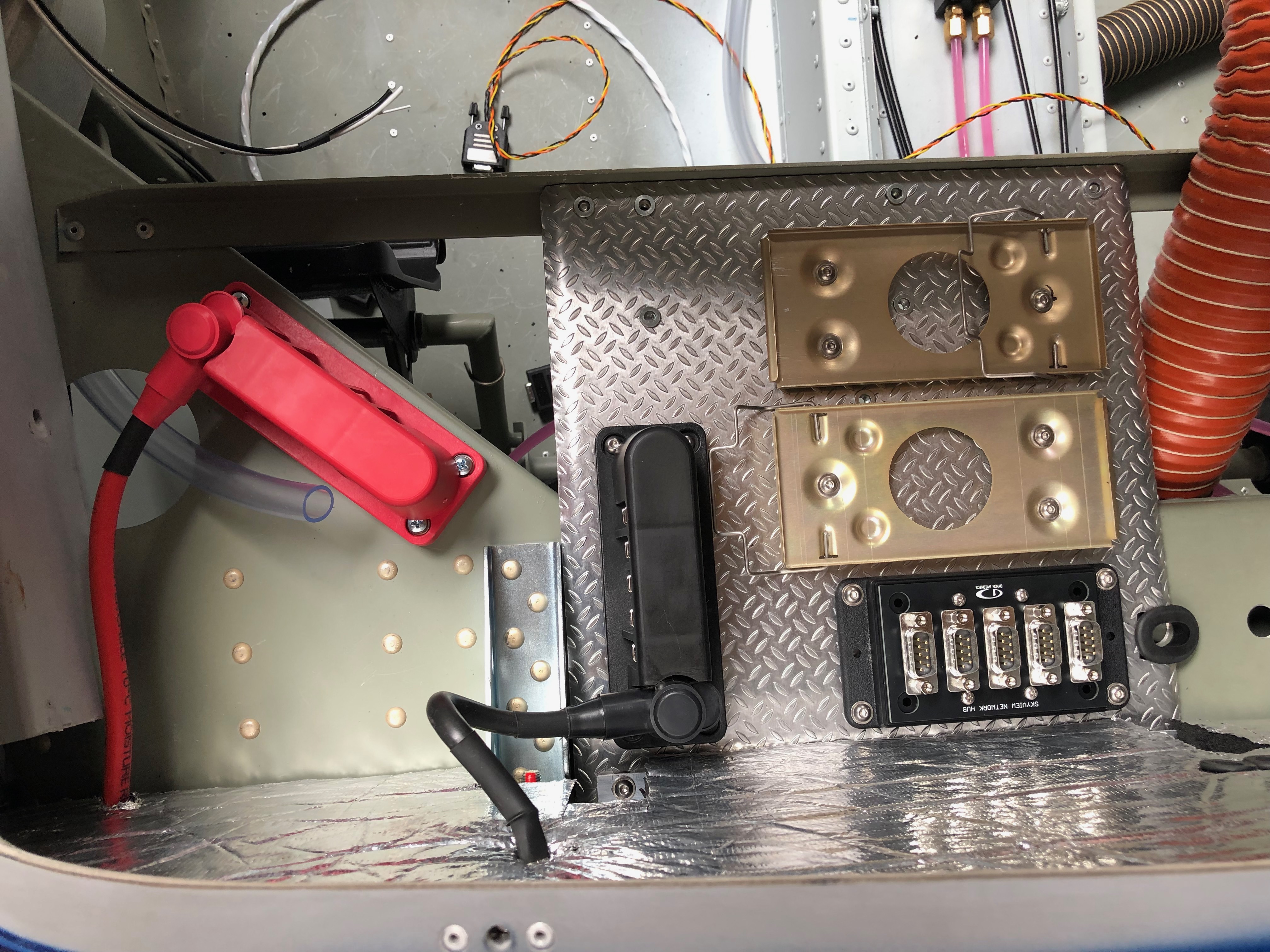
I decided to use a neat 20 way earthing block (VTE 120amp busbar) that complements the power distribution block that I’ve already installed. Where to mount it was an issue but thought the comms equipment tray would work well and shouldn’t produce any interference. So an hour or so was spent trying to work out the best position to ensure ease of access and sensible wiring runs.
I think this is the best option. I made up a short earth wire terminated with and 8mm on one end to bolt to the firewall earth stud and 6mm the other to connect to the busbar. This solution will provide 20 feed and earth connections that should be adequate as I have 15 circuits to cater for in the current electrical design.
The last wire to add is an earthing strap that is bolted on to the starter motor. This will ensure that the start draws all it’s power from direct connections and not through the aircraft frame or engine mount .
The completed primary power system.
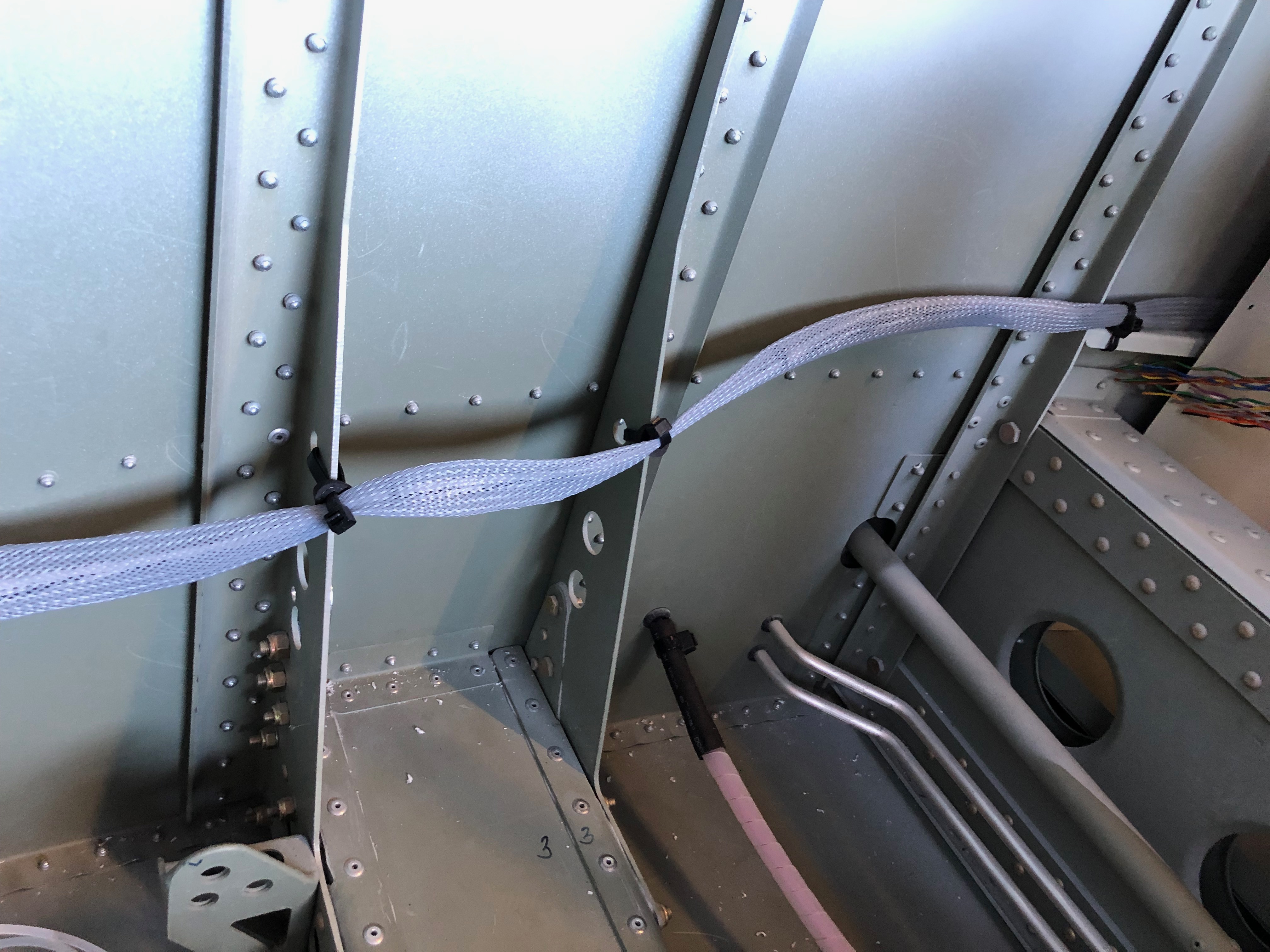
Onto running the wires and harnesses in that I’ve made into the aircraft and ensuring that they don’t get damaged during service. This is the ADAHRS network cable. I’ve chosen expandable braided PET cable sleeve. It’s tough, very light and is easily installed.
Once the cable is run in it can be secured with cable ties. This will be hidden behind the interior panels that I’ve decided to make removable so I can get to these when I carry out my annual checks.
For harnesses with connectors on I’ve chosen flexible split conduit which is tough, and light but a little more bulky. The split in the conduit allows me to slip it over my pre-made wires.
With all the wires and services that will eventually be installed I have to make sure that the installation remains neat and tidy that will facilitate easy maintenance, good protection of the various services and easier fault finding if I ever have a problem.

Tuesday 14th May 2019

Music: Oh Wonder, Paolo Nutini

Today I focused on completing the primary power system and testing switch pitch layouts before fitting to the panel. Robin May and Dave Bennett came down for a visit and check my work out to make sure it was up to standard after which we went for a quick lunch in the Prince of Wales pub that is just across the road from the airfield. It was great to see them both.

Rob and Dave sporting cheesy grins just before departure. Estimated time to get back to Finmere, just 33mins!
I mounted the circuit breakers using a piece of 20 x 1mm aluminium to check on spacing…
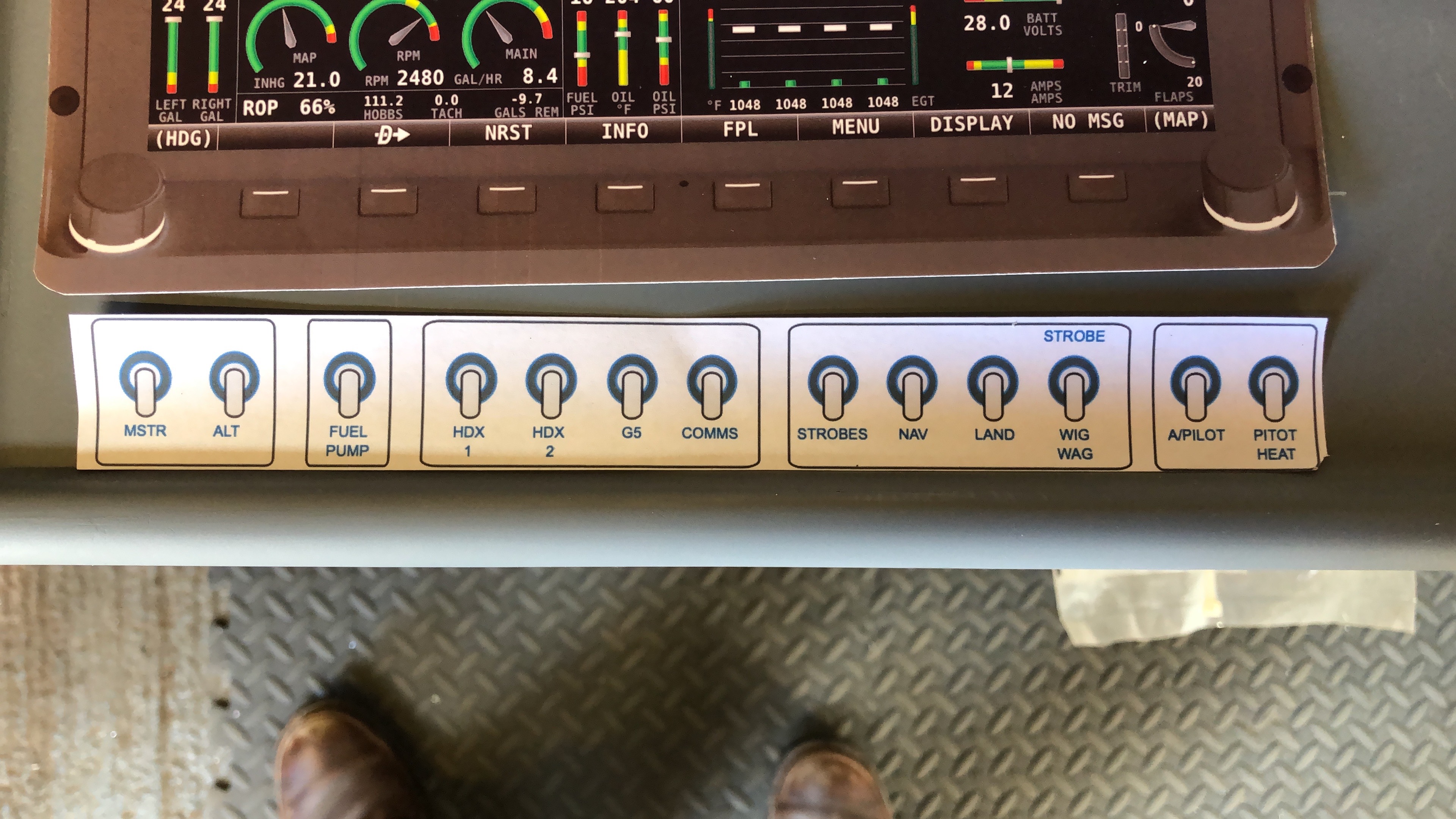
and then did the same for the switches. I will have more interaction with them whilst flying so need to make sure their not too close together. 20mm spacing seems to be fine but will do a final check before drilling the holes in the panel!
This is the likely layout of the switches. I’ve tried to order them logically based on start up and scan cycle.
Each of the heavy duty wires that are used for the primary power system need to be terminated. I considered ordering the wires but thought it would be better to make them up myself just incase I changed my mind on the positioning of components. This is a handy tool for crimping terminals on heavy duty wires that can be used by either clamping in a vice or hitting with a hammer. The latter seems to work a treat!
The +ve power needs to run through the firewall to a position behind the instrument panel so an additional hole needs to be drilled and protected with a rubber grommet.
After a lot of research and scouring the internet I found this busbar. The wire is connected to the unit and protected by a rubber boot, a cover fits over the whole unit to protect against shorting.
The +ve side complete. Now to move on to the -ve side and earthing arrangements…
The -ve needs to be attached to the airframe, engine and -ve busbar so I’ve added a stud that I can connect the engine and battery connections to. Thats it for today and quite pleased with the progress made however it all takes a bit longer than you expect!

Friday 10th May 2019

Music: Elton John

I had ordered several items whilst I was away in Prague which had been delivered by the time I got home so I was eager to get back to the build. These included a Shorai LiFePO4 battery and circuit breakers. I also received the servo connecting rods and wing locker fittings from Farry and replacement Aveo air vents that will allow me to finish off those two jobs.
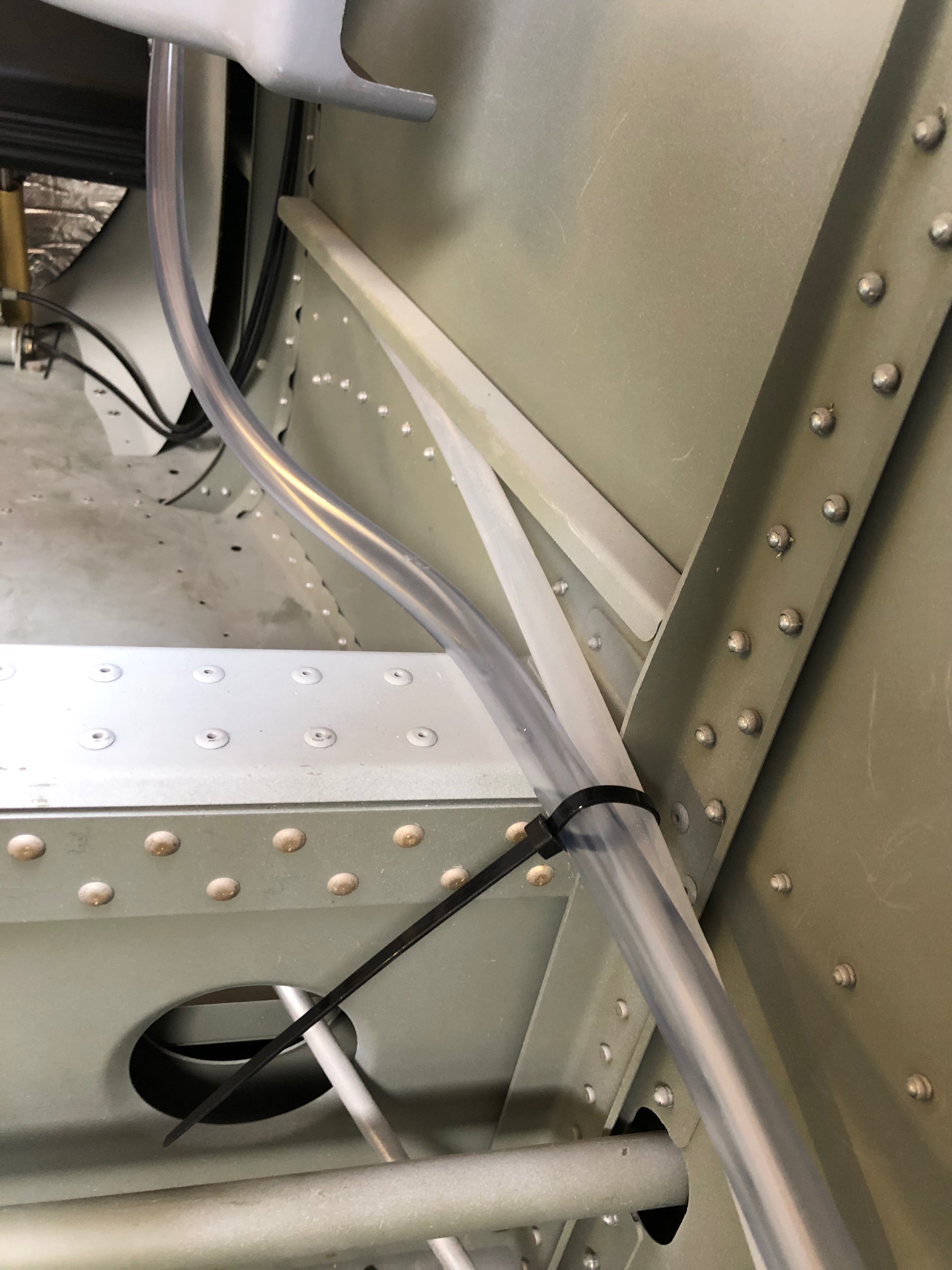
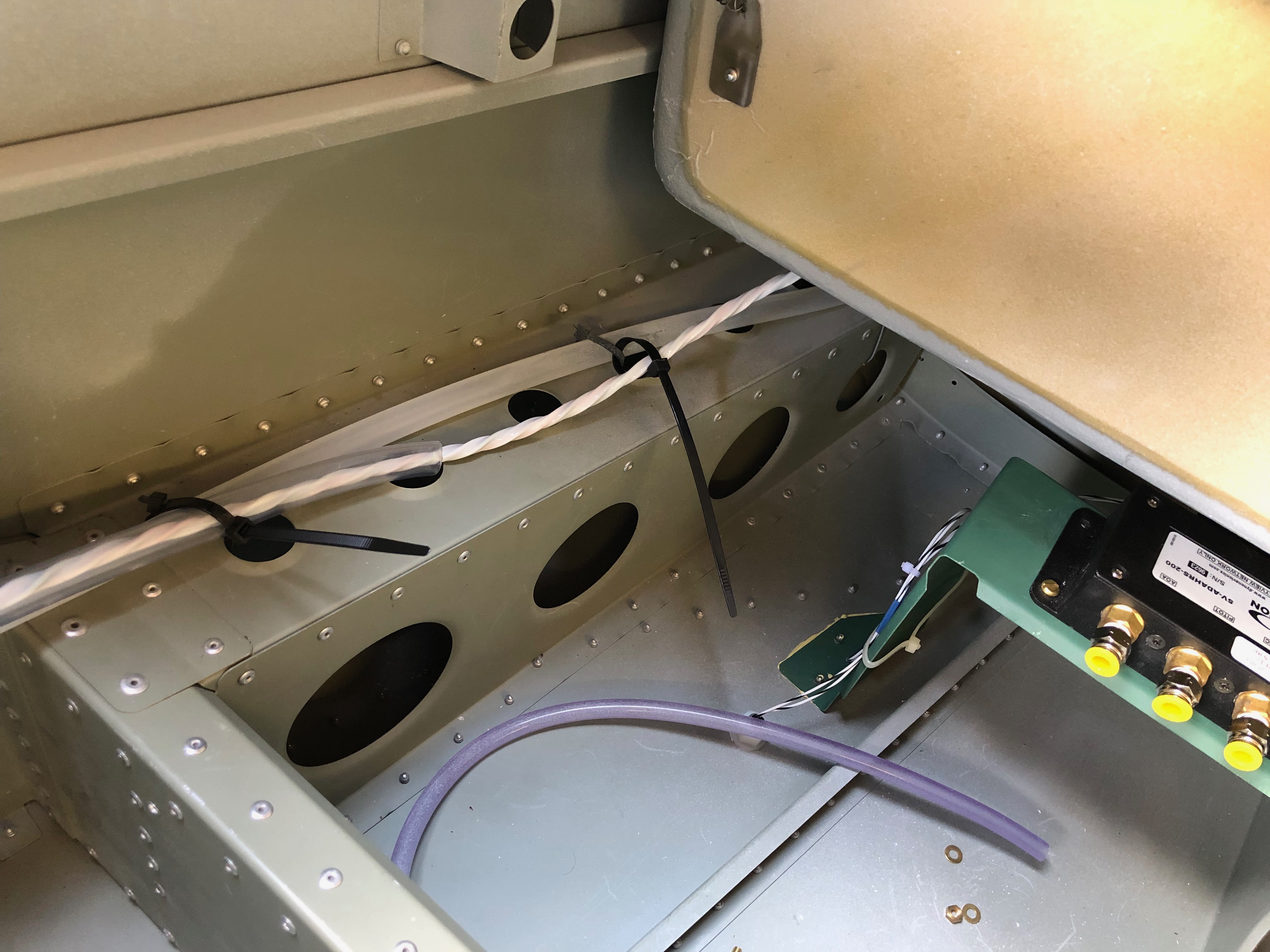
As you can imagine there are a lot of cables running up and down the aircraft so I’m experimenting with conduit that will allow me to run new cables or service the ones already installed. This is some 12.5mm polytube that works quite well for the ADAHRS cable.
Just needs to be run in with some thought to make sure that it doesn’t chaff against other things so will probably need stand-offs.
One of the jobs I had to leave was to terminate and connect the pitot heat control unit to the power cable I had run in earlier.
I’ve tidied the cables around the unit but will have to see if this induces any EMF whilst in use. It’s not close to any other electrical item so should be ok.
One of the items delivered was the Amp Superseal connectors that allowed me to terminate the pitot, landing and strobe lights. They are a little fiddly to crimp the connecting pins on but should allow for a weatherproof connection in service.
Instead of the normal lead acid battery that weighs several kilograms…
I decided to go for a LiFePO4. They are approved with a standard mod and this one has the same capacity as a standard battery but much better cranking power. It’s amazingly small and light weighing just over 1 Kg.
So the first job is to make up a retaining bracket for it with some self adhesive padding that was supplied with the battery.
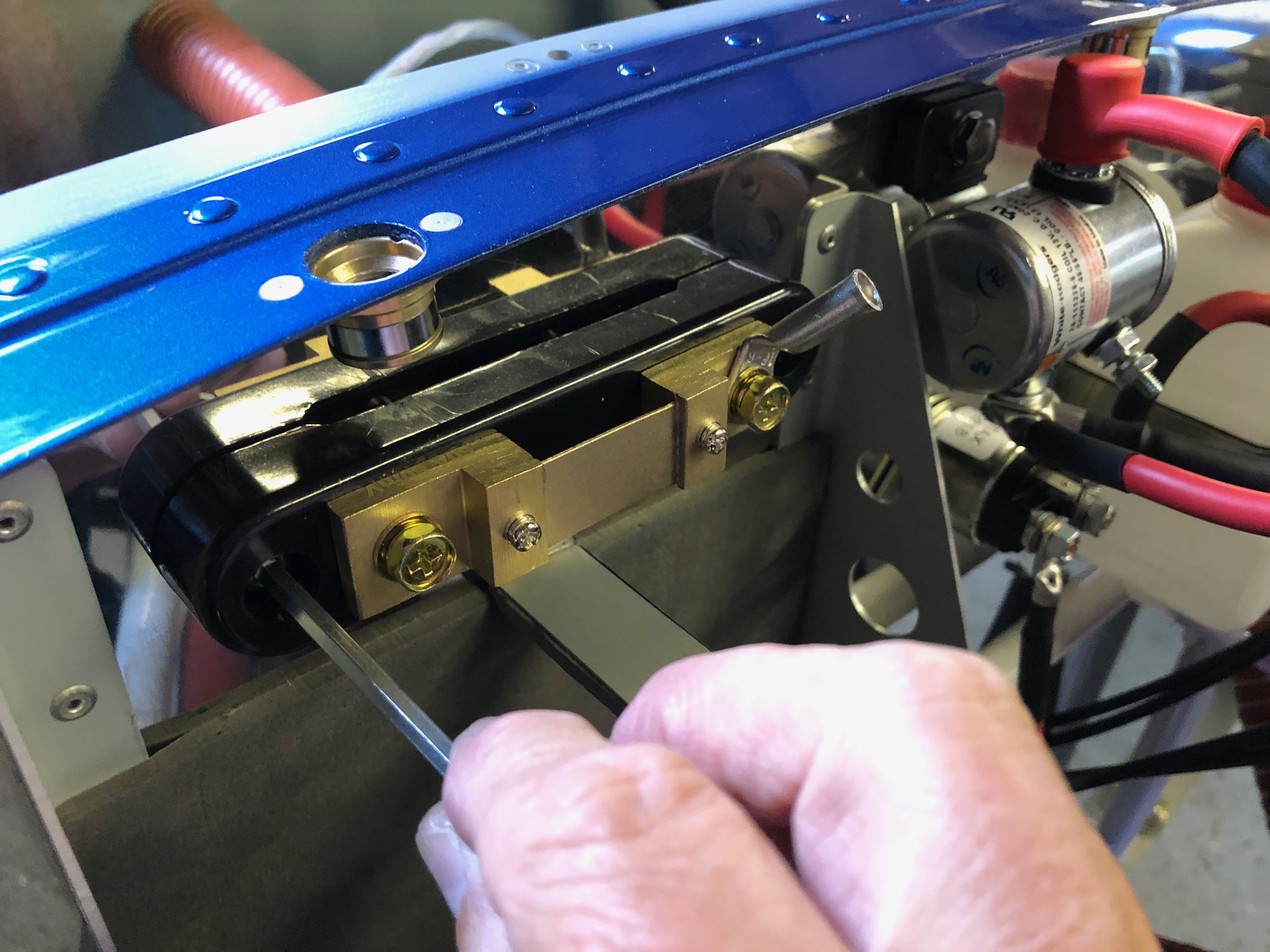
The small size of the battery has given me some space to mount the ammeter shunt that measures the power draw from the battery and is displayed on the SkyView displays.
The finished installation with battery retaining strap and ammeter shunt.

Friday 3rd May 2019

Music: Celine Dion

Now a lot of the build stages have been signed off I can start to install the primary power system, avionics and associated wiring. When I got home I had received a parcel from Farry who had sent the outstanding items to finish the installation of the autopilot and wing lockers. A job that I can do next week now.

It’s time to fit the equipment trays so the avionics units and associated wires and cables can be run out to the various sensors to understand the best route.
The populated equipment trays with carriers for the radio and transponder units.
Now for the primary power system cabling can be installed. Each cable is measured, cut and the terminals crimped on with a heavy duty crimping unit.
There are two types of terminal. The main battery relay uses 8mm and the starter relay and starter uses 6mm.
The install so far. Each of the terminals will have a rubber boot that covers the terminal to reduce the risk of anything shorting on them.
Wires, wires, everywhere… The sensor wire are fed out in readiness to install.
Pilot Pooh supervises the works. There’s definitely less on the back shelf and more installed in the aircraft now!

Thursday 2nd May 2019

Music: Snow Patrol and Celine Dion

Finished off the installation of the tail strobe and pitot unit before starting work on the primary power system. Also 10 stages of the build were signed off by Ian.

First job today is to finish off the installation of the tail strobe.

The strobe and wire have different colours but can be matched up logically, following the same scheme as the wing strobes.

The purple and orange structure in the background is a multi arm clamp that can be used to hold wires whilst I solder them.
The tail strobe wire is fed into the fin but there is no room for any slack so I put a loop in the wire by the rear inspection access hole so I can get to the strobe and solder connections if necessary.
The pitot has two aluminium tube, one for airspeed and one for angle of attack. The can be connected to the nylon pipes by warming the pipe and pushing oner the pipes but a better solution is to use connectors supplied in the pitot installation kit. These need installed using a ‘Flaring tool’ to ensure the connection is air tight.
I didn’t want to buy a flaring tool for just two pipes but luckily Ian Daniels came to the rescue and the result is two very nice flared pipes.
The final assembly ready for fixing to the underside of the starboard wing.
Some silicon seal is used to provide so weather proofing prior to riveting on.
The unit is held in place with clecos whilst riveting.
As shown before the power unit for the pitot heat is mounted on the access panel. The excess wires could be cut but I’ve tidied them up by coiling round the unit and using a cable tie to hold in place.
The first crimps of many!
The last thing to do is cut the pitot power wire to the correct length and connect them up before securing the panel in place. The only problem is I don’t have any male spade connectors so I’ll have to finish that job off when they arrive.
Moving on to the primary power system I’ve decided to add a master battery relay. This allows the switching high currents from the battery to the starter and the main bus by a normal 25amp switch.
Now the master relay is mounted the primary power system can be connected. I’ve decided to make my own cables up so I’ve purchased a sprung loaded crimper that uses a vice or hammer to make the crimp.

First of a few cable required to be fitted.

Ian Daniels agreed to keep an eye on my build and sign of the completed stages. So that’s it for today whilst Ian inspects the work I’ve done so far.
He’s a busy man with several projects on the go but came in today to inspect my work so far and sign off another 10 stages. The photo shows a build record sheet. I now have 17 out of the 27 stages signed off.