Friday 22nd November 2019 – My First Flight In G-MLSY

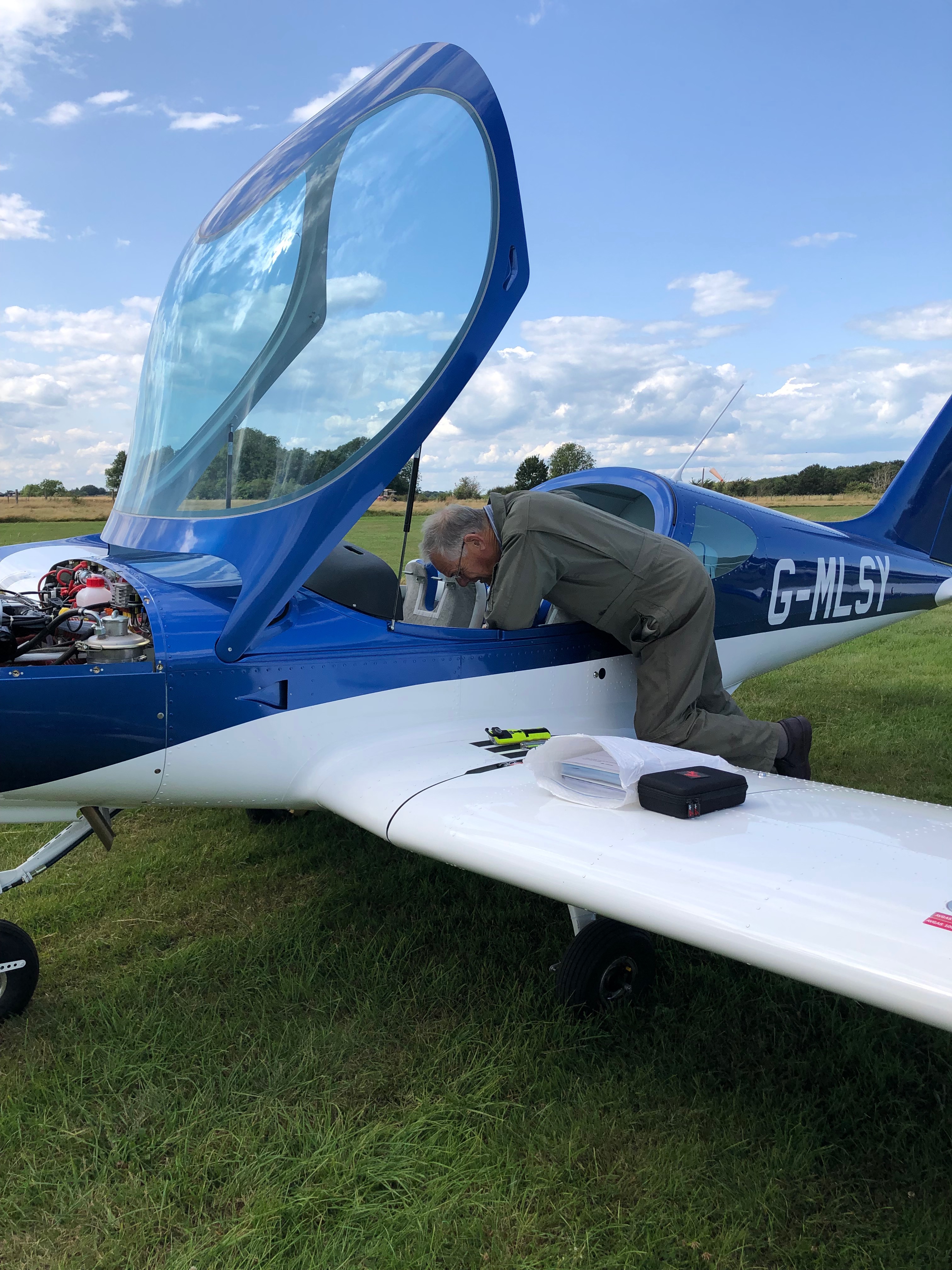
After just 10 months from the start of building G-MLSY she received her Permit to Fly on the 20th November. The LAA sent me an electronic copy on Friday so enabled me to fly if the weather played ball. It had been raining for days before and was due to be raining in the week ahead so my chances of grabbing a flight were slim. Luckily the sky opened up during Friday morning and it looked quite stable so it was time to fly!

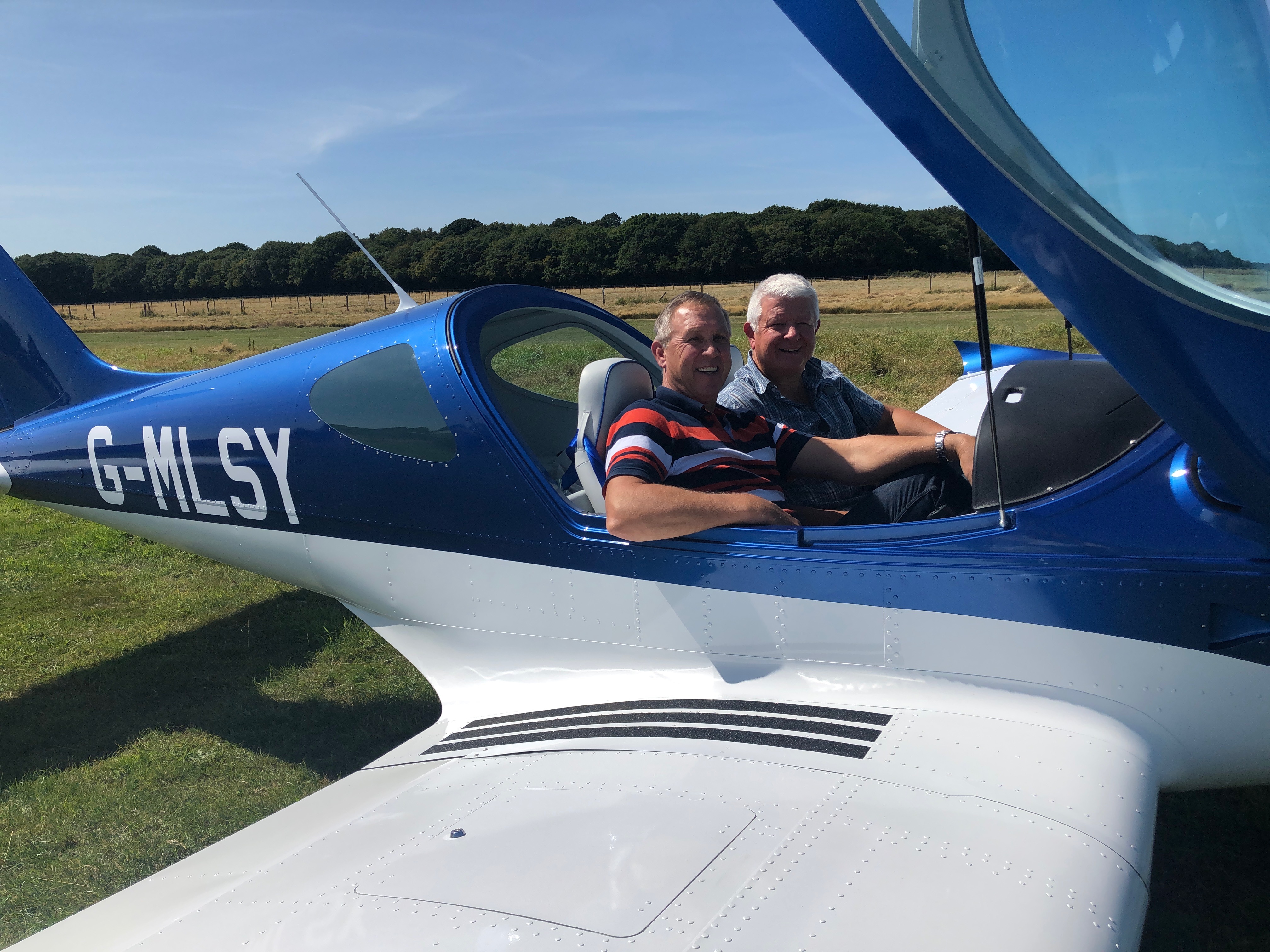
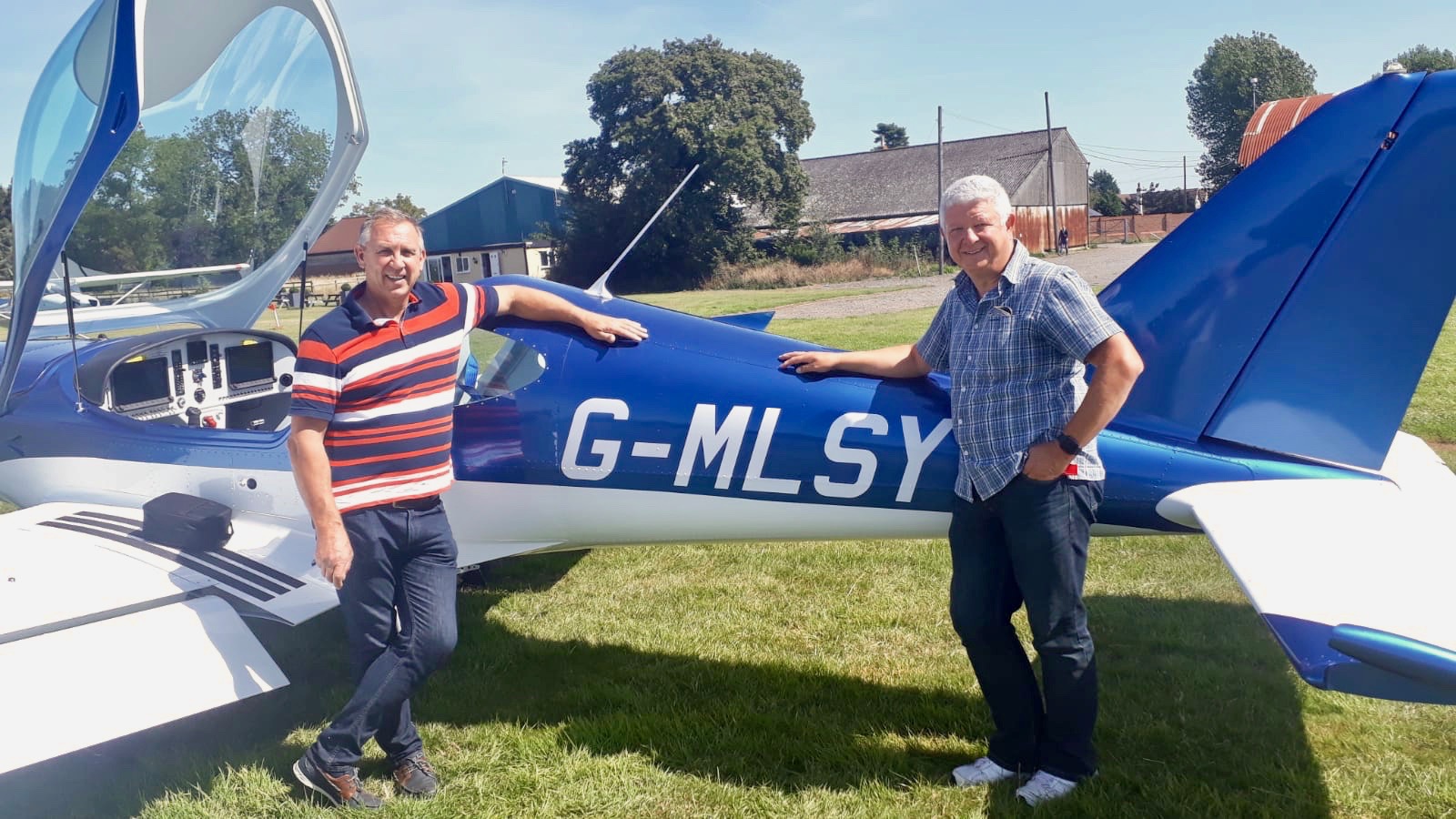
A smile from ear to ear on my first solo flight in G-MLSY.

The take off run was impressively short and she climbed out like a home sick angel at over 1500 fpm. The cruise speed was definitely enhanced by the addition of the spats without adversely affecting the trim of the aircraft. It’s early days yet but cruise looked to be around 115kt. I need to work out the best power setting combination over the next few flights as I think there is another 5 kts to be gained. Landing onto ‘Two Zero’ with a 10 Kt crosswind was straightforward even with quite a bit of turbulence over the threshold.

Short clip of my first flight.

Very pleased with the results so far but now need to fly her more so I can tune the autopilot and get used to how she handles and performs in varying conditions and loadings. Once I’ve built up my confidence in the way she performs I’ll be able to take Karen up as my first passenger.

Friday 8th November 2019 – Fitting the Spats

Whilst waiting for the permit to fly to hit the doormat I can complete a few jobs that didn’t need to be done before the flight testing. This includes fitting the wheel spats, applying the internal leather trims and other miscellaneous jobs.

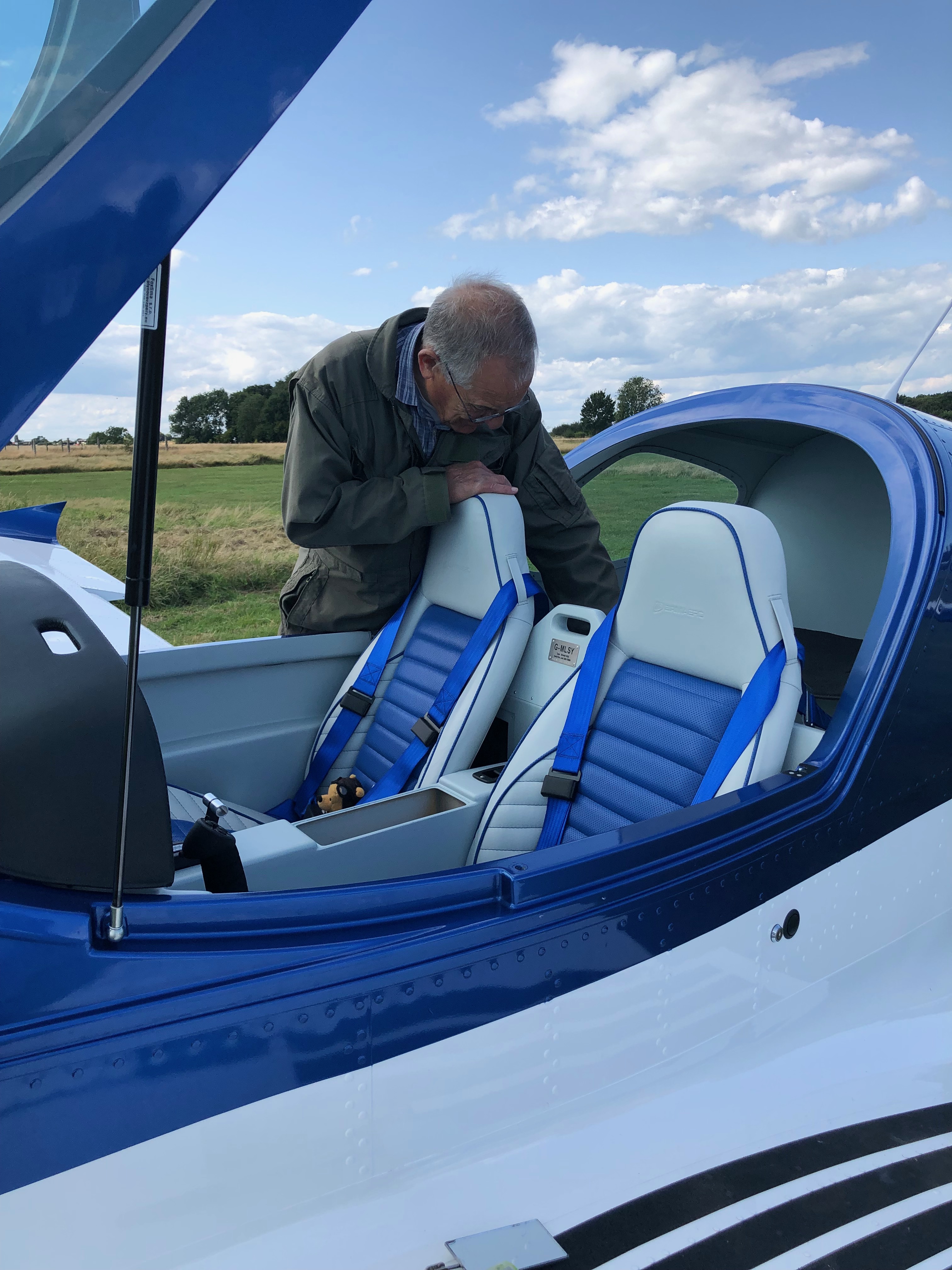
The leather interior trim was very easy to fit but required the seats to be removed. The last thing to do here is to fit the centre storage cover where ‘Pilot Pooh’ normally sits so he will need to sit somewhere else when the cover is fitted. The centre storage box can be removed so this allowed me to put an ’emergency release’ in for the canopy just in case the main release mechanism fails.
The main spats have one hole predrilled but the other four holes on each spat have to be precisely measured and drilled to ensure that they are level and inline with the airflow to reduce drag. What seemed to be a very straightforward job took quite sometime to get right.
Fitting the nose leg cover was very straightforward. The nose wheel spat took about the same amount of time to fit as the main gear but the result is a much cleaner and streamlined look. Hopefully it will give an increase in cruise speed as well!
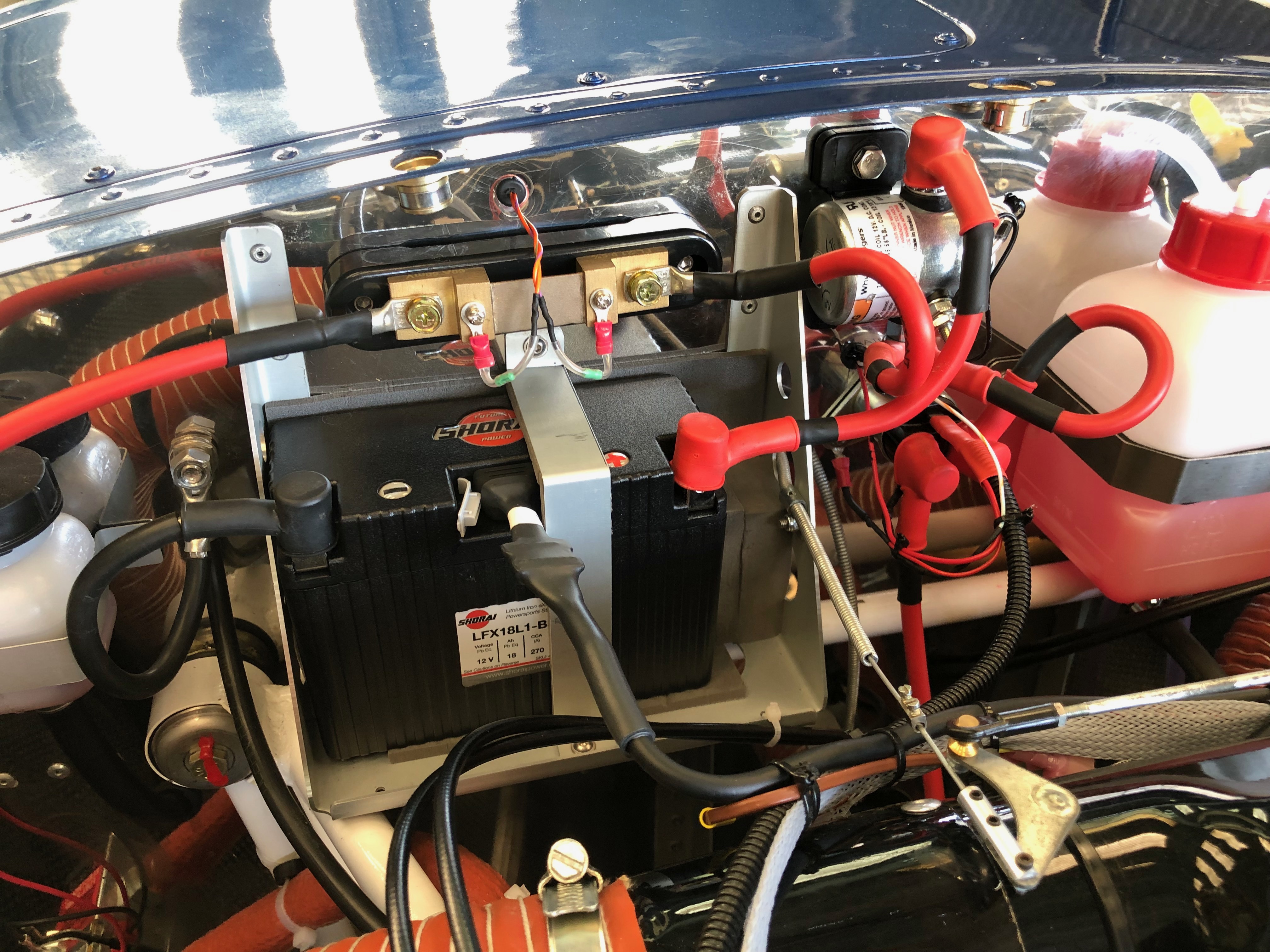
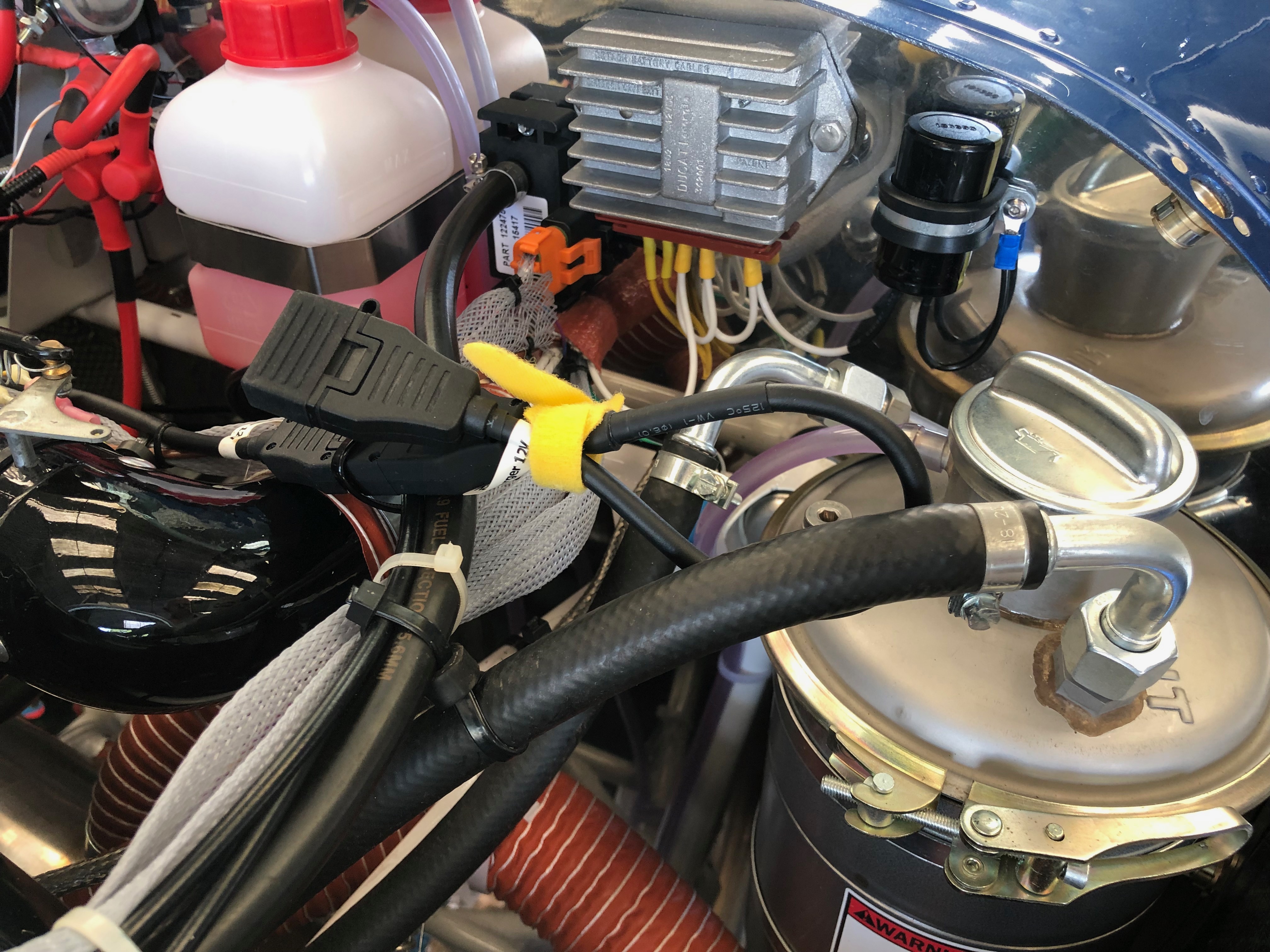
To reduce weight I decided to add a Lithium Iron battery. The battery is normally charged when the engine is running and can also be charged with a normal low amperage battery charger. If the battery runs flat or requires a top up it would normally mean that the top cowling would have to be removed to attach the battery charging leads which is quite a clumsy arrangement. Shorai sell a battery charger that is specifically designed to charge / condition the battery. They also sell a charging lead that can be permanently attached to the battery so I purchased one and run the lead to the oil inspection hatch. This allows me to keep the battery topped up when it’s not used for a period of time. Quite a neat solution.

Monday 28th and Tuesday 29th October 2019 – Flight Testing

It’s been a month since we carried out the first part of the flight test. A couple of holidays and continued bad weather has prevented further testing but Monday and Tuesday both looked good so Rob made the trip down on Monday morning so we could finish it off.

After a cuppa we planned what we were going to do. Avionics testing on the first flight, the Airmaster and feathering on the second flight and during the third flight which would be for 2 hours we would test the autopilot and complete any outstanding general flight tests.

To ensure that we achieved the 15 landings required by the LAA to validate the flight test Rob suggested that we carry out some Touch and Go’s at Lydd EGMD. A quick call to them and we were set up for that on Tuesday.

All the flights were completed at the end of Tuesday at 16:03. We logged 15 landings with a total flight time of 7:31. During the flights all aspects of the the aircraft worked faultlessly.

  1. The Airmaster was a dream to use and produced some very impressive results with maximum rpm for very sprightly acceleration and a very short take off run. Once Climb is selected we noticed a very good climb rate even at MTOW. The transition between different settings on the prop was very smooth and predicable. With the engine off and the prop feathered it reduced the drag to negligible rates which was reflected in the reduced descent rate achieved.
  2. The engine ran faultlessly and never missed a beat. It was very responsive to throttle changes throughout the range.
  3. The autopilot performed faultlessly too. It did everything that was asked of it. Tracking a flight plan, climbing or descending at a specific VS or to intercept an altitude. It even protected the aircraft by ensuring it didn’t fly outside the flight envelope.
  4. The Dynon screens are clear and easy to read. They take a bit to get used to as they are not quite as intuitive as an iPad, but they worked very well with good aural warning annunciations coupled with the display of appropriate alerts.
  5. The Bristell was lovely to fly. It was stable and had a good solid feel but very responsive when you need it. It settled on the ground during landings very nicely even in moderate turbulence. The cabin is very spacious and the seating is very comfortable. It felt that you could fly for hours and not get fatigued.

Overall I’m very happy with my decision to buy a Bristell. The options I’ve included have enhanced the end result and my decision to fit the Airmaster have resulted in an aircraft that’s a delight to fly.

So the flight tests are done and the paperwork is with the LAA. Now it’s a waiting game before I receive the permit to fly but hopefully it won’t be too long before I’ll be able to take G-MLSY for a flight myself and then take Karen for a few flights including a little tour around the Kent coast.

G-MLSY is a joy to fly and it was great to get back in the air.
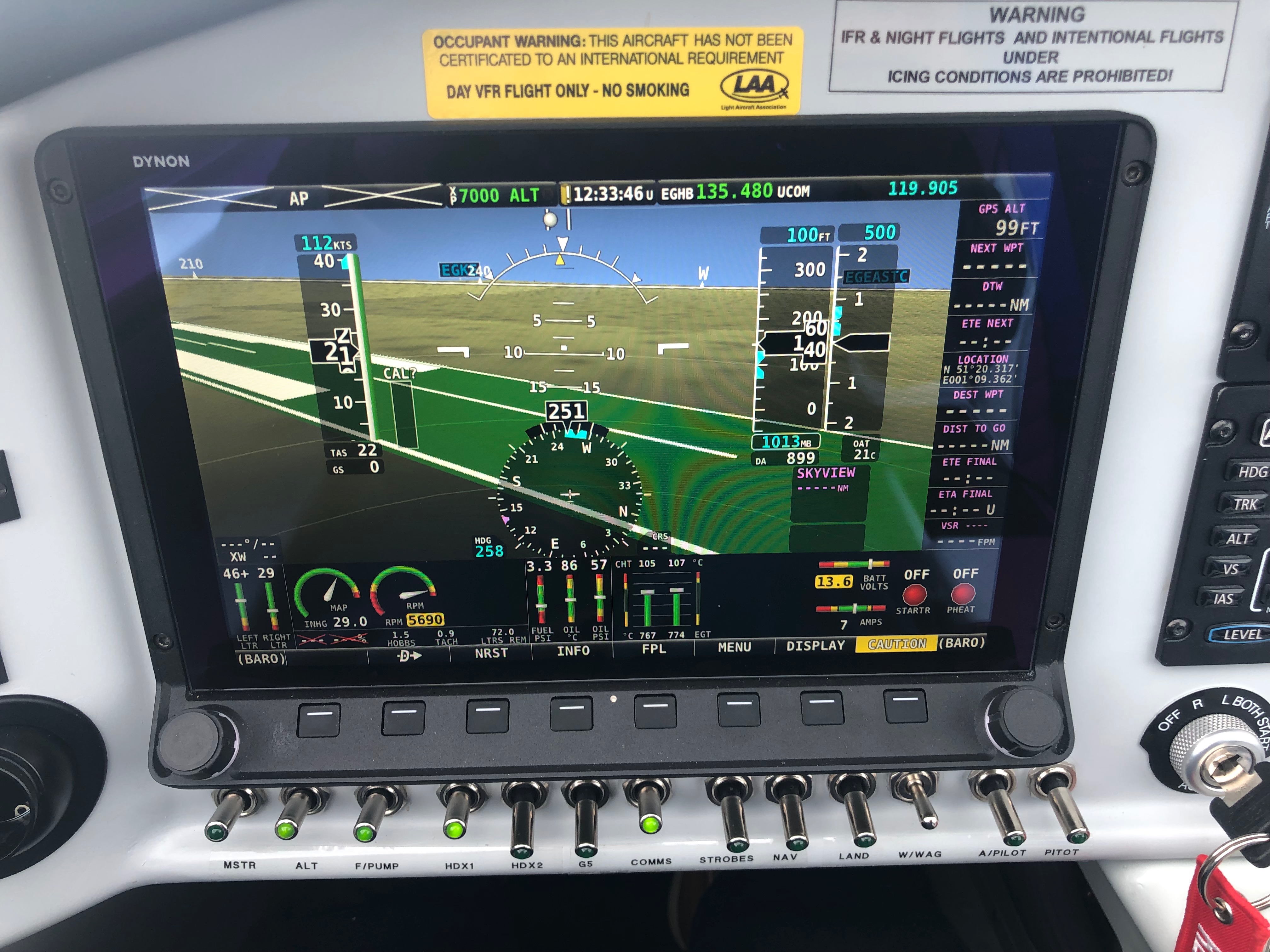
One of the tests to carry out if you have a feathering prop is to switch the engine off, feather the prop and restart with a dive and then repeat with a starter restart. Both work faultlessly. Once feathered and trimmed for best glide we achieved and impressive descent rate as can be seen in the photo..
It never ceases to amaze me what you see from the air. Here a staggered river or drain reveals itself at height.
Dungeness Power station off the right wing tip. The landscape around here is quite barren.
Set up for a very turbulent final to ’03’ The Bristell handled very well and was very responsive even in these conditions. Touch & Go’s were really very easy. Land, dial up 10 degrees of flap, full throttle and away you go. On climb out with positive rate of climb, flaps away and switch the Airmaster to ‘Climb’. The rpm reduces to 5500 with no stress or fuss.
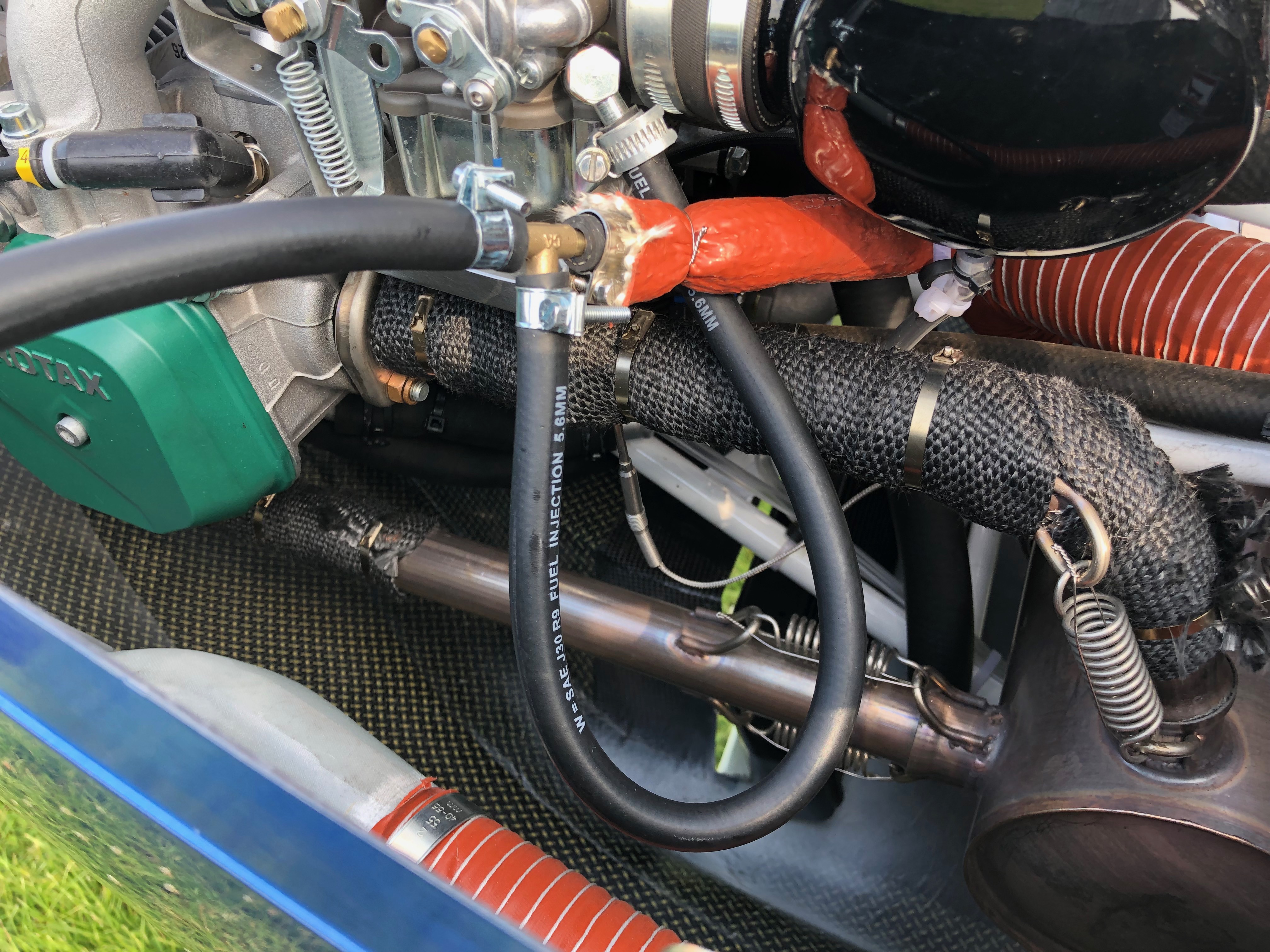
One of the things that we had noticed is the EGTs tended to be a little on the high side. During construction I made a decision to add exhaust wrap to the exhaust downpipes. This was to protect surrounding pipes and lines from excessive heat. However it seems to have an adverse effect and produce higher than expected EGT. This shows the EGTs with the exhaust wrap fitted.
I decided to remove the exhaust wrap and run the engine again. The EGTs are running up to 80 degrees cooler now so I’ve decided to leave them off now.
G-MLSY looking good after a thorough clean and ready for the next flight…

Friday 25th October 2019 – Removing the Thermostat

Yesterday we received an instruction from Bristell UK to remove the coolant thermostat if you had fitted one. They state that two Rotax 912 ULS engines have had to have cylinder no. 1 replaced due to overheating and they claim that the thermostat caused. With no other information it seemed sensible to remove it although now I effectively have a €250 aluminium 90 degree connector. Quite frustrating.

The Silent Hectik thermostat. Very well made with a 80 deg C thermostat hosed within it.
To remove the stat required the casing to be heated with a hot air gun. That softened the Loctite holding the screws. Once removed a little bit of Wellseal is used to help seal the ‘O’ ring, Loctite applied to the screws and then reassembled. As I was going to use the housing as an expensive 90 degree connector I thought it was a good idea to mark the casing with “Thermostat Removed’.
Reinstalled and ready for the system to be refilled with coolant. Job done in just over an hour.

Tuesday 17th September 2019 – Flight Tests Begin

Well today’s the day for G-MLSY to take to the air for the first time. The LAA has approved Robin May as test pilot and Maypole was approved as the test site. As it was a bit short notice only a few people were able to attend but it was great to have the support of Dave, Nic, my Grandson Elliott, cousin Anne and her husband Charles and of course Karen whose idea it was for me to buy the Bristell in the first place.

The day started early with me ensuring that the plane was ready for it’s maiden flight. Everything had bee checked and double checked. The fuel tanks were drained and 15 litres added to enable the first flight to be carried out with minimum weight.

When Rob arrived we agreed the fight test approach and schedule and I briefed him fully on the instruments, prop and engine controls.

Rob getting comfortable before the first start.

Then it was time to go but unfortunately things didn’t go quite to plan. Basically there were three issues that cropped up during the day.

  • The harnesses that are supplied by Bristell UK don’t seem to be supplied by Bristell and need to be modified. When we tried to use them, but in practice they didn’t tighten as they should so they needed to be modified.
  • The left hand wing has a supply and return line that according to a technical drawing on the Bristell UK site are supposed to be crossed when connected to the fuselage pipes. Apparently this was changed in 2016 so there is no crossover now. Unfortunately the technical drawing wasn’t withdrawn so I followed it and included the crossover. All the previous fuel flow tests were carried out successfully however it’s now apparent that the fuel was being supplied from the top pipeline as the tanks were full after completing the fuel level calibrations. Earlier, when I drained the tank and added 15 litres per side for the first flight it uncovered the problem. This resulted in the engine stopping due to fuel starvation during the warm up. There was much scratching of heads as according to the diagram the pipes were connected properly. We ran a test on the right tank and the engine ran with no sign of fuel starvation. I took a punt and uncrossed the lines and repeated the test with a long taxi run and full power tests. After 10 minutes of testing it was quite obvious that the problem had been fixed so the first flight took place.
  • The canopy unlatched on its own. It seems that in the absence of any instructions for fitting and adjusting I had taken out all the slack in the mechanism. Whilst it meant that the canopy unlatched easily when the button was pressed it also meant that if there was any twist in the fuselage it would activate the mechanism and unlatch the canopy – a bit like a ‘hair trigger’.

I think the items above demonstrate the downside of the Bristell. Whilst the aircraft is first class the lack of a comprehensive manual that covers details like those above means that you’re always filling in the gaps. Of course you are building an aircraft so you need to be able to work things out but when there are critical items that need to be done exactly as designed by the manufacturer then they should be documented in detail. I expected an inventory and build manual when I took delivery but never received either.

After resolving the issues that we found Rob carried out 2 flights during the day. The videos below are the takeoff and landing of the last flight of the day.

https://1drv.ms/v/s!Au02Zz1cs6-RgbccF7-ZF7eT6XPyLw

And landing

https://1drv.ms/v/s!Au02Zz1cs6-Rgbcu1aoFqIiNHEcyTg

The day ended well and Rob and I retired for a steak and a beer to discuss the day and work out roughly what the second day of testing would consist of and I am looking forward to my first flight in G-MLSY as observer.

Monday 9th September 2019 – Flight Test Application

I’d planned for the flight test permit application to be processed whilst I was away in Llanbedr on a gliding trip for a couple of weeks. I’d been checking the LAA website to see if there was any change in the status of my test flight application. On Friday 6th I saw that the application had started to be reviewed so was surprised that today I received a note from the LAA that they had reviewed my application and had a few queries that needed clarification.

More specifically these were the points raised:

1. I had not listed the Manufacturer’s options like landing lights, wing lockers etc so I needed to supply a list.

2. I needed to supply some photos of the servo installation to prove that I had installed them as per the Mod that I was repeating.

3. I needed to confirm that I had fitted the harnesses as supplied with the kit?

4. I had transposed the aft and forward figures on the W&B report so that needed to be corrected and resubmitted.

5. There was a query on the W&B report but that turned out to be a mistake by the LAA.

6. I needed to confirm the full designation/part number of the Airmaster propeller that I had fitted. I thought I had but apparently there was another designation that I needed to get from Airmaster themselves. I rang Airmaster in New Zealand and confirmed the full designation.

7. I had set SIL=1 on my ADSB transponder as the GPS250 was now capable of using that level of integrity but I was told that I needed to downgrade to SIL=0.

8. The last thing was to supply details of the Radio aerials I had used for my VHF Comm and Transponder so I sent photos and part number information.

These were all very straightforward to deal with Jon Viner of the LAA. The engineers there take calls from LAA member between 1400-1600 each day so the first thing I did was to call Jon and discuss the issues in detail. Jon was very good and allowed me to use email to give my answers to the queries.

After a few emails and phone calls during the week Jon presented the paperwork to Francis Donaldson and I received the test flight certificate for when I returned home on Saturday with a hope of a first flight on Tuesday 17th September.

Thursday 22nd August 2019 – A visit from the shires

With all the paperwork now complete and sent to the LAA it’s now a waiting game. As I’m away for the first couple of weeks in September it looks likely that the first test flight will be around the 3rd week in September. Hopefully there won’t be any queries and it goes through quickly.

For now I can just get it out of the hanger and give it a run up and down the runway to further test the engine and systems and then give it a good clean afterwards.

Today, Tom and his Mum came down to visit so Tom got a ‘fast’ taxi run – my first passenger!

I thought I’d take some pics for the Blog today…

Friday 16th August 2019 – Build Is Complete

G-MLSY is finished!

Today is the anniversary of gaining my PPL 17 years ago, so it was quite fitting that today G-MLSY is officially finished.

Ian inspected every single millimetre of the aircraft on Tuesday and Graham Smith spent the whole morning doing a very similar inspection and also reviewed all the paperwork that has been completed over the past few weeks before signing it off.

The result was a solid pass with Graham complimenting me on an immaculately built and presented aircraft. Quite pleased with that!

So now it’s time to gather up all the paperwork and check it thoroughly again the then send to the LAA for the “Application for Issue of a permit to Fly’ to allow it to be test flown.

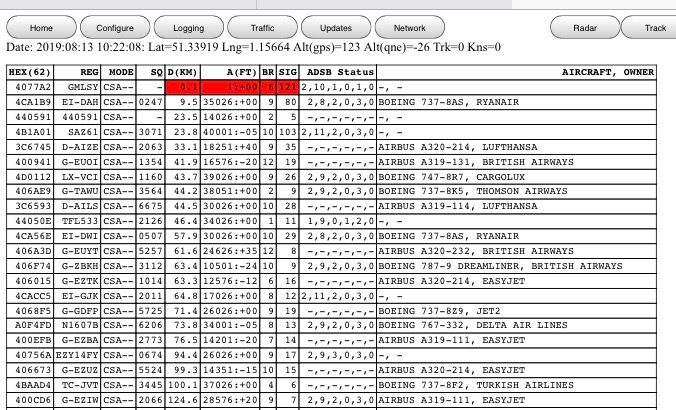
First off today was to get a printout from a PilotAware system to prove that my Aircraft is transmitting the correct codes. This has to be done as a part of the Avionics approvals.
Ian starting the inspection. He has already seen every stage of the build as he regularly visited my workshop but this super inspection still needs to be done and all the paperwork associated, done!
All the inspection panels are off and the seats are removed to ensure he can get to the autopilot and controls. This inspection took all day.
Graham and I had to carry out a joint inspection before he could sign it off the final, final inspection sheets but it’s all good The only thing I forgot to do was take a picture of him doing it!

Thursday 15th August 2019 – The Fuel Flow Test

One of the jobs that I’ve not looked forward to is the fuel flow test. Not because it’s difficult or complicated but more that it seems dangerous. It involves taking a feed off of the carb line and running a long pipe away from the engine and prop. Several timed measurements take place using the electric pump on it’s own with the engine stopped, one with the engine running at full bore using just the mechanical pump and one with the mechanical and electric pumps working together. The aircraft has to be choked and Ian offered to do the work outside the cockpit. We used radios to signal the start and stop of each engine run.

The run off from the carb fuel line using a ‘Tee’
Ian hiding under the wing carrying out the fuel & time measurements. For the electric pump only run the amount that needs to flow is 125% of the maximum litres per hour for the Rotax. For the measurements where the engine is running at full bore, 27 litres will be used by the engine before any excess is collected so the excess should be 25% of the maximum per hour fuel amount so were expecting 6.75 litres as a minimum.
The T&Ps at full chat look ok and the fuel flow results are far in excess of what’s required. Poor Ian need a new set of ears now though!

Friday 9th August 2019 – Adjusting the Prop

With the aircraft substantially complete and awaiting Ian to return to carry out some sign-offs I’m finishing off some smaller jobs that I can do whilst I wait. This includes adding a few more placards and labels, some more taxiing to check nose wheel alignment and brake operation, a couple of engine runs to check its operation and allow me to run to maximum RPM so I can set the fine pitch stop on the Airmaster prop. I’ve also purchased a battery charger for for the Shorai Lithium Iron Phosphate battery that I’ve fitted that balances the cells and ensures a better operation. The upside to this is that it comes with a special lead that fits to the centre port of the battery and not the usual batter terminal. This allows it to be permanently fitted.

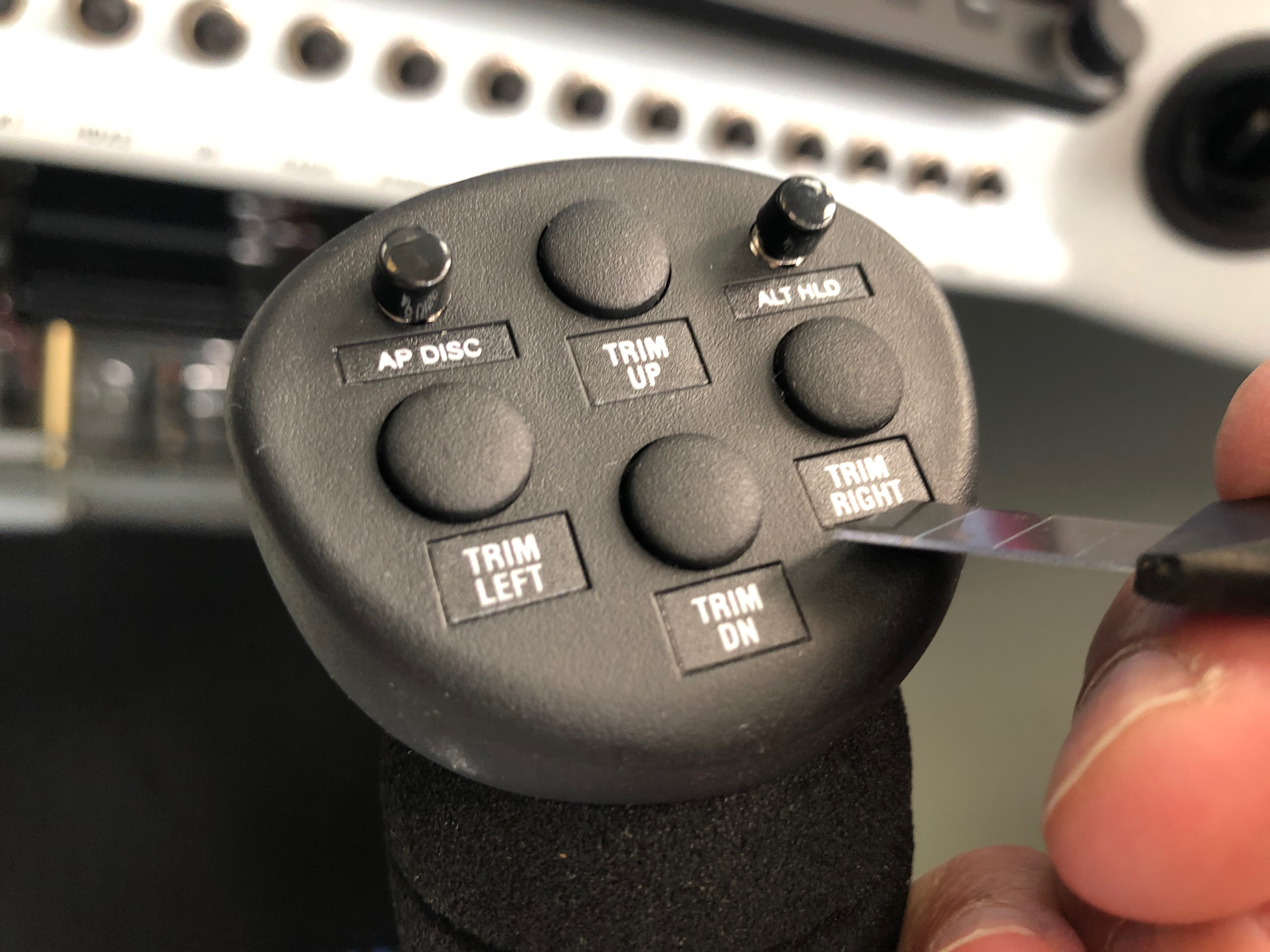
The Bristell kit comes with G405 stick grips but I wanted to put the autopilot disconnect and autopilot level buttons on the grip. so I have installed G407 grips instead. It comes with a variety of labels to identify the button function.
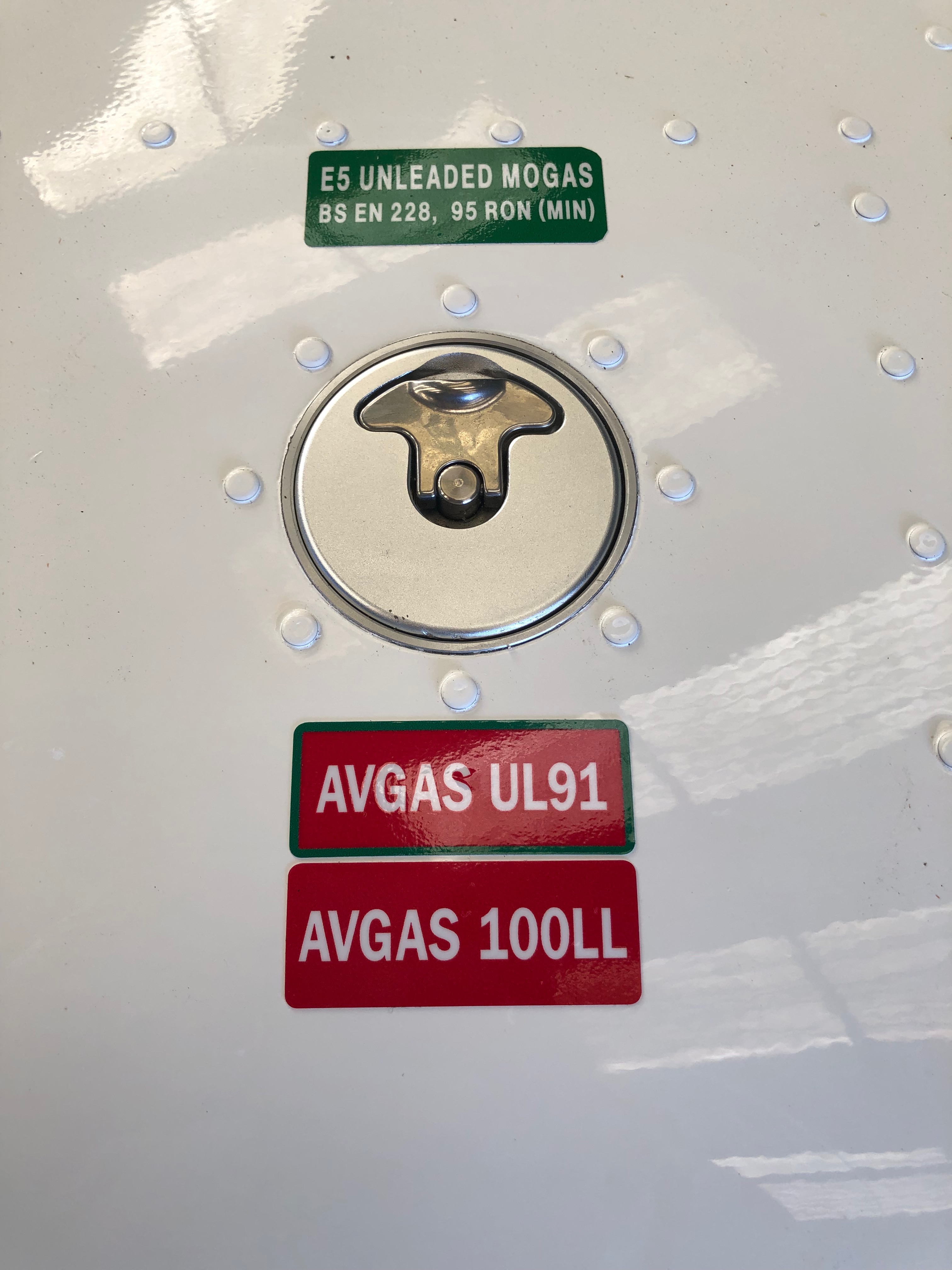
The Rotax 912 ULS can run on a variety of fuels but unless you placard them a refuelled may not fill with the option you request. I got the MOGAS sticker from the LAA and Chris Knight from Maypole had a few of the AVGAS UL91 and 100LL stickers.
As the special battery charge lead plugs into the centre port I had to move the battery slightly off centre by moving the packing but was an easier option than re-siting the battery retaining strap.
I’ve run the charge lead to the oil inspection hatch which will allow me to charge the battery or keep it in maintenance mode without taking the top engine cowl off. Quite a neat solution.
One of the things I needed to do was set the Airmaster fine pitch. This involves putting the prop in manual mode and throttling up to just under maximum RPM at 5700. Once this is done then the engine can be shut down and the adjustment made.
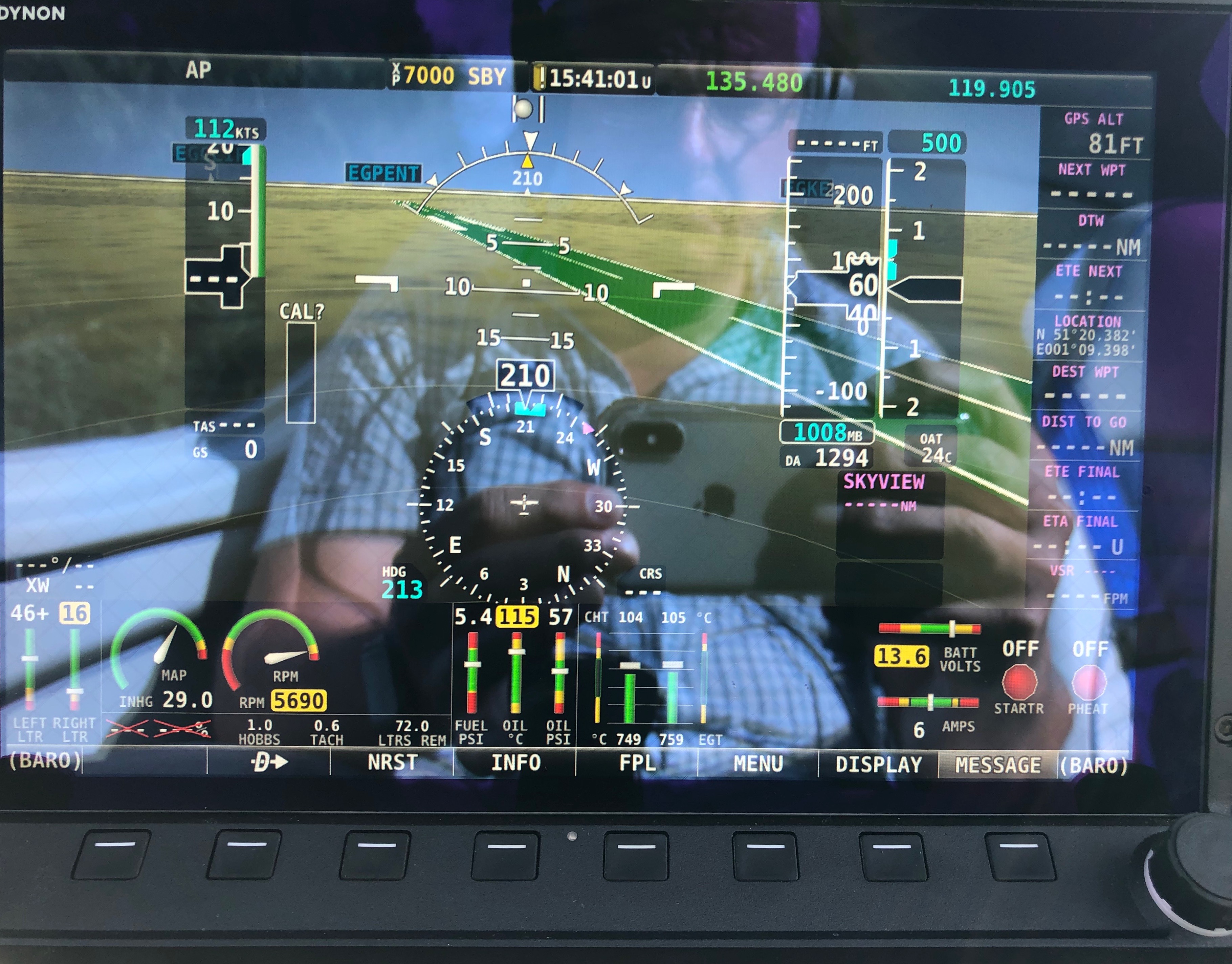
Took this just to record some sensor readings at max RPM. Oil temp is a little high which may be because I’ve been stationary whilst running the engine at high RPM. I will be checking that…
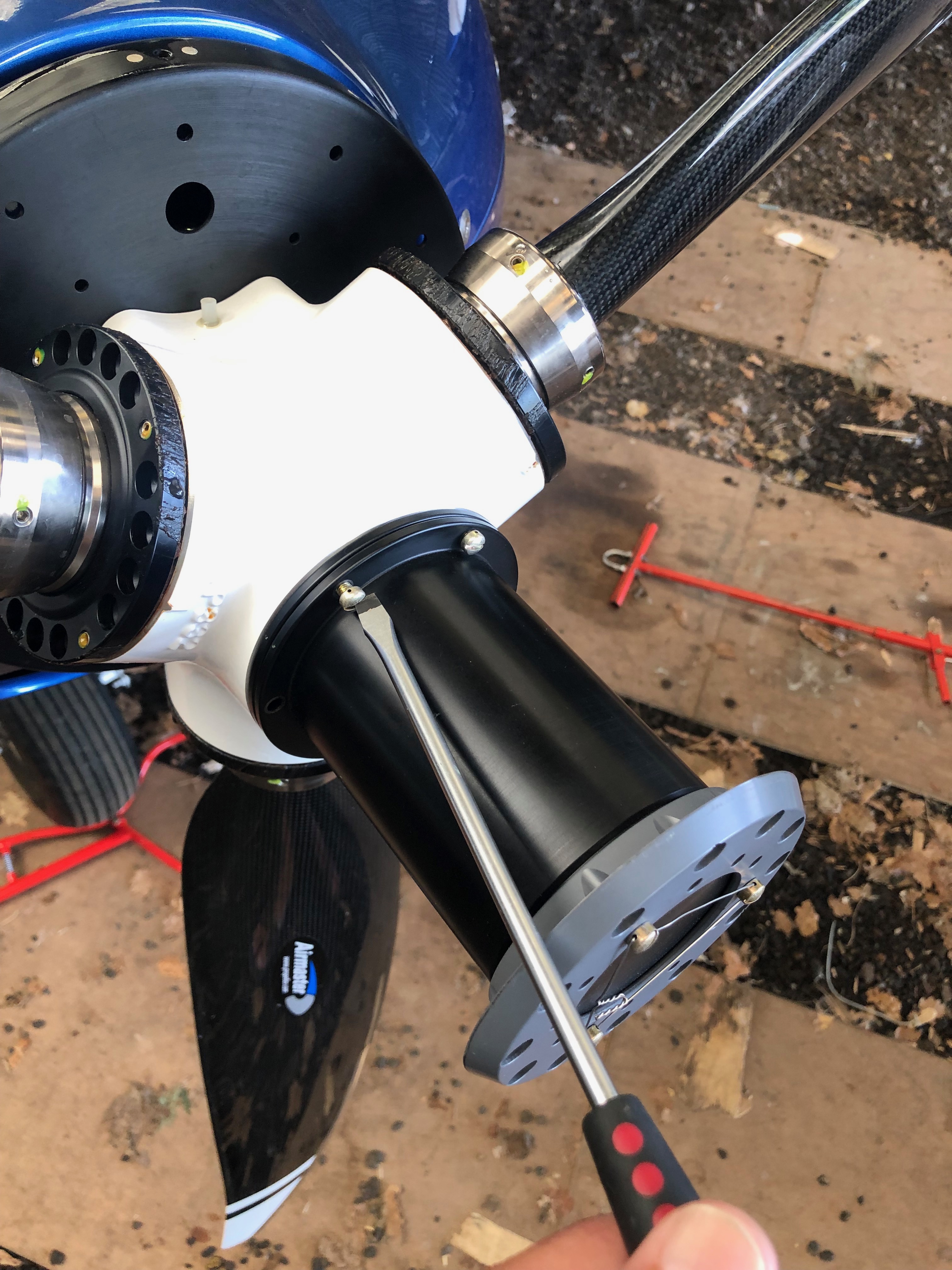
Now I’ve set the prop pitch so the engine peaks at 5700 I can set the fine pitch cam. The pitch motor cover is removed to reveal the microswitches and cam adjusters…
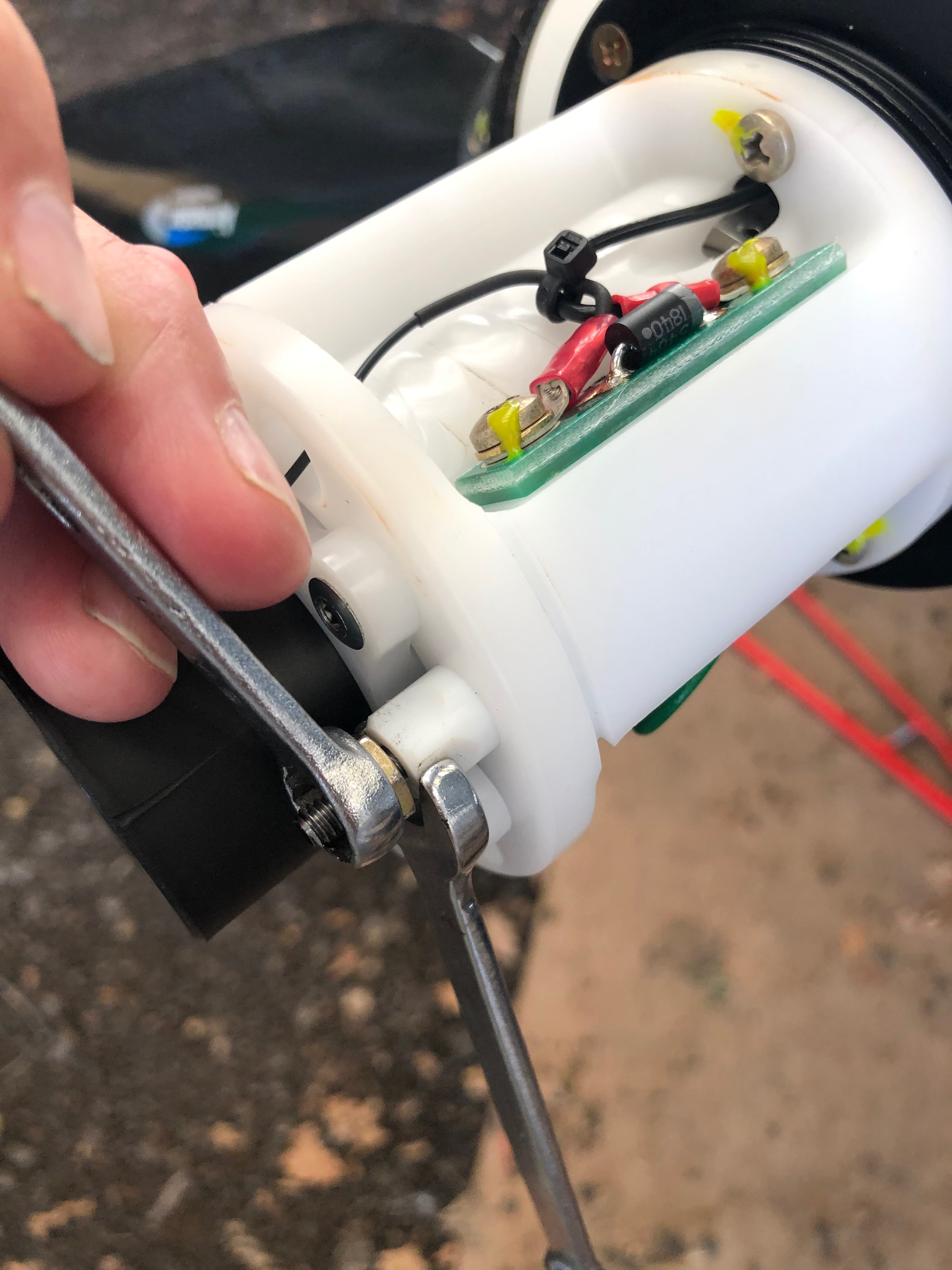
The locking nut is undone and the cam adjuster is turned until you hear the microswitch operate and that’s it – very simple.
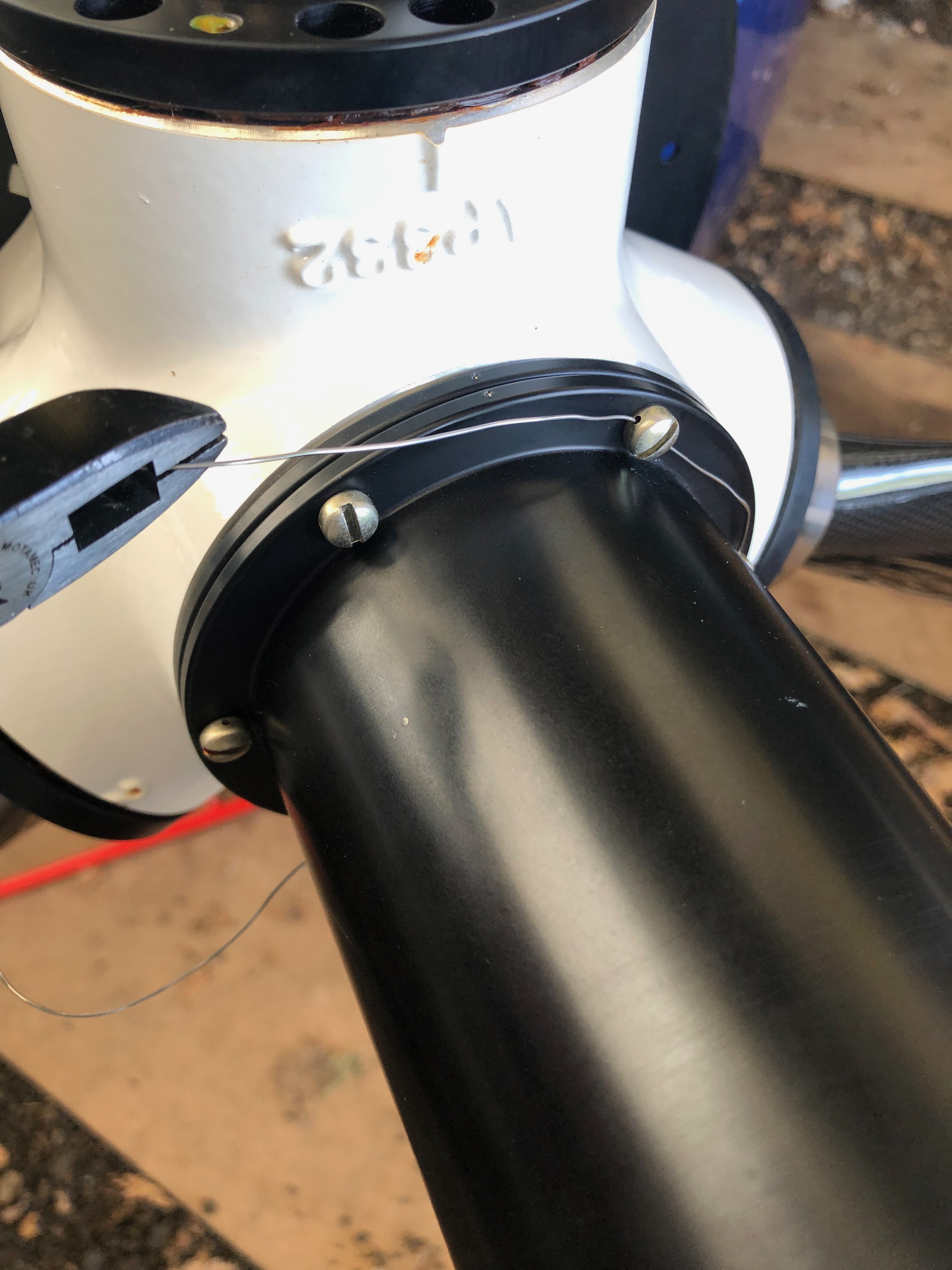
All that’s required is to reassemble the pitch motor cover and now the fine pitch has been set I can wire lock the screws to make sure that it doesn’t loosen whilst in operation.

I must admit the more I work with the Airmaster prop the more I’m impressed with the quality and engineering. It’s brilliantly simple and well worth the extra I paid. It will be good to see what the performance when it finally flies but from what I’ve seen so far has impressed me. I can virtually guarantee maximum RPM for takeoff and tune the prop for climb and cruise. The fact that it has a 2000 hour TBO to match the Rotax and it’s user maintainable at 100 hours intervals means it will be very cost effective over the coming years.

Following the build of my Bristell NG5 Kit No. 382 Registration G-MLSY